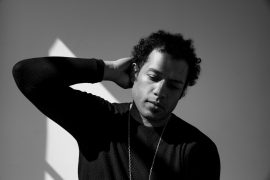
Singer/songwriter William Harries Graham’s “NYC” opens his ‘Belrose Motel’ EP with a brooding, ambient folk reverie of old rooms, lingering love, and lives imagined from afar – a tender, cinematic introduction to a deeply personal new world where past and present blur, grief moves with a pulse, and every fleeting detail becomes part of the story.
Stream: “NYC” – William Harries Graham
Memory rarely arrives in order; it comes in rooms, faces, old apartments, bathroom doorways, and the imagined glow of a life happening elsewhere.
On “NYC,” William Harries Graham wanders through that blur with a storyteller’s ache and an ambient folk pulse, tracing the people who stay with us long after closeness has changed shape. Brooding, tender, and gently luminous, the song feels like a late-night letter to every love, friend, and former self still alive in the mind – a stirring portrait of distance softened by devotion, and the strange grace of loving what time refuses to return.
Anna moved to New York City
To live out her dreams
I imagine you on the floor
of a tiny apartment
Smoking cigarettes and
thinking of another man but me
Atwood Magazine is proud to be premiering “NYC,” the brooding, atmospheric opening track and second single from William Harries Graham’s upcoming EP Belrose Motel, out June 5th via Strolling Bones Records. Following the previously released “Flicker Film,” “NYC” welcomes listeners into a cinematic, memory-soaked world of motel rooms and missed connections, old selves and lingering ghosts – a place where every song holds its own character, yet every character seems to carry some living piece of Graham himself.
An Austin-based singer/songwriter with a deep catalog of narrative-driven folk, Americana, indie rock, and experimental guitar music, Graham has been releasing records since he was a teenager. Across albums like JAKES, there are only endings, and 2024’s Annie’s House, he’s built a body of work rooted in emotional detail: The half-remembered conversation, the late-night question, the ordinary room suddenly glowing with meaning. “Graham delves into memories, anecdotes and random snippets of conversation that have rested in the head,” Atwood Magazine’s Frankie Rose previously wrote of Annie’s House, capturing the delicate emotional terrain he has long made his own – “blurring the real and the fictionalized in a way that’s still relatable.”
With Belrose Motel, Graham opens the door to a new creative space – one shaped by memory, loss, Texas, and fleeting moments, but also by movement, rhythm, and release.
The result feels both lived-in and expansive: A deeply personal record disguised as a place anyone can enter.
For Graham, Belrose Motel isn’t simply a collection of songs so much as a place where memory gathers, mutates, and asks to be understood from a new angle. The EP expands the narrative instincts that have shaped so much of his writing while pushing them into a more cinematic, time-bending frame: A motel as witness, container, and character; a threshold where strangers, loved ones, old selves, and imagined futures all seem to pass through the same flickering light.
“Belrose Motel thematically weaves stories from my past and future records into a space that is totally new and is at the core of everything,” he tells Atwood Magazine. “The motel is a character that interacts with all of these different people who are going through all of these things that we all go through in life. I did not set out to record an EP, nor did I think I was for the first month of working on it. And at some point, I realized that it was a project separate from any of the records that I thought I was creating. It was a space that demanded its own stories to be told, and it excited me so much.”
I was looking for you in the bathroom
Don’t know why I thought you’d be there
Smoking a blunt or watching TV
Anywhere but here

This sense of discovery runs straight through “NYC,” which opens Belrose Motel like a door left ajar.
Before we understand the motel’s full emotional architecture, Graham brings us into a city of apparitions and old attachments, where the past isn’t fixed so much as constantly replaying in fragments: Anna in New York, a tiny apartment floor, Lou Reed in the ‘70s, a bathroom searched for someone who was never there. The song moves like a collage because memory itself does – less a timeline than a rush of people, places, and unanswered tenderness.
“To me, it really is a song about the past,” he says. “There are all of these snapshots of different people and eras of my life mixed together to create this vignette of someone moving through life, growing up, and inhabiting a space which, for the sake of the song title, we could call the city of New York. It ends with a voicemail that I randomly found from one of my best friends, Claire. You can barely make out what she is saying, but it also just feels like a message from a close friend who you are forever connected to. Another literal snapshot.”
I imagine you as Lou Reed in the ’70s
Curly brown hair
You were everybody’s favorite
You were the dream one
Until you went and f***ed it up for everyone
“NYC” glows from the inside out, its atmosphere built as much from absence as sound. Graham’s voice sits close and weathered at the center, moving through the song with the ache of a man following a thread he can’t quite let go. Around him, the production rises in soft waves: A slow-opening Mellotron loop, tasteful synth swells, a steady percussive pulse, and electric guitars that shimmer like streetlights through rain-streaked glass. It’s ambient folk with an indie rock heartbeat, spacious enough to feel haunted and rhythmic enough to keep moving forward – a song that drifts, breathes, and slowly reveals its own emotional architecture.
The lyrics unfold like a stack of photographs scattered across a floor. Graham begins with a single image – “Anna moved to New York City to live out her dreams” – and lets the frame widen into fantasy, longing, jealousy, memory, and love. A tiny apartment becomes a stage for imagined intimacy; a bathroom becomes the place where absence takes shape; a Lou Reed-like figure becomes both myth and wound. By the time Graham sings, “And I loved you then, and I love you now,” “NYC” has moved beyond nostalgia into a rarer, more generous emotional space: The recognition that devotion can survive disappointment, distance, and the ugly ways people leave marks on each other.
And I loved you then
And I love you now
There is a joy in it when
You’re not losing it to everything else
That’s what makes “NYC” hit so deeply. It doesn’t flatten the past into romance or regret; it lets contradiction breathe. The song gives listeners a place to sit with the people they’ve lost, the versions of themselves they’ve outgrown, and the relationships that still glow despite everything they couldn’t become. Its final feeling isn’t closure, exactly, but release – the kind that comes when memory stops demanding answers and starts offering grace. In Graham’s hands, the ache of looking back becomes strangely life-giving: “There is a joy in it when / You’re not losing it to everything else.”
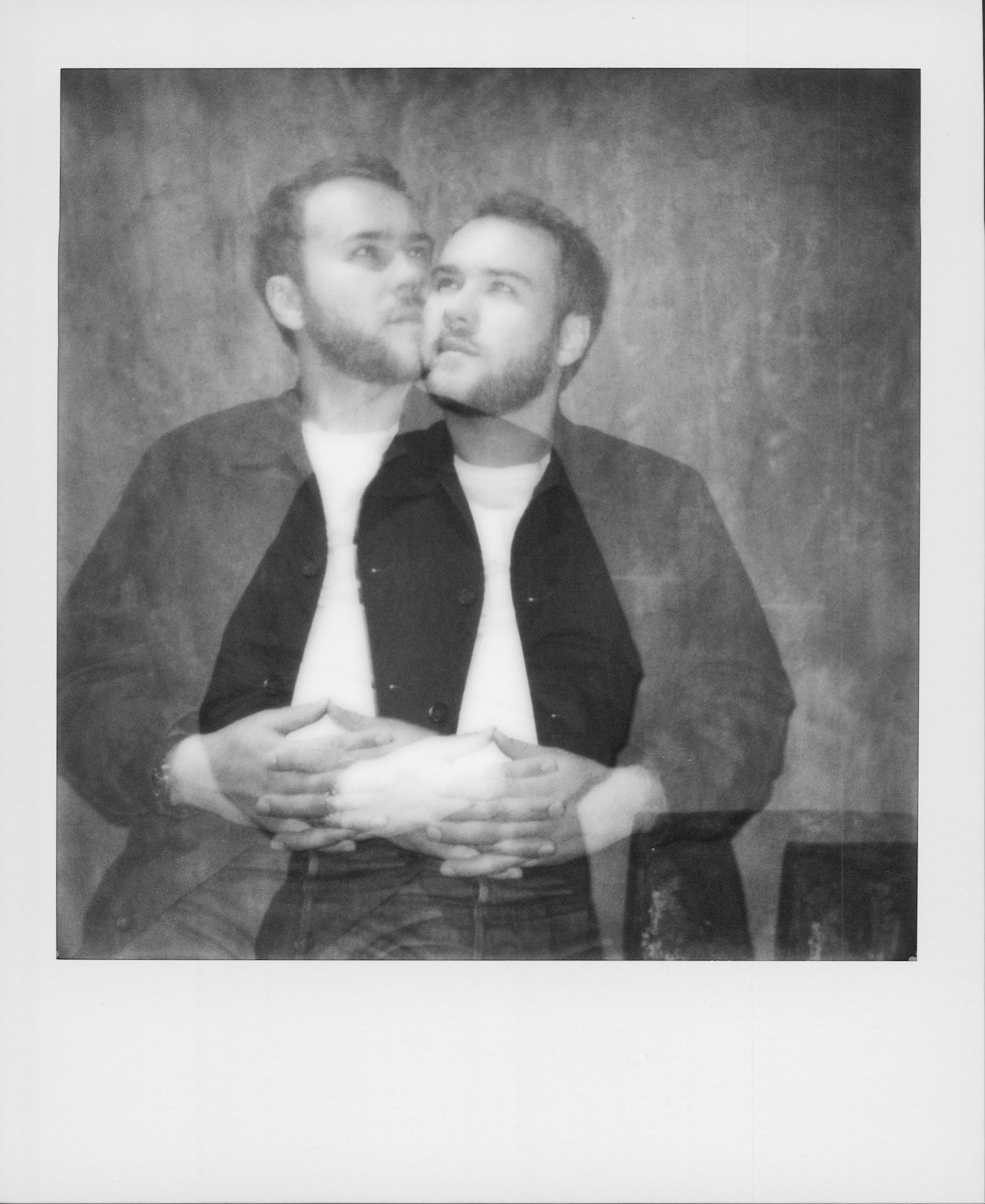
For William Harries Graham, Belrose Motel feels like a defining evolution – an artist with years of narrative craft behind him stepping into a wider, stranger, more rhythmically alive room.
He’s still drawn to the details that have long defined his writing: Overheard lines, half-lit scenes, characters made from memory and feeling. But here, those reflections move through fresh textures and forms, transforming personal history into a shared cinematic space where grief can dance, loss can flicker, and everyday recollection can open into myth. “NYC” doesn’t just introduce the EP’s world; it announces Graham as an artist still pushing himself toward new sounds, new structures, and deeper ways of telling the truth.
“I suppose I hope that people really take their time listening to these songs and try to pick up on the little hidden things, because there are a lot of them,” he smiles. “But I also hope people can see themselves in these songs and emotions. That’s always what makes me connect to a song or album, when I can see some part of myself, however small, within it.”
“I also feel like this is my first album that you kind of want to dance to, and that makes me really happy. Listen to it front to back. I think it feels like a journey you’re going on, and by the end, it becomes one big emotional release of both joy and pain.”

That hope – that listeners might find some small part of themselves tucked inside these songs – is already alive in “NYC.”
As the opening track to Belrose Motel, it teaches us how to listen to Graham’s new world: Not for a straight line, but for traces, faces, rooms, and emotional echoes that gather meaning the longer we sit with them.
Graham isn’t asking listeners to solve the past, or even to understand every figure who flickers through the frame. He’s asking them to listen for the hidden things: The voice at the edge of the recording, the friendship preserved in a voicemail, the old love still glowing beneath the hurt, the small human detail that makes a fictional scene feel lived. Memory rarely arrives in order, but in Graham’s hands, it becomes a place we can enter together – one room, one face, one half-lit recollection at a time.
Stream “NYC” exclusively on Atwood Magazine, and dive deeper into the music below as William Harries Graham opens up about the Belrose Motel EP, memory as a means of world-building, the emotional snapshots behind his songs, and the new sounds carrying his storytelling forward.
Let this special track linger in the in-between – that sacred, ephemeral space where distance softens, old rooms stay lit, and the people we’ve carried become part of the way we move forward.
— —
:: stream/purchase Belrose Motel here ::
:: connect with William Harries Graham here ::
— —
Stream: “NYC” – William Harries Graham
A CONVERSATION WITH WILLIAM HARRIES GRAHAM

Atwood Magazine: William, for those who are just discovering you today through this writeup, what do you want them to know about you and your music?
William Harries Graham: I started playing music at a very young age, releasing my first album, Foreign Fields, when I was 15. I am so lucky to have the freedom to release music and play with some of my best friends. That’s really what I’ve realized is so special about music. There is so much in the music business that focuses too much on the “business” side. At this point in my career, I’m just trying to have fun and make something that matters. I love getting to bring people into that.
With us being so many years into your career, can you recommend a couple deeper cuts or personal highlights from your catalog for Atwood’s crate-digging audience to sink their teeth into?
William Harries Graham: One of the most special songs to me, and one that I’ve actually released two versions of, is a song called “Seven Lives.” I released a home-recorded version as a standalone single in 2022 ahead of the release of Plainfield Tapes, and then I released it again on the there are only beginnings album. I wrote that song when I was in a really dark place in my life, but I feel like it has taken on different meanings for me over the years.
I also remember recording both versions so clearly. The original release was recorded in a country home in Vermont, and you can hear someone doing dishes in the other room. It really was about capturing that moment in time. I’ve always loved films that feel like they are capturing the beauty of simple things in life, movies like Past Lives, and this song feels as close to that type of film as possible.
Then, when I re-recorded it in 2023, it was the last song we tracked. I worked with frequent collaborator Cameron Riggs on that album. He played piano, and we had already finished all of the piano tracking when I remember asking if we could just try one more song. He learned it on the spot, and we did two takes. You can even hear us laughing about messing up the first take at the beginning of the song. It just felt so personal.
Who are some of your musical north stars, and what are you most excited about the music you're making today?
William Harries Graham: Man, that is ever-changing for me. Some of my longtime favorites are Wilco, Matthew Ryan, LCD Soundsystem, Bill Frisell, Blake Mills, and Gregory Alan Isakov. Truly all over the place. But I also think what makes music interesting is that we can all love genres that are completely removed and separated from each other, yet love them the same.
It’s the reason I always have a hard time defining any genre, especially my own. I believe someone once asked Merle Haggard if he considered his music folk music, and he responded, “Well, I play music and I play it for the folks. So yeah, I guess it’s folk music.” I think that’s exactly what excites me most about the music I’m making today. I don’t really feel stuck in any one category, and I don’t want to be.
My last album, Annie’s House, was very Americana. there are only endings before that was very folk. This new EP, Belrose Motel, feels very indie rock and experimental. I want to keep doing that, changing it up. Who knows, maybe I’ll make a jazz album one day.
You’re in the process of releasing your new EP, Belrose Motel. What’s the story behind this record?
William Harries Graham: Well, I suppose I’m in an era of concept albums. Annie’s House was about a relationship falling apart and was told in tiny vignettes. This album really is about the idea of the Belrose Motel. I imagine it as this physical space that exists through all different eras of time, for all different types of people.
Each song carries the story of a different person who stays at the motel or has some interaction with it, even if we don’t directly see it. If I’m being honest, it’s all based on different experiences I’ve had or feelings I’ve carried. That’s the only way I can write, by using what I see and experience, then applying those things to characters that detach from me in a way.
I want everyone to be able to feel some part of themselves and the human experience in each song and character.
”You’ve
Today we’re premiering your new single, “NYC” - the EP’s opening track. What does this song mean to you - and what’s it about?
William Harries Graham: To me, it really is a song about the past. There are all of these snapshots of different people and eras of my life mixed together to create this vignette of someone moving through life, growing up, and inhabiting a space which, for the sake of the song title, we could call the city of New York.
It ends with a voicemail that I randomly found from one of my best friends, Claire. You can barely make out what she is saying, but it also just feels like a message from a close friend who you are forever connected to. Another literal snapshot.
“Anna moved to New York City to live out my dreams,” you sing. “I imagine you on the floor of a tiny apartment, smoking cigarettes and thinking of another man but me.” How did you go about building out the story of this song?
William Harries Graham: I’m pretty sure it was late at night. I had finished sorting out the musical elements of the song, and I was drinking a glass of whiskey, my favorite drink, when I just started literally saying what I was thinking about.
Again, it wasn’t just one person. I was thinking about a few different people that I had once been really close to but had drifted away from over time. You know when you start thinking about someone you care about, or once did, and you just wonder, “Where are they now? What are they doing?” And I mean quite literally in that moment, wherever they are in the world. Are they happy? Are they sad? Are they out at dinner with friends? Or are they just at home, alone on the floor smoking cigarettes?
That’s really what started the song for me. It all just kind of fell out naturally from that initial thought.
The “NYC” sonics are just as interesting as your storytelling. The percussion acts like a rapid pulse; the guitars, almost a dreamy, roving accompaniment. What was your vision for this song, musically?
William Harries Graham: Well, I think “Lit Cigarettes” was the first song I finished recording for the EP, and then I wrote and recorded “Flicker Film” after that. I started thinking about song order, which I never usually do until after I finish an album. I typically record a bunch of songs and then move them around until everything feels right.
But with this EP, all the songs started with the music first. The music for “Lit Cigarettes” came from an old song that I never released, and I just randomly tried the spoken word approach over it. The song was probably done in two takes. “Flicker Film” was similar. I had some previously unused lyrics, but I basically built up the music first. I had the first verse written, but the rest of the lyrics just came from the vibe of the music. So, for a change, I really got to start with the music.
At that point, I had those two songs, but I didn’t know how many songs would end up on the EP. At the time, I thought “Lit Cigarettes” would be the final song, and “Flicker Film” didn’t feel like an opening track. So I knew I needed to figure out how the EP would open and welcome you into its world.
That’s really where the musicality of “NYC” came from. It starts off slow with a Mellotron loop, and then each added section or memory slowly brings in another instrument or layer that kind of introduces the listener to the overall vibe of the album.
Funnily enough, the first voice you hear on the song, and I guess on the EP as a whole, is my mom’s voice saying “hello,” literally welcoming you. You’d probably never notice that, though, if I hadn’t just told you. Whoops.
How does this track fit into the overall narrative of Belrose Motel?
William Harries Graham: I feel like this track sets the table for the entire EP. The rest of the songs each tell the story of a different character, each with their own emotions, issues, joys, and memories, all at different eras of their lives. Obviously, as I’ve made clear throughout this interview, each of them is kind of based on a version or memory of me from those different periods.
But “NYC” is more like a collage of people. It’s like flipping through a Rolodex of what is important, or who is important. And the ones that stick are the ones whose stories get told throughout the rest of the EP.
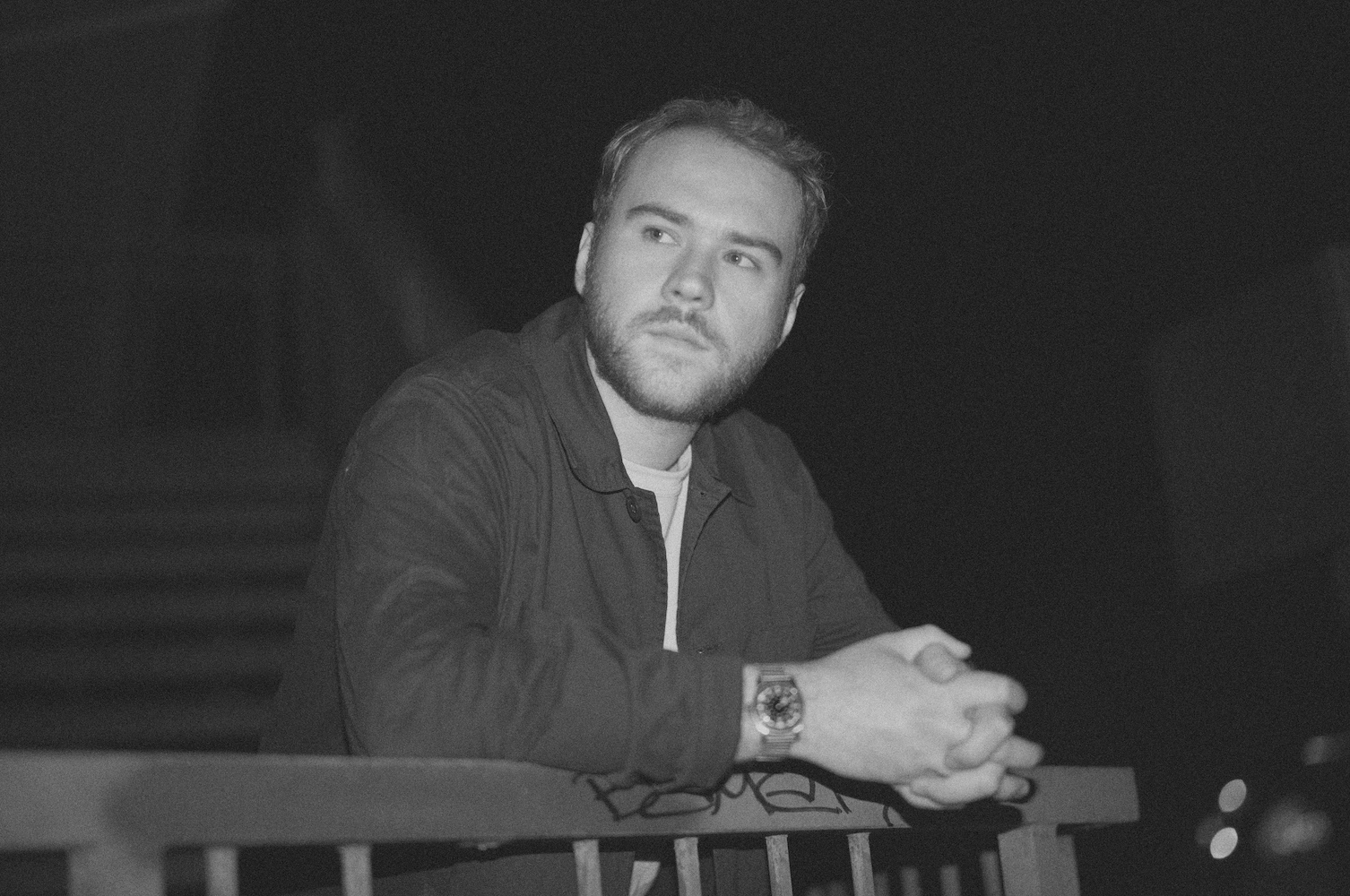
What do you hope listeners take away from this music, and what have you taken away from creating it and now putting it out?
William Harries Graham: I suppose I hope that people really take their time listening to these songs and try to pick up on the little hidden things, because there are a LOT of them. But I also hope people can see themselves in these songs and emotions. That’s always what makes me connect to a song or album, when I can see some part of myself, however small, within it.
This EP helped me through a hard time by giving me both a distraction and a place to put my thoughts and turmoil during a period of pain. Putting it out now does feel kind of strange because of that. It’s been almost exactly a year since I recorded it, and it’s only been two months since my father passed away. So it feels like a difficult time to even be putting words to thoughts like this.
But I also feel like this is my first album that you kind of want to dance to, and that makes me really happy. Listen to it front to back. I think it feels like a journey you’re going on, and by the end, it becomes one big emotional release of both joy and pain.
In the spirit of paying it forward, who are you listening to these days that you would recommend to our readers?
William Harries Graham: Great question! I’ve been loving listening to Craig Finn recently. His last two albums are unreal, just unbelievably good. And his vocal delivery style is so awesome and relaxed. There are also two LA session musicians that I’ve been listening to a lot: Dylan Day, who just put out one of the coolest solo acoustic guitar albums, and Ryan Richter, who has released two awesome electric pedal steel musical suites that are just unreal. Colin Miller, who plays drums for MJ Lenderman, put out one of the coolest albums last year, with really interesting instrumentation and gorgeous lyrics.
And locally, Evan Charles is one of my favorites. He’s put out a string of really amazing albums ranging from country to garage rock to space cowboy country.
BRUCE, the project of Carrie Fussell, is one of the best live music performances in Austin right now, and her songwriting is unreal. There’s so much honesty in her music.
Also, I’m biased as he plays guitar on this EP, Jeremy Nail is one of the best songwriters alive right now. A true wordsmith. Listen to any of his albums and you’ll immediately understand.
— —
:: stream/purchase Belrose Motel here ::
:: connect with William Harries Graham here ::
— —
Stream: “NYC” – William Harries Graham
— — — —
Connect to William Harries Graham on
Facebook, Instagram
Discover new music on Atwood Magazine
© Col Elmore
 © Col Elmore
:: Stream William Harries Graham ::