With the force of an artist who’s been quietly sharpening her voice behind the scenes, Cara Delevingne arrives on the music landscape with a striking, genre-defying debut. Her first singles, “I Forgot” and “Out of My Head,” form a compelling double-sided statement; equal parts vulnerable, atmospheric, and emotionally charged. Accompanied by a cinematic short film from Severance Emmy-winning director Jessica Lee Gagné, the release showcases Delevingne’s ambition not just as a musician, but as a storyteller. Together, the songs signal the arrival of a distinctive new voice, while setting the stage for a highly anticipated debut album slated for release later this year.
 follow our Today’s Song(s) playlist


“I Forgot / Out of My Head” – Cara Delevingne
Cara Delevingne’s arrival as a recording artist feels less like a celebrity side quest and more like the moment the curtain drops on a secret she’s been keeping for years.
Plenty of actors and models have attempted the crossover into music, often armed with slick branding and an audience already built elsewhere. What makes Delevingne’s debut different is that it doesn’t sound like a career pivot. It sounds like a creative pressure valve finally being released.
With the dual singles “I Forgot” and “Out of My Head,” Delevingne crashes onto the scene with startling confidence, unveiling a genre-fluid, emotionally raw sound that refuses to sit comfortably within any one musical tradition. Across seven immersive minutes, she moves between trip-hop, electronic experimentation, dream-pop textures, alternative songwriting, and explosive drum ’n’ bass, all while maintaining a singular emotional thread. The result is not merely a debut; it’s a statement of intent.

The opening moments of “I Forgot” are enough to stop even the most skeptical listener in their tracks. Delevingne’s voice enters almost unaccompanied, fragile and exposed, delivering the haunting line: “I forgot that the world was real.” It’s a striking opening, one that immediately establishes vulnerability as the song’s driving force. Then, just as the listener settles into the intimacy, the floor disappears beneath them.
Distorted instrumentation crashes into the mix. Electronics swell and buckle. Piano passages emerge from the chaos before dissolving into lush synth atmospheres and subterranean bass frequencies that seem designed to replicate the disorientation she describes. It’s a song that feels less written than experienced, unfolding like an emotional flashback rendered in sound.
What’s most impressive is how naturally Delevingne inhabits these shifting landscapes. There is no sense of performance for performance’s sake. Every sonic twist feels tied directly to the emotional state she’s exploring. The production, co-crafted with renowned producer BJ Burton, whose résumé includes work with Bon Iver and Charli xcx, allows the music to breathe, fracture, and rebuild itself according to the needs of the narrative rather than the expectations of genre.
Then comes “Out of My Head,” which arrives not as a separate track but as a continuation of the same emotional journey. A hypnotic trip-hop groove takes hold as Delevingne delivers another quietly devastating observation: “Crowded / It feels like I’m surrounded.” The line lands with the weight of an anxious thought spiraling in real time.
From there, the song expands outward. Rhythms accelerate. Synths begin to shimmer and pulse. Suddenly, bursting drum ’n’ bass erupts from beneath the track like a suppressed emotion finally breaking free. If “I Forgot” captures dissociation, “Out of My Head” feels like the frantic attempt to escape it. Together, the songs operate as companion pieces; one looking inward, the other fighting its way out.
What makes this debut particularly fascinating is its refusal to chase obvious pop conventions.
There are hooks here, certainly, but they emerge organically rather than arriving on schedule. The music prioritises atmosphere, feeling, and storytelling over instant gratification. In an era dominated by algorithm-friendly structures and predictable crescendos, Delevingne’s willingness to embrace ambiguity feels refreshingly bold.
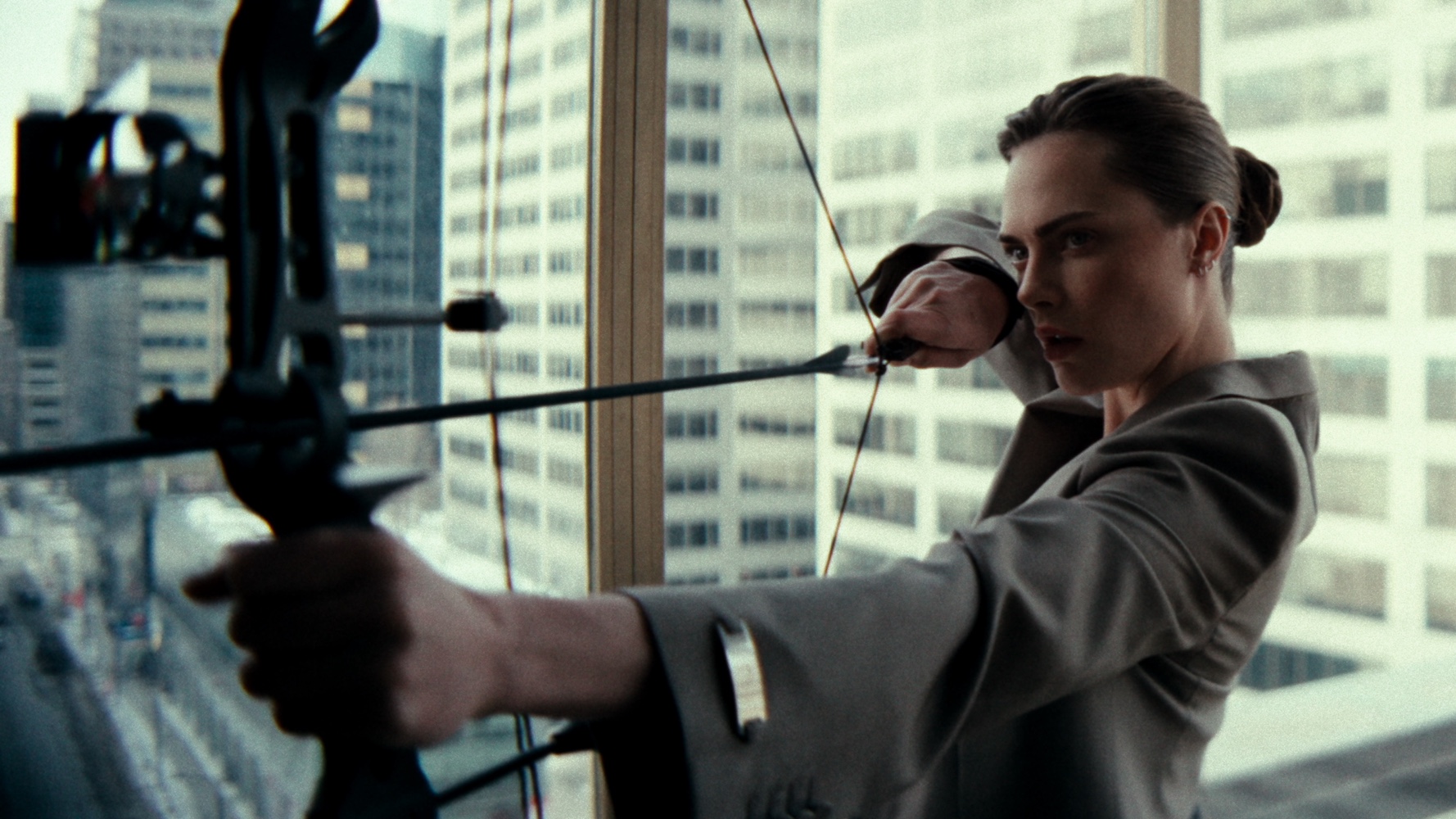
That same ambition extends beyond the music itself. Accompanying the release is a cinematic short film directed by Jessica Lee Gagné, the Emmy-winning visual mastermind behind Severance. Rather than serving as a conventional music video, the film acts as a visual companion piece that deepens the themes running through both tracks.
Gagné’s direction mirrors the songs’ fascination with fractured realities. Delevingne appears trapped within a series of increasingly surreal scenarios where the mechanics of filmmaking itself are constantly exposed. Sets reveal themselves as sets. Illusions are dismantled moments after they’re created. The fourth wall repeatedly shatters, only for another layer of artifice to appear behind it. Yet amid all this deconstruction, genuine emotion remains stubbornly intact.
It’s a clever visual metaphor for the songs themselves. Both the music and film strip away protective layers, exposing the machinery beneath performance and identity. Watching Delevingne dance, scream, sing, and physically battle her way through these constructed realities becomes a powerful extension of the emotional excavation happening within the music.
Perhaps the biggest surprise throughout the entire project is Delevingne’s voice. Not because she can sing, that becomes evident almost immediately, but because of how effectively she communicates emotion. There is an unguarded quality to her delivery that gives the songs their beating heart. She understands when to whisper, when to strain, and when to allow imperfections to remain visible. In many ways, those imperfections become the music’s greatest strength.
The project also arrives with a sense of inevitability once you consider Delevingne’s long-standing relationship with music. Long before modeling campaigns and blockbuster films, she was playing drums, writing lyrics, and carrying guitars between shoots. Music has existed in the background of her career for years, surfacing occasionally through songwriting credits, stage performances, and collaborations with acclaimed artists. This debut feels less like a sudden reinvention than the culmination of a creative thread that has quietly run through everything she’s done.
Most importantly, “I Forgot” and “Out of My Head” succeed because they feel necessary. They carry the unmistakable energy of an artist creating something she genuinely needed to make. When Delevingne describes “I Forgot” as a rebirth and “Out of My Head” as therapy, those statements don’t read like marketing copy; they resonate through every second of the music.

Debut singles are often designed to introduce an artist.
These songs do something more ambitious. They invite listeners directly into the chaos, confusion, vulnerability, and catharsis of their creator’s inner world.
If this seven-minute introduction is any indication of what awaits on her debut album later this year, Cara Delevingne hasn’t merely entered the music conversation. She’s arrived with a fully formed artistic vision, one that is fearless in its experimentation and deeply human at its core.
The most exciting part? It feels like she’s only just getting started.
— —
:: stream/purchase I Forgot / Out of My Head here ::
:: connect with Cara Delevingne here ::
— —
“I Forgot / Out of My Head” – Cara Delevingne
— — — —

Connect to Cara Delevingne on
Facebook, TikTok, Instagram
Discover new music on Atwood Magazine
© Blair Brown
 © Blair Brown
:: Today’s Song(s) ::
follow our daily playlist on Spotify
:: Stream Cara Delevingne ::