Every Friday, Atwood Magazine’s staff share what they’ve been listening to that week – a song, an album, an artist – whatever’s been having an impact on them, in the moment.
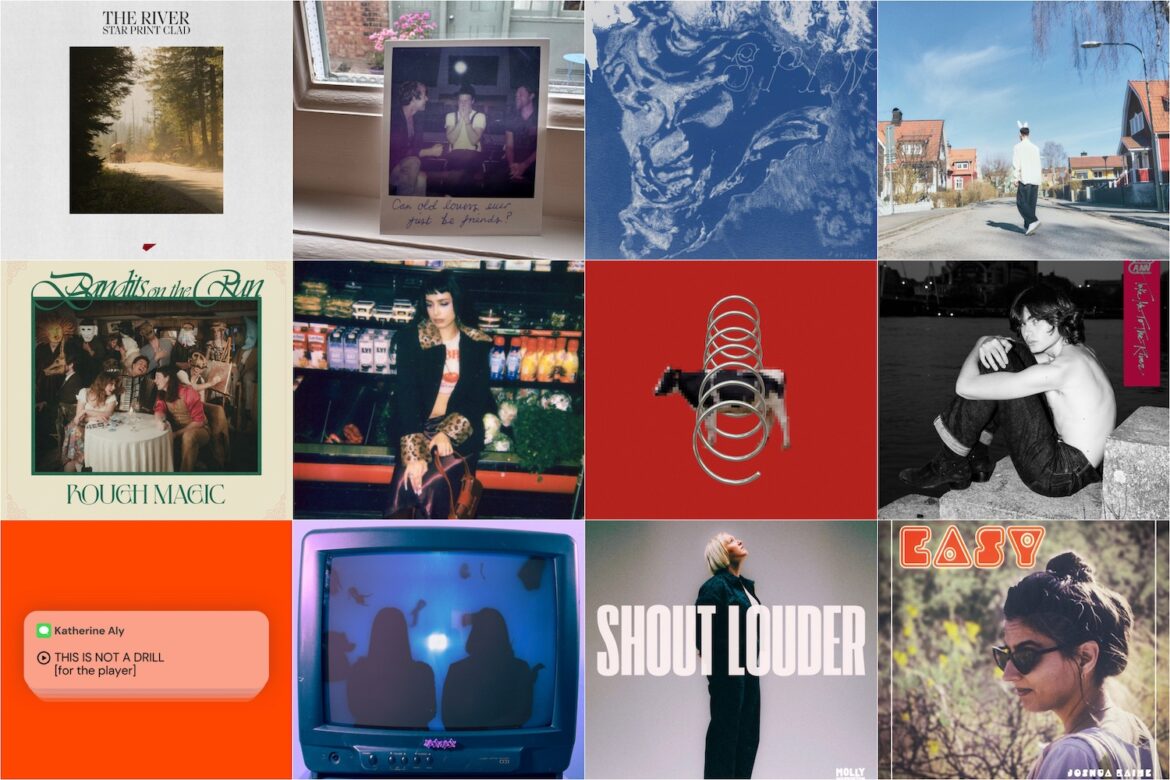
This week’s weekly roundup features music by Valley, Nico Cann, Tom Odell & The Lumineers, Dollpile, Bandits on the Run, Katherine Aly, Quelle Rox, Abstraxion, Molly Warburton, Bad Tiger, Star Print Clad, & Joshua Kaine!
•• •• •• ••
 follow WEEKLY ROUNDUP on Spotify


•• ••
:: “Vending Machine” – Valley ::
Mitch Mosk, Beacon, New York
Valley are back to entertain us – but on “Vending Machine,” they’re not letting that word go unchallenged. The Toronto indie pop trio’s first single in nearly two years arrives with the kind of force that makes a return feel like an arrival: Big drums, blaring guitars, radiant hooks, and a full-bodied rush of charisma from a band stepping into their next era with zero hesitation. Following 2024’s Water the Flowers, Pray for a Garden, a therapeutic triumph born from grief, growth, and the work of becoming their most authentic selves, “Vending Machine” finds Valley pushing further outward – louder, brighter, and more uninhibited than ever.
That history gives “Vending Machine” its charge. Water the Flowers, Pray for a Garden was a soul-bearing reset from a band learning how to grieve, grow, and keep choosing each other in real time; watching them carry those songs into Brooklyn Steel last fall only made that chapter feel all the more vital – and visceral. “Vending Machine” doesn’t abandon that hard-won truth – rather, it electrifies it, channeling vulnerability into voltage and self-knowledge into a hook big enough to shake any room you put it in.
“‘Vending Machine’ is a song about transactional relationships with people,” the band tell Atwood Magazine. “A vending machine exists to give things on demand. It doesn’t have needs or emotions. People only approach it when they want something. A source of comfort, attention, validation, or entertainment. It’s love that depends on output, not connection.”
Take whatever you want from me
You fell in love with the vending machine
Take whatever you want from me
You fell in love with the vending machine
Alright
The lyrics keep circling the split between desire and depletion: A person who walks in “like a miracle,” kisses “like a chemical,” and still leaves the narrator feeling locked up, chewed through, spit out, and used for parts. Valley make the metaphor sting because the machine is both object and mask – an image of being approached only when someone needs comfort, attention, validation, or a hit of entertainment, and a version of the self that has learned to perform availability until connection becomes consumption. Even the bridge’s “You want a sentimental meaning / Just to sleep at night / If you’re still living in your head, then you’re out of your mind” cuts through the fantasy with a grimace, refusing to dress up a transactional dynamic as romance just because longing makes it easier to endure.
Lock me like an animal
To the edge of self-control
Chew me, spit me, kick me out the door
But, baby, baby, I’m a carnivore
You better learn to love yourself, honey
Oh-oh (When you walk my way)
I don’t even need your loving at all
Yeah, yeah, yeah, yeah
This tension between performance and personhood powers every second of “Vending Machine.” The song hits with seductive levels of guitar overdrive, turning Valley’s polished alt-pop instincts into a roaring, arena-sized eruption of want, resentment, and release. When Rob Laska sings, “You better learn to love yourself, honey / Oh-oh,” the band break into an irresistibly catchy vocal cascade that sends chills up the spine; when they flip into the pointed, staccato strut of “Take whatever you want from me / You fell in love with the vending machine,” the hook lands like a sneer, a confession, and a dare all at once.
Take whatever you want from me
You fell in love with the vending machine
Take whatever you want from me
You fell in love with the vending machine
Okay
For all their indie pop shine, Valley have never sounded this gloriously, unapologetically loud. “Vending Machine” bursts at the seams with distorted guitars, pulsing rhythm, and vocal firepower, but its scale never swallows the feeling at its core. The opening question – “Do you need to be entertained?” – becomes less invitation than indictment, setting the stage for a song that knows exactly how exhausting it is to be loved for what you can give instead of who you are.
Valley have long been masters of turning heartbreak, longing, and nostalgia into communal catharsis, but “Vending Machine” lets that catharsis bare its teeth. It’s dramatic, unrelenting, and wholly infectious – a song about being consumed on demand that refuses to be passive, polite, or easy to use up. Valley’s 2026 return is a beautiful punch in the face – a jolt to the system and a spark in the chest, leaving us breathless and emboldened as they remind us that love without connection isn’t love at all; it’s just another transaction waiting to be declined.
You want a sentimental meaning
Just to sleep at night
If you’re still living in your head,
then you’re out of your mind
Take whatever you want from me
You fell in love with the vending machine
Take whatever you want from me
You fell in love with a version of me
:: “Take Me To The River” – Nico Cann ::
Danielle Holian, Galway, Ireland
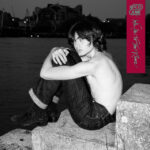
With “Take Me To The River,” Nico Cann delivers a soaring alt-rock statement that feels tailor-made for open roads, festival sunsets, and moments of restless self-reflection. The Milan-born, London-based artist taps into a timeless rock sensibility while keeping both feet planted firmly in the present, creating a track that balances youthful uncertainty with an undeniable sense of purpose. Drawing from the heartland storytelling of Springsteen and the modern arena-ready appeal of Sam Fender, Cann crafts a song that feels deeply personal yet universally relatable. It’s a track that captures the emotional turbulence of growing up, wrapping its confessional core in a sound built to resonate far beyond the bedroom where it was first conceived.
“Take Me To The River” thrives on scale and atmosphere. Driving drums, expansive keys, and sharp-edged guitar work combine to create a cinematic backdrop that steadily builds towards something genuinely exhilarating. There’s a palpable warmth running through the production, with flashes of ’80s rock grandeur woven seamlessly into a contemporary indie framework. At the centre stands Cann’s charismatic vocal performance, carrying every lyric with conviction and emotional weight. As anticipation builds for his debut album, Silver Lining, this latest single feels like a defining moment; an anthem that showcases not only his songwriting prowess but also his ability to transform introspection into something thrillingly larger than life.
:: : “Old Lovers” – Tom Odell ft. The Lumineers ::
Kelly McCafferty, New Orleans
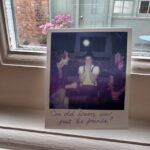
Tom Odell has re-imagined “Can Old Lovers Ever Be Friends?” from his critically acclaimed 2025 album A Wonderful Life – now reborn as ” Old Lovers,” this time with Wesley and Jeremiah of The Lumineers. If you haven’t heard the original, picture Billy Joel-esque piano chords wrapped in an echoey, warmly intimate recording that envelopes you immediately. It’s the kind of song that feels like it was made to be sung out loud in a bar after a few drinks with a room full of friends. And that energy makes the pairing with Wesley’s voice feel almost inevitable – a natural fit that elevates the song to its next level.
“I was thrilled when Wesley and Jeremiah wanted to collaborate on this track,” says Odell. “I have always been inspired by their music’s spontaneity, warmth, and joy, and I wanted to channel that feeling into this version of the song.” The result is a duet that feels like a celebration of music made by people who genuinely love making music. Hearing this one live would be something special.
:: Someone Else’s Heaven – Dollpile ::
Mitch Mosk, Beacon, New York

Dollpile make music for the after-hours ache – for the long walk home, the overheated bedroom, the half-lit kitchen, the car ride through an abandoned hometown you can’t stop mythologizing. On Someone Else’s Heaven, the Denver band’s second LP and first under their current name, Isadora Eden and Sumner Erhard lean fully into the self-described “fuzz folk” world they’ve spent years carving out: Indie rock, shoegaze, gothic folk, and bruised confessionals all tangled together in songs that feel heavy and weightless, intimate and immense, tender and devastatingly alive.
“Someone Else’s Heaven feels like we took the ideas and sound we developed on our last album forget what makes it glow and got more confident exploring them,” Dollpile tell Atwood Magazine. “It goes further in every direction – ‘Tuesday Night’ expands on the fuzzy harsh guitars and feverish sprawl, ‘Cities’ leans into softer folk, ‘Concrete’ is the first drumless Dollpile song, ‘Fake Flowers’ feels like the epitome of our ‘fuzz folk’ sound.”
That confidence is the album’s heartbeat. Someone Else’s Heaven doesn’t sound like a band searching for a shape; it sounds like one inhabiting its own weather system, turning discomfort, memory, grief, boredom, heat, and half-finished goodbyes into a magnificent haze. “Fake Flowers” remains a cathartic exhale of exhaustion and emotional unraveling, its refrain – “I told you what I wanted to say but I can say it again” – capturing the weariness of explaining yourself to someone who still refuses to hear you. “100 Degrees” lets that exhaustion sweat through the walls, finding brutal clarity in lines like “wishing I was home while I’m at home” and “didn’t like it but I’ll miss it when it’s gone.” Across the record, Dollpile make alienation feel physical without turning it into spectacle; their songs seep, smolder, and stay.
“The writing approach was different too,” the band explain. “We did a lot of ‘demo days’ where we’d block off a Saturday and just spend all day in the basement fleshing out the song from a guitar / vocal demo into a fully realized song. In the past it’s been mainly guitar / vocal demos that we chip away at demoing through a lot of small sessions. We wanted to instead recreate the feeling of being totally immersed in the song that we get when we go in the studio to record. Removing distractions and not breaking up the creative flow made the writing process more fun, and we’d end every demo day with a ‘car test,’ driving around our neighborhood and deciding how we felt about the song we’d made. We were more collaborative as well: ‘Stoplights’ started from a jam right before practice, and ‘Concrete’ started with a guitar part Sumner was working on.”
That immersion comes through most forcefully on the title track, a heavy, soul-stirring centerpiece that distills the album’s haunted domesticity into four aching minutes. “Someone Else’s Heaven” begins in a place of stillness and stale air – “what a waste of the weather / to stay inside the place we used to live” – before opening into a collapse of empty rooms, mall bathrooms, swallowed anger, and unspoken hurt. Eden’s refrain, “I’m someone else in someone else’s heaven,” lands like a full-body dislocation: The feeling of standing inside a life that should be good, or should at least make sense, and realizing you don’t recognize yourself in it anymore.
What makes Someone Else’s Heaven so spellbinding is how fully Dollpile commit to that dislocation without losing warmth. Across the record, Eden and Erhard write like people trying to name the shape of a feeling before it disappears: The ache of staying behind, the strange grief of being home and still wanting to go home, the small humiliations of caring too much, the private violence of remembering a face only after reaching for a picture. Their songs are full of rooms, weather, thresholds, and exits, but the escape never feels simple. Dollpile’s beauty lives in that tension – glow and grit, intimacy and eruption, collapse and catharsis – and in the way every song feels inhabited from the inside out.
Long-awaited and fully realized, Someone Else’s Heaven is Dollpile at their most assured, immersive, and uncompromising: A raw, radiant record that turns heaviness into shelter and discomfort into devotion. This is fuzz folk at its most magnificent – music that lingers like heat in the walls, like headlights on wet pavement, like a feeling you thought you’d outrun until it finds you again and demands to be heard.
:: Rough Magic – Bandits on the Run ::
Mitch Mosk, Beacon, New York

Bandits on the Run make folk music feel like an open door, a shared fire, a hand on your shoulder when the road bends out of sight. On Rough Magic, the New York City trio’s sophomore full-length and first album in nearly ten years, Adrian Blake Enscoe, Sydney Shepherd, and Regina Strayhorn turn friendship, faith, friction, and release into an invigorating, harmony-rich celebration of what it means to make a life – and art – with the people who know your heart best. It’s thoughtful and ruminative, raw and spirited, gentle and grand, a record that gathers listeners close before sending them back into the world a little softer, steadier, and more awake.
“With a reverence for imperfection, grit, commitment, an acceptance that chaos is inevitable, and a deep gratitude for the friendships that are truly the foundation for everything – Rough Magic, like love, is both a noun and a verb,” the band share. “It’s the goal and the method. It’s the god we’re evoking and welcoming into the room with each song we write and each show we play. At our core, we’re NYC buskers. We’re throwing our jackets on the ground and playing troubadour style – timeless and evergreen. We know the alchemy at play when you dare to believe that an empty section of a subway platform full of strangers can turn into a concert hall with new friends. None of this is perfect, or requires permission, it only asks that you dare your heart to be seen – even with all the rough edges. Because it’s rough, it’s magic.”
That ethos radiates through every corner of Rough Magic, an album that feels much like a living room full of people singing because they have to. Recorded across three seasons in 2025 – partly at Brooklyn’s THUMP Studios, but largely in a converted church-house tucked away in the Catskills – the record carries the sound of place in its bones: Reverb blooming off walls built for lingering sound, birdsong outside the window, water down the road, peepers murmuring in the dark. Those details deepen the spell, making Rough Magic sound at once cinematic and close enough to touch.
The album’s opening track, “Am I Your Mirror?,” is one of its most immediate and piercing moments, turning the messy space between selfhood and intimacy into a vivid reckoning. “Am I your mirror? Or am I your window?” they sing, asking what happens when love starts to blur the boundaries between reflection, connection, and disappearance. By the time the refrain arrives – “I want to come back to my body. I’m holding you, but you’re not me” – Bandits on the Run have given the album one of its core questions: How do we love each other deeply without losing the sound of our own voice?
The answer, or at least a tender attempt at one, unfolds across the rest of the record. “Woods Alone at Night” turns fairytale danger into a rousing, theatrical folk march; the title track slows the whole world down with a dream-born meditation on patience, presence, and letting go; “Love Pass Through” swells with orchestral grace, its birds-in-flight imagery becoming a breathtaking vision of mutual care: “If you’re tired, step on back / I’ll come forward, we know the track.” Even the gentle “may this love” interludes feel essential, small enchanted breaths that catch the band in devotional motion – three voices singing not for spectacle, but for the simple miracle of being held in harmony.
“The band’s sophomore full-length, Rough Magic, is about friends – how we connect with them (or fail to), how we fight with them, and most importantly, how we love them,” they share. “It’s a testament and a celebration of what’s possible when making something from nothing with your nearest and dearest. Relationships, old and new, are the heart of this LP. We hope Rough Magic will be a friend to you in these uncertain times, whether you’re at the top of a mountain, lost and alone in the depths of a dark wood, or just vibing down winding roads in a tiny French car.”
That hope is more than a nice sentiment; it’s the album’s pulse. Rough Magic is a big folk hug in the truest sense – warm, welcoming, and full of human strength, but never naive about the chaos we carry or the work love asks of us. Bandits on the Run understand that connection is not a fixed state, but a practice: A jacket thrown on the ground, a song offered to strangers, a voice rising beside yours when you thought you were alone. Imperfect, communal, and deeply alive, Rough Magic is an album to walk with, to lean on, and to let in.
:: “THIS IS NOT A DRILL [for the player]” – Katherine Aly ::
Danielle Holian, Galway, Ireland

Katherine Aly’s “THIS IS NOT A DRILL [for the player]” is the musical equivalent of a cold splash of water to the face; except this wake-up call comes wrapped in irresistible hooks and enough energy to fuel a dancefloor meltdown. Taking aim at the exhausting world of situationships and mixed signals, the Edinburgh alt-pop riser transforms heartbreak into something far more useful: a cathartic, fist-pumping anthem. Armed with razor-sharp lyricism and a healthy dose of humour, Aly delivers her observations with the confidence of someone who has not only survived the chaos but turned it into a celebration. It’s bold, self-aware pop that understands the absurdity of modern romance without losing sight of the emotional fallout.
The track is every bit as explosive as its title suggests. Pulsing electronic textures crash into distorted guitars, creating a vibrant, technicolour soundscape that feels both chaotic and meticulously crafted. Aly’s pointed vocal performance cuts through the noise with clarity and attitude, guiding the listener through a journey from confusion to empowerment. The production constantly evolves, balancing avant-pop experimentation with infectious melodic instincts that keep the song firmly lodged in your head. As Katherine Aly continues to build her reputation through fearless storytelling and a distinctive creative vision, “THIS IS NOT A DRILL [for the player]” feels like another compelling step forward from an artist determined to turn modern dating disasters into pop gold.
:: “Mint Cherry Red (pa’ olvidarte)” – Quelle Rox ::
Mitch Mosk, Beacon, New York

Heartbreak looks good in red. On “Mint Cherry Red (pa’ olvidarte amor),” Quelle Rox turns the ache of trying to forget someone into a hot, sweaty, sun-soaked summer night out – gold hoops on, lip liner drawn, cigarette in hand, girlfriends close, bassline low, and the ghost of a bad romance somewhere behind her in the rearview. It’s a dreamy, seductive, soul-stirring entry from the Puerto Rican-Cuban artist and Brooklyn-based singer, songwriter, and producer, whose lush vocals and Spanglish heartbreak-pop have been pulling Atwood into her orbit since her 2018 debut.
“This track is the perfect entrance into the jazzy, romantic, vintage world of my full project coming later this year,” Quelle Rox tells Atwood Magazine. “This song feels like gold hoops, dancing at the club, blocking your ex, red cars, and hot summer nights. ‘Mint Cherry Red’ is little more hype and flirty, but still nostalgic and dreamy at its core. I love empowering the girlies and taking little shots at the sh*tty men we dated. We needed an anthem for the Latina baddies going into summer.”
She’s not wrong. Built on a deep bassline, hazy synths, and Rox’s reverberant vocals, “Mint Cherry Red (pa’ olvidarte amor)” moves with a warm weight that feels perfect for the season ahead – a humid, all-consuming entrancing engulfment of heartbreak, flirtation, fantasy, and release. It may be one of Quelle Rox’s sweatiest songs yet, and one of her most psychedelic too: A late-night dream-pop/R&B haze that shimmers with vintage glamour while still pulsing with the immediate thrill of a body choosing motion over melancholy.
“I wrote this song after realizing that trying to forget someone can become its own kind of ritual,” she says. “Going out, putting on your lip liner, kissing your girlfriends, doing whatever helps you feel free for a moment. It sounds fun on the surface, but underneath it’s about choosing yourself after heartbreak and allowing all of those contradictory emotions to exist at once.”
That contradiction is where Quelle Rox thrives. “Pa’ olvidarte, amor / Hago lo que quiera,” she sings (“To forget you, love / I do whatever I want“), turning forgetting into an act of self-possession – not clean closure, but a messy, glamorous, bodily kind of freedom. “No sé cuál es mejor / Alguien que no siente / O alguien que llora?” – “I don’t know which is better / Someone who doesn’t feel / Or someone who cries?” – cuts deeper, catching the emotional hangover beneath the fantasy: The question of whether it’s better to feel nothing at all or to let the feeling flood in, mascara and all. “Mint Cherry Red” never pretends the night out fixes everything; it just insists there’s power in making the ritual your own.
Released alongside a video filmed across New York and Coney Island, where red convertibles, leopard prints, and oversized hoops evoke the feeling of starring in her own novela, “Mint Cherry Red (pa’ olvidarte amor)” opens the door to Quelle Rox’s forthcoming bilingual project with irresistible style and purpose. It’s flirty, nostalgic, and utterly engulfing – a song for blocking the ex, kissing your friends, dancing through the hurt, and remembering that sometimes the best way to forget is to become so vividly, gloriously yourself that the past can’t keep up.
:: Lendemain De Fête – Abstraxion ::
Ashley Littlefield, California

Underground DJ and producer Abstraxion has found a new creative home in Stockholm. French native Harold Boué, also known as Lion’s Drums, has built his sound over two decades by surrounding himself with community-based projects, embracing vulnerability, and amplifying the human voice. His latest EP, Lendemain De Fête, is out now via Sauna Radio. “I wanted to make music you don’t dance to, but live with, something that stays with you in quieter moments,” Boué shares with Atwood Magazine. “It’s probably the most exposed music I’ve made, using my own voice changed everything.” The four-track EP explores the feeling of embracing quieter moments and reflects on this new direction. His influences include Italo disco, techno-rave, and synthwave.
The EP begins with the single, “I Still Can,” an emotional anchor with slow, deep pulsing low frequencies and modular textures with added soothing hi-hats that guide a listener into a steady groove—a fresh take on what it feels like to belong in a new space. Next, “Lendemain De Fête” is sung in French for a sweeping, deluxe synthwave, with a notable oscillating harmony that pulls the listener deeper into his reflection and detachment of his inner world. Then, “Save Me” breaks the silence into a melody of easy listening, layered vocals that uplift and support. Finishing the EP, “Point Sensible” is a bouncy closer that serves as a raw confession of his authentic honesty. Although Abstraxion now lives in Stockholm, he is also a co-founder of Biologic Records and of parties at the Mouillette queer nightclub. He continues to unite social and environmental engagement in the South of France, particularly at the Encore Encore Festival, celebrating its sixth edition in June of this year.
:: “Shout Louder” – Molly Warburton ::
Danielle Holian, Galway, Ireland

Molly Warburton arrives with a bang on “Shout Louder,” a fearless slice of alternative-pop that feels tailor-made for festival fields, late-night drives, and anyone tired of shrinking themselves to fit someone else’s expectations. Bursting with kinetic energy from the opening bars, the track channels the electricity of Warburton’s live performances into a polished yet emotionally charged anthem. The verses simmer with introspection before exploding into a colossal, euphoric chorus that practically demands to be shouted back at full volume. It’s the kind of hook that lodges itself in your brain after a single listen and refuses to leave.
Co-written and produced alongside multi-platinum hitmaker Craigie Dodds, “Shout Louder” strikes an impressive balance between nostalgia and modern pop craftsmanship. Warm, driving guitars intertwine with shimmering 80s-inspired synths, creating a soundscape that evokes the timeless appeal of Fleetwood Mac while embracing the bold swagger of HAIM and the dramatic sweep of Florence + The Machine. At the centre of it all is Warburton’s commanding vocal performance, delivering unfiltered lyrics with conviction and heart. Empowering without feeling preachy and polished without losing its edge, “Shout Louder” is a statement of intent from an artist who clearly has no interest in turning the volume down.
:: “Spin” – Bad Tiger ::
Mitch Mosk, Beacon, New York

Bad Tiger’s exhilarating “Spin” begins like a body remembering it can move. The latest from songwriter Yasi Lowy arrives in a different configuration – back to a solo Bad Tiger setup for the first time since 2022’s Sanctuary, made with producer, engineer, and session musician Geoff Saba just before Lowy left the Bay Area for Portland. The result is breathtaking, bold, and beautiful: A dizzying rush of feeling and sound that folds shuffling, drum & bass-indebted rhythms into a raw, radiant, gentle, dreamy atmosphere built to quicken the heart and stir the blood.
“I wrote this song very quickly, but it wasn’t until several years later that I realized what I wanted for the drums and bass,” Lowy tells Atwood Magazine. “This was the first time I got to work with Geoff Saba and it was right before I left the Bay Area for Portland. It was just Geoff and me on the track, and they really indulged me as I described the track the way I saw it: A rose unfurling open, ambient synth like a paper bird or fluttering winds, and at the very center the vocals – dry and raw in contrast with the lush and layered atmosphere surrounding it.”
“I really wanted piano on the track as well, and ended up just improvising that final melody line in one take, and the rest of the song just revealed itself during production. ‘Spin’ feels like a tornado, a blooming, something wintered and in hibernation beginning to thaw – the pain and divinity and beauty of regaining sensation, access.”
Inside one day
I find I’m wanting again
to see that thing inside me spin.
To have healed at all
I find I’m crying at the smallest things:
a kiss from that undiscerning wind,
re-membering my skin.
That image of thawing runs through every inch of “Spin.” Lowy’s vocals sit close and exposed at the center, almost startling in their clarity against the motion around them, while the drums shuffle and surge with an anxious, mesmerizing persistence. There’s a pulse here Bad Tiger fans will recognize – that instinct toward circularity, momentum, and feeling carried forward – but Saba’s production opens it into a more enchanted, almost winged space: Moog textures fluttering at the edges, piano glinting through the haze, clarinet swells blooming like breath.
“When Yasi first sent me the demo to ‘Spin,’ I saw a neat, bespoke landscape of traditional indie-rock instrumentation which was informed by what I knew about Bad Tiger through their previous recordings and what I experienced live,” Saba shares. “When Yasi told me what she was envisioning for the drums, I was quite surprised and excited. She sketched out a drumbeat that to me sounded reminiscent of drum & bass. This caused me to re-examine their previous recordings and, lo, I found that there was a consistent presence of persistent and driving drums in their work that indeed harken to drum & bass, krautrock, and maybe even techno.”
“We recorded a looped guide guitar track, which we ended up using on the finished recording, to which I played drums,” Saba adds. “I would consider myself a perpetually underpracticed drummer, so playing that drum & bass pattern really put me through my paces. A few takes later, my leg muscles were already tight and strained. After that, it was all a blur of impressionistic overdubs consisting of piano, clarinet swells, intuitively performed Moog Matriarch, stacks of vocals, and much more.”
Having given all I had
and then, to hear it crack against
the ways we cannot bend.
To feel the spill of me
across the pavement.
Lyrically, “Spin” lives in the strange astonishment of healing – not as resolution, but as sensation returning. Lowy writes of crying at small things, laughing at strange things, feeling the self spill out and then gather again; the song’s emotional center rests in that piercing phrase, “re-membering my skin.” It’s a line that makes the whole track click into place. After giving everything, after cracking against what cannot bend, “Spin” finds wonder in the fragile violence of becoming available to the world again.
To have healed at all
I find I’m laughing
at the strangest things..
tension at the needle sting,
remembering my skin.
Maybe that’s why the song feels so alive. “Spin” doesn’t just describe regaining access to feeling; it enacts it, letting tenderness and velocity move through the same body until they become inseparable. With artwork by Kate Fitz extending its blooming, tactile world, “Spin” stands as a one-off bridge between Bad Tiger eras – a lush, enchanting, soul-stirring release from an artist forever following the spiral wherever it leads.
:: “The River” – Star Print Clad ::
Danielle Holian, Galway, Ireland

On “The River,” Brighton outfit Star Print Clad continue their ascent with a track that feels both timeless and refreshingly immediate. Drawing from a rich palette of classic rock, blues, and indie influences, the band crafts a sound that is steeped in tradition yet never weighed down by it. There is a natural confidence to the songwriting here, with intricate guitar lines weaving through atmospheric verses before giving way to expansive, emotionally charged choruses. The result is a record that captures movement and momentum beautifully, balancing technical finesse with a genuine sense of feeling. Following the promise of Melanie, “The River” arrives as further evidence of a band rapidly refining their artistic identity.
Recorded with producer Jake Stainer, the track benefits from a crisp yet warm production that allows every element room to breathe. The vocal performance carries an understated swagger, recalling the effortless charisma of classic rock frontmen, while the instrumental interplay remains the true centrepiece. A slow-building tension runs beneath the song’s surface, culminating in a soaring guitar solo that feels both earned and exhilarating, providing the emotional release around which the track revolves. Most impressive, however, is the chemistry that permeates every moment of the recording; “The River” possesses the rare quality of sounding meticulously crafted while retaining the energy and spontaneity of a live performance. With festival appearances and a growing reputation already gathering pace, Star Print Clad are emerging as one of the more compelling young guitar bands currently making their mark on the UK scene.
:: “Easy” – Joshua Kaine ::
Mitch Mosk, Beacon, New York

Joshua Kaine’s “Easy” is sonic sunshine – a lush, dreamy, soulful exhale that glows with the warmth of classic ‘60s and ‘70s soul. The Beacon, New York-based independent musician brings R&B, soul, indie rock, and electronic instincts into a song that feels intimate and tender from its first breath, the kind of gently uplifting reverie that puts a smile on your face even as it opens itself up to hurt. Laid-back on the surface yet quietly devastating underneath, “Easy” moves with the grace of someone trying to hold love gently, even as it slips through their hands.
“This song came from an old, familiar feeling I’ve always dealt with,” Kaine tells Atwood Magazine. “I deal with a lot of self-doubt and self-loathing, so relationships tend to be a casualty of that. I spend a lot of time thinking about how to follow my heart even when my head is in trouble. I think even though ‘Easy’ is a love song dressed up as heartbreak, underneath it’s a song about mental health. The self-isolation, feelings of inadequacy, anxiety, it all might take me to a place where I think someone is better off without me.”
“That’s the trickiest part about mental health,” he continues. “There’s someone inside trying to protect you, but that protection might mean destruction. As I’ve gotten older I’ve learned that I have to compromise with that part of me; I can’t let it take over and I can’t ignore it. ‘Easy’ was a chance for me to communicate with not only my partner but with myself; be where you’re at, be open when you’re there and find grace wherever you can. I hope in a few years I get that internal feeling of acknowledgement and I can give myself some of that grace. I’m hoping it gives that invitation to people who hear it, too.”
That inner conversation gives “Easy” its ache. Kaine sings like someone standing at the edge of a relationship and trying not to make the collapse harder than it already is: “I don’t know where my head’s at / I try to follow my heart / I try to keep everything intact / But it’s all falling apart.” There’s no grand confrontation here, no theatrical explosion – just the slow, painful recognition that love can be real and still not be enough to keep every fear from rising to the surface.
Musically, that tenderness comes wrapped in a radiant, easygoing groove. The song’s vintage soul palette gives every confession room to breathe, letting Kaine’s voice drift through warm keys, soft rhythm, and a melody that feels as lived-in as it does light on its feet. When he reaches the chorus – “Get to the hardest part / Where you say you’re leaving / And with my broken heart / I’ll make it easy” – the song reveals its emotional center: The instinct to soften the blow for someone else, even when you’re the one breaking.
That’s what makes “Easy” so affecting. It doesn’t confuse gentleness with simplicity. Kaine turns heartbreak, anxiety, self-doubt, and grace into a tender, invigorating soul song that understands how hard it can be to let someone love you when you’re still learning how to stay with yourself. “Easy” may sound like sun on your skin, but its warmth comes from deeper down – from the quiet courage of admitting where you are, opening the door, and hoping there’s still light on the other side.
— — — —

Connect to us on
Facebook, 𝕏, Instagram
Discover new music on Atwood Magazine
:: Weekly Roundup ::
follow WEEKLY ROUNDUP on Spotify
:: This Week’s Features ::