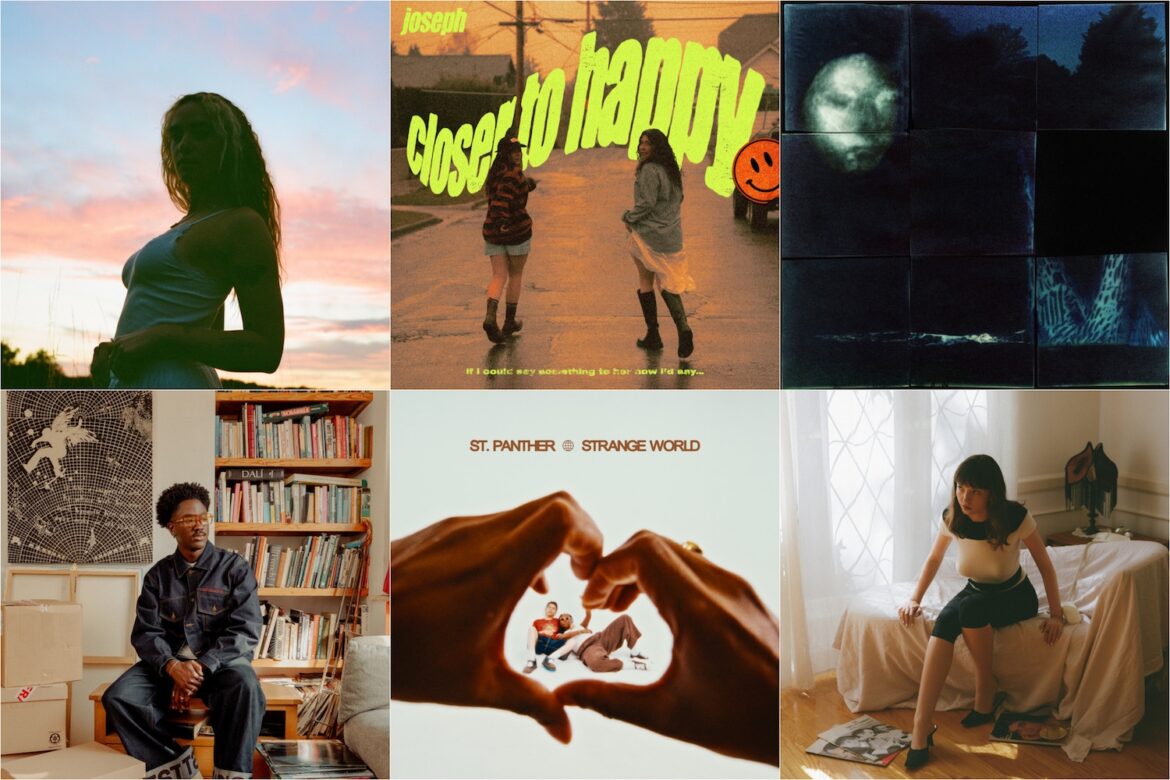
Atwood Magazine is excited to share our Editor’s Picks column, written and curated by Editor-in-Chief Mitch Mosk. Every week, Mitch will share a collection of songs, albums, and artists who have caught his ears, eyes, and heart. There is so much incredible music out there just waiting to be heard, and all it takes from us is an open mind and a willingness to listen. Through our Editor’s Picks, we hope to shine a light on our own music discoveries and showcase a diverse array of new and recent releases.
This week’s Editor’s Picks features néomí, Dove Ellis, St. Panther, JERUB, Chrissy, & JOSEPH!

 follow EDITOR’S PICKS on Spotify

“Sit Back Baby”
by néomí“Sit back baby, let it go.” It’s the kind of refrain that lands like a hand on your shoulder, soft but steady, asking you to loosen your grip on everything you are carrying. In néomí’s hands, those words become both comfort and challenge, a whispered rallying cry to stop running from the hard feelings and let them move through you instead. Wrapped in warm, fuzzy guitars and a hazy, slow-building glow, “Sit Back Baby” holds uncertainty, grief, and self-doubt up to the light without flinching, then gently invites them to rest. It is gentle and fierce, intimate and expansive, a smoldering folk-pop exhale that feels less like escape and more like a moment of hard-won peace.
It can be hard to be honest
Sometimes you just wanna play it cool
It would be easier not to do
Pretend it’s all good
It can be hard to be forgiven
Sometimes you just wanna let it slide
Isn’t it something you just might
That you just wanna try?
So you sit back baby, let it go
So you sit back baby, let it go

The emotional pulse of her recently released EP Another Year Will Pass (out October 31 via Nettwerk), “Sit Back Baby” distills the heart of néomí’s current artistic moment: Clarity through softness, bravery through vulnerability, and a renewed commitment to making space for what she feels rather than fighting it. Her latest record was shaped during a period of profound personal change, a time when the Surinamese–Dutch singer/songwriter (and former Atwood Editor’s Pick) found herself rethinking her pace, her perspective, and even her relationship to her own mind. Themes of time, surrender, and self-realignment run throughout the EP, and “Sit Back Baby” becomes the refined, immediate expression of that shift. Where other songs step back to examine years of memory, this one lives in the tiny, crucial moment where a person chooses to release instead of resist.
“It’s a song where I’m trying to convince myself it’s going to be fine,” néomí tells Atwood Magazine. “I’m telling everyone else, especially my loved ones, that it’s going to be fine. Of course, I know nothing is fine, and it will never be fine, but that’s what makes it fine. It’s a call for myself, and encouragement to others: Try to live, try to move on. If things get heavy or difficult, just sit back and let it go.”
That blend of honesty and reassurance is the pulse of the track. The guitars hum with warm, sweaty overdrive, glowing like a late-summer horizon, while néomí’s voice stays featherlight and unforced, creating a beautiful contrast between heat and hush. Her melodic phrasing feels almost conversational, circling back through the refrain until it becomes less a lyric and more a mantra. Lines like “It can be hard to be honest… it can be hard to do better” and “What means love when you can’t put your heart on the line” flicker with quiet devastation, yet the song never sinks under their weight. Instead, it glows brighter, lifting its heaviness with patience and grace.
It can be hard to do better
When you hide you will always run
Is it about all the things you’ve said
About all the things you have done
Red gaze, shoelace, run fast, make pace
And it might all go away
Remember that we just
sat on that hospital bed
And you cried, and you asked
And I laughed instead
And I said
Sit back baby, let it go
Sit back baby, let it go
Sit back baby, let it go
Sit back baby, let it go
This sense of measured release is reflected directly in how she shaped the song sonically. “I wanted the music to feel like breathing: sometimes shallow, sometimes full, sometimes shaky,” néomí shares. “There are moments where the production sits very still, almost like we’re holding a memory in our hands. And then there are little swells of sound, just enough to remind you that even in fragility, there’s movement and a sort of quiet power. To me, that was the emotional arc: starting in uncertainty, leaning into softness, and finding strength in allowing things to simply be what they are.” This breathing motion runs through the track, giving “Sit Back Baby” its sense of emotional shape rather than emotional collapse.
Such instinct, toward spaciousness and clarity, mirrors a wider transformation – a change in perspective – in how néomí has learned to move through her emotions. It is a shift that has directly influenced her music as well. After spending two years in therapy, she began to see softness not as a break in the armor, but as a form of awareness. “Therapy really softened the way I look at things,” néomí reflects. “ Before, I tended to see situations mostly from my own perspective, which is natural, I guess. But once I started talking things through, I realised how much clarity you gain when you step outside yourself a little. I learned to observe moments from different angles, to understand where other people might be coming from, and to acknowledge how much context shapes the way things feel.” That shift reshaped her writing process too. “The themes became less about ‘this happened to me’ and more about ‘this is how I’m trying to understand what happened.’ There’s something calmer in that, a gentleness that I really needed.” That tenderness is woven deeply into “Sit Back Baby,” which feels like both a reckoning and a reassurance at once.

Within the EP’s narrative, the song holds a unique position. “Another Year Will Pass looks at time in this really stretched-out way,” néomí explains, “but ‘Sit Back Baby’ focuses on the tiny moments, the few seconds you have to choose to let something go. Some things can be released in a minute if you give yourself permission.” In that sense, this track becomes a necessary counterweight to the vastness of the record’s larger themes, a reminder that the smallest decisions can shape the way we move through the world.
As she puts it, “At the core of the EP is the theme of time, as I am very fascinated about time and its infiniteness. Time is a lot of things, and if you think too much about it, you’ll go crazy. So it is also the art of just being.”
“When I started writing these songs, I was going through so much change personally, but I was also observing so much happening around me in the world,” she says. “That makes you both vulnerable and strangely resilient at the same time.” That duality is the quiet heartbeat of “Sit Back Baby,” a reminder that tenderness can be its own kind of courage; that openness can be a form of strength.
I cannot stand it
Always say it’s fine
Over and over
Time after time
What means love when
You can’t put your heart on the line
Over and over
Time after time
Sit back baby, let it go
So you sit back baby, let it go
“Sit Back Baby” is a spellbinding triumph, a song that aches beautifully without ever collapsing under its own weight. It breathes, it burns, and it invites. In its warmth and weariness, its clarity and blur, it offers a moment of relief without promising resolution, which is precisely what makes it so powerful. néomí has crafted something that feels both deeply personal and universally resonant: A gentle prompt to stop fighting the tide for just a moment and let yourself drift.
If the rest of Another Year Will Pass is about time widening and stretching, “Sit Back Baby” is the soul-stirring heartbeat at its center. It reminds us that release is a form of strength, surrender can be a form of courage, and that even in the messiest seasons, a little bit of letting go can feel like peace.
“Love Is”
by Dove EllisLove has never sounded quite as electrifying, as cinematic, or as jarring as it does in Dove Ellis’ world. What begins as a tender piano confession blooms into a feverish, bright, and jangling reverie, pulsing with urgency and ache. The Irish singer/songwriter twists and churns, letting his music spark in real time – shifting from hushed intimacy to something bold, brash, and beautifully unrestrained. “Love Is,” the latest look at his upcoming debut album Blizzard, captures Ellis at his most unguarded and impassioned, laying out love’s contradictions with breathtaking candor.
Released as part of the two-track single Love Is / Pale Song and arriving alongside the announcement of Blizzard – out December 5th via Black Butter / AMF Records – “Love Is” finds Ellis at his most direct and immediate, pairing raw, unfiltered lyricism with a propulsive, atmospheric sound. Self-produced and recorded between London and Liverpool, with mixing by Sophie Ellis and Andrew Sarlo (Big Thief, Dijon, Mk.gee, Bon Iver), the track offers a tantalizing glimpse into an album that promises to be as emotionally intense as it is sonically expansive.
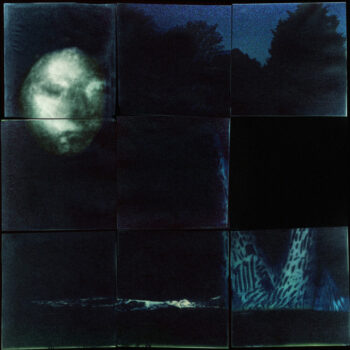
The song itself is a study in emotional escalation. Soft piano and Ellis’ tender vocal set the scene with surreal, striking imagery – “Fools are running in the square / You leapt right off the balcony” – before he drops the first shard of truth: “Love is not the antidote to all your problems.” What starts off feeling fragile and introspective quickly swells into something far more volatile. Guitars jangle and flare, the rhythm section kicks up dust, and his delivery grows increasingly feverish, as if he is willing the song – and himself – into some kind of clarity.
Fools are running in the square
You leapt right off the balcony
Cold dead palms wrap my eyes so tight
Gave me no chance to kiss you goodbye
Love is not the antidote to all your problems
Love is not the antidote to all your problems
Lyrically, “Love Is” unfolds like an emotionally charged laundry list, each line offering another facet of the same overwhelming force. Ellis alternates between declarations and negations, building a kind of call-and-response with himself. “Love is / The only matter you can call your own,” he sings, before turning to more intimate images like “The sweeping hair that is protecting your sleep tonight” and “The snow pooling around your shoes.” These tender snapshots are then undercut by clear-eyed refusals: “Love is not / Keeping it loose… Love is not / Mapped by quotations and it’s not what it seems.” Love is everything and not enough; sustaining and insufficient; miraculous and maddening, all at once.
(Love is)
The only matter you can call your own
(Love is)
The sweeping hair that is protecting your sleep tonight
(Love is)
The snow pooling around your shoes
(Love is)
A whispered smile and it’s got nothing to lose
(Love is not)
Keeping it loose
(Love is not)
What’s in your dreams
(Love is not)
Mapped by quotations
and it’s not what it seems
One of the most arresting moments comes when the song seems to cave in on itself. The energy drops, the arrangement thins, and Ellis returns, emboldened and unflinching, to repeat “Love is not the antidote to all your problems.” It feels less like a hook and more like a hard-won realization, spoken aloud so it cannot be taken back. From there, he launches into the final, breathless incantation:
(Love is)
A fatal chance
(Love is)
A mortal chance
(Love is)
Your last chance
(Love is)…
It is a breathtaking sequence – a dramatic, almost desperate litany that captures just how high the stakes of love can feel. Each repetition tightens the screws a little more, turning the phrase into both a warning and a dare.
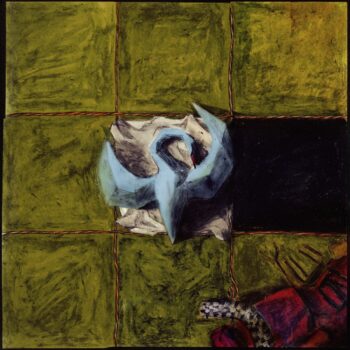
What makes “Love Is” especially compelling is how off-book it feels. Ellis doesn’t seem interested in tidy arcs or familiar structures; instead, he lets the song lurch, blaze, and unravel according to its own emotional logic. Worldbuilding and songcraft feel instinctive rather than prescribed. The track careens between intimacy and spectacle, restraint and abandon, like a mind trying to make sense of something too big to hold. It is tender and feverish, jangling and bright, bold and a little brash – and that volatility is precisely the point.
“Love Is” ultimately lands as both a reckoning and a release. It refuses to romanticize love as a cure-all, yet it never denies its power, its beauty, or its danger. In under four minutes, Ellis manages to capture the giddy rush, the looming risk, and the strange, stubborn hope that keeps us leaping anyway. As a B-side, it is almost disarmingly strong; as a glimpse into Blizzard, it suggests an artist ready to twist the familiar language of love into something sharper, stranger, and endlessly compelling. Whether you love love or merely like it as a friend, “Love Is” will blow you away.
“American Dreams”
by St. Panther“All you ever did was scroll through.” St. Panther’s words land like both an accusation and a mirror, laid over a groove so deep and seductive it practically vibrates in your chest. Soulful keys, a thick, phat bass line, and a head-nodding beat lay the groundwork as Dani Bojorges-Giraldo’s voice slides between silk and sandpaper, crooning and cutting in equal measure. “American Dreams,” the second track on their new EP Strange World, is a call to attention and a call to action – a raw reckoning with apathy, comfort, and the ways we’ve learned to look away, even as the world burns right in front of us.
Consequences of my ugly actions
Different days, different nights
Different crowds, different places,
snuck out to smoke one
Different money I’d have to make
all just to keep up
Working all week, getting no sleep
That’s just a weak front
What is your life outside of the screen?
Whole thing was made up

Out now via drink sum wtr, Strange World is described as a “defiant, genre-transforming body of work” that bridges soul, hip-hop, R&B, alt-pop, and more while confronting today’s climate of uncertainty and numbness. Across its six tracks, St. Panther traces love, community, and purpose, using lush, groove-heavy production as a vessel for hard truths and quiet hopes. “In so many lyrics and melodies, I’m using this set of songs as a method of putting certain messages into our ether,” the Los Angeles based Mexican/Colombian artist explains, adding that this music is meant to “activate people in some way to meditate about our relationship to each other, which feels like a good use for music right now.”
That mission only sharpened as the EP came into focus. “The more I was making the music, the more it feels like it’s just about our time,” they tell Atwood Magazine. “It’s resonating with people in that way that’s just so true to all of us.” As intimate as it is intensely impassioned, “American Dreams” is one of the record’s sharpest tools – a protest song you can dance to, built to slip under the skin.
The track itself is all tension and sway. A steady, unhurried beat locks in as bass and keys wrap around each other, warm and rubbery, thick enough to feel in the ribs, while St. Panther’s vocal glides over the top with casual cool and barely contained frustration. They move from low, intimate murmurs to a soaring, near-shouted hook, all without sacrificing the song’s hypnotic pocket. Even at its most furious, “American Dreams” never loses its swagger; the groove keeps you moving even as the lyrics quietly dismantle the fantasies you’ve been scrolling past.
Still when you look right up at me
I still can’t see ya
Eyes on the screen
American dreams
St. Panther begins calling it out, line by line – sketching out a life lived through screens and debt: “American lover, American debt, American greed / As long as I got all of my comforts, American things / I’m so blind on the world / I just can’t see, I just can’t see / Eyes on the screen, American dreams.” They call out the numbness and self-preservation that have become second nature, the way our devices keep us close and impossibly far from one another at the same time. The refrain “All you ever did was scroll through” lands like a verdict and a plea, repeated until it turns into a mantra – a reminder of how easy it is to witness injustice, violence, and grief in real time and keep moving as if nothing happened. “We’ve had this ability to be so not present,” they explain. “These little moments in life can really actually overarch to be a bigger thing in our culture – the numbness, the lack of connection, really.”
And even here, as the critique sharpens, the beat never lets up – that rubbery, buoyant bass and steady pulse keeping everything moving forward, giving the song a bodily momentum even when the truth it carries grows heavier.
American lover, American debt, American greed
As long as I got all of my comforts, American things
I’m so blind on the world
I just can’t see, I just can’t see
Eyes on the screen, American dreams
St. Panther is painfully clear about their intentions. “Not to make an anthem about desensitization in 2025, but the intention was to start a conversation with several generations. It’s painful to witness 50% of us or more being non-responsive towards our fellow humans in need – whoever they may be. So I wrote about where this lack of a relationship with each other began: on a screen. I highlighted the act of scrolling and how consequential it is to become another cliche ‘American Dream’ because of it, if you ignore the rest of the world to achieve it.”
“Songs like this really do help us recognize it in ourselves,” they add. “I think that was my version of unpacking it both for myself and then for what I was witnessing. I think songs like that are just as important to get us to prompt some change. Now that we can see it and we acknowledge it out in the open, what now? What next? So it’s not just a whisper.”
Is there any use in talking straight to you?
You know how the world do us
You know how the world do us like old news
All you ever did was scroll through
I know we go through it, yeah
I know we go through it, old news
Even if the planets start falling
The stars start falling
All you ever did was scroll through
That perspective comes into sharp focus in the song’s second half, where they pivot from cultural critique to something more intimate, tracing the night shifts and train rides of a trans woman just trying to survive. “Still smell a hint of cigarrillo / Her name was Amaretto / I just need a safe world for all my girls in stilettos,” they sing, pulling one story into the light as a stand-in for so many others. “I essentially put a news clipping of one of our passings in the song,” they share. “I was talking about the overarching thing for our whole world, but then focusing on one story that was personally close to me, because I’m trans as well.”
Still smell a hint of cigarrillo
Her name was Amaretto
I just need a safe world for all my girls in stilettos
Working that club line like she work a 9 to 5
We need more space
Catching eight trains
Talking out of place
Who are you to say we should die by the day?
Who’s testing your faith?
Do you got pain, got tears in your eyes?
I know you got dreams, a family that’s just like mine
The activism doesn’t end with the song, either. In the “American Dreams” music video, a QR code at the end directs viewers to resources and fundraisers supporting several Gazan families St. Panther has built relationships with online – a small but tangible way of turning attention into aid, and of reminding listeners that connection through a screen can be more than passive consumption. “I just try to engage other people too,” they say. “I don’t know, just try to have relationships with people outside of the US. There is so much culture and friendship to enjoy, truly.” It’s a clean through-line from theme to action: If you’re going to look, really look. If you’re going to listen, really listen. And if you’re moved, do something with that feeling.
“American Dreams” sits near the start of Strange World, but it feels like one of the project’s core pillars, a spark that illuminates everything around it. “I think the overarching hope is, I want this strange world and these hard times to change,” St. Panther shares. “And change always starts with yourself.” Where the title track later offers the mantra “We’re living in such a strange world… but I’m still rooting for us,” this song shows exactly what we’re up against – the lure of comfort, the pull of individualism, the ease of tuning out. Soulful and seductive, yet bracingly direct, it captures the EP’s blend of groove and gravity: Music that feels good in the body and refuses to let the mind off the hook. It leaves you buzzing – not just from the bassline, but from the truth of it. In a time when it’s never been easier to disappear into an endless feed, St. Panther’s “American Dreams” is a shaking of the shoulders, a gentle shove, a bass-heavy reminder to look up and out – and to remember who, and what, you’re scrolling past.
All you ever did was
All you ever did was scroll through
“Kumbaya”
by JERUB“They got me singin’ Kumbaya, but I don’t know what it means…” JERUB turns a well-worn word into something raw and revelatory on “Kumbaya,” a spirited, stomping folk rock anthem that burns from the inside out. What starts as a lonely night prayer quickly swells into a full-bodied, beat-and-clap catharsis, his smoldering voice rising over drums, handclaps, and soaring melody as if he is wrestling with heaven in real time. It is bold and breathless, feverish and uplifting all at once – a rousing, radiant reverie that holds doubt and devotion in the same outstretched hands.
Rain fallin’ on a lonely night
Just waitin’ on the sun to rise (mmm)
Come mornin’ and my tears are dry
Still prayin’ it will be alright (mmm)
I’m supposed to stay strong
Heaven knows, I try
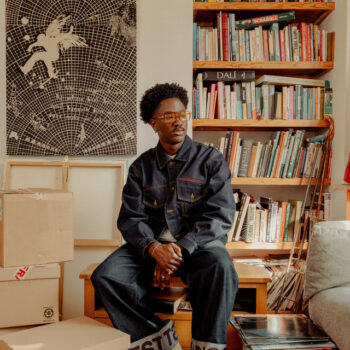
“Kumbaya” arrives as a standout single off The Wonder Years, JERUB’s new seven-track mixtape and his most ambitious project yet, pairing fan favourites “Let It Go” and “Deeper” with fresh cuts that lean into vulnerability, presence, and emotional release. Across these songs, the Nottingham-based artist embraces what he calls “the messy, complicated now,” tracing that tug-of-war between nostalgia for the past, anxiety about the future, and the fragile beauty of the present moment. The result is a warm, unfiltered body of work that feels as immediate and connected as his live shows, where every feeling is out in the open.
They got me singin’ Kumbaya,
but I don’t know what it means
‘Cause I’ve been to the moon and back,
but I still can’t find release
Now every time I close my eyes,
it’s so clear to see
Where you are is where I wanna be
Where you are is where I wanna be
Sonically, “Kumbaya” taps straight into the stomp-clap tradition that has defined so much of modern folk rock, but JERUB makes it feel like his own revival. A steady, pulsing beat and bright, chiming chords lay the foundation as his vocal moves from hushed confession to full-throated cry, every line edged with grit and longing. The song builds in waves: verses that sit low and intimate, a pre-chorus that tightens like a held breath, then a chorus that explodes into communal release. By the time the drums are thundering and the claps are cracking like sparks, “Kumbaya” feels less like a studio track and more like a field of voices lit up under an open sky.
Lyrically, it lives exactly where he says it does – in “that fragile space between hope and uncertainty.” “They got me singin’ Kumbaya, but I don’t know what it means / ’Cause I’ve been to the moon and back, but I still can’t find release,” he sings, capturing the ache of someone who has tried everything and still feels the weight on their chest. The word itself, as he notes, comes from “come by here” – once a spiritual, a plea for comfort, now softened into cliché – and the song leans into that tension. “Kumbaya lives in that fragile space between hope and uncertainty,” JERUB explains. “The word itself comes from ‘come by here,’ which was once a spiritual, a prayer for comfort, but over time it’s become a bit of a cliché. That’s what the song explores for me: what it feels like to keep holding on to hope, even when it feels distant or quiet.” At its core, he says, “it’s a song about faith and searching… a quiet prayer, a love song, and a reflection all at once.”
Water flows to the lowest place
I’m holding on ’til I see your face
No colours, only shades of grey
My heart’s calling for a warm embrace
I’m supposed to stay strong
Heaven knows I try
Even as the verses sit in grayscale – “Rain fallin’ on a lonely night… No colours, only shades of grey” – the chorus keeps pulling toward the light: “Where you are is where I wanna be.” That repeated line turns the song into a kind of pilgrimage, a journey toward presence, toward love, toward the “you” that makes the world make sense again. When he pleads, “Whatever happens, I want you to promise / You’ll hold me close and don’t let go,” it feels like the emotional crux of the entire track: the moment where private prayer becomes shared need, where the stomp-clap anthem reveals the vulnerability beating underneath.
They got me singin’ Kumbaya,
but I don’t know what it means
‘Cause I’ve been to the moon and back,
but I still can’t find release
Now every time I close my eyes,
it’s so clear to see
Where you are is where I wanna be
Oh, where you are is where I wanna be
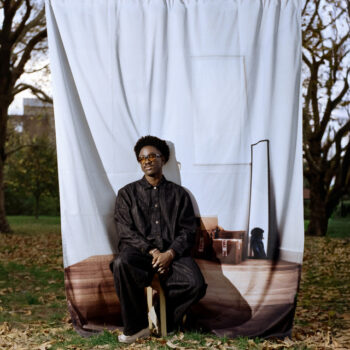
In the wider story of The Wonder Years, “Kumbaya” feels like both a centerpiece and a compass. The mixtape, JERUB says, was born out of an ordinary moment on the phone with the tax man that spiralled into thoughts about how often we live anywhere but the present, either missing what was or longing for what might be. These songs “sit in that space between presence and curiosity,” allowing room to question, to not have it all figured out, and to recognise that maybe these are the wonder years – not behind or ahead, but happening right now in all their imperfect glory. “Kumbaya” channels that idea into something you can shout back at the speakers, a stomp-clap spiritual for people still figuring out what they believe.
Whatever happens, I want you to promise
You’ll hold me close and don’t let go, no, no
Whatever happens, I want you to promise
You’ll hold me close and don’t let go
Folk-textured yet stadium-ready, intimate yet explosive, “Kumbaya” is JERUB at his most open and electrifying. It turns doubt into something holy, restlessness into motion, and an old campfire chorus into a deeply personal cry for connection. Whether you come to it for the rush, the release, or the quiet prayer at its center, this song lands like a spark in the chest – a reminder that even in the loneliest nights, there is power in calling out, and in believing that someone, somewhere, might still come by here.
They got me singin’ Kumbaya,
but I don’t know what it means
‘Cause I’ve been to the moon and back,
but I still can’t find release
Now every time I close my eyes,
it’s so clear to see
Where you are is where I wanna be
Oh, where you are is where I wanna be
“Sore”
by ChrissyThere’s a softness to Chrissy’s ache, a kind of weightless burn that glows rather than scars, drifting through the air like something half-remembered and wholly felt. Her spellbinding song “Sore” moves with that quiet, radiant tension: Tender but smoldering, dreamy but raw, sung in a voice that hits like a bruise you keep pressing just to feel alive again. Over swirling, lightly crackling production, she turns heartbreak into something featherlight and luminous, letting pain dissolve into possibility one breath at a time.
From that haze rises the line that anchors the whole song: “Nothing hurts anymore, it’s just a little bit sore.” It lands not as denial, but as recognition. It’s the moment you realize you’re healing even while it still stings, that the wound didn’t break you so much as bend you toward something new. “Sore” sits in that space between fear and openness, between what hurt and what might come next, holding both with gentle, unflinching grace.

I’m a critter, creepy crawling,
under your skin
Call it what you want
Maybe crazy, sometimes baby,
when you touch me
There’s a garden growing inside of me
Open me up and I won’t bleed
Nothing hurts anymore
It’s just a little bit sore
Out now as part of her new EP Slight Turn, the song captures the project’s central idea: That change often begins quietly, in tiny shifts that accumulate until one morning you wake up and realize you’ve become someone braver, calmer, or simply more yourself. “‘Slight Turn’ as a title is referring to one of the many little shifts that have to happen over time that domino into great change,” Chrissy explains. “I think ‘Sore’ is the realization and liberation that comes with waking up one morning and saying ‘wow, my life is so different than it was last year.’”
The track’s sound mirrors that transformation. A dreamy, lightly pulsing groove sets the foundation while Chrissy’s voice glows at the center – smoky, intimate, and aching with honesty. She moves between whispered vulnerability and quiet strength, her melodies floating over warm synths and soft, swirling textures that shimmer with restraint. Even at its most emotionally charged, the song feels weightless, as if suspended in the exact moment before release.
I’m a storm over the city
while you watch me from the window
You’re inspired by the shitty weather
And when the wind blows
You open up your arms to the sky
You’ve never felt more alive
Nothing hurts anymore
It’s just a little bit sore
It’s just a little bit sore
It’s not broken anymore
Lyrically, “Sore” is a reckoning with the fear of loving again after loss. “I was really scared to love again after having my heart broken,” she shares. “There was grief and guilt as well as mourning of a past self that came with opening up my heart again… as well as all of the other amazing things that outweigh the bad, which is why we do it anyway.” That duality shapes every verse: the trembling hesitance of past hurt, the slow return of trust, the quiet wonder of discovering you’re still capable of feeling deeply.
The song’s central image – “There’s a garden growing inside of me / open me up and I won’t bleed” – captures that transformation beautifully. It’s rebirth without fanfare, growth without spectacle. The pain isn’t gone; it’s simply softened, reshaped into something you can hold without fear. As Chrissy puts it: “Acknowledging that you can be simultaneously affected by your past but still love with an open heart.”

Across Slight Turn, that theme repeats in different forms: Acceptance, curiosity, self-understanding, and the small realizations that gently pull us forward. “I think I was personally in a place where acceptance was the only option,” she reflects. “I think it’s really just a testament to where I was at.” The EP marks a turning point for her – a step toward adulthood, clarity, and artistic self-definition. “In my discography I do think it is a marker of my growth in the sense that I can hear more of a woman singing rather than a girl,” she shares. “I will probably laugh about that in 5 years.”
I have fear from my past lovers
You have all the patience for
There’s a voice inside my head
that wants to make my problems yours
My heart’s not broken
I was convinced
Turns out it’s only broken in
Nothing hurts anymore
It’s just a little bit sore
It’s just a little bit sore
It’s just a little bit sore
But it’s not broken anymore
It’s just a little bit sore
“Sore” stands as one of the EP’s deepest emotional wells: A song that aches lightly, glows softly, and moves with the warmth of someone learning to trust themselves again. It is tender without collapsing, vulnerable without breaking, quietly triumphant in the way healing often is. Chrissy’s gift is her ability to make heavy feelings feel buoyant – to write songs that drift like secrets and settle like truths.
In “Sore,” she offers a small but powerful reminder: You can be changed without being shattered. You can hurt and still move forward. You can be “just a little bit sore,” and still be ready – slowly, bravely – to open your heart again.
“Closer to Me”
by JOSEPHThere’s a spark that hits before JOSEPH’s song even settles, a bright, feverish ignition that feels like touching a live wire. “Closer to Me” erupts with urgent guitars and a full-bodied rush of motion, the kind of electric current that snaps through the air and sends your pulse racing to match it. JOSEPH channel a raw, volatile energy here, a dynamic fury made of harmony, hunger, and heat. It is exhilarating and kinetic, a spirited flurry of feeling that surges forward with enough force to make your hair stand on end. Beneath that voltage lives the song’s beating heart: Meegan Closner searching for softness and self-compassion in the middle of chronic pain, writing something she could wake up to on her hardest mornings, something that might remind her she is safe and worth caring for.
Wake up alone
First thing
Can I bring myself to say I love you
Out loud
I love you
Put my hand on my heart
Breathe in
Even though I know nothing’s okay
I’m here
It’s safe
Even if I don’t mean it
Say that I care
Show that I care

Released November 5th via Nettwerk Music Group, “Closer to Me” arrives ahead of JOSEPH’s new album Closer to Happy (out January 30th), their first full-length since the departure of sister and co-founder Allison Closner. This new era finds Natalie and Meegan stepping into a bolder, guitar-forward sound, co-producing for the first time alongside Luke Niccoli to match what they describe as a more honest, unguarded, alive version of themselves. “We are today a more free, open, and honest version of ourselves,” Meegan reflects. “Sometimes the hardest decision to make that feels like it may end everything actually creates room for new beginnings and fresh perspectives.” That sense of rebirth pulses through “Closer to Me,” a song that feels both jagged and tender, eruptive and intimate.
I just wanna know what you want
What do you want?
I wanna be sweet to you, darling
So tell me, tell me
What it is
I’m listening
Come on
Get closer to me
I wanna be closer to me
The track hits hard from the jump. Urgent guitars snap into motion, the tempo pushing forward like a heartbeat skipping into overdrive. There is a physicality to the arrangement, a churn of rhythm and harmony that mirrors the emotional shockwaves running beneath the lyrics. Meegan’s voice is radiant and raw, soaring above the distortion with a power that feels both vulnerable and unbreakable. She is pleading, steadying, anchoring, clawing her way toward a gentler way of being. Lines like “Put my hand on my heart, breathe in… even if I don’t mean it, say that I care” hit with seismic force, landing somewhere between a mantra and a survival mechanism.
This is where the emotional architecture of the song reveals itself. “In my body’s experience of chronic pain, while it is obviously physical, a large part of the journey is mental,” Meegan shares. “I needed something that reminded me to be gentle with myself, put my hand on my heart and know that I’m safe.” Writing “Closer to Me” became an act of self-rescue, a way of breaking through shame, confusion, and exhaustion long enough to remember she deserved tenderness. “I wanted to write a song that would help me wake up on mornings where my body is experiencing pain and shift my mindset towards loving and nurturing myself and move it away from self-hatred and shaming myself for not having answers for why my body feels the way that it does… [So] we wrote a song for those mornings. It is raging but also gentle. It is urgent while also heartfelt.”
That duality is what makes “Closer to Me” so gripping. The song feels like a collision of adrenaline and ache, a burst of lightning tearing through fog. The guitars roar, the drums drive forward, and Meegan sings like she is holding on to herself with both hands. Yet inside all that fire is a quiet plea for understanding: “I just wanna know what you want… I wanna be sweet to you, darling.” It is self-compassion refracted through the desire to show up fully for someone else, even while learning how to show up for yourself.
This is urgent
Listen
Everybody needs understanding
I need understanding
I know it hurts
I’m trying
I know I can ride through the shockwaves
I know this pain
It’ll be okay
Even if I don’t mean it
Say that I care
Show that I care
Even if I don’t mean it yet
Say that I care
Show that I care
Writing the track helped shift something fundamental for her. “I have gained so much love and understanding by letting my close friends and family in and asking for help,” she says. “Writing this song was magic. It was one of those songs that feels like it was already written and you just had to be a vehicle to let it have sound. And in turn, it gave sound to a part of me.” That revelation reverberates through every moment of the track, especially its climax, where the repetition of “Get closer to me” transforms from yearning into something like self-acceptance.
“Closer to Me” crystallizes what makes this new chapter of JOSEPH so electrifying. As a standalone release, it’s striking. As a taste of what Closer to Happy promises, it’s electrifying. JOSEPH are at their boldest and brightest, channeling upheaval into momentum, pain into propulsion, and yearning into something with teeth. “Closer to Me” does not just make you feel something; it makes you feel awake, shaken into attention by its blaze of guitars, its thundering pulse, and its rush of blood and honesty.
It’s the sound of motion, of truth breaking loose, of a band stepping into a new era with voltage running through every note. And once it hits, there is no going back.
I just wanna know what you want
What do you want?
I wanna be sweet to you, darling
So tell me, tell me
What it is
I’m listening
Come on
Get closer to me
I wanna be closer to me
— — — —

Connect to us on
Facebook, Twitter, Instagram
Discover new music on Atwood Magazine
Editor’s Picks
follow EDITOR’S PICKS on Spotify