Atwood Magazine is excited to share our Editor’s Picks column, written and curated by Editor-in-Chief Mitch Mosk. Every week, Mitch will share a collection of songs, albums, and artists who have caught his ears, eyes, and heart. There is so much incredible music out there just waiting to be heard, and all it takes from us is an open mind and a willingness to listen. Through our Editor’s Picks, we hope to shine a light on our own music discoveries and showcase a diverse array of new and recent releases.
This week’s Editor’s Picks features James Smith, Fenne Lily, Rowena Wise, Alex Izenberg, Essence Martins, and The Army, The Navy!

 follow EDITOR’S PICKS on Spotify

Golden Age
by James SmithYour twenties are supposed to glitter. They’re sold as the years of freedom, momentum, romance, risk, and arrival – the shining stretch where life opens up and every dream still feels close enough to touch. James Smith’s Golden Age knows better. The East London singer/songwriter’s breathtaking sophomore album lives inside the cruel irony of those years: Rent is high, money is hard, love is fragile, grief arrives without warning, and the pressure to become the person you imagined can make even the brightest days feel black-and-white.
“How am I supposed to live / when I’m barely getting by / in the golden age,” he sings on the title track, distilling the album’s ache into a line that lands like a confession and a generational gut-punch. Warm, soulful, smoldering, and startlingly alive, Golden Age is a triumph of old-school craft and modern emotional clarity – easily one of the year’s finest releases, and the sound of an artist stepping fully into the music he was born to make.
Out now, Golden Age follows Smith’s 2024 debut Common People and arrives as his first fully independent album – a ten-song collection written, produced, and mixed by Smith himself. In conversation with Atwood Magazine, he describes himself not as an artist chasing a genre, but as “a songs guy,” a lover of songwriting whose second album “goes down a lot of different roads.” That range is the record’s lifeblood: “Electric Eyes” opens with swaggering Britpop hunger and social-media disillusionment; “For You, My Love” reckons with trust, devotion, and repair; “Silver Spoon in My Cup” cuts into class with wit and bluesy bite; “Jesus Is A Woman” brings neon-lit Soho heat into the room; “Dancing With You (Baby)” glows with lovesick memory; and “Chianti” closes the door with laughter, warmth, and a bottle of wine waiting to be shared. Through it all, Smith sounds timeless without sounding trapped in the past – a craftsman with one foot in the golden eras of rock, soul, blues, and singer/songwriter tradition, and the other firmly planted in his own life.
“Golden Age is named after one of the tracks on the album, which sort of sums up the time in which I’ve written this album, which has sort of been like my mid twenties,” Smith explains. “These years should be the best years of my life, but I’m so stressed about money and work and trying to make it as a musician that I can’t really enjoy myself.”
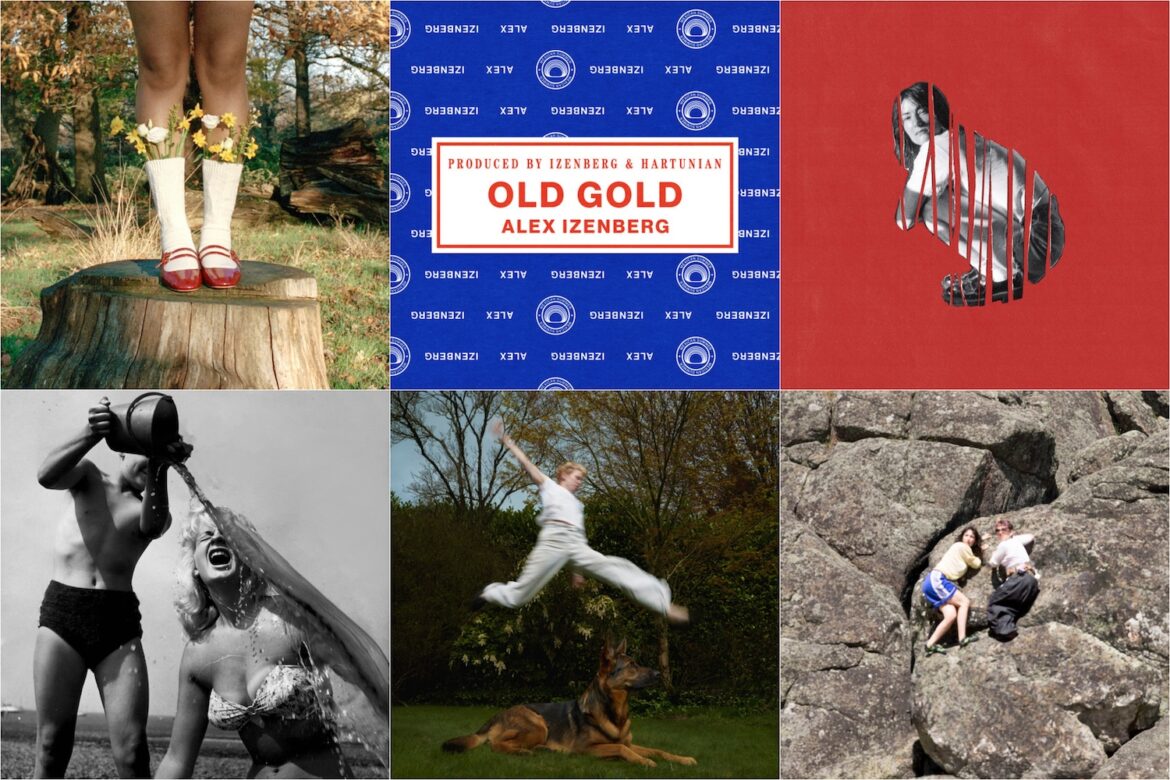
That tension – youth as promise, youth as pressure – shapes the whole record. Smith found the album cover in a photograph of his great aunt and great uncle, who were around his age when the image was taken; to him, it carried a Marilyn Monroe, Gatsby-era glow, an old-world shine that made the title click. But the music itself is never frozen in nostalgia. Golden Age feels lived, labored over, and deeply present: A record about making art while broke, trying to love well while life keeps pulling at the seams, and learning that the dream doesn’t always feel like the dream while you’re inside it. Smith says his vision was simple – to “make some music that you would enjoy listening to if you was just a punter” – and that self-trust gives the album its ease, its spark, and its emotional punch.
If Golden Age has a beating heart, “My Angels” is where it glows brightest. A soulful, sweet, tender, and stirring highlight, the album’s fifth track finds Smith at his most exposed, calling out through grief, shame, loneliness, and self-loss in search of a way back to himself. The song begins with absence – Since you been up and gone / I’ve tried to settle down / Paint a big smile on my face / pick my feet up off the ground – and immediately frames grief as performance: The smile painted on, the body trying to move, the spirit lagging behind. By the time he admits, Don’t know where I went wrong / but I’ve lost myself this time, the song has already opened a wound wide enough to walk through.
And so I call
On my angels
It’s been a long old winding road
And so I call
On my angels
To help me find my way back home
Smith’s voice is dynamite here – expressive, soulful, and impossibly human, rising from a place of bruised humility into a chorus that feels instantly classic. “My Angels” began as a piano ballad, but on Golden Age, it blooms into a full-bodied spiritual plea: Organ warmth, gospel-tinted backing vocals, bluesy gravity, and that lived-in vocal ache Smith carries so naturally. He doesn’t sing grief as an abstract feeling; he sings it as a body in the room, shoulders heavy, glass in hand, trying not to collapse under the weight of memory. I feel so f***ing weak / ain’t got no self control / I’m confiding in a couple of pints / ‘cause it seems like all of my friends have gone, he sings, refusing to romanticize the uglier edges of mourning. The result is devastating because it’s honest – and healing because it dares to ask for help.
“‘My Angels’ is probably my favourite song I’ve written,” Smith shares. “It just started off as a piano ballad… it was just mainly focused on the song, but then when I took it in with the band, it felt like maybe a bit cooler to produce it up a little bit.”
“With that one, I wrote it about my granddad who passed, and he was like a bit of a father figure to me,” he continues. “When he did die, I just became like a total loser… not that I’ve ever had a drinking problem, but I felt like, at that time, I could’ve, because I’d just sit down the pub on my own, and just get absolutely smashed. Because I was just so, so sad, and I quickly got out of that, but I did feel like a lot of shame about that period. About how I dealt with my grief.”
That shame is part of what makes “My Angels” feel so powerful. Smith isn’t writing from the clean side of loss, with lessons learned and wounds neatly sealed; he’s writing from the place where grief has made him unrecognizable to himself. The song’s bridge becomes a kind of prayer for strength through inheritance: ‘Cause with ‘em on my shoulders I know I’ll be strong / with ‘em on my shoulders I know I’ll be strong. It’s a beautiful image – the dead not disappearing, but becoming part of the body’s architecture, carried in muscle memory, conscience, voice, and song. Then comes that luminous outro, Shine your light / shine your light / shine your light over me, repeated until it feels less like a lyric than a ritual. Smith originally pushed the ending toward something even bigger, with a choir and a sweeping “Hey Jude”-like scale, before pulling it back. The restraint serves him. “My Angels” doesn’t need to tower to feel transcendent; it already does.
That’s the wonder of Golden Age: Its most intimate moments make the whole album feel larger. “Dancing With You (Baby),” the song that opened this era almost a year ago, still stands as one of Smith’s defining achievements – a timeless, lovesick reverie of kitchen-floor romance, summer memory, and aching distance. Its warm lead guitar line helped set the tone for the record’s old-school soul, and Smith says choosing it first was an act of faith, especially when others around him didn’t quite hear what he heard. “I really loved it,” he says. “It maybe the fastest song I’ve ever written… picked up the guitar, had the chords, sung the whole chorus pretty much straight away.” That ease radiates through the final version: A song that sounds effortless because the feeling was ready to arrive.
“Chianti,” meanwhile, sends Golden Age off with its arms open. Written in Italy with Smith’s partner, the album closer turns a dusty bottle of wine into a philosophy of living: Stop waiting for the perfect moment; open the bottle; celebrate while you’re still here. There’s a chianti bottle on my kitchen table / she’s gathering dust ‘cause I’m waiting for the perfect time, he sings, before the song loosens into a communal, wine-warmed refrain: Don’t you think that it’s time that we open that bottle of wine. After an album full of stress, longing, grief, class frustration, romantic memory, and self-discovery, “Chianti” feels like a hand on the shoulder and a glass raised in the air – a reminder that life doesn’t begin when everything finally makes sense. It’s already happening.
“I think, actually, life is about the now,” Smith says of “Chianti.” “You need to stop waiting for everything to just make sense… we’ve got so much to celebrate every single day, and we need to chill out and stop waiting for our dreams to come true, because we’re doing them.”
That realization is the golden thread running through the album. Golden Age begins in angst and pressure, opens into heartbreak and grief, dances through desire and memory, and ends in love – not perfect love, not easy love, but lived love: The kind you pour, share, sing, and keep choosing. Smith says the record made him feel like “an artist, a proper artist” for the first time, and you can hear that self-recognition in every guitar line, every drum hit, every vocal crack, every soulful swell. He wanted to make an album people could live with from front to back – “it’s just albums now,” he says, echoing the belief that Album is God – and with Golden Age, he’s done exactly that. This is a no-skips record in the truest sense: Rich with feeling, full of life, and built to last.
James Smith may call this his Golden Age, but the title’s brilliance lies in its contradiction. These songs know that the best years can still hurt, that dreams can still exhaust you, that grief can knock you sideways, and that love can look like both a kitchen dance and an unopened bottle waiting for the right night. Through it all, Smith sings like someone carrying the past on his shoulders and stepping forward anyway – strong, soulful, and lit from within. On “My Angels,” he asks for help finding his way back home. Across Golden Age, he finds it: In songs, in memory, in love, in craft, in the light that keeps shining over him.
“Uh Huh”
by Fenne LilyHeartbreak doesn’t always leave cleanly. Sometimes it follows you across coasts, through apartments and heatwaves, into new rooms and new love, softening with time but never quite disappearing. Fenne Lily’s “Uh Huh” inhabits that tender afterlife – the strange, aching space where one love has ended, another has begun, and the body is still learning how to believe in safety again.
Released June 2nd, the lead single off her forthcoming fourth album Win Win is beautiful, brutal, and wonderfully alive all at once: A dreamy, country-kissed indie folk reverie full of warm, sunlit sonics, hushed vocals, and lyrics so plainspoken they send feeling shooting straight through the chest. “Does it hurt to talk about it? Uh huh / ‘cause you never thought to doubt it? Uh huh,” she sings, turning the smallest sound of affirmation into a whole emotional weather system – exhaustion, recognition, resignation, and the faintest flicker of a smile.

Home from California
looking like the hell you’ve seen
You only brought the clothes you’re in
And she missed you and you’re older
And you’re back laid on her shoulder
Talking about love again
Out October 23, Win Win marks Fenne Lily’s first album since 2023’s Big Picture, as well as her first release for Nettwerk Music Group. Written and recorded after her move from England to New York, the record began in the wake of an unexpected breakup, a crisis of confidence, and the untethered shock of trying to find herself in a city that could feel too large, too loud, and too unforgiving. Across its ten songs, Lily turns that vacuum of loss, loneliness, and self-doubt into a body of work rooted in self-preservation, rediscovery, and emotional openness – a record she describes, simply and beautifully, as music that sounded like the sun was out.
That light matters because it has been hard-won. Lily has been writing songs since she was 14, and while her influences, collaborators, and surroundings have shifted with time – from Bristol to Chicago, North Carolina to Brooklyn – her core impulse has remained the same: She writes to understand what’s happening inside her. “I write when I’m trying to figure something out,” Lily tells Atwood Magazine. “Luckily for me, I’ve had a lot of breakups and that has been most of the fuel behind my writing.” She laughs at the pattern, but there’s a deep seriousness beneath it, too. “The music is the softest part of me,” she says – and that softness, in her hands, is not fragility so much as truth given room to breathe.
“Uh Huh” began in Beacon, New York, after a swim with friends, instruments set up in the living room, and a joke-song premise built around claims and tiny nods of agreement. Back home, the chorus kept calling to her. What had started as play revealed itself as the missing piece of a much larger story: A song about falling in love again while the last love still hurt, about moving from pain and dissolution onto steadier ground without pretending the pain had vanished. “It really is like the clearest description of moving from pain and dissolution onto more stable ground while still recognizing that if you’re hurt in the way that I was hurt, that I know other people have been hurt, it never really goes away,” Lily reflects. “But it becomes less of a big deal. It’s like a shrug and a wink of a song.”
That shrug is everywhere in “Uh Huh,” but so is the wound beneath it. Lily’s delivery is gentle and conversational, her voice close to the ear and warm around the edges, while the music moves with a quiet steadiness that feels both sweet and sure of itself. Acoustic textures glow, the rhythm sits upright and purposeful, and the arrangement carries a soft country tint – “British country music,” as Lily calls it – without losing the murmured intimacy that has long made her songwriting feel so disarming. She wanted the song “to be solid, sound strong and sure of itself,” and it does: Not loud, not armored, but sturdy enough to hold an old hurt without collapsing around it.
You say it’s nothing like the last time
Think I found the real thing
If I only have this one life
It should take the shape I’m in
He just wanted to surround me
I just wanted to believe when he said
“Every time my heart broke
it was leading you to me”
At the song’s center is that luminous line: If I only have this one life / it should take the shape I’m in. It sounds simple until it hits, and then it feels enormous – a declaration of self-acceptance from someone surprised to realize she means it. Lily has said the line proved to her how much had changed, how far she had moved from the panic and sadness that came before. In our conversation, she described returning from California with barely any of her things after being broken up with over the phone, immediately calling the friend who would hold her through the aftermath, and dissolving into a kind of grief so physical it changed how she moved through the world. “I came back and completely dissolved into panic and sadness,” she says. “But with the drum beat that we have on this track, with how kind of strident and purposeful it sounds, I guess people probably wouldn’t picture the reality of it. But I love a story song.”
The story keeps shifting perspective – first person, third person, self-address, conversation – until “Uh Huh” feels like Lily sitting beside her past self, asking the questions that don’t need explaining anymore. Does it hurt to think about it? Uh huh / ‘cause you really thought you’d found it? Uh huh. That refrain cuts because “uh huh” is barely language, and yet here it says everything: Yes, it hurt. Yes, it still does. Yes, I know. Yes, I am tired of saying it out loud. Lily connects it to the kind of care that arrives when someone trusted can name the feeling for you, sparing you the labor of explaining yourself one more time. “When you’re so tired of explaining how sad something has made you, how useless something has made you feel, and you’re talking to someone you trust and who understands, and they are positing ideas about how you feel so you don’t have to describe it anymore,” she says. “The least effort response is… like a primal grunt of affirmation.”
That emotional economy gives “Uh Huh” its ache, but its warmth comes from the people in the room. Lily wrote alone, as she always has, but Win Win opened the process up more than ever before, bringing longtime English bandmates and New York collaborators into music born from isolation. “I always make everything I’m making with my friends,” she says. “I write alone and record with my friends.” That communal texture can be felt in the single’s living pulse: The song sounds delicate, but never solitary; raw, but carefully held. It’s one of those rare breakup songs that does not make pain the only point. Instead, it lets pain become part of a wider landscape – friendship, new love, summer heat, Brooklyn rooms, the body remembering how to stand upright again.
How I see it, it’s a lonely life
without this kind of
Time doesn’t heal
everything but it tries
That line may be “Uh Huh” in miniature: Clear-eyed, funny in its bluntness, deeply wise without making a show of itself. Time doesn’t fix the break, exactly, but it does something. It tries. And so does Lily. By the final verse, love is no longer a fall so much as a climb – difficult, deliberate, worth the bruises it may leave behind. The last time you have it, it won’t kill you / You still wanna do this? Uh huh. It’s a devastating little victory: Not innocence restored, but courage returning with a limp and a grin.
Lily hopes listening to “Uh Huh” feels “peaceful and joyful,” even if the space it came from was anything but. She talks about wanting the song to become part of someone’s “roster of safe songs,” the kind of track you return to without having to decide what you need from it. That feels right. “Uh Huh” doesn’t demand a grand catharsis; it offers recognition, warmth, and a place to rest inside the unfinished work of healing. As the first light from Win Win, it finds Fenne Lily bruised but not broken, tender but not adrift, moving through heartbreak with candor, dry humor, and a voice that makes even the smallest words feel like they have weathered whole lives. Beautiful, brutal, and glowing with hard-won grace, “Uh Huh” is the sound of love hurting, changing shape, and somehow still being worth the climb.
Will it hurt to think about it? Uh huh
And you’ll never wanna doubt it? Uh huh
The last time you have it, it won’t kill you
You still wanna do this? Uh huhnext up
“Blood Ties”
by Rowena WiseFamily love can fail most painfully when it has no language – when the people bound closest to us have been taught to offer duty in place of tenderness, endurance in place of admission. A parent can love fiercely and still freeze before another person’s pain, reaching for old scripts when the moment asks them to step closer.
Rowena Wise’s searing, soul-stirring “Blood Ties” confronts the inherited silence that leaves people stranded from one another in their most desperate hours – a father unable to meet his son’s mental health crisis with openness because no one ever taught him how to name his own pain. Smoldering, gritty, achingly expressive, and emotionally unguarded, the Naarm/Melbourne artist’s first solo single in two years charges forward on crackling guitars, a restrained but powerful groove, and a vocal performance that feels instantly unforgettable: Warm at the edges, raw at the center, and clear-eyed enough to stare straight into the hurt. This is a song about the harm passed down through emotional avoidance – not as cruelty, but as conditioning – and the courage it takes to break that cycle by finally speaking.
He walked along the driveway
You played upon the porch
Running along the gravel
as his car was taking off
A father that didn’t hold you
When leaving or coming home
And so you were raised believing
You should dry your eyes alone
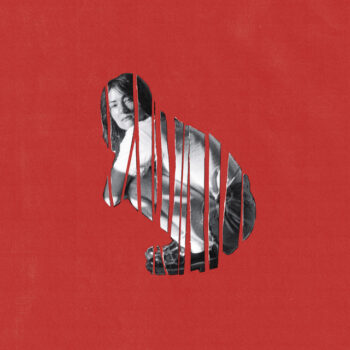
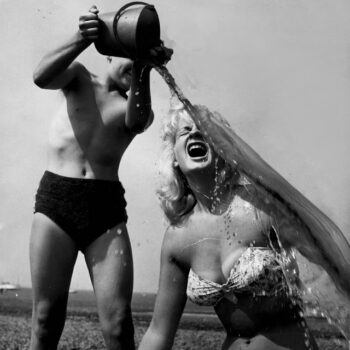
Out now via Beloved Records / Remote Control Records, “Blood Ties” opens the door to Wise’s forthcoming sophomore album Bad Things Feel Good*, out August 7 via 22Twenty / Beloved Records. Raised in Margaret River, Western Australia by a luthier father and a Chicago-born folk musician mother, Wise comes to songwriting through a deep lineage of craft and storytelling – trad folk roots, poetic lyricism, and a band-driven indie canvas shaped by years of touring and live collaboration. Her 2024 debut album Senseless Acts of Beauty was a spiritual milestone, a record born from heartbreak, trauma, and the beginning of a long inner reckoning. Now, Bad Things Feel Good* pushes into thornier emotional terrain: family dysfunction, mental health, self-abandonment, complex intimacy, and the messy, unclean work of becoming.
“I am a storyteller at heart,” Wise tells Atwood Magazine. “I come from a trad folk background, which I think colours my style of poetic lyricism over a band-driven indie pop canvas. I write songs about unravelling, love, loss and selfhood, songs that sound like a close friend whispering into your ear. I want to connect with people through music, as a means of consoling, witnessing, reflecting what people didn’t realise they already felt.”
When your own son was broken
When his life was down the drain
Your only advice that one
has gotta suffer for to gain
That gift for witnessing cuts through every second of “Blood Ties.” Wise sings from the charged space between accusation and empathy, addressing the father directly while refusing to flatten him into a villain. The song’s force comes from its understanding that love alone is not always enough. A parent can care deeply and still fail to show up; a family can be bound by blood and still choked by silence. When your own son was broken / when his life was down the drain / your only advice that one has gotta suffer for to gain, she sings, and the line lands like a generational wound: Pain offered as proof of character, suffering mistaken for strength, endurance confused with healing.
You’ve got blood ties
stuffed in your mouth
Won’t let the truth come tumbling out
About the black sheep running around
It was always you
“I wrote ‘Blood Ties’ after a close friend experienced a mental health crisis,” Wise shares. “In the aftermath, I watched his father struggle to respond – not because he didn’t love his son, but because he didn’t know how to meet him emotionally. He had grown up in a culture that taught men to suppress their feelings, to equate strength with silence, and to see vulnerability as weakness. When faced with his son’s pain, he simply didn’t have the tools to step into it with him.”
“At its heart, ‘Blood Ties’ is about how essential vulnerability is within the relationships that matter most,” she continues. “Loving someone isn’t just about providing or protecting – it’s about being willing to sit in discomfort, to speak openly, and to let yourself be seen. When we can’t do that, even the deepest love can feel distant.”
The music understands that distance. “Blood Ties” never explodes for the sake of spectacle; it churns, tightens, and bears down, letting its restraint make every line hit harder. Guitars scrape and shimmer with warm, crackly energy, the rhythm section keeps a steady pressure underfoot, and Wise’s voice carries the song’s full moral weight – aching, commanding, and beautifully unguarded. She has called it “a killer band-driven track,” and that phrase feels right: The band doesn’t overwhelm the story so much as give it muscle, letting the groove pull listeners closer until the song’s most devastating images are impossible to evade. You don’t wanna see your son swinging from his family tree is one of those lines that leaves the air changed around it, brutal in its clarity and compassionate in its purpose.
It’s cold in the cafeteria
The sky faded blue to black
Here comes the nurse relaying
that they’re gonna use ‘the act’
He shrouded his pain in silence
Now he’s babbling monotone
Because he was raised
believing he should dry his eyes alone
I call you and you’re shaken
It’s not how it’s supposed to be
You don’t wanna see your son
swinging from his family tree
You’ve got blood ties stuffed in your mouth
Won’t let the truth come tumbling out
About the black sheep running around
It was always you
“This song is very close to my heart, as a lot of the unspoken pain in it is something I resonate with,” Wise says. “Personally and in the context of a society that constantly asks us to mask pain. I wrote it about a close friend of mine who was going through a mental health crisis, and I saw how avoidant his father was when it came to talking about the deeper rooted pain. They loved each other, but it was clear that there was a vast divide between them, that neither of them felt safe to be honest and vulnerable with each other for fear of being perceived as ‘weak’ or ‘broken.’”
“This was triggering for me as I grew up in a small country town in South-West Australia, where the culture often dictated to shut up about your feelings, to soldier on. Particularly if you were male. There were a string of young male suicides after I left home, which sparked the Blue Tree Project – dead trees painted blue from head to toe out in paddocks, beside highways, to raise awareness for mental health discussion in rural communities. I think it’s so important to be honest with those closest to you, to overcome the discomfort and conditioning to stay resilient, in order to end the generational cycle of emotional suppression.”
The “black sheep” refrain is the song’s masterstroke because it shifts the frame without softening the indictment. Wise sees the father not only as the person failing to respond, but as someone shaped by his own unspoken hurt – an isolated figure who may have learned long ago that emotion was dangerous, shameful, or useless. That doesn’t excuse the damage, but it deepens the wound. “Blood Ties” is fierce because it asks more of love. It insists that care cannot stay abstract, hidden behind duty, protection, or pride. Care has to speak. Care has to risk discomfort. Care has to sit beside another person’s pain and say, plainly, I’m struggling too.
“I thought about how the odd ones in families are coined as the ‘black sheep’; the different ones that are misunderstood by their kin,” Wise explains. “The colour black spoke to me about depression and isolation, like the simile ‘black dog.’ In ‘Blood Ties’ I am addressing the father character directly – I wanted to be confrontational in a way that humanised him, attempting to understand what shaped his relational patterns.”
“The reality is that they themselves likely feel isolated and lost too, because they perpetuate the disconnect with their own tendencies to put up walls instead of asking if people are okay,” she adds. “Calling the father character the ‘black sheep’ is simply trying to acknowledge that he has his own problems too. He may have grown up in a time where he was punished for showing emotion, which has caused him to feel disconnected from himself and from others. He is the odd one out – the black sheep – because he isolates himself in the act of not showing up honestly and lovingly during his son’s mental health crisis.”
That human complexity sits at the heart of Bad Things Feel Good*. Where Senseless Acts of Beauty carried more tenderness and a cathartic arc of overcoming, Wise says her new album has “a more raw, restrained energy,” with live vocals and guitars capturing “soaring and crumbling moments” in real time. Recorded live over three days at Ratshack Studios with producer Rob Muinos, bassist Richard Bradbeer, and drummer Jess Ellwood, the record embraces flaws as character – the sound of songs breathing, bending, and breaking open. Second single “Diamond In The Rough” continues that world through the stress and unraveling of a friend’s identity crisis, while “Blood Ties” plants the flag for an album willing to dwell in the grey areas of life: Mental health, self-abandonment, undefined intimacies, inherited patterns, and the hard work of sitting with what cannot be solved cleanly.
Is this the way to love
to shrug it off, don’t make a fuss
I don’t know what it takes
to slowly break you open to us
You don’t want to break my heart
so it’s time to talk
“Blood Ties” is a stunning return from an artist whose voice feels built for this kind of reckoning: intimate enough to draw close, strong enough to hold the wound open, wise enough to understand that healing is rarely simple. Rowena Wise doesn’t offer easy absolution, and she doesn’t leave us in blame. Instead, she writes toward the harder, braver possibility – that families can learn new languages, that silence can be interrupted, that vulnerability can become the first real act of repair.
In “Blood Ties,” love is not proven by endurance alone. It is proven by presence. By openness. By the courage to let the truth come tumbling out before the blood in our mouths becomes all we know how to swallow.
“Old Gold”
by Alex IzenbergJoy can feel like a second wind when it arrives without force. It doesn’t ask the past to disappear; it lets it loosen, brighten, and carry you somewhere lighter.
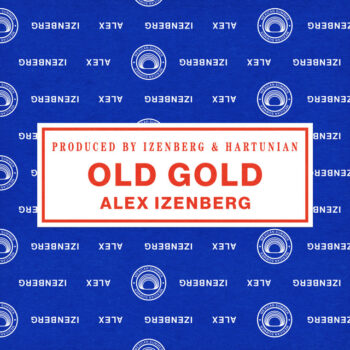
Alex Izenberg’s summery “Old Gold” moves with the easy, sunlit grace of an old favorite rediscovered at the exact right hour – buoyant, inviting, and quietly restorative, a song that seems to smile without ever begging us to smile back. The Los Angeles singer/songwriter’s first single for Mexican Summer is a bright, freewheeling pivot from the sweeping atmospheres of 2024’s Alex Izenberg & The Exiles, trading widescreen psych-pop grandeur for something more tactile and immediate: rippling piano, easygoing groove, dulcet vocal melodies, and an irresistible warmth that feels both playful and deeply felt. “That old gold that lets me live again / through moonlight shining over my head,” he sings, turning nostalgia into motion, memory into light, and music itself into a renewable source of wonder.
I’ll go it alone, I’m takin’ the high road
I gave her my soul and she’s singin’ the old gold
Baby truth be told, I’m not takin’ what I’m owed
That old gold that lets me live again
Through moonlight shining over my head
Sing it with me my love…
For Izenberg, songs have always been less like products than portals. His music has long drifted through the smoke trails of Los Angeles’ golden-age fade, steeped in vintage textures, strange beauty, and a devotion to records that feel like entire rooms one can walk into and inhabit. “I think all I really want people to know is that I’ve devoted my life to trying to make something honest and enduring in a world that moves very quickly,” he tells Atwood Magazine. “My music comes from solitude, longing, beauty, confusion, memory, and the strange experience of being alive at this particular moment in time. I’ve always been drawn to records that feel less like products and more like worlds you can step into, albums that carry atmosphere, mystery, and a human soul inside them. That’s what I’m always chasing in my own work.”
I’m walking the line,
zig zaggin’ my way down
I’m rockin’ to roll and
I’ll tip toe to the highlands
Criss crossin’ my legs,
I ain’t reading the news man
That old gold that lets me live again
Through moonlight
shining over my head
Sing it with me my love
“Old Gold” sounds like that chase with the windows down. Originally born from a piano riff Izenberg would return to casually for years, the song finally took shape with producer Greg Hartunian as part of a new batch of Mexican Summer singles that lean toward sunbleached funk, time-tested rhythm, and groove-forward release. “It was originally a riff I would always play while sitting at the piano,” Izenberg says. “For years I would always play it randomly in the studio. Greg and I realized it would make a good song, so for this series of singles we decided to turn it into a song.” That origin story can be heard in the finished track’s natural lift: Nothing feels overworked or stiffened into place. The piano bounces, the melody glides, and Izenberg’s voice carries the whole thing with gentle, offhand radiance.
There is whimsy here, but not weightlessness. “Old Gold” is fun because it feels alive – loose enough to wander, focused enough to stay glowing. Izenberg calls the lyrics “relatively nonsensical,” a stream-of-consciousness approach in keeping with his preference for music that “makes you wonder and think” rather than point directly at a single meaning. That openness is part of the song’s charm. Phrases flicker by like images from a late-night walk, half-memory and half-dream: I’m walking the line, zig zaggin’ my way down / I’m rockin’ to roll and I’ll tip toe to the highlands. Then the refrain returns, clear as moonlight, inviting everyone in: Sing it with me my love. It feels less like instruction than communion, a hand extended from the middle of the song’s golden haze.
I’ll feed my head
With things I want to do
The night is young
But darlin’ be home soon
Words can’t say
What really happened too
Sing it with me my love
“I think a lot of my lyrics come from trying to preserve fleeting feelings and moments before they disappear,” Izenberg reflects. “That line in particular, ‘That old gold that lets me live again / Through moonlight shining over my head’ was really inspired by those nights where you’re alone listening to old records under the moonlight and suddenly time starts collapsing in on itself. Music has this mysterious ability to resurrect parts of ourselves we thought were gone. A song can bring back an entire emotional landscape in seconds, a room, a season, a person, a younger version of yourself. I’ve always been fascinated by that almost spiritual quality music has.”
That old gold that lets me live again
Through moonlight shinin’ over my head
Sing it with me my love
That spiritual quality is what makes “Old Gold” linger beyond its breezy surface. Izenberg wanted the track to feel “more human and tactile,” something shaped by warmth, depth, dynamics, and atmosphere rather than hyper-modern polish, and the result is a song that invites repeat listens without demanding them. It bops, yes – beautifully – but it also glows with the patient soul of an artist chasing endurance over instant reaction. “To me, the best songs don’t necessarily explain life, they accompany it,” he says. “They become part of someone’s memories, their late-night drives, their solitude, their healing, their longing.” “Old Gold” does exactly that: It opens the door, lets the air in, and leaves us feeling a little more connected to the strange, shimmering beauty of being alive.
Sing it with me, my love.
“Can We All Slow Down”
by Essence MartinsThe world rarely asks how much of ourselves we lose while trying to keep up. We smile, scroll, perform, respond, post, compare, and carry on until even rest starts to feel like another thing we are failing to do properly. Essence Martins’ gently dreamy “Can We All Slow Down” meets that exhaustion with open hands: A beautiful, soul-stirring swell of pop-laced indie folk warmth that moves like an ocean wave, tender in its rise and quietly overwhelming in its release. Can we all slow down / wouldn’t it be wonderful? the North West London artist sings, turning a simple question into a timeless human plea – for presence, for breath, for the right to move through life without feeling watched from every angle.
Smiling is an art form
I’ve got a master’s degree
Saving face, keep the pace
There’s no time to waste
To be something great
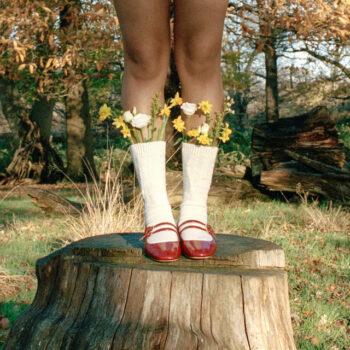
Out now, “Can We All Slow Down” follows Martins’ 2024 debut EP Deer in the Headlights, a diaristic coming-of-age record that introduced her as one of the UK’s most thoughtful and emotionally transparent emerging voices. Once an aspiring professional tennis player on an American scholarship, Martins returned home to pursue songwriting, quickly building a world around curiosity, inner reckoning, friendship, family, and the vulnerable work of becoming. Her music still carries that sense of open-eyed wonder, but “Can We All Slow Down” feels even more focused in its clarity: less about searching for answers, perhaps, than naming the pressure that makes it hard to hear ourselves think in the first place.
“I’d say my music is for those who love the simple beauties of the world,” Martins tells Atwood Magazine. “It’s for those who are listeners, love to read, and those who think about the world around them. I was recently told that I’m soft-spoken, and I’d definitely say that I’m a soft singer too, but I have a lot to say if you want to listen! I love harmonies and subtle time signature changes. I like to tuck little things into my songs that often go unnoticed but can be felt, whether that’s in a sound or a lyric. I write a lot of thought-provoking stuff and love to blend it with organic instruments, lots of harmonies, catchy melodies, poetic lyrics, and some rhythm behind it too!”
That care is everywhere in “Can We All Slow Down.” Martins writes with diary-entry honesty, but the song never feels small; it opens from one person’s overwhelm into a shared portrait of a culture built on constant visibility. Everyone’s an actor / on somebody’s screen, she sings, before one of the song’s sharpest, most modern lines: Being perceived is non-negotiable. Her voice is hushed yet assured, full of tenderness and nuance as she lets the melody drift forward with a calm that feels almost defiant. Around her, organic textures, glowing harmonies, and a slow, hypnotic pulse mirror the release she is asking for. The song does not shout against the noise. It lowers the volume until the quietest need becomes impossible to ignore.
“I wrote this song after feeling really stressed from the pressure of constantly posting on social media as an artist,” Martins shares. “There’s more pressure than ever in today’s climate to be seen and stand out from the crowd. And of course, that’s how you make it in the industry today, but I’ve always been someone who loves peace, and sometimes my natural design goes against the need to be so frequently perceived online.”
“I also wrote this from the realisation of how prevalent social media is,” she continues. “It’s easy to lose sight of what’s real when we live in a digital world. So I was feeling a little suffocated from it all at the time of writing it and imagined I could live off the grid somewhere in a fairy cottage that’s peaceful and away from the stress of being perceived all the time!”
That imagined fairy cottage sits at the heart of the song’s ache: not escape as disappearance, but escape as a return to proportion. Martins is not rejecting ambition, movement, work, or connection; she is asking what happens when they consume the whole frame. Moving at light speed / I miss precious things that matter, she sings, and the line lands with devastating softness because it names a feeling so many of us carry without stopping to examine it. Life keeps changing. Responsibilities pile up. Childhood curiosity becomes adult maintenance. We learn to keep pace, keep face, keep smiling. “Smiling is an art form,” Martins says of the opening lyric. “It just reminded me how often we put on a show in everyday life and how skilled we’ve become as a society at hiding.”
To slow down, for Martins, is not to withdraw from life; it is to actually inhabit it. “Slowing down to me really just means taking a moment to appreciate the wonderful things around us,” she says. “It means being in the moment and taking time away from our phones, or worrying less about how we’re perceived. It’s easy to let beautiful things pass you by when you don’t take the time to step back and appreciate the full picture. This is easier said than done though.” That last admission matters. “Can We All Slow Down” is not naïve about the world it is singing into. It knows presence is difficult. It knows the machine keeps moving. Its beauty lies in asking anyway.
Can we all slow down
Wouldn’t it be wonderful
If we all slow down
Wouldn’t it be wonderful
“Can We All Slow Down” feels like a hand placed gently on the chest, a reminder that breath is still available even when life refuses to pause on its own. Martins hopes listeners feel seen by the song, and that is exactly what it offers: not a solution, but recognition; not an answer, but a moment of shared exhale. With its tender vocals, graceful restraint, and quietly radiant message, Essence Martins has written something simple enough to sing along to and deep enough to live with. Wouldn’t it be wonderful? The question stays with us because it already knows the answer.
“Walls”
by The Army, The NavyA mind can become a haunted house when someone leaves but their shape stays behind. The rooms are still yours, technically, but the light feels different; memory gathers in corners, old love turns the air heavy, and every familiar hallway leads back to a version of yourself you’re trying to outgrow. The Army, The Navy’s “Walls” captures that strange internal architecture with breathtaking intimacy – a soft, stirring indie folk highlight from the Los Angeles duo’s debut album Fake Brave Life, out tomorrow on Independent Co.
Built on hushed call-and-response vocals, lush harmonies, and delicate, slow-burning wonder, “Walls” is visceral, vulnerable, and shiver-inducing: A song about sacred space, self-worth, and the long, non-linear work of reclaiming the parts of yourself another person once occupied.
The walls of my mind
You built with your hands
And then when you left
They continued to stand up tall
Plagued with pictures of us
And half hearted love
That you thought was enough for me

Comprised of Sasha Goldberg and Maia Ciambriello, The Army, The Navy are sonic shapeshifters with a rare, almost cosmic creative chemistry. Raised around the foothills of California’s Mount Tamalpais and later bonded as songwriting students and roommates in New Orleans, the duo have carried that closeness into a project defined by entangled lives, astral storytelling, and harmonies that seem to breathe through one another. Their forthcoming debut album Fake Brave Life follows 2024’s Fruit for Flies and Sugar for Bugs EPs, and expands their intimate practice into a fuller studio world shaped by producers Drew Vandenberg and Mikey Freedom Hart, session musicians, and a string quartet. What began between two friends in a tiny dorm room now arrives as an album about bravery, insecurity, risk, and the terrible beauty of making something honest enough to be seen.
But I think I deserve a little more than that
(I think you deserve a little more than that)
You don’t know what I’m worth
and you told me that
(I don’t know what you’re worth
and I told you that)
I think I deserve a little more than that
(I think you deserve that)
The duo recommend “Little Bug,” “Persimmon,” “40%,” and “Walls” as entry points into their catalog, songs they say “show off the variety within our music while also always sounding distinctively TATN.” That distinction is unmistakable on “Walls.” The song moves slowly, but never passively; it gathers itself like a body learning how to speak after being stunned into silence. Their voices arrive breathy and close, one line answered by another until private pain becomes shared testimony. But I think I deserve a little more than that / I think you deserve a little more than that, they sing, making self-recognition feel both fragile and immense. It is one thing to know you deserved better. It is another to hear someone you trust echo it back until the truth finally has somewhere to land.
“Being in love is offering someone a large piece of real estate in your brain,” Goldberg shares. “Something that was once only yours is now shared, tampered with, and it takes a lot of trust and connection to give that part of yourself to somebody else. If the love doesn’t work out, the spaces they once filled in your brain become hazardous and dark and nostalgic. It’s like unknown territory in your own head, as if it doesn’t belong to you anymore. To us, this song is about navigating this new empty space a past partner left behind, finding ways to appreciate the memories you once shared together while also being pragmatic. Understanding and accepting that they couldn’t be who you needed them to be, and you don’t deserve to settle for anything less than that. The journey of un-loving someone isn’t linear, and sometimes the love never really goes away but instead just takes a new shape.”
All this empty space
No colors no shapes
No windows no drapes
There’s barely paint on my skull
Least I keep it clean
My corners of mean
Are barely seen at all
Triumphant for a moment
Til the damn thing breaks
There’s no sweeter taste
Than the walls caving in
But I think you deserve a little more than that
(I think I deserve a little more than that)
I don’t know what you’re worth and I told you that
(You don’t know what I’m worth and you told me that)
I think you deserve a little more than that
(I think I deserve that)
That vivid image – love as real estate in the mind – gives “Walls” its ache and its power. The song is full of interior detail: empty space, bare walls, missing color, corners kept clean, damage hidden from view. Its language feels architectural, but the emotion underneath is bodily, immediate, and raw. All this empty space / no colors no shapes / no windows no drapes / there’s barely paint on my skull, they sing, turning the aftermath of heartbreak into a room stripped of warmth and identity. The harmonies make that emptiness feel almost touchable, each voice wrapping around the other like a hand finding a pulse in the dark. When the song swells into bridges only burn if you start a fire / and I will start this fire, its softness sharpens into resolve. Tenderness becomes agency. Hurt becomes heat.
Bridges only burn if you start a fire
(Bridges only burn if you start a fire)
Words can only hurt if you give them life
(words can only hurt if you give them life)
Bridges only burn if you start a fire
(Bridges only burn fire)
And I will start this fire
“It’s been six years since we wrote this song, so naturally we’ve had a bit of separation from the lyricism and the story behind it,” they say of hearing the chorus now. “It’s extremely rewarding and nostalgic that we brought this song back to life, I don’t think either of us expected it would make its way into our catalogue. It feels very wholesome and special to us. The simple sadness in this lyric says everything the song is about. Knowing you deserve much, much more than what this person can offer you, and that it’s time to let go.”
The Army, The Navy hope listeners take one clear truth from “Walls”: “That they deserve a little more than that! That settling just comes back to bite you in the end. That tolerance is different from love. Patience is a beautiful thing, but sacrificing too many of your needs in the name of love is not.”
That message glows at the center of the song and, in many ways, at the center of Fake Brave Life: The courage to stop mistaking endurance for devotion, to name what has been taken, and to risk becoming whole again. “Walls” does not rush the process of letting go. It sits in the room after the leaving, surveys the damage, and still finds a way to sing.
In doing so, The Army, The Navy transform heartbreak’s empty architecture into a place of reckoning, release, and quietly radiant self-return.
From loving you, from loving you
I wish I was tired of loving you deeply
and purely and sweetly I wish I was you
I need guidance
Don’t know what I’m worth
I need guidance
And for what it’s worth
— — — —

Connect to us on
Facebook, 𝕏, Instagram
Discover new music on Atwood Magazine
Editor’s Picks
follow EDITOR’S PICKS on Spotify