Atwood Magazine is excited to share our Editor’s Picks column, written and curated by Editor-in-Chief Mitch Mosk. Every week, Mitch will share a collection of songs, albums, and artists who have caught his ears, eyes, and heart. There is so much incredible music out there just waiting to be heard, and all it takes from us is an open mind and a willingness to listen. Through our Editor’s Picks, we hope to shine a light on our own music discoveries and showcase a diverse array of new and recent releases.
This week’s Editor’s Picks features VANITY, Mansdaughter, Keo, Black Lounge, M.O.T.H.E.R., Emma Ogier & Eden Joel!

 follow EDITOR’S PICKS on Spotify

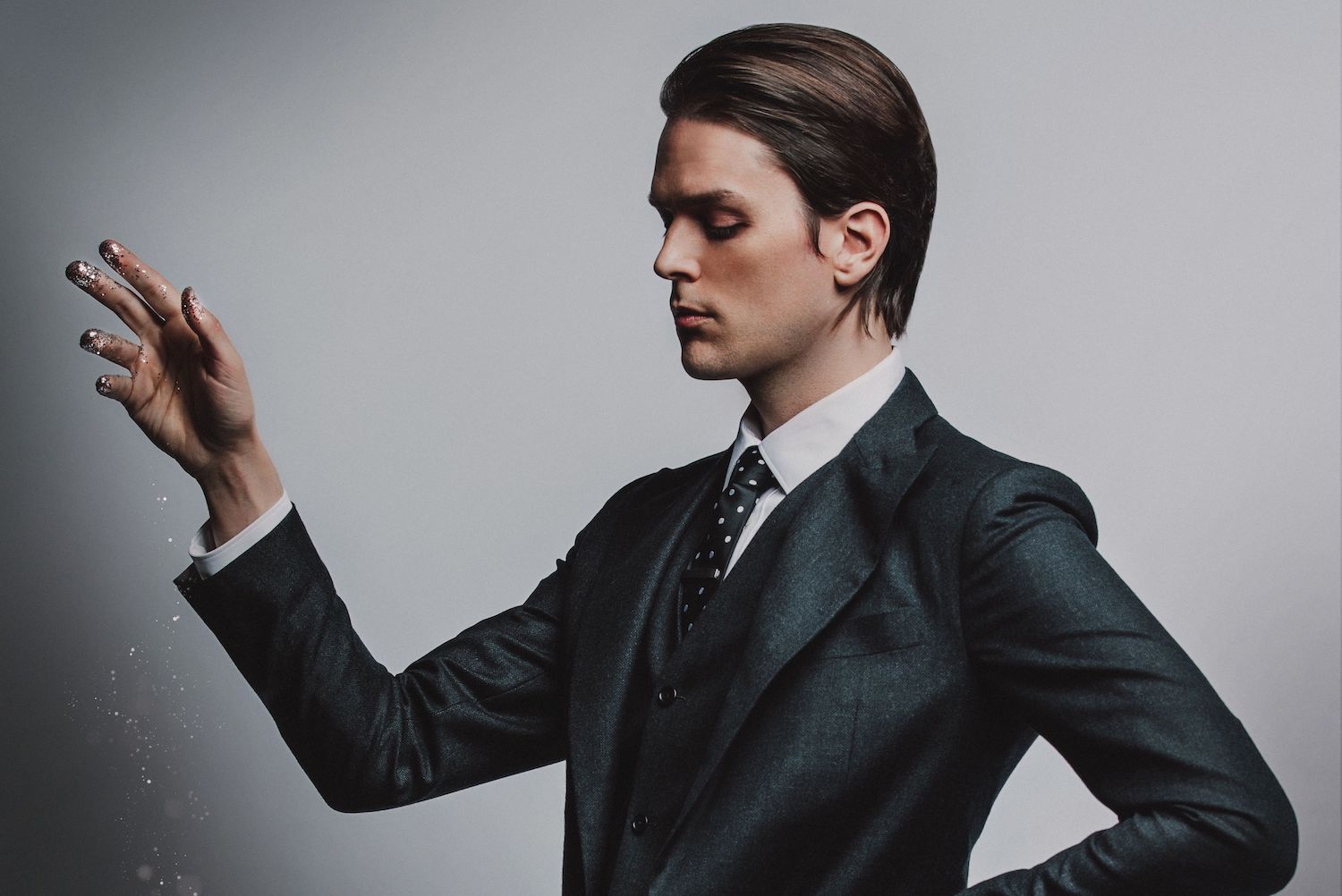
“(T)OUCH!”
by. VANITYRigor mortis has never sounded this exhilarating.
One touch is enough to turn attraction into catastrophe, and VANITY send the whole thing hurtling toward the rafters in a blaze of operatic rock excess.
“(T)OUCH!” is a showstopper – a bold, brash, deliriously theatrical fever dream that takes lust, jealousy, danger, and emotional ruin and blows them up until they feel almost mythic. Guitars roar and surge beneath Billy Titko’s breathtaking vocal, hooks arrive with the force of falling scenery, and every new turn seems determined to outdo the one before it without ever tipping into chaos. The Los Angeles trio of Titko, Wayde Crawford, and Justin Scott make maximalism sound astonishingly precise: Every flourish lands, every escalation earns its place, and every collision between gothic melodrama, dark cabaret, and arena-sized rock somehow tightens the song rather than weighing it down. “(T)OUCH!” is larger than life in the truest sense – invigorating, unapologetic, irresistibly catchy, and utterly consuming, the kind of debut that does not politely ask for attention so much as seize the spotlight and refuse to relinquish it.
When we touch it hurts so good
Not my lover, not even my friend
With blood my fates secured
In the mirror I see how it ends

The audacity is immediate, but VANITY’s spectacle works because there is a real wound beating underneath it. Titko says every song on the band’s forthcoming rock opera began as “a letter to myself. An inner dialogue,” with “(T)OUCH!” standing apart as the album’s only song truly rooted in love and romance. Even then, romance feels almost too gentle a word for what happens here. Attraction becomes entrapment. Desire curdles into dread. A lover’s success becomes evidence of emotional distance. By the time Titko is singing If looks could kill / You’d be the death of me, intimacy has become both seduction and threat.
Then comes the chorus, and the whole thing goes incandescent.
On my bedspread I can’t pretend
Your success doesn’t come at my expense
Took my walls down there’s no defense
Don’t need a knife to cut me when I’m tense
Titko describes that central lyric with disarming clarity: “Seeing someone you care about doing so well MUST mean they’re not hurting as much as you are.” That is the emotional trap at the center of “(T)OUCH!” – the irrational but painfully recognizable belief that another person’s forward motion somehow confirms your own abandonment. VANITY do not shrink that feeling down or tidy it into something tasteful. They let it become enormous. The pain gets costumes. The jealousy gets lighting cues. Heartbreak gets a full band and a death scene.
That instinct toward excess is not incidental; it is the entire point.
“VANITY is everything I always wanted,” Titko says. “It just took me a few years and a lot of learning and hard work to finally believe I could actually do it. My favorite things in the world are all larger than life / campy / dramatic. I pull from rock music as much as theatre and any kind of live performance. It’s just a love child of all my inspirations.”
Those inspirations make immediate sense: Queen, David Bowie, My Chemical Romance, ABBA, Nirvana, Cabaret, Liza Minnelli, The Rocky Horror Picture Show, and The Phantom of the Opera all sit somewhere in VANITY’s bloodstream, alongside the Hammer Horror imagery and Black Parade-scale world-building highlighted in the band’s Columbia Records introduction. But “(T)OUCH!” succeeds because VANITY do not sound like a tribute act rifling through a costume closet. They absorb that lineage into a vocabulary of their own – theatrical without becoming kitsch, technically ambitious without strangling the hook, and gloriously loud without losing the emotional thread.
Very few contemporary rock bands are attempting music at this scale. Fewer still arrive sounding this comfortable inside it.
Titko grew up a self-described theater kid, eventually falling hard for The Runaways around 18 or 19 and deciding she might be meant to become a musician. She started going to shows, asking around, and holding what she laughingly remembers as “fake auditions” while searching for bandmates. Crawford and Scott stayed. “It was a real band the second they both joined,” Titko says. Years of vocal work and live performance followed before the group relocated to Los Angeles in 2024, where Titko began writing the rock opera that would ultimately become Mascara Masquerade, due September 18 via Columbia Records. She co-wrote its songs alongside BRASKO and Lucky West, building a record meant to function as both album and immersive spectacle.
Even the name VANITY came from inside that world. Titko and BRASKO had exhausted list after list searching for the right band name until they realized they had probably already written it into a lyric. There it was in “Love, Sex and Diamonds”: you might’ve thought that it’d be vanity / but Jazz and liquor’ll be the death of me.
“We knew right away,” Titko recalls. “I couldn’t be happier with the name.”
It fits. VANITY’s music is obsessed with surfaces and what they conceal, with glamour pushed until it becomes uncanny, beauty refracted through danger, and theatricality used to magnify the private rather than disguise it. Their videos draw deliberately from retro horror; “Size Two,” the band’s vulnerable second single, wraps body-image anguish in a sinister pastel world of mannequins and beauty syringes, while “(T)OUCH!” plunges headlong into something darker and more feverish. Titko sees every song as “its own world that provides context for the next,” each track revealing another necessary piece of the larger story.
That makes “(T)OUCH!” an especially inspired first impression. It is actually track three on Mascara Masquerade, not the album’s literal opening song, but Titko still calls it “the most VANITY song in the world.”
“It’s catchy and relatable but there’s a lot of interesting moves from a songwriter and musician perspective,” she explains. “So it speaks to both sides of the coin. It’s so dramatic and I really felt it was a perfect introduction.”
Perfect feels right.
Listen to the way the arrangement keeps widening around Titko. The song refuses to sit still, but its movement never feels arbitrary; tension accumulates until every release arrives a little bigger than expected. Her vocal is the axis around which all that motion spins – soaring one moment, venomous the next, capable of slipping from wounded intimacy into full theatrical command without breaking character. VANITY understand that bombast only works when somebody at the center believes every second of it. Titko believes.
So do Crawford and Scott. The band play like understatement has been outlawed.
And then, because apparently the song has not already committed hard enough to the bit, VANITY give us:
Rigor mortis
Dying for it
Ouch!
It is funny. It is macabre. It is wildly dramatic. It is also a spectacularly effective hook.
That three-line turn gets at what makes “(T)OUCH!” so thrilling: VANITY understand that drama does not have to apologize for itself. There is no embarrassed wink after the big note, no retreat into tasteful restraint after the arrangement explodes. Their music commits fully to the premise that emotion can be huge, ridiculous, terrifying, sexy, painful, and funny all at once – sometimes within the same five seconds.
“Not losing the drama was quite easy, Darling,” Titko says elsewhere in our conversation. “Everything I do is dramatic.”
Thank God for that.
Rock music has spent plenty of time pretending coolness requires a certain amount of emotional distance. VANITY sprint in the opposite direction. They want the velvet curtain, the blood, the mascara, and the shriek from the balcony. They want the show. And crucially, they have the musicianship and songwriting instinct to make that ambition feel earned rather than merely decorative.
That is why the comparisons to Queen and My Chemical Romance make sense without defining them. Both bands understood that theatricality works best when the emotion underneath it is deadly serious. Freddie Mercury could make camp feel monumental because the performance never lacked conviction; The Black Parade made mortality feel enormous because Gerard Way committed completely to the world around it. VANITY inherit that instinct for total immersion, but “(T)OUCH!” already suggests a band developing its own grammar of desire, horror, glamour, and self-destruction.
Titko does not seem particularly interested in modest ambitions, either.
“Ohhhh we’re going to be the biggest band in the world,” she says. “That’s a promise.”
It would be easy to read that line as pure rock-star bravado.
Then you hear “(T)OUCH!” and think: Well, shit. Maybe.
Because VANITY are not merely making loud music. They are building a universe around the belief that rock can still be an event – something you dress up for, scream through, disappear inside, and leave altered by. Before they had even released music, the trio began constructing that world through enigmatic visual teasers; now Mascara Masquerade promises a full rock opera in which songs, imagery, and eventual live performance function as pieces of the same spectacle. Titko wants listeners to experience each track as a self-contained world while understanding that all of them are pointing toward something larger.
“(T)OUCH!” makes that promise feel tantalizing.
It also makes VANITY’s larger philosophy impossible to miss.
“As long as we’ve made you feel SOMETHING – we’re happy,” Titko says. “Love it or hate it the worst anyone could take away is nothing at all. I crave your emotions.”
That sentence may as well be painted across the proscenium.
VANITY are not interested in background music. They do not want polite approval, passive streaming, or a shrug. They want reaction. They want awe, discomfort, desire, exhilaration – anything but indifference.
“(T)OUCH!” earns every bit of it.
The song barrels toward its ending with the same apocalyptic conviction that drives everything before it: The end the end, the end of me. But destruction has rarely sounded this electrifying. VANITY take the fever, the jealousy, the pain, the blood, the death wish, and the punch line and turn them into a three-dimensional rock spectacle that practically begs for a stage big enough to contain it.
Maybe that stage does not exist yet.
VANITY sound ready to build it themselves.
They wanted to make something otherworldly and relatable, something listeners might feel has been missing from rock music. Titko makes one more promise to anyone discovering them now: “I promise you aren’t going to forget VANITY now that you’ve found us.”
After “(T)OUCH!,” forgetting them seems impossible. The curtain is only beginning to rise – and VANITY already sound like they came to bring the whole damn theater down. Rigor mortis never stood a chance against a show this alive.
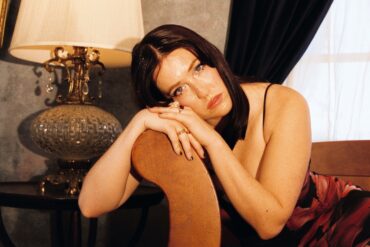
“Label”
by MansdaughterThey told her not to play guitar unless she was in a band. So Charli Adams started one.
After years spent being packaged by people who thought they knew her better than she knew herself, Adams has decided the label belongs to her now.
“Label,” the breathtaking debut single from her new project Mansdaughter, is the sound of that decision catching fire. Brooding guitars lurch and flare beneath Adams’ aching vocal as she unloads years of condescension, manipulation, and accumulated fury with a grin sharp enough to draw blood. The song is heavy without sacrificing the melodic instinct that has always made Adams such a phenomenal songwriter; its guitars bruise, its words cut, and her voice keeps its tenderness even when the music bares its teeth. Cathartic, wickedly funny, and unapologetically alternative, “Label” does more than introduce Mansdaughter. It captures the exact moment Adams stops allowing other people to define what kind of artist she is allowed to become.
Ah damn, I let you talk
and now my self-esteem is lower
than your liner socks,
you might as well raw dog them loafers
For anyone who has followed Adams’ work, the ferocity of Mansdaughter is less a rupture than the next stage of a liberation years in the making. Bullseye found her confronting the people-pleasing instincts that had filtered her down and learning to trust herself; nothing to be scared of carried that growth into a more spacious, self-accepting chapter; by 2024’s “Airlifter,” Adams was describing listening to one’s inner voice as essential to making authentic art. Mansdaughter takes that hard-earned self-trust and gives it amplification, distortion, humor, and teeth. It’s not a replacement for Charli Adams – she plans to keep both projects alive – but a separate outlet for the parts of herself that need somewhere louder to go.
The project arrived before Adams had any grand plan for it. She had spent years prioritizing peace, swallowing what she wanted to say, and overthinking the consequences of disruption. Eventually, keeping the peace became its own kind of imprisonment. “I just realized that a lot of the things that I wanted to say were gonna fester inside me forever if I didn’t get them out,” she explains. “Label” was the first song to come from that release valve. Adams wrote it quickly and initially assumed nobody would ever hear it; when she sent the song to longtime collaborator Andy Seltzer, his enthusiasm helped her recognize that she had not merely written an outlier. She had stumbled into another artistic identity.
That realization was exhilarating enough to scare her. Adams had been releasing music under her own name since her teens, and part of her worried that pursuing Mansdaughter meant betraying everything she had already built. Her mother answered that fear with the sentence Adams needed to hear.
“But honey, you’re betraying yourself if you don’t do the thing you’re most inspired by.”
Once Adams gave herself permission, the project moved fast. Songs poured out. Making music stopped resembling the job she had been forcing herself to show up for and became fun again. More importantly, Mansdaughter gave Adams access to a version of herself that her solo work had never quite allowed into the room: irreverent, confrontational, sarcastic, protective. She calls the project an opportunity to write about “being a woman, not about being Charliadams,” and describes its emerging persona through one of the most revealing images in our conversation.
“I’m kind of, like, seeing it as, like, sensitive Charli gets to sit backstage while I go out, and I am Mansdaughter, which is, like, the person that is standing up for me and protecting me that I didn’t really, like, have, you know?”
That protective older-sister energy roars through “Label.” The song is furious, but Adams’ humor keeps the anger agile. Its opening joke about liner socks and loafers came from the absurd realization that she had allowed a man whose taste she no longer respected to dismantle her confidence. “It was the realization that a guy in silly little socks in his loafer shoes was capable of destroying my entire self-identity, essentially,” she says. With enough distance, the power imbalance suddenly looked ridiculous: Why had this person ever been on a pedestal high enough to tell her who she should be?
The joke gets nastier as “Label” moves into the music industry itself.
Chest out Nirvana shirt
you signed a dude planning his first show
and I just got the urge
said name a song off In Utero
and I couldn’t help myself
I’ll eat the deal that’s on the table
If this little shit can do it,
I think I’ll start
a record label
That scene came from a real Los Angeles industry mixer and an encounter with an A&R Adams remembers as “void of creativity, void of integrity.” The Nirvana shirt was real. So was her incredulity at the influence held by someone whose vision of artistry seemed so detached from the act of making art. The lyric’s punch line quickly became prophecy: Mansdaughter’s world now comes through Man Cave, the tongue-in-cheek imprint Adams named after the New York rehearsal room where she goes to play loudly several times a week.
“Label” gets even more cutting when Adams stops joking and starts reciting the rules that had been handed to her.
“What kind of girl are you?
If you’re not in a band, don’t play the guitar..
Okay, maybe acoustic..
Let’s run an exclusive
and ditch everything that you are
Sincere is weird, look alive,
don’t I look like someone who knows
how to make you a star?”
Those lines are not exaggerated villainspeak invented for the song. “Everything… every sentiment that was written in that last part was expressed to me at least once, if not more than once,” Adams says. Over years of writing sessions, meetings, and industry rooms, she encountered men who treated her talent as secondary to her marketability, invited her into supposedly professional spaces only to hit on her, and prescribed an increasingly narrow version of acceptable femininity: soft, personable, vulnerable, minimally produced. Guitar was negotiable. Apparently only acoustic guitar.
The damage was cumulative. Adams remembers comparisons to other women being used as instructions – Phoebe Bridgers wouldn’t post this; be more like this artist; be less like yourself. Looking back, she summarizes the experience with a phrase that says almost everything “Label” needs to say: people were “trying to beat the me out of me.”
Her answer now is brutally simple.
“You should have managed her, then,” Adams says. “Or you should… you should A&R her, you should work with her then. Cause you got me instead.”
That reclamation is what gives the song its extraordinary charge. The guitars are dark and hulking, steeped in brooding shadow before swelling into a grungy, brutal churn; against them, Adams’ voice is spellbinding – bruised and exposed one moment, cutting straight through the weight the next. She describes the spirit of Mansdaughter as a kind of “soft scream,” and “Label” lives beautifully inside that contradiction. The song can ache without collapsing inward. It can rage without sacrificing the sensitivity that has always made Adams’ performances hit so hard.
That shift in emotional direction matters to Adams. A recent reading of Rage Becomes Her gave her language for something she was already experiencing: the difference between absorbing pain as sadness and allowing anger to become active. Adams laughs about temporarily retiring her “sad girl project” for an “angry girl project,” but beneath the joke is a profound change in posture. Mansdaughter lets her stop merely processing what happened and start answering it.
“It felt like an indicator of healing,” she says.
The anger on “Label” is not indiscriminate. Adams has little interest in building Mansdaughter around vengeance, naming enemies, or making the people who hurt her more important than the person she became afterward. Distance has given her room for what she calls “costume rage” rather than “vulnerable rage” – fury worn with enough perspective to look backward and think, Holy shit, can you believe that happened?
“I just want the project to feel like it’s more about my story than about those who wronged me,” Adams explains. “I didn’t want it to be like a, ‘f*** you, you ruined my life,’ I wanted it to be like, ‘look at me now, can you believe we made it through all of that,’ you know?”
That distinction keeps “Label” from becoming a straightforward music-industry takedown. The song absolutely takes aim, but every barb ultimately bends back toward Adams herself: the confidence she surrendered, the intuition she ignored, and the years she spent believing other people possessed some secret authority she lacked. She remembers being 18, proud of landing her first cut and thrilled to be invited into a writing session, only to leave realizing the invitation had not really been about her writing. Similar experiences accumulated over the years until professional interest and sexual attention became difficult to disentangle.
“I now sort of don’t totally trust or know when they really like – if they really like my music, or if they’re hitting on me,” she says.
The business side created another kind of distortion. Adams watched male artists make loud, guitar-heavy music under their own names without explanation while she was repeatedly steered toward a narrower model of femininity. She was supposed to be soft. Personal. Vulnerable. Streamable. Even guitar became conditional.
“You can hear the direct line to what people want femininity to look like,” she says.
Mansdaughter tears straight through that line.
The project’s name contains its own knot of resistance. Adams conceived it while talking with Seltzer, drawn first to the fact that Mansdaughter sounded like manslaughter and then to the phrase hiding inside it: every woman is somebody’s daughter. She thought about how often empathy for women is demanded through their relationship to men – imagine that was your daughter – and about the much older tradition of daughters being treated almost as property passed from one man to another. The name can sound menacing, even violent, but Adams hears a more complicated tension inside it.
“The name feels empowering, and it also feels disempowering being just a man’s daughter,” she says.
That tension has already started shaping the project beyond “Label.” Adams envisions Mansdaughter as something fluid – spearheaded by her, but increasingly open to collaborations with other women, writers, and artists. She has drawn inspiration from the Riot Grrrl movement and its creation of spaces where women could gather, make noise, and express themselves together. Above all, she wants this music to live physically.
“I don’t want it to be an internet band,” Adams says. “I want us to be playing as many shows as possible at all times.”
She has wanted to front a rock band for years. Under her own name, Adams could hear herself reaching toward that possibility, trying to make the solo project carry every version of her at once. Mansdaughter finally gives the louder one her own room.
Or, as Adams puts it, “sensitive Charli gets to sit backstage while I go out, and I am Mansdaughter.”
That imagined older sister is more than a stage persona. Adams spent much of her life envying women who seemed naturally able to protect themselves – women who could take no shit, defend the people they loved, and stand their ground without obsessing over whether everyone still liked them. Writing these songs has already begun changing how she moves through the world.
“I always envied the older sister stereotype,” she says. “They aren’t afraid who likes them. They’re standing up for the people they love, they stand up for themselves.”
Mansdaughter lets Adams become that person for herself.
And nowhere is the transformation clearer than in the final seconds of “Label.”
Push me in, burn me out,
wash the blood off your hands.
Hello bitch, I’m back and I’m also in a band
The last line was never planned. Adams improvised it while recording the original voice note, before Mansdaughter was a band at all. She simply knew that eventually it would be.
“It was a prophecy of sorts,” she laughs.
More importantly, she knew she wanted “Hello bitch, I’m back and I’m also in a band” to be the final sentence of the first Mansdaughter song anyone heard.
Of course she did.
“Label” begins with Adams remembering how easily she once let somebody else shrink her and ends with her announcing herself on her own terms. Its title works the same way. This is a song about record labels, certainly, but also about every label placed on a young woman who was told what kind of girl she was supposed to be, what kind of guitar she should play, how vulnerable she should appear, and what version of herself would be easiest to sell. Adams spent years trying to fit inside those boxes. Mansdaughter exists because she finally stopped trying.
“All I know is I was really close to quitting, and now I’m having the time of my life doing this again,” she says. “I love the music, and it’s the first time in a while that it’s music that I love listening to.”
That joy may be the most radical part of “Label.” For all its bruising guitars and righteous anger, this song is not the sound of an artist being consumed by what happened to her. It’s the sound of one getting her appetite back.
Adams wants listeners who recognize these experiences to find that same possibility on the other side – to laugh at some of the shitty things that happened, protect themselves, and understand that starting over is still available to them. She has already heard from women who tell her they are stuck in the period before the empowerment, unsure whether their own story can still take a turn.
Maybe “Label” is proof that it can.
Charli Adams has spent years writing her way toward self-trust. Mansdaughter is what happens when that trust finally gets loud.
The guitar is plugged in. The band exists. The rules are hers. “Hello bitch, I’m back – and I’m also in a band.” The era of Mansdaughter has officially begun.
“That's Me”
by KeoThe plague at the center of this song knows exactly who it is.
He’s the one in the corner, the one getting in the way, the one sucking the life from somebody he loves – and by the chorus, there is nowhere left to hide.
Keo make that self-indictment absolutely enormous on “That’s Me,” a blistering alt-rock barnburner that turns Finn Keogh’s ugliest realization inward and then lets it rip. Guitars slash and swell around his ragged vocal as dread gives way to a chorus so immediate it practically demands to be screamed back, every repetition of the title tightening the knot until Keogh arrives at the line he cannot soften: I’ve become a f***ing plague. It is guilt as adrenaline rush, shame transformed into an achingly catchy release – dramatic, bruising, and fiercely melodic, with the kind of white-hot alternative charge that makes self-reckoning sound almost euphoric.
That’s me, in the corner
That’s me, that gets in your way
That’s me, sucking the life from her
That’s me, I’ve become a f***ing plague
Released May 28 via Mushroom Music, “That’s Me” introduces Put A Smile On For Me, Keo’s debut album, arriving September 25. Fronted by 22-year-old Keogh alongside his older brother Conor, drummer Oli Spackman, and guitarist Jimmy Lanwern, the London band have spent the past year accelerating from underground word-of-mouth favorite to one of British guitar music’s most exciting young prospects, following 2025’s Siren EP with sold-out headline runs, major festival dates, and huge support shows with Wolf Alice. Yet Keo’s rise has never depended on disguising melody as coolness. Keogh grew up inside songs – performing on the knee of his Irish musician father at three years old, later playing traditional music with Conor and their father – and that early education in hooks, choruses, storytelling, and holding a room still runs straight through the band’s post-grunge weight.
Keogh’s musical upbringing helps explain why “That’s Me” lands with such brute-force catchiness. Keo pull from the emotional extremity of Jeff Buckley and Radiohead and the textured heft of The Smashing Pumpkins, but the song never sacrifices its melody to its distortion. The chorus is devastating precisely because it is so easy to remember: Keogh keeps beginning with the same two words – That’s me – and every return makes the admission more damning. First he is merely in the corner. Then he is obstructing somebody else’s life. Then he is draining it. By I’ve become a f***ing plague, recognition has curdled into disgust. The music rises to meet him there, serrated guitars and grunge-soaked pressure making the confession hit with the force of a live-wire release rather than a whispered apology.
The album around it was born almost as quickly as that emotion spills out. Given a little over a week at Bam Bam Studios, Keogh wrote and recorded 15 songs, nine of which ultimately made the 11-track Put A Smile On For Me. He entered those sessions carrying months of relationship turmoil, self-examination, and what he calls “personal chaos,” with one romantic relationship beginning to echo a toxic relationship he had experienced as a teenager. Those sessions became a pressure valve for months of turmoil, and Keogh’s reason for writing cuts straight to why these songs arrived with so little distance between experience and expression.
“I love writing songs because I’m the specific type of person who can only make sense of things once I’ve verbalised them,” Keogh says.
“That’s Me” is brutally effective because that verbalizing never becomes self-exoneration. The second verse offers the temptation of an excuse – there’s a reason that I’m built this way – only for Keogh to recognize how easily explanation can become evasion: all the feelings that I can’t explain / Well I could pin ’em all on you. He knows there is history behind his behavior. He also knows history does not absolve him of what that behavior is doing to somebody else. The song keeps forcing those two truths into the same room, and every chorus removes another place to duck responsibility.
And there’s a reason that I’m built this way
But I’m just scared to see it through
And all the feelings that I can’t explain
Well I could pin ’em all on you
Keogh sees that recognition extending beyond his own relationship. “There are going to be men in particular who will hear this track recorded and think, ‘I need to snap out of this,’” he predicts.
Keogh’s prediction gives “That’s Me” an extra sting. Keogh is not presenting himself as a redeemed narrator dispensing wisdom from the other side; he is showing the ugliness while it is still close enough to burn. There is no tidy moral victory inside the song itself. Its power comes from naming the behavior plainly enough that somebody else might recognize their own reflection in it. The chorus may be thrilling to shout, but what the crowd would actually be shouting is an admission: That’s me.
The same immediacy became the governing principle of Put A Smile On For Me. The original recordings arrived rough, urgent, and strikingly cohesive, and Keogh resisted attempts to sand them into something more conventionally polished. He ultimately self-produced the record with Lanwern, despite the immense pressure of taking responsibility for an album whose first versions already seemed to contain the emotional truth he was chasing.
“I’ve never experienced something so mentally challenging,” Keogh admits. “There were moments I seriously just considered stepping back, handing control to someone else. I almost wanted to compromise the music just to get rid of the pressure. But I didn’t think anyone else would get it right.”
You can hear that refusal to clean up the edges in “That’s Me.” Its power lies in friction: melody against abrasion, vulnerability against volume, an almost ridiculously infectious chorus carrying words that should be miserable to sing. The performance never settles into self-pity. It lunges forward. Keogh’s vocal sounds scraped close to the nerve, while the guitars give his admission enough size to become catharsis. That collision is Keo at their most magnetic – the ache stays intact even while the song barrels ahead.
It also opens the door into an album obsessed with the parts of ourselves we would rather keep hidden. Put A Smile On For Me moves through jealousy, resentment, detachment, anger, and the damage people can inflict while still believing themselves fundamentally decent. The album keeps returning to the uncomfortable act of putting one’s worst impulses on record and refusing to look away from them. Keogh reaches for religious language to describe that reckoning.
“It’s like confessing your sins,” he says. “There’s a kind of justice in punishing yourself a bit.”
Seen in that light, “That’s Me” is a devastating introduction to the record’s moral universe. Before there can be forgiveness, repair, or any possibility of becoming better, Keogh demands recognition. He has to point at the thing first. He has to call it by its name.
And somehow Keo make that reckoning soar.
For all its darkness, “That’s Me” is a spectacularly invigorating piece of guitar music – the kind of song whose chorus seems destined to escape the record and live in heaving rooms full of people yelling every word. The communal release only sharpens the irony: thousands of voices potentially joining Keogh in declaring themselves the problem. Yet maybe that is exactly the point. Shame festers in secrecy; Keo drag it under stage lights, plug it into an amp, and make it impossible to ignore.
Keogh eventually arrives at the larger philosophy behind Put A Smile On For Me: “If you put your worst traits out there, then everything else feels lighter,” he says. “That’s the worst you can know about me.”
“That’s Me” gets there first. It burns through excuses until only recognition remains, then turns that recognition into into a short, cathartic blast of searing alternative rock. The song never asks us to applaud Keogh for admitting he has hurt someone. It asks something harder: to understand that seeing yourself clearly can be ugly, humiliating, and absolutely necessary. The chorus keeps pointing inward until the finger can go nowhere else.
That’s me.
Sometimes the first way out is finally admitting who has been standing in the way.
“Welcome Home”
by Black LoungeGeorge Grant doesn’t dream of quitting his job on “Welcome Home.” He dreams of leaving the planet.
When the rat race has swallowed every hour of the day – even the ones spent behind your own front door – outer space starts sounding like a reasonable way out.
Black Lounge channel that suffocation into an irresistible erption. Grant spends the song searching for somewhere beyond the deadening routine that has followed him all the way home – I’ll greet you by the door to find the devil. What should be sanctuary has become another room in the same cage, and the Essex quartet answer that entrapment with one of the most feverishly charged alternative rock songs I’ve heard in months. “Welcome Home” smolders, surges, and finally detonates, pairing Grant’s increasingly unbound vocal with raging guitars and a chorus that seems determined to blow straight through the walls. Spellbinding and soul-shaking, it carries the ache of somebody desperate to change his life and the explosive force of finally admitting he cannot keep living it this way.
Everyday
Moving in the same way
Stuck on replay
Everyday single day
Welcome home
I’ll greet you by the door to find the devil
Take me in to your home
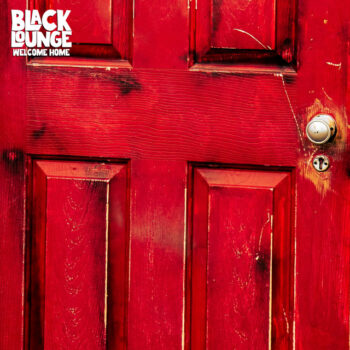
Released in early April via Right Tracks, “Welcome Home” opens a major new chapter for Black Lounge, the Essex band Grant founded in 2024. Now settled into what he considers their definitive lineup alongside guitarist Ben Gulik, bassist James Ladds, and drummer Jack Cassidy, the group have spent the past two years building momentum through BBC Introducing support, sold-out London shows, and festival appearances. Their latest single is the first taste of an upcoming debut EP and their first release through Right Tracks Recordings, with the new material recorded at London’s RAK Studios alongside producer Danton Supple. Grant says the songs were made to inhabit the same world, but “Welcome Home” was chosen to kick the door open for a reason: “At the time I was listening to a lot of grunge. I wanted Welcome Home to feel massive and I think it does.”
Massive is the word. The song begins in relative restraint, Grant tracing the numbing repetition of everyday life before Black Lounge crash into the chorus with a vehement wall of sound. Gulik’s lead guitar cuts through with a scorched, searing edge; the drums hit with the urgency of bottled-up frustration finally finding somewhere to go; and Grant’s voice pushes from weary resignation toward a near-roar, sometimes sounding as though the emotion itself is straining the edges of the performance. There is a distinctly ’90s alternative ache in those loud-quiet dynamics, but Black Lounge never sound like they are cosplaying another era. The guitars are too immediate, the hook too hungry, the whole performance too combustible in its frustration.
That frustration came from a life Grant genuinely wanted out of. He wrote “Welcome Home” while working a nine-to-five corporate job that had begun to reduce one day into the next, leaving him preoccupied with how he might escape what he calls the “Rat Race.” “I was completely sick of it and something needed to change,” he recalls. Songwriting gave that pressure somewhere to go for a while, but even Grant admits it was only a temporary release. Eventually, the situation itself had to change.
Grant built that sense of entrapment into the song’s very architecture, using dynamics and repetition to put the listener inside the headspace that produced it. “The verses for me feel like the person is fed up, monotone and expressing how they feel through innocence,” he explains. “When the explosion of the chorus ‘Welcome Home’ hits it’s almost a release of that emotion. however in this song ‘Home’ doesn’t necessarily resemble a place to unwind, in-fact, the routine is so the same, not even home feels like home anymore. I like the use of the repetition, the structures very much the same and it does feel like you’re going round in circles when listening, but not in a tedious way.”
The repetition never deadens “Welcome Home”; it weaponizes anticipation. Each return makes the chorus hit harder, as though Black Lounge are gathering enough force to break the cycle on the next pass. Even the title phrase twists into something darker with each repetition: Welcome home sounds increasingly less like a greeting than a sentence, the words marking Grant’s return to a routine that has swallowed work, rest, and any meaningful distinction between the two.
And yet the song keeps looking upward.
Why can’t I fly
Fly away
To somewhere great
Why can’t I shine
From the rat race
In outer space
Fly away
There is something almost beautifully outsized about that fantasy: not another job, not another flat, but outer space. Grant wants so badly to break the pattern that ordinary escape no longer seems sufficient. He needs altitude. Distance. Somewhere untouched by the machinery below. That yearning is what keeps “Welcome Home” from collapsing beneath its own heaviness, and it is why Grant still considers the song hopeful. The person singing may be stuck in the loop, but he can imagine a world beyond it.
Grant has since escaped the headspace that produced the song, and that knowledge gives its final repetitions an extra charge. He describes “Welcome Home” as “a cry out for help” – a situation fundamentally different from the comparatively solvable frustrations elsewhere in Black Lounge’s songwriting – but the cry did not disappear into the room unanswered. Something changed. A new band took shape. Songs became records at RAK. The life Grant once spent his days fantasizing about leaving behind actually moved.
By the end, “Welcome Home” has become more than a furious account of going nowhere. It’s the sound of somebody pushing against the same walls until one finally gives. Black Lounge make the frustration enormous because, in the moment, it consumed everything – guitars blazing, drums crashing, Grant throwing his whole voice into the possibility of another life. And somewhere between stuck on replay and fly away, the song finds its opening. “Welcome Home” burns feverishly bright inside the rut, raging toward the exit until escape stops sounding impossible.
“MY LOVE”
by M.O.T.H.E.R.“You can’t stop my love” is less a chorus than a dare.
On M.O.T.H.E.R.’s colossal first statement, Robbie Furze hurls those five words into the void – a chest-out declaration that whatever life takes from us, love can still come roaring back.
Robbie Furze was losing his mother as he was welcoming his daughter into the world. “MY LOVE” came from trying to hold both truths at once – grief opening beneath him as new life arrived, one generation leaving while another began. Out of that collision comes a song with no interest in restraint. M.O.T.H.E.R.’s debut single is enormous: A roaring, open-hearted hymn built to be sung at full volume, its central refrain hammered home until devotion itself becomes a force of nature. My love, my love, my love / can’t stop my love, Furze cries, and the repetition keeps gathering weight. Loud, invigorating, and unapologetically dramatic, “MY LOVE” stares straight at life’s fractures and answers them with the one thing Furze refuses to let break.
So much to play for,
let’s fight another day
I’m not much for miracles,
but you turned up anyway
Are we the great pretenders?
Let’s fake it either way
Might end up killing us,
but one thing will never change
My love, my love, my love
Can’t stop my love
My love, my love, my love
You can’t stop my love
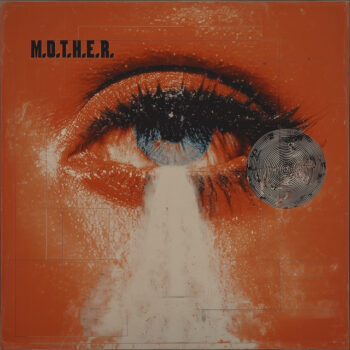
Released in May via Fullaway Records, “MY LOVE” introduces M.O.T.H.E.R., Furze’s new project after years spent at the center of The Big Pink and Panic DHH. This is less a conventional band than an evolving creative collective: Furze leads a rotating circle of longtime friends and collaborators, with Jamie Hince of The Kills and Jamie T helping shape its first incarnation. Inspired by the fluidity of projects like N.E.R.D., UNKLE, and Massive Attack, M.O.T.H.E.R. is designed to change color from release to release. Its self-titled debut EP captures this first configuration across four tracks – “MY LOVE,” “REAL HUMAN,” “TRAITOR,” and “SURRENDER” – pairing supersized hooks with the kind of sharp-edged, emotionally immediate songwriting that gives the whole project its pulse.
The song’s title and wedding-vow language make romance the obvious first reading. Furze’s own story blows that frame wide open.
“‘MY LOVE’ reads like a love story,” Furze says. “But it came from losing my mother and having my daughter at the same time, just trying to hold onto hope, because love is everything and all around. It sings like a hymn. ‘MY LOVE’ faces the cracks head-on yet celebrates what endures. Even as things fall, some love stands unbroken, and it’s worth rejoicing.”
That origin transforms every huge gesture in the song. This is the part where we fall apart could be a breakup line; here, it sounds closer to an acknowledgment that every life eventually reaches rupture. When I said forever / I meant forever and all us together / for worse or for better borrows the language of romantic vows and stretches it toward family, memory, birth, death, and whatever bonds remain after a person is gone. Furze never tries to make grief elegant. He gives it enough volume to become release. The song keeps surging back toward you can’t stop my love with almost devotional insistence, as though repetition itself might make the promise permanent.
That scale is exactly why “MY LOVE” hits so hard. M.O.T.H.E.R. build the song around a hook too big to contain, the title phrase returning again and again until it stops functioning as a chorus and starts sounding communal – less one person declaring love than a whole room shouting it back. The drama is unabashed. The performance pushes outward, the refrain gets larger with every return, and the song’s pop instinct keeps the emotional weight airborne rather than burying it. By the final repetitions, the refrain has taken on a congregational force: Private pain becomes public song, and singing it together becomes its own answer.
The EP grew from that same period of upheaval, making the project’s name carry far more than branding.
“M.O.T.H.E.R. is a project that responds and adapts to what’s happening in the moment,” Furze explains. “This EP came from losing my mother, and everything around it grew out of that, a band of brothers coming together. The next release will be a completely different color and approach.”
For a project built to mutate, its first statement is remarkably clear. “MY LOVE” plants M.O.T.H.E.R.’s flag in the place where collapse and celebration meet – where grief can roar, hope can be shouted, and love can survive a change no one asked for. Furze sings this is the part where we fall apart, and the song believes him. Then it answers with everything it has.
You can’t stop my love.
That is the breath of fresh air at the center of this gloriously oversized song: no cool detachment, no shrinking from emotion, no apology for caring this much. Things break. People leave. Generations turn over. M.O.T.H.E.R. meet all of it with their arms open and the volume pushed sky-high, celebrating the force that survives the breaking. “MY LOVE” is grief with its chest out – explosive, life-giving, and impossible to contain.
“Rocksteady/HeavyMetal”
by Emma Ogier & Eden JoelEmma Ogier and Eden Joel have a name for the relationship that comes after the relationship: A PBF – post-breakup friendship.
Spellbinding, smoldering, and gloriously alive, “Rocksteady/HeavyMetal” is their achingly evocative ode to choosing the person even after the partnership has changed shape, built around one stubbornly loving promise: I don’t wanna leave you behind. Their voices braid, separate, and rise together over glowing electric guitar, layered acoustics, and drums that keep pressing forward, giving this gentle giant of a song both tenderness and turbulence. Visceral and vulnerable, it stays almost impossibly catchy even as every chorus pulls at the bruise – a hauntingly beautiful portrait of two people learning that love can change its name without losing its meaning.
But I don’t wanna leave you behind
Tread heavy
40 quarters
Got me double blind
No I don’t wanna leave you behind
Rock steady
Heavy metal
Hit the overdrive
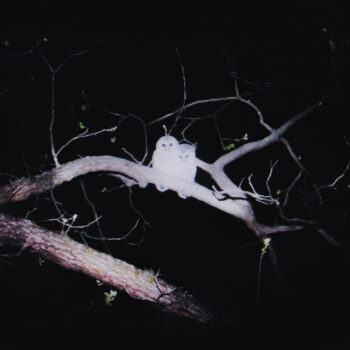
Released July 10 via Lost Highway Records, “Rocksteady/HeavyMetal” arrives in the middle of a remarkable year for Ogier, a 22-year-old Houston singer/songwriter now working toward her debut album. Her recent singles “Baby Don’t Hurt Me” and “Believing” sit, as she puts it, at opposite ends of her artistic range, while this latest track slips somewhere fascinating between them – delicate and hard-hitting, intimate yet built to surge. Ogier never conceived these songs as parts of a coordinated set – they were written at different times, without one dictating the sound of another – but together they reveal an artist increasingly comfortable letting her writing roam. “I take inspiration from a wide range of music and I want to reflect that in my work, while still allowing my voice to piece everything together,” she explains. Recent shows with Bright Eyes found Ogier taking on Emmylou Harris’ harmony role alongside Conor Oberst, an experience she credits with making her write “with a lot more intention”; Austin City Limits and a fall tour supporting Hovvdy are still ahead. All that motion matters here because “Rocksteady/HeavyMetal” was born from another young songwriter who has helped shape Ogier’s voice from up close: Nashville artist Eden Joel.
For all that stylistic openness, Ogier’s ambitions begin with the song itself. She writes from personal experience with the hope that a private truth might travel further than the life that produced it – an idea especially resonant in a song about two people learning how to stay connected across changing circumstances.
“I think good songs are a way for people to communicate to each other across time and space,” Ogier tells Atwood Magazine, “and my aim ultimately is to write great songs and make many great records.”
The collaboration at the center of “Rocksteady/HeavyMetal” is wonderfully literal. Ogier and Joel are singing from inside the very bond the song is trying to understand.
“Our relationship is special and complicated and has always possessed a serious-feeling of depth,” Ogier tells Atwood Magazine. “What started as an undeniable connection and incessant belief in each other, in terms of us both being two young songwriters – vulnerable, on the internet, and trying to make real careers of it – turned romantic, yes, but also taught us something about the weight of love – how even when its median shifts, real love is when you still hope for the others success and joy.”
Their personal history is only half of what gives the collaboration its charge. Ogier and Joel challenge each other precisely because their instincts do not always travel the same route.
“Eden has always inspired and challenged me as a writer,” Ogier shares. “We are very different writers who support each other with the same enthusiasm. He always introduces ideas I would’ve never come up with on my own.”
You can hear that shared history – and that creative push and pull – in the recording itself. Produced by David Baron, “Rocksteady/HeavyMetal” stacks acoustic, high-strung acoustic, and 12-string guitars beneath bass, drums, synths, and a radiant electric guitar that keeps roaring through the song’s gentler spaces. Ogier and Joel share lead vocals while James Eichman and Aidan Ogier join them in the background-vocal layers, creating a chorus of voices that swells around the central refrain rather than merely decorating it. The arrangement is graceful and gritty in equal measure: The guitars rush, the rhythm section keeps tightening the screws, and those glowing vocal overlays make the relationship audible – two distinct voices moving independently while continually finding their way back into the same frame. Even the song’s construction echoes its subject: Different instincts coexist without flattening each other, tension becomes momentum, and separation keeps resolving into connection. The song’s irresistible charm was there before any of that production arrived.
“When Emma played me the original idea for ‘Rocksteady/HeavyMetal,’ I was immediately hooked,” Joel recalls. “We got straight to work on it, stringing together melodies and words with the sole intention of making each other laugh. It was an effortless process, devoid of self-criticism. I never expected anything more would come of it, so I was surprised (and initially slightly hesitant) when Emma called me about recording it. Our relationship has ebbed and changed through the years, but the bottom line has always remained that our support, love and respect for each other is paramount.”
The bridge puts them on separate flights and finally names the ethic underneath the whole song:
Window seat, separate flights
Love ain’t late, it’s right on time
I’m on your side, just keep on rocking
’Cause you don’t have to leave me behind
“I think ‘keep on rocking’ was the perfect way to surface the entire idea of the song. wanting what’s best for someone you love. Encouraging them to keep going even if that means yalls relationship might change.”
Separate flights, same side. That is the grace “Rocksteady/HeavyMetal” leaves behind: Ogier and Joel do not need the old relationship back in order to keep believing in one another. Their paths can split while their support keeps traveling between them, carried by those overlapping voices and that luminous guitar charging toward the horizon. By the time they reach the final refrain, I don’t wanna leave you behind has stopped sounding like resistance to change. It sounds like a new definition of staying – letting love move, letting each other move, and sending the other person forward with the simplest blessing this song knows: keep on rocking.
— — — —

Connect to us on
Facebook, 𝕏, Instagram
Discover new music on Atwood Magazine
Editor’s Picks
follow EDITOR’S PICKS on Spotify