At the Vail Valley Foundation’s GoPro Mountain Games, Mountains of Music turns four days of outdoor adventure into a breathtaking concert experience set against a picturesque backdrop. 2026’s series saw acts like the Allman Betts Family Revival, Wilderado, Michael Marcagi, and more carry the weekend’s energy from sun-soaked days into unforgettable nights in the Colorado Rockies. A celebration of live music as the heartbeat of mountain culture, Mountains of Music belongs on every music lover’s festival list.
By sundown in Vail, the mountains had already seen dogs fly, climbers sprint up walls, kayakers carve through whitewater, and thousands of people spend the day chasing one thrill after another. Then the guitars came out.
There’s something magical about the mountains – the way the sky seems to open wider, the air feels a little lighter, and ordinary life suddenly gives way to possibility. For four days each June, the GoPro Mountain Games take that feeling and build an entire community around it, transforming Vail into a sprawling celebration of adventure, art, music, and the simple exhilaration of being outside together. Across Vail, competitions, free concerts, creator stages, vendor tents, and family activities spill into one another before the current begins pulling toward the Gerald R. Ford Amphitheater as another extraordinary day gives way to live music.
The day-to-night rhythm is what makes Mountains of Music feel so singular. The concerts are not an escape from the GoPro Mountain Games; they are its natural crescendo, taking all the adrenaline, wonder, exhaustion, and collective good feeling of a day spent under the Colorado sun and giving thousands of people somewhere to put it. In 2026, Mountain Grass Unit played bluegrass with the almost unbelievable fire of a group of prodigies having the night of their lives; Michael Marcagi and Wilderado filled the mountain air with folk rock, heart, soul, and stunning harmonies; and, finally, the Allman Betts Family Revival in the Rockies brought generations together for one of the most electrifying concerts in this writer’s lifetime.
If Mountains of Music is not yet on every music lover’s festival list, it should be.
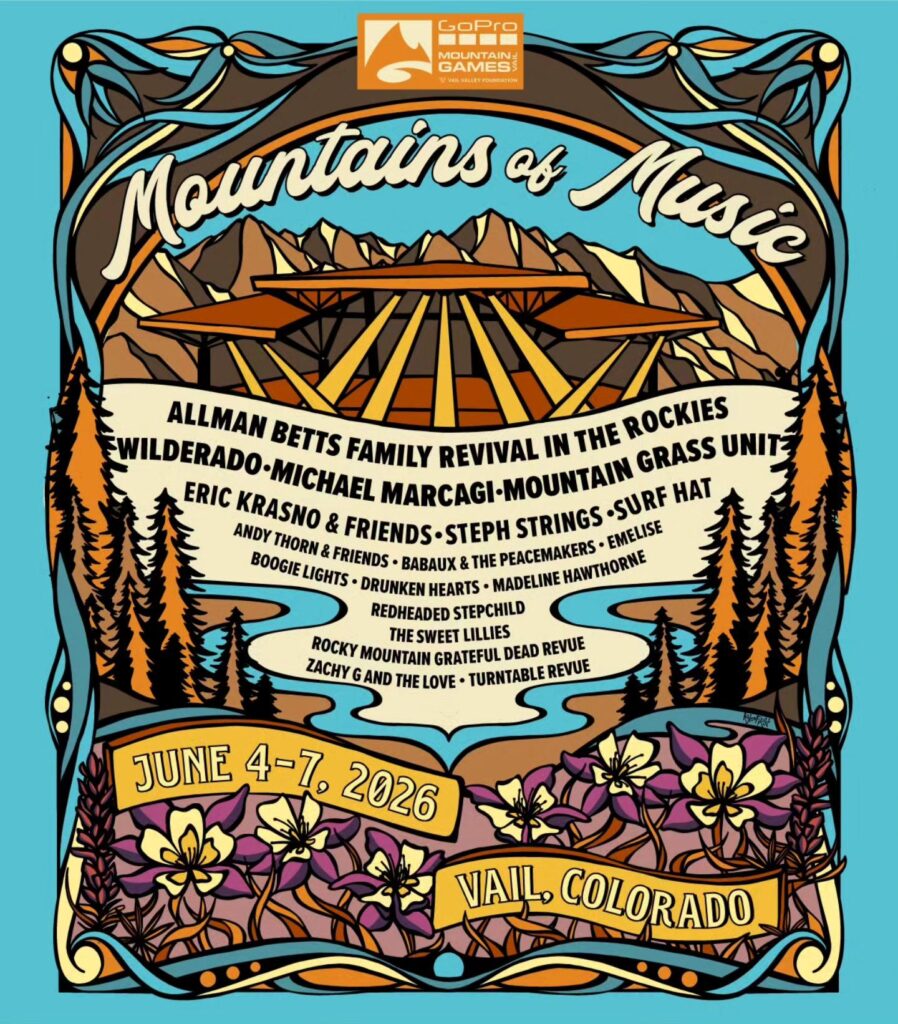
The scale of that experience is easy to underestimate until you are standing in the middle of it. Mountains of Music is only one piece of the GoPro Mountain Games, a four-day gathering that draws roughly 90,000 attendees annually and brings together more than 35 athletic competitions alongside art, food, creator programming, family activities, and enough dogs to make just about any afternoon better. With the athletic competitions free to spectate, the Games feel less like a fenced-off festival than an open invitation to wander.
This openness is central to what the Mountain Games have become. Founded in 2002 as a much smaller celebration rooted in whitewater sports, the event has steadily expanded without losing the communal spirit that makes it work. Today, it sits at the intersection of athletics, music, art, and outdoor culture, all organized by the nonprofit Vail Valley Foundation, which has spent more than two decades building an event that feels less like something you attend than something you temporarily join.
“Music just goes so well with it because it’s the perfect ending to a long day of activity outside,” says Dave Dressman, Event Director of the GoPro Mountain Games and Vice President of the Gerald R. Ford Amphitheater. “It’s getting together to celebrate different activities, and music being a major part of that here this weekend at the GoPro Mountain Games. It’s critical, and I think it’s thriving, especially in a state like Colorado, where people really, really value an outdoor lifestyle.”
Spend even a few hours walking around Vail during the Games and that relationship becomes self-evident. The weekend does not ask visitors to choose between athlete and music fan, outdoors person and arts person, adult and kid, spectator and participant. Athletes, artists, families, spectators, and four-legged competitors all seem to move through the same shared current, occupying the same few remarkably walkable pockets of Vail.
And somehow, despite all that activity, the weekend rarely feels frantic. There is always another path to wander down, another competition to stumble upon, another patch of grass to sit on, another song drifting out from somewhere nearby. Even the most spectacular moments carry a kind of looseness because they unfold beneath an open Colorado sky, surrounded not by the sealed-off atmosphere of an arena but by a festival still moving around them.
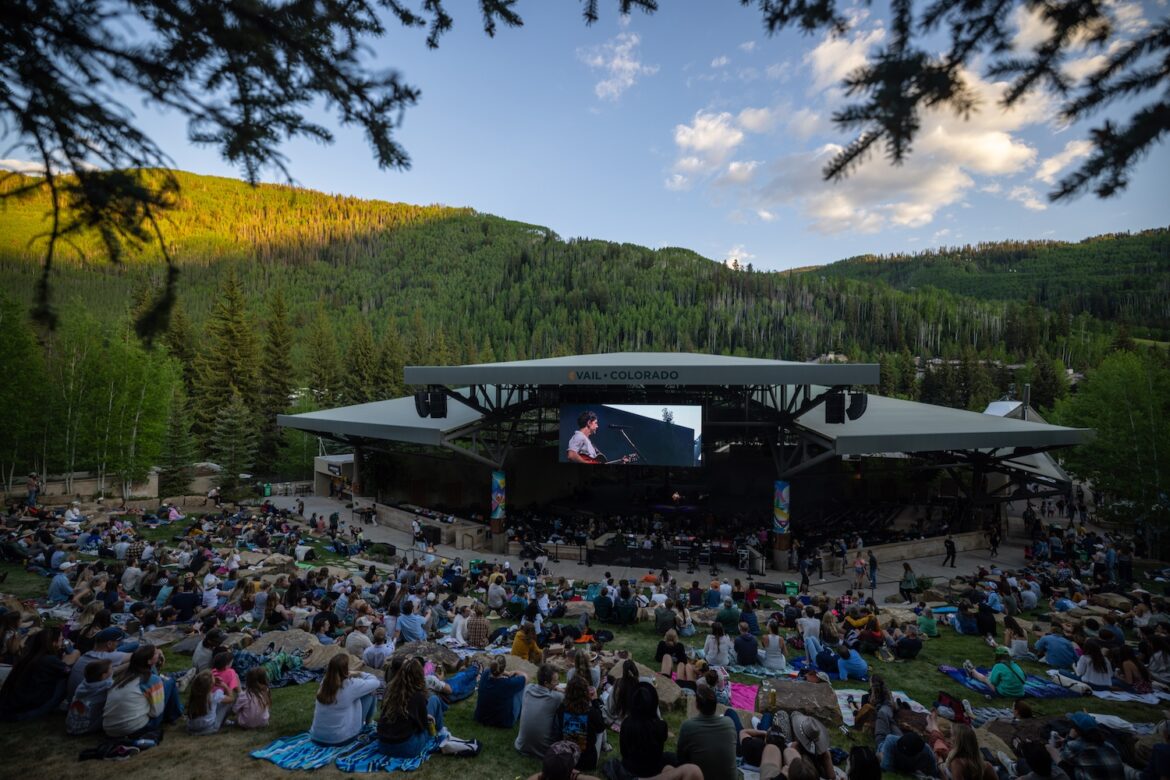
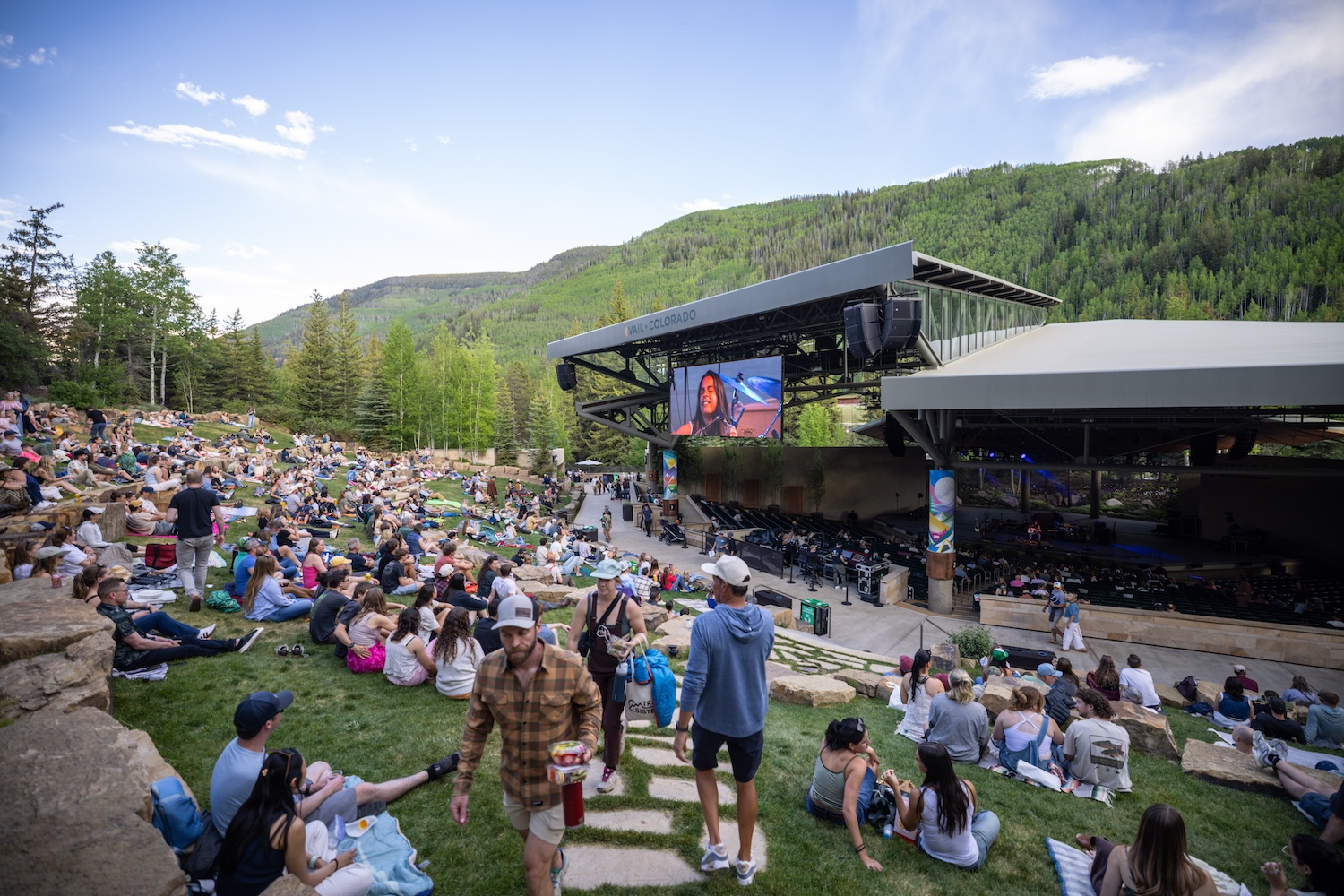
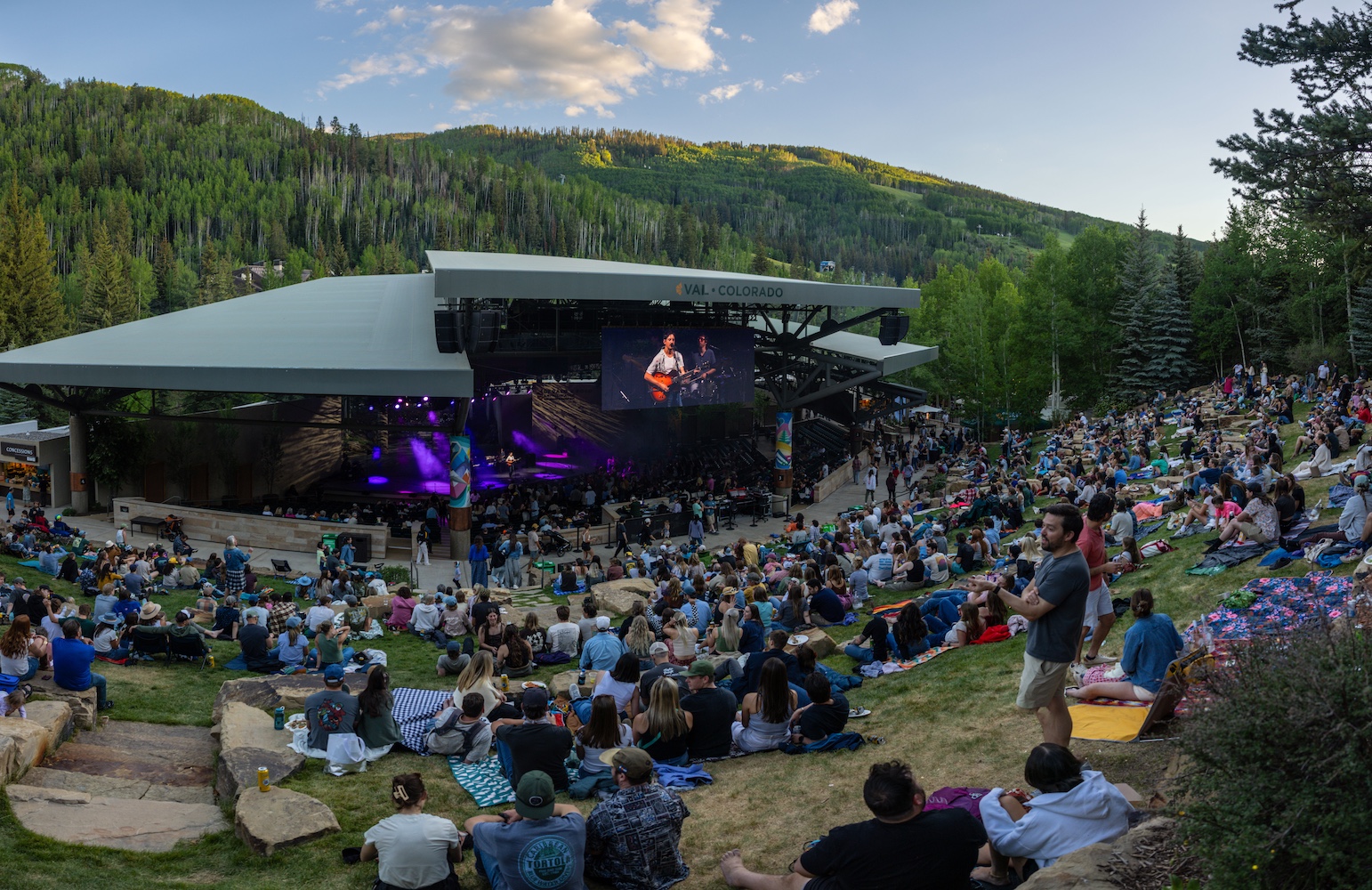
By evening, that movement begins to bend toward the Gerald R. Ford Amphitheater. After spending the day in motion, you do not arrive at some distant, anonymous concert complex. The Amp is tucked beside Gore Creek and surrounded by trees and mountain peaks; you follow the river, walk through the trees, and suddenly find yourself inside one of the most beautiful outdoor venues in the country, close enough to the stage to feel every guitar solo land.
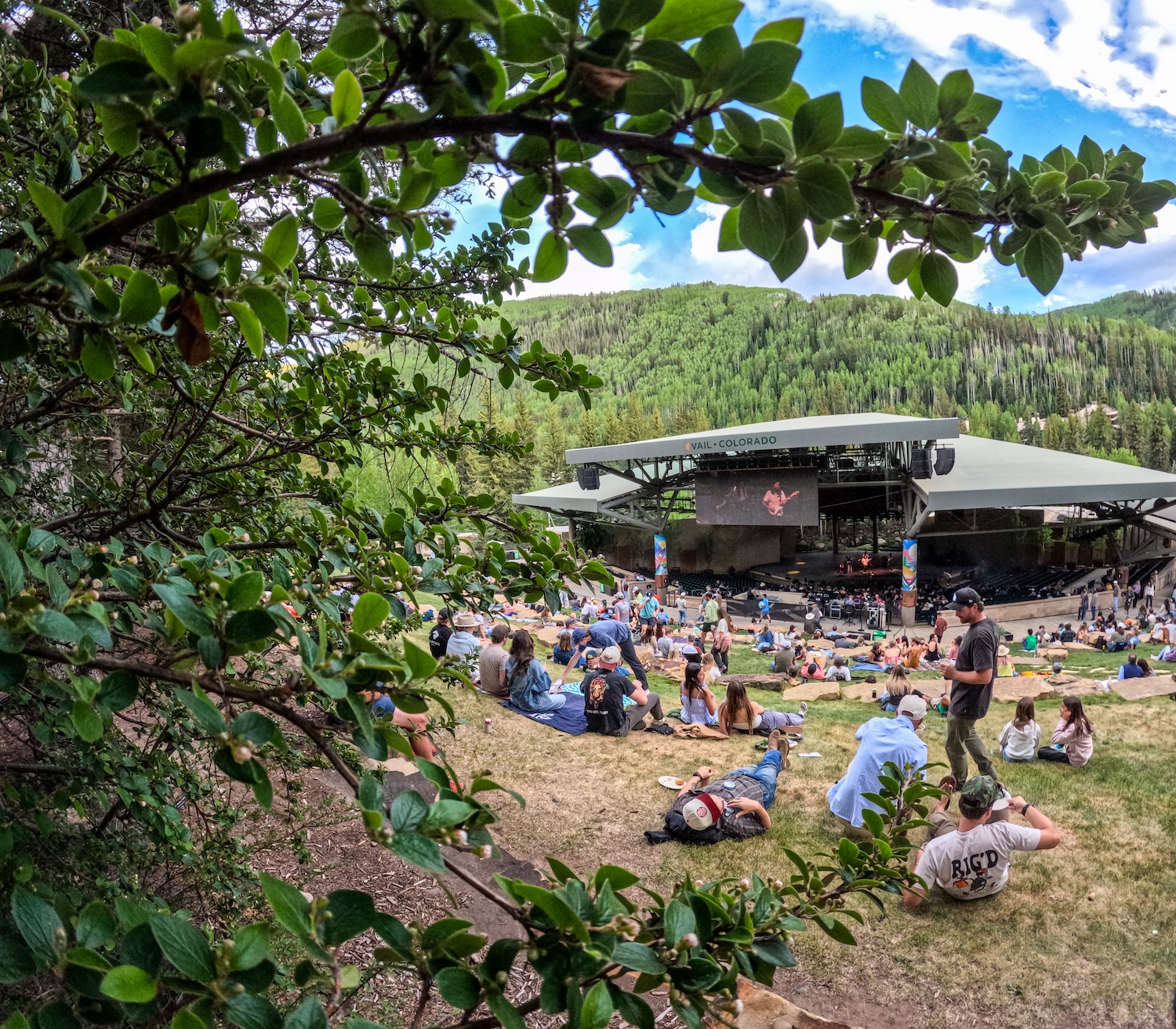
And in 2026, night after night, the music and its surroundings proved impossible to separate.
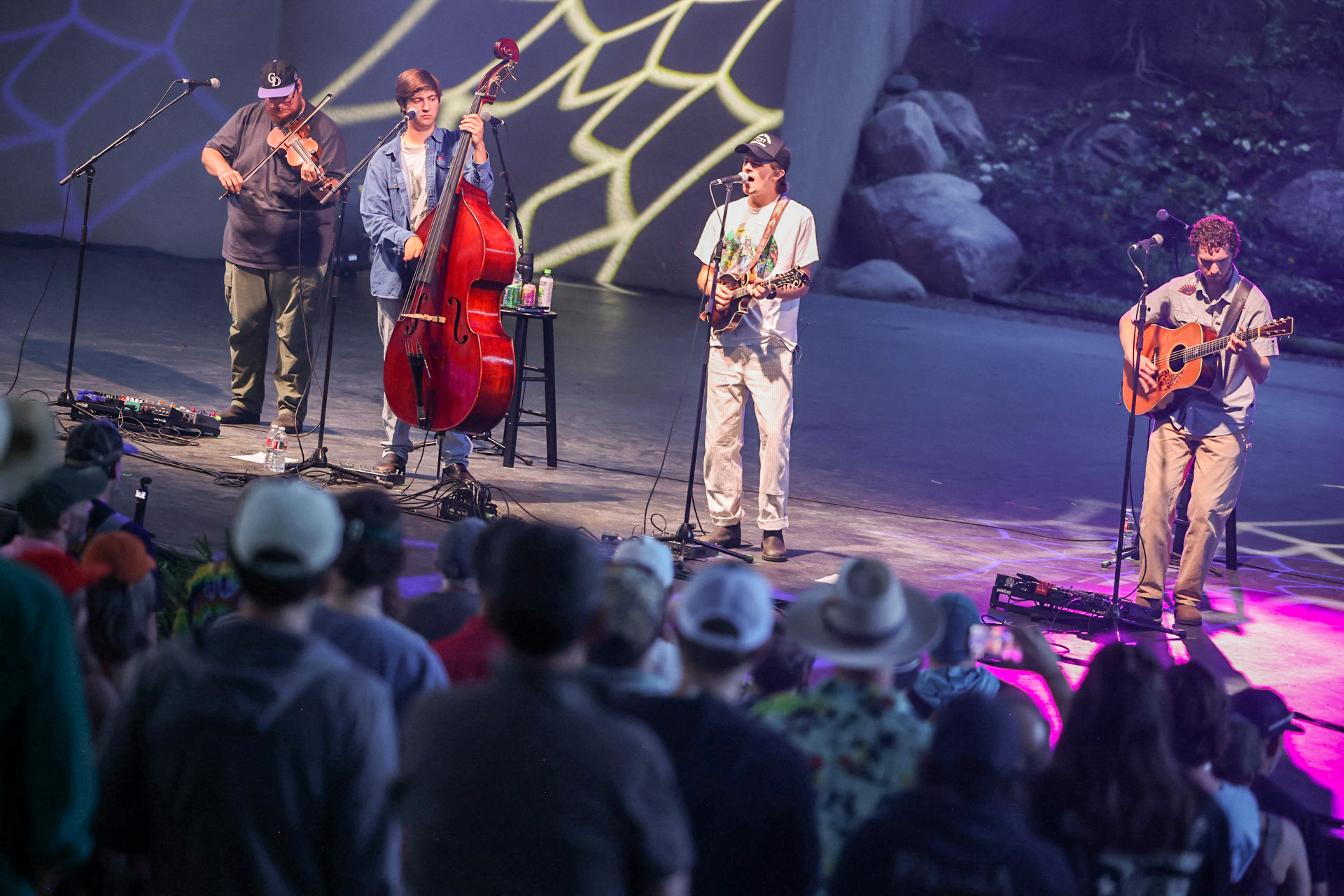
Thursday night offered the first proof. Mountain Grass Unit took the stage with the kind of confidence that makes you briefly forget just how young its members are. The Birmingham, Alabama quartet has spent the past few years rising through the bluegrass and jam worlds, but seeing them in person felt less like catching an ascendant band than witnessing four prodigiously gifted musicians discover, in real time, just how far they could push one another.
They were easily one of the best bluegrass bands I have ever heard.
Technical ability was only part of the thrill. Mountain Grass Unit played with abandon, trading leads and locking into breakneck passages with the intuitive chemistry of musicians who have known each other since childhood. Four-part harmonies gave way to fearless improvisation; traditional acoustic textures slipped toward country, jazz, rock, and jam territory without ever losing the thread. Above all, they looked like they were having the night of their lives, and that joy proved contagious. By the time the set was fully underway, the crowd was theirs.
There is some hindsight available now that was not there in June. In August, Mountain Grass Unit released their debut album, Appalachian Smoke, through Dualtone Music Group, a 13-track record produced by six-time Grammy winner Vance Powell and recorded almost entirely live without a metronome. Bassist Sam Wilson has said the goal was simple: “We wanted the album to feel like our live show.” Anyone who saw the group in Vail already knew exactly what that meant.
The band had entered the weekend on a serious ascent, following more than 30 sold-out shows in 2025 and an IBMA Momentum Award for Band of the Year. Appearances at Bonnaroo, Railbird, and High Sierra, followed by a Grand Ole Opry debut later that summer, only reinforced the sense that something significant was happening around them. Yet none of those credentials mattered as much as the music itself. For an opening night built around discovery, Mountain Grass Unit set an almost unfairly high bar.
They were preceded by Surf Hat, the psych-surf rock band from Squamish, British Columbia whose dreamy guitars and laid-back coastal sensibility made them an intriguingly unexpected booking for a weekend in the Rockies. Dressman’s story of finding them says plenty about how Mountains of Music approaches its smaller stages and support slots.
“I think I saw [Surf Hat] on Instagram, and I was like, ‘These guys are effing awesome,’” he recalled. “I reached out to them. I don’t even think they had an agent at the time, and I was emailing with the lead singer.”
That willingness to follow curiosity matters. Mountains of Music has enough established names to sell tickets, but some of its personality comes from the artists you may not know when you arrive.
By daylight the next morning, the guitars had given way again to the delightful sensory overload of the Games themselves.
Vail Village becomes remarkably easy to wander without any particular destination. Dozens of tents turn its streets and plazas into a sprawling outdoor marketplace, with major brands sharing space alongside local manufacturers and makers. Shirts, sunglasses, outdoor gear, food, demos, samples, and giveaways appear around seemingly every turn. Sun Bum kept sunscreen readily available throughout a weekend when the Colorado sun made that feel less like swag and more like public service. LaCroix, meanwhile, was handing out its new Pineapple Coconut flavor – a tropical, piña colada-inspired sparkling water that proved as delicious as it was refreshing.
The commercial footprint is substantial, but the Games rarely feel like an outdoor-industry trade show that happens to have some sports attached. There is too much movement around it, too much happening simultaneously, and too many unexpected reasons to stop walking.
Few were more effective than the dogs.
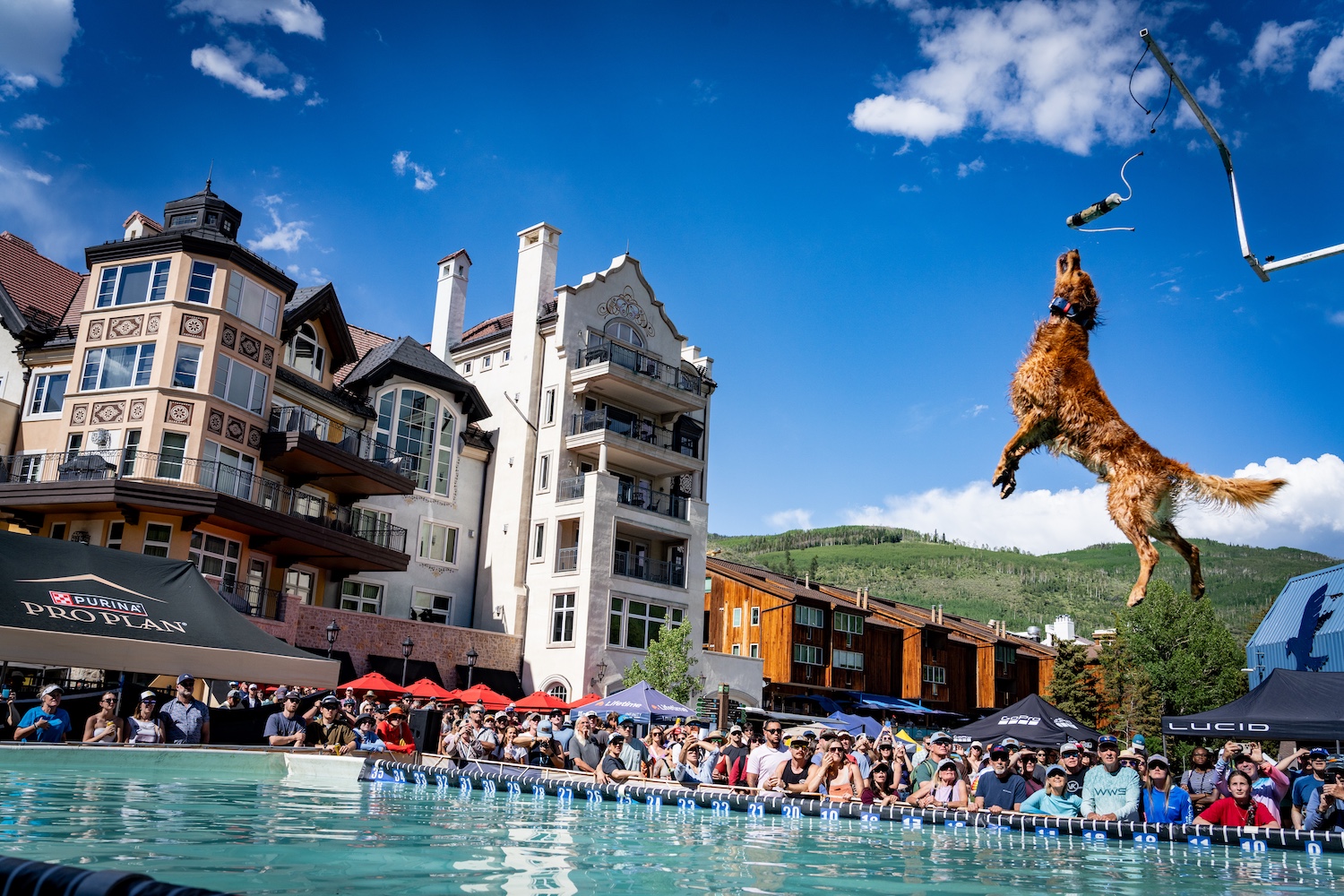
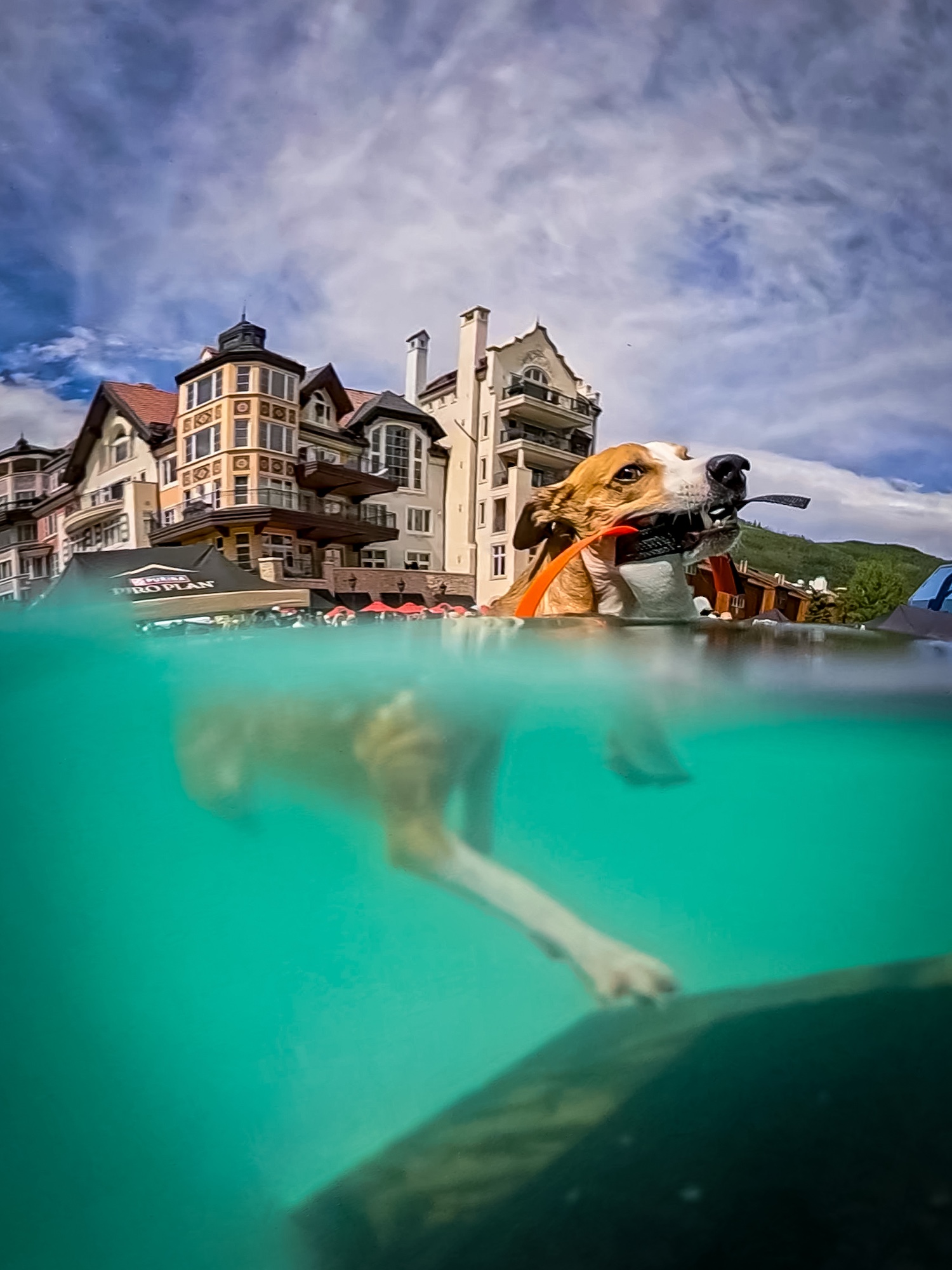
DockDogs was impossible to miss, with crowds gathering around pools to watch canine athletes sprint down a platform and hurl themselves into the water in competitions built around distance, height, and an apparently universal desire among dogs to launch themselves toward something with complete commitment. In the summer heat, there were moments when I wondered whether anyone would notice if I jumped in after them.
The 2026 Games turned out to be historic for their four-legged competitors. Mayhem, a greyhound, tied her own DockDogs Extreme Vertical world record with a 9-foot, 2-inch leap. Elsewhere, hundreds packed around the inaugural Short Dogs In Da House Mountain Race, while the weekend produced an accomplishment far more meaningful than any medal: 30 shelter dogs found permanent homes through the event’s adoption efforts.
It was hard not to understand what Dressman meant when he described the Games through the people and animals who populate them.
“It’s about the people, man,” he said. “It’s this matchup of river rats, cycling enthusiasts, artists, musicians, dogs… Everywhere you look, there’s something to make you smile.”
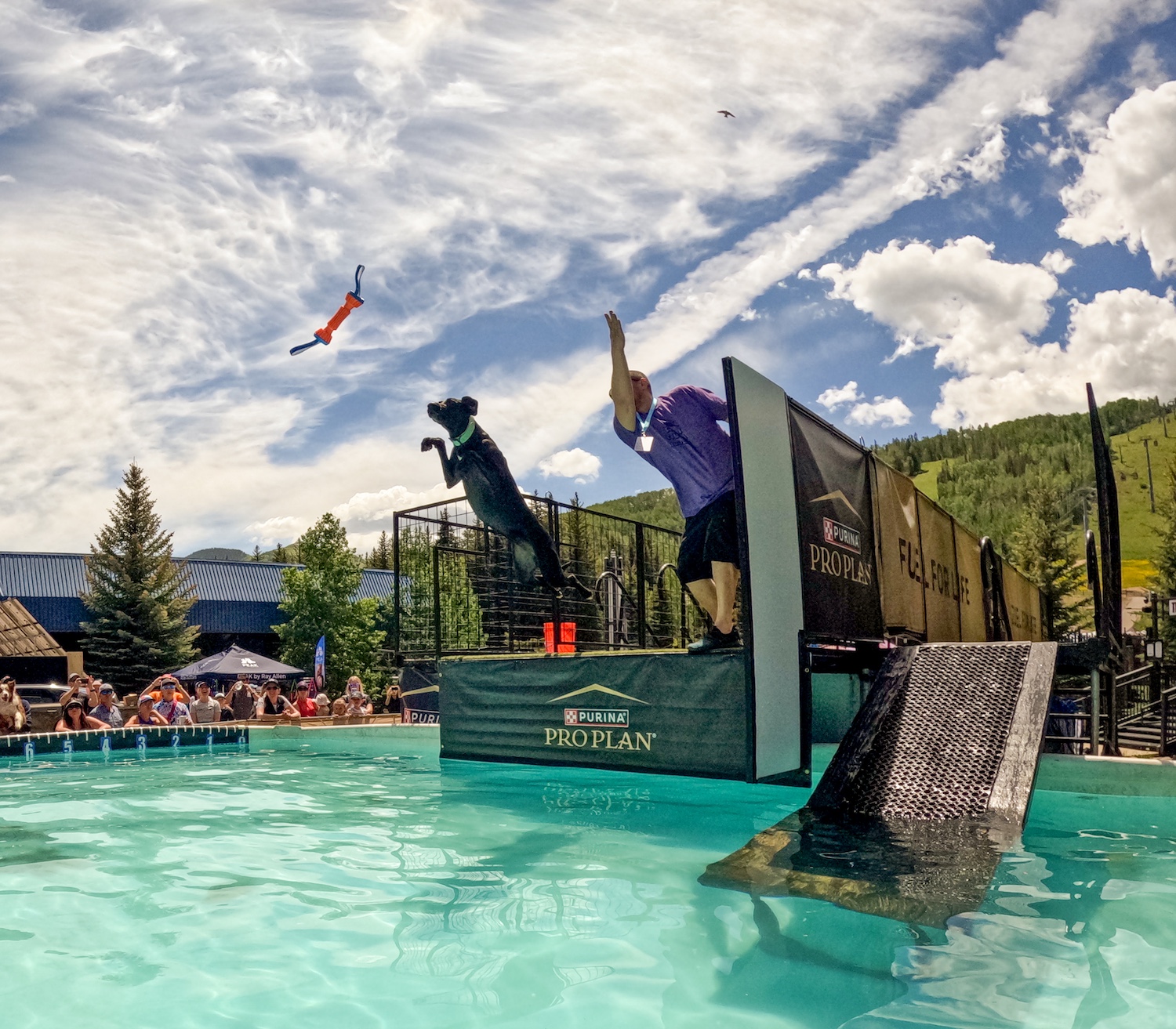
All of it coexists within a footprint compact enough that changing your plans requires little more than turning down another path. That walkability is not accidental. Dressman noted that when organizers experimented with expanding the Mountain Games beyond Colorado in the late 2010s, looking at places including Stowe, Vermont and Bend, Oregon, the ease with which Vail connects all these experiences proved remarkably difficult to reproduce.
By Friday evening, that wandering energy had begun flowing back toward the Amp, and the second night provided perhaps the clearest expression of what happens when the music seems genuinely suited to the landscape around it.
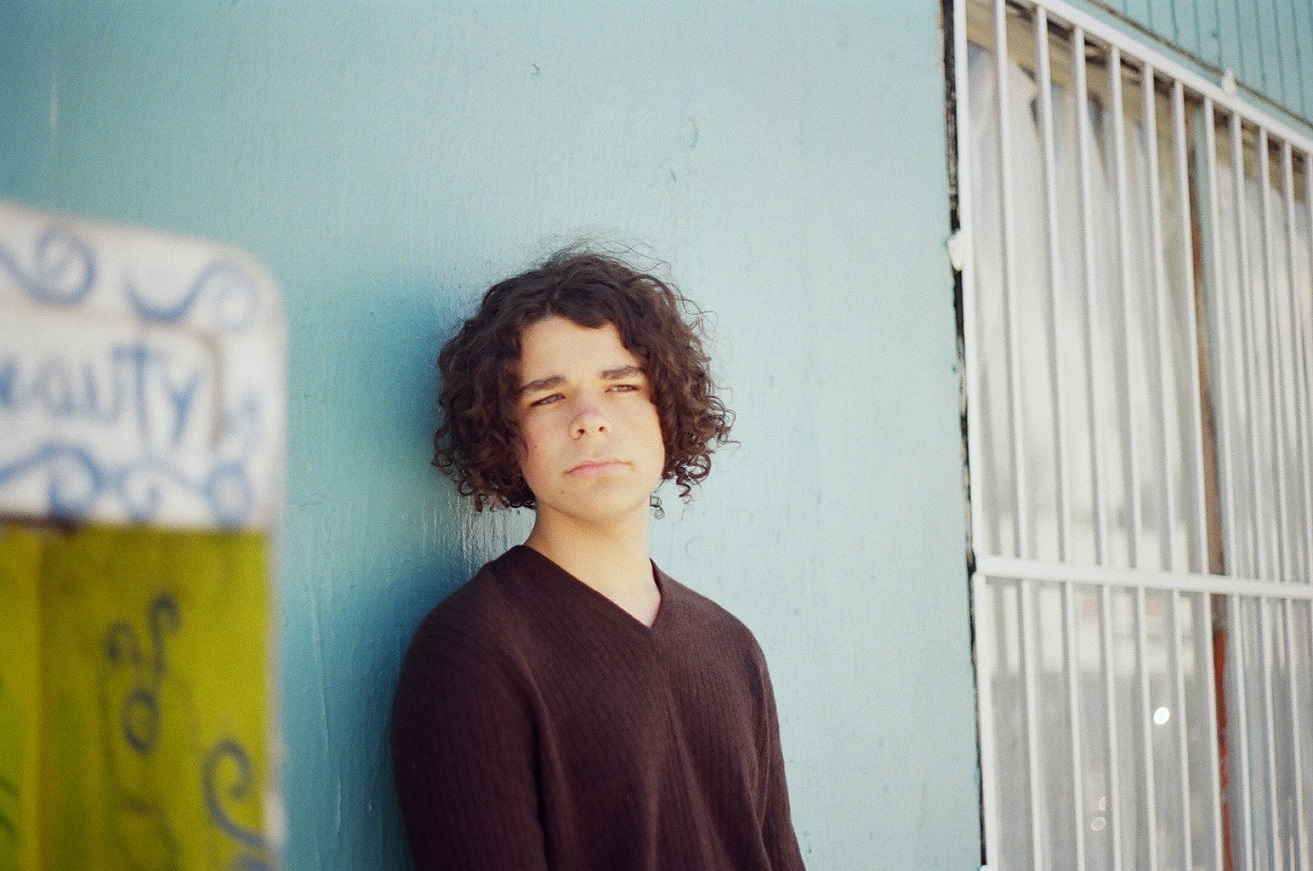
Australian guitarist and singer/songwriter Steph Strings opened the evening, setting the stage for a co-headlining bill that brought Michael Marcagi and Wilderado together beneath the Colorado sky. Marcagi arrived first with a spirited, captivating set of folk rock that made immediate sense in the open air.
The Cincinnati-born singer/songwriter had only recently moved to Boulder, but Colorado already felt natural to him. More importantly, he had long imagined his songs inhabiting precisely this kind of environment.
“I always kind of imagine the music in this kind of setting when I’m writing it, to be honest,” Marcagi told Atwood Magazine. “So I feel at home here. This is, like, an ideal weekend for me.”
Onstage, that comfort translated into an easy warmth. His songs carried across the lawn with a looseness that never diminished their emotional pull.
“I feel happier onstage when I’m in a place like this,” Marcagi said. “It’s hard not to be up there having fun… Honestly, sometimes a setting like this almost takes the pressure off, because it’s doing a lot of work for you.”
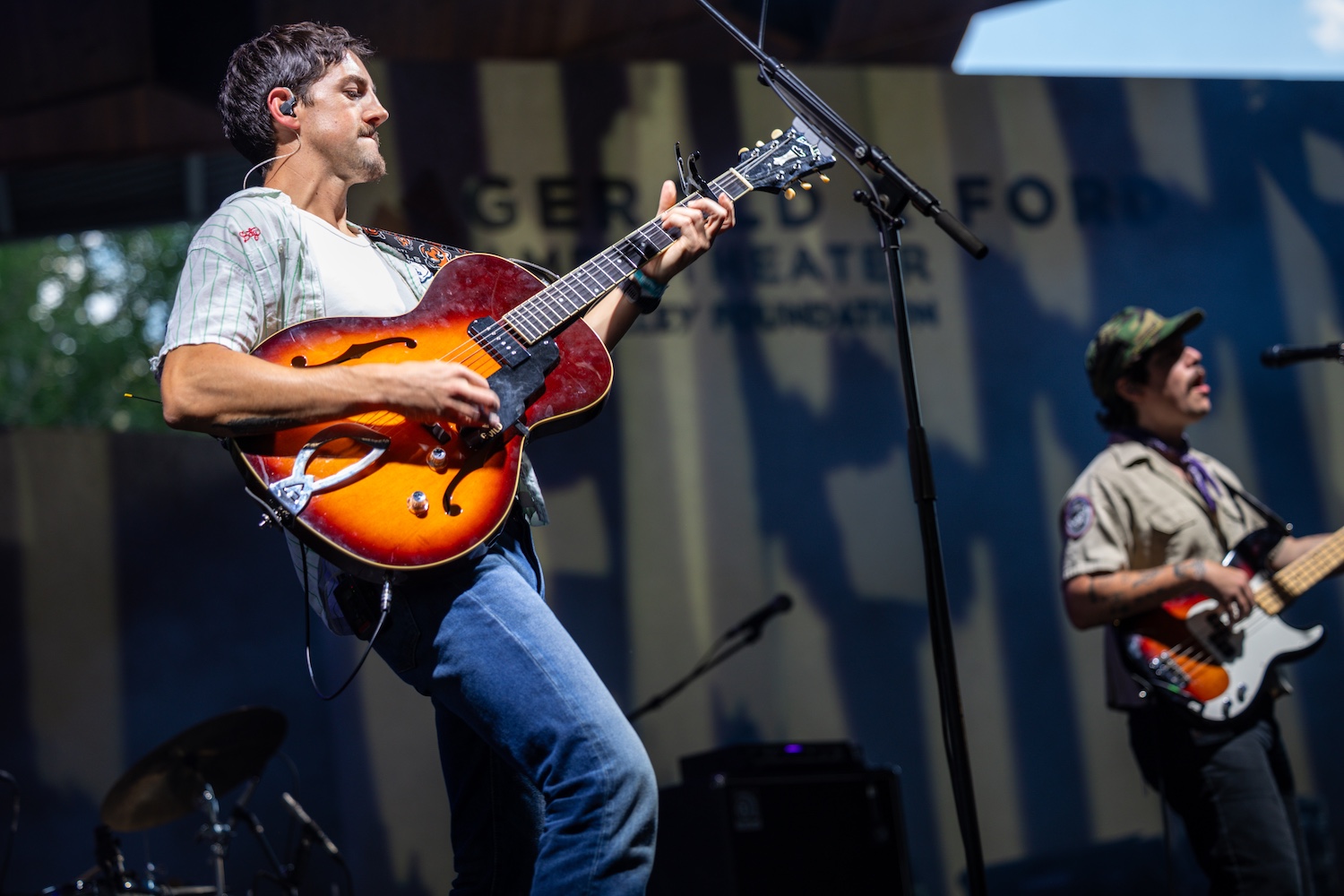
Wilderado followed and somehow made the mountain feel more intimate.
The Tulsa indie rock band’s music has always carried a sense of openness in its anthemic guitars and searching melodies, but in Vail those songs seemed to stretch naturally into the landscape. Their performance was spellbinding, full of heart and soul, with stunning harmonies rising into the evening air and seeming, at moments, to make the whole mountain come alive.
Frontman Max Rainer had already been thinking about that connection.
“I was walking this river yesterday,” he told Atwood. “It was a beautiful trail, and I was thinking about my grandpa. We were really close, and we were up in Colorado together all the time, fly fishing… I was thinking, ‘Man, I can’t believe that we get to play in places like this,’ because I think my spirit really does kind of move in the same way that the air does up here. So I try to let my worries go away and just let the two meet, and be in harmony together.”
Rainer connected that same openness to songwriting itself, comparing the process to watching the aspens move with whatever passes through them. “All this weather happens, all this life, and still, each year, it comes back and just lets it happen over and over and over again,” he said. “That’s what I feel like I’m trying to do with songs.”
By the end of Friday night, that idea no longer sounded abstract.
The Amp has a way of making performers and landscape seem unusually close to one another.
Its modest scale is part of the reason. Even at its largest standing shows, the Gerald R. Ford Amphitheater holds roughly 3,000 people. Dressman contrasted that with the 10,000-capacity Red Rocks, a venue he readily calls “the mecca” and praises without reservation. But Vail offers a different proposition.
“It’s the intimacy and the geography, I think. And the people,” he said.
The distinction becomes obvious once you are inside. The mountain rises around the venue rather than somewhere beyond it. Gore Creek runs nearby. Trees frame the grounds. Lawn seating preserves a communal looseness, while the comparatively small capacity means a nationally prominent artist can still feel startlingly close.
For musicians, the experience begins before they ever reach the stage. Hotels and restaurants sit within walking distance, and artists can quite literally follow the river to work. It bears almost no resemblance to arriving through the loading dock of another anonymous arena or disappearing into the basement green room of a club.
There is history here, too.
The Amp opened in 1987 and will celebrate its 40th anniversary season in 2027. It is currently undergoing a three-year, $19 million renovation led by the Vail Valley Foundation, with Phase Two beginning during the 2026–27 offseason. The goal is not to remake the character of the venue, but to strengthen what sits behind it, improving dressing rooms, rehearsal spaces, bars, the box office, and other infrastructure while preserving the setting audiences already love.
For Duane Betts, the stage already carries decades of personal history.
Decades before the Allman Betts Family Revival arrived in Vail, Betts stood at this same amphitheater as a terrified teenager preparing to play guitar with the Allman Brothers Band for the first time.
Or, more accurately, trying desperately not to.
Betts recalled deliberately leaving his guitar at the hotel so he could avoid sitting in. Ten minutes into the bus ride toward Vail, his father, Dickey Betts, asked whether he was ready.
Duane claimed he had forgotten his instrument.
His father barely blinked.
“Oh, that’s all right,” Dickey told him. “We have plenty of guitars. You’ll play one of mine.”
More than three decades later, Duane Betts returned to that stage carrying those songs himself.
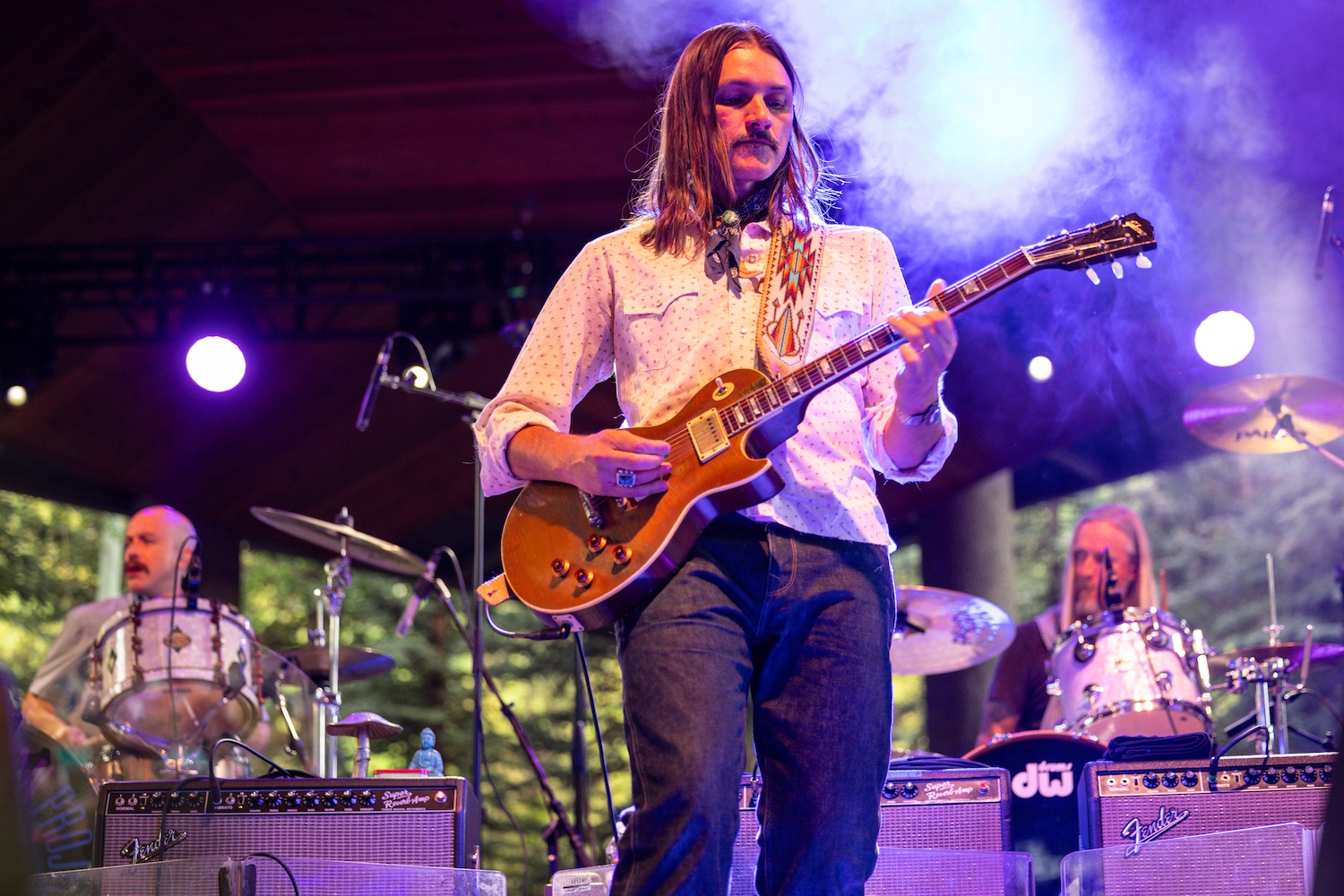
Saturday night could hardly have asked for a better piece of history.
The Allman Betts Family Revival traditionally lives elsewhere on the calendar. Hosted by Devon Allman and Duane Betts, sons of Gregg Allman and Dickey Betts, the annual celebration has spent a decade gathering musicians between Thanksgiving and Christmas to honor one of American rock music’s great catalogs.
Taking it into the Rockies in June was not business as usual.
“To do a Revival outside of that normal, sacred window really needs to be something special,” Devon Allman explained. “We’ve only done it three times.”
Vail earned the exception.
Eric Krasno & Friends opened Saturday’s show before an almost absurd collection of musicians began cycling across the stage. Devon Allman and Duane Betts were joined by Luther Dickinson, Jimmy Hall, Larry McCray, Anders Osborne, Lamar Williams Jr., and others in a sprawling ensemble whose collective résumé could have filled the rest of this article.
What followed was one of the best concerts I have ever attended.
There was plenty of reverence in the room, but very little stiffness. This did not feel like musicians tiptoeing around sacred material. It felt like a family reunion with amplifiers.
A feverish, soul-shattering “Whipping Post” seemed to tear open the evening. “Blue Sky” arrived with a different kind of power, heartfelt and charming, Duane Betts singing his father’s song as daylight lingered around the mountains. “Jessica” ripped. “Soulshine” grew into a roaring, dramatic celebration. By the time “Midnight Rider” helped bring everything home, the night had long since crossed into something revelrous.
The guitar playing alone could have sustained the show.
Devon and Duane repeatedly pushed their instruments toward the edge, trading restraint for eruption and then finding their way back again. Larry McCray brought tremendous soul and feeling, while Krasno brought a restless, expressive edge to every solo. Dickinson, Hall, Osborne, Williams, and the rest of the cast each altered the chemistry as they entered and exited.
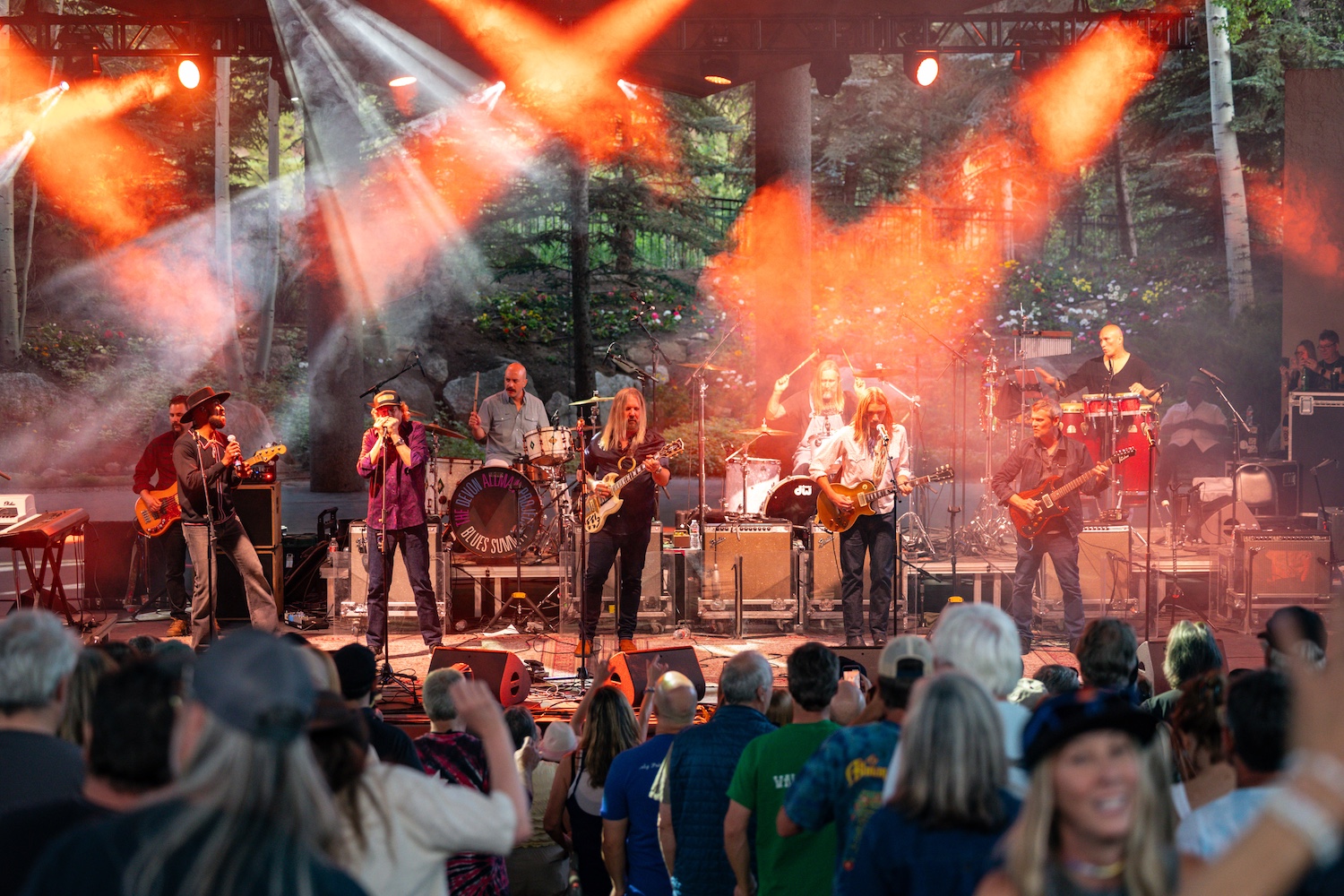
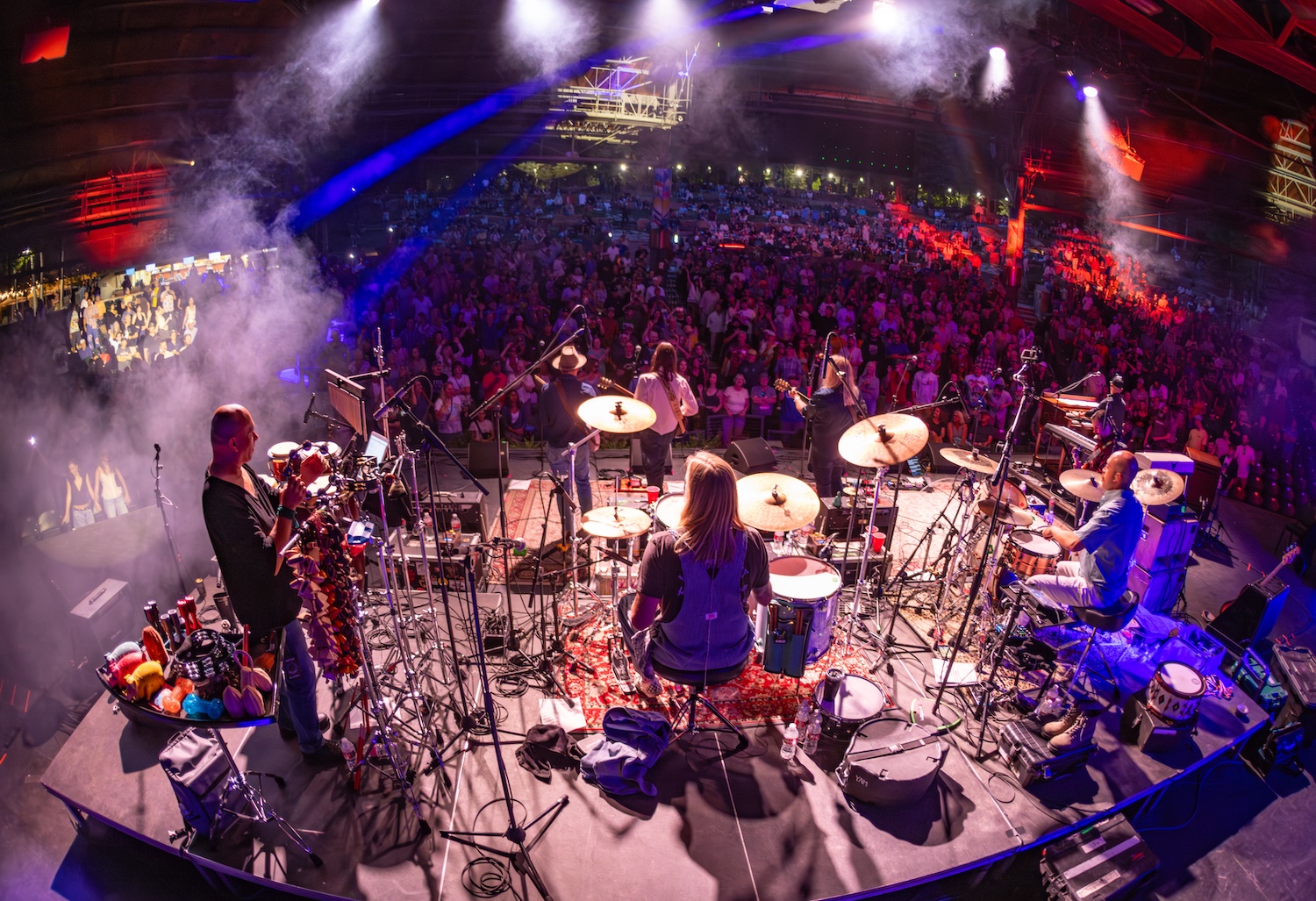
Yet virtuosity never became the point.
“Blue Sky” captured why.
“That particular night, I really recall loving playing ‘Blue Sky,’ because sometimes you can get kind of tired of playing them, or they don’t carry the same magic every night,” Duane Betts told Atwood. “Sometimes they really hit. But in that environment, everybody was up dancing, and it was just the open air, the green grass, and being in the mountains. I mean, ‘Blue Sky,’ it just always hits for me.”
All around him, generations were singing along. Older fans who had lived with this music for decades stood beside younger listeners discovering the catalog generations later. Couples danced. Strangers cheered one another. People shouted for songs they had carried through weddings, losses, road trips, childhoods, and whole stretches of their lives.
The musicians were having every bit as much fun.
That reciprocity matters deeply to Devon Allman.
“It’s a symbiotic experience,” he said. “The audience gives you a ton of energy, and then it just propels you. They’re the fuel for the engine.”
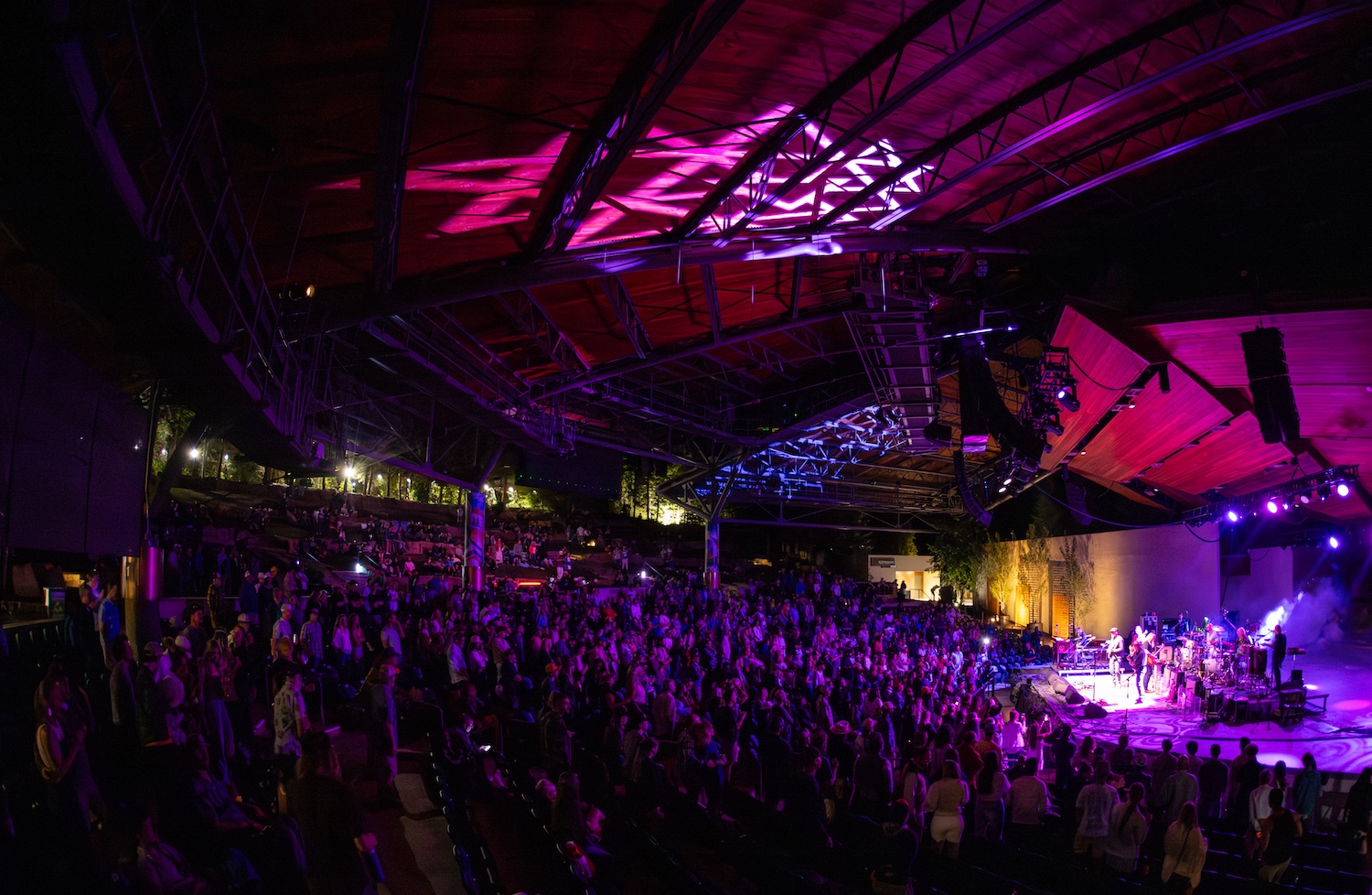
For three hours, the Amp became precisely that kind of engine.
And when the last notes finally disappeared into the night, the weekend’s great musical climax felt less like a standalone concert than the inevitable release of everything that had been building since Thursday.
Sunday morning, the Games started again.
There was something satisfying about that. After three nights defined by musicians doing extraordinary things with guitars, voices, banjos, basses, drums, and keys, the final day returned attention to bodies in motion.
The speed climbing finals were among the weekend’s most breathtaking spectacles. Competitors attacked the wall with such astonishing acceleration that the eye barely had time to process what their bodies had just done, the climbers racing upward with the uncanny speed of human spiders.
Around them, the Mountain Games kept moving.
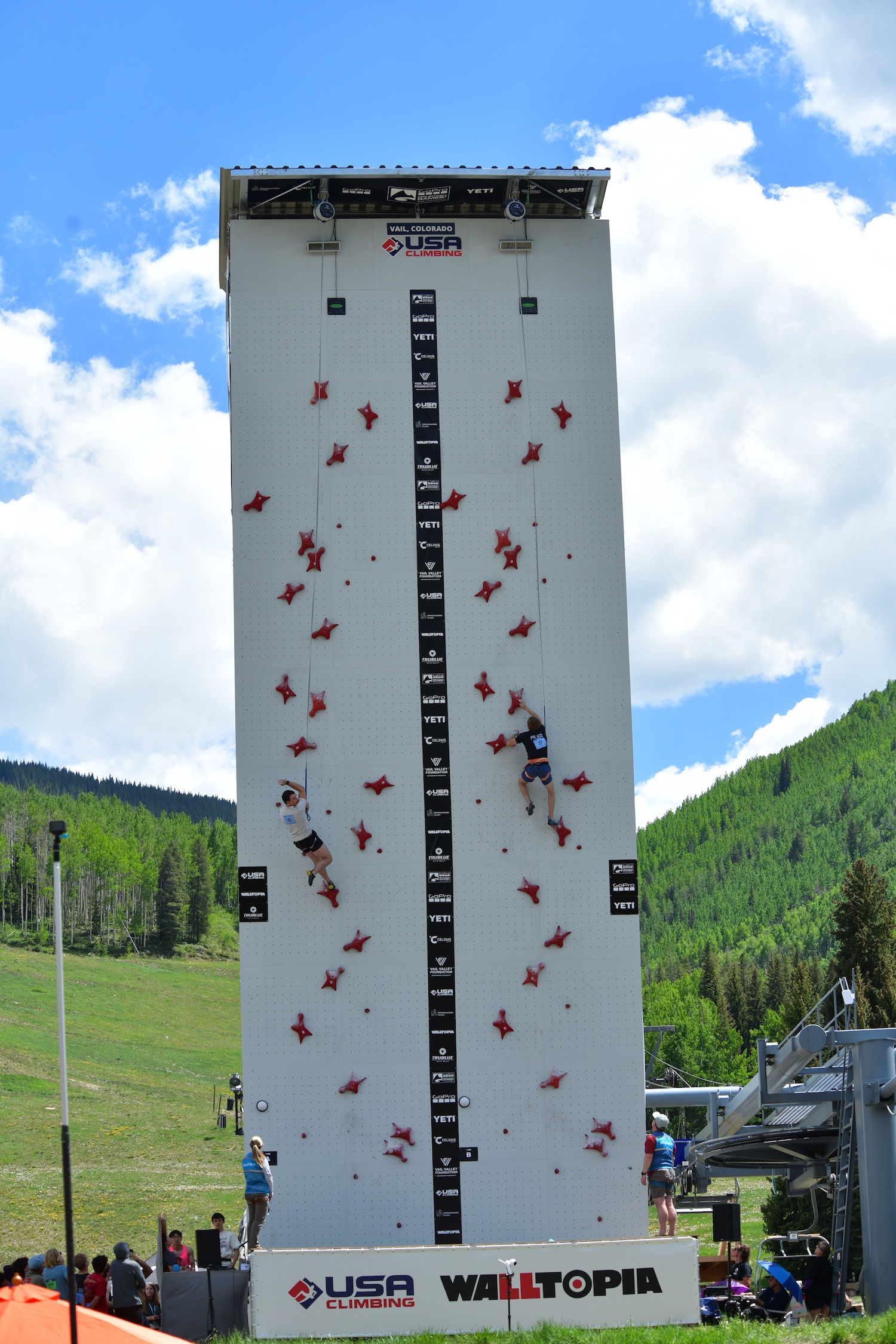
Perhaps the most important thing to understand about the event is that there is no single center.
The Amp may become the emotional destination after sundown, but during the day the center keeps shifting. It might be a climbing wall. A kayak competition. A dog flying toward a pool. A daytime band. A patch of shade. A group of friends deciding, almost arbitrarily, where to wander next.
Even in an age increasingly engineered around predetermined schedules, recommendation algorithms, and screens telling us what deserves our attention, the Mountain Games reward wandering.
This makes its relationship with live music feel particularly meaningful.
Devon Allman addresses his crowds every night with a version of that idea.
“I thank them for supporting music made by human beings, and not AI, or computers, or robots,” he said. “Man, there’s nothing like it. There’s nothing like getting a room full of folks, and I don’t care if it’s 500 or 5,000, and playing some good music.”
There are easier ways to hear a song.
You can stream one instantaneously. Watch a clip. Scroll past a chorus. Save something for later and never return.
None of those experiences require much from us.
Going somewhere does.
It means traveling. Walking. Sweating. Getting rained on if the mountains decide otherwise. Standing beside strangers. Staying longer than you meant to. Letting a performance surprise you. Discovering a bluegrass band or a revival you may still be talking about months later. Looking up from a song and realizing the sun has gone down behind the Rockies.
It asks you to be present.
That is where Mountains of Music finds its deeper identity.
The weekend is emphatically physical. Music travels through air between actual people. Athletes climb real walls and race actual trails. Dogs leap into water and shake themselves dry beside crowds. The river keeps moving alongside Vail Village whether anyone is posting about it or not.
The Games do not reject that digital world; increasingly, they are finding ways to turn it back into a physical one. In 2026, Australian guitarist Steph Strings collaborated at the CoLab Creator Stage with eight-year-old online music personality Miles the Music Kid, producing exactly the kind of collision the event is increasingly interested in exploring.
Dressman described spectators walking past, suddenly realizing they were seeing someone they knew primarily from a phone screen standing directly in front of them.
The operative phrase remains real life.
As Devon Allman put it more colorfully, musicians have a job to do once everyone arrives.
“We are doctors. We are sonic doctors, man,” he said. “Our medicine doesn’t go in the mouth or the bloodstream. It goes in the ears and the heart. We want to deliver the medication, man. We’re supposed to be out there giving people a break from the world for two hours.”
For a few June days in Vail, the prescription is unusually effective.
There is also something remarkable about who is responsible for making all of this happen.
The GoPro Mountain Games are organized by the Vail Valley Foundation, a Colorado nonprofit whose work spans arts, athletics, education, and community needs throughout the valley. Behind an event that can draw roughly 90,000 attendees is not some enormous national festival conglomerate, but a nonprofit organization that also manages the Gerald R. Ford Amphitheater and Vilar Performing Arts Center, produces cultural and athletic events throughout the region, and depends in part on philanthropic support to keep experiences like Mountain Games free to spectate.
The Games’ accessibility should not be taken for granted.
You can spend four days watching more than 35 athletic competitions and catching free daytime music without purchasing admission to the Games themselves. Ticketed evening concerts at the Amp add another layer rather than functioning as a gate through which the entire experience must pass.
The Vail Valley Foundation now has two significant milestones immediately ahead.
The GoPro Mountain Games celebrate their 25th anniversary June 10–13, 2027. The Gerald R. Ford Amphitheater, meanwhile, is entering its 40th anniversary season.
Dressman, for his part, is already thinking beyond the next lineup. He wants more music. Specifically, he would like Mountains of Music eventually to stretch through Sunday night.
“I think Sunday night is a really great opportunity for what I refer to as the date-night shows,” Dressman said, pointing to Leon Bridges’ sold-out Amp performance the previous summer as the kind of mood he imagines.
A fourth night would mean another concert, another reason to stay, and another turn of the cycle that defines the weekend: Activity giving way to music.
Growth, though, will matter only if Mountains of Music preserves what already makes it unique.
Bigger names are easy to understand.
What is harder to manufacture is the sensation of walking out of a hotel and immediately finding music in Vail Village. Or watching a dog soar farther than seems reasonable. Or stumbling onto an athlete doing something you had never previously considered a sport. Or following Gore Creek toward a small amphitheater where a song you have heard a hundred times suddenly sounds different because the mountain is behind it.
That is the adventure.
Long after the stages have gone quiet, Vail remains Vail. The mountains don’t need a festival to become beautiful, and the river doesn’t wait for an audience before it runs.
But once a year, for four days, thousands of people arrive and fill that landscape with movement. They run it, climb it, bike it, paddle it, wander through it, dance in it, and eventually gather together at the end of the day to hear what it sounds like.
Then the guitars come out again – and that’s when Mountains of Music makes its strongest case for belonging on every music lover’s radar.
Below, Dave Dressman traces how music became essential to the GoPro Mountain Games, opens up about the wonderfully unpredictable art of building its lineup, and looks ahead to what comes next for Mountains of Music! Read our full interview below, and stay tuned for the 2027 lineup – knowing Dressman’s ear for talent and appetite for discovery, it won’t disappoint.
And if you’re in the market for a truly unforgettable live music experience, be sure to put the Vail Valley Foundation’s Mountains of Music on your bucket list!
A CONVERSATION WITH DAVE DRESSMAN

Mountains of Music is being framed this year around the idea that music is the heartbeat of mountain culture. When you hear that phrase, what does it mean to you, especially as somebody who’s helping to build that experience from the inside?
Dave Dressman: Yeah, I think it goes not just with music, but with gathering, being outdoors, celebrating with people in public, and getting away from screens.
Mountain culture is outdoor enthusiasts, whatever you want to call them, adventure sports enthusiasts. It’s getting together to celebrate different activities, and music being a major part of that here this weekend at the GoPro Mountain Games.
It’s critical, and I think it’s thriving, especially in a state like Colorado, where people really, really value an outdoor lifestyle. Music just goes so well with it because it’s the perfect ending to a long day of activity outside, you know what I mean?
You’re clearly a man who wears many hats. Can you give me an elevator pitch?
Dave Dressman: For sure. I’ve been with the Vail Valley Foundation over 17 years. I’m the event director of the GoPro Mountain Games, I am the VP of the Gerald R. Ford Amphitheater, and I also oversee our sales and partnerships team.
The amphitheater, where we’re sitting right now, is really what’s kept me here for so long. I’m a live music nut. I have been my whole life, since Woodstock ’99, literally – which, again, bad rap, but I had a great time. Since my first show at Jones Beach when I was 12, I’ve been a music nut my whole life.
When I started with the Foundation, this venue was underutilized from a live music standpoint. We had been booking some stuff ourselves at the GoPro Mountain Games and some free concerts, and we would make some big offers to whether it be Michael Franti or Slightly Stoopid, you name it.
We would get blocked a lot by Red Rocks in the early teen years as we were trying to build the venue up into a more nationally known music venue. It was, “Great offer, but we’re gonna play Red Rocks.”
So in 2017, I picked up the phone and called Don Strasburg, who’s the president of AEG Rocky Mountains, another New Yorker. We hit it off real quick, and he has a home in Vail.
Ten months later, we had a partnership deal in place. We’ve been very good partners with AEG Rocky Mountains for the past nine years. Don, myself, and Don’s team work to book anywhere from 15 to 22 shows over the summer, in addition to the orchestras, the dance festival, the free concerts, and the Mountain Games, which I do myself.
It’s been a game changer for this venue.
I think Colorado has the most thriving music scene for a singular state in the United States, arguably. There’s Texas, Tennessee, California – there are some arguments to be made – but the number of beautiful places to see a show in Colorado, this being one of them…
Seriously, whether it’s Red Rocks, which is the mecca, or the Dillon Amphitheater, or Mishawaka, or Jazz Aspen, or Telluride, the list goes on.
It’s very vibrant, and for us to have a seat at the table has been really amazing. We’ve really pushed into the space the last decade, and it’s doing unbelievable things for this community, for Vail, the mountain, and it’s put us on the map.
Candidly, I hadn’t heard of the Amp beforehand. It’s a really gorgeous space and an incredible venue.
Dave Dressman: We’re in the middle of a $20 million remodel. We just finished Phase One.
Come summer 2028, this place will still look the same, but the green rooms, dressing rooms, rehearsal space, bar – all of it’s being improved. The box office and the main building are being expanded, which we desperately need.
It’s already got a great foundation to build from. So to my understanding, the GoPro Mountain Games started as a local whitewater event in 2002, and it’s grown into this incredible convergence of sport, arts, lifestyle, and music. At what point did music become more than an add-on and something that’s essential to the identity of the Games?
Dave Dressman: Joel Heath, the guy that founded it, I’m still friends with him to this day. Great dude. He was doing Nappy Roots, so he was a little hip-hop back in the day. Music was always a part of the Games, but it was a much smaller part. When I took over booking the music for the Mountain Games, I think the first year I booked it was 2011. We brought Xavier Rudd out. We had Cold War Kids the next year. We started to level up a little bit. The budget was small. It was a budgetary issue, and it was free, too. We didn’t start charging at Mountain Games for concerts until Bob Weir, post-COVID.
We had Bob Weir and Wolf Bros in 2021. They did a double Red Rocks and a double Vail, and it was their first shows out of COVID. It was June 2021, so the masks had just come off. It was one of the most powerful weekends of music ever. We charged, obviously, for Bob, and that allowed us to start – by charging a ticket, you can spend more money on the artists, right? With free shows, you’re very limited, at least we are, in how much we can spend. So the Bobby shows allowed us to start charging.
But I would say music became a much bigger focus when we moved it from the small, free SL100 mobile stage that would sit in the village over here to the amphitheater, which was either 2016 or 2017. I don’t recall. This is my 18th Mountain Games, so they tend to blur together a little bit. We started increasing the budget, bringing Dispatch, Gov’t Mule, Local Natives. That was around the Bobby time, so it’s really the last five or six years when it leveled up above the $25,000 bands. We went from the $25,000-to-$35,000 bands to the $75,000-to-$125,000 bands.
For somebody who’s never been to the GoPro Mountain Games or Mountains of Music before, what does it feel like on the ground? You’re a lifer here – what does it feel like?
Dave Dressman: It’s about the people, man. The people that come to this event are active families. It’s people who cherish their limited time on this earth, and they want to get the most out of every single day. They’re rad people.
Everywhere you look, you meet someone who’s like, “Oh my God!” It’s this matchup of river rats, cycling enthusiasts, artists, musicians, dogs… so many dogs! Everywhere you look, there’s something to make you smile. It’s a lot of fun. It’s hard to keep events healthy for a long period of time, right? You can check off the Coachellas and the Bonnaroos of the world, but it’s hard to keep an event growing and healthy for 20-plus years. Mountain Games has steadily grown and been healthy for 24 years. At the end of the day, I always say it’s the people and it’s the uniqueness of it. It brings people together to see a lot of really awesome stuff for four days in Vail.
What I really love about this is that every night ends with music, and then you also have free concerts throughout the day. Leaving my hotel yesterday, I was just hit in the face by a concert right there in Vail Village. As the booker, what do you look for in the acts? What do you think about when you’re booking for this unique audience of concertgoers?
Dave Dressman: It’s a hard equation to crack. In general, the music industry is a hard equation to crack. We like to mix it up with genres. A lot of years we’ll focus on, “All right, we’re gonna do a reggae night. We’re gonna do a jam band night. We’re gonna do a bluegrass night,” or something to that effect.
Again, it goes with the vibe of the Mountain Games. You’ve got your whitewater athletes hanging out with climbers, hanging out with yoga enthusiasts. It’s these different people who love these different things, and it’s those genres. So we try and mix it up. We also have to book it so that it appeals to a mass audience.
This year, you’ve got a night of bluegrass. Tonight is more rock, pop, Americana, I would say. Then tomorrow night, you’ve got just a burner of a show with the Southern rock gods, the brethren of the Allman Brothers. I walked down the aisle to “Blue Sky.” I’m so excited for tomorrow. It’s very special.
We also kind of know what works in Colorado. It’s a bit of a crunchy demographic here in the mountains. You look for the mac and cheese, I like to say. Everyone likes mac and cheese, right? Jam bands work well. Reggae tends to work well. Bluegrass usually works well. Great show last night – holy shit, those boys can pick – but from a ticket sales standpoint, it was a little soft. You never know what’s gonna hit and what’s not. We’ll book shows and I’ll be like, “Oh, this is a slam dunk,” and it’s not a slam dunk at all. We’ll book other shows where it’s like, “I don’t know about this one,” and then it’s people begging for tickets.
I think everybody who saw last night’s Mountain Grass Unit show is going to come away talking about that. They just announced their debut album, too.
Dave Dressman: Well, and Trey the night before. Again, it was an unofficial kickoff to Mountain Games, but Trey Anastasio has been here five times in the last 10 years. He likes Vail. He’s an amazing human.
I talked about it with Don at AEG and Trey’s manager in 2021 or 2022: “Hey, this would be a great venue for you to do a solo show.” Four years later, it finally comes to fruition. It was one of those magical nights here, where people were hanging on his every word, everyone leaving the room with a smile ear to ear.
Then Trey was posting all of these images of the Vail show. It was just one of those things that makes you feel really lucky to do what we do.
You already started to say it best. This year’s lineup brings Michael Marcagi, Wilderado, the Allman Betts Family Revival, and last night we had Mountain Grass Unit, among others. Can you talk me through these headliners a little bit and what each of them brings to the weekend?
Dave Dressman: The opening act last night, Surf Hat, is literally a band out of the woods of British Columbia who I think I saw on Instagram, and I was like, “These guys are f***ing awesome.” I reached out to them. I don’t even think they had an agent at the time, and I was emailing with the lead singer.
Mountain Grass Unit has been on our radar for a while. I think they started to really blow up at Billy Strings’ festival, Renewal, when Billy’s wife essentially went into labor on the first day of Billy’s own festival, which was a year and a half ago. Billy had to leave his own festival in Colorado, and the Mountain Grass Unit guys stepped up to fill the void, along with Molly Tuttle and some others. They really filled in in a major way and upped their game a bit. They’re just burgeoning in the bluegrass scene, so they’re a really good fit.
Tonight, honestly, we don’t do a lot of this kind of thing. Michael Marcagi – my 10-year-old daughter knows him. It’s a little outside our wheelhouse. He’s a little more radio-friendly and a little more poppy commercially.
He’s probably the newest face on the lineup.
Dave Dressman: Yeah! But he’s opened for The Head and the Heart, and I think he just announced something with Charles Wesley Godwin.
Michael Marcagi, Wilderado, with Steph Strings opening tonight – it’s a really fun three nights of extremely talented groups of artists.
Then again, the Allman tribute – I don’t know if we call it a tribute. I think you have to mention the word tribute, but to have Devon Allman and the Allman Betts Band, and then bring in Anders Osborne, Luther Dickinson from North Mississippi Allstars, Eric Krasno & Friends, Ross James…
The level of musicianship that will touch this stage on Saturday – it’s gonna be a fun one.
Your face is lighting up. You’re a music nerd like me. You do this for the love of the game.
Dave Dressman: Yeah. End of sentence.
What a cool show to be involved in. The Amp recently ranked No. 4 in USA Today’s 10 Best Amphitheater category, and I’m pretty sure it may or may not have beaten Red Rocks.
Dave Dressman: It did in 2025. It just came out that we did not beat them in 2026.
That’s one heated rivalry to share. This state is full of iconic outdoor venues. What makes this one special?
Dave Dressman: It’s the intimacy and the geography, I think. And the people. Our capacity maxes out at 3,000, and that’s only for a show that we know everyone’s standing at. So Tiësto – I’m maxing out at 3,000. It’s a party in here. When I have the New York Philharmonic, we keep it at 2,500. Blankets on the grass. So to be able to see a Robert Plant, Trey Anastasio, Slightly Stoopid, Nathaniel Rateliff – to be able to see the artists that are playing Red Rocks for 10,000 people…
Red Rocks over-delivers in every way. I love the place. It’s absolutely amazing. But it’s 10,000 people. To then, the next night or the night before, come see Dispatch or whoever it is with 2,800 or whatever it may be, it’s a different feel. It’s more intimate. To me, it’s more special. Then you’ve got the river literally running outside, you’ve got the mountains in the background, and then you’ve got our team. We’ve got a really amazing group of people who I think treat the artists and our guests with the ultimate respect.
We want them leaving this place and saying, “I want to make sure next time I’m in Colorado…” Some artists will do a three-night run in Colorado, and that’s a lot of shows in Colorado, a lot of tickets to sell depending on the venues. Fiddler’s is 17,000. Colorado Springs, Red Rocks – you have big venues. There are shows where three is a lot. Some do two, some do one.
We want them leaving here and saying, “I gotta include Vail. I gotta have the Gerald R. Ford Amphitheater next time we run through Colorado.” That’s what we want them to do.
It’s also not over-commercialized in any way, which, again, I’m a sponsorship guy. No offense – we have great sponsors and partners – but it’s a very natural venue. You feel like you’re in nature. You’re in the mountains, you’re in the sky, everything’s green, the river’s flowing.
What’s something artists tend to say after they play the Amp for the first time?
Dave Dressman: They’re surprised. We have a great production team. The sound in the room is great. They’re treated really well. Obviously, they can walk from their hotel in Vail here if they want to – literally walk along the river to the venue.
Where else can you literally walk along the river to and from the venue? For the artists, they’re not in the middle of nowhere. They have options. Again, I grew up in New York. The mountain environment compared to a club, a more urban city environment, a more populated region – it’s just intimate and special.
What do you want someone to understand about Vail after spending four days moving between competitions, dog shows, and nighttime concerts?
Dave Dressman: Vail’s amazing. It’s got a ton to offer in the winter and a ton to offer in the summer. The GoPro Mountain Games, along with Mountains of Music being a component of that, showcases everything that is the best about Vail in the summer.
Everything is in one place over four days. Whether it’s outdoor recreation, art, food and dining, music, dogs – whatever tickles your fancy – you can leave here on Sunday night or Monday and you’re like, “Man, I just experienced Vail at its best from a summer standpoint.” That’s what the Mountain Games is.
I love that on one side you have the dog shows, and on the other side you have the concert venue, and that’s a 30-minute walk in between, minimum.
Dave Dressman: It’s not for the faint of heart.
No, but walkability is important.
Dave Dressman: Yeah. We tried to expand Mountain Games outside of Colorado for a couple years back in 2018 and 2019. We looked at Stowe, Vermont, we looked at Bend, Oregon, we looked at Northern California. Ultimately, the walkability proved to be one of the most difficult things to replicate.
Mountains of Music feels like it has so much room to keep growing without losing any of its identity. You said yourself, next year is the 40th anniversary of this venue. What does growth look like for you – bigger names, more stages, deeper integration?
Dave Dressman: I’d like to go through Sunday night with music.
I think Sunday at Mountain Games is actually my favorite day. Thursday is a slow roll. Friday and Saturday are extremely busy. Sunday, it slows down a bit, and there are a lot of fun things going on. You also have some people who are leaving, so it feels a little more manageable.
We’ve never done a show on Sunday night. I think Sunday night is a really great opportunity for what I refer to as the date-night shows. I don’t want to name bands and feel like I’m insulting any band, but Leon Bridges – we had him here last summer, and it was sold out. I called that a date-night show. It was an unbelievable sold-out show here. If we could put a Leon Bridges on the Sunday night of Mountain Games, I think it would be really special and have more economic impact.
That’s one thing I would like to go for. Again, I’d prefer it to be Thursday through Sunday as opposed to Wednesday through Saturday. But we want to keep this thing healthy, keep it growing. We want to keep bringing burgeoning, up-and-coming bands for the free daytime stuff.
We have a stage called the Collab Stage. It’s a stage of collaborations. Just today we had Steph Strings, who is an up-and-coming artist, but she’s got a massive social media following. She collaborated with an eight-year-old kid named Miles the Music Kid, who’s got multiple millions of followers. He’s literally a music producer who I believe is already working with Teddy Swims and others. Steph and Miles collaborated on the stage two hours ago, and it was this really unique mashup. Everyone who walked by and didn’t know what was happening was like, “Holy shit, is that the kid from Instagram?”
It was one of those real-life moments that brought people who are only seen on people’s phones to real life. There’s an opportunity to grow the creator-musician collaboration within this event – creating really unique moments for people on-site that then get pushed out into the world on the screen as well. That’s something we’ve been pushing. To see it in person is really cool.
What would make you look back on the 2026 Mountains of Music and GoPro Mountain Games weekend and say, “That’s exactly what we wanted this to be”?
Dave Dressman: I want the weather to stay as it is right now. Seriously, as an event organizer, one of the biggest things we are challenged with at all outdoor events is weather. I’m probably jinxing myself right now, but everything’s great right now, and we’ve got a couple more days. We’re knocking on wood.
I want the weather to stay good. I want people to have fun. I want people to stay safe, and I want everyone to leave happy. That’s all you can ask for as an event operator.
— —
:: connect with The GoPro Mountain Games here ::
— —
— — — —
Connect to the Mountain Games on
Facebook, 𝕏, TikTok, Instagram
Connect to The Amp on
Facebook, Instagram
Discover new music on Atwood Magazine
© Lockman
 © Lockman