
Every Friday, Atwood Magazine’s staff share what they’ve been listening to that week – a song, an album, an artist – whatever’s been having an impact on them, in the moment.
This week’s weekly roundup features music by Alabama Shakes, Aquilo, Red Head Redemption, The Menzingers, wakelee, Sailor Honeymoon, Icona Pop, After Eight, Dogwood Tales, New Junk City, Ruby Alexander, Forget Them Wendy, navy june, Africaine, Cloudbelly, Charlotte Morris, Gregory Douglass, BASHT., Savannah Pope, and AMOS & RIOT NIGHT!
•• •• •• ••
 follow WEEKLY ROUNDUP on Spotify


•• ••
:: I Must Be Dreaming – Alabama Shakes ::
Mitch Mosk, Beacon, New York
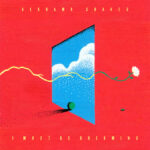
Ten years is a long time to wait for a band that once sounded capable of setting the air on fire. Long enough, certainly, to wonder whether we’d ever get to stand in that heat again. One of the most thrilling and formidable rock bands of their generation, Alabama Shakes return on I Must Be Dreaming as if no time has passed at all – only the temperature has risen. Their breathtaking third studio album is bold, dramatic, deeply seductive, and absolutely alive, an 11-song eruption of psychedelic soul, blues, rock, and restless experimentation that reminds us just how singular the chemistry between Brittany Howard, Heath Fogg, and Zac Cockrell has always been. The Shakes still know how to smolder, still know how to howl, still know how to stretch a groove until it feels almost dangerous – but there’s a newfound openness running through these songs, too. Love, mortality, disillusionment, connection, anger, wonder, hope: everything comes rushing forward at once, and the band meet it with the kind of intensity that hits you square in the chest.
The entrance alone is enough to raise goosebumps. “Tea Time” opens the door slowly, Howard singing over an arrangement that feels less like an introduction than an invocation, the band gathering around her with extraordinary patience. “I’m building a kingdom / In my soul / Where the fires first burned / Let flowers grow,” she sings, and suddenly we are back inside Alabama Shakes’ universe: earthy and cosmic, spiritual and physical, deeply rooted yet forever reaching beyond itself. The song’s vision widens from rivers, wildflowers, and soil toward a world where shields become mirrors and weapons become shelters, giving I Must Be Dreaming a gorgeous opening statement of purpose. After a decade away, Alabama Shakes reintroduce themselves by imagining what could grow from all that fire.
“I’m building a kingdom
In my soul
Where the fires first burned
Let flowers grow”
That return carries real history behind it. Rising out of Athens, Alabama, the band broke through with 2012’s Platinum-certified Boys & Girls and “Hold On,” then blew their own doors off three years later with Sound & Color, a No. 1 album that earned three Grammys and established Alabama Shakes as one of the defining American rock bands of their generation. Howard, Fogg, and Cockrell reunited in late 2024, and the songs that became I Must Be Dreaming emerged through an unusually open-ended studio process in Nashville with co-producer Shawn Everett. Flute, harpsichord, sitar, layered vocals, fuzz, soul, and psychedelic color entered the room as the trio rediscovered the freedom of making music together.
We heard the first spark last summer on “Another Life,” Alabama Shakes’ first original release in a decade and still one of this record’s great gut-punches. Smoky and feverish, it finds Howard staring down love’s alternate possibilities, asking “Can we try in another life?” as regret, tenderness, and desire collide in her throat. I wrote at the time that the song sounded like a transmission from the cosmos, and within the context of I Must Be Dreaming, that sense of scale only grows. Goodbye never sits still here; memory keeps reopening the door, wondering whether another choice, another timeline, another version of ourselves might have led somewhere else.
“Garden” brings a different kind of heat. The track is sly, sensual, and almost taunting in the way Howard warns someone to care for what they have before somebody else does. “If you don’t water your garden, I will / If you don’t show her you love her, I will,” she sings, extending the metaphor until desire itself starts blooming through the arrangement. Alabama Shakes have always understood restraint as a form of power, and “Garden” positively simmers – every pause, groove, and vocal curl adding to the delicious tension of watching someone realize too late what they failed to nurture.
Then comes “I Feel Hope Coming,” and the record’s pulse widens beyond the self. Howard confronts martial law, economic exploitation, polluted air, manufactured enemies, and the exhaustion of watching people get beaten down, yet the chorus keeps reaching toward love. “I feel hope coming / I feel love coming,” the band repeat, refusing despair the final word. Howard has said the younger generation gives her hope because they can see through political lies, while Fogg has called the track an expression of everything he loves about Alabama Shakes being reborn. That word matters here: reborn. Their return has meaning because the chemistry itself still sounds joyful, combustible, hungry to engage with the world instead of retreat from it.
“This younger generation makes me feel hopeful because they can see through all the political lies – that song’s about holding onto that hope, and refusing to give up,” Howard says. Fogg adds, “I’m really happy that song exists. It came from such a joyful moment of collaboration, and exemplifies everything I love about this band being reborn.”
The album’s middle stretch keeps changing the temperature. “Time” strips life down to the one resource love can never manufacture more of, Howard admitting she is tired of keeping up before arriving at the plainest possible truth: when you have someone you love, all you want is time. “Friends” is messier and more volatile, desire curdling into rupture as she repeats “We can’t be friends anymore,” while “Easy” offers one of the album’s gentlest revelations: “I didn’t know joy could be so quiet.” Even here, Alabama Shakes refuse a single emotional register. Love can burn, soothe, destabilize, renew. It can demand everything from us or finally stop demanding anything at all.
“How Love’s Supposed to Go” might be one of I Must Be Dreaming’s most irresistible deep cuts, a full-bodied declaration of devotion built around Howard insisting that real love survives movement: “It goes up and down, it goes back and forth / It never really goes if it’s really love.” The song carries itself with tremendous confidence, pursuing another person with care instead of possession – “The more that you let me know you / The more I can care for you.” There’s such muscularity in Alabama Shakes’ tenderness here. Love becomes active, persistent, almost athletic: running the distance, gathering someone up, choosing again and again to meet another person where they are.
“Waist Deep” sinks into murkier territory. Howard’s narrator describes living “like an angry child”, forever in trouble, forever caught in the downstream consequences of what people take out on one another. The creek becomes a brilliant emotional image: pain follows gravity. “When you can’t take anymore / Where does that go? / It flows downhill to me,” she sings, tracing the way hurt transfers from body to body until everybody is standing in the same muddy water. The song is heavy, bruised, and startlingly intimate, another reminder that Alabama Shakes’ power has always come from their willingness to drag abstract emotion back into the body where it belongs.
And then there is “American Dream,” the record’s most direct confrontation with the surreal world lurking inside its title. Peace, love, happiness, opportunity, freedom – ideals once sold as foundational begin sounding increasingly impossible as Howard surveys economic strain, gun violence, environmental neglect, doublespeak, and a culture powerful enough to tell us what we want before we know it ourselves. “I must be dreaming,” she repeats until the phrase becomes disbelief, exhaustion, accusation. Yet even here the album refuses a single reading.
“There’s a double meaning to it,” Howard explains of I Must Be Dreaming. “It could be saying, ‘I must be dreaming, because the world is so fucking crazy right now.’ But it could also mean, ‘I must be dreaming, because the world is so incredibly beautiful.’ Both those things can be true at once.”
That duality runs through the entire record. Beauty and horror keep sharing the frame. “Tea Time” imagines flowers growing where fires burned; “I Feel Hope Coming” insists on love amid political exhaustion; “American Dream” stares straight at national disillusionment while the album itself remains almost extravagantly alive. Alabama Shakes sound fascinated by contradiction here, by the possibility that despair and wonder can occupy the same body, the same day, the same song. I Must Be Dreaming never tries to solve that tension. It plugs into it and sends the voltage coursing through the speakers.
The closing “Tied To You” brings all that scale back to one person. Howard spends much of the song resisting surrender – “I’m holding it in / I won’t let it go” – before finally allowing the words to spill out. By the outro, “I love you” repeats again and again, surrounded by playful responses – “Giddy up, baby, giddy up,” “Love is free, try me today,” “Now say it back, it’s easy.” After an album wrestling with political systems, mortality, fractured relationships, time, hope, and all the impossible contradictions of being alive, Alabama Shakes end with the simplest risk imaginable: say what you mean and wait to see whether somebody says it back.
I Must Be Dreaming is the sound of three musicians remembering exactly what happens when they get into a room together and then refusing to treat that memory as a boundary. Alabama Shakes have returned with the fire intact, but they are reaching farther now – deeper into psychedelic soul, further into vulnerability, harder into the world around them. The album roars and seduces, aches and sweats, trembles and explodes. It can sound enormous enough to swallow the room and intimate enough to leave Howard’s breath right against your ear.
More than anything, though, it’s a staggering reminder of presence. Alabama Shakes are here. Brittany Howard is howling again over Heath Fogg’s guitar and Zac Cockrell’s bass. The chemistry is crackling. The songs are alive. The doors are wide open. After more than a decade, I Must Be Dreaming doesn’t ask us to admire a legendary band’s return from a respectful distance. It drags us straight back into the heat – and God, it feels good to have that fire on our faces again.
:: “One More Time” – Aquilo ::
Mitch Mosk, Beacon, New York
There’s a stretch of highway here in the Hudson Valley that gets me every single time. One minute you’re enclosed by dense green trees, the road winding through a lush tunnel; then the landscape suddenly falls away and the mountains appear everywhere at once. The world gets bigger in an instant. It’s one of my favorite reminders of why I chose to call this place home – all that beauty, wonder, and possibility arriving in a single panoramic rush. Aquilo’s soul-stirring “One More Time” found me there, and for a moment, song and scenery became inseparable.
Go light on your feet when you run,
Don’t you come back here for anyone,
For anyone at all,
Go take a lap round the sun,
And if you need take another one,
Go take another one,
The British duo’s latest is a sublime burst of light, beginning in dreamy restraint before slowly opening into the kind of spellbinding, euphoric release Aquilo have long known how to earn. Tom Higham and Ben Fletcher let the song breathe as delicate guitar, lilting atmospherics, and their intertwined voices gather momentum, each new layer widening the frame until the arrangement seems to burst beyond its own edges. The build is patient, the payoff dazzling – radiant energy carrying a lyric full of distance, longing, and the impossible wish to be welcomed back into a life already moving away.
“I know there’s a place
Where your smile’s lighting up my face
So far away
Getting further and further each day”
Aquilo have spent more than a decade making intimacy sound enormous. Higham and Fletcher first emerged as friends from England’s Lake District and have since built a catalog around their singular vocal chemistry, writing and producing together through several distinct chapters of the project. “One More Time” is their first release since May’s Confetti EP, which marked a freer phase for the newly independent duo and their intention to release music with greater spontaneity after years of album-focused work. The new single carries that freedom forward while preserving the emotional scale that has always defined them.
The lyrics complicate all that brightness. “Go light on your feet when you run / Don’t you come back here for anyone,” they sing at the outset, sounding almost ready to bless someone’s departure, only for the refrain to reveal the ache underneath: “One more time / Let me in.” By the second verse, goodbye has become its own practiced skill – “You got so damn good at goodbyes / The way you never said it twice” – and the song begins to live inside the distance between loving someone enough to let them go and still wanting one last opening back into their world.
That highway view may have been pure coincidence, but “One More Time” sounded made for the moment the trees gave way. Its slow rise carries the same sensation of moving from enclosure into open space, grief and possibility suddenly sharing the same horizon. Aquilo have always excelled at giving private longing room to become immense; here, they let it climb until the whole song seems flooded with sky. For a few miles in the Hudson Valley, the mountains appeared, the music opened, and the world felt impossibly wide.
:: Sunny With A Chance Of Fallout – Red Head Redemption ::
Danielle Holian, Galway, Ireland
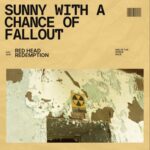
Red Head Redemption’s Sunny With A Chance Of Fallout arrives like a radio transmission from a world that has already started burning, only someone on the other end has decided to turn up the guitars and crack a joke about it. Across four tracks, the New Jersey alternative rock band builds its own corner of the apocalypse, a place where existential dread walks hand in hand with rebellion, romance, and a stubborn refusal to surrender. Their self-described “End of the World Rock” is less a genre than a survival instinct, and the EP understands that contradiction at its core. The guitars crunch and snarl, the drums keep everything moving with a restless pulse, and the vocals carry the kind of fearless attitude that makes even catastrophe feel strangely exhilarating. There are echoes of The Pretty Reckless, Joan Jett, Avril Lavigne, and Veruca Salt in the band’s DNA, but Red Head Redemption are not simply rummaging through the past for familiar clothes. They wear those influences like battle scars, folding punk spirit, alternative grit, and pop-rock immediacy into something that feels sharply connected to the present. The EP’s fictional Nile Tech Industries advertisement is a particularly effective opening gambit, introducing a corporation that cheerfully announces “We Own Everything” while offering gas mask coupon codes during an active fallout warning. It is ridiculous, sinister, and uncomfortably believable, establishing a world where corporate language has become so absurd that satire barely needs to exaggerate reality.
“Armageddon Beach Party” is the EP’s great neon flare, a song that takes the image of watching civilization collapse from the shoreline and somehow makes it feel both terrifying and ridiculously fun. Its infectious hooks conceal a sharper blade beneath the surface, turning the beach into a stage for a generation forced to negotiate political instability, technological control, and the creeping normalisation of technofascism. There is something deliberately perverse about the song’s energy, and that is precisely where its strength lies. Rather than treating apocalypse as a solemn backdrop, Red Head Redemption dance on its edge, using humour as a weapon against helplessness. “Race Against Time” turns the lens inward, trading the broader cultural nightmare for the more intimate panic of wondering whether you are actually living the life you were meant to live. Its anxiety comes from the clock ticking somewhere beneath every ambition, every compromise, and every postponed dream. In that sense, the song gives the EP its emotional centre, because beneath all the fallout and fictional corporations is a deeply human fear. What if the world ends before you become yourself? What if survival is not enough? Then comes “Jolene,” a surf-rock-inflected detour that feels like sunlight breaking through radioactive clouds. Its presence matters because it refuses the idea that apocalypse should erase tenderness. Love, desire, flirtation, and rebellion remain stubbornly alive, even when the horizon looks bleak. The track adds warmth and mischief to the EP’s darker worldview, reminding us that sometimes the most rebellious act is simply continuing to care.
What makes Sunny With A Chance Of Fallout compelling is the way Red Head Redemption understands that modern dread is rarely dramatic enough to announce itself with thunder. More often, it arrives between commutes, deadlines, doomscrolling, bills, bad news, and the quiet pressure to keep pretending everything is normal. The EP captures that strange emotional weather with a voice that is never defeated by its subject matter. Instead, Red Head Redemption turns anxiety into momentum. They take the familiar rituals of contemporary life and hold them up against the mushroom cloud, asking what it means to keep dreaming when the future itself feels unstable. The result is a short but vivid statement, loud enough to rattle the windows and clever enough to leave smoke curling around the edges of its jokes. If the forthcoming videos continue the Nile Tech Industries storyline established here, there is plenty of room for this fictional universe to grow into something even more ambitious. For now, Sunny With A Chance Of Fallout succeeds because it understands its own central paradox: the end of the world may be approaching, but the guitars are still ringing, the beach party is still happening, and there are still people stubborn enough to chase love, identity, freedom, and a life worth living. Red Head Redemption does not offer an escape from the apocalypse. They offer a soundtrack for starting it down.
:: Everything I Ever Saw – The Menzingers ::
Oliver Crook, Montreal

I’m not an overly hopeful person, but I do understand the need for it now more than ever. I also know it’s one of the most radical things a person can do for themselves. So when I hit play on The Menzingers’ eighth album, Everything I Ever Saw, I was so pleasantly surprised. The four-piece are at their best when their cynical, realist lyrics cut just a little close to your own life. But this album is different. Don’t get me wrong, it’s still four-chord pop-punk with soaring riffs and super catchy choruses – I don’t think The Menzingers could deliver anything less as this point – but the realism is tempered. From the first song it seems to be saying, ‘sure, it’s all f***ed like we’ve been telling you, but let’s at least attempt change it.’ Or, as they sing on “Chance Encounters,”
If we tell each other secrets,
even the dark parts that don’t glow
Maybe life could feel a little less alone
We may never stand a chance, but we still got to try
No one’s coming to save us from ourselves tonight
Chance encounters
This sentiment continues throughout. “I know heaven ain’t a place you can go,” but at least make it better for each other on earth, “Better Angels” seems to cajole us, while “Gasoline and Matches” asks us to look at ourselves, the choices we make and how we can be collectively better. It’s a concerted effort at hope from a mid-career band that have made their name om nihilism, and it suits them better than you’d think.
I can’t stop listening especially after seeing them at Warped Tour Montréal last weekend – mainly because of this brave sense of “let’s try.” The album closer, and title track, brings it all together so beautifully, fading out over the refrain “I don’t want to relive, I just want to remember, Everything I ever saw.” As someone who devours all Menzingers’ albums, this is certainly one that I won’t be forgetting for a long time.
:: “Joyce Kilmer Service Area” – wakelee ::
Mitch Mosk, Beacon, New York

Truth be told, I’ve probably been to the Joyce Kilmer Service Area. There’s a strong chance I’ve pit-stopped there somewhere between New York and Delaware, half-awake, hungry, and ready to get back on the road. That makes wakelee naming a song after the New Jersey Turnpike rest stop especially satisfying – turning one of those anonymous in-between places into the setting for a relationship that has reached its own exhausted breaking point.
Jot it down in your scattered thinking
I’ll see how you measure once and cut twice
Jot it down in your scattered thinking
Plan it out and you’ll still disappoint me
You know I hate it when I’m put on the spot
I think I told you but you said you forgot
You couldn’t make it so I’m left here alone
I’m getting tired out
Now it’s 8:17
I knew you’d be late
And you’re telling me that you shouldn’t be shamed
But I’ll take cause it’s what I’m given
Yeah, I’ll take it
A 10 minute walk ‘til I’m home
Released August 18, “Joyce Kilmer Service Area” is three minutes of feverish pop-punk release, brash and unrelenting from the jump. Driving guitars, the first d-beat in wakelee’s catalog, and Alex Bulmer’s raw, strained vocal send the song hurtling forward with barely contained frustration, every chorus sounding bigger and more desperate than the last. The energy is infectious, but there’s real weight beneath all that velocity: this is what repeatedly being let down sounds like once disappointment has accumulated past the point of patience.
wakelee are Brooklyn-based identical twin brothers Alex Bulmer (vocals/guitar) and David Bulmer (drums), alongside bassist Elliot Shiang, who formed the trio in 2019 after growing up around northeast New Jersey’s Wakelee Field. Their 2023 self-titled debut introduced the band’s scrappy potential, while 2024’s “Criminal” and 2025’s Doghouse EP sharpened a songwriting approach rooted in immediacy and everyday detail. “Joyce Kilmer Service Area” now leads into their sophomore album, under construction forever, out October 9 via Wax Bodega, produced by longtime collaborator Zach Aumueller with additional production from Hot Mulligan guitarist Chris Freeman.
“The song is about someone who keeps letting you down and never takes any accountability. An unreliable mess if you will. The structure came together relatively quickly. While we were writing the intro chord progression, we felt the need to push the tempo to double time on the drums. At the time of recording we were listening to Momma’s new record which you can hear some influence in the bridge,” the band share.
Bulmer’s lyrics make that unreliability painfully concrete. The narrator waits until 8:17, already knowing the other person will be late, swallowing the same excuses and settling for whatever scraps of effort arrive. The frustration finally crystallizes into a line that sounds less like an ultimatum than a boundary discovered in real time:
“You said that you’d get better
But I won’t wait forever”
That tension between waiting and finally walking away is exactly where wakelee thrive. “Joyce Kilmer Service Area” barrels ahead as though the band themselves have run out of patience, its roaring guitars and double-time drums converting years of small disappointments into one enormous physical release. A highway rest stop becomes an unexpectedly perfect monument to the relationship at its center: temporary, transitional, somewhere you were never supposed to stay. By the time wakelee reach the last chorus, they sound ready to get back on the road.
:: “Pickle” – Sailor Honeymoon ::
Mitch Mosk, Beacon, New York
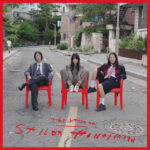
Trouble goes down easier in hot water. Sailor Honeymoon know the particular relief of sweating out a bad day, disappearing into a jjimjilbang, and giving whatever mess you’ve landed in a little time to loosen its grip. That wonderfully specific coping mechanism becomes the premise for “Pickle,” a low-key punk fever dream where angst, absurdity, and attitude simmer together until the whole thing starts to boil.
:: Ritual – Icona Pop ::
Charlie Recksieck, San Diego, CA

For somebody who recorded what I think just could be the most iconic song of the 21st century, we don’t hear enough about Icona Pop. The Swedish duo of Aino Jawo and Caroline Hjelt make consistently great music – and that certainly applies to their latest release, Ritual. Don’t hold it against them that “I Love It” raised the bar incredibly high in 2012.
Ritual is wall-to-wall emotional dance music throughout the whole album. “Dance to This” and “Butterfly Feelings” make for great pop workouts. There are so many great tracks to dive deep into, with a variety of moods but even more melancholy fare has a great beat and features their signature vocals which are simultaneously airy and strong. “Yellow Top” is the kind of song you can keep on repeat for 100 miles of a road trip.
Pick a song at random from Ritual. I bet you’ll find it sounds fresh and simultaneously classic and modern. I’m still scratching my head at why this isn’t a more essential release for music lovers, but consider this your warning.
:: The Reach – After Eight ::
Danielle Holian, Galway, Ireland

There is something beautifully bruised at the heart of After Eight’s debut EP, The Reach, a record that understands vulnerability not as a weakness, but as a place where great songs begin. Across five tracks, the Dutch alternative indie rockers build a world suspended between intimacy and collapse, where distorted guitars can feel as exposed as a whispered confession and quiet moments carry the weight of an approaching storm. Opener “Dress And A Veil” immediately establishes that emotional architecture, beginning with the ache of a future imagined too vividly to survive reality. The song does not simply mourn a relationship, it mourns an entire life that existed only in the mind, turning romantic fantasy into something almost spectral. After Eight’s genre-blurring instincts serve that emotional uncertainty well, folding indie rock, folk, shoegaze, post punk and experimental textures into arrangements that can lurch from muscular to fragile without losing their sense of purpose. There are traces of Radiohead’s emotional unease and Big Thief’s intimate storytelling, but After Eight are less interested in imitation than in creating a sound where contradiction becomes the central language.
That contradiction deepens through “Blinded” and “All By Myself (So Quiet),” two songs that examine connection from opposite sides of the same wound. “Blinded” finds tenderness in a relationship that feels safe, warm and uncomplicated, only to confront the devastating realization that comfort and destiny are not always the same thing. There is a particular sophistication in that idea, because the song refuses the easy logic that love must be painful to be meaningful. Sometimes the tragedy is that something can be good and still not be right. “All By Myself (So Quiet)” turns inward, inhabiting the strange emotional territory between craving another person and craving the sanctuary of solitude. It is a song about intimacy as both desire and threat, about wanting to be held while quietly fearing what being known might demand. Here, After Eight’s quieter instincts become especially effective. The band allows space to become part of the arrangement, letting atmosphere linger around the vocal rather than filling every silence. When the record grows louder, it feels earned, as though the noise is the physical manifestation of emotions that can no longer remain contained. That dynamic gives The Reach a restless pulse, moving between the delicacy of folk rock and the pressure of alternative and experimental rock.
By the time “Running Just To Hide” arrives, escape has become almost indistinguishable from survival, its title capturing the EP’s central paradox with striking simplicity. Running can look like freedom from a distance, but After Eight understand that sometimes movement is merely another form of avoidance. The EP’s closing track, “The Medicine You Take,” brings that emotional journey to its most complicated destination, exploring the painful act of wanting what is best for someone even when their wellbeing conflicts with your own desires. It is an appropriately unsettled conclusion to a record preoccupied with the impossibility of controlling how love ends, or even knowing whether the love being offered is entirely sincere. What makes The Reach compelling is not that After Eight have resolved these questions, but that they resist resolving them at all. The EP lives inside uncertainty, allowing its five songs to feel like fragments of one larger emotional landscape, full of longing, self-protection, grief and reluctant hope. Energetic when it needs to be, hushed when the subject demands it, The Reach announces After Eight as a band willing to make vulnerability sound expansive. This is music that reaches outward while constantly fearing what might happen if something reaches back.
:: “7xover” – Dogwood Tales ::
Mitch Mosk, Beacon, New York
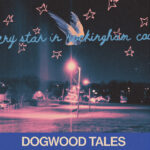
Loss has a way of settling into the landscape. It lives in back roads, family stories, old rooms, and the places we keep returning to long after everything else has changed. Dogwood Tales understand that kind of memory deeply.
On “7xover,” the Virginia band sink into an aching alt-country reverie – brooding, dusty, and wonderfully unhurried, humming with electric guitars, pedal steel, and close harmonies that seem to rise straight out of the Shenandoah Valley around them. There’s grit in its bones and a spellbinding calm in the way it moves – heavy enough to carry grief, wholesome enough to make that weight somehow easier to hold. Fans of Hovvdy and Mildred will recognize that same sun-faded intimacy, but Dogwood Tales give it their own distinctly rural Virginia character.
The Harrisonburg four-piece are childhood friends Kyle Grim and Ben Ryan on guitar and vocals, joined by drummer Jake Golibart and bassist Danny Gibney. Together, they’ve spent years folding the landscape and small-town life of Rockingham County into their music, pairing lo-fi country romanticism with the easy chemistry of people who have known each other half their lives. “7xover” arrives on their new album, Every Star in Rockingham County, out today via Born Losers Records – a 12-song love letter to the local DIY scene, surrounding farmland, mystical mountains, and the people who give those places meaning.
“My grandmother was reflecting on the loss of her son, my Uncle Curtis, in the back of the car with me one night, telling me she could no longer mourn with the anguish she was feeling because she believed that nothing is truly gone and everything we lose in life, we are given back 7 times over in heaven. Turns out it was a misquoting of the Bible according to my brother, but her confidence in there being something to gain out of this experience of loss moved me deeply to be less afraid of the cycle of loss and gain that life infinitely teeters on, and to let go of what needs to go because nothing is ever really gone forever,” Dogwood Tales share.
That belief gives “7xover” its center. Grim’s writing meets grief with surrender, returning again and again to the idea that loss belongs to a larger cycle we cannot fully understand. The song’s repetition deepens that sense of motion, its looping language making time itself seem circular:
“All that’s given once must be returned
I let go of that, it all comes back
7 times over again, again and again”
“The sonic inspiration was drawn from ambient sounds in both the beautiful rural landscape that surrounds our town in Virginia and The Legend of Zelda. It was inspired by growing up and playing N64. We haven’t spoken about it too much, but there are a lot of samples on this album, a lot of them from old video games. The reverse tape sound was really inspired by the nature of the song, of doing something again and again; it feels repetitive and ongoing, like the nature of the song, in and out of time. Forward and backwards,” the band explain.
That unusual mixture of Shenandoah ambience and childhood video-game memory gives “7xover” its wondrous haze. Reverse tape, softly glowing guitars, and pedal steel blur the edges of the song until past and present seem to occupy the same space, mirroring a lyric that keeps circling loss instead of marching cleanly beyond it. Dogwood Tales let grief exist alongside beauty here – both grounded in dust and earth, both reaching toward something larger.
“7xover” carries real heaviness, but it leaves warmth behind. Its deepest comfort comes from refusing to treat letting go as disappearance: people leave, places change, years fold into one another, and still traces remain. Dogwood Tales wrap that idea in an alt-country reverie that feels almost protective, like a blanket pulled across the soul after a long day in the heat – a song about loss that somehow sends you back into the world steadier than it found you.
:: “Lonely Now” – New Junk City ::
Mitch Mosk, Beacon, New York

Boundaries have rarely sounded this explosive. New Junk City’s “Lonely Now” comes roaring out of the gate in a feverish rush of guitars and pounding drums, its breakneck punk charge barely letting up across three breathless minutes. The Atlanta band play like they’ve got nowhere else to be and no time left to waste – fast, fiery, dramatic, and utterly alive, with every crashing chord and ragged vocal pushing the pulse another notch higher.
:: “All This Time Together” – Ruby Alexander ::
Josh Weiner, Washington DC
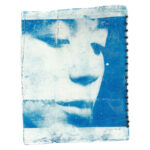
Now that the summer’s winding down and the intensity of the working world is picking back up, a chill, relaxing and enjoyable new track fits the occasion pretty perfectly. And “All This Time Together” ends up doing just the trick!
Ruby Alexander’s been all over the map – she grew up in Sydney, has Greek-Chinese heritage, and just spent the time in New York, where she studied music production at NYU. Having pulled creative influences from far and wide, Ruby is now ready to start producing some material of her own. She got started in 2024 with her debut EP, Anymore, and now is back with her first formal release of the year, “All This Time Together.”
Her main ambition, as the lyrics explain, is as such: “I don’t want to live forever, just long enough to see things fall apart.” It’s an alluring concept, reinforced by Ms. Alexander’s soothing vocals and the alluring instrumental designed in one take by Ruby’s friends and bandmates. She describes it as “a love song for trying times… a song of reassurance” that’s grounded in “the idea that if we do see things fall apart…” (as she admits to desiring in the lyrics) “…that’s less about devastation and more a marker of how long we’ve gotten to be together.” It’s a sincere sentiment that guides the track well and leaves one hoping that the singer will have a full-scale follow-up to Anymore in store for us shortly.
:: “Apple Pie” – Forget Them Wendy ::
Joe Beer, Surrey, UK
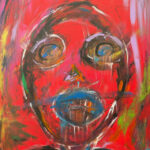
Forget The Wendy serves up a delicious sweet treat with their new single “Apple Pie.” The UK-based indie-pop duo, made up of Oliver Price and Laura James, have created the perfect tune for those lazy summer days, delivering laid-back instrumentation, with warm soulful vocals to form the effortless new song.
Layered harmonies, delicate guitars and a steady beat set the scene for a story about the long summer days that never seem to end. James sings, “Under the sheltering sky, we watch the clouds pass by // Maybe in the afternoon, we could write a mellow tune // And maybe when the sun is gone, we can write another song // Life’s an apple pie, let it float on by.”
“Apple Pie” follows their previous single “Wise Guy” which saw the duo touch on a slightly more introspective side of their songwriting, exploring personal insecurities and the pressure to feel like you have everything figured out. Both tracks are from an upcoming debut album, which is definitely one to keep an eye out for.
:: “routine avoidance” – navy june ::
Mitch Mosk, Beacon, New York

Avoidance can become its own ritual. A thought surfaces, you push it away; a memory catches you off guard, you find another way to drown it out. Eventually the effort of escaping what hurts starts shaping the days themselves.
On “routine avoidance,” Australia’s navy june transform that instinct into a dreamy indie folk reverie, opening in hushed acoustic textures before blooming into fuzzed-out guitars, surging drums, and rich vocal harmonies that seem to hang in the air long after they land. Ruby Barton-Taylor’s voice sits at the center of it all – glistening, intimate, and charged with the kind of passion that comes from finally saying aloud what you have spent months trying not to name.
The Boorloo-based five-piece – Barton-Taylor on vocals, Ella Emmett on bass, Carys Reilly on drums, and guitarists Saxon Keyt and Ben Fletcher – have been carving out their place in Western Australia’s indie scene since 2025. Drawing inspiration from Fiona Apple, Hole, and Fleetwood Mac, navy june fold grunge, soul, and ’90s alternative rock into a sound that keeps widening as the band grow. Their recent run has included more than 45 shows across 2025 and 2026, a WAM Song of the Year nomination, and an AMRAP chart-topping turn for previous single “mister,” which reached No. 1 on both the Indie/Alternative and Rock/Metal charts.
“I wrote this track after a heartbreak I went through,” Barton-Taylor tells Atwood Magazine. “It was in early 2025 and right after I had also lost my grandma. The year transpired, as I’m sure it did for many, in a very hard and challenging manner, and I was so consumed by something that had defined the start of my year, and it took over my life and my grief for my grandma. As the year went on these feelings turned into me routinely avoiding any thought or feeling that reminded me of those events and turned all my sadness into hatred for this person.”
“I soon realised that hate is just passion when you have loved and love is human. I wrote this song in November of that year after reflecting on how much identity I had lost and how much I had changed. How easy it is to routinely ignore a feeling than to face it and grow. Nobody deserves to feel punished for caring ever and this song is about sharing feelings and speaking up, good or bad. Hopefully that’s what it can mean to others!”
That history gives the song’s central contradiction its bite. Barton-Taylor keeps insisting she is alright while the lyrics betray how completely grief and longing have invaded her everyday life: the therapist call, the bed moved outside for fresh air, the attempt to block out every reminder. Even hatred proves slippery. By the time she reaches “What is the meaning of I hate you,” the word has already started collapsing under the weight of everything beneath it – love, loss, resentment, and the need to be seen by the person she is trying to release.
“I exercise a routine avoidance
I find you in everything so I block all the noise
I’m alright but I’m alone
I want you like death but I need you to go”
The arrangement mirrors that reckoning beautifully. The restrained opening gradually swells until the guitars and drums seem to break open the emotional pressure Barton-Taylor has been carrying, while the band’s radiant harmonies give all that hurt a strangely wondrous lift. “routine avoidance” understands how seductive suppression can become when grief grows too large to face directly, then follows the cost of living inside that pattern.
navy june leave us with the harder, more generous truth Barton-Taylor eventually reached herself: Caring deeply was never the mistake. Growth begins when we stop punishing ourselves for having cared at all.
:: For Me, This Time – Africaine ::
Mitch Mosk, Beacon, New York
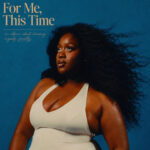
Africaine’s For Me, This Time smolders from the inside out. Across eight tracks, the Connecticut-born Nigerian American singer, songwriter, and producer moves through heartbreak, desire, anger, self-possession, and release with the confidence of an artist discovering just how many shades her voice can hold. Rooted in R&B and soul but threaded with Afropop and wider Pan-African influences, the EP highlights Africaine’s range as both songwriter and sonic storyteller – intimate one moment, defiant the next, always alive to the tension between who she has been and who she is choosing to become.
Africaine’s story gives that transformation deeper weight. Raised between her Southeastern Nigerian heritage, gospel roots, and a tri-state New York perspective, she has built an independent career around creative ownership and a sound that moves naturally between contemporary R&B and African musical traditions. Her rise has already brought more than four million global streams, chart placements across 30-plus countries, playlist support from Apple Music and Spotify, and performances at New York institutions including SOBs and Irving Plaza. For Me, This Time is her debut EP, and its title lands like both a boundary and a declaration.
“I’ve laughed, I’ve cried, I’ve loved, and now I am letting go. This project is like an open journal, where thoughts and emotions can run wild without shame or fear of judgement. I hope listeners see themselves in my stories and choose to dream of more. This project is for everyone who has felt inadequate or unlucky. For Me, This Time is not about sadness or regret. This is the last phase of my rebirth. I am here to reclaim my Identity and take back everything that was stolen from me, and I am not afraid to lose people on the way,” Africaine shares.
That rebirth takes several forms. “Before” opens in grief, mourning the person a lover used to be; the title track reaches the moment when Africaine finally refuses to keep shrinking herself for anyone else. “Burn” is fiercer, its breakup fallout crackling with anger and hard-won resolve, while “Whatever” flips romantic disappointment into swagger, culminating in one of the EP’s most satisfying reversals: “honey i think you got the game mixed up.” “Give It Away,” featuring Nonso Amadi, brings flirtation and friction into the mix, and “Live Life” closes the record with its gaze fixed forward, trading rumination for ambition and motion.
The title track captures the record’s pivot most cleanly:
“Jah take all this pain away
before I lose my mind
Away, away away
I’m done tryna shrink myself,
I live for me this time”
That line becomes the spine running through For Me, This Time. Africaine allows herself to grieve what hurt, laugh at what once diminished her, crave love, demand better, and keep moving. The EP’s sensual pull draws you in, but its staying power comes from how fully she inhabits every version of herself along the way. By the time “Live Life” arrives, choosing herself sounds less like an ending than the beginning of everything she intends to claim next.
For Me, This Time lands as a debut in the truest sense: an artist stepping fully into the frame on her own terms, carrying every scar, desire, and hard-won lesson with her. Africaine’s range becomes part of the statement itself, each shift in mood and sound revealing another dimension of the woman reclaiming her identity across these eight songs. She has spent the record gathering herself back piece by piece – by the end, she sounds completely, unmistakably her own.
:: “What Am I Doing?” – Charlotte Morris ::
Danielle Holian, Galway, Ireland
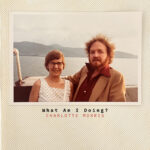
Charlotte Morris turns inherited history into something deeply personal on “What Am I Doing?” a guitar-driven Americana protest song that feels less like a declaration than an intimate reckoning. Drawing on the civil rights legacy of her grandparents, Rev. John B. Morris and Harriet “Patsy” Pratt Morris, Charlotte confronts the enormous question of what it means to follow in the footsteps of people who devoted their lives to justice. Yet the song’s strength lies in its refusal to make that inheritance feel grandiose or distant. Morris brings it down to the level of ordinary life, where conviction has to coexist with work, bills, exhaustion and the endless pressures of simply getting by. Her repeated question, “What Am I Doing?” gradually changes shape as the song unfolds, moving from uncertainty into something more urgent and soulful. It becomes a refrain of conscience, the voice of an artist measuring her own life against a family legacy that feels both inspiring and impossibly large.
Morris gives that internal struggle a warm but restless home in Americana, allowing the guitar-driven arrangement to carry the emotional tension without overpowering the story. There is a natural storytelling quality to her writing that recalls the best traditions of folk music, where the personal and political are rarely separated by more than a few words. Morris understands that the most affecting protest songs are often not the ones that tell us what to think, but the ones that make us feel the weight of a question ourselves. Her vocal delivery gives the repeated title a remarkable elasticity, allowing the same words to sound reflective in one moment and almost pleading in the next. Produced by William Gawley, with David Flint’s instrumentation, mixing and mastering and engineering from Matt McMenamin, the track has the grounded character of a song meant to be lived with rather than simply heard once. There is an appealing tension between movement and uncertainty throughout, as though the music itself is pushing forward while the narrator keeps looking over her shoulder, asking whether she is doing enough.
What makes “What Am I Doing?” especially moving is that Morris ultimately transforms self-doubt into a more generous understanding of legacy. She admires the fearlessness of her grandparents without pretending that honoring them means reproducing their lives exactly, and that distinction gives the song its emotional maturity. Instead of turning activism into an impossible standard, she begins to recognize that meaningful change can take different forms in different generations. That realization gives the song a quiet optimism beneath its searching surface. Morris is not stepping away from the fight. She is finding her own way into it. The result is a thoughtful, beautifully human protest song that understands both the urgency of injustice and the limitations of the individual trying to confront it. “What Am I Doing?” resonates because it makes room for uncertainty without surrendering conviction, turning one artist’s private question into something universal: a reminder that conscience does not always arrive as certainty, and that sometimes the most honest way to begin making a difference is to stop, listen inwardly and ask what you can do next.
:: “Bespoke” – Gregory Douglass ::
Chloe Robinson, California

Hailing from Southern California, singer-songwriter Gregory Douglass crafts mesmerizing, ethereal music that reaches listeners on an intimate level. His new single “Bespoke” is just as emotionally haunting. Douglass’ warm, stirring vocals take you on a profound expedition of beauty, heartbreak and overcoming internalized shame. Lines like, “Always a long, dark night before the dawn, you’re still a fingerling, I’m still a fawn,” represent the journey of growth that lies ahead, while expressing his willingness to embrace the path forward. Tender piano and sweeping strings underscore a soulful tone, producing a poignant reflection on honesty, compassion, and self-acceptance. Rooted in the after effects of a deeply transformative relationship, the song exposes how love can intertwine vulnerability and uncertainty, forcing us to confront the sides of ourselves we often keep hidden.
Douglass established his career through persistence and a genuine, personal approach to music, well before the internet made independent artistry more accessible. He wrote and recorded on his own terms, toured wherever the music took him, played relaxed house shows, and relied on his listeners to help sustain his work. Over time, those efforts turned into a devoted community of fans who grew alongside him. This latest piece is a testament to that deep dedication. “Bespoke” is a perfect depiction of progression, openness, and finding peace within yourself.
:: “Panopticon” – Savannah Pope ::
Chloe Robinson, California
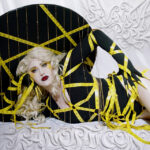
Los Angeles-based singer, songwriter, and visual artist Savannah Pope is a captivating baroque-pop talent who blends whimsy with avant-garde theatrics. Her single “Panopticon” plunges into the lasting imprint people can leave on our lives, examining how the past can continue to mold us long after we have moved on. Powerful lyrics such as, “Sometimes I fit in barely, to the shape of your creation, shop girls welcome me inside to say, ‘I think we have your size,’” capture how easily someone can become consumed by an image created for them, ultimately losing sight of who they truly are. Going on to say “The fear as my ribs break” crafts an image that many profoundly resonate with. Most of us understand the feeling all to well, of exhausting ourselves trying to conform to an unhealthy standard. The music video features stunning high fashion spectacles that are utterly eye-catching. The bold piece takes inspiration from Rococo painting, chiaroscuro and fashion editorials.
Pope stands out for her commanding vocals, cinematic visual aesthetic, and deeply affecting songwriting. The singer has toured North America alongside Erasure’s Andy Bell, played three sold-out shows at Los Angeles’ Fonda Theatre, and nearly sold out her New York headline debut at Joe’s Pub. Her other releases “He Sees Me” and “Melancholic Goddess” display daring operatic drama. With “Panopticon” Pope continues that thrilling performance quality as she channels her own struggles with body image and sexual trauma.
:: : “Pieces” – AMOS & RIOT NIGHT ::
Joe Beer, Surrey, UK

Liverpudlian trance artist AMOS & RIOT NIGHT has teamed up with fellow trance producer Grant Trowbridge and indie singer/songwriter Lucy Starr to create an undeniably mesmerizing anthem titled “Pieces.” Combining their expertise in the trance world, along with Starr’s soulful, soaring vocals, the result is a fast-paced, almost otherworldly release that hits deep in your soul. AMOS & RIOT NIGHT, who is the project of DJ David McClelland, found inspiration for the song after experiencing an emotionally challenging time of his life. Navigating loss, heartbreak and extreme turmoil, he slowly began to rebuild himself, piece by piece, hence the recurring lyric, “I’m picking up the pieces.” McClelland confides, “When me & Lucy began working on the song, this lyric very much was the focal point of the song and is very much the heart of what this song is all about.”
The raw and vulnerable storyline is almost a juxtaposition to the bold, energetic, colliding soundscape, but it delivers something truly empowering. The two producers used driving beats, piercing bass lines and intricate melodies to form the foundations of “Pieces.” The track is an anthem for those who may be experiencing hardships, reminding them that there is light at the end of the tunnel and that if they can just hold on and take things step by step, they will come out the other side.
:: “Terror TV” – Basht. ::
Mitch Mosk, Beacon, New York
The screen is screaming, and Basht. scream right back. “Terror TV” is a bustling, bold burst of fiery indie rock, barreling forward on a thick bass riff, driving drums, and Jack Leavey’s searing vocals. The Dublin quartet match the sensory overload of the modern news cycle with a lightning-quick post-punk charge, packing conflict, confusion, and information fatigue into a song that barely gives us room to catch our breath.
“Terror TV” arrives as the latest preview of Basht.’s forthcoming debut album, Poor Advice, out October 9 via LAB Records and produced by Ali Chant (Dry Cleaning, Perfume Genius, PJ Harvey). Basht. are Jack Leavey (vocals/guitar), Lughaidh Armstrong-Mayock (lead guitar), Ryan McClelland (drums), and Louis Christle (bass) – a Dublin quartet whose bruising live show has steadily built their reputation at home and abroad. They’ve toured alongside DEADLETTER, Everything Everything, and Wunderhorse while bringing their music to festivals including The Great Escape, Live at Leeds, and Other Voices.
Poor Advice follows the band’s 2025 sophomore EP, Bitter and Twisted, and gives Basht. their biggest canvas yet, stretching the intensity of their earlier work across a ten-track concept album. Across the record, the band trace the relationship between power and the people crushed beneath it, drawing a line from the historical influence of church and state in Ireland to the forces shaping contemporary life. “Terror TV” plants that larger argument squarely in the present, where violence and political upheaval arrive through the same screens we stare at every day.
“Terror TV is about trying to make sense of what we’ve been watching unfold on our screens over the past few years,” vocalist and guitarist Jack Leavey explains. “It’s about the endless loop of tit-for-tat conflicts, the footage that blurs together numbing our sensitivity, and how quickly the ground seems to shift under our feet. The song looks at how fickle politics feels right now with alliances flipping, narratives changing overnight, and ordinary people caught in the middle trying to process it all in real time and the exhaustion of watching.”
The chorus captures that exhaustion through repetition, hammering its title until the phrase itself starts to resemble the ceaseless barrage Leavey is describing. Basht. understand the cruel irony here: catastrophe has become programming, endlessly refreshed and repackaged until horror risks becoming background noise. The song’s bridge cuts through that numbness with its most devastating image, tracing retaliation to its inevitable endpoint:
“My eye for your eye leaves everybody worldwide
Deaf, blind, and bleeding”
Basht. channel helplessness into pure physical release on “Terror TV,” letting that monstrous bassline and relentless rhythm section carry the weight when language starts to fail. It’s furious, immediate, and built to be played very, very loud – a visceral response to the exhaustion of watching the world fracture in real time, and a ferocious glimpse into the systems of power Poor Advice is preparing to confront.
:: “Oh, Antarctica!” – Cloudbelly ::
Mitch Mosk, Beacon, New York

Forever starts to look fragile in a heat wave. Cloudbelly’s dreamy “Oh, Antarctica!” was born during the record-breaking July 2025 heat that swept the Northeast, and the song carries that strange contradiction in its bones: summer love thriving inside a climate crisis, domestic happiness brushing up against the knowledge that permanence is mostly an illusion. Cyclical guitars, loping drums, and ascendant strings give the track a steady, dreamlike pull, widening an intimate memory into a meditation on what happens when the future we counted on starts changing before our eyes.
Cloudbelly are Corey Laitman, Sam Perry, Nate Mondschein, and Ciarra Fragale, a Western Massachusetts indie folk quartet formed in 2020 whose collaborative sound draws from alt-folk, art rock, chamber pop, and ambient music. Their 2024 album, i know i know i know, was named one of the year’s top albums by The Boston Globe and earned an Album of the Year nomination at the Boston Music Awards. “Oh, Antarctica!” opens their next chapter as the lead single off Throwing The Game, their forthcoming late-2026 LP, whose fuller-band arrangements push their music in a more rock-driven, outward-looking direction.
“I started writing ‘Oh, Antarctica!’ during the record-breaking heat wave that swept the Northeast in July of 2025,” Laitman shares. “Sitting in front of a fan in a heat daze, I found myself reflecting on the long, winding arc of my relationship with my partner. The first verse – ‘our bikes across the bridge / lovers making summer wind / time eating its tail again’ – reaches back to one of the first days we spent together, nearly ten years ago, riding our bikes through another impossibly hot summer. I actually began writing the song after Matthew and I had just come home from a bike ride. As the first verse came together, I could feel the second pulling at me, but I couldn’t quite figure out what the song wanted to become. Then I looked up at the wall of our home.”
What Laitman saw there gave the song its entire horizon. An old photograph of an early British Arctic expedition hangs in their home, depicting a group of explorers who would all die on the return journey. Scrawled across the image in their partner Matthew’s handwriting is the title of a Cap’n Jazz song: “Oh, Antarctica!” That collision of adventure, mortality, climate, and shared history gives Cloudbelly’s song its unusual gravity. Antarctica becomes both a real endangered landscape and an emblem for everything we once assumed could outlast us.
“Hanging there is a print of an old photograph from one of Great Britain’s early Arctic expeditions. I later learned that every man pictured died on the return journey. One walked into a blizzard rather than slow the group down. Another slipped into a coma and was left behind. Most died just eleven miles from a cache of food. Scrawled across the photograph in my partner’s handwriting, in black Sharpie, is the title of a song by one of his favorite bands, Cap’n Jazz: ‘Oh, Antarctica!’ Something clicked. I started thinking about Matthew’s almost fanatical love of winter; about those explorers and their hunger for adventure; about the vast wilderness that both inspired and destroyed them, and how different that landscape is now; about the oppressive heat we were living through; and about the quiet happiness I’d found in this relationship. Somehow all of those things belonged together. The song wasn’t just about Antarctica anymore. It was about what happens when you realize that something you assumed would always be there…won’t.”
By the song’s climax, Cloudbelly gather those threads into one deceptively simple refrain – “Oh, Antarctica! / I’d say you went on forever / If I didn’t know better.” The arrangement keeps climbing beneath it, strings rising around cyclical guitars as knowledge slowly overtakes nostalgia. The line holds the song’s deepest tension: loving a person, a season, or a landscape while understanding that love cannot freeze any of them in place.
“The lyric that emerged – ‘Oh, Antarctica! I’d say you went on forever / if I didn’t know better’ – became the center of the song. Antarctica started feeling less like a place than a stand-in for every illusion of permanence we eventually lose: that the seasons will always behave as they once did, that the landscapes we love will outlast us unchanged, that the people closest to us will always be here, or that we ourselves can move through life untouched by loss. ‘Oh, Antarctica!’ became my attempt to hold two truths at once: that wonder deepens with knowledge, even when knowledge brings grief; and that love – for a person, a place, or a planet – is made more urgent, not less, by its fragility..”
That urgency gives “Oh, Antarctica!” its lasting power. Cloudbelly begin with bikes crossing a bridge on a sweltering summer day and end up staring toward melting ice, lost explorers, passing years, and the person beside you through all of it. The song understands that impermanence can sharpen devotion – that knowing the world changes gives us every reason to look harder, love deeper, and pay attention while we still can.
— — — —

Connect to us on
Facebook, 𝕏, Instagram
Discover new music on Atwood Magazine
:: Weekly Roundup ::
follow WEEKLY ROUNDUP on Spotify
:: This Week’s Features ::