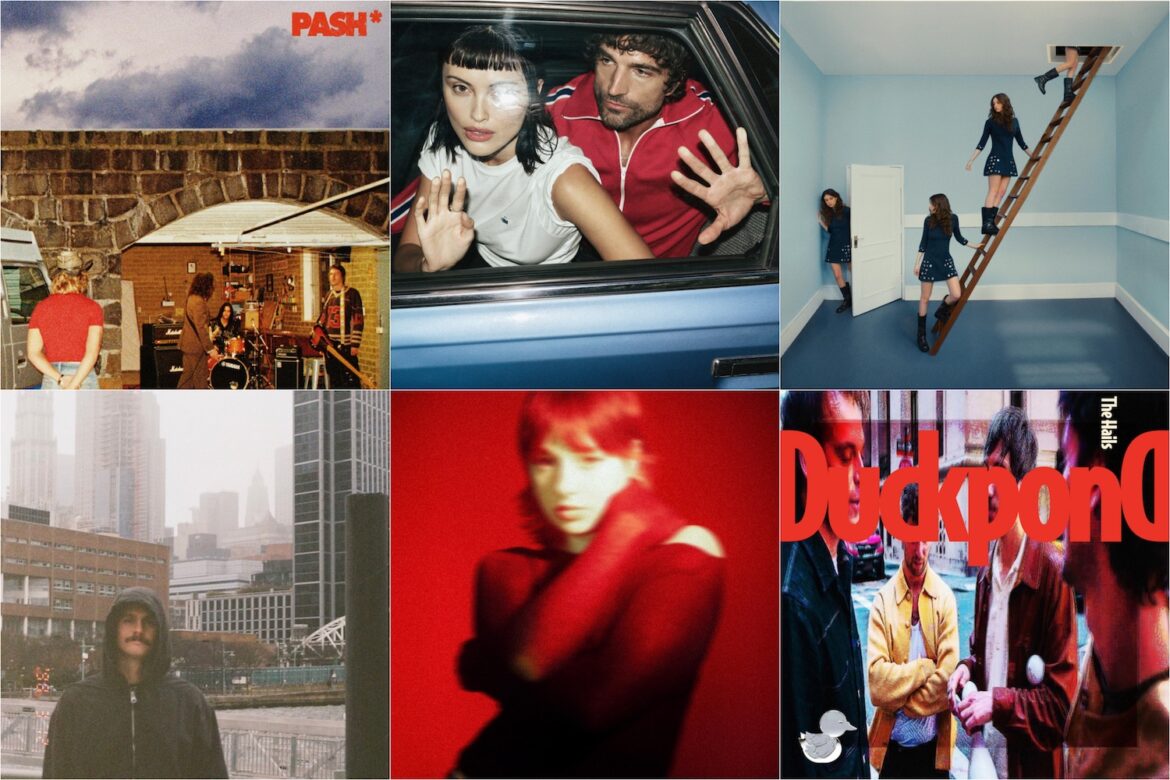
Atwood Magazine is excited to share our Editor’s Picks column, written and curated by Editor-in-Chief Mitch Mosk. Every week, Mitch will share a collection of songs, albums, and artists who have caught his ears, eyes, and heart. There is so much incredible music out there just waiting to be heard, and all it takes from us is an open mind and a willingness to listen. Through our Editor’s Picks, we hope to shine a light on our own music discoveries and showcase a diverse array of new and recent releases.
This week’s Editor’s Picks features PASH, Matilda Mann, Evan Honer & Medium Build, Pamela., Stevie Bill, and The Hails!

 follow EDITOR’S PICKS on Spotify

“Tracy”
by PASHPASH’s “Tracy” is the best ’90s pop rock hit that never existed in the ’90s.
Vocals, guitars, and drums burst to life all at once, and the Adelaide quartet waste absolutely no time sweeping us into a sun-kissed whirlwind of pure pop rock exhilaration. A dazzling highlight from their self-titled EP, “Tracy” captures the delirious excitement of an all-consuming crush, turning hopeless infatuation into a sweet, swaggering rush of irresistible hooks and youthful abandon. It’s gloriously catchy, effortlessly charming, and so full of life that I can practically feel myself smiling with every note. There’s an almost magical familiarity to it, like rediscovering a favorite song you somehow forgot existed – except PASH have only just arrived, and the thrill of everything still to come makes this one all the more intoxicating.
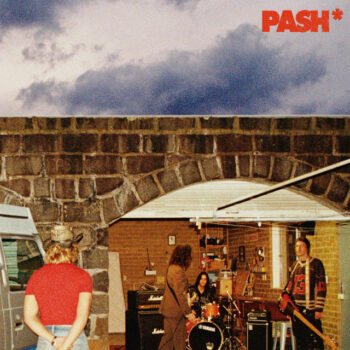
And who wouldn’t fall for Tracy? She’s practically a local celebrity before we’ve even met her, the girl everybody knows and everybody seems to want. She wears big brown boots, has a signature perfume, and walks into a room like she’s stepped straight out of a movie. PASH bring her to life with the kind of wonderfully specific details that make a song feel instantly familiar, capturing the bewildering experience of being completely captivated by someone who might not even know your name. There’s a glorious, almost adolescent innocence to the whole affair: The narrator wishes they were neighbors, dreams of dating her, and can’t quite shake the suspicion that she might actually hate him. He’s hopelessly smitten, and the band make every second of his predicament sound like the greatest feeling in the world.
“Everyone’s had a Tracy, a crush on someone truly magic and out of reach,” PASH tell Atwood Magazine. “It was just fun writing about being invisible almost, but with such a strong puppy love for someone else.”
This perspective gives “Tracy” its irresistible personality. The song embraces the giddy absurdity of infatuation, letting its narrator be awkwardly earnest and unabashedly overwhelmed without ever making him the butt of the joke. And the music is every bit as lovable as the story. The guitars have that deliciously bright, ringing quality of classic alternative pop rock, while the drums keep everything charging forward with an exuberance that practically demands movement. The vocals are loose and animated, dancing over the rhythm with a carefree conviction that makes the whole performance feel wonderfully spontaneous. It’s the sound of four musicians having an absolute blast, with the sort of effortless melodic chemistry that makes you wonder how a song this catchy could possibly be so simple.
Then comes that chorus. “She gets me every time,” PASH sing, and suddenly the entire recording seems to revolve around those five words. The refrain tumbles over itself again and again, transforming one helpless admission into an exhilarating, endlessly repeatable celebration of surrender. There’s no grand revelation waiting around the corner, no clever twist to complicate the feeling. Just a boy with a hopeless crush and a band that knows exactly how to make his heart race. I love how completely PASH commit to that idea, allowing repetition to become its own kind of euphoria. By the final chorus, the song feels almost impossible to resist. Every time that hook comes around, I’m right there with them, grinning like an idiot and wanting to hear it all over again.
Perhaps the most remarkable thing about “Tracy” is how naturally it came together. For a song that sounds so immediately complete, its creation was an astonishingly impulsive affair.
“It’s one of those ones that just fell out in 15 minutes at the early hours of the morning,” the band recall. “Like it was just a gift from heaven or something haha. Felt like we were just in a flow state with our producer and each line just came one after the other and it was done before you really got to think too much about anything.”
You can practically hear that lightning-in-a-bottle excitement in the finished recording. Nothing feels labored or overthought; every melodic turn seems to arrive precisely when it should, and every repetition somehow makes the hook more infectious. “Tracy” has the exhilarating directness of the best guitar-driven pop songs, the ones that make their case in seconds and spend the next few minutes reminding you why you fell in love with them. Its nostalgic character is part of the appeal, certainly, but what really makes it special is the sheer vitality of the performance. This isn’t a band trying to resurrect a bygone sound. PASH have taken everything wonderful about a great pop rock anthem and made it feel thrillingly present.
That natural chemistry has deep roots. PASH are four longtime friends from Adelaide – Jett, Orlando, Nic, and Danny – whose shared history reaches back to their high school days, when they played in different indie bands before recognizing the possibilities of making music together. Their bond is inseparable from the project itself, shaping everything from the way they write to the energy they bring to the stage. There’s a beautiful recklessness to the idea of four best mates chasing something enormous together, and in PASH’s case, that friendship feels like the beating heart of the music.
“We’re inseparable and so whatever story we’re telling, or the music, is just coming from that place of collaboration and putting our heads together to make it as a unit,” the band explain.
It’s that collective spirit that makes PASH such an exciting proposition. Their music occupies a particularly satisfying space between pop’s melodic immediacy and rock’s rougher, more combustible energy. The hooks are enormous, but the performances retain a scrappy, livewire quality that gives even the glossiest moments a sense of possibility. They’ve found a way to sound polished without losing their personality, bringing a distinctly Australian sensibility to a style that draws from decades of guitar-driven pop and alternative rock.
“It has felt good to be in a pop space but pushing it into a world that feels super authentic to us,” they share. “It’s exciting that it has these pop sensibilities but feels Australian and has these real rock flavours as well as not very pigeon-holed.”
Released May 22, 2026 via AWAL, the band’s self-titled EP makes a compelling case for that vision. Arriving two years after their 2024 debut PULSE, PASH captures a young group coming into its own, with a fuller sound and increasingly confident songwriting. The project took shape over a year of touring, travel, and creative exploration, and its seven tracks offer an exciting snapshot of a band discovering just how much it has to say. For all the joyous abandon of “Tracy,” there’s a great deal more happening across the record: Restless desire, romantic turmoil, heartbreak, and grief all find their way into the music, giving its euphoric highs a deeper emotional foundation.
“The first record was self-produced which was an important experience but obviously the new PASH EP has a magic in the production that we could only get from collaborating with our friends,” the band reflect. “There’s growth in the stories too, we just lived more and had more to say about ourselves and what’s happened in our lives, and were able to express it better.”
That growth reveals itself in wonderfully different ways. Opener “Down The Aisle” turns the imagery of a wedding into a furious reckoning with betrayal, its explosive pop rock charge giving heartbreak a particularly satisfying bite. “Ricochet” pushes further into volatility, capturing the dangerous temptation to chase something destructive simply to feel alive. The brief “Interlude” then creates an unexpected moment of reflection before giving way to “Another Day,” one of the record’s most affecting achievements. Here, the band’s youthful bravado gives way to something devastatingly personal, as they confront grief and the impossible desire to reconnect with someone who’s gone. “If love could reclaim you, darling you’d live forever,” they sing, a line whose origins make it even more heartbreaking.
“That sentence was actually taken from an obituary of a passed family member, so it holds a special place in our hearts being able to sing that,” PASH reveal.
It’s a startling moment of vulnerability from a band whose music so often seems to be hurtling toward the next great night out. And it’s precisely that emotional range that makes PASH so promising. “Solid Ground” channels a turbulent relationship into a soaring plea for stability, its whirlwind imagery reflecting the exhausting cycle of trying to regain your footing when love keeps knocking you off balance. Closing track “East End Girls,” meanwhile, brings the EP back to full-throttle rock territory, all lipstick, Friday nights, and breathless anticipation. But beneath its infectious surface lies something more personal: A celebration of the band’s own journey, and an acknowledgment that everything they’ve experienced together has brought them to the threshold of a new beginning – crystallized in the line, “One last kiss to new beginnings.”
“It was never really about someone, but more about ourselves and our home city Adelaide,” they explain. “That line was more of a message for what’s to come, that that EP is what it is, and was us finding ourselves, and there is this new, exciting path ahead.”
And what a promising path it is. PASH have already followed the EP with September’s “Suffer,” continuing to build on the musical identity they’ve spent the past few years developing. But I keep coming back to “Tracy,” because it captures the thing that makes this band so exciting in the first place: An almost outrageous ability to bottle the rush of being young, hopelessly infatuated, and completely alive. There’s an openness to their songwriting that feels wonderfully refreshing, a willingness to chase the biggest possible hook without sacrificing the spontaneous energy that makes rock music such an enduring thrill.
“Tracy” transports you somewhere between a sun-drenched summer afternoon and a long-forgotten favorite from an old mixtape. It’s everything you’ve ever loved about pop rock: The ringing guitars, the heart-on-sleeve declarations, the choruses that somehow seem to know exactly what you’ve been waiting to hear. PASH make it all sound easy, but that kind of immediacy is a rare gift. There’s real craft beneath the exuberance, and an even greater promise in knowing that these four friends are only getting started.
Everyone knows about Tracy, or so the song insists. After hearing this irresistible little masterpiece, I want everyone to know about PASH, too. Because the best thing about discovering a song that feels like an old favorite is realizing you’ve found a band whose best days might still be ahead of them.
Kismet
by Matilda MannMatilda Mann is so in love, and she wants the whole world to feel it.
Listening to her breathtaking sophomore album Kismet, it’s hard not to believe in a little magic ourselves. The London singer/songwriter has poured her heart into eleven exquisite songs that celebrate the extraordinary wonder of loving and being loved, wrapping achingly earnest confessions in swooning melodies, sumptuous arrangements, and a sweetness that feels almost too beautiful to be real. From the very first notes of the spellbinding “Chain Reaction” to the final moments of closer “Haunt Me,” Mann invites us into a world where romance feels limitless, fate feels tangible, and every little moment carries the promise of forever.
Who says writing a great love song is a lost art? Bursting with imagination and unafraid to mean every word, Kismet is a magnificent reminder of just how much beauty can bloom when we give ourselves over to love.
Released September 4, Kismet arrives just eighteen months after Mann’s debut album Roxwell, yet the emotional distance between the two records is enormous. Where her first full-length gathered years of growing pains, heartbreak, and self-discovery into a sprawling coming-of-age portrait, its successor captures an artist reveling in the happiness of her present. Written and recorded alongside longtime collaborator Jonah Summerfield, the eleven-track collection also marks Mann’s first independently released album, giving her greater freedom to shape the music and its accompanying creative world on her own terms. “I think I’m a lot more confident in a calmer way,” Mann tells Atwood Magazine in our recent conversation. For an artist whose previous Editor’s Picks, “In Plain Sight” and “Say It Back,” have explored such different sides of romance, this latest chapter is an especially beautiful evolution.
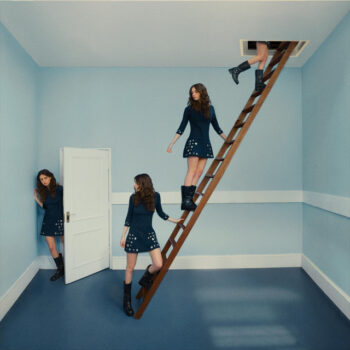
Heaven is a concept
I’m a little closer to believing in
Since you walked right in
Sudden as a landslide
No one in this world could prevent the fall
Inescapable
If you could only see
Oh if you only knew
In every life I’m always next to you
– “Chain Reaction,” Matilda Mann
This transformation also reflects the way Mann has learned to approach the world around her. “It’s definitely sometimes really hard to be positive and optimistic, but I think it’s really important to choose that if you can or when you’d like to start,” she reflects.
And nowhere is that newfound joy more exhilarating than on “Chain Reaction,” the album’s magnificent opening track and one of its most irresistible highlights. Enchanting and utterly smitten, the song sweeps us into the breathless excitement of falling head over heels, its buoyant melody and sumptuous harmonies capturing that delicious sensation of having the ground disappear beneath your feet. Mann’s silken, expressive vocals give the recording its beating heart, carrying each declaration with a sincerity that makes even the grandest romantic sentiments sound wonderfully natural. There’s an old-soul elegance to the arrangement, drawing on the breezy pop and romantic soul traditions that inform Kismet, but the emotion at its center is thrillingly immediate.
Out of the blue
You’ve given me something to lose
A chain reaction
I can’t stop falling for you
One for the ages
A love they’ll never forget
Was bound to happen, automatic
Since the day we met
The lyrics are equally captivating. Mann begins by imagining heaven as a concept, then allows the arrival of another person to challenge everything she thought she knew about the extraordinary. It’s a remarkable opening proposition, made even more affecting by her admission that this unexpected happiness has given her “something to lose.” Beneath the song’s giddy euphoria lies the beautiful vulnerability of surrendering your heart to someone else: The knowledge that loving so completely means opening yourself up to a future you can neither predict nor control. Mann embraces that uncertainty as part of the thrill, letting images of gravity and forces of nature capture an attraction that seems written into the universe itself.
The song’s placement was particularly important to Mann, who knew its first chord belonged at the very beginning of Kismet. Its accompanying video extends that sense of enchantment into a surreal romantic fantasy.
“It does feel like you’re flying, it feels like a weird dream,” Mann smiles.
Like a river running through me
You’re a constant, you’re a compass
My epiphany, like it’s meant to be
Gravity, it has to be
There’s a force of nature pulling you to me
It’s fate in motion
You’re all that I want
That same imaginative spirit runs throughout the record, finding wonderfully different expressions in songs like “Inventing” and “The Fig Tree.” On the former, Mann decides that the word love is simply too small to contain everything she’s experiencing, searching for a language capable of doing justice to the enormity of her affection. Wispy slide guitar lends the song an almost weightless sweetness, while its playful premise speaks to one of romance’s loveliest peculiarities: The private language two people create together.
Mann traces the idea back to a conversation with a friend. “It was so sweet, her explaining how she really wanted to have a different word just for her and her partner,” she recalls.
“The Fig Tree,” meanwhile, borrows Sylvia Plath’s famous metaphor for life’s overwhelming possibilities, surrounding Mann’s anxieties about the future with storybook woodwinds and a melody full of childlike wonder. Faced with a world of unanswered questions, she discovers one glorious certainty in the person standing beside her.
Mann brings a delicious sense of humor to the sultry “Make Up,” its Hammond organ and muted horns giving a lovers’ quarrel the irresistible allure of a late-night reconciliation. “After The Love” is equally playful, wrapping a more skeptical question in sun-dappled strings, tambourine, and an audacious key change: Will the person promising forever at closing time still mean it when the evening is over? These songs make room for the teasing negotiations of a real relationship, where desire comes with disagreements and lasting devotion takes more than a grand declaration. Mann’s fascination with classic soul is especially apparent here, both in the music’s sumptuous textures and in her affection for songwriters who could express enormous emotions with disarming simplicity.
“I love how vulnerable and direct he is,” Mann says of Al Green, one of her central inspirations. “He’ll simply sing, ‘I love you,’ and he’ll make it sound so poetic and beautiful.”
Yet even in its happiest moments, Kismet understands that loving someone means accepting the possibility of separation. “Call You From The Car” brings that reality down to earth, as Mann reflects on missed milestones and the countless miles that keep a touring musician away from the person waiting at home. There’s extraordinary sweetness in her gratitude for having someone worth missing, and an equally moving determination to make the relationship work despite the distance. By the time the album reaches its closing “Haunt Me,” that devotion has taken on an almost spiritual dimension. Mann contemplates the unthinkable possibility of losing the person she loves, imagining their presence surviving in birdsong, passing breezes, and the countless little signs we search for when someone is gone. The song is devastatingly beautiful precisely because its fear comes from a place of such profound happiness. She wants this love to last beyond everything, even life itself.
As Mann explains why “Haunt Me” had to be the final track, she reveals the unexpected line of thinking behind its spiritual imagery. “I’m not a religious person, but I think religion is a very fascinating topic to me, and I think the idea of it is beautiful in the belief sense of it. I think people believing in something you cannot see or prove, I think, is somewhat similar to like love and things like that,” she reflects.
For all its romantic wonder, Kismet never promises that devotion will make life’s difficulties disappear. Mann gives happiness its full emotional weight, embracing the rush of a first encounter alongside the everyday work of keeping love alive. Her willingness to acknowledge uncertainty makes the record’s optimism all the more affecting: Joy becomes a conscious choice, an act of trust in the people we hold dear and the futures we hope to share with them. I’ve admired Mann’s remarkable gift for writing through heartbreak and self-discovery for years, but hearing her approach happiness with this much imagination and conviction is a revelation.
When I ask what she hopes listeners will take away from Kismet, Mann’s answer is disarmingly simple. “You kind of want to hype yourself up or get over something. Then there’s this album,” she says.
I want to stay in the world she’s created a little longer. And when Kismet finally ends, I find myself a little more grateful for the love waiting outside it. Maybe that’s the greatest magic of all: Matilda Mann has made an album so full of love that it leaves us with even more of our own to give.
“pull me out”
by Evan Honer & Medium BuildEvan Honer got what he wished for: A career doing what he loves. Albums, tours, and a calendar filling up faster than he can catch his breath. The crowds keep growing, and the miles keep adding up.
The goodbyes haven’t gotten any easier.
On “pull me out,” the Arizona-born singer/songwriter joins forces with Medium Build’s Nick Carpenter for a feverish, full-throated folk rock burner that makes the bittersweet cost of chasing your dreams sound downright exhilarating. Guitars surge, drums charge ahead, and their voices soar with a rugged, irresistible charm, the whole song brimming with a restless energy that feels equal parts celebration and confession.
“Ain’t it funny we’re both crying for the things that we both wished for.” It’s a devastating admission at the heart of an achingly earnest song, one that finds Honer reckoning with the distance between the life he’s always wanted and the people he wishes he could spend it with. A soaring standout from his 4 songs EP, “pull me out” wears its heart on its sleeve and its swagger proudly, turning the emotional tug-of-war of life on the road into a dynamically human, life-affirming rush.
I’ve been running, stressin’ over everything
You’ve been waiting,
watchin’ me spin myself into the ground
Come on, honey, pull me out
So if it’s a thrift store, restaurant,
you know I’d do anything to get you laughing
I let go, you let your hair down
Come on, baby, won’t you pull me out

Released August 7 via Honer’s own Cloverdale Records, 4 songs is a modestly titled addition to an extraordinary year of music-making. Co-produced with Steve Rusch, the four-track collection follows the deluxe Everything I Wanted (& more) and the vinyl-exclusive Halfway, further cementing Honer’s reputation as one of the most prolific young voices in contemporary folk. Since breaking through with his viral cover of Tyler Childers’ “Jersey Giant,” he’s released three studio albums, built a fiercely loyal following, and grown increasingly adventurous with his sound. Atwood has been championing his songwriting since Fighting For, his soul-stirring sophomore record, praising him for his unflinching honesty and gift for capturing the turbulence of young adulthood: “[It’s] as raw and honest as they get… a coming-of-age folk record dwelling in life’s gut-wrenching depths.” This latest release finds Honer continuing to embrace the emotional complexities of a life lived in constant motion.
‘Cause we only got ten hours
’til you take me to the airport
Ain’t it funny we’re both crying
for the things that we both wished for
And I call you everyday
Well honey, it won’t be the same
Until those wheels touch down
and I know you’re already on your way
And I’ll take you out, hmm
Honer has a rather charming explanation for the EP’s deadpan title. “These were four songs I did with Steve Rusch who is basically my neighbor, and I’m really stoked I got to work with him. The name of it is sort of an ode to Andy Shauf and his first EP, but also I just like the idea of a silly name like that,” he says.
The EP’s other three tracks are similarly unguarded. “say anything” wrestles with the suffocating silence that follows an argument, its desperate refrain pleading for any response that might break the impasse. “blackout wednesday” revisits the uneasy feeling of reuniting with old friends around Thanksgiving, while “if you wanna know” captures the particular helplessness of loving someone who’s already gone. Each offers another glimpse into Honer’s restless inner world, where relationships remain painfully complicated even when the melodies make everything sound so wonderfully immediate.
Asked what he learned from making 4 songs, Honer points to an unexpected source of satisfaction. “I think I’ve learned that it doesn’t take the greatest musicians in the world to create a song. I played bass and piano on some of these songs and I would not consider myself a pianist or a bassist,” he shares.
The closing “pull me out” brings those tensions into sharper focus through a partnership that feels especially natural. Co-written by Honer, Rusch, and Carpenter, the track made its live debut when Honer and Medium Build shared the stage at Newport Folk Festival. There’s a beautiful roughness to the duet, a sense of two friends throwing themselves into the same emotional whirlwind and finding a little relief in the sheer pleasure of singing together. Neither vocalist holds back; their performances have the loose, uninhibited appeal of a late-night singalong, with the instrumental momentum lifting each impassioned phrase higher than the last.
Carpenter was effusive about working with Honer.
“Evan’s such a damn talent,” he shares. “I loved getting to get creative with him and hear his inner world come to life. So excited to be a small part of his journey.”
Honer’s account of their writing session makes it clear the admiration is mutual. “We wrote that song together with Steve and it was such a fun time. I am a huge fan of Medium Build’s music, and him as a person, so it was an honor. He is really good at keeping it light and overall just having a good time while making music,” he recalls.
For all the exhilaration coursing through the recording, its emotional stakes are strikingly familiar. How do you give yourself completely to a dream without sacrificing the everyday experiences that make life meaningful? How do you come home from the thing you love doing most and remember how to simply be? The irony at the song’s center is particularly cruel: Everything is going right, and the person you want to celebrate with is the very person you’re repeatedly leaving behind.
The song measures that heartbreak in hours. In the first chorus, there’s still “ten hours” before the airport; by the second, the countdown has dwindled to “two hours.” What fills that shrinking window is beautifully ordinary: Taking his partner somewhere just to make her laugh, making a dance floor out of their kitchen, finding in “These walls, your eyes” everything he needs. “Well I’m finally where I’m supposed to be, but it hurts so bad to leave,” Honer sings. And when he admits, “And it’s crazy to complain so I’ll be grateful everyday,” the conflict cuts deeper. He’s grateful for the dream, but gratitude doesn’t give him any more time at home.
When asked how years of touring have affected his personal life, Honer offers a remarkably candid answer.
“I put my identity into touring and sometimes it feels like it’s the only thing I am doing or the only thing I talk about anymore,” Honer tells Atwood Magazine. “When I am off the road, it feels like I have no purpose. When someone asks me how I am, I find it hard to not mention the road.”
His admission brings an entirely different weight to the song’s charging guitars and infectious chorus. Success can be exhilarating and disorienting in equal measure, especially when your work demands so much of your identity that the hours away from it begin to feel unfamiliar. Honer’s songwriting gives that experience a deeply personal dimension, capturing the unsettling realization that achieving your ambitions doesn’t necessarily teach you how to enjoy them. There’s genuine affection beneath the frustration, too – the longing for someone who can interrupt the endless cycle of travel and expectation long enough to remind you of everything else worth living for.
The distinction between “pull me out” and “take me out” becomes especially revealing as the refrain unfolds. One sounds like a cry for help, the other like an invitation to step outside the overwhelming demands of everyday life. Asked about the subtle shift, Honer offers an unexpectedly practical perspective.
“I feel like it means that I want her to pull me out but the reality is, that I have to be willing to be pulled out. We have to go out and do stuff, I have to take her out in order for her to pull me out of whatever shit I’m in.”
It’s a refreshingly grounded sentiment for a song that sounds ready to burst through the speakers. Honer recognizes that even the most devoted partner cannot do all the work of reconnecting for you; love requires participation, especially when the competing demands of ambition leave so little room for anything else. The duet adds another beautiful dimension to that realization. Carpenter’s presence makes the struggle feel shared, transforming what might have been an isolated confession into a rousing expression of solidarity between two artists who know the peculiar loneliness of spending so much of their lives away from home. By the outro, “pull me out” and “take me out” are tumbling over one another, the overlapping refrains giving the song the feeling of a conversation in which a plea gradually becomes a promise to show up for each other.
There’s tremendous joy in hearing them sing their hearts out, and even more meaning in understanding what lies beneath the noise. “pull me out” captures the peculiar heartbreak of getting everything you asked for and discovering that you still need something more. It’s a song about ambition, certainly, but also about remembering how to be present for the people who love us when the music stops.
Evan Honer and Medium Build make that reminder sound like the kind of anthem you want to shout at the top of your lungs – because a dream is worth chasing, but so is the life waiting for you when you come home.
IT'S NICE TO SEE YOU HERE
by Pamela.Pamela. have enough swagger to make heartbreak feel like a victory lap.
The Sydney duo’s gloriously self-assured debut EP IT’S NICE TO SEE YOU HERE is a sun-soaked invitation into a world where rock guitars flirt with dancefloor grooves and even the messiest romantic entanglements come dressed for a good time. Sarah Ellen and Josh Kempen trade effortlessly cool vocals over glistening riffs and propulsive drums, their six songs brimming with a cheeky, freewheeling confidence that’s impossible to resist.
There’s bite behind the bliss, and a big heart beneath all that attitude. Pamela. make the complications of modern love feel like an adventure worth having, packing an astonishing amount of personality into a record that celebrates the thrill of being alive, even when everything goes spectacularly wrong. This is indie rock with its collar undone, its pulse racing, and a grin it can’t quite hide. Six songs in, and I’m already completely smitten.
Released July 10, 2026, IT’S NICE TO SEE YOU HERE grew out of a partnership that might never have existed if Ellen and Kempen hadn’t become housemates in Sydney. Ellen, a self-taught photographer and filmmaker, was the night owl forever filling their living room with music; Kempen, a former lawyer and solo artist who’d returned to Australia after years in South Africa, preferred an early start. She kept waking him up to dance, and eventually the pair began writing together. What emerged was an unlikely creative partnership with a musical identity neither could have arrived at alone.
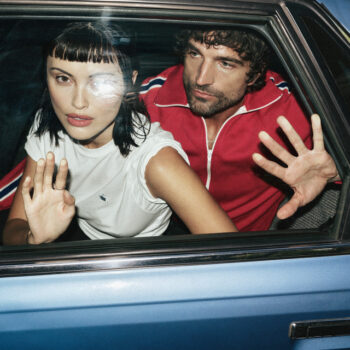
“We never settled on doing one or the other, rock or pop,” Kempen tells Atwood Magazine. “Instead we made something new to us. We may have started in different places but we move in the same direction.”
The title of their debut EP reflects that same spirit of openness. “It’s as simple as: here’s this little world we’ve built. You’re welcome inside,” the duo explain.
Their chemistry is apparent from the opening seconds of “Pandemonium,” a breathless collision of crunchy garage-rock guitars and psychedelic electronics that makes the chaos of falling for someone sound like the greatest possible adventure. “Standing In The Rain” brings the excitement down to earth with a disarmingly beautiful definition of devotion: “Romance isn’t mystical / It’s standing in the rain / And saying stay.” Meanwhile, the slick, synth-funk pulse of “Point Of View” captures the maddening frustration of loving someone whose perspective you simply cannot understand. Across these shifting moods, Pamela. find plenty of room for humor and mischief, letting their melodies do much of the emotional heavy lifting.
That carefree sound rests on a much more earnest creative philosophy. “What we hope comes through is how much care we put into everything. Music is more than entertainment to us, it’s a way of making sense of life, lighting up the dark times, and giving the good moments a good baseline too,” they share.
But “Better Than Before” is the EP’s euphoric high point, a glorious indie rock rush that makes recovery feel like a summer afternoon with nowhere else to be. Its guitars shimmy and sparkle over a bounding bassline, while the drums kick everything into a higher gear. Ellen and Kempen’s vocals skip between nonchalance and delight, and the chorus arrives like a window flung open on the first perfect day after a miserable season. “I’ve got sunshine in my pocket,” they sing, an almost childlike declaration of happiness that becomes utterly convincing in their hands. The whole performance radiates an infectious, uninhibited energy, with just enough grit around the edges to keep its sweetness from becoming saccharine.
Oh darling don’t be mean
You know you mean so much to me
Still don’t know what I’m waiting for
Everywhere that I look is an open door
I’ll need you someday
Give me a break
Oh my mind can be uninspiring
Better, better than before
Better, better than before
I can’t start it I can’t stop it
I’ve got sunshine in my pocket
Yet for all that exuberance, the song’s origins are considerably more painful. Kempen remembers the experience that inspired it with an honesty that makes its buoyancy all the more remarkable.
“Your first heartbreak is so shocking that everyone just tells you to survive it however you can,” he explains. “People say, ‘One day you’ll realise you haven’t thought about them all day,’ and it feels impossible. But eventually that day comes. You remember who you were before them. You get excited about someone new. You go from ‘things can’t get any worse’ to ‘things might actually get better.’ The song honours the pain, but celebrates making it through.”
The brilliance of “Better Than Before” lies in how completely it embraces that emotional middle ground. The old attachment hasn’t entirely disappeared: “You’re always on my mind / Girl I’m trying,” Kempen sings, a passing admission that gives the song’s carefree exterior an unexpectedly poignant dimension. The repeated “Better, better than before” becomes more than a catchy refrain; it’s a celebration of progress that doesn’t demand perfection. The past can still sting, and the future can remain uncertain, but neither has to stand in the way of enjoying the present. Pamela. capture that realization with such irrepressible spirit that even the most ordinary signs of recovery begin to feel monumental.
Kempen has a wonderfully eccentric explanation for the song’s emotional sleight of hand.
“There’s an old saying: don’t butter your bacon. I feel that way about music. I don’t need sad lyrics over sad chords. Some of the most uplifting songs are quietly heartbreaking. It’s like making someone laugh before they cry. So often getting people to dance is what lets them feel something deeper.”
It’s a philosophy that gives IT’S NICE TO SEE YOU HERE much of its irresistible appeal. “Skin Contact” channels the anticipation of physical intimacy into a bass-heavy, disco-kissed tease, its restless rhythm practically vibrating with desire. The closing “Half Of Me Is You,” meanwhile, leaves the revelry behind for a bruised reflection on the sacrifices we make in love. “I can’t keep on changing / Changing me for you,” Kempen sings, before the pair’s voices come together in a final refrain that captures the beautiful, sometimes devastating entanglement of two lives. Even at its most sorrowful, Pamela.’s music retains an unmistakable sense of movement, as though every ending contains the possibility of another beginning.
Their visual world is just as distinctive. Ellen and Kempen conceptualize, direct, and edit their own music videos, bringing their shared fascination with film and fashion into an aesthetic that’s equal parts effortlessly chic and mischievously absurd. The video for “Better Than Before,” filmed with little more than a studio, some lights, a camera, and three hours, offers a particularly delightful glimpse of the duo at their most unguarded. Their camaraderie is palpable, and their enthusiasm contagious; watching them together, it’s easy to understand why this project works so well.
What looks so spontaneous on screen actually has a surprisingly deliberate foundation, one the pair have been developing since the project’s earliest days. “One of the first things we ever made was what we call the Pamela. Bible. It’s a living document full of our aesthetic, sound, motivations, colours, clothes, films, photos… anything that feels like us. In a way, everything we’ve made has come from that. Distilling your vision like that is surprisingly powerful,” they explain.
Perhaps the greatest achievement of IT’S NICE TO SEE YOU HERE is how naturally it allows its contradictions to coexist. Love can be maddening and magnificent; desire can inspire both reckless decisions and extraordinary growth. Pamela. have found a way to make those experiences sound exhilarating without dismissing the feelings underneath, wrapping genuine emotional insight in hooks that practically demand repeat listening.
“Better Than Before” captures the very best of that approach, turning the first fragile signs of life after heartbreak into a celebration worth dancing to. It’s a triumph of songwriting and sheer personality, and the kind of song that makes you want to throw open the windows, turn up the volume, and surrender to the moment.
And they’ve already had the extraordinary experience of watching those songs take on lives of their own beyond the studio. “We just got back from our first European tour, fully prepared for nobody to show up. Instead, people were singing our songs back to us or telling us their favourites from the EP. That was surreal. Music is such a personal relationship between a song and the person listening to it. You rarely get to witness that relationship firsthand,” they recall.
It feels fitting that songs so fascinated by the beautiful trouble of getting close to someone have brought strangers together in rooms half a world away. Pamela. don’t pretend the bruises disappear when the music starts; they just give us a reason to dance through them, to celebrate everything we’ve survived, and to remember how much joy still lies ahead.
For a debut that spends so much time exploring what it means to stay, IT’S NICE TO SEE YOU HERE makes one thing wonderfully easy: You won’t want to leave.
“Pieces”
by Stevie BillIf you want Stevie Bill after dark, you’d better want her in the daylight, too.
On her radiant single “Pieces,” the Dutch singer/songwriter offers a deliciously flirtatious ultimatum: Lust is welcome, but love has to come with it. It’s a sweet, self-assured declaration from an artist who knows how to surrender to desire while holding her ground.
Glistening guitars curl around a buoyant, pulsing drumbeat, while Bill’s spellbinding vocals glide through the heat with a honeyed, hypnotic sweetness. Lush, slinky, and irresistibly danceable, “Pieces” is an intoxicating indie pop daydream that wraps a serious demand for devotion in the pure, smile-inducing pleasure of a great pop song.
Say my name and lead with your touch
I find you in the curves of my body
I wonder, are you sleeping on us?
‘Cause my heart is wide awake now
Too telling, I find your embrace
In club lights and the break of the morning
I wonder when your words were replaced
By keeping tabs of honor
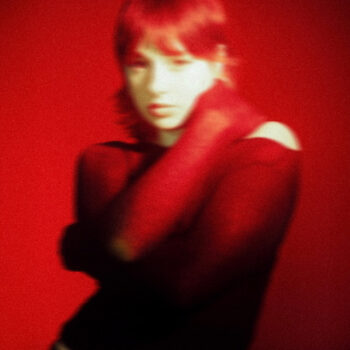
I’ve been cheering for Stevie Bill since I was a platinum blonde, the 2024 EP that helped make her one of Atwood Magazine‘s top artist discoveries of the year and a 2025 Artist to Watch. Born in Amsterdam, she developed her craft in Berlin before moving to New York to study at NYU’s Clive Davis Institute, and went on to support Stevie Nicks at Hyde Park. Her 2025 single “Fan” earned a place in our 110th Editor’s Picks; now, following February’s “Shadow,” her second single of 2026 brings her back for another well-deserved appearance.
When we spoke in 2024, Bill was reflecting on the many versions of herself she’d been learning to embrace. Nearly two years later, she has a fascinating perspective on the relationship between identity and artistry. “I think I was going through that process of being okay with contradiction, but I’ve learned in the past few months to go even deeper as to say – contradiction is the entire point,” Bill tells Atwood Magazine. “It’s what makes an artist interesting and human.”
This perspective reaches beyond artistic identity and into the sheer pleasure of making music. “The most exciting thing about the music I’m making right now is that I’ve been bringing the fun/sex appeal back. It feels true to who I am as a person. I’m not that serious as a person, but I can get vulnerable,” she shares.
Michael Jackson has been her musical north star this year, with Prince and Fleetwood Mac among the other greats guiding her creative ambitions. She’s increasingly interested in songs that come alive onstage, where a melody can sweep an entire room into motion. For “Pieces,” Bill joined her longtime collaborator and producer Jacob Geoffrey for a writing session that yielded something especially immediate.
“Jacob and I can be a little extra, but we wanted to try something contained and strong,” she explains. “He started producing and I was at the piano coming up with melody and lyrics. The chorus came together in about 15 minutes and the rest in about an hour. It was a quick one.”
The song’s beautifully balanced arrangement makes every detail count. The rhythm keeps its spring while the guitar figures flicker at the edges, giving the refrain lift without swallowing it. Bill knows when to lean into a phrase and when to let it hang, and “But you can’t have these pieces of me” arrives with the effortless certainty of someone who means every word. Even the repetition becomes a challenge you want to sing along to, the melody burrowing deeper with each return. The music practically invites you to close your eyes, loosen your shoulders, and let yourself be carried away.
Asked what that boundary means to her, Bill answers with the same gleeful self-assurance that animates the recording. “It’s flirty – you’re challenging them in a way. I know you want to have parts of this, of course you do. But you need to do it right,” she says.
Now you’re a hideaway lover
Speaking in silence
I know what’s behind those eyes
If it’s lust and you want it
If it’s love and it isn’t quite what you need
It’s enough for wanting
But you can’t have these pieces of me
If it’s lust and you want it
If it’s love and it isn’t quite what you need
It’s enough for wanting
But you can’t have these pieces of me
The most affecting moment, though, comes in the second verse. Following a rush of starlit flirtation and laughter, Bill suddenly asks, “Would you mind it if I get serious for a moment?” It’s a disarming interruption, a fleeting glimpse of uncertainty beneath all that confidence. The drums keep moving, but the emotional temperature shifts as she lets her guard slip. When asked why she wanted to make room for this change, Bill’s answer is wonderfully direct:
“Because ultimately you do want something more from that person.”
Her songwriting is particularly moving here because it allows those competing impulses to coexist. “I’m open to figure out what it means / When my heart beats out of time,” she sings, reaching toward a future she can’t yet define. The admission lends the chorus a different emotional weight: What initially sounds like a playful challenge becomes an expression of personal dignity. Bill isn’t pretending to have all the answers, nor is she asking for guarantees. She’s simply refusing to compromise the things that matter to her in pursuit of a connection that might never become what she hopes it could be.
Just do something, the night is so young
I’m still looking up and it’s starlit
I wanted an innocent crush
And now I’m lost in emotion
Say funny, you’re making me laugh
Would you mind it if I get serious for a moment?
I’m open to figure out what it means
When my heart beats out of time
And while “Pieces” draws from the complications of one relationship, Bill hopes its message will resonate far beyond her own experience.
“I hope girls especially feel like it’s maybe a little reminder not to let them be taken for granted and to stand up for what they want – or remember to walk away when it’s not right.”
You can’t help smiling when that chorus comes around again. For all its emotional stakes, “Pieces” leaves you feeling lighter, with each return amplifying the song’s joy rather than diminishing its sincerity. Stevie Bill has an extraordinary gift for making deeply personal feelings sound universally irresistible, and this latest chapter finds her wielding that talent with infectious confidence and an ever-deepening sense of purpose.
Her melodies sweep us off our feet; her words remind us we still get to decide where we land.
Now you’re a hideaway lover
Speaking in silence
I know what’s behind those eyes
If it’s lust and you want it
If it’s love and it isn’t quite what you need
It’s enough for wanting
But you can’t have these pieces of me
If it’s lust and you want it
If it’s love and it isn’t quite what you need
It’s enough for wanting
But you can’t have these pieces of me
Duckpond
by The HailsBeing in a band in 2026 is a ridiculous proposition – the bills keep climbing, the internet never stops shouting, and an industry increasingly ruled by algorithms hardly seems designed for four friends with guitars and a dream.
And yet, The Hails have never sounded more convinced it’s worth the fight.
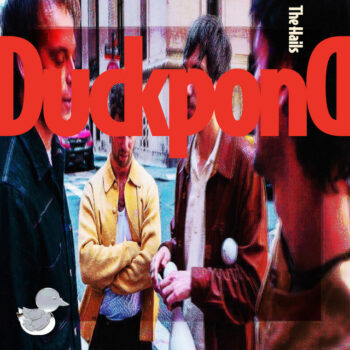
The indie rock band’s smoldering, emotionally charged sophomore album Duckpond answers the exhaustion of modern life with the electrifying chemistry of four friends finally making music together again. Guitars curl around supple grooves, Robbie Kingsley’s melodies seethe with soulful heat, and the songs bristle with the joy of a band reclaiming its own momentum. Beneath that swagger lies a deeper hunger – for meaningful connection, for creative freedom, for a life that offers more than scraps. The Hails have spent years learning how hard it is to keep a band alive. Duckpond is the sound of remembering why they started.
Released October 23 via ONErpm, Duckpond is a 14-track statement from a band rediscovering the thrill of spontaneous creation. The Hails – Robbie Kingsley (lead vocals), Franco Solari (guitar, keys, vocals), Dylan McCue (guitar), and Zach Levy (drums) – emerged from the University of Florida’s indie scene, breaking out nationally with 2018’s “Younger” before years of touring and the release of their 2023 debut album, What’s Your Motive. With the members now scattered between Miami, Washington, DC, and Brooklyn, the quartet rented a house in South Florida to recover the easy give-and-take of their college days, then traveled to Los Angeles to record with producer Brandon Shoop (Role Model, Dijon, Junior Varsity).
How did you want me
to answer your questions?
The answer is me
Took all my problems
and made it your business
I cannot believe
But if you don’t wanna beg for anything
He looks like a fool
He acts like a tool
I’m only telling you what I thought was true
I know what you’ll say
You’ll run far away
My life’s on fire
– “Fool,” The Hails
“What’s great about this record is that we wrote and recorded everything in the span of two months,” Kingsley tells Atwood Magazine. “You’re hearing a true time capsule of a band committed to one goal. Our lives could have drastically changed since those sessions, but you’re not hearing that like you might’ve on our past projects where we were fighting to get songs done.”
The sessions with Shoop brought a fresh set of ears to a group that had spent years figuring things out on its own. Solari remembers the producer’s influence with a particularly good punchline.
“I had become a bit of a laptop nerd, automating like six plugins to make some sound that’s never existed before. I think Brandon was kind of the voice of, ‘Just play guitar, you loser,’” he jokes.
The results are all over Duckpond, a record whose musical pleasures are as varied as its frustrations. The album opens with the simmering rock heater “Bad Habits,” whose stubborn momentum runs headlong into the costs of self-sabotage. Kingsley’s admission “Afraid that I might die alone” slices through the song’s bravado, revealing how much fear is buried beneath the bad behavior. “Digital Life” confronts social media-induced alienation with brooding guitar rock, while the stomping “Timely” sneers at predatory landlords and “Scampi” ridicules armchair activism over a cocky funk strut. The fiery closer “Ducks on the Pond” sends the record out swinging, its swaggering rock attack taking aim at predatory gambling companies. When the band sneers “By the end we’ll own your house,” the lyric exposes the cruelty behind the flashing lights.
“Corruptor,” another indisputable highlight, practically springs out of the speakers on a buoyant Britpop rhythm, with a Brian Wilson-inspired three-part vocal harmony lending its bridge an unexpected lift. The line “You’re the world and I’m your toy” puts a disarmingly earnest confession at the heart of the song’s playful commotion. The Hails have plenty to say about the absurdities of modern existence, but their sharpest observations aren’t confined to the outside world. On “Fool,” the album’s second track and one of its most intoxicating tracks, the band narrow their gaze to the peculiar humiliation of knowing exactly how a relationship can hurt you and willingly walking into the fire anyway.
And what a deliciously seductive fire it is. Dreamy, slinky, and steeped in late-night desire, “Fool” unfolds in a swirl of woozy R&B guitars and a languid groove that practically invites you to lose your better judgment. Kingsley’s vocals glide across the arrangement with a soulful, mischievous ease, making the song’s romantic dysfunction sound almost impossibly appealing. The influence of D’Angelo and Maroon 5 can be heard in its sinuous guitar work and smooth melodic contours, while Kingsley traces its opening melody to another set of musical heroes.
“I always said the opening melody reminds me of something Paul McCartney would write,” he explains. “So I guess that was my personal vision. There’s some Stones in there, too.”
Beneath the song’s irresistible sway is a remarkably self-aware portrait of romantic self-deception. “He looks like a fool / He acts like a tool,” Kingsley sings, as though putting the embarrassment in the third person might make it easier to swallow. The warnings grow more pointed as the song progresses – “Don’t dress up your lies / There won’t be a second time” – yet desire keeps getting the better of good sense. By the time Kingsley reaches “Ooh, baby, now we’re dancing on fire,” the contradiction has become the whole attraction. “Fool” captures the maddening pleasure of choosing what we know is bad for us, then dressing up the consequences as romance. Kingsley once likened the experience to walking into a leopard-print room in your finest leather jacket, having a martini thrown in your face, and secretly enjoying it. Asked whether the comparison still holds, he doesn’t hesitate: “Same thing. I’ve got my leather ready to go.”
For all its romantic misadventures and pointed social commentary, Duckpond ultimately draws its greatest strength from the musicians themselves. The record’s restless energy is rooted in the give-and-take of four people who have weathered years of uncertainty and still have plenty of fight left in them. There’s a looseness to their playing, a sense of possibility in the arrangements, and a palpable delight in hearing ideas take shape collectively. When asked what larger story the album tells, Kingsley reaches for an unexpectedly wonderful analogy:
“I think it’s a glimpse into our collective life as a band, as a unit. The ‘band’ sort of operates as its own entity and I think we make up parts of a whole body. Kind of like a Megazord, you know, from Power Rangers. This Megazord has some fight. We want to fight. We want to share our passion for creating and performing because it truly makes us feel alive together.”
The Hails have even dressed themselves as 1930s bowling-alley pinsetters in the album’s visual world, embracing the wonderfully absurd parallel between a profession lost to automation and the increasingly precarious business of playing rock ‘n’ roll. It’s a clever joke with a very real question underneath: What happens when the world starts treating the things we love as outdated, impractical, or expendable? Duckpond answers with the unmistakable conviction of musicians who have rediscovered the pleasure of their craft, and whose willingness to keep showing up for one another is every bit as compelling as the music itself.
Kingsley, naturally, puts it best.
“Bands are ridiculous and out of style, but I love being in one.”
— — — —

Connect to us on
Facebook, 𝕏, Instagram
Discover new music on Atwood Magazine
Editor’s Picks
follow EDITOR’S PICKS on Spotify