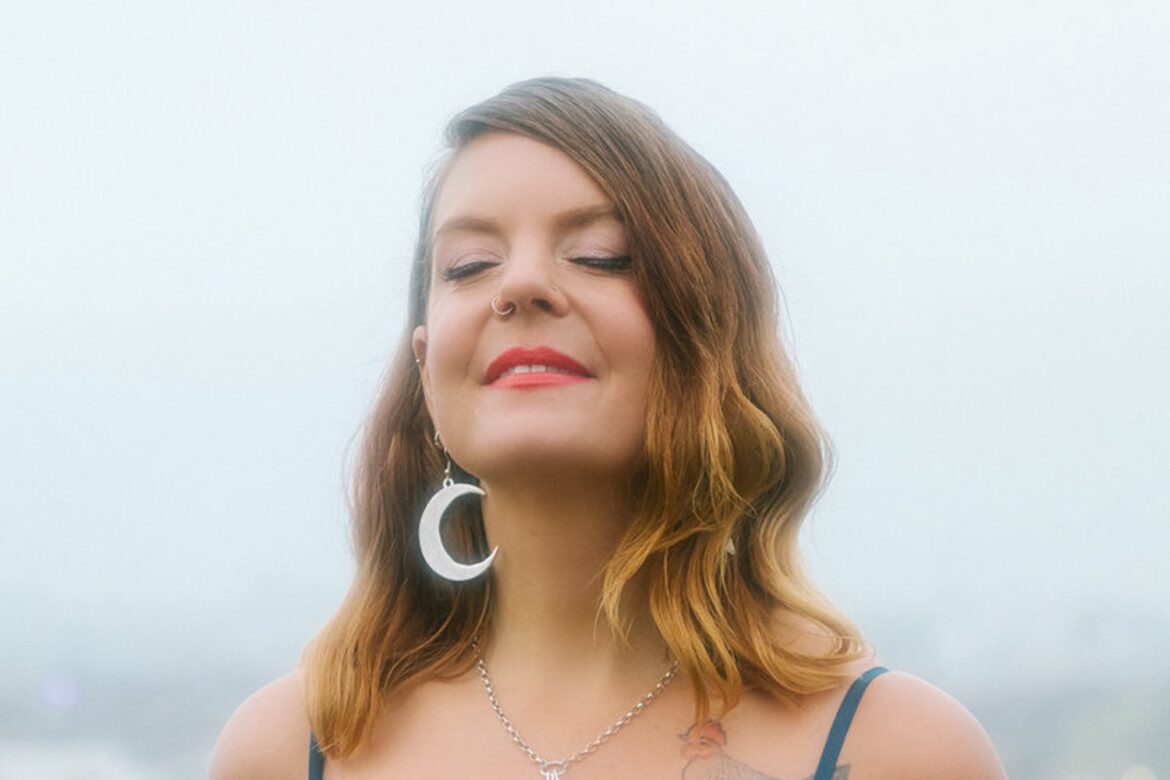
In honor of International Women’s Day, Atwood Magazine has invited artists to participate in a series of essays reflecting on identity, music, culture, inclusion, and more.
•• •• •• ••
In this lyrical, reflective essay, songwriter and poet Rosina Buck explores the ‘sacred wound’ and the alchemy through which the wounds we carry transform into art, empathy, connection, and offering – and how, in loving these fractured parts of ourselves, we cannot help but return to our innate humanness.
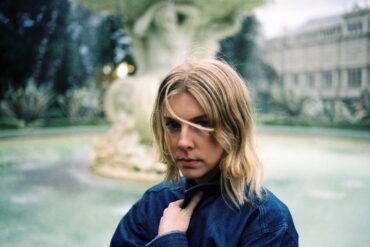
Rosina Buck’s work blends the familiar with the otherworldly. Celebrated for weaving wondrous tales of love, loss, longing, resilience – and even telescopes – set against dreamy, ethereal pop-folk landscapes, her music carries a kinetic, embodied energy, offering listeners heart-led experiences that linger long after the final breath. Rosina has performed at acclaimed festivals such as Glastonbury, Green Man, Boomtown and Shambala, as well as gracing the stages of legendary venues such as Ronnie Scots and St Pancras Old Church. She has also previously received praise from the likes of Bristol24/7, Songwriting Magazine and CLOUT to name a few.
Rosina is supported by Arts Council England for the development of her first poetry book and recently received the Next Level grant from Help Musicians UK for the release of her two upcoming EPs, Part One: Biscuit Tin and Part Two: Before it Snows, due for release later this year. This forthcoming body of work explores relationship, transformation, heartbreak, recovery, and the quiet miracles of being alive through it all. Each song is its own self-contained universe – a place to lean into, tumble through, and return from fuller. Taken from her first upcoming EP, “Telescope Love” marks Rosina’s most expansive creative era to date. “Telescope Love” is out now.
•• ••
DANCING WITH THE SACRED WOUND

by Rosina Buck
As poets – songwriters, artists, healers – we often find ourselves haunted by something: A feeling, a catastrophic event, a memory, a question that lingers, woven into the tapestry of our lives.
Something that lives in us, branded on our hearts, an insistent presence that simply is, that we cannot escape, returning again and again, even when we try to look away.
We return to it, spiralling inward, searching the void for the words, melodies, or movements that might give it voice—the vocabularies that might ‘save us’ from the perpetual ache. We come to know this texture of pain as we would a lover, tracing its contours, its rhythms, its untameable depth.
This is why similar themes tend to echo through a writer’s work: we are compelled to explore a particular agonising presence, wrestling with the many ways to articulate it through our art.
At the heart of this compulsion lies the sacred wound—something I first learned about from the incredible poet Maya Luna—a deep, unhealable part of our being that both troubles and awakens us.
This is the paradox.
As writers, we often only know how to speak from this place, pouring our pain, our seeking, our confusion, or chaos into our art. Yet from surrender, curiosity, and radical love, we momentarily metamorphose our wounds into something meaningful, something palpable, something that ripples into the hearts of others.
There is nothing more beautiful than encountering a piece of art, a song, a poem, that speaks directly to the ache inside us—the tender, fragile place we have always carried. We recognise ourselves there. When we recognise our own sacred wound mirrored in another, it is one of the most life-affirming feelings in the world. Our wounds are exactly what bring us home to our innate humanness.
In my own journey as a songwriter—from the depths of addiction to finding sobriety—I heard again and again: your broken parts are your gift. I used to think I understood, but it still felt so unfair. Now—now I get it. I see how those tender, raw pieces of myself guide my expression, and in staying close in, not trying to fix, mend, or medicate them, I create medicine.
They are the never-ending muse. They shape our creative lives from childhood onward. We even find ourselves drawn to experiences, people, and environments that stir that ache again—not to suffer endlessly, but to give it a voice, to feel it so fully that we have no choice but to transform it into something other—something that comforts, connects, and resonates—both within us and beyond.
There is a quiet intelligence in this: the intelligence of love, moving us toward self-realisation, radical-compassion, toward meeting ourselves more fully. Through giving ourselves to our churning and clenching, we experience more of what it is to be truly alive. When we learn to love the broken parts of ourselves, to hold them as something holy, our art becomes an offering. It soothes, it reaches, and it reminds us that fragility and brilliance can coexist.
To walk with our sacred wounds, to receive their teaching rather than resist or turn away, is to allow the tender story to breathe. And in that breathing, in that soft attention, we create something profoundly human, profoundly healing, profoundly beautiful. – Rosina Buck
* * *
I KNOW THAT I BELONG TO THE SEA, BECAUSE ALL THINGS COME FROM THE OCEAN
I can control the wind,
I’ve bolted from my bed, held a gale in my palms,
pushed sailboats, carried them away from the shoreline.
I’ve slowed down sunbeams, wrapped them around my barnacle shoulders,
when I cannot stop crying, I summon the rain.
For days I’ve sat curled up in a ball on this beach
and felt a low rumble that
overtakes my body, as if my bones were a cave
and the waves were caught in its gaping mouth.
When I’m certain I’m alone, I slip off my skin and dance.
A seal watches my madness like a priest in a box.
Naked under a rinse of moonshine I moan to her.
She stretches towards me through an underwater cathedral and
it’s as if she knows exactly how lonely I am.
I tell her I’m discontent on land. I want to be out there –
where seagulls scream from their greedy throats
where cliff faces emerge like spirits in the mist
where the flash of fisheyes become a lighthouse.
I want to shift through the guts of a shipwreck
without having to hold my breath.
The urge to drink can rise like a muddy tide.
It sucks you under before you can catch your breath.
One moment the waters are calm,
then the current drags you toward a bottle
you promised you wouldn’t open.
The past follows me like a dogfish,
but I have also seen things change –
like the energy of waves, and the ways my body shapes
into something more bearable.
I did not believe I could be happy sober.
But after a storm is when solid things are found –
when the ocean gives back all she has taken,
because waves can only climb so high before they collapse.
Maybe you will always find me here –
I want nothing more than to roll open naked,
to gulp in the rain and belong to the sea.
* * *
Before I Accepted You, My Ribs Stuck Out
(a praise poem to my body)
Before I accepted you,
my ribs stuck out
but gently
you wove
me back together.
You filled my lungs with breath,
when my marble eyes vanished,
rolling like lost pennies
towards an empty ceiling –
you held me.
I want to thank you
For all the times you guided
rivers of crimson
toward cuts weeping
like mothers’ hearts
stooped below a pink sky.
For every tear
caged inside a cigarette.
This pair of vacant breasts
hung over broken furniture,
for every desperate tongue,
sunk inside a whisky glass.
I want to thank you
for the shoulders that wrap me,
tuck me inside a waistcoat,
gently, you curl up
and around like a root.
When I hung myself out
you pulled me back to bed,
licking my legs clean.
You soothed
me back together.
You have become an island.
When there was nowhere left to stand,
certain and solid, you waited.
* * *
I Can Hope for the Song of Dolphins
What happens when summer comes,
and you haven’t finished dying?
When all the ways you learned to be quiet
become a grave of burnt bed frames
and you can’t stop thinking about
smoking tobacco, and the mercy of men’s hands
slipped underneath the branches of an
old tree, and the bright stars whispering
a tune you first heard lying on a kind rock.
The sea is not always crystal or warm.
It’s a swollen pool of black ink,
a bad mood that loiters in and out
of my sharp attempts to stop all my madness.
I’m tired of aching all the time.
These heartbreaks have become my home
and I’m scared I’ll vanish if I can’t
turn them into something beautiful.
If I sit on a folding chair just above the shoreline;
if I dangle my chest into the ocean long enough
will I feel the never-ending fingers of rain
caress my ordinary life into something holy?
For a split-second,
will this untidy escape
paint itself pale blue and reflect that silvery song back?
So that I can sleep in a soft mizzle
and enjoy my human failings, like a bad film
I can’t stop watching.
•• ••
:: connect with Rosina Buck here ::
•• ••
•• •• •• ••
Connect to Rosina Buck on
Instagram, TikTok, Facebook
Discover new music on Atwood Magazine
📸 © courtesy of the artist
Stream Rosina Buck