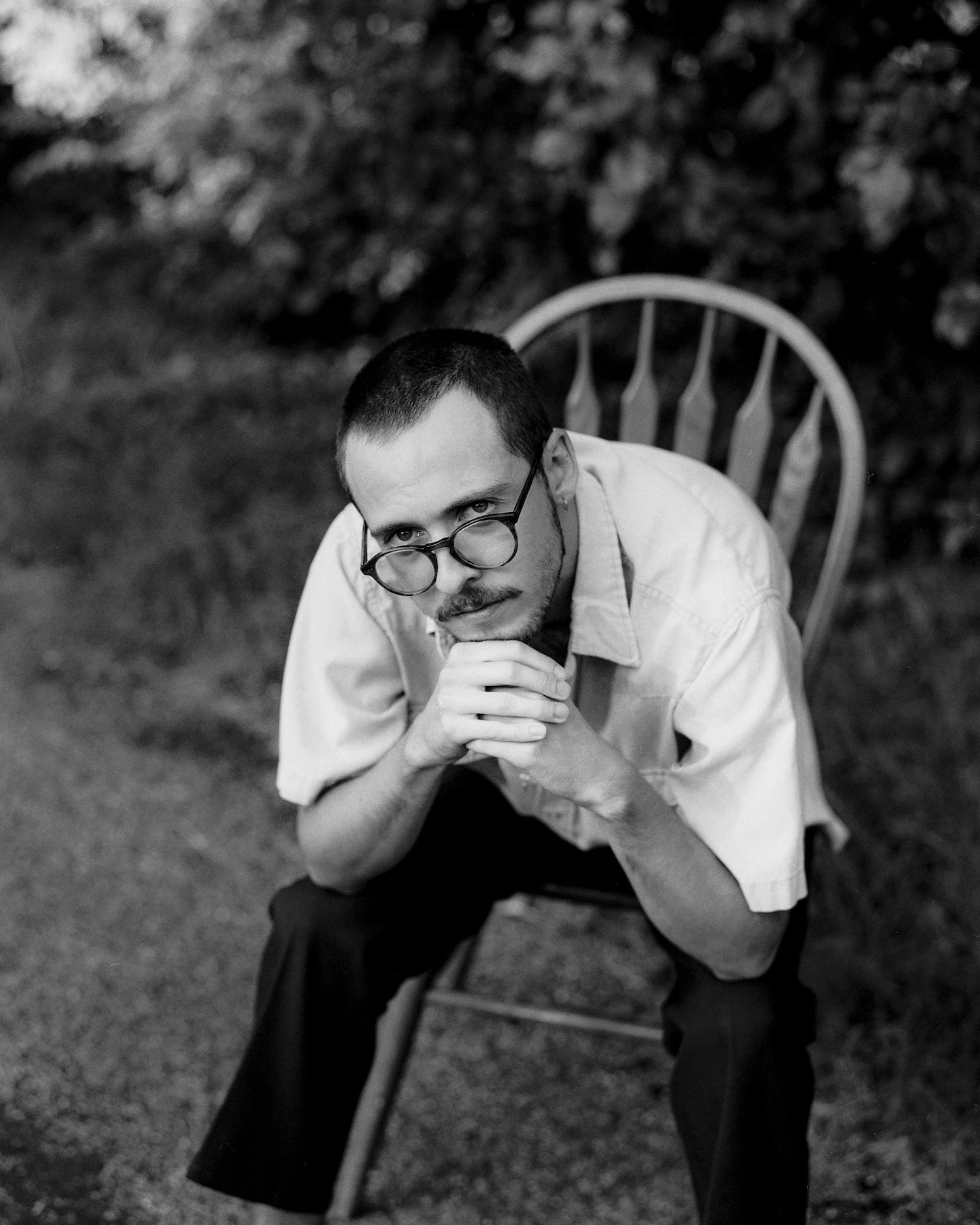
With ‘Leave It in the Sand,’ New York’s Pleasure Systems follows up his debut album that first brought him recognition for his heartbreaking and deeply personal illustration of grief. His sophomore effort now finds Clarke Sondermann in an entirely new state of life – sounding more hopeful than ever.
Stream: ‘Leave It in the Sand’ – Pleasure Systems
Pleasure Systems’ 2021 debut Visiting the Well was recorded in the six months following his partner’s death.
Intimate, devastating and deeply human, the album soon took on a life of its own, allowing listeners to find their own experiences reflected in its grief-stricken lyricism.
But Leave It in the Sand is no Visiting the Well 2.0. It’s not – and thank God for that – a simple continuation of the heartbreaking nature of his debut. Instead, five years later, Sondermann finds himself in an entirely new chapter of life: He’s now married to opera librettist Mark Campbell and living part-time on Fire Island – both of which served as a major inspiration for the record. The grief remains, but it is no longer the album’s defining force. Instead, Sondermann turns toward the life he has built since and the ordinary moments of happiness he saw emerging after sorrow.
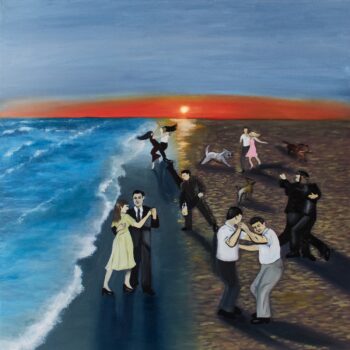
This shift is audible from the very first moments of the record, as the sound of waves crashing on the album’s “Intro” sets the scene for the next 12 tracks.
Written over three years and produced by Ivan Berko, the album was developed between Sondermann’s homes of New York City and Fire Island, a place of queer culture and striking coastal landscapes that his husband first introduced him to. The natural world evidently remains an endless source of inspiration for Sondermann, with Fire Island’s vast landscapes and narrow coastline permeating much of the album’s imagery.
This influence comes into sharper focus on “Everything I Need,” one of the album’s standout moments. The song showcases Sondermann’s remarkable ability to elevate the ordinary happiness of everyday moments into something profound, while weaving in imagery drawn from the natural world:
Take a little time
In the real, in the sublime
Wandering the island,
wondering a rhyme
Like playing with the light
Going in and out of sight
Everything I need is here tonight
The track was previously released in 2023 and now appears in a slightly altered form, most notably with the addition of strings after the second chorus that leave the listener wanting more. They sit so naturally within the arrangement that the absence of a more extended outro feels almost deliberate in its restraint.

A similar sense of expansion is audible on “Rubble,” where the arrangement is brighter and more open, with warm guitars, strings and a clear production that allows every element to breathe. Sondermann’s voice, in particular, sounds unusually crisp and assured, carrying an unprecedented confidence that suggests a newfound stability. Yet the lyrics complicate that sense of reassurance. In a world that at times seems to be failing, with “cracks in all the pavement / plastic in our blood,” there remains the mundane beauty of everyday life, the “sunlight on the furnace / a new day dawns at last.” As such, the song exists in a space between gratitude and anxiety, where “the steady reassurance / is replaced by steady doubt.”
This uneasy balance between stability and doubt is one of the album’s defining emotional threads. Meanwhile Leave It in the Sand never suggests that healing means forgetting. The album’s title is a lyric from “Everything I See,” where Sondermann describes making peace with the past, as he wears his late partner’s old sweater to Fire Island. He is caught between grief and the life he’s built there, easing off the pain with the resolve to meet his husband and dog:
I’ll wear his sweater to the island
I will be silent
I will leave it in the sand
I can’t control the way the seas rise
But in your eyes
I can see that it’s okay
It’s always worth it for the moment
For a lifetime
Only for another day

The soundscape reinforces this sense of acceptance, suggesting a way of holding what was, what is and what will be in the same frame.
As Sondermann repeats “I found a way, I found a way” on the outro, it becomes clear that grief does not vanish, but is instead reshaped into something navigable. Love, in turn, is not diminished by loss; rather, it is what makes both pain and joy possible in the first place. Leave It in the Sand accepts and ultimately embraces the precarious nature of life, where nothing is permanent and both the good and bad are temporary.
Perhaps the clearest sign of how much Sondermann’s world has expanded is the presence of other voices. Where Visiting the Well was largely a solitary undertaking, Leave It in the Sand is a more collaborative effort, featuring a range of vocalists and instrumentalists. It also includes two collaborations with his husband Mark Campbell. “Still,” for which Campbell wrote the lyrics and Sondermann provided the musical interpretation, is a hopeful song of defiance and an ode to perseverance – one that links the fragile environment of Fire Island, constantly exposed to rising tides, with love itself as something equally vulnerable yet enduring:
The tide could take us under
And drag us way out to sea
The waves could knock us over
Snap each limb
Still
We swim
And then there’s the extraordinary “have had.” Originally written in 1992 by Campbell and composed by Stephen Hoffman for a friend’s memorial service, Sondermann now covers the track for his album. He does so with remarkable grace for the tender lyrics that touch the heart immediately:
We would have walked
With your bike at your side
Only slowing our stride to watch above
Legato, a swoop of birds
And in our awe
Have had no need for words
The sky this evening
You would have loved it
With collaboration making for some of the most special moments on the album, the question arises what this means for Pleasure Systems as an artist otherwise marked by his deeply personal and autobiographical texts.
It’s why one can’t help but read these lyrics in the context of Visiting the Well, applying them to Sondermann’s personal experience. But there’s a reason “have had” is now, years later, reinterpreted by Sondermann – it doesn’t come at random. As he sings, “The sky this evening / you would have loved it,” it becomes clear that these lyrics could have also been found on Visiting the Well.
The closing track “Thank You” offers a final moment of gratitude toward his husband: “Sometimes it’s hard to see the light / Sometimes I wake up in the night / But you’re glowing in the background.” In its simplicity, it distills the album’s emotional core – the presence of another person as an anchor through uncertainty.
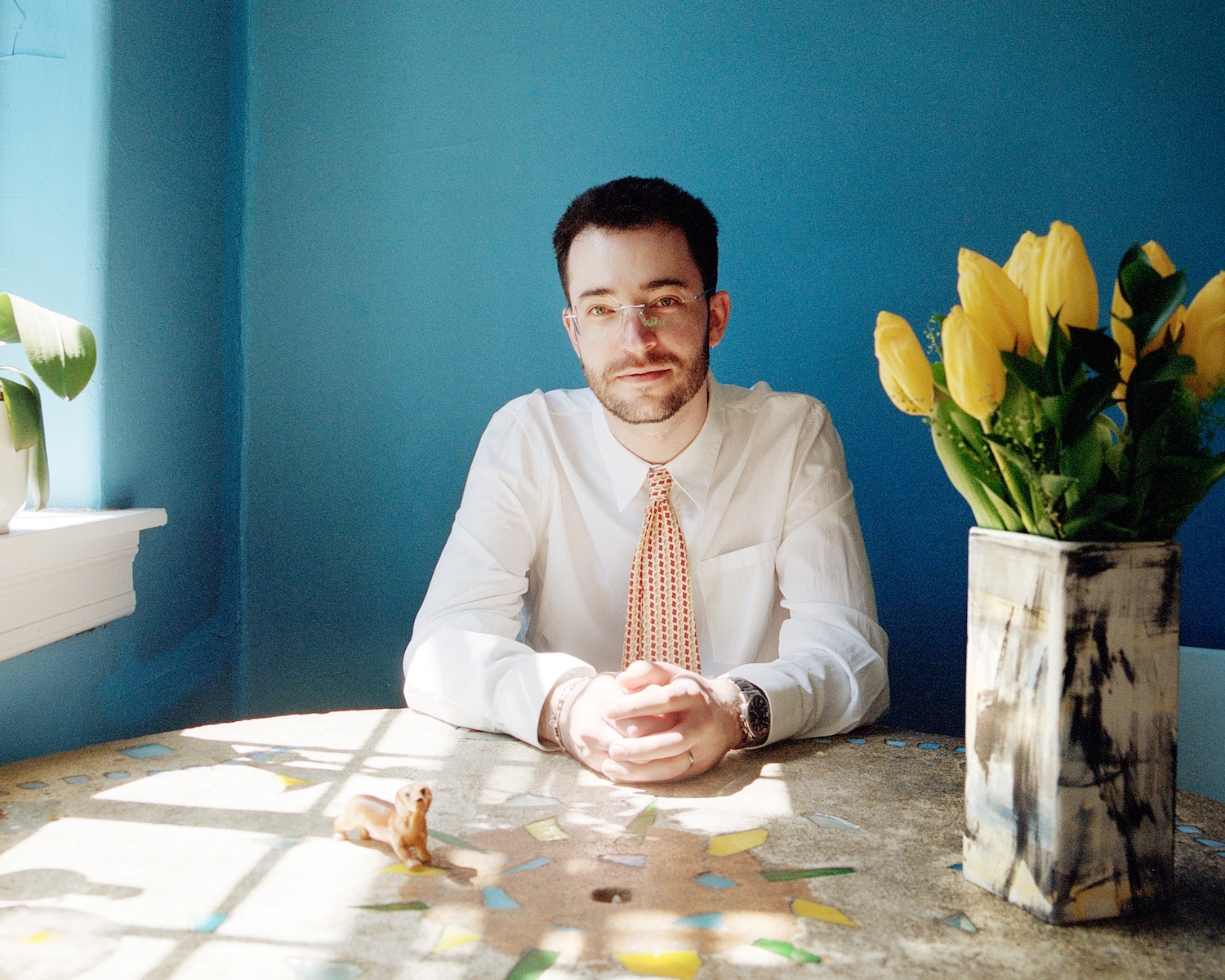
On Visiting the Well, Sondermann sang, “I don’t want to write another empty eulogy / I don’t want this / I want the life to return.”
Five years later, Leave It in the Sand sounds like the answer to that plea. The album confirms what one desperately hoped to be true after listening to Pleasure Systems’ debut: That life goes on after death. And while grief will inevitably remain part of it, it no longer occupies the whole frame. Love and joy return – in unprecedented, new and beautiful ways.
More than a record about loss, Leave It in the Sand is about what happens afterwards: celebrating the quiet beauty of surviving, of loving again, and of learning that happiness can coexist with sorrow.
Leave It in the Sand is out now via Sondermann’s own micro label Ending Music. Enjoy listening!
— —
:: stream/purchase Leave It in the Sand here ::
:: connect with Pleasure Systems here ::
— —
— — — —
Connect to Pleasure Systems on
𝕏, TikTok, Instagram
Discover new music on Atwood Magazine
© Eve Alpert
 © Eve Alpert
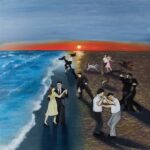
Leave It in the Sand
an album by Pleasure Systems