Every Friday, Atwood Magazine’s staff share what they’ve been listening to that week – a song, an album, an artist – whatever’s been having an impact on them, in the moment.
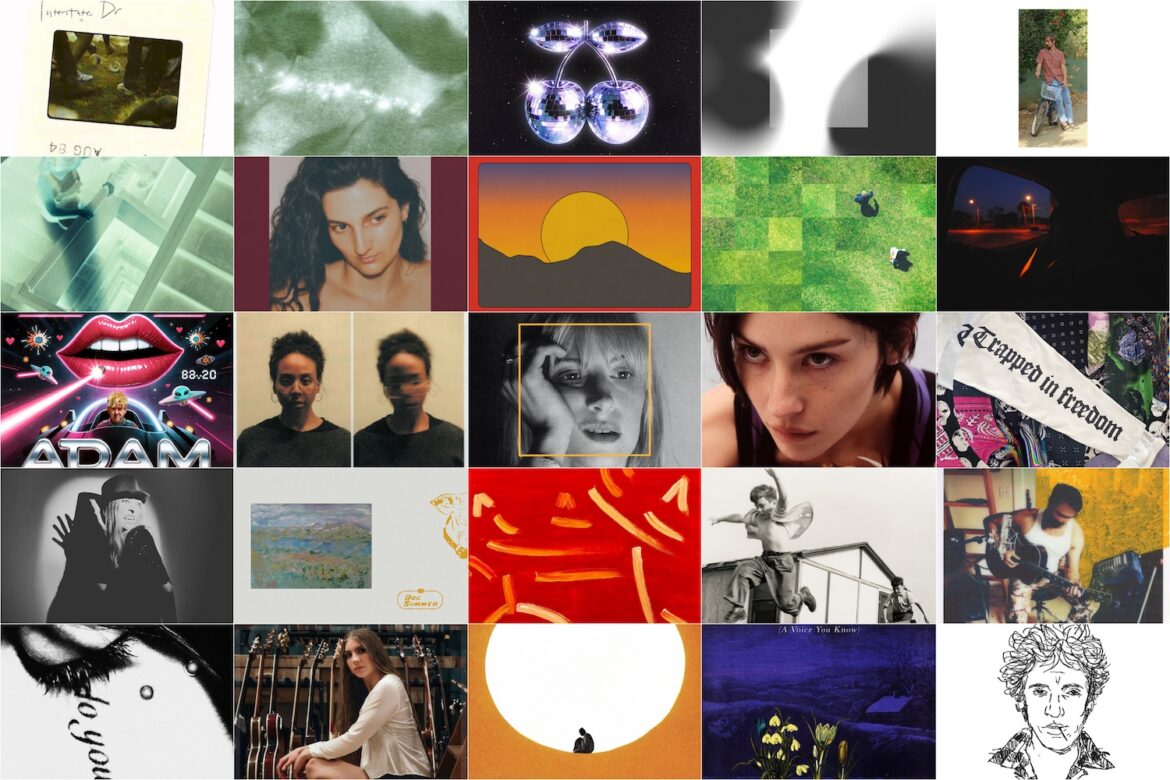
This week’s weekly roundup features music by Gracie Abrams, Hayley Williams, Death Cab for Cutie, The Mountain Goats, Shakey Graves, The Revivalists, DICE, Glazyhaze, Julia Sommerfield, Gab Gordon, A.D.A.M. MUSIC PROJECT, Purple Disco Machine, 808 BEACH and Belle Humble, kennedy mann, Larlin, Tummyache, Ahva, Nicholas Krgovich, Damn Williams, Kevin Farge, Rob Burger and Iron & Wine, Lucy Frost, My Life As A Moth, Rzekomo, Huarinami, & Cutflowers!
•• •• •• ••
 follow WEEKLY ROUNDUP on Spotify


•• ••
:: “Hit the Wall” – Gracie Abrams ::
Emily Weatherhead, Toronto, Canada

The lead single off her upcoming album Daughter from Hell, “Hit the Wall” is a lyrically cutting, sonically enticing introduction to Gracie Abrams’s latest era. You can hear the sonic fingerprints of producer and co-writer Aaron Dessner as soon as the song begins, with frantic synthesized notes dancing overtop of somber piano chords. The percussive heartbeat of the song begins to stutter as Abrams’s vocals come in, telling a story of self-deprecation and desperation in love. Immediately, the lyrics are a punch in the gut: “I’m a crack in the pavement, I’m a slip knot / I’m afraid that my fortress is a glass box / I should know what I’m playing, but I forgot / Felt good for a day, but that stopped / And I once saw it clearly, but it’s bloodshot.”
On the first listen, it’s easy to get swept away in the lyrics, but the sounds that surround them are just as captivating. This song is richly layered with strings, with violins beginning to zip through the background during the second verse. Listening closely, you can hear Bon Iver’s Justin Vernon adding texture through the background vocals. The instrumental side of this song perfectly compliments the emotional turmoil of the lyrics, ebbing and flowing through the beats of a breakdown. The bridge is a soaring departure from the rest of the song, the lyrics nostalgically referencing the difficulty of confronting your past selves: “What a waste, oh, what a shame / At night / Face to face with every girl / That I tried to play”
Abrams is no stranger to deeply emotional and vulnerable lyrics, but “Hit the Wall” feels like an introduction to a heavier side of her. There’s a resigned fierceness that feels different from the tone she held on The Secret of Us, which held an undercurrent of hopefulness. Ultimately, “Hit the Wall” is a lead track that leaves me incredibly excited to hear what Abrams’s continued collaboration with Aaron Dessner will bring on the rest of Daughter from Hell.
:: “Whim” – Hayley Williams ::
Julia Dzurillay, New Jersey

It’s Kilby Block Party week, so that means I’ve been obsessively listening to the lineup in preparation. Currently on repeat is Hayley Williams’ 2025 album which I was, admittedly, too quick to dismiss. I get it now, I really do.
Williams is synonymous with Paramore, and Paramore was beyond foundational for pop punk music and really any rock band fronted by an absolute powerhouse female vocalist. There’s still traces of that early era with songs like “Mirtazapine,” but Ego Death at a Bachelorette Party gave Williams space to explore new sounds – and even get “controversial” with her lyrics. (On one track she references a “racist country singer,” which Williams later unapologetically clarified was a dig at Morgan Wallen.)
With “Whim,” in particular, Williams is doing something new, exciting and whatever the ear-version is of eye-catching. It’s not as rock-forward, with the singer trading her iconic (and loved!) belt-y vocals for something softer, more contemplative. The lyrics perfectly match the more acoustic indie-alternative instrumentals in a way that’s so satisfying. Because, after all, who doesn’t want to believe in love?
:: “Punching the Flowers” – Death Cab for Cutie ::
David Diame, Kalamazoo, MI
Death Cab for Cutie, now one of the reliable statesmen of indie rock, have been flexing their position with all-new music from their forthcoming record, I Built You A Tower, and it is even more evident with the latest single, “Punching the Flowers.” With a band that has a verifiable legacy as great and influential as Death Cab’s, the inevitable question of “how does it stack up with their most legendary work?” crosses everybody’s mind, with the band having to cross the tightrope of maintaining their position while also pushing their sound to greater heights. And the latest single certainly proves that Death Cab is capable of both, throwing in elements from all over their discography and beyond while sounding as vital and energized as all-new bands.
On the track, Death Cab once again fire on all cylinders. “Punching the Flowers” seems to recall the episodic song structures previously seen on The Photo Album or Narrow Stairs, combined with guitar work that dip their feet into the type of second-wave emo waters that Death Cab have rarely, if ever, stepped in themselves. They remain masters of tension and release, with claustrophobic verses locked down by an insistent drum-bass-guitar groove while their choruses bloom with flowery, arpeggiated guitar lines and Ben Gibbard’s wispy lead vocal. In particular, that chainsaw-like guitar solo followed by their signature clear-sky bridge is simply sublime songcraft. And, of course, Gibbard’s elliptical lyrics consistently hold their place as the anchor in all the contrast. His brief vignette of a man whose inability to place his feelings destroys his own relationship is the type of tale that he’s always been a master at, one complete with a frustrating amount of detail that he never resolves. And as per usual, Gibbard leaves a calling card of emotional weight to cap it all off: “And I’m not sure which is worse; if it was love, or it wasn’t.” His words tie all of it together in a succinct, 3-minute firecracker of a rock song.
It’s safe to say the question of how the story of Death Cab for Cutie continues is answered with “Punching the Flowers,” a track indicative of their ability and insistence to never stop producing quality, impactful indie rock for as many years as they can. It’d be almost too easy to phone it in, produce what’s expected and guarantee a return on investment, but it’s admirable to see a band with the longevity of Death Cab avoid the pitfalls that many legacy acts find themselves occasionally falling into. And the band turns 30 next year, maintaining their relevance with an album on the way and a bulletproof position in the annals of music history – not bad for what started as a nondescript experiment by some bored college students in ‘97.
:: “Charlie Sheen Reaches Out to the Feds” – The Mountain Goats ::
Charlie Recksieck, San Diego, CA
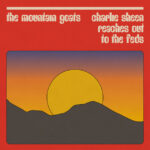
This isn’t the Ballad of Charlie Sheen. You won’t hear about cheesy “winning” or “tiger blood” references here.
What you will get is an exciting new song from one of the most literary and satisfying bands around. For years, The Mountain Goats started as basically John Darnielle in a home studio. But as they added members and started touring, they expanded their sound to full band status. On this song, things are revved up with saxophone – as if Clarence Clemons joined Arcade Fire.
They’ve got some beautiful lo-fi pieces; I can’t explain why but I think “Southwestern Territory” is a masterpiece. I’ve heard that song maybe 400 times and still couldn’t tell you exactly what it’s about. Same goes for the lyrics in “Charlie Sheen Reaches Out to the Feds” here. It’s a weave of well-phrased snippets of paranoia, which is where we use Charlie Sheen to backfill the idea of an unhinged guy in Hollywood dealing with some unknown conspiracy.
Did I mention this is a great gym song – or something you throw on while driving too fast on a roadtrip? It’s a pulsating rock song that’s an anthem, if disjointed paranoia is anthemic.
You don’t always need to know what the hell is going on to appreciate great writing. But like a lot of Mountain Goats songs, the more you listen, the more certain parts of the lyrics will seep into your consciousness. That’s a lot of headiness for something this frantic.
:: Fondness, Etc. – Shakey Graves ::
Mitch Mosk, Beacon, New York
Shakey Graves makes change sound worn-in, weathered, and warmly alive on Fondness, Etc., a homespun wonder of a record that holds grief and gratitude in the same open palm. Alejandro Rose-Garcia’s fifth album arrives like a box of old photographs pulled from a closet at night – dusty at the edges, glowing in the right light, and full of small details that only grow more potent the longer you sit with them. It’s a record about trying to stay present while time keeps moving, about becoming a parent without turning fatherhood into thesis, about holding onto fleeting beauty without trapping it under glass. Raw but never bare, modest but never small, Fondness, Etc. wraps its tender heart in haunted guitars, analog tape hiss, soft-focus strings, drum machines, birdsong, porch air, and the beautifully imperfect warmth of a life being lived in real time.
Rose-Garcia recorded the album himself in a focused month-long burst, using Tascam tape machines, Optigan textures, a possibly haunted 1932 Gibson, and whatever pieces of gear happened to be within reach. After the wide-screen sprawl of Movie of the Week, this is Shakey Graves swinging back toward intimacy without shrinking his world. He calls it a “small but big feeling record,” and that tension defines its charm: These songs feel handmade, but they don’t feel unfinished. “Don’t Change a Thing” opens the album as both a grin and a warning, setting its jolly sway against lyrics that stare straight into personal and cultural exhaustion: “I can’t help but feeling that the better days have left me behind.” The bluesy “When the Love Is New” rides a JJ Cale-inspired groove through the delicious delusion of forever, while “Time Flies” and “Away It Goes” let love, memory, and distance blur into one long ache.
“I kind of wanted to cut the poetry out of it and just kind of somehow leave the emotion,” Rose-Garcia tells Atwood Magazine, describing the way Fondness, Etc. circles massive life changes without over-explaining them. “It’s actually just a record about massive change and kind of the loss of time, you know, just aging in general.”
That clarity lends the album its deepest pull. “The Boilermaker” is a woozy, string-laced reckoning with the morning after, turning one more round into a carousel of dread; “I Once Was an Ocean” drifts through Western-tinged, Exotica-kissed instrumental haze; “On My Own” folds separation anxiety into porch-born folk intimacy. Then comes “No Place to Be,” the album’s plainspoken final blessing and perhaps its truest heart: “Well I ain’t got no place to be / Might as well take in the scenery / As long as you’re right here with me / Then this life will finally be easy.” It’s sweet without being saccharine, mortal without being morbid, and open-hearted in a way that feels earned.
When asked to describe the record in three words, Rose-Garcia lands on “warm old hug,” and it’s hard to imagine a better shorthand for an album this lived-in. Fondness, Etc. doesn’t ask to be decoded so much as carried around – on drives through the rain, in rooms where life has recently changed shape, in the private stretches between who we were and who we’re becoming. Shakey Graves has always been a gifted tinkerer, storyteller, and self-mythologizer, but here he finds a new kind of freedom in letting less become enough. The result is a tender, softly cinematic reset from an artist still chasing the strange magic of making a song out of whatever the day leaves behind.
:: “Heart Stop” – The Revivalists ::
Mitch Mosk, Beacon, New York
The Revivalists know how to make longing sound larger than life. “Heart Stop,” the seismic opening track off their forthcoming sixth album Get It Honest, arrives as a full-bodied rush of blood, sweat, and surrender – a spirited rock anthem caught between wreckage and revelation, between the love that tears you open and the love that waits with steady hands. Roaring guitars churn and swagger, drums hit with arena-sized urgency, and David Shaw sings like he’s trying to pull himself out of the fire by force of will alone. It’s aching in all the right places, cinematic without losing its grit, and charged with the kind of big-hearted radiance The Revivalists have spent years turning into a calling card.
“This song might hit a little different for everyone, and I love that,” Shaw says. “But for me, I’d say sometimes you are caught between two loves. One that’s tearing you apart and one that you know is right. This song is the sleepless nights, the wreckage, and the moment you finally surrender to what you know is there for you.”
That tension floods every corner of “Heart Stop.” Shaw doesn’t sing desire as a clean, redemptive force; he sings it as a bodily event, a pressure system, a bad habit, a blessing, a bruise. “Cold sweats keep me up at night” lands like a confession still slick with panic, while the chorus barrels forward with the kind of belt-your-heart-out abandon that makes a private spiral feel communal: “Wherever we are, you make my heart stop beatin’ / You make my heart stop.” The song’s power comes from how fully it commits to that contradiction – love as salvation and self-destruction, as a force that can break your back and still be the only thing keeping you alive.
It also sets the stage for Get It Honest, an album framed around growing up, letting go, and learning how to live with the imperfect clay of the self. With seven of the band’s eight members now fathers, The Revivalists’ next chapter is being cast as a “grown-folks record” about cutting loose from the past and embracing love, grace, and salvation in the present. “To me, this album is about understanding this point and learning to work with it like a potter works the clay,” Shaw reflects. “Our flaws and imperfections are what ultimately make us human and beautiful.”
On “Heart Stop,” those flaws don’t get polished into something neat. They’re held up to the light, still jagged, still bleeding, still beating. By the time Shaw howls “I’m not afraid of the future comin’ my way / I’m over wasting my time,” the song has turned surrender into momentum – not the soft collapse of giving in, but the thunderous release of finally choosing what’s real. The Revivalists have always been a band of motion, muscle, and communal uplift; here, they make perseverance sound like a heart learning how to keep time again.
:: “Loose Change” – DICE ::
Mitch Mosk, Beacon, New York

DICE make ambition sound like sunlight hitting the pavement at full speed. “Loose Change,” the latest single off their forthcoming sophomore album I Thought The Altitude Would Make It Worth The View, is a bright-burning indie rock anthem for anyone who’s ever had more nerve than money, more hunger than certainty, and just enough belief to keep moving anyway. It’s all forward motion: Guitars flashing like chrome, drums kicking up dust, Ben Hodge’s vocals pushing toward the horizon with a grin in their teeth. The song feels built for that first breath after deciding to leave the safe route behind.
“Loose change is about taking risks and getting out from the safety net to achieve what you set out for. This is something we definitely experienced throughout the journey of this band being on hard budgets and playing every show we could find. This track is a nice reminder that it’s all a matter of the mind and anybody can achieve what they strive for,” the band tell Atwood Magazine.
That hard-won optimism gives “Loose Change” its lift. DICE aren’t selling some frictionless fantasy of success; they’re singing from the scrappy middle of the climb, where the plan keeps changing and the only real currency is conviction. “Loose change is all that I got / But I think it’s still enough to run, run, run, run, run” lands as both a confession and a battle cry, turning scarcity into propulsion. Later, when Hodge sings, “Never made it to the blueprint / So please don’t shut me down,” the song sharpens into a portrait of self-belief before the world has fully caught up – that reckless, necessary moment when you decide you’re not waiting for permission anymore.
“Loose Change originally came from a voice notes chord progression from 2023 which led to a writing session with G Flip and Aidan Hogg in LA in 2024 after our first World Tour. We demo’d an early version of the song here and then went and recorded it in Melbourne in 2025. Not happy with the final product, we put the track into the archives and revisited it when we were back in LA at East West Studios. The chorus melody for this track was probably one of the last things written for the album, Ben tried heaps of different melodies but nothing stuck for us until the final hour, pressure makes diamonds! The intro to this track is super fun and the ooo’s are definitely a highlight on the record, perfectly capturing the euphoric feeling we were going for. Loose Change is definitely the most reminiscent song of ‘old’ DICE and we aren’t mad about it.”
That last point matters. For a band stepping into a bigger, more expansive chapter, “Loose Change” still carries the spark that made DICE feel so immediate in the first place: four friends, a room full of noise, a chorus big enough to chase, and the sheer thrill of making the road feel possible. If I Thought The Altitude Would Make It Worth The View is DICE looking outward and upward, then “Loose Change” is the leap – loose coins in hand, heart in throat, sun in your eyes, and no real choice but to run.
:: “Ratata” – Julia Sommerfield ::
Danielle Holian, Galway, Ireland

Julia Sommerfield’s debut single “Ratata” arrives with a quiet kind of confidence. The sort that doesn’t demand attention so much as draw it in slowly, almost unwillingly. Built on a foundation of haunting, atmospheric production and restrained yet emotionally charged vocals, the track unfolds like a half-remembered dream you can’t quite shake. There’s a deliberate softness to the way everything is presented, but beneath it lies something far more unsettled: a meditation on survival that never tips into melodrama, instead choosing subtlety, tension, and emotional nuance.
What makes “Ratata” particularly striking is its ability to balance intimacy with cinematic scope. The production feels vast yet fragile, with eerie textures and layered vocal fragments creating a sense of emotional suspension. Sommerfield’s songwriting, poetic, metaphorical, and carefully unspooled, transforms personal struggle into something almost mythic in its presentation, without losing its human core. It’s an impressive debut not because it is loud or showy, but because it trusts silence, space, and feeling, and in doing so, establishes Sommerfield as a new voice with both artistic restraint and undeniable emotional intelligence.
:: “Do You?” – Glazyhaze ::
Mitch Mosk, Beacon, New York

Glazyhaze make uncertainty feel overwhelming enough to touch on “Do You?,” a dreamy, devastating rush of shoegaze-speckled alternative rock that glows even as it comes apart. The Venice-based band’s latest single is all heat and haze, flooding the room with lush guitars, heavy churn, and vocals that rise through the noise like a hand reaching out in the dark. It’s dramatic and driving, but achingly close too – the kind of song that doesn’t just wash over you so much as pull you under, holding tenderness and intensity in the same breath.
“You know that moment when you’re lying next to a sleeping lover, alone with your thoughts? The warmth of their body wraps around you, but you can’t quite switch your mind off. You know this isn’t love, and it isn’t a cure either, still, it comforts you in a way you didn’t even realize you needed. So you just stay there, taking it in quietly, almost waiting for the morning to wash it all away. This is the feeling that inspired ‘Do You?’”
That image lingers over every second of the track. “Do You?” lives inside the strange intimacy of being physically close and emotionally elsewhere, wrapped in another person’s warmth while already feeling the distance between you. “I feel a tear running down my face / But it’s okay ‘cause the sun is out” captures the song’s emotional weather perfectly: sadness in broad daylight, hurt softened but not solved by proximity. The repeated plea – “Kiss me until the sun is out / Kiss me until I smell like you” – feels less like romance than temporary shelter, a way of borrowing another body’s certainty before morning strips the illusion away.
What makes “Do You?” hit so hard is how Glazyhaze let that inner contradiction bloom outward. The guitars don’t soothe the ache; they amplify it, swelling around the song’s central question until comfort starts to feel indistinguishable from collapse. By the time the title phrase circles back – “Feels like you don’t really mind, do you?” – it sounds less like accusation than surrender, a small, wounded thought turned into a wall of sound. Glazyhaze have crafted a song for the hour before dawn, when desire, denial, and loneliness blur together – and for a few minutes, the noise feels almost enough to hold it all.
:: “Slowburn” – Gab Gordon ::
Danielle Holian, Galway, Ireland

Gab Gordon’s “Slowburn” feels less like a conventional indie pop single and more like a carefully lit scene from a forgotten arthouse romance, unfolding in soft focus and emotional half-light. Taken from her EP The Pretty Bazaar, the track thrives on patience, resisting the immediate hooks and overstated crescendos that dominate much of contemporary alt-pop. Instead, Gordon builds atmosphere with remarkable control, allowing the song’s tension to simmer beneath layers of hazy synth textures, restrained percussion, and breath-like vocal harmonies. There’s an unmistakable cinematic quality to the production, one that recalls the melancholic grandeur of Lana Del Rey while carrying the dreamy emotional intimacy of Weyes Blood. Yet Gordon never slips into imitation; her songwriting remains deeply personal, rooted in the fragile emotional territory between comfort, desire, and the fear of crossing the line between the two.
What makes “Slowburn” particularly compelling is its commitment to emotional restraint. Gordon understands that longing becomes more powerful when it is implied rather than declared outright, and every production choice reinforces that philosophy. The synths swell gradually like distant memories resurfacing, while the nostalgic pulse of the percussion evokes romantic 80s pop without leaning into retro caricature. Vocally, she delivers each line with a quiet ache that lingers long after the track fades, capturing the uneasy beauty of feelings that evolve too slowly to ignore yet too delicately to confront. The fact that Gordon wrote, produced, performed, mixed, and mastered the single herself only deepens its impact; “Slowburn” feels entirely self-contained, crafted with the precision of an artist who knows exactly how much to reveal and how much to leave unresolved. In a genre often driven by immediacy, Gab Gordon proves that subtlety and patience can still leave the deepest mark.
:: “Suck My Ship” – A.D.A.M. Music Project ::
Grace Holtzclaw, Los Angeles, CA

A.D.A.M. Music Project (AMP) is a musical endeavor that began with Adam DeGraide and Dameon Aranda. Since then, the band has grown into a creative collective of many different artists united by a shared love of video games. AMP’s new release, “Suck My Ship,” is a powerful battle-cry for the competitive spirit. Inspired by the universe of Galaga, AMP uses a classic video game to captivate a whole new era.
“Suck My Ship” cranks the circuits with frenetic notes of electric guitar, pulsating percussion, and fury-stricken vocals that never shy away from a challenge. DeGraide sings, “Sparks igniting, it’s a cosmic scheme / No game over / I’m built to win.” The lyrics are vivid and transportive, immersing each listener in a bizarre space realm, while maintaining an air of mischief the whole ride through.
Paired with a music video that follows DeGraide as he battles a monstrous pair of lips from the dark void of space, the visuals for “Suck My Ship” are delightfully campy and enticingly surreal. On the verge of gearing up for a 2026 national tour, the demand for AMP has never been higher. “Suck My Ship” is yet another cornerstone in their collection of music that makes alternate realities a part of our own.
:: “Disco Cherry” – Purple Disco Machine ::
Ashley Littlefield, California

Funk, disco with a nostalgic soul: Australian DJ and producer Tino Piontek, known as Purple Disco Machine, keeps the energy high and the essence of a ’70s party alive with “Disco Cherry.” The track was released on May 8th, 2026, via Sweat It Out. The Grammy Award winner of “Hypnotized” continues to dazzle audiences around the world with sweeping grooves. He stays true to the grain of disco’s expression and connection, as the dance floor embraces these aspects of history. “Disco Cherry” celebrates his residency this year at Pacha Ibiza. The venue has over 20 years of history, as its lively popularity continues today. Purple Disco Machine reminds listeners and groovers alike that there’s no better time for a 70s revival than one of his shows today.
Paying tribute to Kasso’s 1980s hit “Walkman,” “Disco Cherry” sparks the groove. The tune features a repetitive bassline with a meditative quality, enchanting hearts on the dancefloor with its satisfying hi-hats and shimmering disco flavor. The music video is an archive of actual Pacha footage, with Piontek angling himself into it, capturing the unmistakable charm. This charm brings the venue’s history to life and magnetizes the energy around his residency. Recently, he announced a 200-exclusive bundle pack for “Disco Cherry.” It features a purple etched cherry vinyl. Sharing that – his vinyl releases are rare. Act fast, be early to the party, and grab yours here!
:: “Here’s Where The Story Ends” – 808 BEACH ::
Chloe Robinson, California

With “Here’s Where The Story Ends,” 808 BEACH and Belle Humble present a striking, emotionally charged reinterpretation. They reinvent The Sundays’ indie staple as a luminous, contemporary club-ready gem. The featured single is also released as part of a deluxe package that showcases its variety, incorporating a collection of remixes. Those include remixes from The Aquarius, Juan von Carlos, Zac Samuel and others. Each placing their own unique flair, reshaping it through their individual styles and giving the release a broader sonic palette that highlights just how adaptable the original song can be.
808 BEACH is the creative writing and production partnership between NYC club veteran and multi-hyphenate Bill Coleman (Sinéad O’Connor, Lenny Kravitz, Party Girl) and UK musical talent John “J-C” Carr (Zayn, Christina Aguilera, Jody Watley, Pat McGrath Cosmetics). As a duo, they’ve put their stamp on a broad spectrum of music through production, remixes, and re-edits for artists such as Lizzo, Sia, and Khalid. Belle Humble is a multi-platinum songwriter, artist, and holistic sound practitioner whose work sits at the intersection of music and healing. Her career has been dedicated to shaping immersive sonic experiences that inspire reflection and a deeper reconnection to joy and movement. The result is a release that honors the spirit of the original while expanding its reach, transforming it into a modern, genre-blurring experience that resonates across both dance culture and introspective listening.
:: “Trouble” – kennedy mann ::
Mitch Mosk, Beacon, New York

Kennedy Mann sings like she’s trying not to wake the feeling sleeping beside her. “Trouble” is an achingly affecting reverie from the Brooklyn-based singer-songwriter and producer, a softly stirring inner monologue wrapped in wistful acoustic guitar, shiver-inducing vocals, and a performance that feels both faraway and devastatingly close. It drifts with the hush of a private confession, but there’s a deep current running underneath – longing, insecurity, recognition, and the slow ache of realizing you’ve been bending yourself toward someone else’s approval.
“[My collaborator] Richard Orofino and I both share a love for Stina Nordenstam and early bedroom pop so our impulses leaned toward something wistful and dramatic,” Mann tells Atwood Magazine. “I wanted to make a song that felt like a kind of inner dialogue. If you don’t know yourself, it seems like all you need is validation from someone else. Then one day you look up and realize how much you’ve molded yourself for other people’s approval. I think this can extend to any type of relationship if you struggle with insecurity, which is what I refer to as ‘Trouble’ in the song – something that follows you. I think there’s an inner voice that’s stronger and more truthful. You can hear it if you’re really still and you can learn to trust it. It guides you out.”
That inner dialogue lends “Trouble” its fragile force. Mann’s voice hovers in the space between wanting to be seen and fearing what that need has cost her, carrying each line with a tenderness that makes the song feel almost too intimate to interrupt. “No one could ever / See me like you do” opens the door to a familiar kind of dependence, but the song’s ache deepens as she names the pattern beneath it: “Sometimes my confidence just needs a / Second point of view / But I never get that far / ‘Cause the trouble’s in my heart.” It’s not just heartbreak she’s singing through, but self-recognition – the uncomfortable moment when the outside validation you’ve been chasing starts to reveal the wound it was never going to heal.
Coming after last year’s dupes of nobody, “Trouble” marks Mann’s first collaboration with songwriter/producer Richard Orofino, and it feels like a natural expansion of her world: intimate indie folk stretched into a darker, more atmospheric space, where every guitar tone and vocal shadow seems to linger in the air a little longer than expected. The song’s most haunting turn arrives in its refrain – “Not recognizing the person I used to see / Still at the end of the day all I have is me” – a line that lands not as defeat, but as the beginning of a way back. Mann doesn’t oversing that realization; she lets it tremble, trusting its weight.
“Trouble” is the sound of a person meeting herself in the aftermath of wanting too much from someone else. It’s brooding, tender, and quietly devastating, but its deepest truth is not despair – it’s guidance. Beneath the longing and the softness, Mann finds that steadier voice she describes, the one that waits beneath the noise and tells you where to go next. On “Trouble,” she doesn’t just capture insecurity in bloom; she finds the first pale light beyond it.
:: “Sondheim” – Larlin ::
Mitch Mosk, Beacon, New York

Larlin’s “Sondheim” catches the exact moment selfhood starts to blur under someone else’s gaze. The Brighton band’s latest single is a catchy, cathartic indie rock reckoning, featuring bold guitars, charged drums, and Maryann Hoar’s soul-stirring vocal performance cutting through the haze with bruised conviction. It moves with a gripping sense of push and pull, letting its verses hover in uncertainty before the chorus opens wide and hits with the force of a thought finally said out loud.
“With ‘Sondheim,’ I tried to encapsulate the complex feelings of not always feeling real,” Hoar tells Atwood Magazine. “I wanted to express how easy it is to have your opinions swayed when caught up in this mindset, and let others’ views of you override your sense of self.”
That loss of center sits at the heart of “Sondheim.” Hoar begins from a place of near-surrender – “Make me in your image / All that matters is what I am in your eyes” – capturing how easily insecurity can turn another person’s perception into a mirror. The song doesn’t treat dissociation as distant abstraction; it gives it weight, sound, and pulse. “You don’t know it / ‘Cause I guess I look alive / But I’ve been coasting / Watching the years go by” lands with a chilling plainness, naming the divide between appearance and experience with devastating clarity.
Then comes the chorus, and with it, the song’s whole world breaks open. “I want you to write me out in a story / I will let you decide for me” is the line that makes “Sondheim” cut deepest, because it’s both admission and alarm bell – a portrait of someone so far from themselves that being authored by another person can feel like relief. Larlin match that realization with a roar, letting the guitars swell and the drums surge until the song feels less like a confession than an exorcism.
Formed in 2024 and already gathering heat across Brighton’s live circuit, Larlin sound on “Sondheim” like a band stepping fully into their own weather. The song is intimate without shrinking, forceful without losing feeling, and its chorus has the kind of cathartic lift that turns private disorientation into shared release. For a track about being shaped by someone else’s view, “Sondheim” ultimately leaves the opposite impression: Larlin know exactly who they are becoming.
:: “Interstate Dr” – Tummyache ::
Mitch Mosk, Beacon, New York
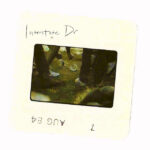
Tummyache’s “Interstate Dr” moves like a memory you can’t stop revisiting. The first single from the project’s upcoming fourth album Repeat in Reverse is a dreamy, intoxicating art-rock reverie dressed in cinematic grace and driven by a restless pulse. Violins cut through the haze like passing headlights, drums push forward with quiet insistence, and guitars cast a heated spell around Soren Bryce’s fragmented, aching vocal performance. It’s elegant and urgent all at once, a song that seems to drift and accelerate in the same breath.
“‘Interstate Dr’ is the first single from the upcoming fourth album Repeat in Reverse, which examines the grief surrounding the passing of my father two years ago,” Bryce tells Atwood Magazine. “It contains vignettes of small stories relating to my childhood, as a way of examining and reliving the experiences that shaped me, including those memories of a person who is no longer here. The song is entitled ‘Interstate Dr’ to represent the road in my hometown that the BNSF Railway offices live on, the place where my dad worked for almost 30 years.”
That connection to place gives “Interstate Dr” its haunted pull. Bryce doesn’t write grief as a single clean wound, but as a series of images that flicker and return: A plan still “ingrained,” a childhood landscape reshaped by absence. “Ran out of room / put the car in reverse” opens the song with immediate dislocation, while “Smoke a pack round the back / Of a Santa Fe train” folds memory into motion, letting the railway become both setting and symbol. The track’s looping construction deepens that feeling, circling the same emotional terrain as if trying to understand what can never be fully recovered.
At its core, “Interstate Dr” is about how grief lives in the body long after the facts have settled. Its arrangements never overstate the hurt; they let tension build through repetition, texture, and movement, with the strings and percussion tracing the shape of a thought that won’t leave. By the final stretch, the song has gathered itself into a hushed fury, as a massive, smoldering lead guitar overtakes the mix and Bryce’s voice recedes into the background like a memory being swallowed by weather. When Bryce sings, “There is a light at the end of it,” the line doesn’t arrive as easy comfort. It feels hard-earned, almost distant, but still visible. Tummyache have crafted a song for the roads that carry us back to who we were – and for the painful, necessary act of passing through them again.
:: “Trapped in Freedom” – AHVA ::
Joe Beer, Surrey, UK
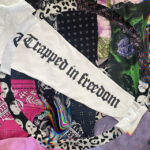
Finnish artist Ahva’s latest single “Trapped in Freedom” showcases his infectious experimental indie pop sound and ability to pair catchy melodies with offbeat production and playful unpredictability. Drawing inspiration from the adventurous spirit of early-2000s indie music, his music balances warmth and eccentricity, delivering a restless energy but also a sense of curiosity and humour.
“Trapped in Freedom” was written during the long lockdown periods in Helsinki and captures the strange emotional contradiction of that time. Living at home with young children while routines dissolved around him, Ahva found himself caught between the idea of freedom and the reality of confinement.
The track is off of his forthcoming album, Clean Your Soul, which explores the boundaries between restriction and release, both creatively and personally. Influenced by artists like Animal Collective, LCD Soundsystem and Hot Chip, he blends electronic textures with live instrumentation, which has since been described as “chaos pop.”
:: Boss Tape – Nicholas Krgovich ::
Charlie Recksieck, San Diego, CA

The concept from this singer/songwriter from Vancouver is simple: Quiet covers of Bruce Springsteen. Actually, everything about this release is simple, as in kinda charming.
Very little instrumentation. An ink sketch of The Boss as its cover. Eight great but malleable songs.
I’m going to say two things that sound like I’m slamming the record where I’m really not; I really like this. The first is that most songs are just one main instrument, a keyboard that could be just one generation up from a Casio. Each song features it, plus Krgovich’s breathy interpretation, and then one stray instrument sounding like somebody just walked into the room from the kitchen with a tremolo guitar. Or a bassoon.
The other is that it sounds like Nicholas Krgovich might have started recording this after dinner and wrapped up the whole album by 1am. Again, that’s not a diss – that’s just how intimate this sounds.
I think every artist could do a cool covers project like this of their favorite influential bands. But they wouldn’t be as good as this deceptively rewarding effort.
Song selection is a big part of it. Even though he leads the most accomplished and famous bar band of all time, Bruce Springsteen is also one of our best songwriters. And like his hero, Bob Dylan, he is ripe to be covered.
Smartly, Krgovich here has picked great songs for this collection. This is not the time or place to do “Jungleland” or “The Rising.” His steady and soft reworkings of “Hungry Heart” and “Dancing In The Dark” make one realize how those songs are blank slates despite being huge Springsteen hits.
That said, I think this concept is at its best on songs with less familiarity and Bruce baggage, like “Give It a Name,” or “Stolen Car” – a song that I love but here sounds more like a joyride than the desperate original from Nebraska.
If the least you can say about this album is that its songs make for great choices on a Springsteen Covers playlist on Spotify, then that’s terrific.
:: Dog Summer – Damn Williams ::
Danielle Holian, Galway, Ireland
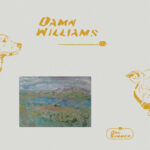
Dog Summer, the debut album from Naarm/Melbourne’s Damn Williams, feels like stumbling into a half-remembered story someone is telling you across a kitchen table at 2am; equal parts hilarious, unsettling, and strangely tender. Led by Tasmanian songwriter Elliot Taylor, and now fully realised as a four-piece with Olmer Bollinger, Carla Oliver, and James Campbell, the project thrives in contradiction: it is chaotic yet carefully shaped, absurd yet emotionally precise. Across ten tracks, the band build a world where Australian suburbia mutates into folklore, where rusty cars and invasive snails become emotional symbols, and where memory itself feels unreliable but deeply felt. There’s a looseness to it all, but never aimlessness. more like watching a dream insist on its own internal logic.
What makes Dog Summer quietly endearing is the way it holds its strangeness so gently. Beneath the jagged guitars, atonal bursts, and warped indie-rock textures, there’s a songwriter constantly reaching for connection, even if it arrives sideways, disguised as satire or surreal imagery. Taylor’s vocal delivery carries that same duality: part storyteller, part witness, part unreliable narrator trying to make sense of inherited histories and personal mythologies. Moments like the reflective ache of “Today It’s Been Raining” or the skewed theatricality of “The Progress Of A Rake” reveal an album that is far more emotionally open than its eccentric surface suggests. Dog Summer doesn’t ask to be decoded so much as lived inside; a messy, affectionate, beautifully unstable world that lingers long after it ends.
:: Country Love Song – Kevin Farge ::
Danielle Holian, Galway, Ireland
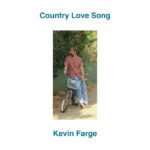
Kevin Farge’s Country Love Song is the kind of record that feels less constructed than discovered, as if it already existed somewhere in the air and was simply caught at the right moment. Across 27 tracks, the album refuses the neat boundaries of genre or pacing, instead unfolding like a humid, slow-moving landscape shaped by memory, geography, and instinct. Recorded in a remote Costa Rican cabin above a surf break, it carries the imprint of its surroundings in everything from its pacing to its texture, songs drift in and out like weather systems rather than discrete statements. Farge’s voice sits at the center of it all: warm, unforced, and emotionally transparent, guiding the listener through a world where folk, slowcore, Brazilian jazz, and alt-country don’t collide so much as quietly coexist.
What makes Country Love Song compelling is not just its scale, but the way it uses collaboration and contrast to build emotional depth without ever hardening into structure. Guests like Little Wings, Gregory Rogove, and Kyle Field don’t interrupt the album’s flow; they expand it, like new rooms opening inside the same house. One moment feels like a sunlit bossa nova breeze, the next like a fractured slowcore reverie dissolving into silence. Even at its most rhythmically alive, the record never abandons its sense of stillness; instead, it holds tension between movement and rest, presence and distance. Memorable tracks include “Good Girls,” “Memphis,” “Pretty Kids In The City,” and “Coastal Fog.” It’s an album that doesn’t demand interpretation so much as attention, rewarding listeners with something rare: a feeling that keeps changing shape the longer you sit with it.
:: “Valley People” – Rob Burger ft. Iron & Wine ::
Mitch Mosk, Beacon, New York

Rob Burger and Iron & Wine’s “Valley People (A Voice You Know)” feels like sunlight warming the edge of a window. A tender, spellbinding reverie full of gentle motion and sweet, glistening melody, the song pairs Burger’s patient, cinematic touch with Sam Beam’s unmistakably soothing voice, creating an alt-folk lullaby that feels both intimate and quietly expansive. It doesn’t rush toward revelation; it settles into serenity, letting each note arrive with the soft assurance of a hand resting on your shoulder.
“‘Valley People’ was written during a peaceful break from my busy touring schedule,” Burger tells Atwood Magazine. “It had been a particularly strenuous year, so when I was finally home, I made an effort to write and play as much as possible to reconnect with myself and stay grounded in my truth. Originally intended as the foundation for a song, it was shelved for a time before being repurposed as a cue for the ‘No Way Jose’ montage in the introduction to Episode 4 of HBO’s DTF St. Louis.”
“When showrunner Steven Conrad asked me to submit source material for the show, I included ‘Valley People’ in my reel, and he chose it to be featured. After it was placed in the show, we decided to add a vocal layer, so I reached out to my friend Sam Beam, aka Iron & Wine, to lend his voice to the track as a B-side. Steven Conrad’s writing is top shelf, and the cast of the show includes some of my favorite performances on television. I’m deeply grateful for my ongoing working relationship with Steven and his team.”
The collaboration makes good on that origin story, turning Burger’s moment of personal stillness into a shared act of care – one artist opening a door, the other stepping in with a voice that already feels like home.
“One of the best parts of making music is working with inspiring collaborators!” Beam says. “Rob has been contributing to my songs for years, so I was thrilled to have the chance to contribute to one of his. The piece has such a steady, calming feel, and I wanted the lyrics to reflect that sense of serenity and the imagery within.”
That serenity proves the song’s center of gravity. Beam sings in small, glowing phrases – “Where you belong / A voice you know” – and the repetition feels less like refrain than reassurance, a phrase returning because we need to hear it again. Burger’s arrangement gives the words room to breathe, carrying them with soft instrumental grace rather than crowding their meaning. “The lights are coming up at last / A voice you know” lands like dawn after a long night, not dramatic in its arrival, but quietly transformative all the same.
“Valley People (A Voice You Know)” is the kind of song that seems to lower the volume of the world around it. Its beauty lies in that restraint, in the way Burger and Beam let warmth, familiarity, and stillness become their own quiet kind of catharsis. It’s not trying to sweep us away; it’s trying to bring us back to ourselves – where we belong – one hushed melody at a time.
:: “Lead Paint” – Lucy Frost ::
Mitch Mosk, Beacon, New York

Lucy Frost makes bad love sound like a house you should’ve known not to enter. “Lead Paint” is a dramatic alt-pop reckoning from the Los Angeles-based, Boston-born artist, a song that rises from a hush into a passionate rush of radiant sound as Frost turns domestic danger into deliciously pointed metaphor. It’s soft and searing in equal measure: ghostly at the edges, theatrical at its core, and carried by a chorus that opens wide with the force of a warning finally breaking through. Electric guitars turn up the heat, drums swell beneath her, and Frost sings like she’s trying to save someone before the walls close in.
“I remember hearing this story about a friend of mine having just moved states to live with her boyfriend of one year in Manhattan,” Frost tells Atwood Magazine. “Truly boxed everything she had to be with this guy. I think less than two months later, he left her for a married woman in Brooklyn. All this to say, this brutal story was lodged in my brain for some time after. Having grown up in a historical house in Boston, where lead paint poisoning was a real fear of mine as a kid (embarrassing), I started writing out this metaphor: Lead paint poisoning is really just the same thing as moving in with a shitty guy (duh).”
She continues, “This was by far the most fun song to write. It all came together so easily, the chord progression just begs for good storytelling, and I had a blast fleshing out all the similarities between the two. ‘Lead Paint’ is a PSA to all who are about to move in with a significant other, or I guess, who are looking into buying new real estate.”
This cheeky metaphor gives “Lead Paint” its wicked bite. Frost frames a relationship like a beautiful old home with poison beneath the surface, all charm and familiarity until the damage starts showing through the cracks. “He feels like home / But got some therapy to do / And his walls won’t keep you safe” lands as both punchline and prophecy, the kind of lyric that makes you laugh once before the dread catches up. She keeps twisting the knife with vivid, funny, brutal precision: “One day you’re nailing picture frames and the next he’s nailing your best friend.” It’s a line as sharp as it is devastating, turning betrayal into a full-blown cautionary tale without sanding down its sting.
What makes “Lead Paint” so satisfying is how fully Frost commits to the drama. The verses creep forward with a knowing smirk, but the chorus blooms into something bigger and brighter, letting the song’s humor, heartbreak, and horror all hit at once. “Turns out there’s lead inside that paint / Babe, it’s a toxic trait / And you won’t know ’til it’s too late” is the thesis in miniature: clever, cutting, and painfully true. Frost doesn’t just write about ignoring red flags; she turns them into architecture, then lets the whole beautiful, dangerous place shake.
“Lead Paint” proves Frost has a gift for making emotional self-preservation feel theatrical, tuneful, and alive. Her storytelling is vivid without overplaying the bit, her vocal performance aches without losing its bite, and the song’s soaring finish gives the whole cautionary tale a cathartic charge. This is alt-pop as warning label, haunted house, and exit sign – a reminder that not every place that feels like home is built to keep you safe.
:: The Parade of the Starlet & the Broken Hearted – My Life As A Moth ::
Joe Beer, Surrey, UK

Swedish-born and now based in East London, My Life As A Moth makes music that feels shadowy, cinematic and deeply personal, bringing together elements of post-punk, experimental rock, industrial noise and art pop into something all her own. The project first took shape during lockdown after she sat down at an old keyboard and discovered a dead moth trapped between the keys, a small but strangely poignant moment that ultimately went on to spark both a song and eventually the name of the project itself.
Her new album, The Parade of the Starlet & the Broken Hearted, was written during a turbulent period marked by therapy, personal upheaval and emotional recovery. The record explores experiences of manipulation, trauma and coercive relationships, however it focuses on a more hopeful perspective of survival, transformation and the strange beauty that can emerge from difficult experiences.
Recorded over the course of a year with producers Ellie Mason and Keir Adamson in a back garden studio, the album offers a beautifully handmade quality. Everyday objects were turned into percussion and textures, helping shape a sound that feels organic and eerie. With the new album, My Life As A Moth welcomes listeners into a world of her own, delivering a record that feels both emotionally fearless and sonically adventurous.
:: The Gray Zone of Talk – Rzekomo ::
Danielle Holian, Galway, Ireland

Rzekomo’s The Gray Zone of Talk arrives as the third chapter in the ambitious 10 times 10 gives 100 cycle with the quiet confidence of an artwork already aware of its own internal logic. What could easily have become a rigid conceptual exercise instead unfolds as something deeply fluid and sensuous: a record suspended between structure and intuition, between the precision of electronic composition and the instability of feeling. The album’s defining gesture, a jazz-inflected guitar fragmented through granular synthesis, becomes more than a sonic signature; it behaves like memory itself, constantly dissolving and reforming within meticulously programmed rhythms. Across tracks such as “which,” “shapes unity,” and the magnificent closing piece “There is no need to talk about everything,” Rzekomo builds environments that feel less composed than discovered, as though the music had been patiently excavated from beneath language rather than written in the conventional sense.
The philosophical framework underpinning the record could easily have weighed it down, yet Rzekomo handles it with remarkable restraint. Drawing inspiration from Henri Bergson’s ideas of intuitive understanding, The Gray Zone of Talk meditates on the insufficiency of speech without lapsing into pretension. Instead, the album communicates its ideas through atmosphere and repetition, through subtle shifts in texture and the emotional ambiguity of unresolved motifs. The focus track “which,” with its microhouse pulse and wistfully glitched guitar line, feels particularly emblematic of this approach, intimate yet distant, melancholic yet strangely comforting. Elsewhere, pieces such as “speakable” and “stronger” demonstrate an impressive sensitivity to pacing, allowing silence, decay, and negative space to carry as much narrative weight as melody itself. Even the more rhythmically assertive moments resist climax in the traditional sense, preferring gradual convergence over dramatic release.
:: “All That Jazz” – Huarinami ::
Mitch Mosk, Beacon, New York

Composure sounds dangerously seductive on Huarinami’s “All That Jazz.” The French London-based four-piece’s latest single is cool, slick, and quietly combustible, a dreamy psych-indie groove that moves with tight beats, nonchalant vocals, and feeling tucked just beneath the surface. Pauline Janier sings like she’s holding the room together by force of will, letting every phrase glide across Kevin Siou’s guitar lines with a poise that feels effortless until you hear the strain underneath.
“It’s my favourite track I’ve ever written,” Janier tells Atwood Magazine. “It’s about the idea of staying composed, performing a state of happiness, it feels very me-core. We actually made the song in just three hours. When Kevin came up with the guitar melody, and something in me just opened up, and it might be the most honest I’ve ever been while songwriting.”
That honesty arrives dressed in its finest disguise. “All That Jazz” is a song about smiling through the rupture, about maintaining the look of ease while the body keeps score. “I have sinned, I have lied and all that jazz” lands with a shrug that only makes the confession cut deeper, while “I wish I could tell you that I’m alright / But I want that cigarette right away” turns the smallest craving into a pressure valve. The refrain – “Cause I smiled through everything” – becomes the song’s glittering bruise, repeating until performance and survival start to sound like the same act.
“‘All That Jazz’ is what I would call the ‘power lush’ track of the EP, if that makes any sense!” Siou adds. “I think we managed to write a song that really harnesses both our lush and punk side.”
He’s right: “All That Jazz” doesn’t need to explode to make its point. Its force comes through control, through the way its velvet textures and locked-in rhythm keep circling the same emotional mask. As Huarinami head toward their sophomore EP nothing happens, the track captures a band sharpening their own language – lush but wired, elegant but restless, smiling through everything until the smile starts telling the truth.
:: “Up High!” – Cutflowers ::
Mitch Mosk, Beacon, New York

Belief feels like a body in freefall on Cutflowers’ “Up High!” The Brighton four-piece’s latest single is a dramatic indie rock reverie full of dreamy melody and raw, aching intent, a song that doesn’t so much build as lift off. Punchy guitars and propulsive drums drive it forward, while the vocals bloom in rich, radiant layers, their harmonies adding weight to every turn. It’s immediate and visceral, but still suspended in the air – a rush of feeling caught somewhere between doubt, desire, and surrender.
“We wrote it one evening, played it the next week, and got shocked by the reaction,” Cutflowers’ lead vocalist Kai Wilks tells Atwood Magazine. “People said it was our best song. We didn’t like it at first… it was too raw, too direct, too honest. After some time and learning to trust ourselves – we agree with the people. We love it – this is our best song.”
That rawness is exactly what makes “Up High!” land. “Secretly / It’s wearing me down” opens the song in a place of private strain, but Cutflowers don’t let that feeling stay buried for long. The chorus breaks open with stirring force – “Up high / Tossing and turning all my life / ‘Cause I been falling for the in-between” – turning uncertainty into lift, motion, and release. It’s the kind of refrain that feels written for a live room, big enough to be shouted back, but intimate enough to still feel like a confession.
The song’s most powerful moments come when the guitars begin to drone alongside the vocals, sending a shiver through the chorus as melody and distortion start pressing against each other. By the time the track reaches its full height, “Up High!” feels less like a polished breakthrough than a band learning to trust the feeling that scared them at first. Cutflowers have made a song that roars because it aches, and aches because it means every word – a soaring, self-revealing anthem from a band already sounding ready for the next room.
— — — —

Connect to us on
Facebook, 𝕏, Instagram
Discover new music on Atwood Magazine
:: Weekly Roundup ::
follow WEEKLY ROUNDUP on Spotify
:: This Week’s Features ::