Dark, gritty, and deeply vulnerable, Gracie Abrams’s third album ‘Daughter from Hell’ finds the singer/songwriter collaborating with producer and co-writer Aaron Dessner to pair her most biting lyrics and dynamic vocals yet with sweeping orchestral arrangements, transforming heartbreak, anxiety, and self-doubt into the boldest, most musically expansive work of her career – and a striking declaration of her artistic maturity.
Stream: ‘Daughter From Hell’ – Gracie Abrams
Despite how someone’s life looks on the outside, it rarely feels the same to the person actually living it.
There’s a heartbreaking loneliness to this familiar dissonance. We’ve all had moments where our external successes feel hollow compared to what’s happening in our internal world. The isolation of this experience only serves to make it more painful. On her third album, Daughter from Hell, Gracie Abrams has alchemized this pain into a symphony of heartbreak, nostalgia, and anxiety that makes life’s heavy moments feel easier to carry.
Released July 17, 2026 via Interscope Records, Daughter from Hell is darker, grittier, and more vulnerable than anything Abrams has created before. Her vocals are more acrobatic, her lyrics are more cutting, and the album’s orchestral production style lends gravity to themes that are often dismissed as youthful melancholy.
Sooner or later, you’ll find out
I live in a pattern of breakdowns
You’ll bend to my silence, it’s so loud
And then you’ll lose me to the crowd
Hit the wall, I just hit the wall
I’m not a problem you can solve
The album is an impressive evolution from Abrams, who once said she sings in hushed tones because she used to practice quietly in her room, worrying she’d be overheard. On Daughter from Hell, one thing is clear: Gracie Abrams has no more reason to hide.
As the primary producer and co-writer on the album, Aaron Dessner was the ideal partner in Abrams’s bold next step. While he’s recently stepped into the spotlight through his work with superstars like Taylor Swift and Noah Kahan, his craft has truly been honed through his decades-long membership in The National. The influence of their deeply personal lyrics and lushly layered instrumentals reverberates throughout Dessner’s latest venture with Abrams.

Daughter from Hell combines an orchestral production style with deeply vulnerable lyrics, creating an electric, emotionally charged atmosphere.
The album opens with “Hit the Wall,” which was also its lead single. A fitting introduction, it chronicles Abrams’s feelings of self-sabotage in relationships. Zipping violins and pulsing percussion lines lead the introduction of the symphony of instruments you hear throughout the album. This cinematic, orchestral atmosphere is largely a credit to the contributions of Oscar-nominated composer Bryce Dessner (who also happens to be Aaron Dessner’s brother and fellow member of The National.)
“Death Wish” comes in with tinkling synths and a rich guitar line as Abrams narrates a story of heartbreak that drives home just how much she has evolved her lyrical craft. Perhaps a credit to the time she’s spent touring and collaborating with Taylor Swift, Abrams has mastered the art of a powerful bridge:
And I used to pretend that it didn’t feel evil
Your light of a million suns burns through people
And bridges and cities till ash covers ground
A breath of your air is a death wish
And you’re forcing my hand,
but I’m a drop in your ocean
I ruined your plans of some grand self-promotion
The second you figured that I figured you out
Now you look away when I look at you now
A piano-led ballad that builds to an orchestral frenzy, “The Knife” is another tale of a relationship gone wrong, comparing the inability to move on from the hurt someone caused you to a knife in your side.
Title-track “Daughter from Hell” is a moving tribute to Abrams’s mother. It explores the complexity of mother-daughter relationships, from the push of Abrams wanting to be her own person to the pull of realizing she hopes the person she becomes has the traits she values so much in her mother. Its deep electric guitar and crying vocals evoke the sound of a touching, indie-rock lullaby.

Even the most upbeat tracks on Daughter from Hell have an honest undercurrent of anxiety.
“Look at My Life,” the album’s second single, is one of the few upbeat songs on the album – but that doesn’t mean it’s any happier. Co-produced by Olivia Rodrigo collaborator Dan Nigro, the contradiction of the song’s upbeat sound mirrors the feelings expressed in its lyrics; things aren’t always how they appear on the outside.
“Good Reason” waltzes in like a sequel to Abrams’s massive 2024 hit, “I Love You, I’m Sorry.” Abrams nostalgically reflects on the end of a relationship where nothing was wrong, but nothing was quite right, either. Another orchestral collaboration with Bryce Dessner, “Men Like You” showcases the evolution of Abrams’s vocal prowess, with siren-song vocal lines that cry out to her ex-lover. “Sober” is a stripped-back guitar tune with a stuttering drum line that echoes the failing heartbeat of a relationship gone wrong.
“Broke My Heart” is a moody piano-led track that brings in dynamic violin lines and driving drums as Abrams moves from resigned sadness to righteous anger. The piano returns to bring us into “Mews,” but its wilting chord progression immediately creates a different energy. Anger lingers in its lyrics, but the fight has been replaced with subtle longing. With some of the strongest lyrics on the album, Abrams compares the downfall of a relationship to a car crash.
I believed every word that you read
Every glorified tome by the side of your bed
When you swore you’d go right
Then you went left instead
How was I supposed to know?
Did I miss the sign when
you’d answer my call?
Like if between the lines,
did one breath say it all?
When you called me naïve,
did you mean to a fault?
Despite the heartbreak that permeates its lyrics, Daughter from Hell is full of collaborations rooted in love.
“Minibar” ignites an electric energy within the album. A collaboration with “Sue Me” singer Audrey Hobert (who also happens to be one of Abrams’s best friends), “Minibar” is a funny, self-deprecating anthem about a night out. Its quirky production and distinctive background vocals let you in on the joke.
“Imaginary Friend” was penned with Abrams’s boyfriend Paul Mescal. The lumbering percussion line grounds the song as its lyrics float through imagined romantic moments. It fittingly leads into “Afflictions,” which is one song on the album where the relationship actually turns out right. Underscored by intricately layered instrumentals and a pounding drum like, the lyrics paint a picture of how beautifully mundane moments can build a meaningful relationship. Abrams sums up her overwhelming feelings in one simple, deeply romantic line: “I don’t know where to put it all / I’ll put you in a song.”
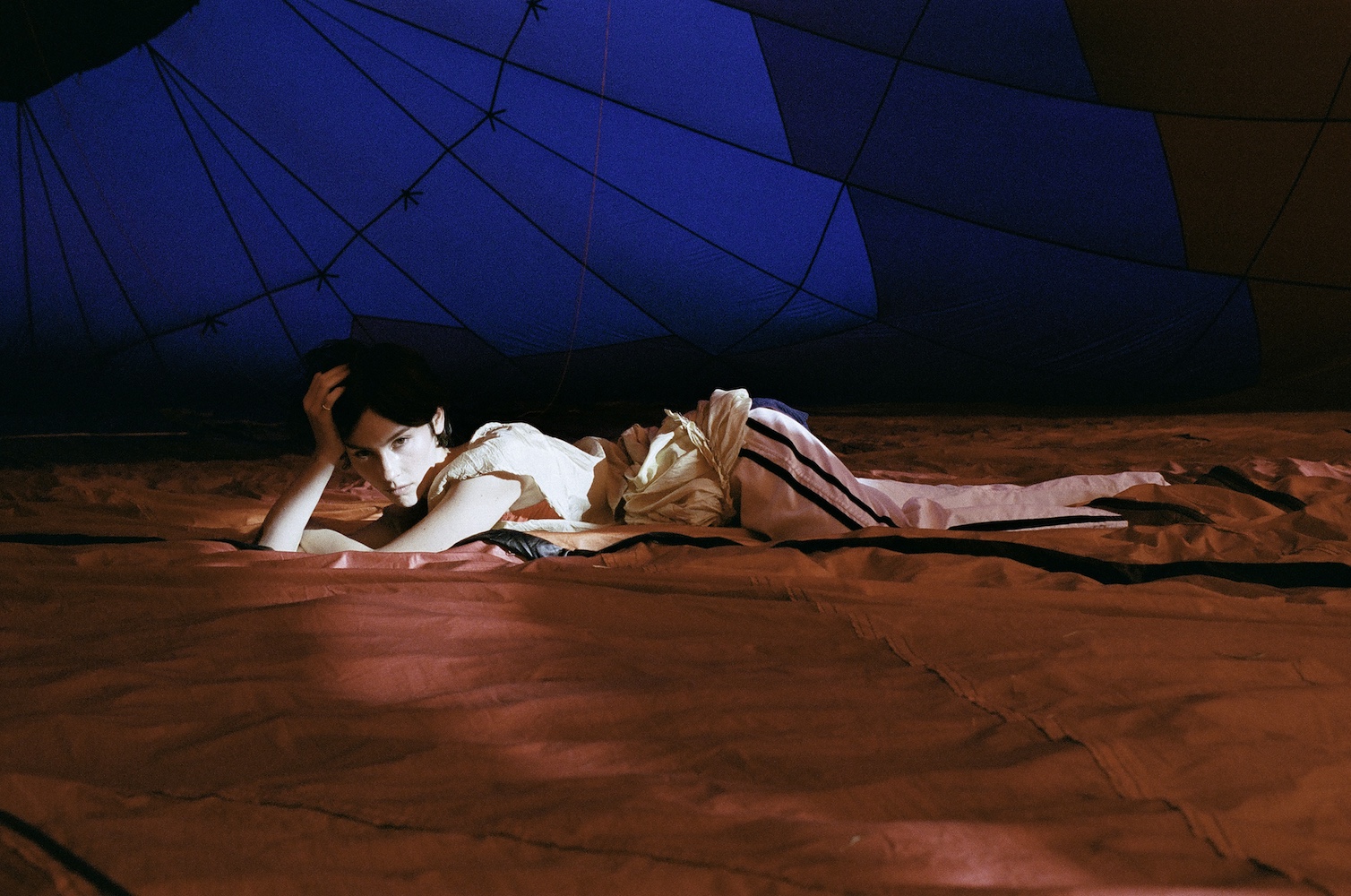
On Daughter from Hell, Abrams’s lyrics lend gravity to life’s unassuming moments of despair, making them sound as serious as they feel when you’re living them.
“Humming” is a simple, quietly devastating track that captures the soul of the album. A delicately plucked guitar line sets the foundation for Abrams’s ethereal vocals, which echo as she begins to harmonize with herself. Her poetic lyrics weave through the facets of life that weigh so heavily on you in your twenties, reconciling the fact that the adulthood you always thought was promised to you is not at all what you expected.
Every kid I grew up with
has lost their childhood house
No way to make sense of it
It’s why I’m making sound
Let me wake up from this horrible dream
Where what feels true is nothing
And there’s no one at the top to believe
What a way to feel in your twenties
Today’s young adults are also contending with devastating climate disasters, like the wildfires that burned down Abrams’s childhood Palisades neighbourhood, an unstable political climate, and having to watch it all unfold in horrifying detail through cell phone screens. Abrams has perpetuated the intrinsic human desire to create art in the face of uncertainty, singing: “I’m convinced our sinking ship / Will sing as it goes down / Haunting hymns keep echoing / After we’re in the ground.”
“What If It’s Right” features Marcus Mumford, leaning heavily into the folkier side of the album. With layered strings and shakers, Abrams and Mumford’s vocals complement each other beautifully as they explore the push and pull of a relationship where you can’t tell if staying or leaving would be worse.
“Cold Goodbyes” closes out the album with an exploration of the darkest thoughts that can plague you late at night. Abrams’s vocals are hushed and frayed as the song’s deep keyboard line underscores her voice like a gentle death march.

With Daughter from Hell, Abrams has proven that she’s a serious musician who treats her craft with care and reverence.
Ultimately, Daughter from Hell is a love letter to the practice of using songwriting as catharsis. From heartbreak to grief to existential anxiety, Abrams has used her pen to transmute pain into art. She doesn’t come to a conclusion about anything of the questions that are plaguing her, but at least the release of putting them into song makes them feel lighter (for her and for the listener.) Abrams herself says it best: “No way to make sense of it / It’s why I’m making sound.”
This practice is supported through the album’s intricate production and arrangement. Each moment is thoughtfully crafted, from the breath sounds peppered throughout “Death Wish” to the carefully layered instruments that build throughout “Broke My Heart.” Considering Daughter from Hell in addition to his work on Noah Kahan’s The Great Divide and Mumford and Sons’ Prizefighter, 2026 has cemented Aaron Dessner’s status as a legendary producer.
With its poetic honesty and hauntingly gorgeous instrumental landscape, Daughter from Hell is the perfect soundtrack for lonely, late nights and the messy mornings that follow them.
— —
:: stream/purchase Daughter From Hell here ::
:: connect with Gracie Abrams here ::
— —
— — — —

Connect to Gracie Abrams on
Facebook, 𝕏, TikTok, Instagram
Discover new music on Atwood Magazine
© Julie Greve
 © Julie Greve
Daughter From Hell
an album by Gracie Abrams