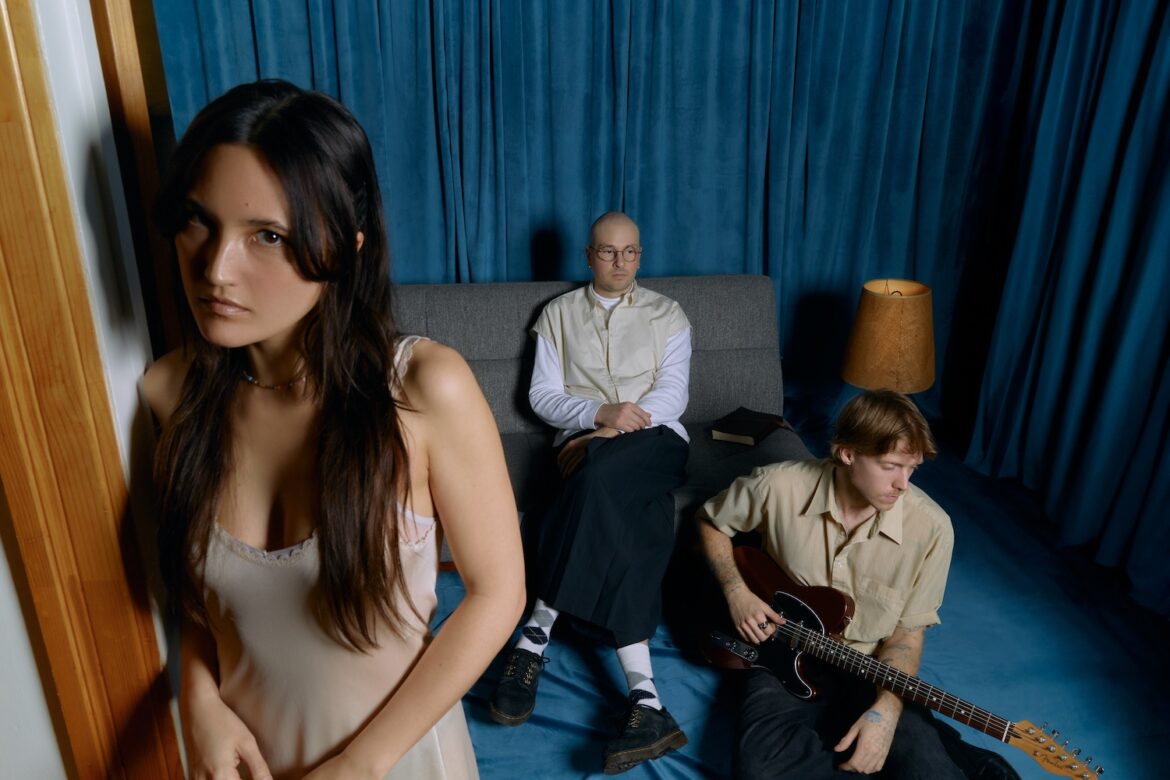
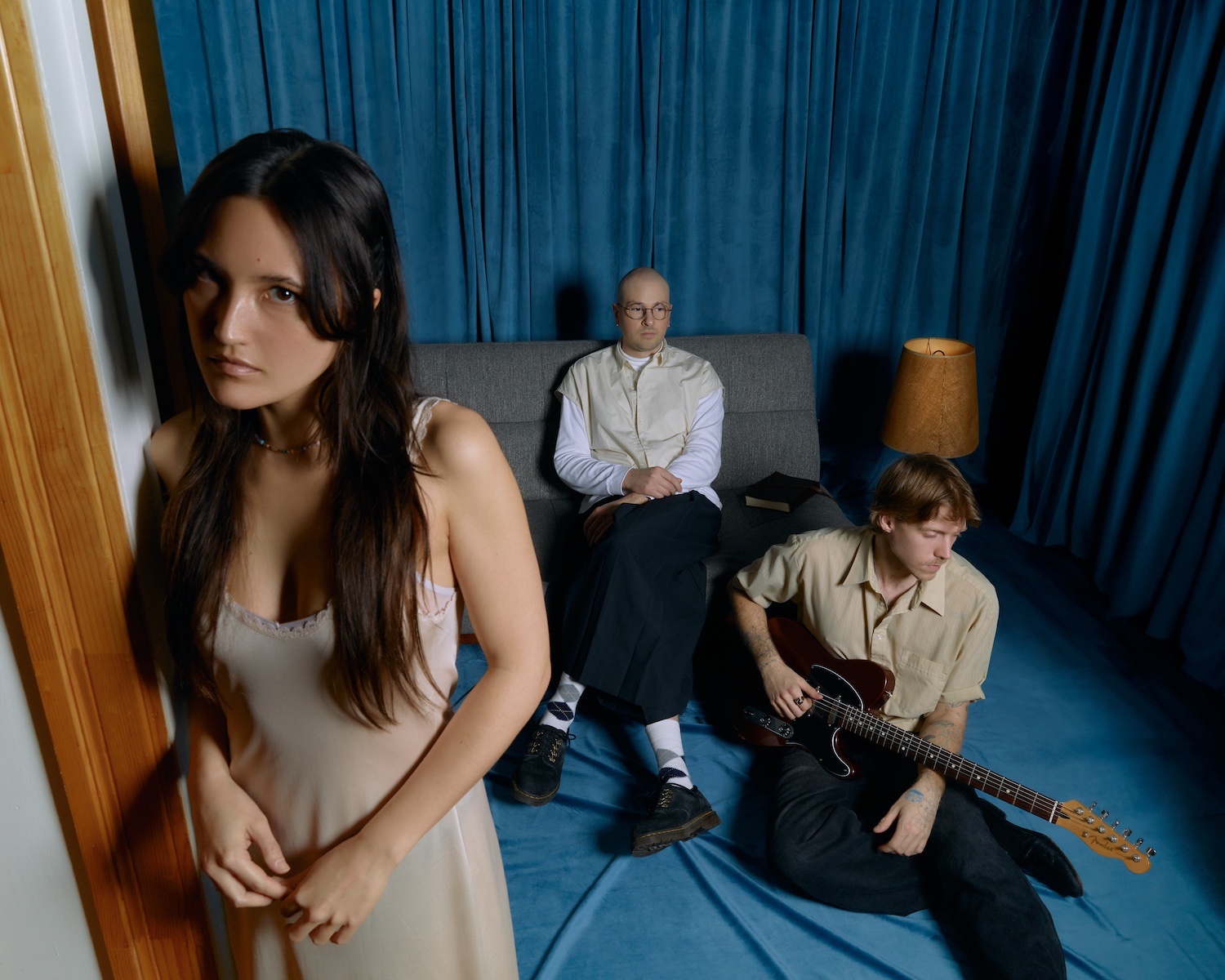
Montreal indie band Afternoon Bike Ride reach a breathtaking new peak on ‘Running With Scissors,’ a dreamy, soul-stirring third album that threads heartbreak, caregiving, new love, and loss into an achingly human portrait of learning to live when life outruns our ability to make sense of it. Nearly a year after its release, the record’s poetic lyricism and sublime, enveloping music hit with undiminished force, affirming ‘Running With Scissors’ as the trio’s most beautiful and emotionally fearless statement – a timeless album about grief, wonder, and staying fully present through both.
Stream: ‘Running With Scissors’ – Afternoon Bike Ride
We want you to cry, we want you to feel, and love, and be with the present in the most unyielding way.
* * *
Afternoon Bike Ride’s Running With Scissors begins with a breakup and ends with a daughter running blind, trying to keep hold of a father who is forgetting her.
Between those two losses, Lia Kurihara keeps living. She falls in love again, cries on the metro, wonders whether death is really an ending, watches old footage of herself as a child, and discovers how intensely a new chapter can register when everything familiar has shifted. Grief anchors the album, but it never gets the whole stage: Running With Scissors is about being remade by experience, and about what happens when life starts teaching faster than anyone can keep up.
Heavy nights under the light of
This city I’m in another era
Finding it pretty hard sitting solitary
First time in my life I’m living alone
It wasn’t what I thought
this year would bring yet here I am
Oh February saw the end of me
and you my very first love
Twenty seasons of us couldn’t win
against our final combustion
And you’re still thinking my decision
came together in a big rush
But do you remember last September’s
speech about our weathered out love
Did you see me trying my best for us then?
While my grief closed in on me
– “20 Seasons,” Afternoon Bike Ride
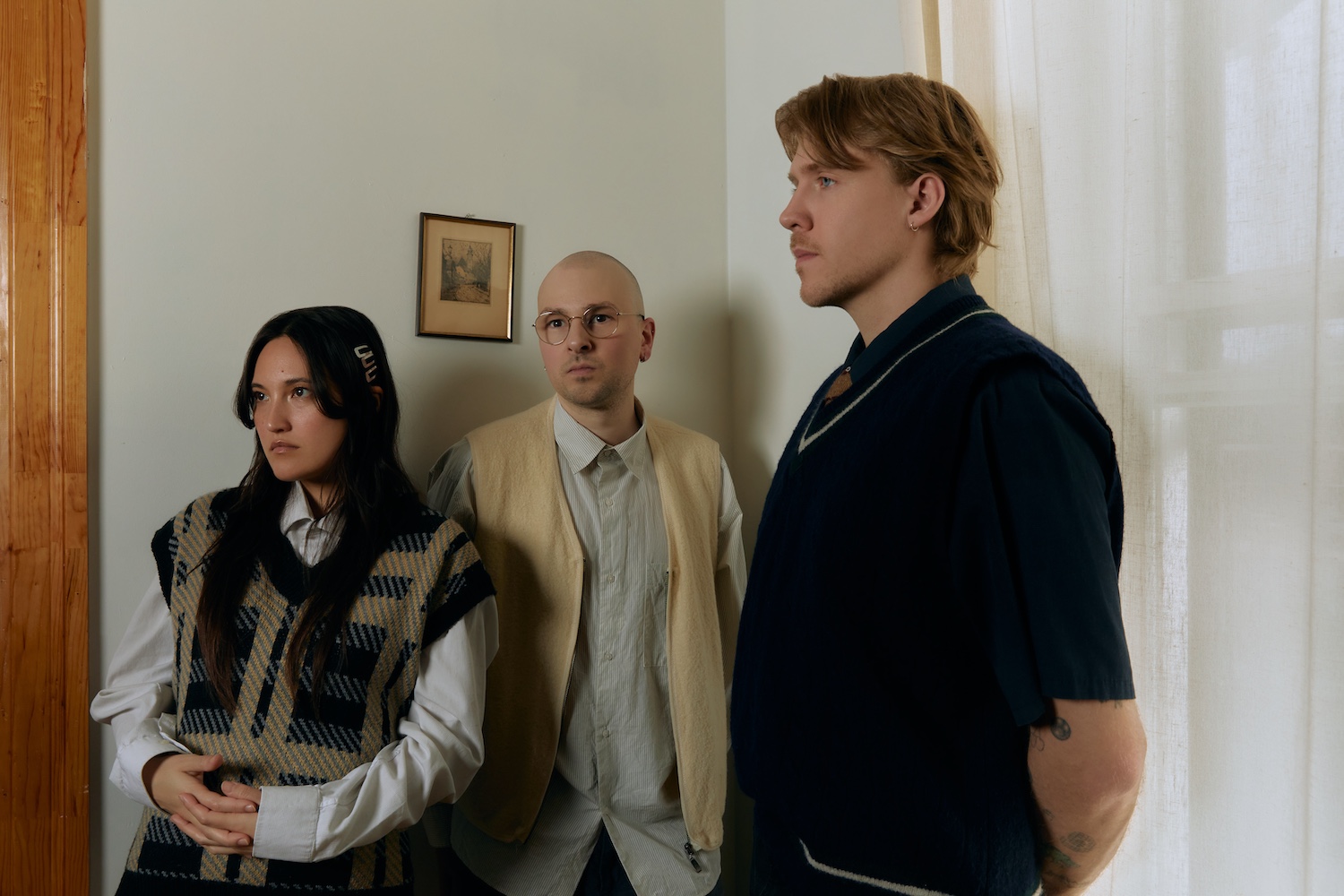
Released September 19, 2025 via Friends of Friends Music, Running With Scissors is the soul-stirring third album from Montreal-based trio Afternoon Bike Ride – Kurihara, Éloi Le Blanc-Ringuette, and David Tanton. Since their 2021 EP Skipping Stones and self-titled debut album through 2023’s Glossover, the three musicians have developed a shared language in which field recordings mingle with ambient, folk, and pop, while guitar, vocals, and percussion move between members and English and French both enter the frame. On Running With Scissors, acoustic detail meets subtle electronics and flashes of indie rock and grunge, giving the band more room to stretch around Kurihara’s increasingly searching writing.
The record’s story also reaches backward through Afternoon Bike Ride’s own history. Kurihara’s father, Tom, spent five weeks on a writing retreat with the trio that resulted in Glossover, and he attended nearly all of their practices while they built their first live show. As his dementia advanced, Kurihara dedicated much of the following years to his care. Their relationship gradually changed direction: The father whose stories and wisdom had helped orient her in the world became the person whose illness was forcing her to find her own footing without his guidance.
That reversal gives Running With Scissors its emotional gravity, but Kurihara’s writing keeps widening the frame. In her notes for the album, she describes life itself as a lesson, with the experiences documented here – falling out of love, falling back in love, regret, embarrassment, grief, losing control – shaping who she is as the parent she has lost can no longer do so. One song reaches toward reincarnation; another reduces a crushing day of caregiving to the terror of encountering an acquaintance on the subway. “New Bliss” lets a new relationship rewrite the terms of love, while “Feel Through” argues for sensation itself as proof of being alive. Again and again, the record moves from the intensely personal toward questions too large to answer, then lands back inside the ordinary places where those questions actually have to be lived.
This movement is key to Running With Scissors. Kurihara is searching for meaning without pretending she has mastered the search. The wisdom her father once supplied now survives in memory, in the lessons his illness imposed, and in the questions she has inherited from him; meanwhile, life keeps arriving with new relationships, new fears, new possibilities, and new reasons to stay present. The title captures the precariousness of all of it: moving forward without complete control, carrying more than you know how to carry, and learning by doing because there is no safer way through.
I can fixate
On a comma or a smiley face
Details, drive me mad and I don’t drive
This brain it has a mind of its own I mind
My own business but it steals me for a ride
And suddenly I’m crying
On my subway ride
I refuse to say hi
To an acquaintance
My oh my
How I try hard to hide
My face from their eyes
Oh no!
The album’s wide-angle questions emerged from circumstances far smaller than Afternoon Bike Ride originally envisioned.
Asked to trace the story behind Running With Scissors, the trio begin with the distance between the record they hoped to make and the one life ultimately required of them.
“We made Running With Scissors over the course of two years, mostly at David’s home studio in his apartment,” Afternoon Bike Ride tell Atwood Magazine. “We had lofty dreams of renting a big studio for a few weeks out of the city, hoping we’d get a grant like with Glossover. The gods of favour weren’t with us this time and it forced us to adapt and make the album truly DIY. During the whole process Lia was caretaking for her dad, Tom, through what ended up being his final years, and that seeped through every aspect of the album. The album is a love letter to him and to every caretaker going through similar stories that we hope can find comfort knowing they’re not alone.”
“With this one we really just wanted to be more us, more true to ourselves and push our sound further,” the band continue. “We often say Glossover was like our first real album, honing down on our sound and working together as a unit for the first time. With Running With Scissors even more so, if one of us wasn’t a hundred percent on one of the songs we tossed it to the side even if the others loved it. What we’re left with is a true distillation of the three of us artistically. We wanted to push ourselves and have room to try new things, not be bound by what we thought an Afternoon Bike Ride record should sound like.”
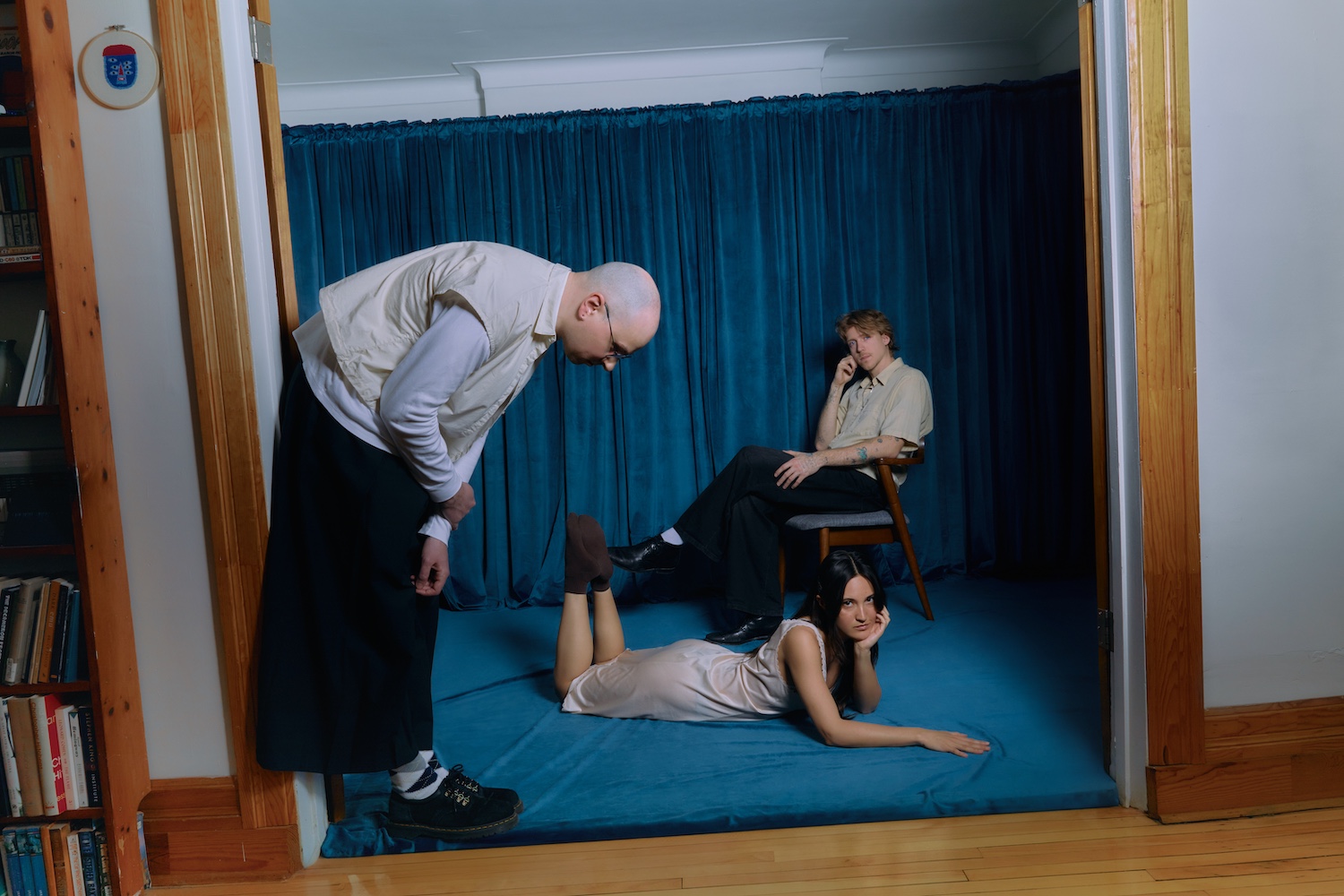
The trio candidly describe Running With Scissors as “exposed, tender, and unflinching.”
The title gives those qualities motion, taking a familiar childhood warning and recasting it for adulthood – for all the risk, uncertainty, and responsibility that arrive long before anyone knows what they are doing.
“We thought the title of the last song was really fitting for the overall album,” Afternoon Bike Ride share. “Running With Scissors is about the journey of life, dealing with all the ups and downs and hardships and grief.”
The lessons begin immediately. Opener “20 Seasons” drops Kurihara into the apartment she once shared with her partner of five years, newly alone and trying to make sense of a relationship whose ending he still does not fully understand. “Twenty seasons of us couldn’t win against our final combustion,” she sings over a brooding bass and piano medley, before another loss intrudes on the breakup: “Did you see me trying my best for us then? / While my grief closed in on me.” It’s an important distinction for everything that follows: Kurihara’s life is not waiting for one crisis to finish before beginning another. Love can end while a parent is disappearing; a new era can start before the previous one has been properly mourned.
By “Otherworld,” distance has taken a different form. Kurihara originally set out to write nonsensical lyrics, only to discover herself describing the unreachable place her father increasingly occupied – “another room,” as she puts it, or an island she could occasionally access before losing him again. The hypnotic, shuffling song preserves the ordinary intimacy of morning tea and the enormous significance of a smile before collapsing into the devastating repetition of “All I do is cry.” Asked to choose a definitive highlight from Running With Scissors, the trio point here: “‘Otherworld’ is a standout song for so many reasons,” they say. “It feels like all of us coming together at our very best, lyrically, sonically, melodically, and emotionally. It’s an arc of a song that feels so very real.”
Sitting in your other world
You caught me I’m on it
On an open island
Eye drops in the air I’m haunting you
And nothing after the words you said I –
I left my letter unread on the ground
And never have I had to handle it
In the morning we’d sit down for tea
You’d open up your door
and slowly carefully make your way to
Me, not much you’d say
but still your smile stretches far
and captures all the joy of life
Now you’re quickly growing tired,
I can’t accept you’re too ripe
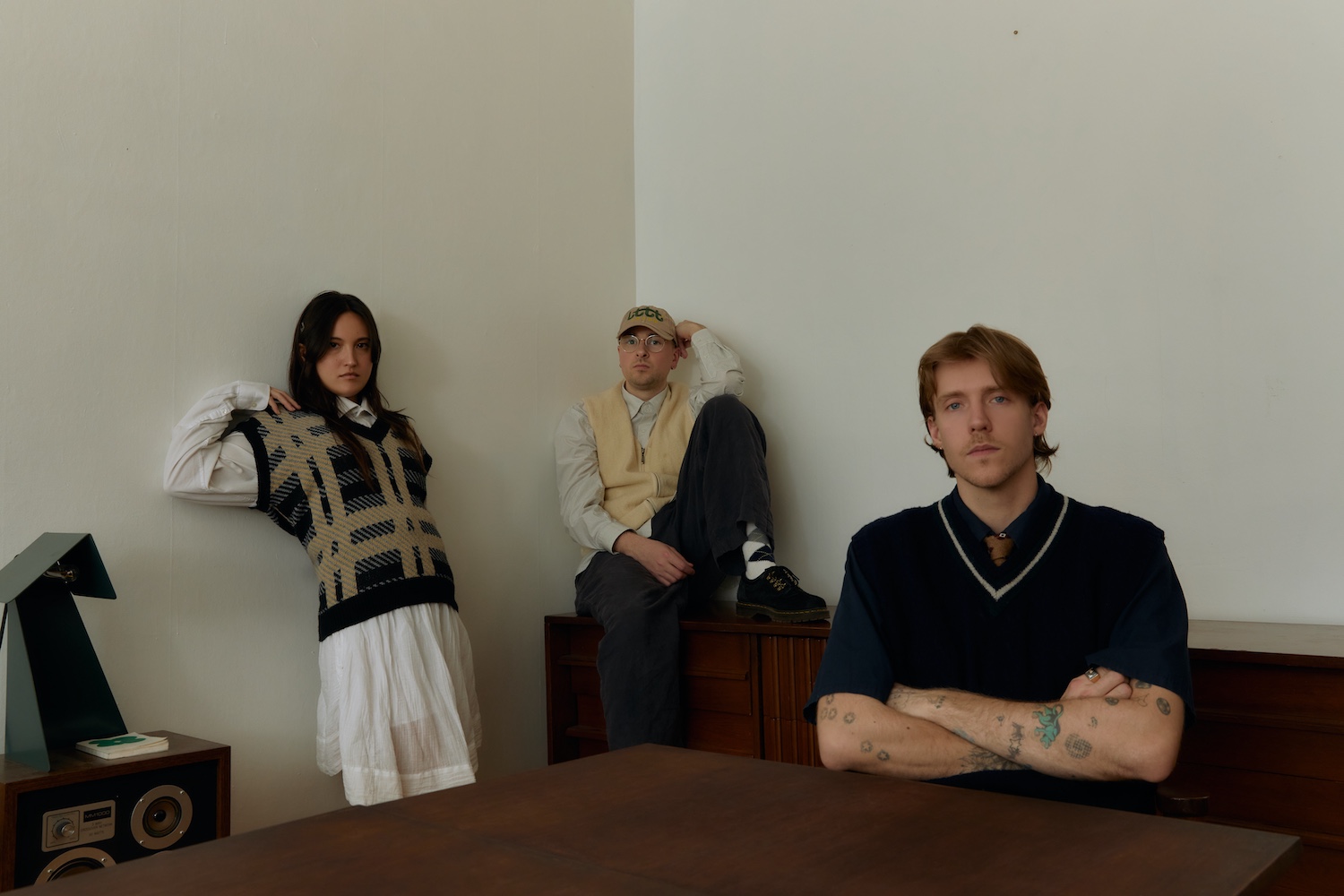
Elsewhere, Kurihara keeps changing the distance from which she examines the same impossible questions.
“Beautiful & Treacherous” returns to Billy Goat Trail in Maryland, where she and Tom would eat lunch above the rushing Potomac while he shared his view of a world he described using those very words. Now his old lesson comes back with devastating clarity: “How come I don’t get to get to know the world through your lens anymore?”
The spellbinding “Abigail” looks even further outward, wondering whether death might open into reincarnation and whether the people we lose can somehow meet us again. Then “Oh No!” snaps the scale back to a subway platform, where profound grief collides with the excruciatingly ordinary possibility of running into an acquaintance and having to answer, “How’s it going?” The contrast is funny because the panic is real: Cosmic questions and social niceties occupy the same life, whether Kurihara has room for both or not.
You move freely
Down out
When you hit the ground
You float up unbound
Let go of the ones behind
They can’t see you now
While you’re looking down
Waiting on new life
Maybe I’ll come back
and so will you and we’ll meet again
Reintroduced old friends
In another life, in another time
Or I could be on the final iteration of me
Am I ancient memory?
And only with time
Will it be defined
– “Abigail,” Afternoon Bike Ride
Life refuses to remain in mourning.
“New Bliss” opens the door to another relationship and the possibility that love itself can be relearned, while “Feel Through” pushes that renewal into one of the album’s clearest statements of purpose. Entering a new chapter leaves Kurihara intensely alert to everything around her – discomfort alongside excitement, uncertainty alongside wonder – until sensation itself becomes evidence of being alive. David Tanton singles out the song’s chorus as his favorite lyric on the entire album:
“What do I, what do I do?
I feel like a child in spring
watching wildflowers come into bloom
And like when you get caught in the rain
pouring down in the wrong kind of shoes
My heart’s on fire,
I’m feeling every emotion brand new
I’m so alive
it’s my human condition
to feel through”
“There’s something both so light and whimsical about the imagery and also perfectly forceful about making you think about moments where you’ve felt the same weightlessness and warmth,” Tanton explains. His choice gets to the center of Running With Scissors: Its hardest experiences do not cancel out wonder. They make Kurihara more aware of how much can coexist inside a single life.
“Miss Universe” carries that idea into adulthood itself. Kurihara repeats the mantra “The universe doesn’t give us anything we can’t handle” while looking backward at childhood footage and confronting the strange fact that the little girl onscreen is still part of the adult who has had to take the lead. By the closing title track, any protective distance has disappeared.
Caregiving becomes guilt, responsibility becomes improvisation, and Kurihara admits what no one preparing to lose a parent can really prepare for: “I’m running blind with a pair of scissors in my hand.”
Later comes the question that cuts even deeper – “Who am I to him now?” – followed by the simplest admission on the record: “I’m over my head.” Running With Scissors never solves that condition. It learns how to keep living inside it.
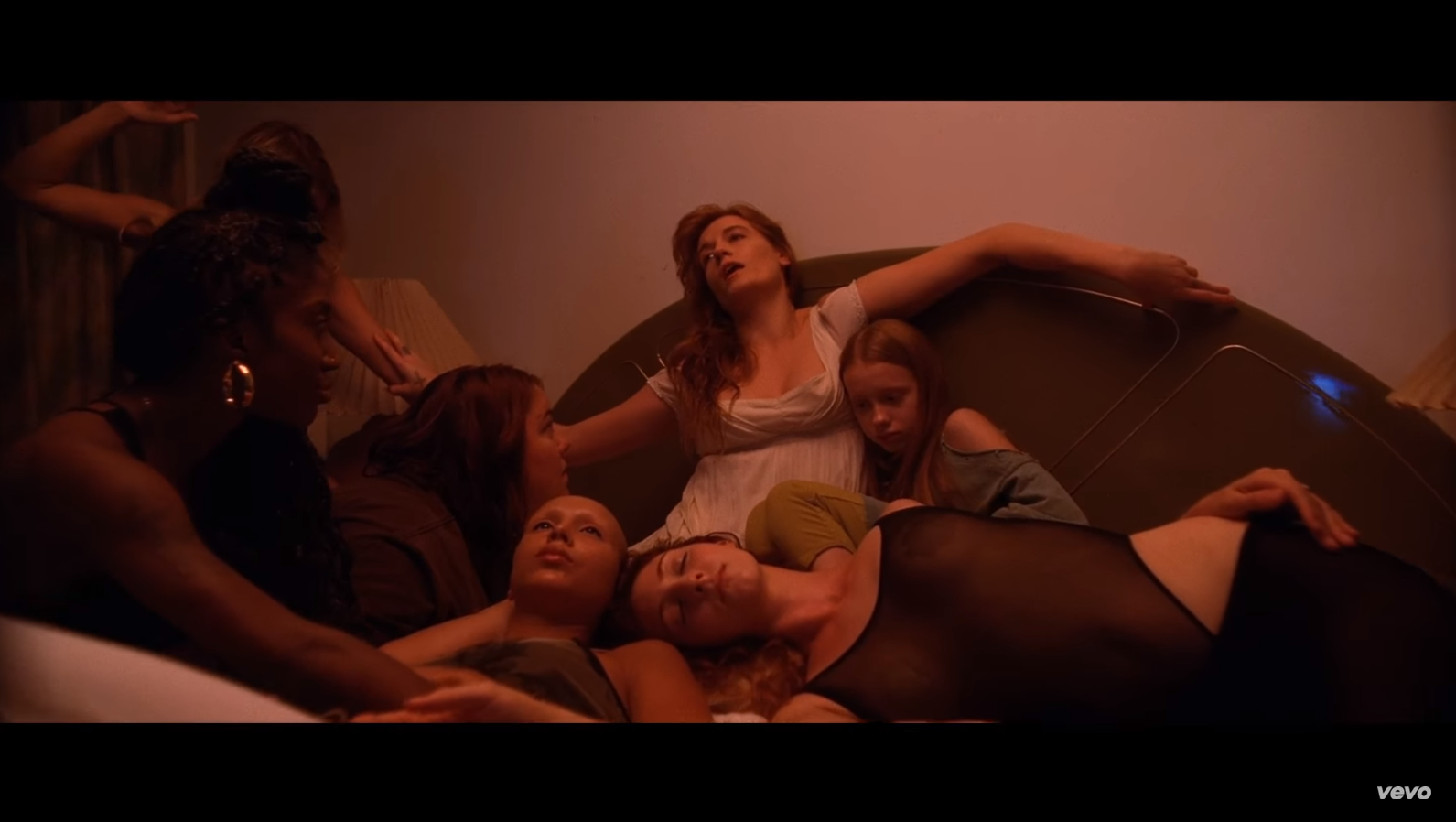
The song later received an especially poignant visual coda in a video directed by Hayley Williams, with Williams and Kurihara portraying their fathers, both of whom died in 2025.
She wouldn’t bring
You anything that you couldn’t fight
Listen to me, Miss Universe is kissing you right
When you can’t breathe
She’s locked her lips to yours so tight
And she’s teaching you to live alive
Yeah she’s teaching you to live a life
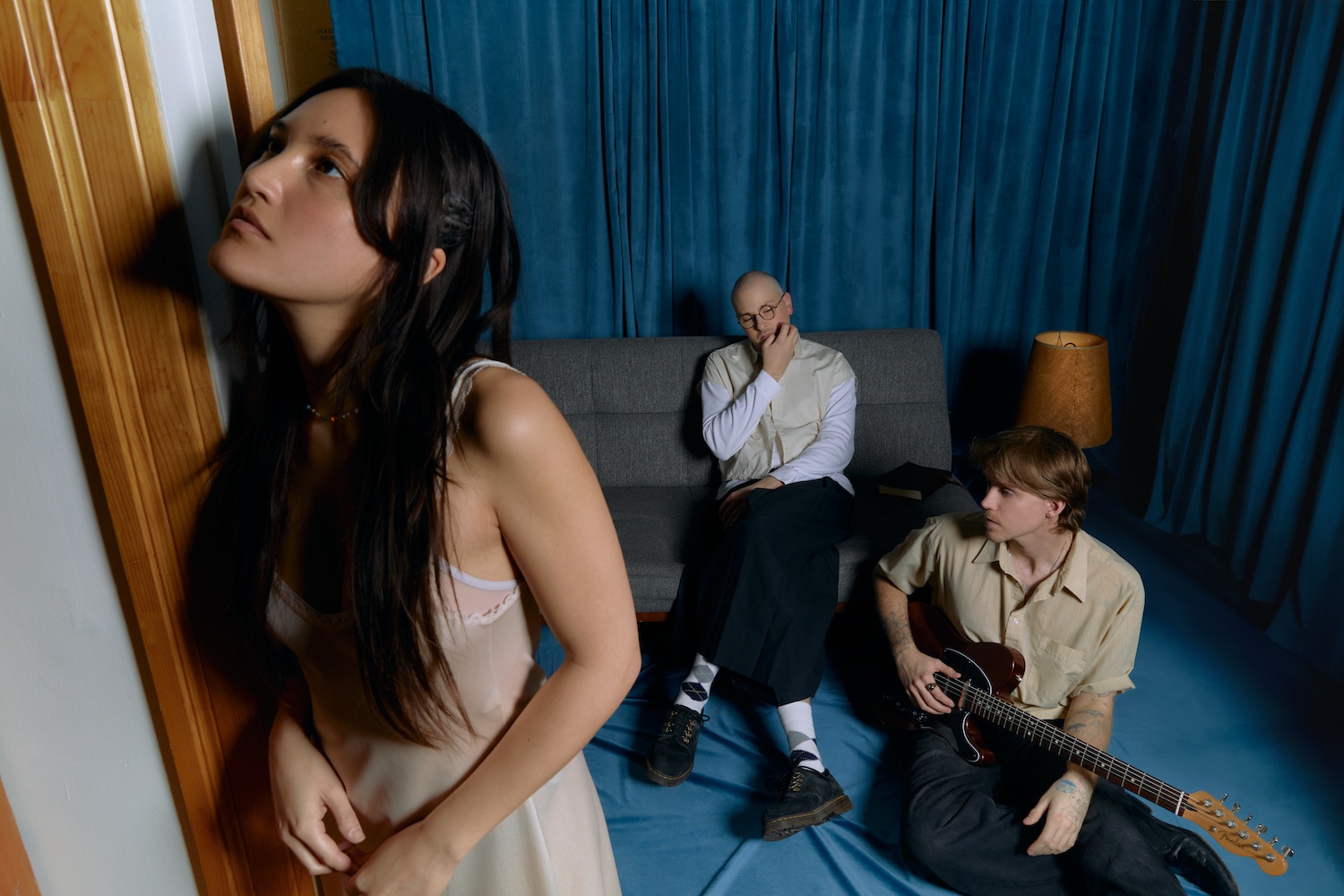
Taken as a whole, Running With Scissors is Afternoon Bike Ride at their best – dreamy and seductive in one breath, dramatic and soul-stirring in the next, with every beautiful surface carrying the weight of a life being changed underneath it.
Kurihara’s lyrics are poetic because they are precise, poignant because they refuse to look away, and painful because so much of what she writes is brutally recognizable: The relationship you outgrow, the parent you cannot save, the stranger you become to yourself when adulthood asks more of you than you thought you could give. Around her, Le Blanc-Ringuette and Tanton build music that can be sublime and radiant, then suddenly hit with startling force. At its most enveloping, the album is a warm blanket pulled over the ears and soul; at its most devastating, it reminds you that comfort and hurt can occupy the very same space.
This tension is also what makes the record so achingly, unapologetically human. Running With Scissors never asks its listener to extract a clean moral from suffering. Its larger lesson is simpler and harder: Love while you can. Grieve when you need to. Let change unsettle you. Let joy surprise you. Stay awake to the entire impossible spectrum of being alive. Afternoon Bike Ride make space for all of it, until the album’s title begins to sound less like a warning than an admission that none of us really know how to carry everything life puts in our hands.
To see him every day
Guilt could go away
Wouldn’t I be perfect, justice to his curse
There’s only so much time
I have to sit beside the dying man
Happily unaware, empty in his stare
Only in the present,
cloudy-weathered head now
And isn’t it unfair?
I’m running blind
with a pair of scissors in my hand
to keep him with me hand to hand
He handed me his life too young,
too bad, together I’m in over my head
– “Running With Scissors,” Afternoon Bike Ride
For all its private detail, Running With Scissors was always intended to reach beyond the people who made it. “We hope people feel connected and free to be open about their grief in the same way we’re trying to share,” Afternoon Bike Ride explain. “We want you to cry, we want you to feel, and love, and be with the present in the most unyielding way.”
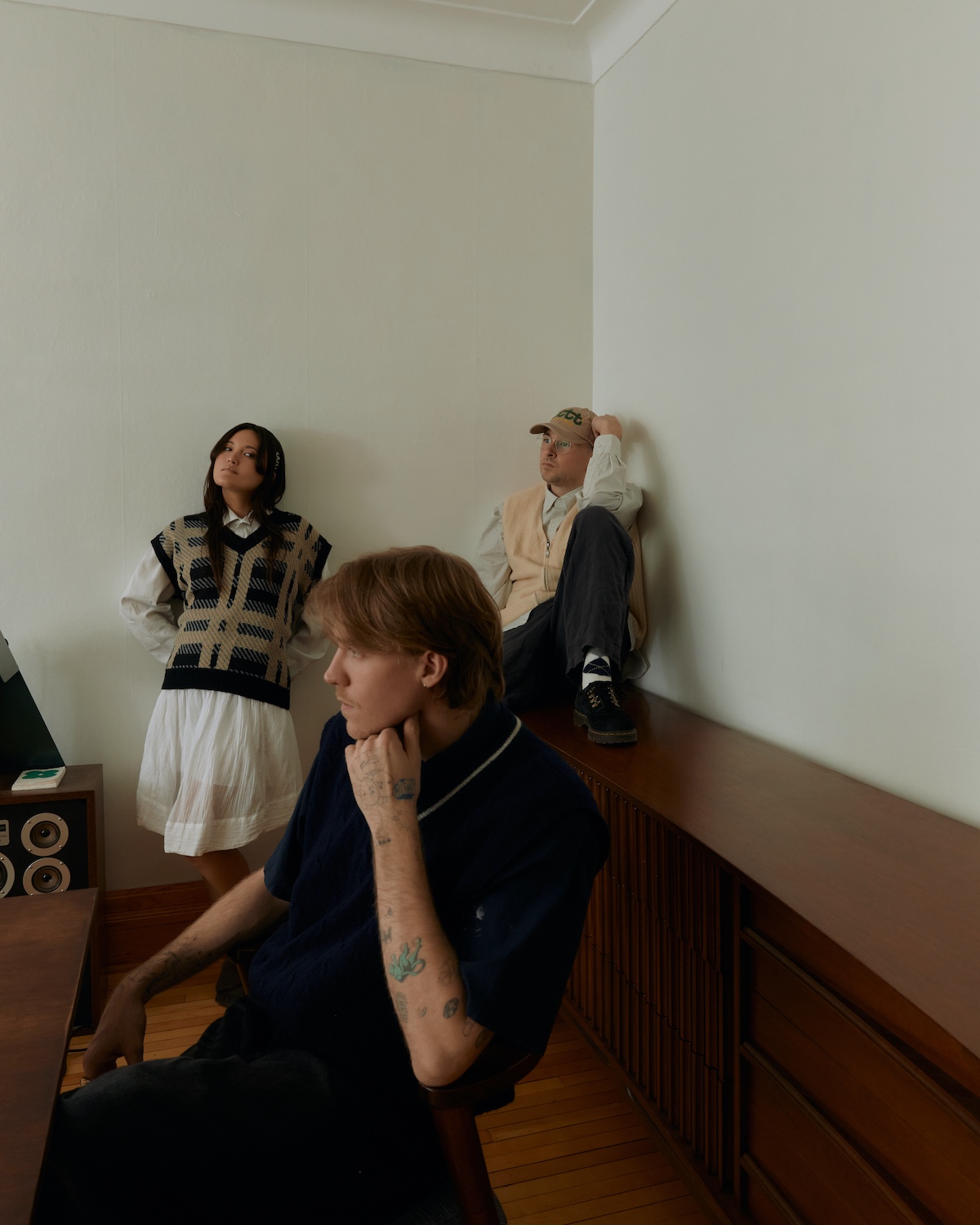
Eleven months after its release, Running With Scissors has lost none of its force.
If anything, distance strengthens its argument: Relationships end, parents die, lives change shape, and the questions Kurihara wrestles with here do not expire when an album cycle does. The record remains as absorbing and affecting as ever because its subjects are permanent ones – how we love, how we lose, how we remember, and how we keep moving when the person who once showed us the way can no longer lead us. Fresh from a run opening for American Football, Afternoon Bike Ride remain on the road this week, with headline shows in Washington, D.C., New York, and Cambridge before returning to Québec for FME in September – a chance to hear these songs take on another life onstage.
Experience the full record via our below stream, and peek inside Afternoon Bike Ride’s Running With Scissors with Atwood Magazine as the trio go track-by-track through the music, lyrics, memories, and life lessons behind their soul-stirring third album.
— —
:: stream/purchase Running With Scissors here ::
:: connect with Afternoon Bike Ride here ::
— —
Stream: ‘Running With Scissors’ – Afternoon Bike Ride
:: Inside Running With Scissors ::

— —
20 Seasons
This song is a reflection on my breakup, I was with my ex for 5 years. I didn’t feel like he understood all the reasons why I felt we needed to end. I was also feeling weird about living in our apartment without him, sitting solidly in a new era of my life.
Otherworld
I wrote this trying to make nonsensical lyrics but it ended up outlining trying to access the other universe that my dad existed in, like he was in another room or off on his own island and sometimes I got access but most times I didn’t.
See Me Old
This captures the acceptance that I had no control over my father’s illness. When he was first diagnosed I truly thought I could slow it down but it just kept advancing, and all I could do was let it happen and accept that it was happening and wait for each new stage and tackle it when it came. This taught me a lot about life, hence the lyric, ‘I’m finding my ground in his night’ (night being the end of his life) but he’s not there to guide me, his illness was my life lesson.
Beautiful & Treacherous
The title is how my dad always described the world. It’s a song about his wisdom and the sadness of understanding I no longer have access to it. He’d often share his perspective of the world while we hiked on this trail called Billy Goat Trail in Great Falls National Park about a 40 minute drive from his townhouse. The river always rushed viciously below us as we sat discussing and eating lunch on the rocks above.
Abigail
With the slow loss of my dad, I’ve been meditating a lot on the idea of reincarnation, who we were, who we are and how we’ll be erased one day. When I was four I stepped out of the metro station in Washington, D.C. with my mom and proclaimed that it looked a lot like Paris and then went on to tell her the story of my previous life, which I’ve captured in the opening lines of the song. Abigail (Abbey in real life) is a little five year old girl I met a couple of summers ago. I felt a deep pull of familiarity, as if we’d known each other in that other life so it felt fitting to name the song after her.
Oh No!
I’d been riding the metro a lot to visit my dad and often got lost in my thoughts on these rides. Full of grief after my visit, I had a strong aversion to the idea of running into an acquaintance and having to make small talk. Maintaining social norms felt ridiculous compared to the profoundness of my time with Tom. I wrote this song about fearing I’d cross someone and have to mask what I was feeling.
New Bliss
This one’s all about falling in love and letting that new person re-write the definition of what love is for you or what a relationship can be. My boyfriend and I have a dynamic that makes me wonder if we were always meant to be traveling through time as a unit.
Miss Universe
The song starts with a mantra I’ve been repeating a lot: “The universe doesn’t give us anything we can’t handle” Though akin to the idea of ‘Live, Laugh, Love’ (which I can’t disagree with either) this universe-mantra has helped me move through a lot this year. It explores the feeling of loss of innocence and how hard it is to accept that we’re all little babies even as our bodies show otherwise.
Feel Through
This is about entering a new chapter in one’s life and how raw, fresh, uncomfortable but also exciting it can be, there’s so much newness and I argue that novelty brings a heightened awareness. You feel everything so intensely that it reminds you you’re alive.
Running With Scissors
This song encapsulates the self-doubt I had as a caretaker and how hard it was to constantly feel guilty whenever I wasn’t with my dad. No one prepares you to be a caretaker, it’s a role that all caretakers have no choice but to jump into. It truly feels like you’re running recklessly with a pair of scissors.
— —
:: stream/purchase Running With Scissors here ::
:: connect with Afternoon Bike Ride here ::
— —
— — — —
Connect to Afternoon Bike Ride on
Facebook, 𝕏, TikTok, Instagram
Discover new music on Atwood Magazine
© Akina Chan
 © Akina Chan
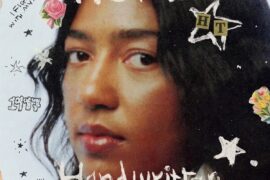
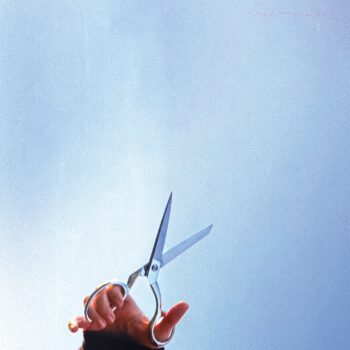
Running With Scissors
an album by Afternoon Bike Ride