A decade into Medium Build, Nick Carpenter emerges from a period of upheaval with a clearer sense of who he is, what he wants, and how he hopes to inhabit the life he fought so hard to build. With his landmark sixth album, ‘King of Having Fun,’ Carpenter looks back on the defenses and approval-seeking that shaped so much of his life, reconnecting with the kid who once found joy in little things as he learns the difference between having fun and merely surviving – and, in the process, comes back to himself.
Stream: ‘King of Having Fun’ – Medium Build
I’m peeling out of the drive. The car has been detailed. Smells good. We’re headed to the racetrack.
* * *
Nick Carpenter is back in motion.
Six months ago, the Medium Build singer/songwriter described himself very differently. After a year that pushed his body, relationships, and sense of self toward a breaking point, Carpenter told me he was “decommissioned” – off the track, in the garage, getting worked on.
Now we’re sitting across from each other at a corner table in a New York Italian restaurant, and the metaphor has apparently evolved. The car is running again. Carpenter is healthy, clear-eyed, and bracing for another album cycle. He knows what the road ahead can demand because he’s already learned, painfully, what happens when he gives it more than he has.
“I’m ready for battle,” he says. “We’re in the prep. The team is in the locker room.”
The mixed metaphors make us laugh, but the difference in Carpenter is hard to miss.
The past two years have brought nearly everything he spent a decade working toward – a major-label breakthrough with 2024’s Country, bigger stages, high-profile tours, and a growing audience drawn to the raw emotion and brutal candor at the center of Medium Build. They have also forced him to confront what happens when the life you wanted starts asking you to become somebody you can no longer sustain.
That question hangs over King of Having Fun, Medium Build’s sixth studio album, out now via slowplay/Island Records. Made live with Carpenter’s closest collaborators and built with the stage firmly in mind, the record arrives bigger and more outward-facing than much of his past work. Yet underneath that energy is a songwriter taking stock of the person who got him here – the habits he mistook for personality, the approval he spent years chasing, and the distance between performing a life and actually inhabiting one.
Carpenter calls the album a “post-mortem” of who he has been over the past decade. He also calls it “a celebration of life.”
Both descriptions fit.
King of Having Fun doesn’t pretend the hardest parts disappeared once Carpenter got sober, sought help, or learned to slow down. What has changed is his relationship to them. He sounds less interested in proving that he belongs inside the life he built, and more interested in figuring out how to remain himself while living it.
A decade into Medium Build, that may be the most consequential shift yet.
And if the car really is leaving the garage, Carpenter isn’t flooring it blindly this time. He knows where he’s been. He knows what it cost.
Now he gets to decide where he goes next.
* * *
“This feels like a letter from rehab,” Carpenter says. “Even though I didn’t go to rehab, it feels like a postscript a little bit.”
That postscript follows a remarkably concentrated stretch of Medium Build history. Country, released in 2024, felt like an arrival – the record that brought Carpenter’s world into sharper focus just as more people were beginning to enter it. Marietta dug beneath that newfound visibility, reaching back toward childhood, family, and the experiences that shaped the person behind the project. takeaways arrived amid the period of recalibration that followed.
King of Having Fun picks up on the other side.
“I think it is the closing of that chapter and the opening of a new chapter,” Carpenter muses. One of his best friends recently put it more bluntly: “Bro, you have to stop writing songs about your childhood.”
Carpenter laughs, but he understands the point. For years, Medium Build has given him somewhere to process the forces that made him who he is – religion, family, romance, rejection, belonging, and an almost bottomless appetite for approval. Now, after spending so much time digging through those foundations, he senses that he may finally be reaching bedrock.
“My childhood is how I became Medium Build, right?” he says. “My lonely Christian-kid existence became this need for attention and processing and grieving. Now that I’m here, I don’t feel as phony.”
What comes next, he hopes, is possibility. Carpenter talks excitedly about making protest songs someday, trying on dance music, chasing stranger ideas, being “more Bowie.” He wants to put on some different hats. King of Having Fun isn’t quite that record, he insists, but it may be the one that clears the way for it.
First, he had to make this one.
The earliest version of King of Having Fun took shape last summer in a garage – a half-converted studio Carpenter remembers mostly for the smell. The space shares an entrance with a bakery, and the aroma of cake drifting through the room all day was, he says, profoundly distracting.
Inside were Carpenter and the musicians he’d spent the previous years touring with, working through songs together and thinking less about what a Medium Build record was supposed to be than what they wanted to play.
That distinction came directly from the road. Much of Carpenter’s earlier music began with beats: A drum pattern, an 808, a track assembled first and written over later. It was an approach rooted in his love of hip-hop and R&B, and one that helped establish Medium Build’s shape long before Country. But taking those productions into larger rooms exposed their limitations.
“Stick Around,” for instance, became a source of frustration. Carpenter loved the song, but its dense, synth-heavy arrangement had never been conceived with a live band in mind. Night after night, he found himself trying to translate something built in one environment into another.
Tours with Lewis Capaldi and Holly Humberstone gave him a closer look at a different kind of machinery. He watched how their bands filled stages, how live instrumentation and tracks could coexist, and how arrangements could expand without losing the songs inside them. By the time Country had carried Medium Build into even bigger rooms, Carpenter knew what he wanted more of.
“I was thinking about the end goal: What it’s going to be like playing these out on the road,” he explains. “I would ask myself, what am I missing in my set? We’re missing some 150 BPM. We’re missing some guitar solo. We’re missing a big break, a scream, an everybody-sings-this-part-together moment.”
So rather than build the new record alone and figure out the stage later, Carpenter started there.
Almost everything on King of Having Fun began with the band playing together in the room. The recordings would eventually need overdubs – microphones bleed, acoustic guitars pick up vocals, and live energy doesn’t always cooperate with a mixing desk – but the bones stayed intact. When the band first rehearsed “Perceived,” Carpenter remembers hearing the record almost instantly: his guitar, Steve’s bass, the musicians already responsible for much of its sound standing right there beside him.
There was another difference, too, and Carpenter names it before anything technical.
“So much less loneliness,” he says. “Informed by laughter and friendship.”
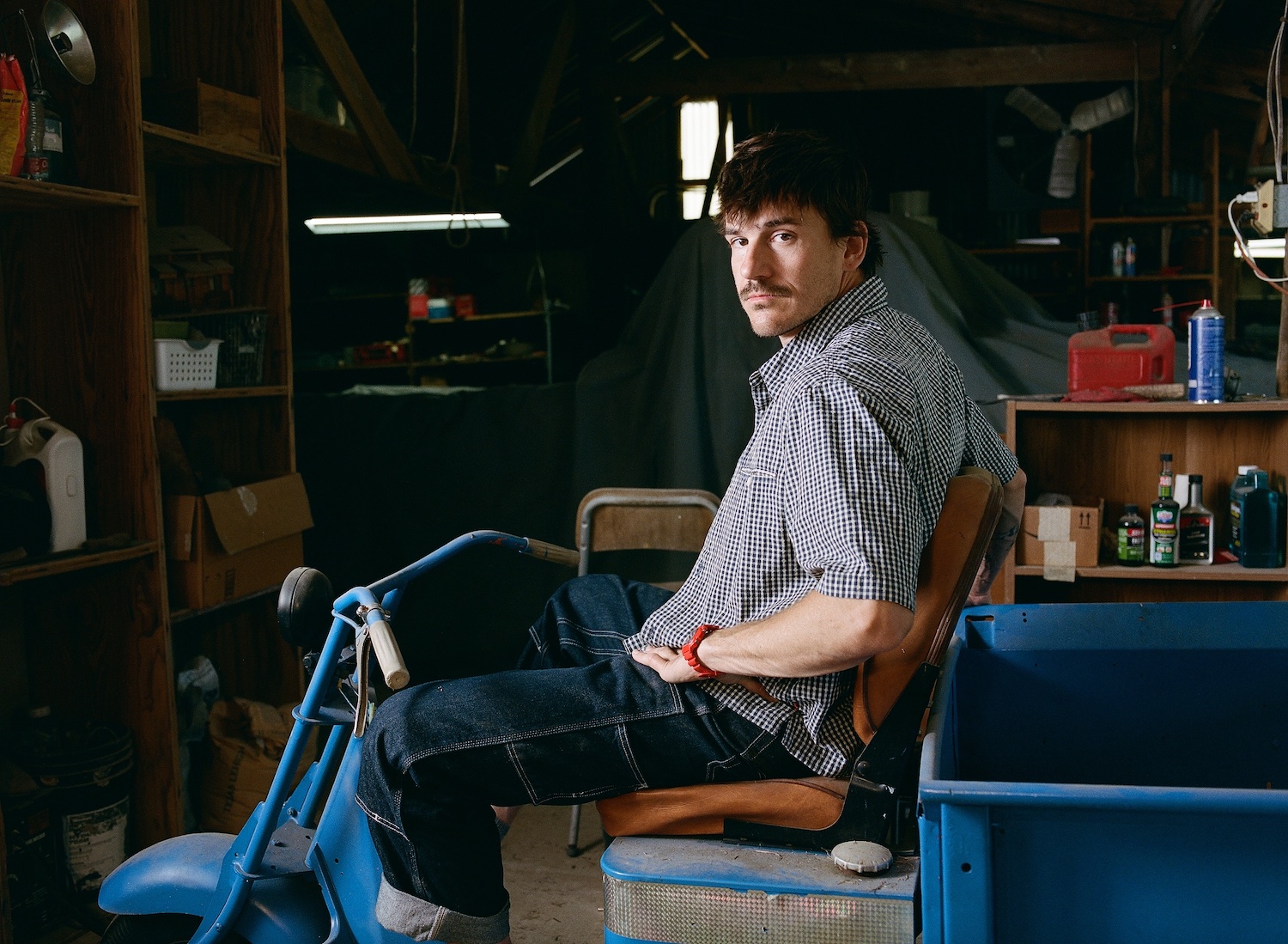
Seven people working through a song in a garage inevitably means more opinions, more negotiation, and more cooks in the kitchen. Carpenter welcomed it. When he looks at King of Having Fun’s credits now and sees his closest friends repeated across its writing and production, he hears something that earlier Medium Build records couldn’t have contained in quite the same way.
The point wasn’t simply to make a bigger record. It was to make one together.
For an artist reckoning with how easily performance had swallowed the rest of his life, that may have been as important as any guitar solo. King of Having Fun began with Carpenter asking what his live show was missing. Somewhere in that cake-scented garage, surrounded by his friends, the question became larger:
What had he been missing, too?
* * *
Okay, we think we’re in control ’til we’re not
Then we’re helpless, and
You turn your head
The big empty comes along
I don’t wanna know how much money I got left
I don’t wanna see my phone or read no messages
I wanna starve myself until I’m beautiful
Hey, what the f*** is that?
Thought I could fix myself
without the dysphoria
Paul heard some philosopher
said hope is fear and fear is hope
I’m Sisyphus, and you’re the rock I’m pushin’
There I go again
Projecting on you
And I hate myself
So, I turn it into art
Or something dumb
Put my armor on
No one can hurt me when I
I put my armor on
You can hear that change almost immediately.
King of Having Fun is still unmistakably a Medium Build record, but there is more physicality in the room. The drums hit harder. Guitars are given space to stretch out, distort, and occasionally show off. Choruses arrive with crowds in mind, and even the quieter songs feel surrounded by people rather than sealed inside a bedroom. Carpenter still slips easily between indie rock, country, R&B, and whatever else serves the song in front of him, but this time the arrangements carry the looseness of musicians responding to one another in real time.
The record is bigger without becoming grandiose. Its scale comes from bodies playing together, not from layers piled endlessly on top of one another.
Carpenter had some fun with the title before anyone heard the full thing. In the lead-up to release, he teased a string of alternate names on social media: King of Yearning. King of Chaos. King of Plywood. King of Little Treats. King of Crashing Out. They were jokes – good ones – but taken together, they read almost like a glossary for the album itself. Yearning and chaos are here. So are plywood, little treats, bad decisions, freedom, envy, expectations, and the occasional crash.
The joke works because King of Having Fun never presents fun as one uncomplicated state.
Its opening makes that clear. “Every Noise Is You” barely lasts long enough to settle into the room, an exposed little plea built around the feeling of waiting for somebody you love to come home. Carpenter sounds small in the best way – not diminished, but undefended. There is no big entrance, no victory lap, no attempt to introduce his sixth album by proving how much ground Medium Build has gained.
Then “Do Something Productive” blows the door off.
Wake up, go for a run, coffee with a friend,
go home and make some lunch,
do something productive, clean the house, and write a song,
But you know it won’t be long,
you know it won’t be long
Til’ I gotta get super f***ed up
Ruin everything let the demons out
Eat a bunch of drugs and be bad to myself
Then I call you up and ask for help
And you say, baby this is super f***ed up
Once a week you ruin everything, kick and scream
Call and say you wanna end it all
Nobody’s forcing you to stay
you can be here or take the pain away
The song inventories all the things a person can do in the name of getting better – running, coffee, lunch, cleaning, writing, yoga, fasting, supplements, prayer – before Carpenter sends the whole wellness routine careening into the same destructive cycle it was supposed to prevent. It is hilarious until it isn’t. Self-improvement becomes another thing to optimize, another scoreboard to keep, another way to punish yourself for failing to become the person you thought all that discipline would produce.
Carpenter has always been good at letting the punchline and the bruise occupy the same sentence, and King of Having Fun repeatedly weaponizes that instinct against his own bullshit.
“Perceived” brings the problem into public. Here, the anxiety is no longer only about being good, healthy, productive, desirable, or loved; it is about having made a career out of letting strangers watch him decide whether he is any of those things. Carpenter has spent a decade turning his private life into Medium Build songs, and now he sounds newly suspicious of the transaction. What happens when the place you created to say everything becomes another place where you feel obligated to perform?
The song doesn’t resolve that contradiction. Neither does Carpenter.
He still wants to make records. He still wants people to hear them. He still loves performing. What has changed is his willingness to confuse attention with proof that he deserves to exist.
So I turn my private life into entertainment
Commodified all the thoughts i’d ever had
Had a Menty B on stage on tour in Europe
Yeah but all my friends say
“Nick, it can’t be that bad”
Now the obsessive need to turn this
thing off burns like a spider bite
But the guilt that I can’t feed my parents
mouths has got me out tonight
Dancin’ for ya in the neon light
And I don’t wanna be right
I don’t wanna be wrong
No I don’t wanna be anything at all
And I don’t wanna be here
But I don’t wanna be gone
No I don’t wanna be perceived at all
That tension made “Armor” an especially revealing first single. The album’s twelfth track was the first song Carpenter chose to put in front of listeners, and for good reason: It contains nearly every version of him fighting for airtime at once. Panic, body shame, avoidance, philosophy, jokes, projection, self-awareness – the thoughts tumble forward faster than he can properly file them away.
It’s also a blast, by design.
“Armor” refuses the idea that difficult material must be delivered solemnly in order to count as serious. Carpenter wanted speed, a live-wire arrangement, something people could lose themselves inside for a few minutes. The song turns the chaos in his head into movement rather than pretending that movement has solved it.
That distinction runs through the album.
The next two singles widened the picture. “Home Depot” leaves Carpenter’s own interior monologue long enough to study Steve, the emotionally unavailable handyman who can repair almost anything except the part of himself nobody taught him how to address. What begins as a funny portrait of a certain kind of man gradually becomes an act of identification. Carpenter recognizes Steve because pieces of Steve live in him, too.
Then “In My Gut,” co-written with Annika Bennett, traces those behaviors further backward. Conflict becomes inheritance. Toughness becomes performance. Family memories stop functioning merely as stories about the past and start explaining reflexes that followed Carpenter into adulthood.
Taken in release order, “Armor,” “Home Depot,” and “In My Gut” quietly prepared listeners for the way King of Having Fun expands its gaze: First the self, then the people around him, then the places those patterns began.
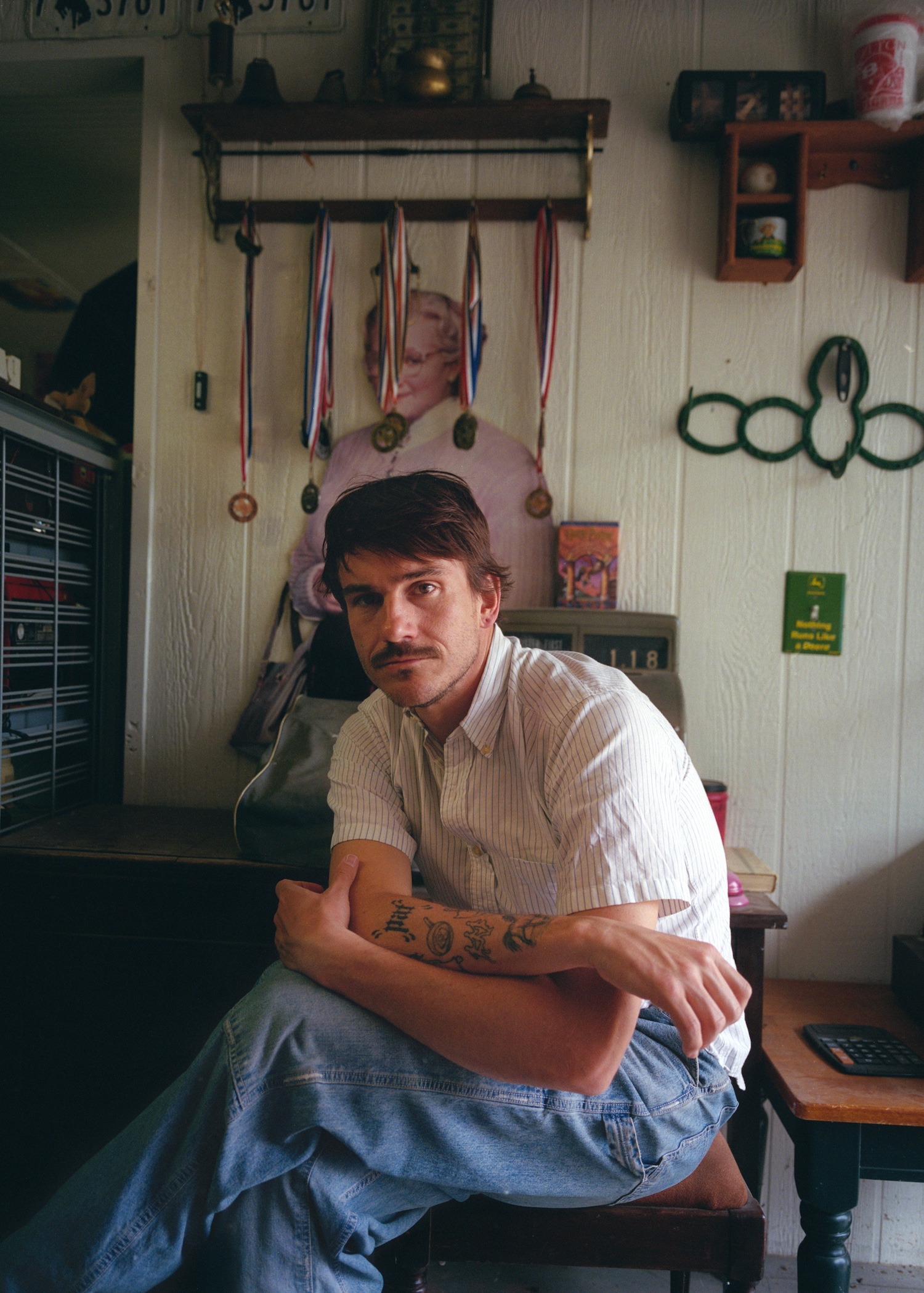
But the full album is gentler than that sequence alone suggests.
“Bird Woman” contains some of Carpenter’s strangest and funniest imagery, watching an older woman practicing Tai Chi while a mockingbird performs its heart out nearby, before collapsing the scene into a brutally concise self-assessment: He wants the stillness of the woman, but recognizes himself in the bird making noise because it wants something.
“It’s Not Easy (Falling In Love)” and “Cone Off” approach romance from opposite sides of the door. The former watches people reach for connection while knowing how easily they can ruin it; the latter is pure release, Carpenter comparing the end of a relationship to a dog finally getting its cone removed. There is regret in both songs, but considerably less self-mythology than there might have been a few records ago. Sometimes you hurt someone. Sometimes somebody hurts you. Sometimes you leave.
Sometimes being free feels incredible.
Then there is “Feed the Boys,” one of the smallest songs on the album and one of its most important.
Carpenter sits in the car while his mother picks up prescriptions. Maybe there will be a drive-through stop before they head home. Maybe they get one little treat together before returning to the rest of the family. Nothing explodes. Nobody is diagnosed, condemned, forgiven, or transformed.
It is simply a good memory.
For a songwriter who has spent years excavating childhood for scars, that simplicity feels significant. Carpenter doesn’t have to turn the moment into evidence against anyone. He lets love exist without putting it on trial.
“In My Gut” complicates that tenderness by returning to family through conflict, while “Chill” takes a relationship that once seemed indispensable and reduces it to an almost comically plain realization: Maybe this person just wasn’t who he thought they were. Beneath the shrug sits real damage, but Carpenter no longer sounds interested in making suffering more mysterious than it needs to be.
That idea reaches one of its sharpest expressions on “Downpour.”
“Even in my wildest dreams I’m working on a problem,” he sings – a line funny enough to land immediately and bleak enough to keep opening the longer you sit with it. Carpenter imagines a brain incapable of receiving even fantasy without calculating the cost. He can picture the trip and worry about the credit card. Picture success and anticipate how it disappears. Picture joy and start looking for the catch.
There may be no better description of the version of fun King of Having Fun is trying to leave behind: pleasure experienced with one eye already scanning for danger.
Then comes the title track.
* * *
I been living with the feeling
I’ve got no feelings at all
I treat my life like it’s a rerun
but I tune out while I scroll
I take the molly with the mushrooms
to be the guy you adore
I guess my brain could do it naturally,
feels like it don’t anymore
And half of me is fully jealous of the younger me
A kid who saw the light in little things
Hadn’t had a reason yet to run
And all of me is living like
a secret I don’t wanna keep
Since when do I need all this shit to fall asleep?
I used to be the king of having fun
“King of Having Fun” is where the album finally asks the question its title has been teasing all along: Who was Nick Carpenter before having fun became work?
Carpenter finds him in Marietta.
He is riding bikes down hills and making movies with friends. He has a pet snake and a black light. There are DVDs, a PSP, Grand Theft Auto, stuffed-crust pizza, Mountain Dew, sugar rushes – an entire childhood rendered through the cheap, hyper-specific artifacts that made it wonderful.
The point isn’t that the past was objectively better. It’s that the kid inside those memories hadn’t yet learned to evaluate every experience from the outside.
He wasn’t asking whether he looked cool having fun. He wasn’t wondering whether anybody was watching. He wasn’t turning the moment into content, comparing himself to somebody further ahead, using a substance to force the feeling into existence, or worrying about whether joy had been sufficiently earned.
He was just in it.
That is the person Carpenter has spent much of King of Having Fun trying to find again – not because a 35-year-old man can or should become an 11-year-old boy, but because somewhere along the way he learned to replace instinct with performance.
The song’s progression matters. The king moves from past tense toward possibility, and then toward recognition. Carpenter does not ultimately discover that the child is dead.
He discovers that he is still carrying him.
And yet King of Having Fun does not end there.
The album’s final act of self-recognition belongs to the adult Nick Carpenter.
“Thank You, Cook” is a love song to Annika Bennett, but its deepest movement is inward. Carpenter begins by thanking another person for a kind of love that steadied him, then follows that love until it becomes something he can offer himself.
It’s an extraordinary endpoint for an album so preoccupied with approval.
For years, Medium Build songs have asked other people to stay, understand, forgive, want, choose, or recognize him. King of Having Fun still contains all that need – it opens, after all, with Carpenter hearing every sound as the person he wants coming home – but by the closing minutes, love is no longer solely something arriving from outside.
He can carry some of it himself.
“I get to find the kid and love him, and then I find me currently and love him,” Carpenter says.
That may be the most important thing King of Having Fun accomplishes. It doesn’t end with Nick disappearing into nostalgia, nor with some immaculate healed version of himself stepping triumphantly out of the wreckage. He is still anxious. Still competitive. Still capable of spiraling. Still figuring out how to live inside a career built partly on giving strangers access to the very thoughts he is learning not to let define him.
But he is here.
When Carpenter talks about the past two years, he is careful not to dress what happened up as some conventional industry resurrection. There is no giant hit or trophy that suddenly makes the pain worthwhile, no clean before-and-after.
“This isn’t a comeback,” he says.
Then he thinks about it.
“Somehow it feels like my comeback to myself.”
What follows is our latest in-depth conversation with Medium Build’s Nick Carpenter – on surviving the dream, rediscovering fun, learning to live without performing every second of it, and the making of what may be his most important record yet.
— —
:: read more about Medium Build here ::
— —
:: stream/purchase King of Having Fun here ::
:: connect with Medium Build here ::
— —
Stream: ‘King of Having Fun’ – Medium Build
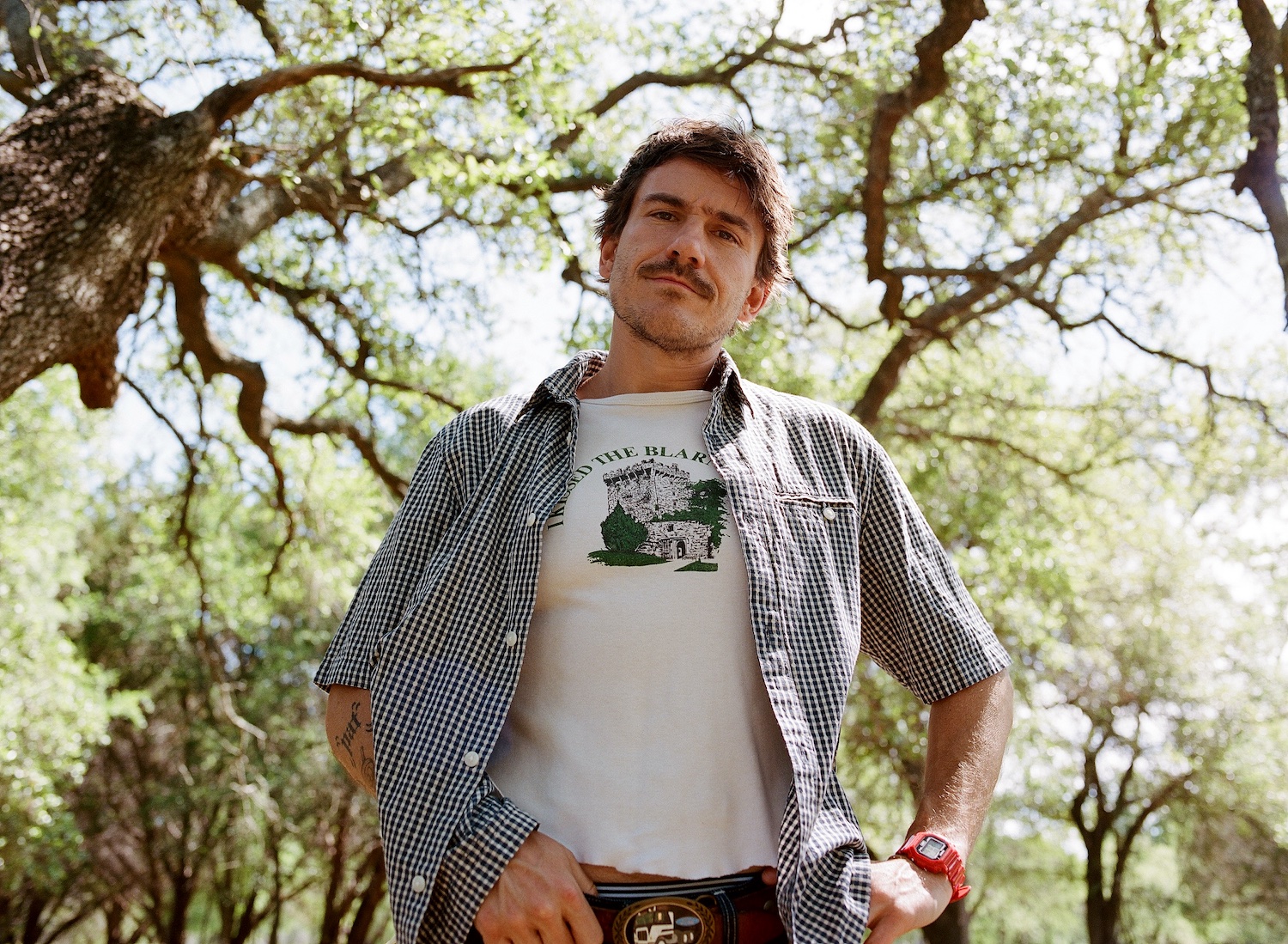
A CONVERSATION WITH MEDIUM BUILD
Nick, last time we spoke, you described 2025 as a “violent upheaval of self,” and you said you were in the shop – decommissioned, in the garage, getting work done. Where are you now?
Medium Build (Nick Carpenter): I’m peeling out of the drive. The car has been detailed. Smells good. We’re headed to the racetrack. But we’re not there yet, so this is the prep. I’m ready for battle. The team is in the locker room.
So now we’re a car, and now we’ve turned into an entire football team. Not a basketball team? You’re in the home of the Knicks here.
Medium Build: I know. I love the name. I was a Knicks fan as a kid because I thought, “Me too. I’m a Nick.” But I really could not give a shit about basketball if they paid me. So boring. But hockey, soccer – World Cup.
I’m back. I’m healthy, I’m tuned in, I’m aware of the burdens and the challenges that are headed for me. So, we’re here.
2025 marked 10 years of making music as Medium Build, and 2026 marks a decade since the release of Falling Apart, your first album. When you look back at that long, winding road – Anchorage, Nashville, the independent records, signing to a major label, Country, and everything that followed – how does it feel to arrive at this moment, sitting at this corner table in this Italian restaurant, with this album?
Medium Build: It feels like getting to try again. I think a lot of my career, leading up to getting signed, was all this, “I gotta prove myself. I gotta take chances, and I can do whatever I want because no one’s paying attention.” And then you get signed and you get some buzz, and it’s like, “Whoa, whoa, the stakes feel really high.” You kind of get cocky.
And now I feel like, whatever. Maybe it’s like being a junior in high school? Freshman year, you’re terrified. Sophomore year, you’re like, “I’ve got this shit.” And then junior year, you’re like, “Damn, dude. I can’t wait to be a senior.” I feel like I have more privilege right now as an artist that’s a couple records in. I can get better offers on tours, but because I don’t have a hit, I don’t have anything to defend.
I’m just here. I feel lucky to still be on the roster. I feel grateful that I still get to do it. I think I’ve made a really good record that I’m really proud of. I’m not blind. I’m not entranced by some sort of illusion of grandeur. I know the marathon is ahead of me. I’m just standing at the line. I’m ready. Ready to do it.
Do you run marathons?
Medium Build: I’ve never run a marathon. I’ve been anti-race forever, but lately people have been convincing me otherwise. I don’t really like running on the road. I would rather do a trail race. Now my whole entire algorithm is just feeding me videos of ultra-marathon trail runner guys. I’ll see someone post their times, and then I’ll try to equal that or beat it, and I’ll injure myself trying to be competitive.
Isn’t that what we do with music, too? We love to make music – that’s why we pick up a guitar or a piano when we’re young. We love making songs because we hear other people make songs, and we start to do it. Then if we’re lucky enough to start doing it for a living, it becomes a profession, and it can really hurt us. We can really hurt ourselves.
Medium Build: I’m over that. I still am competitive. I want to do well, but it’s competitive with myself. Did I show up? Was I authentic? Did I give it my best? Did I get good sleep the night before I ran?
It’s the same thing with touring, with an album. Like you were saying: I don’t have a song that’s 200 BPM yet – let’s make one. I don’t have a really big stadium anthem, and I opened for an artist and learned that it could be kind of fun to have one of those that’s mine. Let me go make one.
When we last talked, you also teased this record as dark, healing, grieving, and “Nick doing his shit.” Now that King of Having Fun is a little more real, how would you describe what this album is to you?
Medium Build: This feels like a letter from rehab. Even though I didn’t go to rehab, it feels like a postscript a little bit. If Health was the prequel and Country was the flick, King of Having Fun feels like a post-mortem of the guy who got to those.
Don’t quote me – well, do quote me – but this might be the end of the Nick who doesn’t think he belongs. I think there was a big life-and-death cycle of the guy that got buzz and then kind of exploded his own life. This feels almost like I am doing an autopsy on myself – on the guy, the party guy. It’s a complete bird’s-eye view: Who is this? Do I still want to be him?
You kind of have to kill old you to become new you. And there was just a lot of me that needed to die. I think it’s all documented on here.
Country felt like an arrival. Marietta felt like an excavation under that. takeaways feels like recalibration. Where might King of Having Fun sit in the Medium Build story?
Medium Build: I think it is the closing of that chapter and the opening of a new chapter. One of my best friends was like, “Bro, you have to stop writing songs about your childhood.” I’m wondering if maybe this might be the tale of me processing all this shit that got me here. My childhood is how I became Medium Build, right? My lonely Christian-kid existence became this need for attention and processing and grieving. Now that I’m here, I don’t feel as phony. I feel like it’s time. Now I can kind of get into some f***ing art, you know? Not just therapy. I’m still gonna be therapeutic always, but I could start saying other shit.
I could make some protest songs, make some Radiohead songs – what are those about? I don’t know. Make some dance music. Be more Bowie. Try on some hats. I feel like I’m coming into my auteur shit, but this record isn’t that. That’s what the next thing’s gonna be. This feels like this post-mortem of who I’ve been the past decade.
I wonder how that’ll play out when we check in again in another six months, once you’re singing these songs to audiences – whether living them every day changes your tune on them, or if this is simply part of a cycle you had to perform and get out of your system.
Medium Build: Dude, I write songs so close to myself. I try to be as honest as possible.
But the fact that “Cone Off” is about getting out of the toxic relationship I was in – it was documented in “Crying Over U,” “Triple Marathon,” “Last Time.” I’m literally freed from this place that I’ve been. And that’s addiction, alcohol. I was undiagnosed and unmedicated bipolar, so I was living this shell life. It was marked by fear and mania and wanting control.
I’m letting go. I’m letting God. I’m chilling. I’m having fun. I’m laughing. I’m taking the stairs. I’m eating more ice cream than ever. I’m maybe gonna sign up for a marathon – who knows? I don’t feel scared anymore.
Genuinely, I’m happy for you.
Medium Build: Yeah. I wish more artists felt that. I think there’s this thing when you’re coming up online: you post, and then you just race. Is it gonna go off? Is it not? Does anybody like it? Does anybody like it?
I’m not saying I’m free of that. “Armor” comes out, I’m puckered, hoping people f*** with it. But I also know that I picked it, and it’s fun to play live. You have to remember: If you f*** with it, that’s good enough.
That was what worked on the Bandcamp shit. That was just me, literally, doing nothing – just goofing off. I would leave the studio with those songs mixed that night and bop them on the way to work, blasting them in my car, feeling like a f***ing rock star because I had a document of myself.
You lose perspective when it starts working.
Are you the kind of artist who enjoys listening back to your own songs? I’ve met a lot of artists who don’t listen to their own music at all.
Medium Build: After some time. I don’t know, I love listening to myself. It’s not a weird thing. Maybe it’s a public thing where you’re not supposed to say that you like listening to your music. I think it’s looked down upon as Kanye-ish or whatever. But if you’re not going back and listening to your shit, how do you remember what you did?
I have to go back and find lyrics. I’ll go back and have to find out what the bass part was, because I’ll just lay down the bass part and I won’t remember it. But I also love getting kind of stoned and trying to listen as a stranger. Like, what am I up to on softboy? I’ll put it on and have my mind blown. I’m like, “Damn, I’m so proud of myself.” It’s like reading your old journal. You don’t do it all the time. Anybody who says they don’t listen to themselves is either very protected and healthy or lying.
What does it mean to be the king of having fun?
Medium Build: The king of having fun is an 11-year-old in Marietta, Georgia, making spoof documentaries with his friends. Seeing if he can ride his bike down a hill, off a ramp, and land in a pile of leaves. Walking to Taco Bell with a bag of change and seeing how many soft tacos you can get.
VeggieTales, SpongeBob-worshipping, unaware of what’s cool. The king of having fun was me before I learned to mask and code-switch and posture.
Does he only exist in the past, or can he exist in the present as well?
Medium Build: I’m getting back to him, you know? I think that’s the last lyric. I don’t know if you have the lyrics, but it’s like, “I used to be the king of having fun.” Then, “I could be the king of having fun.” And then, “Baby, I’m still the king of having fun.”
It’s this sort of, “Oh shit, I used to be him. Am I not him?” The fun got turned into partying, and the partying turned into the monkey on your back. It requires a lack of thought.
I’d say the king of having fun is something I’m tapping into more and more with the not caring, and with the ice cream, and with the running, and with realizing I’m 35 and I can’t keep pretending I’m 25. And if you don’t f*** with it, that’s fine. I’m not for everybody.
I opened for Alex Warren and ROLE MODEL last summer, and I’m like, “Why am I not popular like these guys that I’m friends with, that I f*** with, that everybody f***s with? How come it’s not crossing over?” Maybe my lyrics are too specific. But also, maybe it doesn’t matter. Maybe I’m old. Maybe 15-year-old girls don’t want to date me, and you know what? That’s great.
We’re very okay with that.
Medium Build: Yeah. I’m not an icon. I’m just a guy doing my thing.
It’s the same thing I would say if sixth-grade me came and was asking me for advice. Sixth grade is when I realized that people had more money than me and had better clothes and brands, and when I learned to really fake it. I would say to him probably the same thing I’m saying to me, which is: It does not matter.
One day, these kids will give a f*** about you. One day, someone will want to kiss you. One day, someone will want to have sex with you. One day, someone will think you’re cool. Are you gonna give them your entire life?
Is your life worth approval from someone? Historically, for me, it has been. I have given people everything to approve of me. And now I’m giving myself the gift of approving myself so I don’t have to go seek it.
If people come, great. I’m not mad if people like it. I’m not mad if people don’t. I just have to be okay with me. And I have the privilege to make music for a living. That’s crazy. I’m just gonna keep doing that until I can’t.
King of Having Fun is kind of funny on paper, but it’s also kind of devastating when you listen to the title track. Did the words seem funny at first, sad at first, or some combination of both?
Medium Build: My guitar player Josh and I wrote this song together. We both were really rambunctious kids who have found ourselves to be these quiet alcoholics. Just like, “Oh yeah, I had five beers last night for no reason, just so I can go to sleep.”
We were talking about that. We were like, “Since when do I need all this shit to fall asleep? I used to be the king of having fun.” It seemed so effortless.
It didn’t seem funny, but it also didn’t seem that tragic. It was just like, I used to be a wild man. Josh was a kid who needed a harness type shit.
Me too.
Medium Build: Yeah. Harness kids are very structured adults. I think there’s this thing where energy as an adult male is so scary, so we turn it into aggression or numbing. We found ourselves both being the type of guys who numb regularly.
You don’t need that. Well, I don’t need it anymore. It was a crutch. I was self-medicating. It’s okay to just be kind of crazy.
Speaking of Josh, you made this album live in the studio with some of your closest collaborators and your band, with bigger rooms and “future rock and roll moments” in mind. How did that process impact the songs themselves, and how did it compare to making Country?
Medium Build: So much less loneliness. Informed by laughter and friendship.
Seven dudes in a garage working a song out can be way better – and for me was better – than two dudes just ripping a track and being like, “That’s it.” There’s less loneliness when you’re collaborating. It’s a little scary at the end, when there are too many cooks in the kitchen and there are a lot of opinions you have to approve. But I loved it. I loved every second of it.
It was important to me. And when I look at the credits and I see my best friends’ names across every writer line, producer line, that feeling is sick.
You started off as just you, and then it was you and a longtime producer. The more people who get to enter your universe – the Medium Build universe – it’s like a big party, a playdate with all your friends.
Medium Build: And it always has been. Even the OG shit. I would cook a little bit of it alone, but mainly it was always me and a homie. We were just limited. We didn’t know any good drummers. Sorry.
Now that I have access to the musicians, it’s like, let’s get in the room and do what we like to do, which is play f***ing music, because it’s fun. Playing music is fun.
The king of having fun, for me, is a guy who’s had a good jog, had a good lunch, stretched, maybe getting a little stoned and jamming with his buddies. Cooking dinner, hanging out with his dogs, watching a movie, being outside.
I literally get paid to do that.
It’s not fair to simplify it this far, because you’ve been making and playing music live for almost as long, but I always viewed the songs on Country as the first time you’d had experiences on big tours and then gone back into the studio thinking about what you’d learned. How much has playing this music out in the wild, with real people, informed your approach – and how consciously were you trying to bring the live show into the studio this time?
Medium Build: You’re so right, because the old-school Medium Build ingredients were hip-hop beats. That was what I loved. I was a huge Tyler, the Creator fan – all that Odd Future shit was my favorite shit. And then I grew up on Outkast and Wu-Tang, and I had a huge Kanye phase. I just love beats.
When I first got into music, I was like, “I’m gonna make a beat, and then I’ll write a song to the beat.” So me and Glaves, me and Allen, me and Jake, me and whoever – the process has always been: Make a beat, make a sick track, and then just sort of write over it.
When you start touring those in big rooms, you find your limitations, especially when you start having a band. The most frustrating part of touring Country was trying to figure out how we play “Stick Around,” because we made “Stick Around” basically as a Drake track. It’s just this wall of synths. Playing it live dynamically was so challenging, to the point where I started hating the song. I was like, “I don’t hate this song. I really like this song. I love the lyrics. I really mean all this. Why do I hate this song?” It’s because I feel handcuffed to this arrangement that wasn’t thought of with a band in mind.
Opening for Lewis Capaldi in summer 2023, and then going into fall ’23 when I was out with Holly, I saw how they did their shows and I took notes. They’re using some laptops, some tracks, but the band is playing a lot of stuff. I was like, “Yeah, I want a band.”
But I hadn’t learned the full process when we were in Country mode. “Beach Chair” – kick drum and a guitar. I love that thing. I’ll never not love an 808 and some guitar and my powerful vocal. But as I toured those, I was like, “Man, wouldn’t it be nice to have bangers? To have drums and guitar solos?”
Having that guitar solo in “Home Depot,” “Chill,” “Bird Woman” – all of those moments feel so like me, but a version of me I haven’t been able to show people. I love R&B. I got to show people that stuff back in the day. A lot of people don’t know about the old records.
They’re slowly learning. takeaways.
Medium Build: Yeah, sure. But even, go back and listen to “Make Believe” off roughboy, or the OG “fat broke loser.”
It was very informative for me to have the struggle of trying to take these two-dimensional productions and make them big. It gets easier if you’re already there in the studio with a drummer, with a bassist, with a guitarist.
Dude, the first time we started rehearsing for this record and we literally just played “Perceived,” it immediately sounded like the record. It’s like, “Oh! Oh!” Because it’s my guitar, and it’s Steve’s bass – nothing changed. We’re literally half the ingredients right here. We don’t have to go fetch a tone. Just plug in, and it’s the record.
I love that shit.
Was anything recorded live to try to capture that organic live energy?
Medium Build: Almost everything was recorded live. But then the mixing engineer was like, “Dude, there’s bleed in everything. Your acoustic has vocal in it. I can’t EQ this out.” So we ended up overdubbing a lot of stuff, but the bones were all live. Almost all the drums were live while we were recording.
Once you go live recording, they say you never go back.
Medium Build: Do they say that?
I don’t think so. But they might. All you need now is bigger sound barriers for next time.
Medium Build: Bro, literally, I’ve caught the bug now. I’m like, okay, how do I do that? I want to make it messier. I want to make some early Pinegrove shit, where it sounds real live.
You open the album with “Every Noise Is You,” which is so spare and heartbreaking: “Sparrows sing a Sunday tune / Lovers picnic in the shade / And I think every noise is you / Coming home to get me.” Why did this feel like the right way into King of Having Fun?
Medium Build: This was a voice note on my phone that I love. It was old – maybe from the Marietta era. I don’t even really remember writing it, but it just lived on my phone, and I kept trying to find a place for it. It feels like a childlike feeling. When I was a kid and I knew my friend was coming over, I would stand at the carport door and pop my head out the window, just incessantly waiting to see someone’s car come down the street. I think that’s such a feeling of when you’re really craving intimacy, when you’re ready to connect.
I’m a person who has big cycles of wanting people and then really needing to be alone. And when you’re ready to connect and you’re wanting connection, it’s such an insecure place. You’re like, “I hope they want it back.” Waiting for someone to come home, or waiting for someone to text you back, or waiting for someone to touch you when you touch them – that feeling is so gentle.
I sent the voice memo to Jake and I was like, “Can you just do your little magic?” The same thing he did on “Hey Sandra.” “Hey Sandra” was a voice memo. I sent it to Jake and he built the little world around it. I said the same thing: “Hey, let’s ‘Hey Sandra’ this one.” He nailed it. He knocked it out of the park. I don’t even know what he did. It’s magic.
To answer your question about why it felt like an appropriate place to start the record, I think it’s this tiny little admission of: I’m insecure, and I need love, and I’m gentle. It’s just asking someone to hold you, asking someone to come home and be with you. It’s this little prayer. This little invitation of, “Please.”
And then when Jake sent it over and we realized it was the same key as “Do Something Productive,” which we had slated as the opening track, we all were shaking. Jimmy – the mixing engineer and co-producer – threaded it so well. We had some bird noises that someone got on their phone. I love theater. I love drama. I think it’s such a sweet way to start the record. Just a tiny little, “Hey, I’m a human. I’m gentle. Do you want to come?” Because once you’re in, you’re in.
Forty-five seconds in, I’m already crying on this album.
Medium Build: And then we’re getting super f***ed up.
And then we’re getting super f***ed up. “Do Something Productive” starts with all these gestures of health and self-care – “Wake up, go for a run, coffee with a friend” – and then detonates into this cycle of getting f***ed up, ruining everything, calling for help, and being told, “Nobody’s forcing you to stay.” It’s raw, painful, self-deprecating, and a never-ending cycle: “Ask for it to stop / But it’s never gonna stop.” What were you trying to get at with all that contrast?
Medium Build: I think I was fed up with myself. Towards the end of the Country cycle, I was really on my grind. I had a friend who gave me a workout plan and some supplements, and I was doing all this stuff that I thought made me exciting and interesting. I think a lot of people adopt lifestyle choices so that they feel like they belong.
This was just – no one’s meaner to me than me. That’s my rule. I don’t want anyone to be meaner to me than me. This was me being as mean to myself as possible. I’m like, “Look at you, you little f***er. Oh, good for you. You’re doing all your little things. Skipping your meals, going for a run, taking your supplements. That’s very cool. Just remember, once a week, you’re an idiot and you go crazy.”
This is before I was medicated. For years and years, I’ve had partners be like, “Yo, you’ve got a blue streak every once in a while.” I was just like, “Yeah, whatever. I’m moody.” My brother is really moody. They told me that he had cyclothymia. He was like, “Well, I guess I don’t have to medicate for that.” I’m like, “No, you should.”
But I wanted to remember: Sure, all these cool self-help tips – they don’t fix who you are. And not in a cursed way. I don’t feel like I’m stuck being him. It’s just like, “No, Nick. This is the brain chemistry we have, bro.”
I think I find my meanest thoughts actually comforting. No one is forcing me to stay. No one is literally forcing me, gun to my head, to stay alive. I’m choosing to be here and be a pill. If I want to leave, I can. Is starving yourself and taking a bunch of supplements making you feel better? Is it preventing you from going rogue and drinking an entire bottle of tequila and ruining your life? No. So how do you feel?
It’s really funny – I wrote that song the same week I wrote “Drug Dealer,” on the trip that “Last Time” was about. It was a very interesting week.
It is interesting, because you’re such an autobiographical writer. There are snippets of your world that somebody could piece together without being a part of it, and it’s oddly voyeuristic.
Medium Build: I’m definitely the first to tattle on myself.
What does being productive really look like for you?
Medium Build: I don’t know. I think in my most toxic masculine answer, the one I want to give is, “Be disciplined. Show up.” There’s some truth to that. There is a requirement. Songs don’t show up unless you sit down at the guitar and the piano. My knee is never gonna feel better unless I get on the yoga mat and stretch.
I think toxic productivity is work, work, work, work, work, work – like my dad, always working, never living. For me, productivity looks like living. Clear eyes and not making excuses.
When someone says they have to do something, don’t just look down and pretend you didn’t hear it. It’s like, “Hey, tune in. We’re here. Tune in.” True productivity to me looks like being present.
I like that answer a lot. I always say, I know this is technically work, but I hope it can feel like playtime at the same time – just having a really intense one-sided therapy session with somebody who has no qualifications whatsoever.
Medium Build: My life.
I read about you feeling like your lore was beginning to overshadow your existence. That feels connected to “Perceived” and to the pressure of turning private life into entertainment. How did you know the story of Medium Build was starting to cost too much of Nick?
Medium Build: I think there’s a tipping point when someone creates a brand, or a character of themselves, where you lose yourself.
For instance, I’m Nick. Nick created Medium Build as a safe place to put his nasty internal intrusive thoughts. Medium Build is this guy who chain-smokes and doesn’t give a shit and gets drunk and just tells it like it is. Eventually, Medium Build became Nick.
Now Nick doesn’t know what the f*** he’s up to, because he’s too busy wearing his dangly earrings and getting drunk and being a clown. And I don’t want to be stuck being anything.
One of my least favorite things in the entire world is being stuck places. I do not want to be stuck at a function. I don’t want to be stuck on the highway. I do not want to be stuck playing some role that I don’t want to be anymore. I’ve quit so many jobs. I will quit some shit real quick.
So when Medium Build started being my own oppressor, when I created my own handcuffs, it’s like, we’re out. Shaved the mustache, took off the nose ring, ditched the – whatever y’all think he is, he ain’t.
“Perceived” also gets directly at the cost of being dishonest in public: “So I turn my private life into entertainment / Commodified all the thoughts I’d ever had.” How are you thinking about that bargain now?
Medium Build: I recognize that what Medium Build offers people is I say the thing out loud that people haven’t said. I know that it’s valuable because people line up and tell me at shows, “Hey bro, ‘Never Learned To Dance,’ or ‘Rabbit,’ or ‘Rage’ changed this thing in my brain. It helped me see something clearly.” I appreciate that, and I want to honor that.
But again, as part of creating my character, I started selling Nick up the river. When I’m telling other people’s dirty laundry, and when it started affecting my own life, I’m like, “Oh.”
I watched my mom do it when I was a kid. She would tell anybody anything to win a room over. I have that gene. I have that muscle. I’ll do anything for anyone to like me.
If the server came over right now and was like, “The lamb tonight is crazy,” I’d be like, “Oh my God, let’s get it.” Not because I’m a fun, crazy guy that just loves lamb. It’s because I’d be like, “Well, if you think it’s good, sure, let’s do it.”
I literally didn’t put up any fight for anything he listed. I was just like, “Sure, bring it.” Now I have this huge platform, and it does affect people when I air dirty laundry. I had to inspect that thought: What am I getting out of telling everyone everything?
Sometimes I wonder whether that’s a product of being an artist – or trying to be an artist – in the 2020s. Did Led Zeppelin have to deal with this kind of pressure? Does it come back to social media’s impact on the psyche – not just on kids, but on full-grown adults? Why are we sharing everything?
Medium Build: Because we created a river for us to do it. You used to share everything with your friends at a dinner party, or with your priest, or with whoever – your higher power. Now people literally just say every thought on their story.
What did we know about Kurt and Nirvana? We didn’t know shit except what he said in magazines, and he made it all up, mainly. He would just give bogus answers, which I love.
Maybe I’ll try that one day. With you and me, I’ll always be real, but there’s a part of me that’s like, if I got some big f***ing moment and people ask dumb questions – journalists who don’t want to engage with depth and just want to have a buzzy headline.
It’s like the Pink Floyd thing: “Which one’s Pink?”
Medium Build: I just think we give everything away. That’s part of the cost of doing business. We want people to pay attention.
I think that sucks. Last question about “Perceived.” In that same song you sing, “I don’t wanna be here / But I don’t wanna be gone / No, I don’t wanna be perceived at all.” How does that square with being a performer, especially one whose work depends so much on vulnerability?
Medium Build: Obviously, I created this platform, and this was all for myself. I’m not quitting. I say that in “Do Something Productive,” right? “Nobody’s forcing you to stay.” That thought continues into this song. “Well, I don’t want to do this, but I don’t want to stop. I don’t want to be here, but I don’t want to die.”
So what are you gonna do? Just put my head in the sand and never come back? I don’t know.
You’re introducing this album with “Armor,” and it feels like such a thesis song: “There I go again / Projecting on you / And I hate myself / So I turn it into art.” Why make this the first doorway into your record?
Medium Build: This song contains – I mean, this entire album contains – my favorite, proudest lyrics. But this song is just so much what it’s like being in my head some days. Endless run-on intrusive thought.
The way it starts: “Okay, we think we’re in control till we’re not / Then we’re helpless / You turn your head.” You think you’re doing great. You turn your head, the big empty comes. That’s my mania, my bipolar.
I don’t want to know how much money I have left. I’m flipping my phone over. I’ve been missing calls. I’m intentionally avoiding. Then it goes from, “I want to avoid my phone,” to, “I wanna starve myself till I’m beautiful / Hey, what the f*** is that?” It literally reads like a conversation with yourself.
I wanted everyone to know the sharpness of the pen and how insane and serious I am about this record. This song is crazy. It’s not everybody’s favorite, but if you listen to it and can’t find something that you f*** with, maybe it’s not for you.
Even though I know it’s an outlier because of the speed, I have songs in this zeitgeist where it’s just endless bars, bars, bars. I think this is gonna be a lot of people’s f***ing fave, but there’s so much good on the record. I wanted people to start with something a little nutty and fast.
I think it gives “John & Lydia” a run for its money as your fastest song.
Medium Build: Right. I think it’s probably “John & Lydia” beforehand.
Or “Movie Stars.”
Medium Build: That’s a fast one.
You don’t have many hovering around 150. So in the past eight years, you wrote two fast songs, and now we did a third.
Medium Build: Yeah.
There’s something exciting about coming back with a bang like that. I think people will be surprised.
Medium Build: We’ll find out. But who cares? Let them be surprised. I don’t really care.
It’s okay to care. I mean, if you like it. The armor image feels like it could be about art, masculinity, performance, self-protection – all of that at once. What does armor mean to you in this chapter?
Medium Build: The armor I’m talking about is humor – all the defense mechanisms that I’ve used my whole life. I’ll avoid. I’ll use being agreeable as armor, for one, to protect myself from people knowing me.
Knowing enough psychoanalytic buzzwords to project onto people. “There I go again / Projecting on you.” I’m like, “You hate me. You want me to leave.” And they’re like, “No, I don’t. You want to leave. You’re being a pill.” Then I’m like, “Oh, I’m the problem.”
I think my armor, historically, has been me being a problem and making it seem like it was someone else’s idea. Like me getting drunk and ruining a show and being like, “Well, if Steve hadn’t given me that Fernet.” It’s like, “Well, Nick, what did you do with the Fernet?” “Oh, I turned the bottle upside down and drank it.” There you go.
My armor has always been this sort of “I’m rubber, you’re glue.” But now my armor is trying to remember that nothing matters and it’s not that serious. If it flops, I can still go home and make a good sandwich and live in a house.
“Okay, we think we’re in control till we’re not / Then we’re helpless.” We could probably have an entire conversation around that line. How much control do you think we have over ourselves and our actions? Are we products of our environments and our parents’ decisions when we were young, or do we have the agency to become whoever we decide we want to be?
Medium Build: Do you know the Serenity Prayer? “God, give me the strength” – or the wisdom to – strength to change the things I can, and see the things I can. I don’t know. I’m butchering it. There are things that are in your control. That’s your reaction to stuff. That’s how you treat people. It’s your beliefs about yourself. Then there are things you can’t control, and that’s everything else. And the wisdom is knowing the difference, right?
I am a product of my parents – my brain chemistry, my upbringing. But that really doesn’t have an effect on me anymore. It’s part of my DNA, and maybe it brands or colors the neural pathway that gets to the reaction. Maybe you excuse yourself from the table and walk away. My insecure upbringing might trigger a thought of, “Oh, he’s not having a good time. He’s leaving.” That’s not true. It’s not even anywhere close to true. There’s no signal of that. I get to decide whether or not that affects me.
Obviously, like I said, it colors the path – how it gets to you – but it’s not actually coloring the moment. Because I’m here today. I’m not 10. I’m 35. I know we’re pals and that we’re gonna have a great time. So if you leave the table or take a phone call, I don’t have any grounding to be like, “Oh, Mitch kind of hates me.” That’s not real. My point is, we think we’re in control until we’re not. We’re never in control. The thing we’re in control of is the illusion. That’s why people freak the f*** out. You see people break down because they think they have it.
My big acceptance of this is: I don’t have it. And I’m excited and happy to be on the ride as long as I can.
There’s a bluntness across this album that really stands out: “I thought you were chill but you weren’t.” “Nobody’s forcing you to stay.” “I don’t wanna be perceived at all.” “I hate myself, so I turn it into art.” “Burdened by the person I’ve become.” Given how much care and thought you put into your writing, was there a conscious effort here to just say the thing plainly?
Medium Build: That’s always been my superpower. I remember when I was in ninth or tenth grade, my best friend was this deep poet guy. He was always writing in code. He loved Conor Oberst and James Mercer, and he wanted to do that type of writing. I would try to write with him like that. I could never do it. I didn’t know how.
I remember trying to write a Radiohead-type song where it was like, “Kids are eating ice cream,” and I thought that was deep because it showed the depravity of the suburbs. Or we wrote a song about how we’re stuck in a card game with this girl in a relationship, but I’ve got a joker and she’s missing a – there are only three fives in the deck. I don’t know. Stupid shit like that that I thought was deep.
But when I found my pen, when I found my voice, it was saying the thing exactly how I would say it. That’s what I try to do. My new brain is very blunt. My medicated, off-alcohol brain is very blunt.
Has that been an adjustment?
Medium Build: It’s always been there. I’m just now giving myself the gift of saying, “Nick, it’ll actually be better for you if you just say it rather than hide.”
With my manager, with my girlfriend, with my bandmates – instead of fighting what I want to say and then couching it in this sort of, “I hope everyone’s happy with anything,” I’ll just send, “Hey, I kind of hated that.”
Oh. I said it. Now what?
I think my pen has always lingered there, but Nick has never given himself the agency to do that IRL, out loud.
So Medium Build isn’t just your intrusive thoughts. It’s also maybe your most honest thoughts and feelings as well, for better and for worse.
Medium Build: Yeah, exactly. Maybe it’s a pretty good place after all. I like my brain.
“Bird Woman” has one of the lines I keep coming back to: “I wanna be the woman / But I’m really just the bird.” What does that line mean to you?
Medium Build: Each verse is a scene where somebody wants something else. The first verse, I’m watching a woman do Tai Chi in the park. And then I’m also hearing a mockingbird doing every song he knows – basically a mating call.
I’m coveting the stillness and what I am projecting as a spiritual wisdom of the woman doing Tai Chi. What I’m seeing in the bird is horny, annoying, and in my truest thoughts I’m like, “Damn, I wish I was that old woman doing Tai Chi, but really, I bet I’m more like that f***ing mockingbird.”
In the second verse, it’s all about being a third. Someone’s cheating on their partner with you. So you want to be the woman, but you’re really the bird. You’re the side piece. You’re just the thing that they’ll never leave them for.
There’s some wordplay. I literally wrote that while we were recording. I went to therapy one day and saw a woman doing Tai Chi in the park, and I was like, “Damn.” And then I’ve also been the third in a lot of relationships. I don’t know why. I just have that energy about me.
They never leave them for you. That was really something for me to learn. I loved processing it in this rock tune.
Sound advice: They never leave them for you.
Medium Build: Nope.
There’s a woman in the park
facing east, moving slow
Bringing her fists into her gut
like she’s pulling a boat in
There’s a mockingbird going hog wild
singing every song he’s ever known
A show off no doubt just tryin’ to get laid
And I wanna be the woman
But I’m really just the bird
Yeah I wanna be the woman
But I’m really just the bird
“Home Depot” feels like one of your great character-driven songs – funny, tender, brutal, and so specific. Who is Steve to you?
Medium Build: Steve is every stepdad you’ve ever met. Every woman you love has dated, or is currently dating, a man who is phoning in the intimacy and overdoing the physical chores.
There’s emotional labor and there’s physical labor, and I find that a lot of men don’t know how to do emotional labor, so they overdo physical labor.
“His heart’s the only project he ain’t got the tools to figure out.”
Medium Build: Exactly. It started as me trying to take them down, and by the end of the tune, I realized I’m writing a love letter to the men in my life saying, “Hey, brother, take it easy. Let us in.” That song has made me laugh, but it also breaks me to tears sometimes when I really think about the guy. When I scream, “Who broke your heart?” at the end, I bet there are so many guys who have never been asked that.
“Who hurt you?” is this joke response when someone is sensitive in the comments. “Who hurt you, bro?” But if someone really asks you the question genuinely – who hurt you? F***. That’s a can of worms.
I also possess a lot of Steve qualities. I spent so much of my life avoiding honest-to-God stuff, shoving it down, drinking, having a mask, playing the funny guy. Steve is all of us. Steve is your mom’s boyfriend. It’s anybody.
“Feed the Boys” is such a gentle little memory – sitting in the car while your mom picks up prescriptions, hoping for a drive-through snack, then going home. When did that song open up for you?
Medium Build: I don’t think I’ve ever given my mom a real good tune. My dad gets a lot of shoutouts in songs – mainly derogatory. I just wanted to give a snapshot. I didn’t even really intend to do it. I was sitting with the guitar one night and it came to me. It was one of those really late additions to the album that I just wrote sitting on the couch, not thinking about it. When memories come to me like that, you just have to honor them.
It was such a tender part of my childhood – getting a Frosty with my mom and having that time alone with her. Her and I were members of the DQ Blizzard of the Month Club.
That’s adorable. Your mom was – what was the lyric? “The invisible kid in a litter of six”?
Medium Build: Yeah. She’s an invisible kid in a litter of six. I think it was special for her, too, to have one-on-one time with me, and it was special for me to have one-on-one time with her. It was what I always craved.
Jack and Dad were more – they would team up and do boy stuff together. Get under the car, go to an AutoZone. Mom and I would go to Publix and get groceries and go to Dairy Queen. That was our business. That’s what we got up to.
“In My Gut” feels like it might be the last song you write of a certain era in your life. You mentioned that it was one of the tunes you wrote as you had closed up that relationship –
Medium Build: That was “Triple Marathon.”
“Triple Marathon” – and other songs, is that right? What does it feel like to maybe say goodbye to one of your past romantic chapters, one that, for better or worse, has a lot of songs about it that aren’t going away anytime soon?
Medium Build: Whoa. Leaving that person literally felt like getting your hands back. If a dog’s nose is how they explore the world, and their cone basically keeps them from exploring and enjoying and sniffing and having joy – I remember we had been broken up for a couple months, and we had the coffee-walk debrief.
I came home from that coffee-walk debrief and I just cried. Then I immediately wrote the beginning of “Cone Off.” I thought that was so funny – to take this thing that had punished me for years and years, that I never got to fully have, and just turn it into this cathartic joke song.
I’m so proud of “Cone Off.” It feels like I’m honoring all my country influences – Willie, Waylon, Tyler Childers, Sturgill – and getting to cosplay as that guy. But then also being like, “Hell yeah, I’m f***ing free.”
Elsewhere, “Downpour” has this incredible line: “Even in my wildest dreams I’m working on a problem.” Does that feel like one of the album’s central lyrics to you?
Medium Build: That’s one of my favorite lyrics I’ve ever written. I say that about so much of this record. I literally realized that most of my dreams – my actual sleep dreams – I’m doing chores, or I’m in a conundrum, or a pickle. I think it’s because of my anxious phone brain.
But I also realized that even when you give me a complete blank slate and I draw a house, or I draw a vacation in Italy, I’m thinking about the credit card debt. I’ve spent so much of my life aware of the costs of doing – so afraid of stepping on toes and being outcast. Even in my most cocky, endless dreams, I’m calculating how to not be a nuisance. That’s why the next line that follows it is so important: “Grew up on a life raft, now I’m foreign to precaution.”
I grew up on this life raft, in this huddle. My parents were like, “We have to band together or else we’re gonna go under.” So now I’m like, f*** it, I’m just gonna act like nothing matters. But I’m crippled with this awareness that everything matters, and you can lose it any time.
And in “Downpour” you also sing, “Remembering that love’s a gift and not a weapon.”
Medium Build: Another favorite lyric. This record’s full of f***ing bars, man.
The title track looks back at a younger version of you – “A kid who saw the light in little things / Hadn’t had a reason yet to run” – and asks whether that person is still reachable. Do you feel like he is?
Medium Build: Yeah. He’s here. It feels like a séance. “Is he in the room with us right now?” The candle moves. He’s here. He’s absolutely here. I just had to go find him. I had to dig. I had to pull some skin. I dressed him up in fake shit for so long that we both forgot who was who. Now it’s like, he’s there.
I don’t need him to be everywhere now. I really think my friend is right when he’s like, “You need to be done with childhood trauma shit.” I’m at the place where I’m like, cool. I dug and dug and dug and dug and dug, and I found him. I said, “I love you. Thank you. We’re cool. By the way, we’re f***ing sick. Whatever you did, it worked.”
But he’s free. It feels like the end of one of those ghost movies where it’s like, “Do they stay?” No. They let them go.
You sing, “I treat my life like it’s a rerun / But I tune out while I scroll,” which feels painfully modern and very human. How do you know when you’re actually living versus just watching yourself live?
Medium Build: I think you know when you’re living when you’re bored and you’re aware. Boredom is really a gift of being alive. When you feel overstimulated and frantic – “I gotta check the time, I gotta remember where the date is, I gotta” – when you feel your brain speeding up to an unnatural place, that’s when you realize you’re just watching. You’re observing life, and you’re not living. Living feels slower.
The middle of “King of Having Fun” is this flood of childhood images: “Pet snake, black light / DVD, PSP, GTA, G to G / Sick stuff, stuffed crust, Mountain Dew, sugar rush.” As a 33-year-old millennial myself, it’s a fun walk down memory lane. Kids these days aren’t gonna get that. Born after 2000, you don’t know what the PSP is.
Medium Build: Yeah. That was fun.
And then we get to “Thank You, Cook.” It’s such a beautiful ending: “When the love I learn from you / Becomes the love I give myself / And the tree that’s grown out of my chest / Is holding me.” Why did you want to end the record there?
Medium Build: I wrote that to Annika after we broke up, before we got back together. My drinking and my callousness prevented us from having a real relationship. When I got sober and got medicated and started doing my spiritual, mental inventory of who I’ve been and who I want to be, looking back on the time I had spent with her, I realized how much I learned from the way she showed up for me.
A lot of people have loved me in my life. I’m definitely here because people have been kind and generous with their love and their care. But Annika showed me a love that I hadn’t fully had. It was a firm love. It wasn’t conditional, but she let me know when I f***ed it up. She was like, “Hey, this is a really true love I have for you, but I will not sit here while you destroy yourself.” When she left and let me go figure my shit out, I realized how much that was love – maybe the truest love I had ever had.
That song is truly a gratitude list: Thank you for showing up for me. And then I got to find it on my own.
The song moves from needing someone else’s love to being able to give some of that love back to yourself. Does that feel like the album’s closure?
Medium Build: Yeah. That’s why I love that it’s “King of Having Fun” into “Thank You, Cook.” I get to find the kid and love him, and then I find me currently and love him. It starts with this sort of, “I’m super f***ed up. I’m gonna ruin everything,” and then it ends with, “You got it, baby. You’re good.” No more seeking.
I always felt like Country was also a journey – “Beach Chair” to “Stick Around.” I love that you let the album be a journey. Whether or not the songs are all directly related to one another, it still feels like we got somewhere at the end of it.
Medium Build: Yeah.
You have some wildly poetic lines on this record. “Plug me into your big heat lamp heart.” “I treat my life like it’s a rerun, but I tune out while I scroll.” “Even in my wildest dreams, I’m working on a problem.” What are some of your favorite lines on the album?
Medium Build: One of my favorite lyrics is, “And when the appetizers come nobody says nothin’ / We’re just chewin’ on a problem.” And the lyric before that: “You’re always talking ’bout the cap and gown / Can we graduate this scenario?” “In My Gut” has some of my favorite lyrics. It felt like I showed up on some rapper shit. “You’re always talking ’bout the cap and gown / Can we graduate this scenario?” I love that lyric.
I love “Feed the Boys”: “A left, a honk, some magic, and we’re at the drive thru.” That type of shit – that’s when I really feel like I’m in my pen. I showed up. I said the thing. “I’m Sisyphus and you’re the rock I’m pushin’.” Come on. And then, “There I go again / Projecting on you.” I’m saying that you’re my endless burden? What an asshole. And then immediately to follow it, “There I go again / Projecting on you.”
You’ve called this album a celebration of life, which is wild and moving given how much darkness it follows. How does it feel like a celebration to you?
Medium Build: It’s a celebration that I’m alive. I survived.
I got past the hot potato. I got to be famous and go on tour and do everything, and then it kind of blew up in my face, and I didn’t kill myself. I didn’t quit. I walked away for eight months, almost a year, but now I’m back.
I’m not dead, and I have a really nice thing that I made. So yeah, this feels like a victory lap for a guy who really has no f***ing W’s other than he made it. I don’t have any big songs. There’s no Grammy. This isn’t a comeback. But somehow it feels like my comeback to myself.
Two years ago, you told me you always want your music to be a little bit messy. Does this album fit the bill?
Medium Build: It does enough. Doing it live with the band helps inform a little bit of rowdiness that I appreciate. I think the lyrics show up messy and unedited.
Some of the songs are a little too slick for me. Some of the production came out a little too slick. But I think there was a lot of production that didn’t, and I count “Feed the Boys,” “Thank You, Cook,” and “It’s Not Easy (Falling In Love)” as places where I won those battles sonically.
There are just really no skips on this. I think there is a lot of hi-fi shit. I think there is a lot of Nick being a messy little piece of shit that I love. I feel like I got to play in this world significantly.
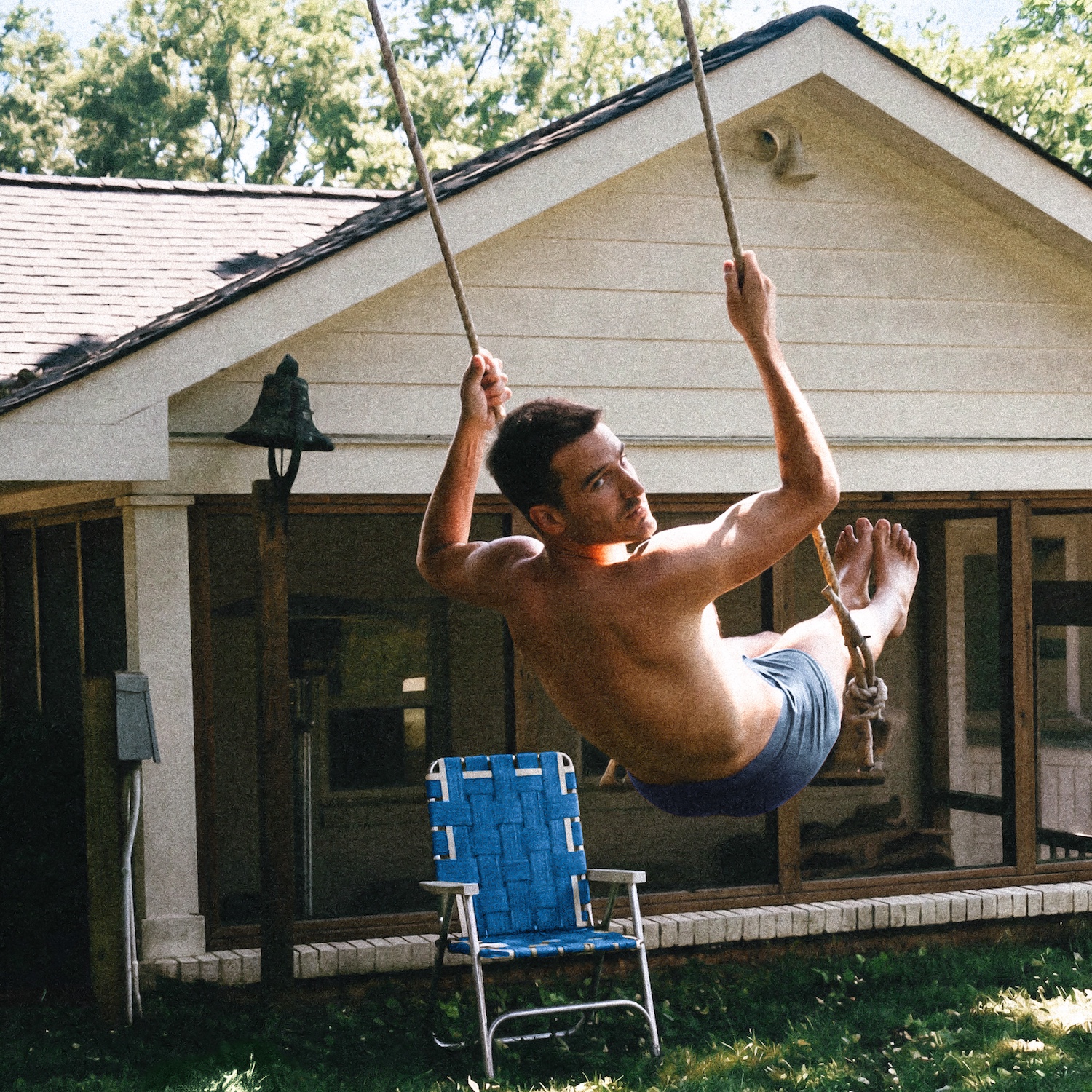
You and I have somehow, mostly unintentionally, spoken about every six months for the past two or three years. Where do you want to be in six months, in our next chat?
Medium Build: Let’s see, it’s June 24, so we’re looking at December.
I will be with Annika. I will be with my family, celebrating the end of a great year and clear-headed about the people I want to spend time with before we go do it all over again. January comes Australia. Then we go to Europe and the UK in March. Then secondary markets, then summer festivals.
What did making this record teach you about fun and survival, and the difference between the two?
Medium Build: That’s a great question. That’s why we talk every six months. Fun is not concerned with safety. Fun knows it’s safe. Survival is a chokehold on control and safety.
Some people will sell you survival as fun. But if you need a bottle of wine and a TV to fall asleep, that’s survival. That’s not blowing off steam. People will tell you that you’re blowing off steam, but that’s all in service of being a good little laborer, right? If you have to get drunk and buy shit on the weekend to erase the monotony and pain you feel being in your life, then you’re not really blowing off steam. All you’re doing is exhausting yourself to make you a good worker.
Fun is not about relaxing so you’re a good little worker on Monday. Fun is about sitting in where you are. You’re safe to have it. Fun isn’t something you sneak in just to not blow your brains out on Monday.
I would like to spend more of my life in a state to meander. I’m trying to loiter. I’m trying to veg. Not in an “I bed-rotted” way. When people say they rotted all weekend, I know what they’re trying to say – “Oh, I did nothing.” But there’s this weird guilty pleasure with that because we know that we have to always do something. And we also know that we have to go be productive on Monday.
You said in the bio – and reiterated earlier tonight – that you grew up learning how to “perform the act of existence,” being a good boy at church, at school, wherever approval was available. How much of King of Having Fun is about trying to separate actual living from performance?
Medium Build: Every second of it. Every second is me trying to remember. Every day, I have to hack into my own brain and re-download the program that says, “You have done enough.” But if you leave me alone for 20 minutes and I find something shiny, I will recalibrate to my old way.
You know how you find a preset on a piece of gear that it just always defaults to, and you’re like, “Why is this the default?” My default is, “I’m not good enough, and I need to win to be acceptable to be here.”
Every day, I literally have to 50 First Dates myself. I have to get in and be like, “Yo, you’re good. No faking. You’re good. You’re good.” Sometimes multiple times a day. “Your name is Nick. You live on a boat. You’re okay to be here. You’re not in trouble.”
My therapist was like, “You always say this thing, ‘in trouble, in trouble.’ In trouble means you’re in peril, or you’re being punished. Do you feel like you’re in peril?”
I’m like, “No.”
“Are you being punished?”
And I was like, “I think I am. I don’t know by whom, but I’m afraid of being punished at all times.”
He’s like, “You’re not being punished.”
I was like, “Okay.”
“Because you’re 35 and you make your own rules. You’re literally never in trouble.”
And I was like, “Wait.”
What do you hope listeners take away from this sixth album of yours, and what have you taken away from creating it and now putting it out?
Medium Build: The original name for the record while I was forming it was Six Windows. I have a picture I took of my friend’s garage door that had six windows. That was how I remembered: sixth album.
I just want people to feel free. As free as I feel right now. I want people to feel invited and good. At least they’ll have a companion they can listen to that reminds them: That guy has already gone and done the work of thinking he can change everything, and he realized he can’t.
There’s nothing behind the curtain. There’s no control. There’s no nirvana. There’s no place to get to. You are there.
Congratulations. This guy almost blew his brains out over it, and you don’t have to. Even though everyone will, because we all have to go figure it out ourselves. But at least when you do that and you fall on your face, you’ll be like, “Hey, this guy wrote about that.”
For those who can’t afford BetterHelp or Talkspace, there’s Medium Build.
Medium Build: I’m lucky. I have an intense privilege, and getting to talk about it is very freeing for me.
Thanks for talking about it with me today.
Medium Build: I wish I was funnier and more Kurt and could just be like, “Yeah, this song’s about a fish.”
More Kurt?
Medium Build: Kurt. Mr. Cobain. I wish I was a little more of a joker. Like, “Yeah, what’s this song about? Oh, it’s about a guy I saw at a mattress store.”
A woman and a bird will have to do. In the spirit of paying it forward, who are you listening to these days that you’d recommend to Atwood readers?
Medium Build: Maybe I said this last time, but the new underscores album is incredible. Everyone should listen to underscores. I’m sure I also talked about Ken Yates last time, but we’re taking him on this tour. We’re also taking Bella White. Bella White is an incredible artist that I’ve just found in the past couple years.
And then I’m bringing one of my childhood best friends. Her name is Merle Law. She’s out of Portland now. You know the feeling when you’re 15 and you hear someone’s voice and it’s basically like God to you? That’s what Merle’s voice is for me. The fact that 20 years later we’re still friends and I get to bring her on tour with me – she just put out an incredible record, self-released. Merle Law. Bella White. underscores. Ken Yates. That’s all you need.
— —
:: read more about Medium Build here ::
— —
:: stream/purchase King of Having Fun here ::
:: connect with Medium Build here ::
— —
Connect to Medium Build on
Facebook, 𝕏, TikTok, Instagram
Discover new music on Atwood Magazine
© Beth Garrabrant
 © Beth Garrabrant
King of Having Fun
an album by Medium Build