Throughout the year, Atwood Magazine invites members of the music industry to participate in a series of essays reflecting on art, identity, culture, inclusion, and more.
•• •• •• ••
Today, attorney, advocate, and Keep Good Company Records co-founder Matthew Baione reflects on music, memory, and the stories behind three digits in “Music Heals,” a moving essay marking 25 years since September 11.
Matthew Baione is a father, husband, and founding partner at Pitta & Baione LLP, where he represents 9/11 survivors and their families. He is also co-founder of Keep Good Company Records, a Hudson Valley-rooted, artist-first label committed to timeless music and thoughtful collaboration.
For Baione, those worlds meet in “8:48,” a song and short film created with his wife Tina Baione, singer/songwriter Ginger Winn, producer David Baron, and director Kevin Lombardo. Previously screened at the National September 11 Memorial & Museum and the Flickers’ Rhode Island International Film Festival, 8:48 is now being made permanently available on YouTube for the first time as part of this year’s 25th anniversary remembrance.
•• ••
MUSIC HEALS
by Matthew Baione
A little more than a month after September 11, New York turned to music.
On October 20, 2001, Madison Square Garden hosted The Concert for New York City. Paul McCartney, The Who, David Bowie, Billy Joel, JAY-Z and others performed for firefighters, police officers, recovery workers, families, and a city still trying to understand what had happened.
Music could not change what happened on September 11. It gave people a place to come together after it.
For more than a decade, I have worked as a lawyer representing members of the 9/11 community, including people living with cancers and respiratory illnesses related to World Trade Center exposure, families who lost loved ones in the attacks, and families who have faced loss years later because of 9/11-related disease. That work has taught me that some people experience three 9/11s. The first was September 11, 2001. The second can arrive years later, when a doctor connects an illness to World Trade Center exposure. For some families, the third is losing a loved one years later to that illness.
The work has also taught me how easily tragedy becomes a monolith. Three digits can come to hold thousands of deaths and injuries, years of illness, and an almost impossible amount of pain. Behind “9/11” are individual lives, marriages, children, missed calls, last conversations, diagnoses, and families whose lives continued long after the day itself.
Zoom out and those three digits help us understand the scale. Zoom in and we begin to understand the people inside them.
Music can move between those two distances. A song can meet one person in a completely private moment, then belong to twenty thousand people singing it together. Music can also show how our understanding of an event changes over time.
JAY-Z’s music sits in an unusual place in the history of September 11. The Blueprint was released on September 11, 2001, one of the stranger coincidences in New York music history. Eight years later, The Blueprint 3 arrived in a country that understood the aftermath of the attacks very differently.
On “Thank You,” JAY-Z uses the image of people rushing toward Ground Zero without masks, inhaling toxins and later becoming sick as part of a deliberately crude rap metaphor. It is not a sensitive treatment of the subject and was never intended to be. Historically, it tells us how 9/11 toxins exposure had started to enter the collective conscience. By 2009, the delayed health effects of September 11 had started to become part of the broader culture’s understanding of what happened. Music has the power to illuminate uncomfortable truths, and can sometimes use the most raw metaphors to get us there.
That same album gave New York “Empire State of Mind.” The song had a very different life. New Yorkers made it their own, and after Hurricane Sandy, Alicia Keys performed it at the 12-12-12 benefit at Madison Square Garden. A song written before Sandy became part of the way New York gathered after another tragedy.
Songs collect meaning after they leave the people who made them. They become attached to cities, relationships, weddings, funerals, championships, protests and losses. Sometimes the audience eventually decides what a song is for.
My own path into music came out of the same world as my legal work. For years, I had spent my days with people living through the long aftermath of September 11. That experience changed the way I understood the event, especially the thousands of individual lives hidden inside those three digits.
Then one night, another three digits, 8:48 came to me.
I wrote a fictional lyrical story about a couple having an ordinary argument on the morning of September 11. One leaves for work and both assume they will have time later that day to make things right. They do not. I chose 8:48 almost arbitrarily, as the time one of them had to be at their desk, because so much of that day turned on happenstance. The person who missed a flight. The person who overslept. The person who was somewhere they normally would not have been. In the song, it is the cruel thought that follows tragedy: if only they had left five minutes later, argued a little longer, missed the train. If only, if only, if only…
The story was not based on any one person or case. It came from something much broader that had settled in over years of doing this work. Ordinary life can change in a moment, and the things we assume can wait until later do not always get that chance.
My wife Tina brought what I had written to singer/songwriter Ginger Winn, who turned it into a song. David Baron produced the record. Tina and I later decided to make a short film directed by Kevin Lombardo around it through Keep Good Company, the creative company we built together.
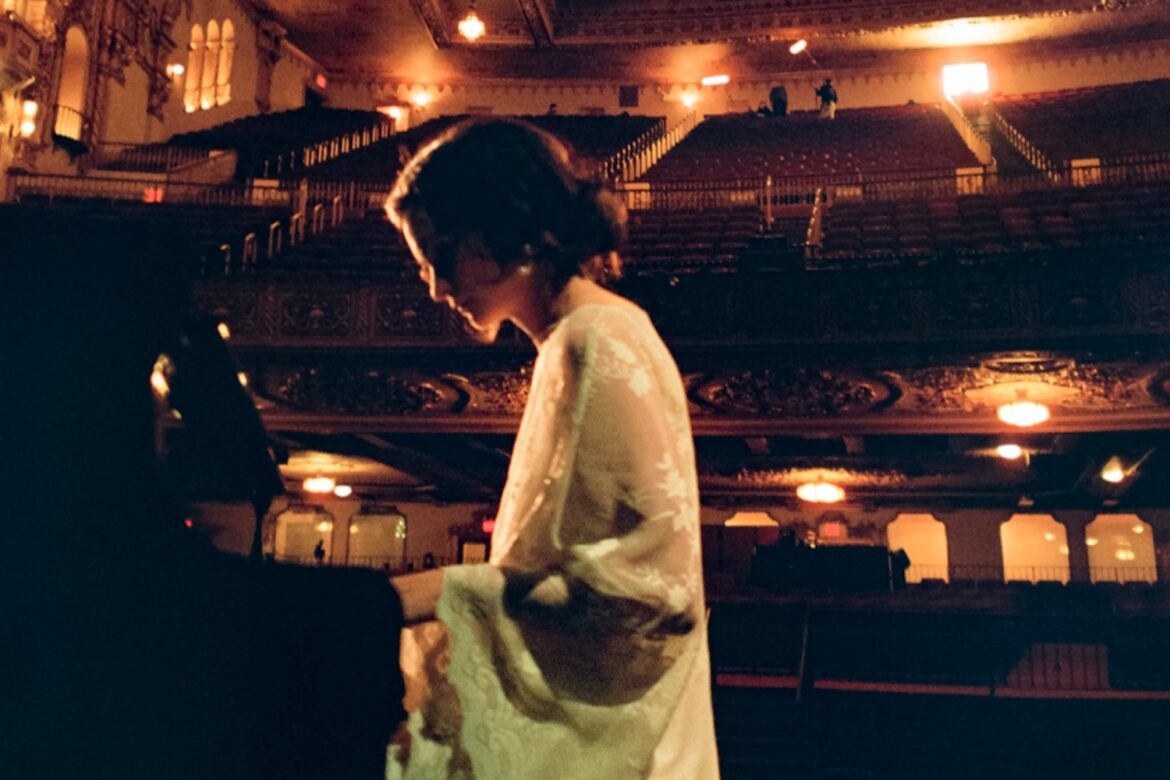
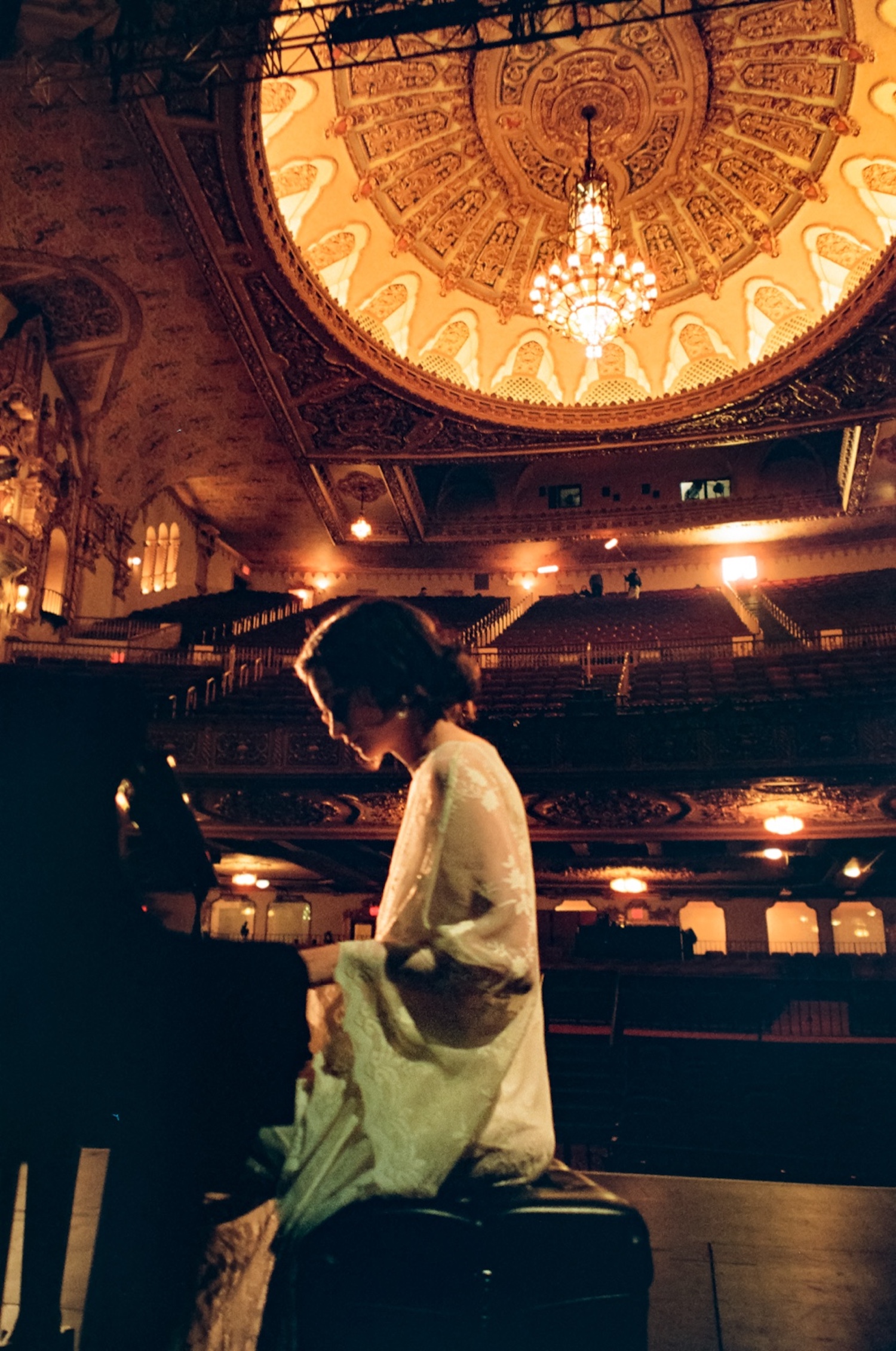
We filmed 8:48 at the St. George Theatre on Staten Island, where Tina and I grew up. Staten Island was already part of the story for me. The idea had begun taking shape after I visited the nearby Postcards 9/11 Memorial with my son. The memorial looks across New York Harbor and remembers Staten Islanders lost on September 11 individually, with each person given their own place inside an event most of the world knows by a single date.
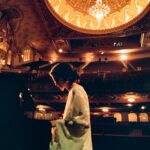
The St. George Theatre gave us a way to tell the story through time, absence, and the feeling of trying to reach someone before it is too late. Keith W. Richards, a 9/11 first responder as well as an actor, plays a man arriving for a performance and trying to reach the person onstage. Ginger appears there performing the song.
The film takes September 11 down to one relationship, one morning, and one conversation that was supposed to continue.
8:48 first screened at the National September 11 Memorial & Museum in January 2025. It is now included in the Museum’s Artists Registry, where the statement accompanying the work addresses the same idea at the center of this essay: massive tragedies can become monoliths while the individual losses inside them continue to create permanent ripple effects.
Later that year, 8:48 was accepted into the Flickers’ Rhode Island International Film Festival and screened there in August.
Until now, those screenings have been the primary way to see it. For the 25th anniversary of September 11, we are making 8:48 permanently available on YouTube for the first time.
I was a lawyer long before I wrote a song or produced a film. I never made a decision to leave one world and enter another. The creative work grew out of years spent close to these stories. Law asks me to establish what happened to an individual person inside a massive historical event. Writing, music, and film gave me other ways to stay with the individual life inside that history.
Twenty-five years after The Concert for New York City, music will also be part of another New York gathering with its own September 11 history.
This September, as we enter 25 years since 9/11, a community deeply impacted by the tragedy celebrates a different milestone – the 100th Anniversary of The Feast of San Gennaro. The two are deeply connected. The 75th Feast of San Gennaro was supposed to begin on September 12, 2001. It was canceled as the streets filled with dust and the city wrestled with tragedy. To celebrate the centennial and commemorate the canceled feast, together my law firm, Pitta & Baione LLP, and Keep Good Company, have joined to produce The Forgotten Feast, a mini-documentary about the canceled feast and how community came together to support each other and thank responders through nourishing food. Additionally, we’re bringing artists together on the music stage to celebrate the community, its culture, and its resilience 25 years after its darkest days. Ginger Winn will perform 8:48. Sal Valentinetti, backed by the NYPD Jazz Band, will remind New York of its triumphance and pay tribute to the community’s historical roots, including paying homage to Julius LaRosa who was due to perform in 2001. Many other talented artists like Dominic Chianese, Frank Moyo, Amanda, Pascali, Christian Sparacio, Chase Manhattan, Jenna Esposito, and many more will remind us that music heals.
The crowd will include people who remember September 11 firsthand, people who lost someone, people who became sick years later, people who were children at the time, and people who were not born yet. Many will simply be there for the Feast and stop because they hear a song they like.
Twenty-five years have also brought Sandy, wars, fires, floods, shootings, and private losses that never become public events. Music continues to show up around all of them. Sometimes it raises money. Sometimes it preserves a memory. Sometimes it says something uncomfortable before we have found better language for it. Sometimes people simply want to be together.
For the 9/11 community, the anniversary marks twenty-five years while the consequences remain current. People are still receiving diagnoses. Families are still carrying losses that began on September 11 or arrived many years afterward. Younger generations are now inheriting stories they did not experience themselves.
This year, 8:48 will move from museum and festival screenings to a permanent public home. The Feast will reach its 100th year. Music will fill the streets once again.
Zoom out and September 11 is part of history.
Zoom in and there are people still living its story.
Music has always had room for both.
Music heals. – Matthew Baione
•• ••
Proceeds from 8:48 the song, short film, and documentary benefit 9/11 related nonprofits and the Forgotten Feast benefits 9/11 related nonprofits, Figli di San Gennaro and Italian-American Museum.
•• ••
Matthew Baione is a father, husband, and founding partner at Pitta & Baione LLP, where he represents 9/11 survivors and their families. He is also co-founder of Keep Good Company Records, a Hudson Valley-rooted, artist-first label committed to timeless music and thoughtful collaboration.
•• ••
•• •• •• ••
Connect to Atwood Magazine on
Facebook, 𝕏, Instagram
Discover new music on Atwood Magazine
📸 © Cole Thompson