Every Friday, Atwood Magazine’s staff share what they’ve been listening to that week – a song, an album, an artist – whatever’s been having an impact on them, in the moment.
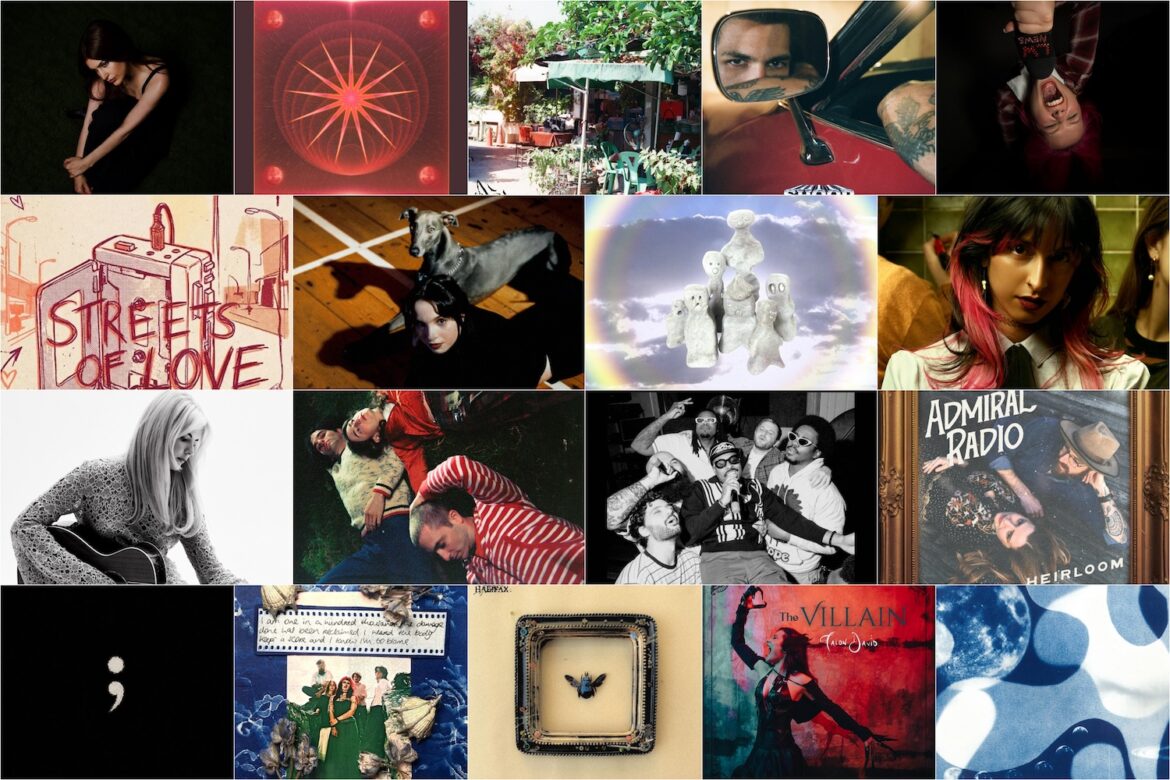
This week’s weekly roundup features music by BAILEN, SHOOP, Bebe Stockwell & Wesley Schultz, SNACKTIME, weyvir, Other Mother, Mel Denisse, Sex Week, Good Hugg, Dayvon, Lolli Wren, Miler, Club Halifax, Mercy Land, Loren Beri, Talon David, Colyn & Sainte Vie, and Admiral Radio!
•• •• •• ••
 follow WEEKLY ROUNDUP on Spotify


•• ••
:: SWIM!!! – BAILEN ::
Mitch Mosk, Beacon, New York
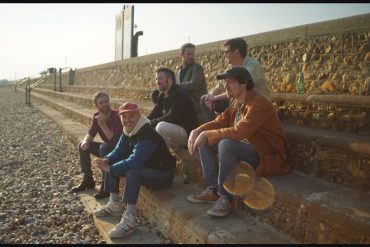
Ten years into being a band, BAILEN have stopped asking permission. On their fearless third album SWIM!!!, siblings Julia, Daniel, and David Bailen sound freer, fiercer, and more unmistakably themselves than ever – a breathtaking collision of full-throttle indie rock, windswept folk, spellbinding soul, intimate confession, and three-part harmony capable of making even the heaviest thought lift off the ground. It’s intense and unguarded, heated one moment and impossibly sweet the next, with the kind of dynamic range that demands your undivided attention.
Bringing their full, unadulterated selves into the room, BAILEN have made a record with no interest in flattening three distinct personalities into one easily marketable “vibe.” SWIM!!! sprawls because they do. It roars because they do. And beneath all that range is one remarkably clear pulse: A band newly convinced that trusting themselves might be the most important thing they can do.
“I feel like we’ve gotten to a point where I think we’re the best band in the world, and if people don’t get that, that’s on them,” Julia told Atwood Magazine earlier this year. “I feel that way now, and I’m trying to hold on to it despite all the difficulties of releasing music and the emotional rollercoaster of it, because it’s a really good feeling.”
That confidence was hard-earned. SWIM!!! is BAILEN’s first fully independent album, arriving three years after Tired Hearts and born partly from the aftermath of a terrifying 2024 car crash Julia and her parents survived at highway speed. That night, she decided that if she lived, she couldn’t quit the band; the next day, she picked up a guitar damaged in the wreck and began writing the verses to “SWIM!!!.” The title track eventually became the album’s battle cry – “Burn that bridge / Say f*** it I know how to swim” – and its larger philosophy. BAILEN produced much of the record themselves, David engineered and mixed it, Daniel handled string arrangements, and the siblings tracked extensively as a trio, often live, reclaiming the chemistry that has always made their concerts such an electrifying proposition. They even resisted advice to make the album more sonically uniform, deciding that Julia’s rock instincts, David’s soulful streak, and Daniel’s folk sensibilities belonged beside one another precisely because their intersection is BAILEN.
Singles like “SWIM!!!” and “Kansas Tornado” introduced those extremes perfectly. The former burns a bridge in a roaring rush of self-preservation; the latter gathers three voices around acoustic guitars and surrenders completely to love and wonder. Everything else lives somewhere between those poles, though SWIM!!! takes the scenic route every chance it gets. “Eve Babitz” struts through crunchy guitars with mischievous, desirous swagger, Julia caught between wanting to be the woman in front of her and wanting to be with her: “Maybe I wanna be with you / Maybe I wanna be you.” “Never Gonna Live It Down” digs through adolescence with a long memory and a crooked grin, revisiting fake IDs, vodka at prom, humiliation, and the strange permanence of the person you became while trying desperately to grow up. “Looks like life took a bite out of me,” Julia sings, folding old embarrassment into a song buoyant enough to dance with its ghosts.
Sun-kissed, stirring, and utterly sublime, “Send Me Off” may be the album’s most staggering left turn. David steps forward in a stunning soul performance, his falsetto aching and soaring through an apocalyptic love song whose tenderness only grows hotter as the arrangement swells around him. “Die with me one last time / Don’t you miss what it’s like to feel alive / ‘Cause living’s just dying every night / I’m not lying there next to you,” he sings before landing on the devastating plea, “Send me off with what real love feels like.” The siblings built the track together almost sentence by sentence, layering piano, harmonies, and a propulsive guitar figure into a song carrying traces of the Beach Boys, Queen, vintage R&B, and BAILEN’s own restless musical DNA. Somehow none of those references overpower the intimacy at its center. “Send Me Off” swelters because the world may be ending, but love is still worth choosing while it does.
“I look around and the world’s so hard, and I’m like, let’s focus on our love, and focus on family, and focus on what’s important,” David explains. “It is sort of this apocalyptic love song, but it’s also more simply just about focusing on your love when things are hard.”
The album keeps returning to that collision between surrender and survival. The dreamy, dramatic “This Is It” wrestles with the moment when resistance itself becomes exhausting – “This is what it is now / You have to make your peace with it” – building from rootsier beginnings into one of the record’s most muscular, dynamically charged arrangements. “Inevitable,” meanwhile, burrows deep into the destabilizing work of loving another person, Julia singing “I’m alive but just barely / I’m hardly awake” before asking whether she is wasting her time changing her life for someone else. Even “Some Things Like You,” one of the album’s most understated gut punches, refuses the fantasy that heartbreak happens once and stays neatly in the past: “I thought, when your heart breaks / Well shouldn’t you die?” People survive. Love returns. Pain returns with it. SWIM!!! understands resilience less as a glorious comeback than as the weird, stubborn fact that we keep waking up and trying again.
No song carries the album’s convictions with greater force than “In My Name.” Slow-burning and increasingly emphatic, it finds BAILEN staring outward at violence, identity, nationalism, and the ways powerful institutions invoke collective identity to justify their actions. Julia’s vocal is extraordinary – clear-eyed, wounded, and furious as the refrain keeps tightening around “In my name.” The lyrics refuse abstraction: “Another year another war / Another century more / Counting the days, counting the months, then counting the bodies / In my name.” Later comes the question that hangs over the entire song: “If it’s all worth living out / Then, tell me, what are the living worth?” Julia has described writing and recording the song near Columbia University amid the 2024 Gaza protests, which brought large demonstrations and police action to the campus. Musically and lyrically, “In My Name” is BAILEN at their most unflinching: A band refusing to soften its response to what it sees happening around it.
“I was really horrified by the way that my identity was being co-opted by powerful people doing horrible things, and not really having the ability to define what that identity means, what those labels mean,” Julia says of the song. She connected that struggle to both her Jewish and American identities, and to a line she encountered in Palestinian poetry: “We’re all the same animal.” For her, the song ultimately confronts “how we weaponize those labels.”
SWIM!!! holds that fury beside tremendous wonder, and the friction is precisely where the album comes alive. While trying to explain the record’s visual world, Julia arrives at a phrase the siblings kept returning to: Even at the end of the world there will still be beautiful days. It could almost serve as the album’s subtitle. BAILEN never use beauty to deny disaster. They are fascinated by the dissonance of both occupying the same day – the sun shining while life becomes unmanageable, love blooming while everything else seems unstable, people laughing in rooms where grief has already entered. “Kansas Tornado” gives itself to wonder; “Send Me Off” chooses love beneath the power lines; “Some Things Like You” discovers the absurd durability of a repeatedly broken heart. The album’s hope comes from looking directly at what hurts and deciding life remains worth inhabiting anyway.
“There is a real dislocation of being in a beautiful day when something awful is happening in the world,” Julia says. “When something really bad is happening, not everything in the world is really bad, and there’s something very strange about that… life feels unmanageable, but the sun is shining.”
The final song, “Unreal,” answers all that intensity with awe. After an album that asks so much of itself and its listener, BAILEN loosen their grip and drift into a playful, soulful reverie filled with vibraphone, harp, toy piano, flute, slide ukulele, and one last convergence of their voices. “I was looking up at the stars / this whole time with my eyes closed / You tell me baby turn off the lights / And suddenly the sky glows,” they sing, arriving at the refrain “You help me understand it” without ever explaining exactly what “it” is. They don’t need to. The point is the opening – the person, song, night, sibling, lover, or moment that suddenly makes the vastness feel navigable. After ten songs obsessed with endings and beginnings, control and surrender, survival and loss, SWIM!!! closes by accepting that understanding can remain incomplete and wonder can still be enough.
BAILEN have called themselves scrappy for years, but SWIM!!! gives that word new weight. This album was built through friendship, family, stubbornness, and a community cultivated one show and one listener at a time; its independence is communal rather than solitary. More importantly, it captures three siblings finally trusting the friction between them – three songwriters, three singers, three different reservoirs of influence refusing to collapse themselves into anything simpler.
Julia asserts that records this dynamic demand active listening, because they refuse to become passive background music. She’s right. SWIM!!! asks to be entered fully, and it rewards that attention with one breathtaking reminder after another of why BAILEN deserve every flower coming their way. The record began with a battered guitar that still had a song left in it. Ten years into their life together as a band, Julia, Daniel, and David sound equally unwilling to be broken – and gloriously, emphatically alive.
:: “Holy Smokes!” – SHOOP ::
Mitch Mosk, Beacon, New York

Sadness has rarely sounded this much fun. Bright, buoyant, and sun-kissed, SHOOP’s “Holy Smokes!” is a feel-good alt-pop reverie charged with the kind of energy that makes you want to throw the windows down and keep driving long after you’ve missed the exit. Fuzzy guitars and boot-scuffing rhythms bounce beneath an impossibly catchy chorus, while SHOOP barrels through the whole thing with infectious abandon. The song radiates light and heat, all loose-limbed charm and end-of-summer cheer – the kind of jam that practically dares you to play it once and move on.
That rush hides a much heavier song in plain sight. “I wish we didn’t have to die / I wish we crashed out tonight / It’s always been about a girl / It’s always been one more night,” SHOOP sings before launching into the chorus: “Holy smokes / Holy shit / I’m on my way back home to Lafayette Street / On the balcony waiting.” The second verse piles on more impossible wishes – money, freedom, energy, another night with the fire still burning – until all that wanting starts to sound exhausting. “Holy Smokes!” thrives on that contradiction: the music grins while the lyrics stare down uncertainty, longing, and the nagging sense that happiness might always be waiting somewhere just out of reach.
“‘Holy Smokes!’ kinda happened by accident during a time of a ton of stress and life challenges for me. At the time, I was overwhelmed and felt stuck in my music making and relationships so I decided to sit down with two of my closest friends. We joked around for a few hours and unexpectedly wrote this song. The reason it’s deeper than expected to me is because it talks about all those challenges and moments of sadness in a way that someone would never notice unless they sat down and read the lyrics aloud without the music. I always loved the way it read as very depressing, but felt and sounded so upbeat, almost like the piece of motivation or hope you have when you’re really feeling that down,” SHOOP shares.
That accidental origin explains why “Holy Smokes!” sounds so gloriously unburdened. Written with Jonah Shy and Paul Dally and co-produced with Suzy Shinn, the track throws fuzzy new wave, boogie-rock swagger, and sun-baked pop into the same room and lets them run wild. Even the chorus has the loose, communal pull of a line everybody somehow knows by the second time around. Its cheerfulness never erases what SHOOP is wrestling with underneath; instead, the song becomes its own little shot of momentum, proof that a few hours laughing with friends can loosen the grip of whatever has you stuck.
“Holy Smokes!” is SHOOP’s first single of the year, following last year’s never better EP, and it catches Brandon Shoop – the Los Angeles-based artist, songwriter, producer, and multi-instrumentalist behind the project – leaning even harder into the instincts that made his solo work pop in the first place. Before stepping forward as SHOOP, he spent years behind the scenes working with artists including Role Model, Dijon, Syd, and Maude Latour, along with playing and producing with Junior Varsity. Here, all that craft disappears into the fun. Nothing about “Holy Smokes!” sounds labored; it sounds like somebody remembering why making music was supposed to be exciting.
And maybe that’s the song’s real trick. “Holy Smokes!” doesn’t wait for life to straighten itself out before having a good time. SHOOP takes the stress, the stalled relationships, the impossible wishes, and the balcony waiting, then blasts straight through them with a chorus too catchy to sulk through. It’s bright because the darkness is there. It’s fun because sometimes fun is exactly what gets you moving again.
:: “Ant Farm” – Bebe Stockwell ft. Wesley Schultz ::
Charlie Recksieck, San Diego, CA

Does every great song need to change your life? I’ll answer that for you: No. For music to be noticed, it seems like it either has to be catchy, danceable “song of the summer” fodder, or sad, disconsolate introspection. What about the wonderful middle ground of just great relatively-light songs?
A great case in point was recently released, Bebe Stockwell’s “Ant Farm.” The simplicity is half the fun: one acoustic guitar, one counterpoint keyboard track and two confident singing voices (Bebe and guest singer Wesley Schulz).
Yes, it is a little sad to review what went wrong in what had been a cherished relationship in “Ant Farm.” But giving voice to both the man and the woman and the feelings that they’re both going through, it all gives the song extra punch when they sing together: “So let’s go swimming in the river creek / Where the rocks gone soft easy on the feet / Back to a time when you used to need me / Let’s go dancing till the morning sun / Wanna kiss your lips till they both go rough / Back to a life where our love was breathin’ / Oh back to a life where our love was breathin’” It’s one thing for somebody to be thinking wistfully like this, but when both of the people in the relationship are the narrators, it unites them in their bittersweet regrets.
I hope this doesn’t undercut how good things sound when I use this word to describe it: Pretty. It’s just a simple, pleasant track that you can listen to on repeat because of a deceptively catchy melody and truly great vocal performances. This is a clinic about how to make a great song by stripping away everything but the basics. Yup, not for your “Summer Hits” playlist, but start with this in YouTube or Spotify and let the algorithm take it from there for a terrific afternoon of listening.
:: “Can’t Imagine Why You’d Stay” – SNACKTIME ::
Mitch Mosk, Beacon, New York

Sometimes the brightest songs come from the ugliest fights. Dreamy, radiant, and stadium-sized, SNACKTIME’s “Can’t Imagine Why You’d Stay” is a breathtaking, smile-inducing arena-rock rush built around the slow collapse of a relationship still full of love – loud guitars flashing against pulsing grooves, brass lifting the edges, and Nico Bryant singing like every word has to clear the rafters. The Philadelphia septet go big here, but never hollow: the verses carry an ‘80s glow, the hook hits with arena-ready force, and the whole thing radiates the kind of feel-good warmth that practically demands another spin. Coming at the edge of fall, it lands like one last burst of summer light.
The contradiction is the point. “Back then I would kiss the ground beneath you / Now I can’t get out of my own way / Screaming all night, is this what we’ve come to? / Now I can’t imagine why you’d stay,” Bryant belts, watching devotion curdle under the weight of pride. The second verse sharpens the self-indictment: “I’m too caught up in being right / Not a trace of peace in sight.” SNACKTIME don’t hide the damage behind the song’s huge, radiant frame. They push it harder, letting the guitars roar and the chorus open wide enough to hold both the regret and the strange exhilaration of finally admitting you helped break the thing you loved.
“‘Can’t Imagine Why You’d Stay’ is about a relationship falling apart not from a lack of love, but a surplus in ego. We lose ourselves in our pride, grit our teeth, tighten our fists, and lose the most important thing – our shared experience. Until, slowly, it withers away, and there’s nothing left but contempt and the question, why do you stay?” founder Sam Gellerstein shares.
This tension between heartbreak and release is baked into the arrangement. Produced and mixed by Justin Lucas, “Can’t Imagine Why You’d Stay” moves on pulsing, Paisley Park-inspired rhythm, flitting guitars, and bursts of brass that keep punching light through the wreckage. The verses stay wistful and restless before the chorus stomps into view with the kind of hook built to be shouted by a crowd. SNACKTIME know exactly when to hold back and when to hit the gas, and the payoff comes from hearing that restraint finally give way.
The song also catches a band in the middle of scaling up. SNACKTIME began with free performances in Philadelphia’s Rittenhouse Square, building crowds through sheer live-wire chemistry before growing from a brass-centric street band into a seven-piece spanning vocals, guitars, bass, drums, keys, saxophone, trumpet, and trombone. That history still matters here. “Can’t Imagine Why You’d Stay” has the polish of a studio single, but the arrangement moves like a live band thinking in real time – everyone pushing toward the same chorus, everyone helping it land harder.
“We have been pouring every ounce of our heart and soul into ‘Can’t Imagine Why You’d Stay,’” Gellerstein reflects. “The band spent many days inside chipping away at the stone until it finally came into its realized form, and then polished it in sunny Los Angeles with the amazing Justin Lucas. We hope that you can see from this release a more open and honest SNACKTIME.”
That openness arrives at a pivotal moment. After a breakthrough summer that included Newport Folk Festival and Lollapalooza, “Can’t Imagine Why You’d Stay” marks SNACKTIME’s first release with Thirty Tigers and opens the door to their debut album, due in 2027. The band have spent the past several years sharpening their songwriting alongside the live energy that first made their name, and this single sounds like those two sides finally locking together – bigger, cleaner, and more emotionally exposed, while still carrying the same communal rush.
And exuberance is exactly what makes this song hit so hard. “Can’t Imagine Why You’d Stay” hurts, but it moves; it grieves, but it grins through the wreckage. Bryant’s vocal aches with spellbinding passion while the band answers with guitars, brass, and rhythm big enough to shake a room. SNACKTIME take a relationship at the point of rupture and give it the kind of chorus you want to scream back until your voice gives out. Sometimes the repeat button is less a choice than a foregone conclusion.
:: “Streets of Love, Pt. 1” – weyvir ::
Danielle Holian, Galway, Ireland

weyvir’s “Streets of Love, Pt. 1” is an assured and emotionally engaging piece of indie rock that finds an appealing balance between immediacy and reflection. Calcutta-born and Madrid-based, the singer-songwriter, multi-instrumentalist, and producer delivers a track that feels bright on the surface while carrying a deeper emotional current underneath. Built around melodic guitars, an infectious rhythm, and strong pop-rock instincts, the song moves fluidly between indie rock, alternative pop, power pop, and surf rock. Its greatest strength is the contrast between its energetic musical character and its exploration of heartbreak, missed opportunities, and unresolved feelings. The track never allows its emotional subject matter to become overly heavy, instead using its melodic momentum to suggest movement and possibility.
The story behind the song adds considerable depth to the listening experience. Originally written almost eight years ago while weyvir was still in high school, “Streets of Love, Pt. 1” began with a chorus inspired by feelings that were difficult to express. Rather than becoming a forgotten teenage composition, the song remained important enough for weyvir to revisit and finally complete. That long creative journey can be felt in the writing, particularly in its exploration of whether love is determined by fate or shaped by individual choices. Musically, the track reveals a sophisticated understanding of melody, drawing inspiration from Band of Horses, The Wonders, The Beach Boys, Supergrass, and Arctic Monkeys while maintaining its own identity. The bright guitar work and forward-driving rhythm give the song a sense of youthful freedom, while the lyrical perspective provides a more mature understanding of relationships and the things we sometimes leave unfinished.
“Streets of Love, Pt. 1” succeeds because it feels genuine. There is no attempt to manufacture drama or force an easy conclusion. Instead, weyvir allows the song to exist in the space between nostalgia and acceptance, creating something that can connect with listeners who have experienced their own unresolved chapters. His ability to pair accessible songwriting with emotional substance is particularly impressive, and the track suggests an artist with both a clear musical instinct and plenty of room to evolve. Following more than 25,000 streams across his solo output and collaborations that have surpassed one million streams, weyvir is building momentum with a sound that can appeal to both indie rock listeners and fans of melodic alternative pop. “Streets of Love, Pt. 1” is a strong and memorable addition to that journey, proving that sometimes the songs we carry with us for years are the ones that become most powerful when we finally let them go.
:: “anymore” – Other Mother ::
Danielle Holian, Galway, Ireland
Other Mother’s “anymore” is a beautifully abrasive study in self-perception, a song that seems determined to turn inward discomfort into something loud, physical and strangely exhilarating. From its opening textures, the Cork five-piece establish a world where vulnerability is never presented cleanly, instead arriving fractured through serrated guitar lines, atmospheric electronics and a rhythm section that gives the track a restless, almost kinetic pulse. Their self-described bubblegrunge aesthetic proves particularly potent here, marrying the bruised immediacy of alternative rock with the nervy angularity of post-punk and flashes of melodic sweetness that prevent the darkness from becoming one-dimensional. There is an impressive sense of compositional instinct throughout “anymore,” with each instrumental layer seeming to sharpen the emotional edges of the song rather than simply decorate them. Willow Esteve’s vocal presence sits at the centre of this collision, carrying the song’s anguish without sanding down its rougher contours. The result is music that feels simultaneously intimate and confrontational, as though private turmoil has been dragged into the light and given an amplifier.
What makes “anymore” particularly affecting is the tension between its subject matter and its physical momentum. A song rooted in disgust, illness, body image and the painful scrutiny of the self might easily collapse into solemnity, yet Other Mother resist that gravitational pull. Instead, they make something propulsive, danceable and jagged, allowing the music to embody the contradictions contained within the lyrics. The guitars bite, the bass provides a muscular undercurrent, and the keyboards introduce an atmospheric sheen that gives the track a woozy, almost cinematic dimension. There is a compelling push and pull between ugliness and beauty, with passages of abrasive intensity giving way to melodic flourishes that feel less like resolution than brief glimpses of clarity. That balance is central to the band’s appeal. Other Mother understand that rage can be rhythmic, that sadness can move, and that catharsis does not necessarily have to sound defeated. ‘anymore’ therefore becomes more than a song about feeling alienated from one’s own body. It is an act of reclaiming that alienation, reshaping an experience of vulnerability into something communal, visceral and alive.
As a statement of intent ahead of Can’t Help But Feel Dramatic, “anymore” suggests a band with a remarkably assured understanding of what it wants its music to feel like. Other Mother are not merely stacking genre signifiers, but using alt-rock, post-punk, electronic music and grunge as a vocabulary for emotional excess, creating a sound that is increasingly difficult to mistake for anyone else. The track’s greatest strength is its refusal to separate delicacy from fury. Its melodic details are allowed to bloom inside a heavier framework, while the harsher elements retain enough vulnerability to feel human rather than merely aggressive. There is an evident chemistry in the five-piece arrangement, with Fionn Cogan’s guitar work, Bláthnaid Marsh’s keys, Cathal O’Sullivan’s bass and Conor O’Regan’s drums expanding Esteve’s central vision into something considerably larger than its origins. ‘anymore’ ultimately leaves the impression of a band discovering how powerful their collective voice can be. It is wounded without being passive, furious without becoming hollow, and melodic without sacrificing its teeth. For a band still ascending through Ireland’s independent scene, that combination feels less like a promising experiment than the emergence of a genuinely distinctive artistic identity.
:: “Hunted” – Mel Denisse ::
Chloe Robinson, California

Ever feel like you are on an emotional roller coaster? You can go from arguing with your partner one moment to holding each other close the next. Blending alt-pop and rock, Mel Denisse’s “Hunted” examines that intoxicating tension between obsession and fear, wrapped in a shadowy, late-night soundscape. Her warm vocals float effortlessly over a haunting, richly layered backdrop, resulting in a mesmerizing listen. There is something beautifully unsettling about the way the song captures the magnetic pull of a relationship you know can hurt you, yet still cannot seem to escape.
Nashville artist and producer Denisse thrives on contrast, pairing unconventional pop with raw alt-rock. Her distinct style of ethereal vocals woven into gritty, distorted production creates a compelling push and pull between softness and intensity. Rather than settling into one sonic lane, she embraces the unpredictability that comes from blending opposing textures and emotions. The result is a sound that feels both vulnerable and visceral.
:: “Life is a Circle” – Sex Week ::
Mitch Mosk, Beacon, New York

Love can be a loop, and Sex Week know exactly how dizzying it gets when romance and creation start circling each other. The New York duo’s “Life Is A Circle” begins in soft reflection, with fiddle and harmonica giving the song an almost campfire intimacy, before the whole thing starts slipping its leash. Richard Orofino and Pearl Amanda Dickson gradually stretch that hush into a radiant, brooding alternative passion play, layering wooden recorders, accordion, 808s, and even a quantized horse sample into a captivating cacophony that glistens, glows, and aches in all the best possible ways. What starts dreamy and entrancing becomes dramatic, emphatic, and altogether breathtaking.
The lyrics move with the same circular logic. “Is it over now? / Or do we just keep going around?” Dickson asks early on, only for the refrain to answer with its own impossible certainty: “There’s no end / Life is a circle.” The song keeps returning to that image as love slips between devotion and exhaustion, endings and reentry, staying and leaving. Even its darkest lines resist finality: “Kicked off the horse / Just to get back on it again / Dirt in my mouth and pain / but it’ll turn into some other feeling.” Every exit becomes another entrance. Every wound changes shape and comes back around.
“‘Life is a Circle’ feels like the cornerstone of our musical palette,” Dickson says.
This sense of exposure matters because “Life Is A Circle” reaches directly into the strain of making art alongside the person you love. The arrangement starts gathering force as the relationship frays in the lyrics, eventually exploding into a resounding rush of sound: voices pile up, textures collide, and the song’s early restraint gives way to full-body abandon. By the time Dickson sings “There is no safe place to land,” Sex Week have built exactly that sensation into the music. The floor has disappeared. All that remains is motion.
“It was cathartic to make. Just adding these little wooden recorders, accordions and 808s, just not caring about anything other than what we wanted to hear,” Orofino shares.
“Life Is A Circle” is Sex Week’s first new music since touring with Mitski and Fcukers, and it captures the duo at their most liberated – following instinct wherever it leads, even when that means dragging a campfire song through electronic debris and out the other side. The final stretch keeps widening until love, conflict, noise, and release all blur together. Life circles back. So do people. Sex Week make that repetition sound less like resignation than surrender to the strange fact that we keep reaching for one another anyway.
:: “talk more” – Good Hugg ::
Mitch Mosk, Beacon, New York

Some conversations die in your throat before they ever reach the room. Good Hugg’s “talk more” lives inside that paralysis, a brooding, intimate reverie where the desire to connect keeps colliding with the inability to get the words out. Glistening vocals drift just beyond reach over gliding keys and hazy ambient production, slowly pulling the song into a spellbinding alt-R&B fever dream that any fan of Dijon or Mk.gee – yours truly included – can gleefully fall headfirst for. James Grout-Smith keeps the arrangement spare enough for every hesitation to register, yet strange enough that the song seems to hover between memory and waking life.
The lyrics are startlingly direct. “Why do I find it so hard to speak / And the words on my breath / Aren’t as cold as they seem,” Grout-Smith sings before the imagery suddenly darkens: “Soon comes the winds / And he sweeps up my corpse.” Communication becomes existential here, as though every unsaid word carries the threat of disappearing with him. By the time he asks, “Why do I find it hard to talk to you?” the question has already outgrown whatever relationship first inspired it. “talk more” catches the strange loneliness of having plenty to say and still finding yourself stranded on the wrong side of your own mouth.
“The music for this record for me sits at this cool intersection between weird combinations of sounds – the weird nostalgic feeling of semi-analog semi-digital textures like that of Peter Gabriel and the Cocteau Twins, coupled with haunting, low-resolution samples and melodies that seems drift in and out of the spotlight,” Grout-Smith shares. “The lyrics are as much about the sounds of the words for me as they are the meaning. My girlfriend’s dad has lent his old ‘80s PSR keyboard which has some crazy sounds on there – it’s so exciting and inspiring when a single sound can trigger a whole feeling – it’s just about wrapping it in a way that doesn’t feel boring.”
“I like thinking about equipment generally in that way, using things how they weren’t intended, as long as your focused on capturing a clear feeling or vibe. Judie Tzuke was a big inspiration in that way. Vocals inspiration is interesting to me – I like when the vocals shift between different worlds, going from pretty traditional positioning in the track to sitting just out of reach from the listener. It’s definitely one of the most challenging aspects of the record as there is nowhere to hide if you’re not being authentic in the performance. I’m on a constant quest to experiment and make something truly new, that it still feel good and accessible and I feel this record really does that. I also love a lot of pretty mainstream pop, there’s so much skill in crafting a good pop song and that definitely soaks into my music. I think that’s what grounds the whole project in terms of songwriting, and allows me to really push the limits of what people expect should be happening sonically.”
That obsession with texture gives “talk more” its peculiar intimacy. Grout-Smith’s semi-analog, semi-digital world constantly blurs the edges: melodies surface and recede, old keyboard tones flicker through the mix, and the vocal itself shifts between closeness and distance. The production mirrors the song’s central problem perfectly. He wants to speak, wants to be heard, but even his voice keeps slipping away from us. Rather than forcing a grand climax, “talk more” stays suspended in that uneasy space, letting uncertainty become part of its atmosphere.
Raised in rural Sussex and now working under the Good Hugg moniker, Grout-Smith has spent years moving between pop instinct and experimental production, from early Ableton experiments to studies at Guildhall School of Music & Drama and airplay on BBC Radio 6. “talk more” arrives as the first single from a forthcoming mixtape he hopes will mark a larger step forward for the project, and it makes a persuasive case for exactly that. Good Hugg understands that intimacy doesn’t always arrive through clarity. Sometimes the words catch, the signal flickers, the voice recedes – and the distance itself says everything.
:: “;” – Dayvon ::
Ashley Littlefield, California

Everyone experiences grief differently, and Dayvon captures what lies on the other side of pain: carrying the memory while holding onto the hope that remains. Eight years later, he shares that memory in his track “;,” a raw ballad about friendship. The Georgia native is known for his performances at Chain Reaction and as a bassist for the Orange County band Asylus, where he has showcased his versatility over the years. Last year, Dayvon was featured on “Stuck On You,” a reggae-pop, sun-drenched feel-good single with Long Beach artist Llevan and Nevi Outlyr. Since then, Dayvon has been preparing new releases while deepening his spontaneity in collaborating with other musicians.
Dayvon’s latest release on his imprint, “;,” is a meaningful ballad about loss and friendship, using his voice to speak about pain and grief over the past years. Last month, Dayvon also produced his previous single, “Perspective,” with co-composer Joe Hogue, (HiTPLAY), a Grammy award-winning producer recognized for his work on DC Talk’s 1992 album, Free At Last. After years of performing, Dayvon shares his most honest and emotive ballad yet. When listeners hit play, they are immediately introduced to violin strings that deliver the sincerity and emotional pull of the message behind his lyrics. In those lines: “I wrote my wrongs in red / you got me out my head.” His lyrics offer hope to carry on, followed by: “I’ll live my best until it’s over.” Dayvon writes about the deep encouragement friendships can provide, and how one of the fondest friendships in his memory and heart will continue to live on in “;.”
:: “are we alright?” – Lolli Wren ::
Danielle Holian, Galway, Ireland

Lolli Wren’s “are we alright?” arrives like a transmission from the darker side of the modern imagination, where the glow of a phone screen meets the cold light of a city at 3am. Its avant-pop architecture is cinematic and quietly unnerving, folding experimental textures, progressive flourishes and art-pop drama into a portrait of a world that has forgotten how to switch off. Inspired in part by They Live, Wren finds dystopia not in some distant future but in the familiar rituals of contemporary existence: scrolling, consuming, commuting, repeating. Yet there is poetry in the unease. The song does not simply document existential dread, it gives that dread shape, colour and atmosphere.
At its centre, Wren’s extraordinary voice becomes both narrator and landscape. Spanning more than four octaves, it fractures, gathers and multiplies through layers of self-performed backing vocals, creating the sensation of one consciousness speaking with many tongues. There is something almost operatic about the scale of it, but the emotional impulse remains intimate. “are we alright?” is ultimately less interested in answering its own question than in allowing it to linger, suspended between anxiety and empathy. In that unresolved space, Lolli Wren finds something quietly beautiful: the possibility that, in a culture obsessed with constant connection, simply asking if somebody else feels the same might be one of the most human gestures left.
:: “Betty” – Miler ::
Danielle Holian, Galway, Ireland

Miler’s “Betty” is the sound of grief refusing to remain still. Built around the final conversation between Calista Morgan and a close friend before her death, the song carries an extraordinary emotional weight, yet its power comes from the fact that Miler never allow that weight to become inert. Instead, “Betty” moves with the unsettled momentum of memory itself, beginning in an intimate, almost hushed space before gradually widening into something bruised, expansive and cathartic. Guitars shimmer and grind at the edges, the bass gives the track a grounded sense of gravity, and the drums steadily tighten the tension until the whole arrangement feels poised on the brink of collapse. Morgan’s voice is the undeniable centre of the performance, possessing the rare ability to sound both completely exposed and utterly commanding. There is tenderness in the quieter passages, but when the song opens its lungs, her delivery becomes ragged and visceral without ever sacrificing control. It is a vocal performance that understands grief not as a single emotion, but as a volatile mixture of longing, anger, guilt and the unbearable persistence of remembrance.
The song’s gradual construction is particularly effective, allowing its emotional crescendo to feel earned rather than engineered. Recorded with Alex McCrea and producer Jamie Biles, “Betty” begins with the intimacy of a confession before gathering layers until its guitars and drums seem to physically push against the boundaries of the song. When the vocal harmonies emerge around the chorus, there is a fleeting, almost spectral quality that recalls the luminous grandeur of Fleetwood Mac, before the track plunges back into its darker, more muscular terrain. That contrast between fragility and force is where Miler find their identity. They have an instinct for the kind of alternative rock that can be both cinematic and deeply human, drawing from shoegaze haze, ’90s grunge, folk-rock storytelling and the grand emotional gestures of contemporary indie without becoming beholden to any one of them. The arrangement constantly threatens to spill over, but never loses its sense of purpose. Even at its most towering, “Betty” remains anchored to the personal story at its core. The guitars are not simply loud for the sake of grandeur, and the crescendo is not merely a climax. Everything serves the memory that Morgan is trying to preserve and understand.
As the first glimpse of Your Best, “Betty” suggests an EP concerned less with overcoming difficult experiences than with examining the shapes they leave behind. There is something deeply compelling in the song’s refusal to offer an easy resolution. Morgan’s friend warned her about the path she was taking, and years later that conversation has become a kind of emotional mirror, forcing the songwriter to confront the parallels between another person’s fate and her own life. Miler turn that self-examination into something both intimate and monumental, finding grandeur without losing the fingerprints of the individual experience. The result is a song that feels lived in rather than performed, as though every crescendo has been carrying the accumulated pressure of everything left unsaid. ‘Betty’ establishes Miler as a band capable of handling grief with sophistication, allowing darkness and beauty to occupy the same space. It is haunting without being precious, powerful without becoming melodramatic, and emotionally raw while remaining musically assured. If this is the threshold into Your Best, Miler are stepping through it with a remarkably clear artistic voice.
:: “Bee Sting” – Club Halifax ::
Mitch Mosk, Beacon, New York
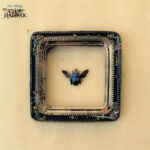
Pain leaves a mark, and Club Halifax would rather show the crack than sand it smooth. The Australian indie trio’s “Bee Sting” is a dreamy, dramatic slow-burn that gathers heat by degrees, moving from a contemplative shuffle into a smoldering reverie of yearning vocals and increasingly scorched guitar. Bri sings from inside the messy aftermath of a breakup, caught between the instinct to keep the peace and the anger that arrives once self-preservation finally wins. By the closing stretch, Cameron Hopcroft’s fuzzed-out electric guitars soar over Cameron Browning’s drums with palpable cathartic heat – the whole song opening wider as the hurt finally gets somewhere to go.
The title captures that contradiction perfectly. “Oh I’m cast into the deep end / Cause I held on too tight / it’s like welcoming a bee sting / cause I don’t wanna bite,” Bri sings, accepting pain almost as the price of keeping conflict contained. But “Bee Sting” keeps pushing until that restraint starts to crack. The bridge cuts deepest: “We circled the drain / made jokes from the pain / it swallowed us anyway / keeping your promise / was all that I wanted / I thought I was worth more than that.” What begins as longing slowly reveals the cost of making yourself responsible for everyone else’s comfort.
“‘Bee Sting’ is about the aftermath of a breakup and feeling destined to absorb pain to maintain normalcy and keep the peace,” Bri explains. “Making the song felt like showing the cracks instead of hiding them and sitting in the anger and rawness instead of resolving it neatly. Ultimately, the process meant learning that the pain means it mattered, but it isn’t a reason to stay somewhere wrong.”
The music follows that same release. “Bee Sting” formed organically in Club Halifax’s rehearsal space, and its slow transformation preserves the unpredictability of that first jam: Browning’s ride bell punctures the early calm, Hopcroft answers Bri’s rising intensity with distorted twang, and the arrangement keeps swelling until the guitars take over the horizon. The ending carries the weight of everything Bri has been holding back. Dreaminess gives way to distortion, restraint gives way to volume, and the song burns hottest exactly where its defenses finally give out.
“The recording process was really different for us, we just started jamming it and it was honestly unpredictable. It kept shifting until Hop’s (Cameron’s) distorted twang and Cam’s drum part landed on something buzzy and incredibly vulnerable, like you can’t hide in this song. We didn’t expect it but it’s exactly where it needs to be.”
Hailing from Gundungurra/Blue Mountains, NSW, Club Halifax have spent two EPs pairing confessional songwriting with the friction between folk depth and alt-rock force. “Bee Sting,” following July’s “Blah Blah Blah” and offering another glimpse of their forthcoming debut album, catches that balance at its most exposed. The pain stays visible, but it no longer dictates the terms. By the time those guitars blaze through the finale, the sting has become evidence of survival – proof that getting hurt and staying hurt are two very different things.
:: “I’m Your Daughter” – Mercy Land ::
Mitch Mosk, Beacon, New York

Teenage rebellion hits different at 180 beats per minute. Glitchy, volatile, and wound dangerously tight, Mercy Land’s “I’m Your Daughter” is a feverish, rip-roaring alt-pop rager built for speeding past the edge of suburbia with the windows down and every warning light blinking. Laura Jinn comes hot on the mic over blown-out guitars, glitchy synths, and hammering drums, while producer Tatum Gale keeps pulling the floor out from under her – the track barrels forward, fractures into local-news interference, then detonates into a four-on-the-floor electronic rush. Its 2000s alt-rock DNA is unmistakable, but Mercy Land drag that adolescent urge to escape straight into the hyperstimulated present.
The chorus gives that restlessness a perfect banner: “I’m your daughter of love and rage / adrenaline junkie for a new age / pick up your script and then we’ll race / 180 bpm heartbeat okay.” Jinn sings from the perspective of a kid already halfway out the door, racing toward whatever comes next with friends, prescriptions, bad ideas, and very little interest in tomorrow. The line nods directly to Green Day’s American Idiot, but “I’m Your Daughter” pushes its own generation into the frame – one raised on the same suburban boredom and hunger for freedom, now armed with different chemicals, different screens, and a whole new set of ways to burn out.
“I was in fourth grade when American Idiot came out. Boulevard of Broken Dreams was at the top of the charts and I remember driving to Sunday school at the mosque, listening to Ryan Seacrest and hoping that we’d be just a little late so I could hear it in full. My favorite thing about music is its ability to conjure feeling, and that music conjured this dark and thrilling desire within me.
So I was speaking to that music when I wrote “I’m your daughter of love and rage / adrenaline junkie for a new age”. I was picturing my friends at school, we were so innocent but so wild with silliness, always impatiently waiting for that time of freedom when we could leave our homes and get in the car and drive to some parking lot or backyard and hang out. We’re still a nation of suburban burnouts but now we have new toys and new prescriptions,” singer/producer Laura Jinn shares.
Mercy Land make that friction between kids and the structures around them part of the production itself. A Kentucky TV-news sample keeps bleeding into the song, the word “effort” surfacing like some nagging voice from the adult world while Jinn races in the opposite direction. When the arrangement finally breaks open, the interruption becomes impossible to ignore for a moment – then the beat comes roaring back and she disappears again into the world she chose. It’s a smart bit of sound design because the song’s rebellion lives in that refusal to stay put: every interruption becomes another reason to floor it.
“I was obsessed with American Idiot as a kid. I used to loudly sing along to each song in my room with my headphones on, no regard for or even awareness of my vocal performance, just being totally free with it. We are biting into that feeling a little bit with “Daughter,” the itchy, impulsive, empty reaching out into space, that type of escape. We kept the world very 2000s alt with our guitar and drum choices to recall that sonic sensation as well.
The sample is from local TV in Kentucky, just across the river from where LJ grew up. The word sprinkled through the track is “effort,” as in “yeah, it’s an effort by the Kentucky Transportation Cabinet to keep the bridge crossing the Ohio River safe.” When you’re out zooming as a teen you have a total disagreement with your surroundings, the adults and the structures they build. When everything breaks in the song, LJ is briefly forced to hear the quote, and she turns away, diving back into the little dark world she creates and chooses to inhabit,” producer Tatum Gale shares.
Formed in New Orleans and now based in Los Angeles, Mercy Land have built their world around dark synthpop, suburban cynicism, and the strange rebirths that come after everything familiar starts warping at the edges. Following last year’s Termites EP, “I’m Your Daughter” arrives via Feature Bug Studios like a jolt through that world – brash, wired, and gloriously restless. The adults can keep building their roads, bridges, rules, and warning signs. Mercy Land are already speeding toward the next exit.
:: “Stagehand”- Loren Beri ::
Chloe Robinson, California

Have you ever heard the term “main character energy”? While it can feel good to be the center of attention, there’s also something beautiful about embracing who you are and finding joy in simply being yourself. That is the focus of Loren Beri’s latest single “Stagehand.” The track is a reminder that you don’t have to be the star of the show to find meaning in your own life. By letting go of the roles we create for ourselves, “Stagehand” discovers a quieter kind of asset in authenticity. The release exudes The Killers and Coldplay vibes while also encapsulating a style all his own.
New York artist Beri brings a theatrical touch to indie songwriting, weaving lush, layered arrangements with memorable melodies and vivid narratives. Later this year, he will unveil Stagehand, his second full-length record, alongside a collection of poems that expands on the album’s world. At its center, the title track unfolds as an intimate, dreamlike piece of chamber pop. Beri admits, “I think the song tries to find the beauty in a kind of ego death that can come from getting lost backstage behind the play you can’t quite seem to be cast in. It feels like a relief, and feels more accurate to my actual feelings somehow.”
:: Villain – Talon David ::
Danielle Holian, Galway, Ireland

Talon David’s Villain opens like a door kicked from its hinges. Its central question is deceptively simple: what happens when you stop trying to convince everyone that you are good? Across eleven tracks, the Nashville-born, UK-based artist turns the accusation of villainy into a kind of liberation, transforming professional conflict, grief, romantic uncertainty, loneliness, and self-doubt into a theatrical alt-pop and neo-soul universe. “Make Me the Villain” provides the ignition, its slow-burning alternative rock gathering heat around the experience that inspired the record, before the album begins to splinter into funk, house, retro R&B, pop-rock, reggae-pop, and dark pop. Yet the genre-hopping never feels like indecision. It feels like character development. David changes the lighting, the costume, the scenery, but the emotional protagonist remains the same. There is something almost literary in the construction of Villain, a quality that makes sense given David’s background in acting and audiobook narration. She does not merely sing through these songs. She inhabits them, allowing each track to become another room in a strange and brightly colored house where rage can dance beside humor and vulnerability can arrive wearing sequins.
The deeper Villain travels, the more its bravado reveals its bruises. “Ghosted” turns rejection into rhythm, finding liberation in the decision to stop waiting for collaborators and simply create. “Awkward” catches the absurd comedy of modern romance, while “Hero Is a-Slitherin’” plays with the mythology of labels and the human tendency to mistake an outward category for an inner truth. But beneath the wit is a quieter record, one that keeps surfacing when the spectacle fades. “Inner Banshee,” written while David was grieving her grandmother, carries the restless ache of someone who needs to make something because standing still feels unbearable. Then comes “Mosaic (All of You),” the album’s exposed nerve, where piano becomes both floor and mirror. Here, there is no exaggerated villain, no clever costume, no protective mythology. There is simply loneliness, longing, and the painful desire to belong somewhere with someone. It is the moment when the album’s fairy tale becomes recognizably human. David’s greatest strength is her refusal to separate strength from fragility. She can be furious and funny, theatrical and sincere, self-assured and uncertain, often within the same emotional breath. The record understands that resilience is not the absence of hurt. Sometimes it is simply what hurt sounds like after you have learned how to sing through it.
What makes Villain ultimately compelling is the sense of authorship behind it. David wrote, produced, arranged, engineered, and performed the project, surrounding that singular vision with musicians who add muscle, color, movement, and atmosphere. Her influences are deliberately broad, from classic rock and Motown to 2000s pop and Broadway, and they surface not as nostalgia but as raw material for something stranger and more personal. By the time “Last of My Kind” arrives, the album has travelled a considerable emotional distance from its opening confrontation. The villain no longer sounds like someone pleading her case. She sounds free. That freedom is the record’s quiet triumph. David does not ask to be rehabilitated, misunderstood correctly, or recast as the hero. Instead, she takes the word that was meant to diminish her and turns it into a stage, then lights the whole thing on fire. Villain is messy in the way real self-discovery is messy, expansive in the way ambition should be, and alive with the unmistakable thrill of an artist refusing to make herself smaller. Its final message is not that the villain was secretly the hero all along. It is that perhaps the story never needed a hero at all.
:: “Desert Sunrise” – Colyn & Sainte Vie ::
Ashley Littlefield, California

Colyn and Sainte Vie join forces to capture a moment in time: what it feels like to watch the light peer over the horizon as they share the experience of being on the Playa at Burning Man. The duo shared a B3B performance with Innellea during Burning Man 2024, and the following year, the longtime friends shared the stage at Tomorrowland, building on each other’s energy and creativity. Now, they have paired up for their long-awaited single collaboration, “Desert Sunrise,” out now via Interstellar. “Desert Sunrise” turns their roots and Burning Man memories into a poetic, energetic message. Dutch DJ and producer Colyn brings his trance influences and progressive techno framework. At the same time, Mexico City-born artist Sainte Vie blends genres into a deeply emotional, reflective melodic techno journey—an inviting soundscape that celebrates life, stays present, and looks toward new possibilities rising in the wake of a new sun in the distance.
Colyn and Sainte Vie share the story behind “Desert Sunrise”: “We wrote this track while preparing for our Maxa x Mayan Warrior sunrise set at Burning Man 2025. After sharing a sunrise set together the year before, we wanted to compose a special intro for this unforgettable moment and capture the feeling of a desert sunrise. Some songs become the soundtrack to moments you’ll never forget, and this has been one of those for us. Every time we hear it, it brings back incredible memories. We hope it resonates with you in the same way and becomes part of many special moments in your life.” As they embrace dusty dancefloors, they ignite their creativity through music, community, and a shared atmosphere of connection. The spoken-word chorus reinforces that bond with a mantra of belonging in the present moment: “This is where I am supposed to be / An understanding / a belief / a faith / a dream / Now watch the night turn into day / Watch the sun come up and feel the love.”
:: “Coal Mining Town” – Admiral Radio ::
Mitch Mosk, Beacon, New York

Coal dust can settle generations deep. On “Coal Mining Town,” Admiral Radio trace the bloodline back to Logan, West Virginia, carrying Becca Smith’s family history into a warm, smoldering country song full of fire and grit. Her hot-on-the-mic vocal comes backed by Coty Hoover’s steady acoustic guitar and a rootsy ensemble that seems to gather force around the story, with banjo, mandolin, upright bass, and Kristen Harris’ roaring fiddle pushing the track toward the high-lonesome sound that first stopped Smith in her tracks. The result is spirited and deeply rooted, a song of pride whose pulse comes from people who worked hard enough to give the next generation another life.
Smith’s connection to this history is painfully literal. Both of her great-grandfathers were coal miners – one died in a mine, while the other was shot on the banks of a river – and her grandparents eventually left West Virginia after her grandfather joined the Army and moved them to Fort Jackson in South Carolina. “Coal Mining Town” reaches back across that distance, opening with a declaration that makes inheritance tangible: “I travel these roads where my blood comes from / McCoy is my middle name, and that I am proud of.” Later, the song enters the mine itself, where a seventeen-year-old takes the job to feed his family and dies underground, giving the refrain’s longing a devastating weight.
“They say if you listen close enough you can hear the sound / of voices in the distance / voices dying, voices dying, voices dying / dying to get out.”
“The song stirs a sense of pride in me for being part of a long lineage of working-class people,” Smith tells Atwood Magazine. “It brings up many emotions and questions for me as I think about how much tradition can be lost–lost to time, to assimilation, and in many ways, to survival. My two great-grandfathers were both coal miners. One was killed in a coal mine and one was shot on the banks of a river. Times were tough. After my grandparents met, my Grandfather joined the army, ultimately moving them down to Ft. Jackson in Columbia, SC for a shot at life outside of the mines.”
That lineage reaches beyond Smith’s own family tree. Writing “Coal Mining Town” sent her digging into West Virginia history she hadn’t inherited directly, from the musical traditions of coal miners to the Battle of Blair Mountain and the labor struggles embedded in Logan County. Darrell Scott’s “You’ll Never Leave Harlan Alive” provided the spark: Smith remembers hearing it for the first time between groups of students and being stopped cold by the sense of identity in its high-lonesome sound. She wrote her own song in roughly twenty minutes, and that bolt-of-lightning immediacy remains in the performance – especially when the fiddle surges and her voice presses harder against a story already etched into the land.
Released as the focus track from Admiral Radio’s new album Heirloom, “Coal Mining Town” gives the South Carolina husband-and-wife duo’s folkgrass roots a particularly personal charge. Smith and Hoover have spent five albums building songs around ordinary lives and the traditions that bind people together; here, they use that instinct to recover a history that nearly slipped out of reach. The final return to “I travel these roads where my blood comes from” lands differently after everything that comes before it. Pride becomes an act of remembrance – and “Coal Mining Town” asks us to look backward with enough curiosity to understand what, and who, we’re still carrying with us.
— — — —

Connect to us on
Facebook, 𝕏, Instagram
Discover new music on Atwood Magazine
:: Weekly Roundup ::
follow WEEKLY ROUNDUP on Spotify
:: This Week’s Features ::