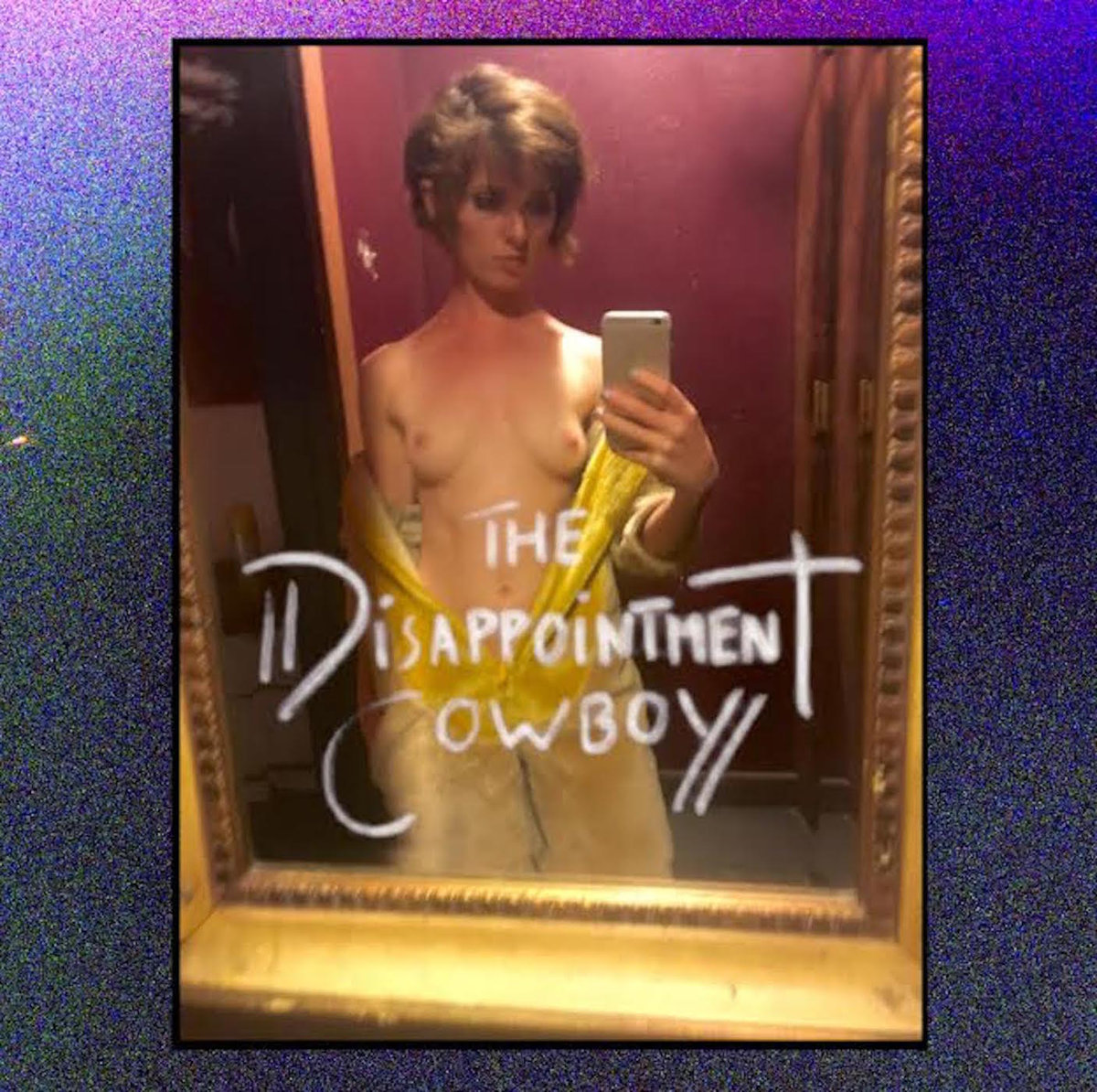
Liya Shapiro’s “Another Woman” is raw, theatrical, and deeply personal, exploring the lasting impact of one-sided love and the complicated ties between romance and self-worth.
 follow our Today’s Song(s) playlist


Stream: “Another Woman” – Liya Shapiro
Liya Shapiro writes about real and raw human experiences that most people try to avoid.
Building a world around emotional honesty, her music touches on themes ranging from longing, shame and uncertainty, and everything in between. The London-based artist perfectly balances her visual storytelling with exposing confessionals, which is evident in her latest single, “Another Woman.”

I don’t love you anymore, not at all
But why does it still hurt
somewhere deep in my heart
When I see you embraced by another
When I see your lips kissed by another
When I think of her touching your hair
I can’t deal with the fact that she’s there
Hey, I have to admit
That it hurts to know
That there is another woman
Another woman kissing your lips
Another woman tracing your hips
Another woman sleeping in your bed
Independently released March 27, the track finds Shapiro at her most direct, navigating the complicated aftershock of unrequited love and the way it can distort how you feel about yourself, even long after the feelings themselves have faded.
However, “Another Woman” is more than just a song about one-sided love. With its sweeping chamber-rock textures and deeply personal core, the track hints at the broader arc of Shapiro’s upcoming EP, one shaped by endings, reckoning, and renewal. Speaking with Atwood Magazine, she reflects on the experiences behind the song, the evolution of her writing, and the growing freedom that comes with seeing herself more clearly.
— —
:: stream/purchase Another Woman here ::
:: connect with Liya Shapiro here ::
— —

A CONVERSATION WITH LIYA SHAPIRO

Atwood Magazine: With the song focusing around unrequited love, do you remember when you first became aware that your self-worth was being affected by that kind of one-sided love?
Liya Shapiro: This is something that’s been with me for as long as I can remember. I’m 29 and I’ve never been in a relationship, so the older I get, the more it seems to weigh on me. It started early with crushes in my teenage years that ended badly, love interests who would openly mock me, sometimes to my face, sometimes through mutual friends. Watching people around me find relationships while I didn’t made me feel like I wasn’t enough, like I wasn’t deserving of love or simple romantic attraction. That fed into eating disorders that only cemented the association between my self-worth and my non-existent love life. I’m more self-aware about it now, but I can’t fully shake it. I know rationally that it doesn’t define me, but knowing that and feeling it are two very different things.
Has this song changed how you see that whole experience now?
Liya Shapiro: I’m not sure it changed anything in a profound way, it’s more of a closing chapter than a revelation. This is the last song I’ve written about that person, and right now I feel nothing towards them, which has been true for a long time. What’s shifted is that singing it feels liberating. I made something beautiful out of that pain, something I’m genuinely proud of, and that does something for my sense of self-worth in a way the experience itself never could.

Your background in art, fashion and anthropology all feed into your work. When you’re creating a song like “Another Woman,” which of those influences feels most present?
Liya Shapiro: Honestly, this song is a bit of an outlier, it’s unusually direct, no metaphors, no allusions, almost like a notes app entry set to music. The art and fashion side came through more in the visual world around it, the accompanying photos, the use of red, the overall aesthetic. People have connected with that on Instagram in a way that feels really intentional. More broadly though, when I write, I tend to be very referential, and my future releases will make that much clearer. And anthropology for me is less of a direct influence and more of a lens. I like to look at my own music from a socio-anthropological angle, asking how it fits within the human condition. The concept of ritual is a big one in anthropology, and I think Another Woman functions as one – a symbolic rite of letting go. We surround ourselves with rituals in daily life without even noticing, and turning that anthropological brain on makes the mundane suddenly fascinating. This song is no different.
“Another Woman” leans into a more chamber rock sound. Was that something you always heard for it?
Liya Shapiro: I’ve always known rock is the space I want to inhabit, even when I was still figuring out exactly which corner of it. Initially I saw this as a purely alt rock song, I was heavily inspired by Lana Del Rey’s Ultraviolence (the album) when writing it. Chamber rock is the direction I’ve chosen going forward, but I thought this one would stay in alt rock territory. I’d always dreamed of it having violins, I just didn’t think it was manageable without pushing the release date back. Then, with a stroke of luck, the producer I’m working with on the EP, who is also a violinist, found the time and inspiration to record and layer them onto the existing mix. It came together in the best possible way. That chamber rock element elevated everything, made it sound more visceral, more gut-wrenching. I couldn’t be happier with how it turned out.

If you had to describe the sound of this track in three words, what would they be?
Liya Shapiro: Cinematic, gut-wrenching, transcendent.
“Another Woman” is from your upcoming EP which is said to explore both closure and new beginnings. At what point did you realise you weren’t just writing about the past, but also documenting a shift in yourself?
Liya Shapiro: It came out of nowhere when I decided on the EP title. The duality in “Another Woman” suddenly hit me, this record is a rite of passage. It marks my transition from being someone defined by unrequited love and all the weight that came with it, to someone free of it and ready to move forward. The EP closes that chapter, and I’m already recording something completely different starting this May. The song that perhaps best captures that shift within the EP is actually “Hold Me Tight,” because part of it was written while I was still in the thick of that unrequited love, while the chorus came years later, when I was already past it. You can hear both versions of me in the same song.
You describe becoming “another woman” as part of that journey. What does that version of yourself understand now that you didn’t before?
Liya Shapiro: I haven’t fully untangled my sense of self-worth from my romantic history, that’s still a work in progress, honestly. But I’m much more self-aware about it now, I don’t want those experiences to define me anymore. I have so much more to say, some of it is a deeper, more unflinching look at my relationship with my own story and some of it has nothing to do with any of this at all. That freedom feels enormous.
Looking back at your previous releases “Mirror” and “Burning Bridges,” how do you feel your songwriting and also your relationship with vulnerability has evolved?
Liya Shapiro: I’ve always been vulnerable in my writing, but the way I express it has shifted. “Mirror” was part of the same story, written about the same experience, but obscured – lots of imagery, metaphors, things I wished were true rather than things that were. Starting with “Burning Bridges,” I began calling things what they actually are, using direct, unflinching language rather than hiding behind metaphor. That’s a more exposed way to write, and it’s the direction I’ve kept going in, though I am resorting to metaphoric language in my newer work.

Apart from the upcoming EP, what else is next for Liya Shapiro?
Liya Shapiro: I’m already starting work on my next EP this May, before “Another Woman” even comes out. I’m currently polishing the material, experimenting with sounds, rewriting before we go into production. Musically it’s going to be more ambitious: lots of harmonic experimentation, influences from Jewish folk music traditions, occasionally Bondian sonically and deeply chamber rock. I want it to balance explosive moments like the outro of “Another Woman” with softer, more orchestral arrangements. It feels like the most fully realised version of where I’m going.
— —
:: stream/purchase Another Woman here ::
:: connect with Liya Shapiro here ::
— —
Stream: “Another Woman” – Liya Shapiro
— — — —
Connect to Liya Shapiro on
Facebook, Web, TikTok, Instagram
Discover new music on Atwood Magazine
© Viktoria Vorobeva
 © Viktoria Vorobeva
:: Today’s Song(s) ::
follow our daily playlist on Spotify
:: Stream Liya Shapiro ::