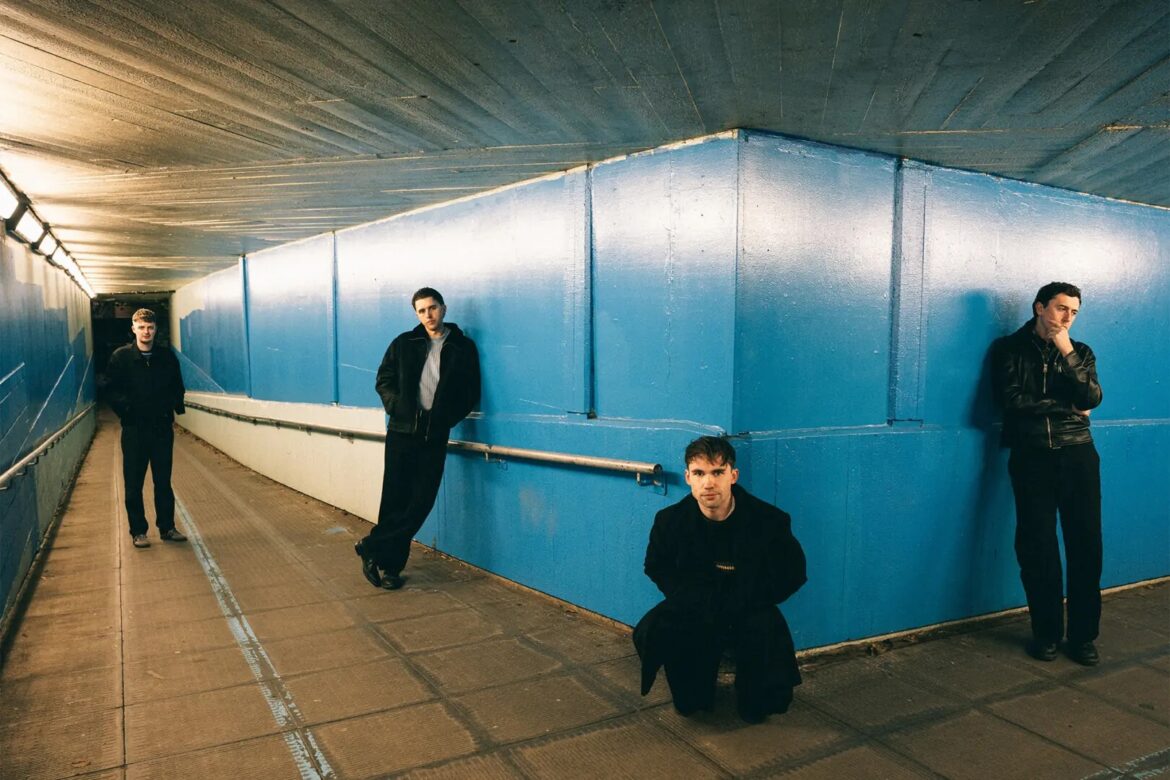
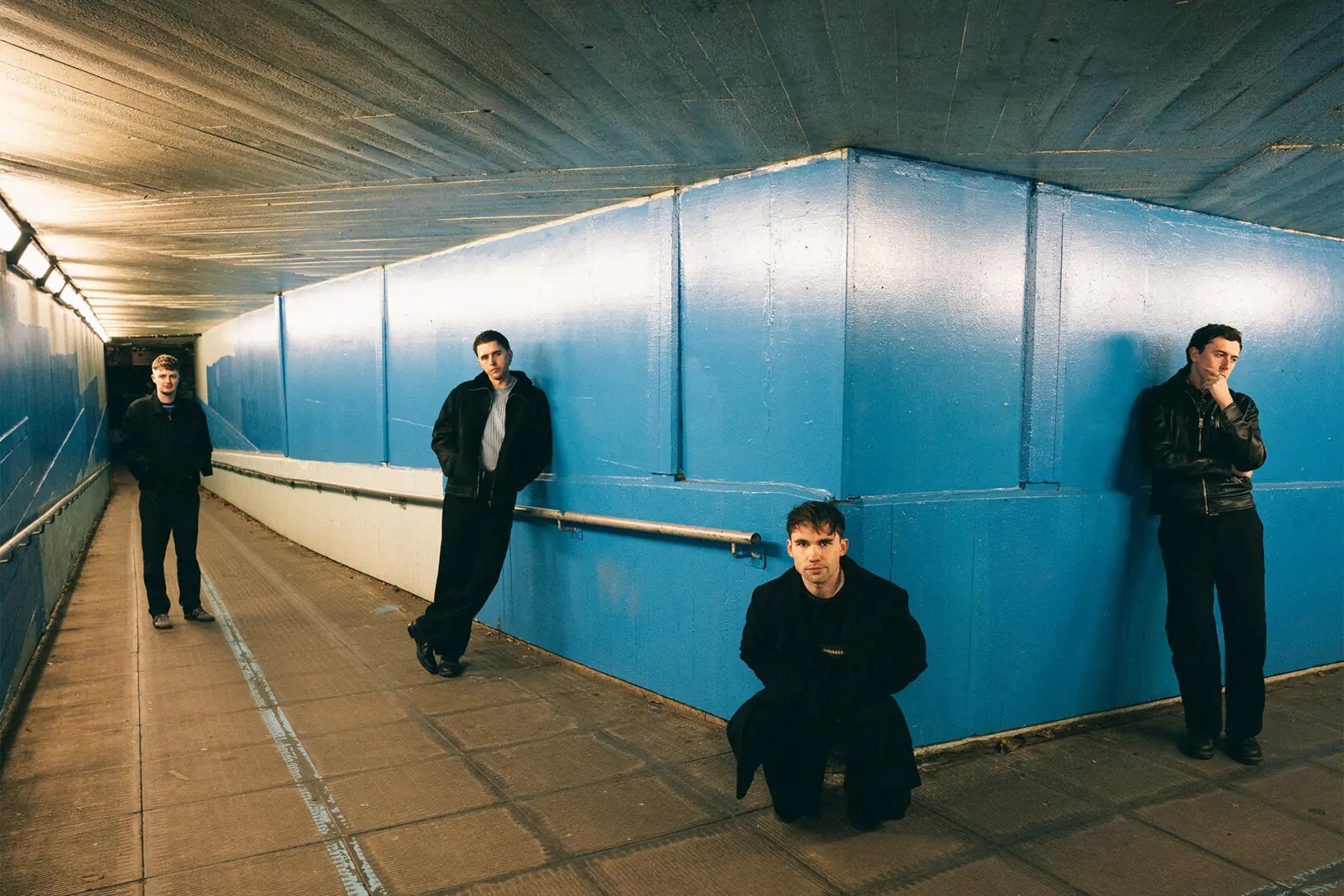
There’s a moment, just before everything tips, where the noise of the world hums instead of roars, and disconnection masquerades as peace. The Clockworks’ sophomore album ‘The Entertainment’ lives in that special space.
Stream: ‘The Entertainment’ – The Clockworks
There’s a particular kind of pressure that follows a debut like Exit Strategy: The expectation not just to replicate its immediacy, but to deepen it without losing the spark that made it feel urgent in the first place.
On The Entertainment, The Clockworks sidestep that trap with a record that feels less like a continuation and more like a recalibration. If their debut captured the chaotic thrill of four musicians finding their voice in real time, this follow-up documents what happens when that voice turns inward and starts asking harder questions.
From its opening moments, The Entertainment announces its intent. “How To Exist” arrives in a rush of handclaps and nervy piano, teetering on the edge of collapse. James McGregor’s vocal feels less performed than exhaled, fragmented, breathless, almost indecipherable at points, before crystallising into the album’s central thesis: “I’m looking for something to believe in.” It’s a blunt line, but it lands with the weight of accumulated noise, as though pulled from the wreckage of everything that came before it. The tension between surface-level optimism and a deeper, more pervasive unease becomes the album’s defining dynamic.
Where Exit Strategy thrived on immediacy, “four lads making a noise in a room,” as the band themselves put it, The Entertainment stretches outward, embracing atmosphere, texture, and space.
Recorded over months and produced by guitarist Sean Connelly, the album adopts a deliberately fragmented process: each member tracks parts in isolation before assembling them into a cohesive whole. The result is a subtle but persistent sense of friction. Songs don’t quite settle; they hum with the energy of components that were never meant to fully align. It’s a conceptual choice that mirrors the album’s thematic concerns, disconnection, alienation, and the strange dissonance of contemporary life.
That sense of unease threads through “Best Days,” which disguises itself as an anthem before revealing its hollow core. Its refrain, “These are the best days of my life,” lands not as a celebration but as self-deception, a mantra repeated often enough to almost convince. Similarly, “Getaway Car” moves with a grinding inevitability, its heavy bass line suggesting motion without escape, as though the destination has already been predetermined.
If the album’s emotional palette leans toward introspection, its aesthetic scope is notably expansive.
The Clockworks draw heavily from cinematic reference points, Blade Runner, Drive, and Fellini’s La Dolce Vita, not merely as stylistic nods, but as structural influences. “La Dolce Vita” itself pulses with theatricality, opening on a surreal, decaying image that gestures toward the collapse of traditional values. McGregor’s lyrics remain rooted in the everyday, but they’re refracted through a wider cultural lens, one that considers not just individual experience, but the systems that shape it.
This interplay between the personal and the societal is where The Entertainment finds its sharpest edge. “Well Well Wellness” takes aim at the commodification of self-care, skewering an industry that sells connection while perpetuating isolation. Its critique is pointed but never didactic; McGregor’s writing retains a conversational immediacy, allowing the absurdity of its subject to surface naturally. There’s a similar balance at play in “The Magnificent Seven,” which recontextualises its title into a commentary on corporate dominance. The track’s restless energy, part post-punk urgency, part electronic pulse, mirrors the overwhelming scale of its subject, while its central metaphor cleverly collapses past and present into a single, uneasy continuum.
For all its thematic weight, the album never loses sight of melody.
“Through The Looking Glass” offers a moment of lift, its buoyant rhythm providing a temporary reprieve from the surrounding tension. “The Double” begins in relative fragility before expanding into something more widescreen, its gradual build suggesting not resolution, but a kind of reluctant acceptance. Even at their most expansive, The Clockworks remain disciplined, resisting the urge to overindulge. Each arrangement feels considered, serving the song rather than overshadowing it.
At the centre of it all is McGregor’s songwriting, which has evolved noticeably since the band’s debut. His lyrics retain their observational core, but they’re now tempered by a more reflective sensibility. On “The Actor,” he turns inward, grappling with existential drift in lines that feel both deeply personal and broadly relatable: “Life waves as it passes me by.” It’s a sentiment that could easily tip into cliché, but here it’s delivered with a quiet sincerity that anchors the album’s more abstract ideas.
The Entertainment occupies a space that feels both familiar and newly defined with their exciting soundscapes.
There are echoes of post-punk, flashes of synth-pop, and a cinematic sensibility that occasionally recalls the grandeur of film scores. Yet these influences are never allowed to dominate. Instead, they function as a framework within which the band can explore their own identity. The production, deliberately restrained, avoids the polish that might dilute the album’s emotional impact. There’s a rawness here, not in the sense of unfinished ideas, but in the willingness to leave imperfections intact.
That ethos extends to the album’s closing moments. The title track, recorded live in a single take, captures the band in their most unfiltered state. Background noise, minor imperfections, and details that might typically be edited out are left in, reinforcing the album’s underlying message about authenticity and connection. It’s a subtle but effective gesture, one that ties together the record’s conceptual threads without overstating them.
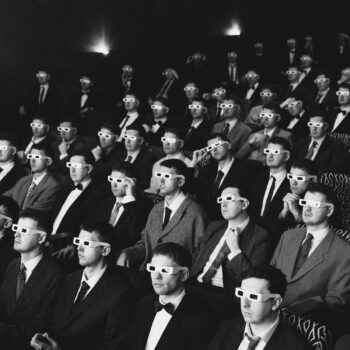
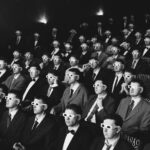
Even the artwork reflects this duality. Referencing a vintage image of a cinema audience experiencing early 3D technology, it highlights the tension between spectacle and isolation, between shared experience and individual detachment. It’s a fitting visual counterpart to an album that consistently questions the nature of modern “entertainment,” and what it means to engage with the world beyond the screen.
At 43 minutes, The Entertainment is concise but expansive, a record that rewards repeated listens without demanding them.
Its shifts in tone and texture unfold gradually, revealing new details with each pass. More importantly, it marks a clear step forward for The Clockworks, not just in terms of sound, but in their willingness to interrogate both themselves and their surroundings.
If Exit Strategy was about capturing a moment, The Entertainment is about understanding what comes after. It’s heavier, more deliberate, and occasionally more challenging, but also more rewarding. In stepping away from the immediacy of their debut, The Clockworks have created something that lingers, an album that doesn’t just reflect modern life, but actively engages with its contradictions. In doing so, they’ve made a compelling case for their evolution, not as a departure from what they were, but as a natural progression toward what they might become.
— —
:: stream/purchase The Entertainment here ::
:: connect with The Clockworks here ::
— — — —
Connect to The Clockworks on
Facebook, 𝕏, TikTok, Instagram
Discover new music on Atwood Magazine
© Nicholas O'Donnell
 © Nicholas O'Donnell
The Entertainment
an album by The Clockworks