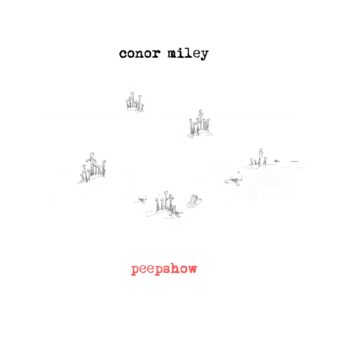
Irish artist Conor Miley detonates tribalism, digital spectacle, and the corrosive pull of online outrage on “Peepshow,” a blistering indie rock eruption that channels collective fury into a raw, theatrical, and unmistakably human performance. Captured live with full-band urgency and one-take intensity, the Wexford-based singer/songwriter transforms a fractured cultural moment into a visceral statement of purpose – and, in the process, cements his place as a bold, unflinching voice of his generation with the nerve to say the quiet part aloud and the firepower to make it impossible to ignore.
for fans of Arctic Monkeys, Fontaines D.C., Cage the Elephant
Stream: “Peepshow” – Conor Miley
Well, first there came the father, and with the father came the sin, and from that beginning every sin’s been wrangling to get in.
* * *
A bassline lurches out of the dark, dragging the whole room toward a fight.
Pressure rises by degrees, thickening the air until release feels less like a choice than a certainty. A voice cuts through with sinister force, not so much narrating the tension as conducting it, while instruments surge forward around him with the fury of a scene about to unravel. What begins as a slow-burn unease quickly takes on a combustible momentum – a volatile, full-body charge as reason gives way to instinct, identity hardens into armor, and collective outrage starts feeding on itself.
Conor Miley’s “Peepshow” thrives on that edge: The moment when public discourse turns feral, when conviction becomes performance, when outrage stops seeking truth and starts craving an audience. Roaring with live-wire guitars, pounding drums, and a vocal that sounds half-preacher, half-ringmaster, “Peepshow” is a feverish indie rock reckoning with tribalism, spectacle, and the human hunger to belong – even when belonging means losing ourselves in the crowd.
Well, first there came the father,
And with the father came the sin,
And from that beginning
every sin’s been wrangling to get in.
Now they drain all sense of reason
into an algorithmic stew,
With a belly-aching,
ankle-shaking slight of ridicule.
But, the world keeps spinning,
As the words come stinging, slinging by,
And the boys keep singing,
Flinging joy up to the sky.
Atwood Magazine is proud to be premiering “Peepshow,” the blistering new single and live studio video from Irish songwriter, singer, multi-instrumentalist, and composer Conor Miley. Out everywhere June 3rd, “Peepshow” follows this past March’s “Raise Your Red Flag” as the second entry in Miley’s two-part live studio series – a project built around immediacy, physicality, and the electric friction of musicians playing together in real time.
Originally from Dublin and now based in Wexford, Miley first emerged through the Irish music scene as a founding member of We Raise Bears before stepping fully into his solo voice with 2023’s Thousand Yard Stare, an ambitious, emotionally charged debut that fused folk-rooted storytelling with atmospheric depth and expansive arrangements. With “Peepshow,” he pushes further into a rawer, more explosive space, trading layered studio polish for collective force as he channels the chaos of online discourse into a live-wire performance that feels as urgent as it is uncontainable.
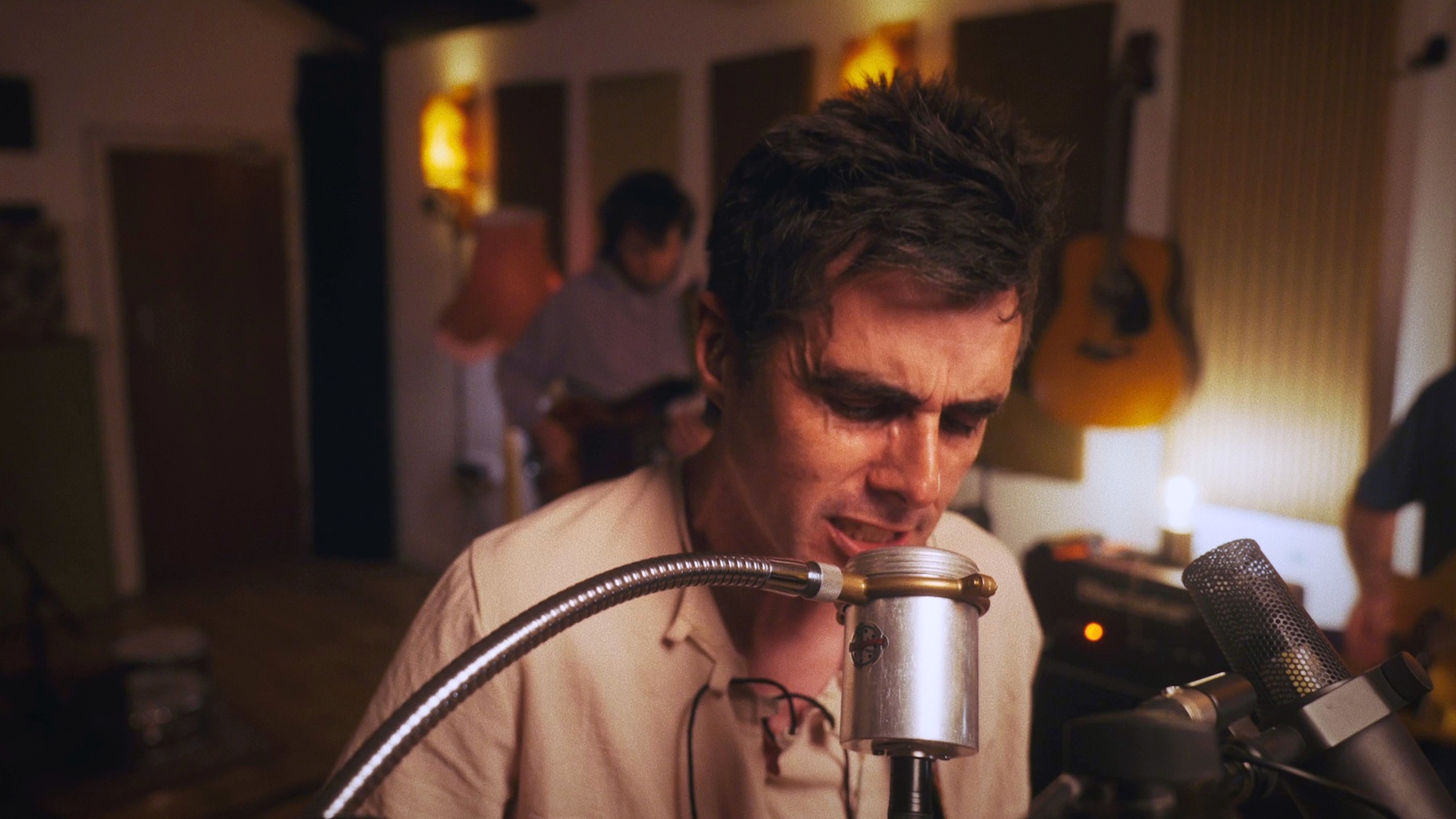
Speaking to Atwood Magazine, Miley explains how “Peepshow” took shape through an intense process of lyrical refinement, with its musical architecture built to mirror the very escalation it describes.
“‘Peepshow’ was written over a number of weeks and involved constant drafting and redrafting of the lyrics,” he shares. “Using the internet – and X in particular – as a source of research, the song explores political polarisation and the tribal instinct to align with groups, often abandoning reason in favour of comfort, identity and collective validation. These tensions culminate in a final crescendo that depicts a bar fight between opposing factions.”
“Musically, the song was built around a dirgy bass figure, gradually increasing in intensity before breaking down and rebuilding toward its final climax. The arrangement was shaped to mirror the emotional escalation within the lyrics, allowing the tension to accumulate and release in waves.”
“As with ‘Raise Your Red Flag,’ the decision to record and film ‘Peepshow’ live was a deliberate one. It was intended to foreground the power and humanness of musicians performing together in real time, and to document that physical, human connection at a moment when AI-generated music is becoming increasingly prevalent.”
Miley’s statement sharpens the stakes without dulling the song’s impact. “Peepshow” may have been built from drafts, edits, research, and intention, but it hits with the force of a thing escaping containment. Its live setting matters: The track doesn’t feel arranged so much as unleashed, each moving part caught in real time as pressure mounts, tempers flare, and the band barrels deeper into the mess Miley is conjuring.
See, they keep seeing illusions,
It’s illusionary times,
Where each fantasy is bad poetry
laid out in perfect rhyme.
It’s the edict’s endless virtue,
It’s the dictum’s grumbling verse
that echoes ‘round the battle grounds,
On the new salvation’s birth.
But, the world keeps turning,
Their bellies churning for a fight,
Here’s the boys returning,
Hurling songs into the night.
That mess is contemporary, but its roots run ancient.
“Peepshow” stares down the absurd theater of polarization – the way people gather around outrage, dress up instinct as righteousness, and mistake belonging for belief. Miley’s lyric sheet reads like a fever dream of inherited sin, online fantasy, mob ritual, and pub-floor chaos, yet the performance keeps every image grounded in sweat and human force. He doesn’t write about division from a safe distance; he throws himself into the churn, turning public discourse into a boiling cauldron of emotion where anger, ridicule, fear, and pleasure all bubble together until the whole thing spills over.
From the opening line – “Well, first there came the father, and with the father came the sin” – Miley frames the track in almost mythic terms, treating tribalism not as a new invention, but as an old human impulse wearing modern clothes. Soon enough, that ancient hunger gets fed through screens and systems: “Now they drain all sense of reason into an algorithmic stew,” he sings, one of the song’s most vivid and damning images. It’s funny, grotesque, and unsettling all at once – a perfect encapsulation of how discourse curdles when every thought is flattened into content, every grievance served back hotter than before.
The chorus erupts like a sneer with its arms thrown wide: “It’s a real laugh, / It’s the modern way, / It’s a piaffe in a street melee, / It’s a rehash of an old ballet, / It’s a peepshow.” That word – peepshow – becomes the song’s cruel little keyhole, inviting us to look at the spectacle while implicating us for watching. Miley finds the grotesque comedy in the performance of conflict: the choreography of outrage, the vanity of public virtue, the way an argument can become entertainment once enough people gather around to see who swings first.
So, I strip myself of glory,
Leave all splendour to the dead,
So, the rabble raff come to my gaff,
They’re calling for my head,
They’re eyeballing my doorbell,
They’re pillaging my shed!
It’s a real laugh,
It’s the modern way,
It’s a piaffe in a street melee,
It’s a rehash of an old ballet,
It’s a peepshow.
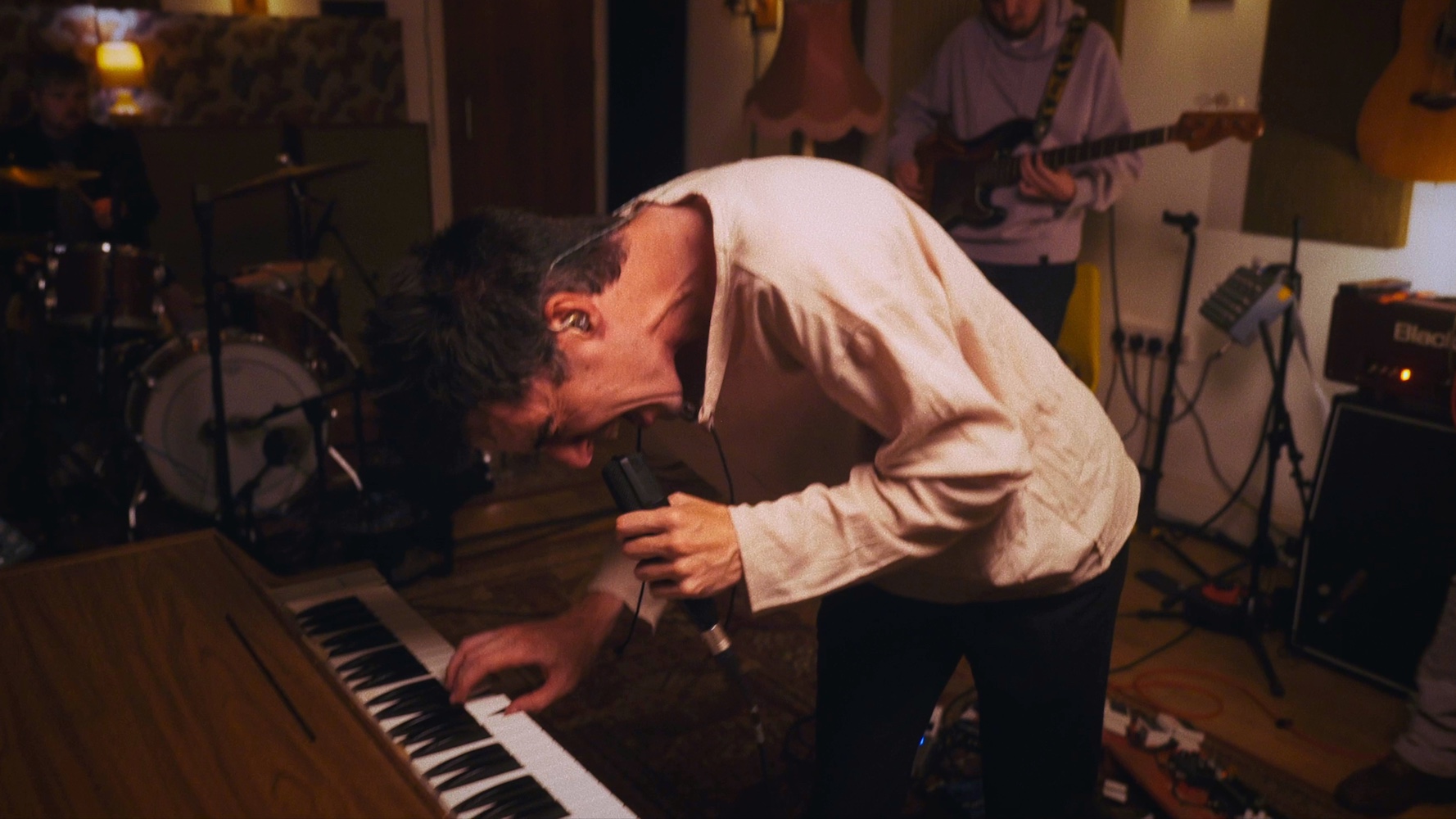
For Miley, the absurdity is inseparable from the point.
“Peepshow” doesn’t just rage against online conflict; it laughs at the empty theater of it, exposing the strange pleasure people take in watching old human instincts play out through new machines.
“It is about the utter ridiculousness and pointlessness of online arguments and debates,” he shares. “Nobody ever changes their mind. People need personal experience to change how they view things, and that experience needs to happen in the real world. Our phones and computers are really just portals into a kind of fantasy world.”
“This chorus is taking the mickey out of it all. The peepshow is the silly spectacle of online arguments. The piaffe and the ballet represent the performative nature of it all. And the line about ‘a rehash of an old ballet’ is really saying that none of this is particularly new. Technology changes, but human tribalism and group behaviour have probably looked very similar for thousands of years.”
Now the winds of change are squealing,
The waves are pirouettes,
And a bitter breeze blows
through the trees like a weeping clarinet.
So, some have huddled closely
in amongst the mountain pine,
Where a fool gets branded,
reprimanded and cast out to the lions.
That old ballet keeps accelerating. The song’s final stretch doesn’t just describe a bar fight; it feels possessed by one, with Miley steering the scene through haunted alleyways, sub-bass groans, divine racket, drunken bravado, and collapsing dialogue. The song’s raw fervor comes from that refusal to stay tidy. It grows louder, stranger, and more combustible as it goes, until the political, the personal, the mythological, and the absurd all crash into one another in a cataclysmic roar. What begins as a grim procession becomes a communal detonation – a portrait of a world so addicted to its own friction that even collapse starts to look like release.
But, the world’s rotating,
The moon’s awakening
to see the boys debating,
Migrating from its apogee.
So, they howl out in its honour,
And dance in the lunar glow,
They’re rounding up the band,
Set foot and let the people know
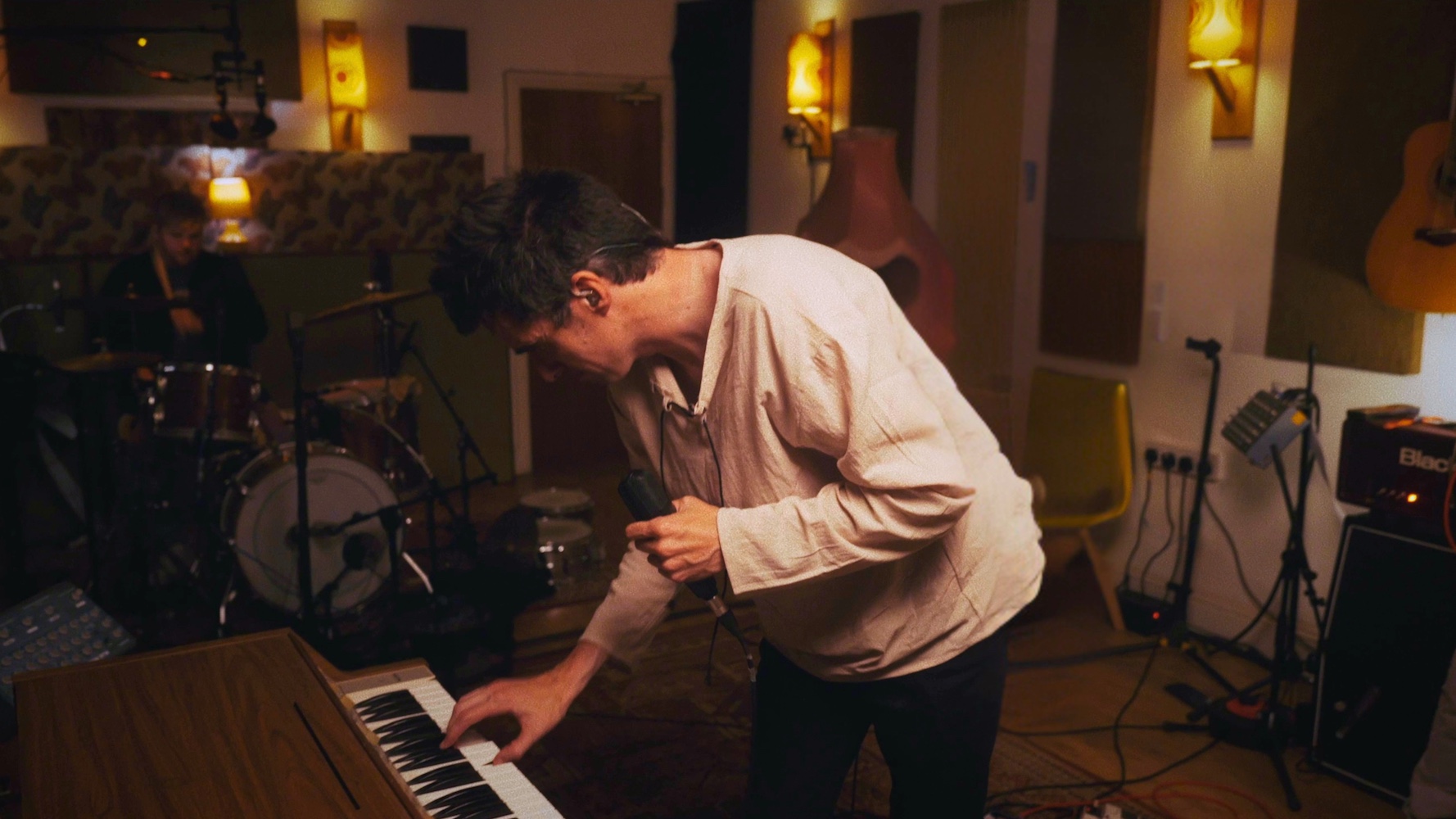
For Miley, all that intensity is the point: “Peepshow” is meant to seize the listener and carry them all the way through its unruly, escalating world.
“When I listen to a song that really hits me, it can transport me somewhere else entirely,” he says. “I’d love anyone who listens to ‘Peepshow,’ all five minutes and twenty-odd seconds of it, to have that same experience, to really sit with it and let it take hold of them. From start to finish, the song is designed not to really let go. I’d hope people get lost in the lyrics and allow themselves to be carried through it. From a personal point of view, I’ve really enjoyed the power that comes from a more minimal approach – just drums, bass, guitar and one vocal for most of the track. My debut album was much more layered and dense, so this shift towards restraint and focus is something I definitely want to carry forward.”
It’s a real laugh,
It’s the modern way,
It’s a piaffe in a street melee,
It’s a rehash of an old ballet,
It’s a peepshow.
We say: “One, two, hit it
when they break through.”
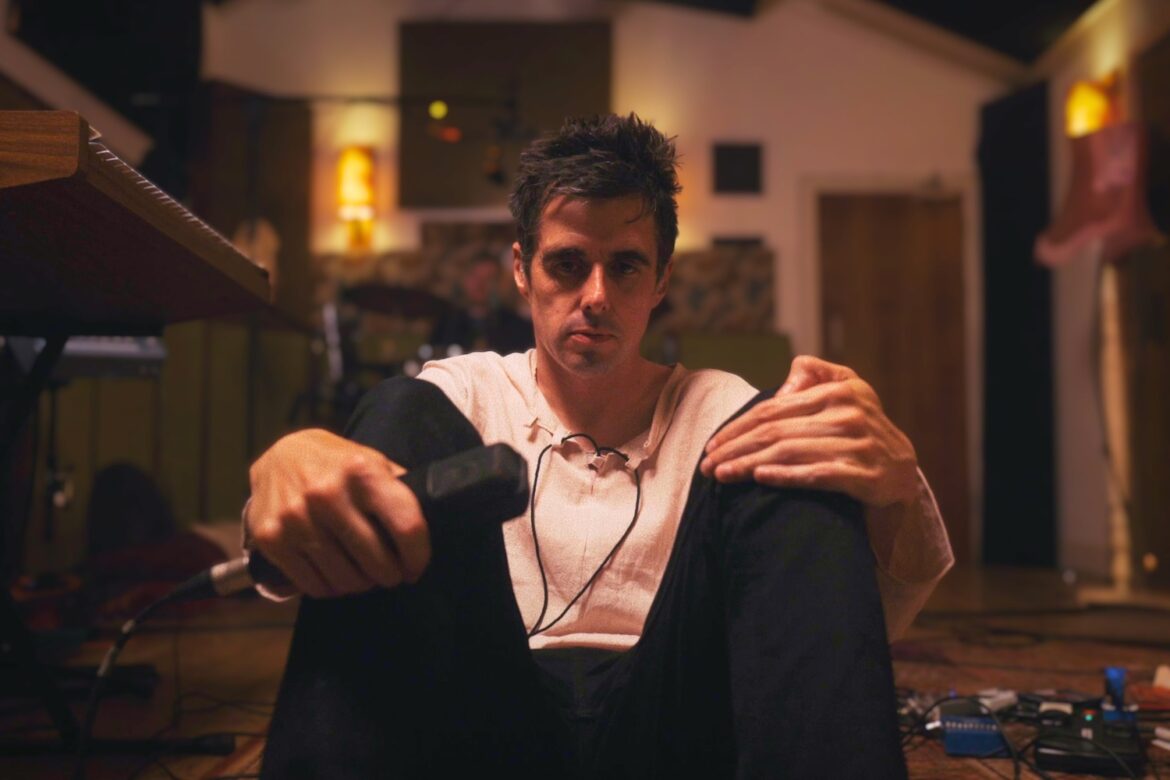
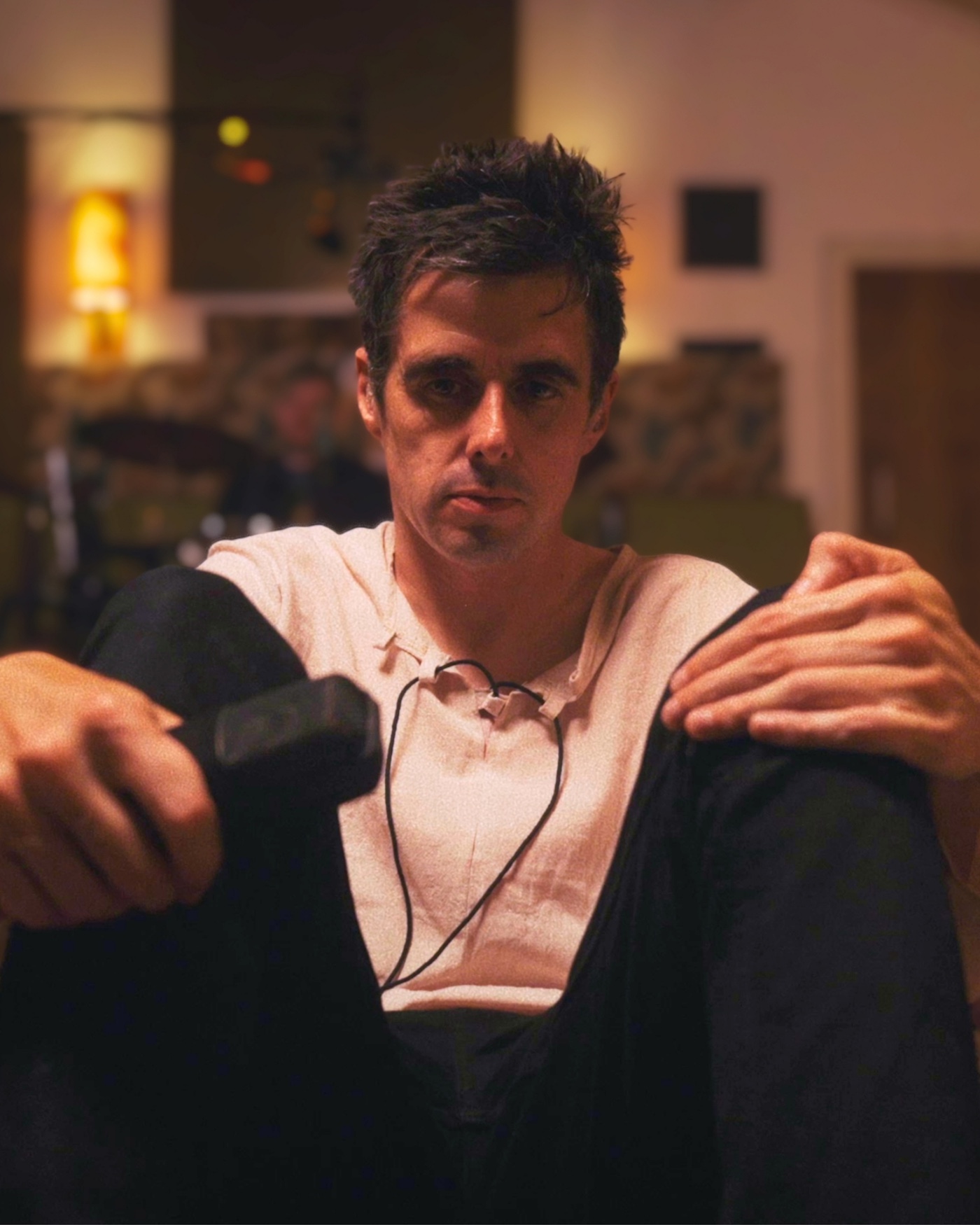
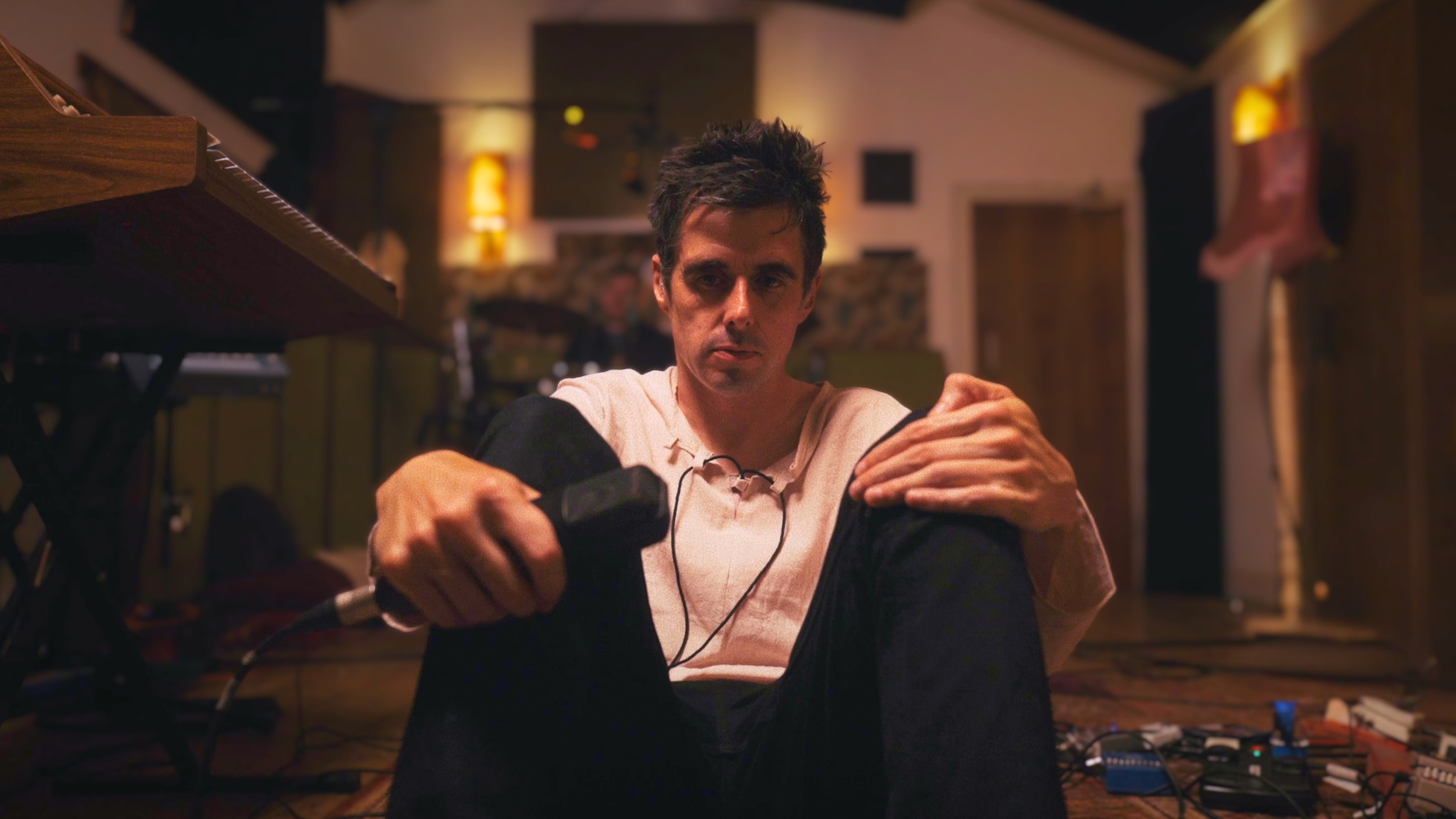
The live video makes that intent impossible to miss. Stripped of narrative framing or visual spectacle, “Peepshow” becomes a document of bodies in motion: Miley gripping the microphone, the band locked into the song’s rising pulse, every expression and physical gesture caught in the same storm the lyrics describe. It’s intimate because there’s nowhere to hide, and it’s raging because nothing feels softened for the camera. The performance doesn’t decorate the song; it exposes the sweat, strain, and human electricity inside it.
That rawness brings “Peepshow” home. Watching Miley sing without an instrument for much of the performance only heightens the confrontation – his voice and body become the center of gravity, pulling the track’s chaos into a single, searing presence. The one-take format gives the video a naked immediacy, as if we’re watching the song hold itself together in real time while threatening, at every turn, to come apart. It’s simple, but never small; real, but never restrained. The result is a visual that humanizes the music while intensifying its impact tenfold.
Miley says that sense of exposure was central to the video’s creation: “The video was filmed in one take by Michael-David McKernan, with no edits,” he smiles. “He also shot three videos for my debut album in 2023, which I loved – particularly ‘Thousand Yard Stare.’ Recording live and in one take was a deliberate choice to emphasise the human interaction at the centre of the performance. It’s quite unusual for me to sing without playing an instrument, so it was a slightly different experience. I play organ in the choruses, but otherwise it’s very much just a straight performance with a microphone in hand.”
“I wasn’t really in my comfort zone, which was part of the point. When I listen to music online, I often prefer watching a live performance of a song rather than the studio version – there’s a different kind of energy and tension to it. I wanted to capture that feeling for this release.”
So, I gather up the fallen
at the mouth of the abyss,
The divils, dopes, the misanthropes,
Yeah, we’re going on the piss.
And so, we steer a course for pleasure
down some haunted alleyway,
When the rasping groan of sub bass
tones calls like Parthenope.
Now, the holy racket draws us
into the bosom of a bar,
Where Azrael picks out a spell
upon the neck of her guitar.
And when I raise my hand to order,
A man says “Bit of hush”
So, I watch her spit some
f***ing shit ‘bout shaving off her bush.
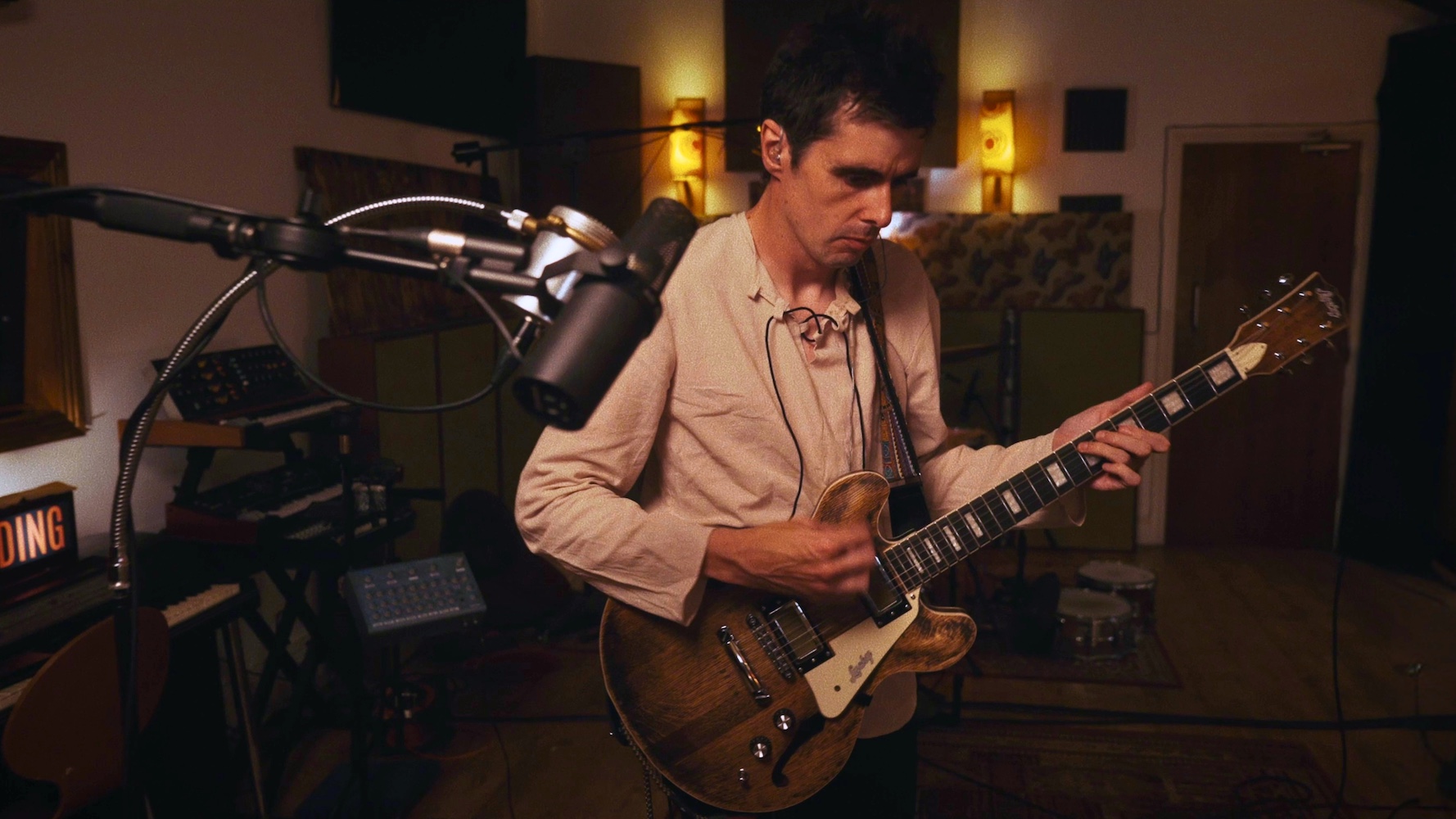
That is what gives “Peepshow” its bite: It meets a fractured cultural moment with flesh-and-blood combustion.
In an age when fury can be flattened into feeds, factions, and disposable content, Miley answers with a performance you can feel in the ribs – messy, muscular, alive, and bristling with consequence. The track matters now because it refuses to leave the spectacle at a distance; it pulls us inside the frenzy, then asks what we become when watching starts to feel like participation.
By the end, that opening bassline feels like a warning still echoing through the room. The fight may be theatrical, absurd, and ugly, but Miley makes it painfully human – a reminder that behind every public collision is a private hunger to be seen, heard, validated, and claimed. “Peepshow” doesn’t offer escape from the chaos. It throws the door open, turns the volume up, and lets the whole thing roar.
The boys are getting kind of lairy,
Yeah, It’s getting out of hand,
My percussionist takes out his sticks,
He’s climbing up the stand!
And with an healthy dose of
porter and a shot of dopamine,
He thumps the kit like Buddy Rich,
Crying “F*** the IFP”.
Oh dear! That’s got the patrons swinging,
It’s got them scratching in the fog.
And the infantry comes barging in,
As some hopeless dialogue
swings between the gods of virtue
like a creaking pendulum.
Stream “Peepshow” exclusively on Atwood Magazine, and read our full conversation with Miley below as he opens up about tribalism, AI-generated music, live performance, lyrical precision, and the unrelenting energy behind his latest release.
Conor Miley isn’t just an artist to watch – he’s a bold, daring voice of his generation with the conviction to say the quiet part aloud and the firepower to make it feel at once undeniable and impossible to ignore.
And in the mezzanine plays out
the scene of the rebel and his drum,
And in the mezzanine plays out
a scene from the War of ’21.
It’s a real laugh,
It’s the modern way,
It’s a piaffe in a street melee,
It’s a rehash of an old ballet,
It’s a peepshow.
We say: “One, two, hit it
when they break through.”
— —
:: stream/purchase Peepshow here ::
:: connect with Conor Miley here ::
— —
Stream: “Peepshow” – Conor Miley
A CONVERSATION WITH CONOR MILEY

Atwood Magazine: Conor, for those who are just discovering you today through this writeup, what do you want them to know about you and your music?
Conor Miley: I’m an Irish songwriter and multi-instrumentalist, and I’ve been releasing music under my own name for the past few years after spending a long time playing in different bands, including We Raise Bears, which was largely built around my songs and writing. I spend a long time writing, rewriting and developing lyrics for each song – it’s just become part of my process. The music itself is always evolving. A few years ago it probably would have fallen more into indie folk, but there are electronic influences too, and the more recent material has become much more aggressive and rock-based.
I’m mostly trying to make work that feels emotionally and physically present rather than overly polished or detached.
Who are some of your musical north stars, and what are you most excited about the music you're making today?
Conor Miley: There are many. Radiohead are probably top of the list. I actually flew to Copenhagen to see them recently, only for the gig to be cancelled a few hours before doors opened because Thom Yorke had a throat infection. I’ve always gravitated towards lyrical songwriters – Nick Cave, Conor O’Brien from Villagers, and Guy Garvey from Elbow are big ones for me. Dramatic music has always drawn me in, regardless of genre. I love Gogo Penguin for example. Piano being my main instrument, I love what they do with a setup of piano, bass and drums. That rhythmic intensity is something that I am putting into my new music. My debut solo album, Thousand Yard Stare, contained songs that were very layered and that built drama using those layers. I’m now more interested in doing a lot with a little – reducing the number of elements and really zoning in on one musical idea as it gradually develops. I’m currently recording a new track built almost entirely around a seven-note synth arpeggiated refrain.
Today we're premiering your latest single (and music video) “Peepshow,” a song that seems to thrive in a space of unadulterated tension. What’s the story behind this song?
Conor Miley: The blueprint for the song originally came on an acoustic guitar. I had the basic bass riff first and then gradually built the structure and chorus around it. The lyrics took weeks to finish – a lot of writing, rewriting and refining things until the language felt precise enough. The song is really about tribalism and the atmosphere of constant outrage that seems to dominate online spaces now. Social media platforms, in my opinion, have had an incredibly corrosive effect on public discourse. The long crescendo at the end of the song uses the allegory of a bar fight to represent that dynamic – the escalation, the group mentality, the viciousness, and the strange spectacle of people turning conflict into entertainment, the draw of an old-fashioned witch hunt. A lot of the tension in the music came from trying to reflect that feeling emotionally rather than simply describing it literally.
You've mentioned this song is part of a response to AI-generated music, and I'd love to hear you cook on this – what are your thoughts and feelings about AI in music?
Conor Miley: The decision to record the song live and film the performance was definitely informed by an awareness that there’s now been a huge flood of AI-generated music onto the internet, much of it increasingly difficult to distinguish from human-made music. Like most people, I have absolutely no interest in listening to purely AI-generated music. To me, any new technology should ideally solve a problem, and there wasn’t ever a shortage of music being made. Tens of thousands of songs were already being uploaded to streaming platforms every day before all of this arrived. That said, I’m not completely anti-AI as a tool. Elements of automation and machine-assisted production have existed in music technology for years already through plugins and software. It essentially comes down to a personal choice. I think there will inevitably be a huge rise in hybrid music where vocals and some instrumentation are human, but large parts of the arrangement are AI-generated, especially because independent musicians are under enormous financial pressure and hiring session players is expensive. This is not a path I think I would ever go down. I still want to play with other musicians. A huge part of what I love about music is the unpredictability of performance and the interaction that happens between people in a room together. That’s something I don’t think I’d ever want to replace.
“Well, first there came the father, and with the father came the sin, and from that beginning every sin’s been wrangling to get in,” you sing at the song’s start. Tell me about this entrance – why start the song this way, and what does this inherited sin represent to you?
Conor Miley: I have lived my whole life in Ireland. Throughout the 20th Century Ireland was effectively a theocracy, very much under the control of the Catholic Church. After the scandal of widespread child abuse Ireland has moved towards being a far more secular state. However, I think people will always look for something to believe in or belong to. The “father,” the “son,” and the idea of inherited sin are all deliberately religious images, but the song isn’t really about religion in a traditional sense. It’s more about the tribal instinct people seem to have – the need to align themselves completely with a group, whether political, cultural or ideological. I never understood the idea of inherent sin as a child – the Catholic faith seems to be very much built on it. It’s why Jesus died on the cross – to save mankind. It has become a little clearer as I’ve gotten older and I realised that even the people in power have as little an idea as the rest of us. Human beings seem to carry certain destructive instincts with them, particularly once group dynamics take over. So in the song, the “sin” isn’t really theological – it represents the darker side of collective human behaviour and the ease with which people can be drawn into outrage and conflict.
The chorus has this massive catharsis: “It’s a real laugh, it’s the modern way, it’s a piaffe in a street melee, it’s a rehash of an old ballet, it’s a peepshow.” What does the peepshow represent, in the context of this song?
Conor Miley: It is about the utter ridiculousness and pointlessness of online arguments and debates. Nobody ever changes their mind. People need personal experience to change how they view things, and that experience needs to happen in the real world. Our phones and computers are really just portals into a kind of fantasy world. This chorus is taking the mickey out of it all. The peepshow is the silly spectacle of online arguments. The piaffe and the ballet represent the performative nature of it all. And the line about “a rehash of an old ballet” is really saying that none of this is particularly new. Technology changes, but human tribalism and group behaviour have probably looked very similar for thousands of years.
I have to say, this song is lyrically stunning. My favorite line is probably from the first verse – “now they drain all sense of reason into an algorithmic stew.” Do you have any favorite lines in this track, or lyrics you’re particularly proud of?
Conor Miley: Thank you. I spent a lot of time on the lyrics, so I’m quite proud of them. One line I’m particularly fond of is: “Now the winds of change are squealing, The waves are pirouettes, And a bitter breeze blows through the trees like a weeping clarinet.” I really like the imagery in that section, especially the “weeping clarinet.” There are moments in the build-up towards the end of the song that I like as well: “And so, we steer a course for pleasure down some haunted alleyway, When the rasping groan of sub bass tones calls like Parthenope.” I tend to research imagery and characters quite a bit when I’m writing lyrics. Parthenope is a siren in Greek mythology. I like how it fits in as an image.
Tell me more about the music video - how do you feel this visual adds to the song’s experience?
Conor Miley: The video was filmed in one take by Michael-David McKernan, with no edits. He also shot three videos for my debut album in 2023, which I loved – particularly ‘Thousand Yard Stare’. Recording live and in one take was a deliberate choice to emphasise the human interaction at the centre of the performance. It’s quite unusual for me to sing without playing an instrument, so it was a slightly different experience. I play organ in the choruses, but otherwise it’s very much just a straight performance with a microphone in hand. I wasn’t really in my comfort zone, which was part of the point. When I listen to music online, I often prefer watching a live performance of a song rather than the studio version – there’s a different kind of energy and tension to it. I wanted to capture that feeling for this release.
What do you hope listeners take away from “Peepshow,” and what have you taken away from creating it and now putting it out?
Conor Miley: When I listen to a song that really hits me, it can transport me somewhere else entirely. I’d love anyone who listens to “Peepshow,” all five minutes and twenty-odd seconds of it, to have that same experience, to really sit with it and let it take hold of them. From start to finish, the song is designed not to really let go. I’d hope people get lost in the lyrics and allow themselves to be carried through it. From a personal point of view, I’ve really enjoyed the power that comes from a more minimal approach – just drums, bass, guitar and one vocal for most of the track. My debut album was much more layered and dense, so this shift towards restraint and focus is something I definitely want to carry forward.
In the spirit of paying it forward, who are you listening to these days that you would recommend to our readers?
Conor Miley: There are a lot of quality artists here in Ireland so I‘ll focus on these. Seamus Fogarty is great – I’m going to see him play here in a few months. I got both Aoife Nessa Frances’ records recently. She is well worth checking out. A band from the town I live in, Foot Squeaker, have just released their debut EP and it is worth a listen. Lisa O’Neill is always brilliant and Lankum are legends by now. There are plenty of others as well!
— —
:: stream/purchase Peepshow here ::
:: connect with Conor Miley here ::
— —
Stream: “Peepshow” – Conor Miley
— — — —
Connect to Conor Miley on
Facebook, 𝕏, Instagram
Discover new music on Atwood Magazine
 © Michael-David McKernan
art © Emma James
 © Michael-David McKernan
art © Emma James
© Michael-David McKernan
art © Emma James:: Stream Conor Miley ::