Every Friday, Atwood Magazine’s staff share what they’ve been listening to that week – a song, an album, an artist – whatever’s been having an impact on them, in the moment.
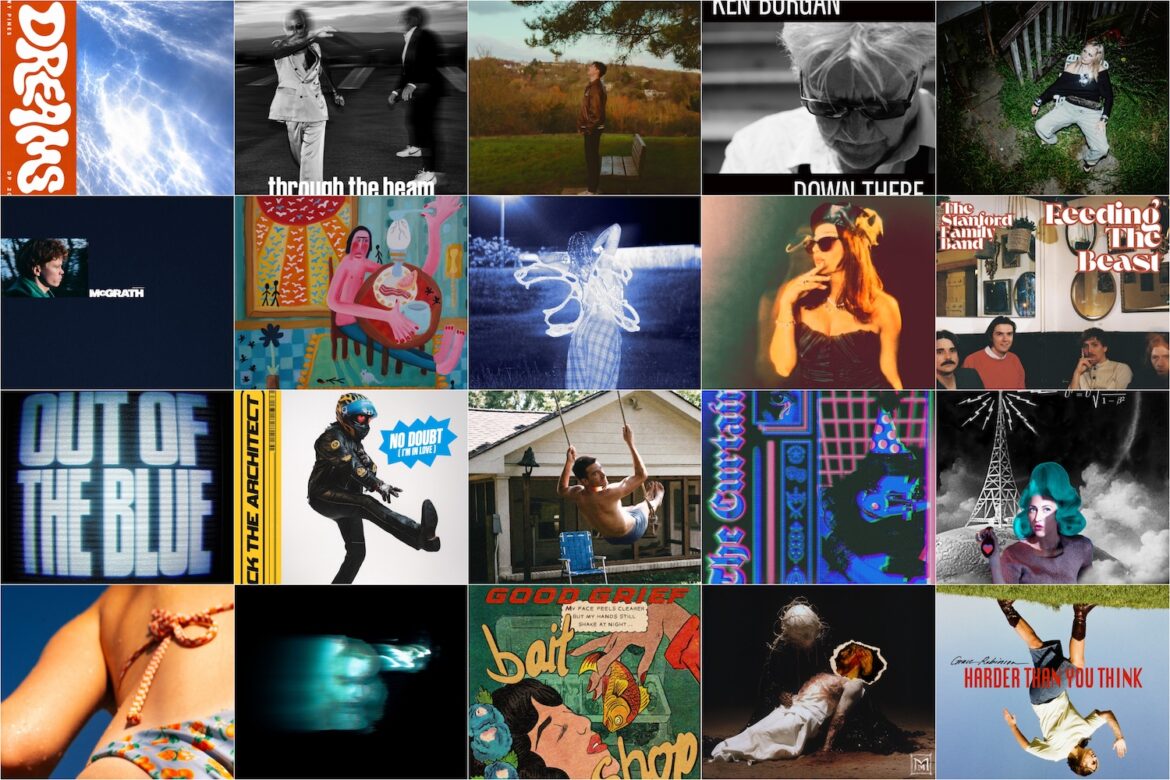
This week’s weekly roundup features music by Medium Build, Phoebe Bridgers, Similar Kind, Erick the Architect, The Stanford Family Band, total tommy, McGrath, Magi Merlin, Teanga Teanga, Ken Burgan, Bank Holiday, Nixon Boyd, Grace Robinson, Kate Stephenson, Alisan Porter, TRIGGERFINGER, George Bone, GOOD GRIEF, Dewy Pines, and Macro/micro!
•• •• •• ••
 follow WEEKLY ROUNDUP on Spotify


•• ••
:: “Armor” – Medium Build ::
Mitch Mosk, Beacon, New York

Every wall Medium Build’s Nick Carpenter ever built sounds like it’s shaking loose on “Armor.” Feverish, unfiltered, and fully exposed, the singer/songwriter returns this summer with a song that barrels forward like a release valve blown open: Fun enough to shout along to, brutal enough to leave a mark, and breathtaking because it refuses to hide.
The first single from Medium Build’s upcoming sixth album King of Having Fun, out September 4 via slowplay/Island Records, “Armor” is one hell of a reintroduction: Exhilarating and achingly brutal in the same breath, an emotionally charged reckoning that pairs arena-sized release with lyrics that refuse to look away from the mess. After the soul-searching of Country, the intimate recalibration of takeaways, and a year Carpenter has described as a violent upheaval of self, “Armor” feels like a fuse being lit – not a clean new beginning, but a door kicked open.
“‘Armor’ is the first song I knew was on the album,” Carpenter tells Atwood Magazine. “The most transparent look into my no filter stream of consciousness. The lyrics and the music pair up to imprint the feeling of unease and awareness that comes with being alive nowadays. If you listen to the lyrics there’s a lot to chew on, if you just vibe the music there’s a lot to bop to. Hope it leaves you better than it found you.”
Okay we think we’re in control ‘til we’re not
Then we’re helpless
You turn your head
The big empty comes along,
I don’t wanna know
how much money I got left, I-I-I,
I don’t wanna see my phone
or read my messages
I wanna starve myself ‘til I’m beautiful
Hey what the f*** is that?
Thought I could fix myself
without the dysphoria
Paul heard some philosopher
said “hope is fear and fear is hope”
I’m Sisyphus and you’re
the rock I’m pushin’
This hope – that the song might leave us better than it found us – cuts to the heart of King of Having Fun. Carpenter sees his new album as “a letter from rehab,” even though he never went, and “a post-mortem” of the person he spent the past decade becoming. To him, it marks both the closing of that chapter, and the opening of a new one – a record about killing off old selves, processing the pain that made Medium Build possible, and rediscovering joy without dressing it up as denial. Here, having fun is not a dodge or a disguise; it’s what becomes possible after the post-mortem. In that light, “Armor” is not just a jolt back into motion; it’s the perfect entry point into an album where fun, fear, healing, and self-destruction all keep colliding with one another.
Carpenter calls “Armor” a natural doorway into the record precisely because it comes in fast, weird, and wide-open. “This entire album has some of my favorite, proudest lyrics,” he shares. “But this song is just so what it’s like being in my head some days: Endless, run-on, intrusive thought. The way it starts – ‘Okay, we think we’re in control until we’re not / Then we’re helpless’ – you think you’re doing great, and then ‘you turn your head and the big empty comes.’ It literally reads like a conversation with yourself.”
That’s the thrill of “Armor”: It moves like a banger and bleeds like a confession. Crashing through his own intrusive thoughts and rawest emotions with that signature charismatic intensity, Carpenter rattles through spirals of money anxiety, body dysmorphia, avoidance, fear, faith, self-hate, and love until the chorus arrives less as relief than reflex: “There I go again, projecting on you / And I hate myself, so I turn it into art / Or something dumb, put my armor on / No one can hurt me when I put my armor on.” It’s funny because it’s true, and absolutely devastating for the same reason.
There I go again
Projecting on you
And I hate myself
So I turn it into art
Or something dumb
Put my armor on
No one can hurt me when I,
I put my armor on
“The armor, what I’m talking about is humor, all the defense mechanisms that I’ve used my whole life,” Carpenter says. “I’ll use being agreeable as an armory of one to protect myself from people knowing me. Knowing enough psychoanalytic buzzwords to project onto people – ‘There I go again, projecting on you’ – like, ‘You hate me, you want me to leave,’ and they’re like, ‘No, I don’t. You want to leave. You’re being a pill.’ And then I’m like, ‘Oh, I’m the problem.’ I think my armor, historically, has been me being a problem and making it seem like it was someone else’s idea. But now my armor is trying to remember that nothing matters, and it’s not that serious. If it flops, I can still go home and make a good sandwich and live in a house.”
For all its speed and sweat, “Armor” is ultimately about the terror of being known. Carpenter spends the song building walls, naming the walls, laughing at the walls, and still wondering what happens if he lets someone get close enough to touch the tender part underneath: “If I take my armor off would you put that blade through my side?” That line is the real bruise beneath the bop, the question hiding inside every joke, every chorus, every defense mechanism dressed up as personality.
As cathartic as it is captivating, “Armor” is Medium Build at full tilt: Reckless, self-aware, hilarious, wounded, and alive. It’s the sound of Nick Carpenter turning self-interrogation into a communal release without sanding down its roughest edges, a song that knows healing can still look like panic, and joy can still come with teeth. As the first glimpse of King of Having Fun, it doesn’t promise ease. It promises honesty, motion, and one hell of a reckoning.
:: “Lost Boys” – Phoebe Bridgers ::
Jack Batt, Washington, D.C.
Phoebe Bridgers has never been interested in speed limits. Her debut album found her “speeding, ’cause f*** the cops;” on Punisher, “25 felt like flying;” with boygenius, she imagined a disastrous crash while drag racing through the canyon with her bandmates. By 2024, her own career seemed to be accelerating at an impossible pace. Fresh off the success of Punisher, a major label album cycle with boygenius, and collaborations with artists including Taylor Swift and SZA, Bridgers accepted four Grammy Awards in a single night. Then, almost as suddenly as she’d reached the summit, she slammed on the brakes, deleting her social media accounts the following day and disappearing from public view for the next several years.
On “Lost Boys,” the lead single from her long-awaited third album Lost Weekend, she’s back and moving faster than ever, doing 90 in a 55 and flying through layers of guitars, trumpets, and shimmering synths. Produced by Bridgers and her longtime collaborators Tony Berg and Ethan Gruska, alongside Jack Antonoff and Alex G, her first solo effort in more than four years marks a climactic return to the spotlight. The single comes after a series of phoneless pop-up shows that began in Roswell, NM and ended at Madison Square Garden, culminating in the announcement of an entirely phoneless arena tour kicking off in September. Lost Weekend releases August 14th on Dead Oceans.
:: “The Curtain” – Similar Kind ::
Mitch Mosk, Beacon, New York

Pay attention to the band behind “The Curtain.” Similar Kind have long had a gift for making heavy feelings move with light on their feet, and their first single since last year’s debut album good grief! keeps that spirit alive while letting a chill creep into the room. Propulsive, eerie, and intentionally uncanny, “The Curtain” channels the modern romance with AI into a sleek indie pop fever dream, all shimmering hooks and existential dread.
a crucifix and an eerie black box
a perfect girl any way that you want
whatever fantasy that lives in your thoughts
i live to serve, all i need is a prompt
don’t waste your time in reality
you’ll find that i’m everything you need
get left behind or let me see
your inner mind, all your hopes and dreams
Atwood Magazine has been in Similar Kind’s corner for several years now, and the Norwalk, Connecticut band – comprised of Julia Breen, Benjamin McNamara, Evan Murphy, Nate Porter, Kenny Cash, and Miles Dominici – have only grown more assured in that time. Following the release of good grief! last June, “The Curtain” begins a new run of monthly singles leading toward a larger project later this year, trading the heart-on-sleeve warmth they’re known for with a darker kind of glow: The feeling of watching technology learn our wants, our fears, and our loneliness a little too well.
“‘The Curtain’ was inspired by the current relationship our society has with AI, and the uncertainty something so new and unnatural brings,” Similar Kind tell Atwood Magazine. “It is a skeptical criticism of the relationship humans build with AI, specifically chatbots, and how they rely on them for everything, including love. The song relates this relationship to a king/servant dynamic, while describing it all through the point of view of the chatbot itself.”
a darkened room with one light
distractions help you sleep at night
i’ll do as i’m instructed
feed you bread and show you circuses
it’s hard to hear the truth
when it’s unbelievably cruel
so please pay no attention
to the man behind the curtain
That perspective is what makes “The Curtain” so compelling. Similar Kind sing from inside the machine, their lyrics blurring devotion and manipulation until care starts to feel like control: “I live to serve, all I need is a prompt.” The song’s pulse is hypnotic and bright, but its center is deliberately unsettling, a mirror held up to our willingness to trade human friction for instant affirmation – “all the warmth without the breeze / do you love me? / tenderness and dopamine / like I love you?”
By the time they reach the line “please pay no attention to the man behind the curtain,” Similar Kind have turned a familiar warning into a full-bodied indie pop reckoning. “The Curtain” is catchy enough to pull us close and strange enough to make that closeness feel dangerous, a dazzling pushback against the algorithms, avatars, and artificial comforts already eating away at our humanity.
:: “No Doubt (I’m In Love)” – Erick the Architect ::
Charlie Recksieck, San Diego, CA

Something about this track from the get-go lets me know that I’m in good hip-pop hands. Those hands belong to Erick the Architect, aka Erick Elliott. To think of this as garden-variety hip-hop is a mistake. Genre doesn’t matter here; it’s got a great beat, it’s really musical, and the rapping is clever. I’m a sucker for cultural food references like the line, “Frozades in Frigidaire.”
It would be a nice enough song on its own. But scratch below the surface and you’ll find that Erick architected a full remake of Jamaican singer Jennifer Lara’s 1981 “I’m In Love.” The original is a slow-to-mid-tempo dub from back in the day. It’s not so much sampled as completely rebuilt and souped up. It’s a fascinating listen to go from the original track. Lara’s vocals are fun in 1981 but in the new context the same vocal track surrounded by a modern, energetic hip-hop vibe is a revelation.
Music is music, you shouldn’t have to know the history of a song to enjoy it. But the backstory of hearing how Erick the Architect transformed something from Point A to Point R is amazing, impressive, and sounds even richer.
:: “Feeding The Beast” – The Stanford Family Band ::
Danielle Holian, Galway, Ireland
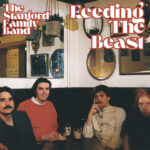
“Feeding The Beast,” the latest single from Brighton’s retro-minded quartet The Stanford Family Band, is a radiant piece of sunshine pop that feels both lovingly archival and quietly forward-thinking. Drawn from their forthcoming EP Go Again (out July 17 via Krautpop Records), the track inhabits a space where the melodic sophistication of The Beach Boys collides with the wistful modern nostalgia of Lemon Twigs and Drugdealer. Yet rather than simply borrowing from its influences, the band reshape them into something distinctly their own. Brightly chiming guitars weave through buoyant rhythms and elegantly layered harmonies, creating a sound that is immediately inviting while revealing greater depth with repeated listens. Beneath its warm, melodic exterior lies a subtle melancholy, a sense of yearning that gives the song emotional weight and prevents its vintage stylings from feeling merely decorative.
Much of the track’s charm stems from its beautifully analogue production, courtesy of Harry Hayes, whose contributions as both producer and songwriter help bind the band’s influences into a cohesive whole. There is an unmistakable affection here for the melodic craftsmanship of Nilsson and McCartney, evident in the song’s effortless hooks and gentle sophistication. The arrangement shimmers with detail without ever feeling crowded, allowing Elliot Stanford’s vocal delivery to glide naturally through the song’s bittersweet emotional core. What makes “Feeding The Beast” particularly compelling is the way it extends a forgotten lineage of guitar pop, connecting the golden glow of 1960s radio melodies with the intimate, slightly glam-tinted sensibilities of 1970s singer-songwriters. As a preview of Go Again, it suggests a band growing increasingly confident in their identity, refining their vintage palette into something timeless, evocative, and quietly enchanting.
:: “Winona Forever” – total tommy ::
Kelly McCafferty Dorogy, Pittsburgh

“Winona Forever” immediately draws your ears with a warm guitar lick and wispy vocals. It holds your attention with a stark switch from the warmth into a rock chorus that explodes. total tommy has stated that “Winona Forever” was written in just four hours about the disorientation of distance and life lived across time zones. It was inspired by an image of Winona Ryder lost in a cityscape. With this track, you never know what is going to happen next. It can’t be predicted, which makes it fun to listen to again and again.
:: “Rotha” – McGrath ::
Mitch Mosk, Beacon, New York

The wheel keeps spinning, even when your heart doesn’t know what to do with the motion. On “Rotha,” Donegal-born, Belfast-based artist McGrath makes a debut that feels both featherlight and full of ache, a heart-on-sleeve indie folk confessional glowing with gentle guitars, tender percussion, and a chorus that rises into a dreamy, aching falsetto.
McGrath is the solo project of Irish artist and songwriter Mick Russell, an emerging voice newly signed to Some Action Records whose early momentum has already carried him onto stages with George Ezra, We Are Scientists, and The Feeling. Released April 23 and produced by Rob Kirwan, “Rotha” introduces a songwriter whose gifts lie in warmth, detail, and the intimate intensity of saying the hard thing plainly.
“Bottling the hurt from leaving a relationship and harnessing it for the better,” McGrath tells Atwood Magazine. “Knowing you’re better off having left, but hopeful and without spite for the other person. Rotha means wheel. It keeps spinning.” This sense of forward motion gives his song its glow: McGrath sings from the aftermath, but not from the wreckage; this is music still carrying love, curiosity, and care for the person left behind. “I think about how you’re doing now / Did you find a little hope is all I’m wondering,” he offers, his voice softening around the question as the music smolders beneath him with a tender, unhurried pull.
As far as debuts go, “Rotha” is disarmingly complete: Innocent and intimate, smoldering and sincere, with a chorus that seems to lift itself out of the room and hover there. McGrath does not need to force grandeur into the moment. He lets the wheel do what wheels do, and in that steady spin, he finds release, grace, and a little light.
:: “pixxxie” – Magi Merlin ::
Mitch Mosk, Beacon, New York

Magi Merlin is no one’s plot device. On “pixxxie,” the Montréal artist slips into the cinematic skin of the manic pixie dream girl only to tear the trope apart from the inside, delivering a dreamy, charged pop reverie that pulses with cool defiance and tender fury.
The final single ahead of her debut album POWER HOUSE, out July 10 via ONErpm, “pixxxie” sets the scene for a record built around inner architecture: anger, fear, vanity, self-possession, and the hard-won power that comes from refusing to flatten oneself for anyone else’s story. Merlin, who calls her high-definition fusion of pop and R&B “Broken R&B,” has spent the run-up to this album bending genre into her own image, and “pixxxie” deepens that world with a lush, hypnotic pulse and vocals that seem to move in every direction at once.
I’m baked in your plans
Break them for me
Thrive in a written land
Are you laughing with me?
Feel you move my skirt down
Just another night out
Solving all your problems
Thank you for the last round
“Female characters in film are often reduced to this trope, simply a device used to further the plot of the male protagonist,” Merlin tells Atwood Magazine. “This is a role and, at its worst, an expectation many men in real life will cast onto their female counterparts. The only function of women in their eyes is being a sexual object or a tool to aid them in their growth.”
That critique smolders through every inch of “pixxxie.” Merlin’s performance is spellbinding: Cool to the touch, but burning underneath, her voice gliding across the song’s deliciously dark synth lines with a mix of allure, exhaustion, and control. She makes the fantasy feel tactile before exposing the violence beneath it, transforming the dream girl’s supposed softness into confrontation.
Make me your pretty god
Lord, love staring at me
Wait uhm stop, no, keep going
Laid wrong, awe,
Write me as a friend then
Waiting in your backlog
Josh said, “Wait for me”
Wait longer, I’ll get crazy
Nighttime’s light
Tasted on the tongue
As a gateway into POWER HOUSE, “pixxxie” is both invitation and warning. Magi Merlin does not reject pop’s pleasures so much as reroute them through her own gaze, making music that aches, seduces, and snaps back. The result is a song that refuses to be ornamental – a shimmering act of reclamation from an artist building a universe where complexity gets to take up the whole room.
:: “Around The World” – Teanga Teanga ::
Grace Holtzclaw, Los Angeles, CA

Teanga Teanga is a creative partnership between Pamela Sue Mann and Paul Murphy (pxmurphy). Mann is a New York-based vocalist, while Murphy is a Dublin-based producer. When they come together as Teanga Teanga, the result is a vivid abstraction of pop, electronic, and indie. Their new release, “Around The World,” offers a surprising twist on the Nat King Cole classic.
Teanga Teanga’s “Around The World” mesmerizes with dramatic string crescendos, dazzling synths, and fluid electronics that lure you deeper into the track. “Around The World” exists outside the confines of time. Teanga Teanga sheds light on how the classics inform our reality and the future of music. “Around The World” marries nostalgia for the past with premonitions of tomorrow.
Teanga Teanga thinks of “Around The World” as “time travel through music.” They grasp the emotion and spirit of music that remains palpable through every era. Apart from their work as a duo, Mann and Murphy have made impressive strides as individual artists. Mann has collaborated with Donna Lewis, Suzanne Vega, and Gerry Leonard, while Murphy is a member of the band, Electric Penguins. “Around The World” is a testament to Mann and Murphy’s serendipitous dynamic as collaborators. When the two of them come together as Teanga Teanga, great ideas are born.
:: “Down There” – Ken Burgan ::
Chloe Robinson, California

California rock veteran and accomplished songwriter Ken Burgan fuses gritty guitar-driven energy with dreamy melodies with his latest release, “Down There.” The alt-rock, psychedelic gem delivers a captivating blend of grit, groove, and nostalgia. The impassioned piece is off of his album Somewhere Else, spanning nine tracks. The unique offering delves into existential questions of mortality, self-acceptance, desire, and more.
The black-and-white video for “Down There” opens with a crow flying past a church, immediately setting a haunting, cinematic tone. Sitting by the building, Burgan’s gravelly voice delivers a surge of raw emotion. The stark monochrome visuals heighten the sense of isolation, letting each frame linger with a quiet tension. As the scene unfolds, the imagery and vocal delivery intertwine to create an atmosphere that feels both intimate and foreboding, pulling the viewer deeper into its world.
Burgan’s musical journey dates back to the birth of rock and roll in the 1950s. Over seven decades later, his new album channels both the sounds that shaped him and the life he’s lived since. Growing up in the Greater Los Angeles area, Burgan played saxophone during high school in Frank Zappa’s early band, The Boogie Men. By the early 1960s, he had become a regular presence on the L.A. music scene, performing with groups such as The Imposters and The Red Roosters. During the 1970s, Burgan moved into songwriting and developed a signature voice formed by wit, melancholy, and an off-kilter view of the world. Now at 80-plus years old, he is still going strong with a musical style that remains sharp, distinctive, and unmistakably his own.
:: “Out Of The Blue” – Bank Holiday ::
Danielle Holian, Galway, Ireland

With their debut single “Out Of The Blue,” Manchester trio Bank Holiday arrive with a level of confidence and clarity that many bands spend years trying to achieve. Bursting with energy from the opening bars, the track is an instantly engaging slice of indie rock that draws heavily from the melodic punch and swagger of ’90s alternative music while maintaining a fresh, contemporary edge. Bright, driving guitars cut through punchy percussion and tightly locked basslines, creating a sense of momentum that rarely lets up. At the centre of it all is a sharp songwriting instinct, with the band demonstrating a natural understanding of how to balance infectious hooks with enough grit and personality to avoid falling into formula. For a debut release, it feels remarkably assured, introducing a group that already sound comfortable in their own skin.
What elevates “Out Of The Blue” beyond a straightforward indie anthem is the charisma woven throughout its lyricism and delivery. Playing with familiar phrases and everyday observations, the song embraces a tongue-in-cheek charm that gives it both relatability and character, allowing Bank Holiday’s identity to emerge clearly from the outset. There is a youthful exuberance running through the track, but it is matched by an impressive sense of craft, with each melodic turn and dynamic shift feeling purposeful rather than accidental. The chemistry between Mac McCartney, Luke Owens and Oliver Clare is evident throughout, resulting in a performance that feels cohesive, vibrant and full of potential. As an opening statement, “Out Of The Blue” not only justifies the growing industry attention surrounding the band but positions Bank Holiday as one of Manchester’s most promising new indie prospects, delivering a debut that is as memorable as it is exhilarating.
:: “How I Know I’m Home” – Nixon Boyd ::
Mitch Mosk, Beacon, New York
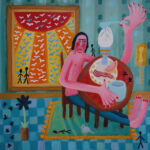
Home arrives like a hush on Nixon Boyd’s “How I Know I’m Home,” tender and wide-eyed, innocent without ever feeling naïve. Released as a single in April and now serving as the closing track on his debut solo album Every Time We Turn a Corner (out now via Royal Mountain Records), the song is a spellbinding introduction to the Canadian singer/songwriter’s gentler side: Dreamy, stirring, and wondrous, with a warmth that seems to glow from the inside out.
Boyd may be stepping out on his own for the first time, but he is hardly a newcomer. After founding Canadian indie rock band Hollerado with his childhood friends in 2009, touring heavily from the age of 20, and co-writing more than a dozen top-ten alternative radio hits, he trades high-energy hooks and power chords for music that asks us to lean in close. Written and rebuilt in his converted auto shop studio in small-town Ontario, Every Time We Turn a Corner is made from cheap acoustic guitars, lo-fi drums, an old Telecaster, and Boyd’s hushed vocal style – simple, warm, and calmly emotional even in its most aching moments.
“A few years ago my friend Luke Doucet showed me open D tuning, and this is the first thing I wrote in that tuning that I liked,” Boyd tells Atwood Magazine. “I structured it to have this long-winded melody so that there’s space for a detailed and kind of rambling monologue leading into the ‘that’s how I know I’m home’ lyric in the chorus. I think it gives the effect of blurting out words and saying way too much the way I sometimes find myself doing when I’m trying to express something really earnest and heartfelt.”
“Arrangement-wise, this is pretty sparse but it’s also the only song on the record with a synthesizer in it. I felt like the arrangement needed a bit of glue and I tried strings and horns, but they felt way too serious and heavy, so I used my Moog Sub 37, and it felt like it provided warmth without feeling too formal. I know the topic might be a bit cheesy, but I was an army brat growing up and was always moving around, so I spent a lot of time figuring out what home actually means.”
That search sits at the center of “How I Know I’m Home,” a song whose softness is its strength. Boyd lets the melody wander the way an earnest confession does, circling closer and closer to the heart of the matter until love becomes both compass and shelter. “I don’t need to take a leap of faith / Never sit and wonder where it is I belong,” he sings, giving language to the rare form of certainty that doesn’t need to shout in order to be felt.
As a finale, “How I Know I’m Home” leaves Boyd’s debut album glowing in its wake. It’s not grand or dramatic; it’s more intimate than that, a closing exhale from an artist relearning how much power can live inside restraint. Boyd’s songwriting feels like it was made to sit beside you – tender, patient, and quietly devastating in its understanding that home is not always where you began, but where your heart finally stops bracing for departure.
:: “Harder Than You Think” – Grace Robinson ::
Mitch Mosk, Beacon, New York

Recovery is a terrible hobby for overachievers. Grace Robinson’s debut solo single “harder than you think” knows this in its bones, smoldering and churning through the absurdity of trying to ace your own healing while your body, mind, and heart are begging you to slow down.
A Naarm/Melbourne-based singer/songwriter who has spent the better part of a decade building a life in music for “everyone but herself,” Robinson arrives with an unusually rich backstory: She co-wrote on an ARIA-nominated jazz record at 19, trained for five years in jazz voice at the VCA, directed an 80-voice choir, worked as one of Australia’s youngest booking agents at WAT Artists, and fronted electro-soul outfit Empress before finally releasing music under her own name. Out June 4, “harder than you think” introduces that next chapter with a dry laugh and an open wound, taking the pressure to be “good” at getting better and dragging it into the light.
“I wrote this song after I had finally started recovering from the worst burn out I’d ever experienced – truly a rock bottom,” Robinson tells Atwood Magazine. “I felt like everyone was looking at me and thinking of me on the outside as a person who had it figured out – but in reality I was so lost and so unhappy – maintaining this facade eventually became impossible. Eventually my therapist said to me, ‘At some point you need to stop trying to convince me and everyone else that you’re healing – and actually start doing the work. This isn’t a game anymore.’ It sounded simple but this was way harder than you think, and that was the beginning of what snowballed into this song, and this project as a greater whole.”
Robinson’s debut single is as striking as it is undeniably soul-stirring: Her voice has that same charged, close-to-the-flame grit as Sharon Van Etten, while her confessional edge recalls fellow Aussie Angie McMahon at her most visceral and vulnerable. Still, “harder than you think” belongs fully to Robinson – a smoldering alternative rock embrace that aches, charms, and churns all at once, soft and welcoming even as it digs its nails in. The overdriven guitars reverberate and glow with heat, the rhythm section keeps the song moving like a thought you can’t outrun, and Robinson sings burnout not as collapse, but as the uncomfortable beginning of honesty.
This honesty cuts deepest when she lets go of the scoreboard altogether: “And so I gave up winning as I ran myself out of the race the heaviness lifted.” For a debut solo single, “harder than you think” feels remarkably lived-through – vivid, funny, bruised, and self-aware without hiding behind its wit. Grace Robinson may have spent years helping other people’s stories take flight, but here, finally, she steps into her own with a song that feels less like arrival than permission: To stop performing progress, and start actually healing.
:: “Summerfoot” – Kate Stephenson ::
Kelly McCafferty Dorogy, Pittsburgh

This song immediately feels like summer. It’s such a fun thing when the title, lyrics and meaning of a song pair with the music to exude the exact feeling it is talking about. “Summerfoot” does this in spades. In Stephenson’s relaxed vocals, you can almost hear a smile in the way she’s singing.
Come here summerfoot
Love the way you backtalk
Keep me on my toes
like a dancer on the blacktop
No one’s ever done it like you do it baby
Hat’s off too you
Couldn’t make a killing,
baby that’s all you
With Paul Simon-like bass licks, melodic notes and a rhythmic pulse that keeps it going, this song is extremely catchy and has had me pressing repeat all week. Stephenson is a talented independent artist who I, personally, cannot wait to hear more from.
:: “Race To Nowhere” – Alisan Porter ::
Julius Robinson, California

Have you ever wondered why, despite constantly pushing yourself to achieve more, you still end up feeling drained, overwhelmed, and stuck? Alisan Porter’s “Race to Nowhere” explores the pursuit of a destination that ultimately proves elusive. Her delicate, passionate vocals float atop soft drums and vibrant keys for a piece that radiates warmth and sincerity. The singer reveals, “‘Race To Nowhere’ came from a really honest moment where I realized how easy it is to get caught in cycles that feel productive but don’t actually lead anywhere. That constant push to do more, be more, give more, especially in motherhood, where you can lose yourself in the rhythm of taking care of everything and everyone.”
With “Race To Nowhere,” Porter offers a glimpse into the highly anticipated project she plans to release later this year. The song reflects a new creative chapter that Porter has dubbed her “Perimenopop” era, blending candid storytelling, sharp humor, and heartfelt reflections on personal growth. While many first came to know her as the star of Curly Sue or as the winner of The Voice, her artistic journey has continued to expand far beyond those milestones. From acclaimed performances in productions such as A Chorus Line, Footloose, and Hair to her work as a singer-songwriter, Porter has built a career defined by authenticity, resilience, and a willingness to share life’s most defining moments through her art. “Race To Nowhere” does just that.
:: “Through The Beam” – TRIGGERFINGER ::
Danielle Holian, Galway, Ireland

Belgian rock veterans Triggerfinger demonstrate that longevity need not come at the expense of reinvention with their new single “Through The Beam.” Serving as the first taste of their forthcoming sixth studio album Tarmac, the single finds the band expanding their established rock foundations into more adventurous territory, weaving together elements of funk, alternative pop and atmospheric synth-driven textures without sacrificing the raw power that has defined their reputation for more than two decades. Choppy, tightly wound guitar rhythms collide with waves of fuzz-soaked lead work, while pulsing synth bass and muscular drumming create an irresistible sense of momentum. The result is a track that feels both immediate and meticulously constructed, balancing sharp-edged energy with a sleek modernity that signals an exciting new chapter for the band.
What makes “Through The Beam” particularly compelling is its ability to marry muscular instrumentation with a subtle emotional undercurrent. Ruben Block’s vocal performance drifts through the arrangement with a reflective melancholy that contrasts beautifully against the song’s driving rhythm section, adding depth to its deceptively infectious hooks. The influence of producer Mitchell Froom is evident in the track’s rich sonic detail, while Tchad Blake’s mix gives every element room to breathe without diminishing the song’s impact. Beneath its polished exterior lies the same restless spirit that established Triggerfinger as one of Europe’s most formidable live acts, but now channelled through a broader and more nuanced palette. As a lead single, “Through The Beam” succeeds not only as an exhilarating standalone release but also as a statement of intent, showcasing a band unwilling to settle into nostalgia and instead determined to push their sound into fresh and rewarding territory.
:: “Floating Away” – George Bone ::
Danielle Holian, Galway, Ireland

George Bone’s latest single “Floating Away” is a beautifully crafted showcase of the Essex/London-based songwriter’s ability to balance intimate storytelling with expansive musical ambition. Acting as a preview of his forthcoming debut EP The Yes Man, the track highlights the qualities that have steadily earned Bone recognition across the East of England’s thriving music scene. Opening with delicate finger-picked guitar that evokes the quiet introspection of contemporary folk, the song immediately establishes a sense of vulnerability and emotional honesty. Bone’s warm, expressive vocal delivery anchors the arrangement, guiding listeners through reflective lyrics that feel deeply personal while remaining universally relatable. Drawing from a palette that blends pop accessibility with touches of neo-jazz sophistication and folk sensitivity, “Floating Away” demonstrates an artist confidently shaping a sound that feels both contemporary and enduring.
As the song unfolds, its emotional and sonic scope broadens impressively. What begins as a restrained acoustic meditation gradually evolves into a sweeping, cinematic statement, with swelling strings, atmospheric keys and subtle synth textures enriching the arrangement without overwhelming its core sentiment. The arrival of the drums injects a renewed sense of momentum, propelling the track towards a soaring climax where brass flourishes and layered instrumentation elevate the song’s emotional resonance. Despite its increasingly grand scale, Bone never loses sight of melody, delivering a chorus that is both instantly memorable and genuinely affecting. The careful balance between commercial appeal and artistic depth is one of the track’s greatest strengths, allowing “Floating Away” to feel accessible without sacrificing authenticity. As a lead single and introduction to The Yes Man, it presents George Bone as a songwriter of considerable promise, capable of transforming quiet introspection into something stirring, cinematic and profoundly engaging.
:: “BAIT SHOP” – GOOD GRIEF ::
Mitch Mosk, Beacon, New York
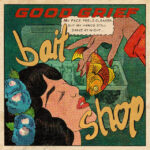
Charlie Brown would be proud. Seattle newcomers GOOD GRIEF know how to make an exit sound like a grin, a gut-punch, and a hand grabbing yours on the way out the door. The duo’s debut single “Bait Shop” is warm and wired, intimate and smile-inducing – a feel-good burst of queer indie rock that finds freedom in finally saying the thing out loud: This isn’t right, and I’m not staying.
Made up of Ella Scudder-Davis and Wendy Walcoff, GOOD GRIEF began after the two met in a young adult grief group in 2023, following the loss of both their dads. Together, they fold folk roots, ’90s rock, pop hooks, and queer indie into a sound built for messy nights, big feelings, and hard-earned self-recognition. Independently released June 12th, “Bait Shop” introduces the band’s forthcoming debut album Not Over It with a wink and a wail, pulling love and loss into the same room as it summons the courage to leave a date that’s not quite right.
“We wrote this song after a late-night escapade in Seattle’s fish-themed dive bar, Bait Shop,” Scudder-Davis and Walcoff tell Atwood Magazine. “A frustrated and empowered rock anthem, ‘Bait Shop’ summons the resolve to leave a date that’s not quite right and laments, ‘I don’t feel like I’m supposed to!’ in the face of a current situationship. After losing our dads, we’ve experienced how time alters with profound loss, flirting fluctuates, and some days we feel more recognizable in the mirror than others, ‘my face feels clearer/ but my hands still shake at night.’ ‘Bait Shop’ is an urgency to find agency and an affirmation of self-reclamation.”
That urgency comes wrapped in charm. Co-produced by Kayla Pichichero and Grammy-nominated Math Bishop, with drums by Ross Chait and bass by Neil Wogensen, “Bait Shop” moves with playful confidence, its jangling warmth and rock bite giving GOOD GRIEF plenty of room to laugh, ache, and cut loose. Even their most cutting lyric – “I’m leaving your line, I’m not yours to take” – lands with a spark of release, the sound of someone stepping back into their own body.
As far as introductions go, “Bait Shop” is a joy: Flirty, furious, cathartic, and fully alive. GOOD GRIEF make self-reclamation sound like the best kind of late-night revelation – the one that leads you out of the wrong room and back toward yourself.
:: “Dreams” – Dewy Pines ::
Mitch Mosk, Beacon, New York

Longing can turn a bedroom into a pressure chamber. On “Dreams,” Germany’s Dewy Pines take the push-and-pull of an almost-relationship and make it sweat: guitars smolder and roar, drums surge forward, and Ana Shestner’s vocals rise with the heat of a feeling that refuses to loosen its grip.
Made up of Shestner on vocals and guitar, Jonathan Frübis on lead guitar, Samuel Blank on drums, and Max König on bass, Dewy Pines have spent the past three-plus years channeling grungy alternative rock, indie sensibilities, and a distinct strand of emo DNA into songs that feel raw, melodic, and deeply lived-in. Following their 2023 debut EP Chew and subsequent singles “Irrational” and “Nothing Wrong,” the German band return this summer with a smoldering new song that channels the ache of an almost-relationship into a full-bodied alternative rock catharsis.
“‘Dreams’ was inspired by one of my closest friends and a long-lasting push-and-pull connection that never quite became a relationship,” Shestner tells Atwood Magazine. “She often talked to me about how, rationally, she knew they weren’t right for each other, but emotionally she just couldn’t let go. It was a constant cycle of endings and new beginnings, hot and cold, until she eventually became frustrated with herself for still carrying this person around in her head. She knew it wasn’t working, but the longing kept coming back. At its core, ‘Dreams’ is about wanting to be with someone so badly while knowing exactly why it won’t work.”
This tension lives in every corner of the song. Dewy Pines build “Dreams” into a spellbinding eruption, balancing dreamy atmosphere with an achingly visceral fervor. It’s hazy and hard-hitting at once, a song that feels caught between late-night fantasy and the rude light of day. The lyrics linger in that same charged in-between, where desire becomes almost dangerous: “You speak like smoke, I breathe you in / Then hold my breath so you can’t win.” Later, the hook’s ache – “Hey baby, just maybe / Could I be in your dreams” – lands less like a question than a confession, full of hope even as the answer keeps slipping away.
Dewy Pines sound fully locked into their next chapter: Bigger, heavier, and more immersive, without losing the bruised intimacy at their core. “Dreams” is not just about carrying someone in your head long after they are gone; it’s about the exhausting thrill of knowing better and wanting anyway.
:: A.fter I.ntelligence – Macro/micro ::
Danielle Holian, Galway, Ireland
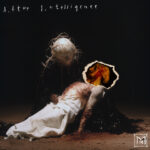
Macro/micro’s latest album, A.fter I.ntelligence, feels like a meditation on the edge of possibility, a haunting transmission from the space where human consciousness meets its technological reflection. Across eleven meticulously crafted compositions, Tommy Simpson transforms abstract philosophical questions into living, breathing soundscapes that pulse with curiosity, anxiety, and wonder. The record unfolds like a speculative novel written in frequencies and textures, moving from the tentative digital awakenings of “Clicks (Prologue)” to the ominous finality of “Judgement Day.” Yet despite its engagement with artificial intelligence, existential risk, and machine cognition, the album remains profoundly human at its core. Simpson’s gift lies in his ability to imbue complex ideas with emotional weight, allowing listeners to feel the implications of these questions long before they fully comprehend them. The result is an immersive listening experience that lingers somewhere between contemplation and prophecy.
What makes A.fter I.ntelligence particularly compelling is its refusal to settle for easy narratives. Rather than portraying technology as either salvation or doom, Simpson explores the vast and uncertain terrain in between, where intelligence, consciousness, and morality become increasingly difficult to separate. His production is rich with detail: fractured rhythms flicker like neural pathways, ambient passages stretch toward infinity, and moments of unsettling beauty emerge from beneath layers of digital complexity. There is a cinematic grandeur to the album, undoubtedly informed by Simpson’s experience working alongside Trent Reznor and Atticus Ross, but the vision remains distinctly his own. Every track contributes to a larger philosophical arc, inviting listeners to consider not only the future of artificial intelligence but the nature of humanity itself. In an era dominated by surface-level conversations about technological progress, A.fter I.ntelligence offers something far rarer, something that is a thoughtful, poetic, and deeply resonant work of art that asks us to look inward even as we imagine what comes next.
— — — —

Connect to us on
Facebook, 𝕏, Instagram
Discover new music on Atwood Magazine
:: Weekly Roundup ::
follow WEEKLY ROUNDUP on Spotify
:: This Week’s Features ::