Atwood Magazine is excited to share our Editor’s Picks column, written and curated by Editor-in-Chief Mitch Mosk. Every week, Mitch will share a collection of songs, albums, and artists who have caught his ears, eyes, and heart. There is so much incredible music out there just waiting to be heard, and all it takes from us is an open mind and a willingness to listen. Through our Editor’s Picks, we hope to shine a light on our own music discoveries and showcase a diverse array of new and recent releases.
This week’s Editor’s Picks features Lucia & The Best Boys ft. Abigail Morris, Soft Loft, Martin Luke Brown, TAURO, Cassia, and Bekah Bossard!

 follow EDITOR’S PICKS on Spotify

“Big Romance”
by Lucia & The Best Boys ft. Abigail MorrisHeartbreak can make one person feel like a whole universe: The dream, the wound, the apology, the second chance you keep reaching for even after the door has closed.
Exhilarating, redemptive, and utterly all-consuming, Lucia & The Best Boys’ “Big Romance,” featuring The Last Dinner Party’s Abigail Morris, takes that oversized ache and blows it wide open into a towering, heart-thrown-open pop anthem that lives up to every inch of its name. Bold, dramatic, glistening, and delightfully infectious, the song channels old heartbreak into a cinematic rush of passion, pain, and release.
It really is a big romance – and a breathtaking reminder that the biggest feelings are often the ones that make us feel most human.
All the time that we spent now a distant memory
Don’t know how to fill the vacancy in my head
I would pour my heart into your big romance
Yeah I put my world in the palm of your hands
Now I do believe in a second chance
So won’t you come back?
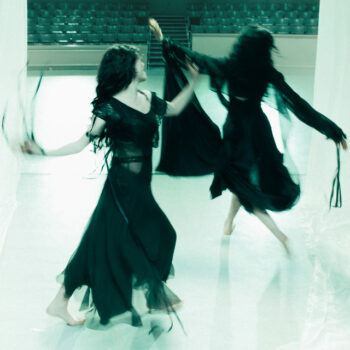
Released in May as the latest single from Lucia & The Best Boys’ forthcoming sophomore album Picking Petals, out July 31st via Communion Records, “Big Romance” arrives like a showstopper already mid-flight: Sweeping, shiver-inducing, and larger than life, yet achingly human in the way Lucia Fairfull and Abigail Morris sing through the wreckage of wanting someone back. “I never wanted you to go, but here I am again and again, waking up alone,” Fairfull sings, and the hook hits with the force of a whole room remembering the same wound at once.
Lucia & The Best Boys have spent nearly a decade refusing to be narrowed into one shape. Led by Scottish artist Lucia Fairfull, the project has moved through rockier textures, dreamy pop, synth-lit longing, and emotionally charged guitar music, all while staying rooted in Fairfull’s appetite for transformation.
“If people go on any streaming platform and listen to a few different tracks they may find quite an eclectic mix of sounds,” Fairfull tells Atwood Magazine. “I have never let myself feel restricted by the expectations that an artist should stick to one thing and have loved delving into different sounds that have all led to the making of this album we are about to release, which I do believe to be the best yet. And I do think there is something for everyone on this album.”
That album, Picking Petals, follows Lucia & The Best Boys’ 2023 debut Burning Castles, a record Fairfull still loves but now hears as deeply tied to her early twenties. The new music marks a bolder, freer chapter: Written partly in the Scottish countryside in weather-beaten bothies, then brought back to Glasgow’s Castle of Doom studios with producer Yves Rothman, and shaped by the creative community Fairfull has built around Glasgow, Picking Petals carries the force of an artist coming home to herself. Where Burning Castles had to imagine its scale through lockdown distance, this record was made to capture the loud, electric charge of Lucia & The Best Boys in full flight. It’s collaborative, instinctive, and steeped in the people and places that make her feel most alive – the landscape, the band, the friendships, the divine feminine energy she feels in the Scottish land, and the thrill of finally singing with full command of her own voice.
“Picking Petals has captured everything I love about music,” Fairfull shares. “It feels like the most collaborative body of work yet as well as fully embodying who I am as a person right now. I didn’t really have influences or inspo artists whilst making it, my inspo was my friends and my band and the talent and beauty that surrounds me in Glasgow and Scotland on a whole. This also might sound ridiculous, but I’ve never felt like a better singer than on this album, it’s been empowering to write and almost find my voice in a way I haven’t before.”
‘Cause I never wanted you to go, go, go
I never wanted you to go, go, go
But here I am again and again
Waking up alone
(I said I’m sorry, I miss you)
I never wanted you to go, go, go
(I said I’m sorry, I want you back)
“Big Romance” carries that empowerment through a song that almost didn’t make it out alive. Fairfull first wrote it around age 23, and it was once intended as a major single for Burning Castles, but the track resisted every attempt to force it into shape. Years later, after revisiting it at the piano, Morris encouraged Fairfull to keep going and asked to sing on it once it was finished. That push changed the song’s fate. What had once been a difficult, overworked demo became something newly open and alive – reimagined from the ground up, built from restraint rather than excess, and finally given the kind of dramatic lift it had been chasing all along.
“There were about three different demos that existed, all of which were way more dramatic than the current version, maybe not in the best way,” Fairfull recalls. “We all thought ‘Big Romance’ was going to be a big single on Burning Castles, but it was just so hard to crack even after spending hours on it, to the point where it felt like we were just trying too hard and needed to let go of it for a while.”
“I remember calling Abi one day after revisiting it whilst sitting at my piano and she was very persistent that I had to make it work and said she wanted to sing on it when I was done, and that’s what happened,” she continues. “We approached the instrumentation side of things starting small and building upwards, rather than going in full guns blazing, it really felt like we had to start from scratch and reimagine it.”
That patience is part of what makes the final version so powerful. “Big Romance” has all the sweep of an ‘80s pop classic – the scale, the ache, the sense of lights rising at the exact moment the heart breaks open – but it never collapses into empty grandeur. Fairfull and Morris make a formidable, spellbinding pair, their voices circling each other with theatrical force and lived-in feeling, turning apology and longing into something almost communal. The production builds with live-band warmth and romantic tension: Glowing keys, surging drums, brass blooming at the edges, and vocal lines that seem to keep climbing toward the sky. “I said I’m sorry, I miss you / I said I’m sorry, I want you back,” Morris echoes, and suddenly the song becomes more than a plea to an ex. It’s the sound of two artists giving an old feeling a second life.
“I think it came to be the way it was by starting from scratch with the instrumental and trying to be really casual about it and forget that I’d been trying to make it work for years,” Fairfull says. “I went into the studio with my band and we literally just played it in the most real and organic way we could and built it up from there. I knew I wanted it to build slightly but in a more romantic and subtle way using live brass and with the dynamic of Abi and me singing together.”
I’ve been sinking into this
overflowing feeling
And I’d like to find some
emotional healing before I go mad
‘Cause through it all I was losing sight
Now all I see is what I’ve left behind
But I do believe in everything that we had
So won’t you come back?

This dynamic also changes the song’s emotional center. What began as a heartbreak song from Fairfull’s early twenties now feels broader, warmer, and more generous – not only about romantic love, but about the platonic romance of friendship, artistic belief, and the people who help us carry our old selves into the present. Morris’ presence is more than a feature; it’s part of the story. Before The Last Dinner Party, Morris even played keys for Lucia & The Best Boys on a few Scottish dates, and that history gives “Big Romance” its extra charge. This is not two voices thrown together for scale; it’s a long-running creative bond turning an old wound into something triumphant.
“This song was initially written about a heartbreak in my early twenties, but it feels like much more now, not necessarily through the words but through its journey and what I’ve experienced with this song, including having Abi on it and the video we made with Sal Redpath,” Fairfull reflects. “It’s not just a song about romantic relationships anymore, it’s about romantic platonic love too.”
That’s why “Big Romance” feels so immense: It understands that a song can outgrow the life that made it. Time has not dulled its ache; it has deepened the meaning around it. What once belonged to one heartbreak now belongs to persistence, friendship, timing, community, and the hard-won redemption of finally seeing a hard-to-crack song bloom exactly when it was meant to.
Together, Lucia & The Best Boys and Abigail Morris have delivered a dramatic, all-consuming pop anthem for the ages – one that is blissful and wounded, theatrical and true, impossible to shake because it’s still becoming as it plays. “I never wanted you to go,” Fairfull sings again and again, but the song itself proves the opposite of loss: Nothing this alive is really gone.
‘Cause I never wanted you to go
I never wanted you to go
I never wanted you to go, go, go
(I said I’m sorry, I miss you)
I never wanted you to go, go, go
(I said I’m sorry, I want you back)
But here I am again and again
Waking up alone
(I said I’m sorry, I miss you)
I never wanted you to go, go, go
(I said I’m sorry, I want you back)
I said I’m sorry, I miss you
I said I’m sorry, I want you back
I said I’m sorry, I miss you
I said I’m sorry, I want you back
“F U WANT IT”
by Soft LoftRestless and rapturous, Soft Loft’s “F U WANT IT” feels like the exact second an old feeling stops being a memory and becomes a song you can’t stop singing.
The Swiss band’s spectacular, cinematic indie pop anthem glows with the rush of a thought you should probably leave alone – an ex-lover turned ghost, a missed moment turned chorus, a late-twenties reckoning with timing, freedom, loneliness, and the maddening pull of what might have been. Released in May as the second single from their forthcoming sophomore album Throw a Dice, the song is pure Soft Loft magic: Trembling and radiant, vulnerable and huge, carried by Jorina Stamm’s unmistakable voice as it turns unfinished feeling into a chorus that refuses to leave the mind. “You are gone, but you’re not / you felt wrong, but the right spot / I’d still have you again if you wanted,” she sings, and every word lands like a confession trying to laugh at itself before it becomes too true.
I took a walk some days ago
I thought about the time I almost fell,
cause I didn’t pack the right shoes
the bladder on my heel
was the least of our problems
I had a tickle up my nose and
I saw me sitting in the grass
and you hitting the gas
but the fever in my eyes
was the least of our problems, problems
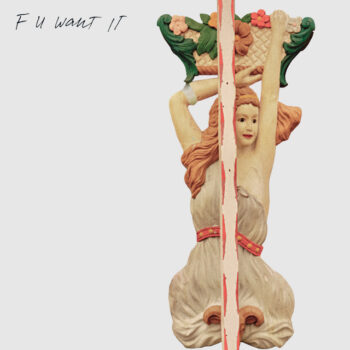
Soft Loft have always known how to make intimacy feel expansive. The five-piece from Switzerland – Jorina Stamm (vocals/guitar), Lukas Kuprecht (drums), Marius Meier (bass), Sarina Schmid (keyboards), and Simon Boss (guitar) – make songs that channel private feeling into communal release, pairing emotional exactness with arrangements that feel organic, cinematic, and deeply alive.
“We’re five friends living for music and trying to capture life, in writing, in songs to have people connect with our feelings and stories,” they tell Atwood Magazine. 2024’s debut album The Party and The Mess gave grief, joy, friendship, and self-searching a tender, full-bodied home, while last year’s Modern Roses EP – which Atwood Magazine hailed as “a heartfelt, handmade collection that invites us to sit with our feelings… and find beauty in the in-between” – pushed the band into a more exploratory space, reconnecting them with what they wanted from their sound after that first full-length statement.
Soft Loft carry that self-trust into a wilder, more grown-up frame on Throw a Dice, out September 4th via [PIAS] Recordings. Produced by the band and mixed by Grammy-winner Craig Silvey, the album is still alive to the mess and wonder of being human, but more alert to the contradictions of adulthood – the rebellious self and the reasonable self, the need for calm and the fear of becoming too still, the desire to love deeply and the equally strong desire not to be pinned down before life has had its say. “F U WANT IT” sits right at that emotional crossroads, a coming-of-age anthem dressed in glistening guitars, warm momentum, and a refrain so sticky it practically melts into muscle memory.
last year is still all over me
you’re in my mind
you keep on calling me
I screamed at night
I’m not a medium
but felt pretty medium
when you called it off and
needed time
“Throw a Dice might even be the older sister to The Party and The Mess as it’s still all about life and experiences with it but a little more grown up, I guess?” Stamm explains. “What came together is a wild collection of songs, a snapshot of thoughts and feelings of that time. But when you listen to them as a whole, the common thread becomes obvious. They circle around growing older and feeling torn between your rebellious and your reasonable side. Around finding loved ones and losing loved ones, age as a number and age as a feeling, getting well, transience, and simply being alive.”
“F U WANT IT” transforms that tension into one of Soft Loft’s most immediate songs yet. Driven by acoustic guitar and a pulse that keeps pushing forward, the track has the lift of a classic pop anthem and the emotional shake of a voice trying to hold steady while the past keeps calling. Stamm’s vocal is astonishing here: Trembling without breaking, strong because it allows itself to sound wounded, sending shivers through every soul-stirring exhale. The verses move through odd, vivid fragments – a walk, the wrong shoes, a blistered heel, a feverish memory, a car pulling away – before the chorus opens into that irresistible, emotionally charged release. It’s catchy in the way great heartbreak songs are catchy: Not because the feeling is simple, but because the melody gives the mess a shape you can finally carry.
you are gone
but you’re not
you felt wrong
but the right spot
I’d still have you again
if you wanted
if you wanted
f*** you want it
“‘F U WANT IT’ really is the tenth attempt to get over the same heartbreak again and rethinking a past relationship, wondering if they could’ve been something more if only it had happened at a different time,” Stamm shares. “Being in your late twenties feels like constantly shifting between extremes, between finally finding a sense of calm and worrying you’re not living wildly enough. Between contentment and sudden panic that there’s still so much left undone, so much left to try.”
“‘F U WANT IT’ lives in that uncertainty, in the tension between holding on and letting go, between timing and feeling, and in the quiet realization that sometimes, it’s not about the person, but about where you are in life when you meet them,” she continues. “We really tried writing a simple pop song here that is carried by voice and guitar only, which we thought would be easier than it turned out to be.”
I tend to shut down when you come too close
but with you all I thought I did was grow
yet often stories do not go the way
we think, yeah we should know
we’re not a feast but enjoy it
thinking of hours that we spent alone
I never met the people you could call
cause worlds were changing as a whole,
that’s not the reason we stayed home
we’re not a feast but enjoy it
last year is still all over me
you’re in my mind
you keep on calling me
I screamed at night
I’m not a medium
but felt pretty medium
when you called it off and
needed time

That simplicity gives the song its sting. “Last year is still all over me / you’re in my mind / you keep on calling me,” Stamm sings, turning memory into a presence that refuses to stay buried. The song understands the strange humiliation of still wanting a person you know wasn’t right, and the stranger tenderness of admitting that timing can be as decisive as love itself. “I tend to shut down when you come too close / but with you all I thought I did was grow,” she sings later, holding contradiction in both hands: Self-protection and openness, regret and desire, the wish to be wilder and the ache for stability. “F U WANT IT” doesn’t resolve that conflict. It lets the hook spin inside it until the title itself starts to change shape – a dare, a joke, a curse, a longing, a cheeky little flare sent toward the ghost who may have moved on first.
“Those lyrics come from a place of longing for something in the past, while at the same time knowing it probably wasn’t right for you,” Stamm says of “you are gone, but you’re not / you felt wrong, but the right spot.” “It’s that contradiction of missing something, or someone, even when you’re aware it didn’t fully work. And then there’s that question of what to do with those feelings when loneliness creeps in.”
That question becomes the song’s final rush. By the time Stamm sings, “I’m switching between feeling like finally / being calm or not quite wild enough,” “F U WANT IT” has widened from one old relationship into a whole portrait of late-twenties restlessness: wanting everything, having not enough, trying to outgrow old ghosts while half-hoping they still know your name. Soft Loft make that uncertainty feel massive, melodic, and strangely freeing. This is a song for the beautiful mess of still being unfinished – for the loves that missed their moment, the lives we haven’t lived yet, and the part of us that can laugh, ache, and sing the whole thing back at full volume.
I’m switching between feeling like finally
being calm or not quite wild enough, mmhm
and suddenly I’m panicking cause there’s
still so much to do and I haven’t tried enough
but the least of our problems
but the least of our problems
the least of our problems
was wanting everything
and having not enough
As Soft Loft put it, “Life and love is frustrating and so the song in the end might also be a cheeky, ‘f***, you, want it’ to the ghost who seems to have managed to bury your ghost a long time ago.”
That cheek is part of the catharsis. “F U WANT IT” is Soft Loft at their most anthemic and emotionally electric: A soul-stirring pop triumph that turns longing into lift, regret into release, and romantic uncertainty into a chorus bright enough to haunt back. It’s spectacular because it knows the mess is the point. It’s unforgettable because Stamm sings like the feeling is still happening in real time. And once that hook gets in, good luck getting it out.
you are gone
but you’re not
you felt wrong
but the right spot
I’d still have you again
if you wanted
if you wanted
if you wanted
f*** you want it
“dream state”
by Martin Luke BrownWeightless and gently euphoric, Martin Luke Brown’s “dream state” feels exactly like its title: Soft ground beneath your feet, sunlight through closed eyes, the sweet little lift of a song that seems to float before it ever lands.
It glows in that dangerous sweetness – the glistening haze of running from pain until escape becomes its own kind of trap. Released in May as the latest single from his forthcoming third album life & death etc, “dream state” is warm, lush, and irresistibly buoyant – a seductive indie-soul reverie that shines like heat on your face and fog in your lungs. Loose grooves, slacker guitar, golden harmonies, and Brown’s tender, open-hearted vocal carry the song upward until the refrain becomes a sort of suspended surrender: “Stuck in my dream state somewhere / in California wasting away / one day I have to face it / but not today.” It’s gorgeous because it floats; it aches because it knows floating is not the same thing as being free.
There’s a cloud in my head
A lump in my throat
A pain in my body
It wants me to know
That all of my problems
I never solve them
I just run away
[Verse 2]
Fear is a feeling
Denial is a place
I left the country
I needed to break
Filled my lungs with smoke
Found me a telescope
You know how I need my…
SPACE!
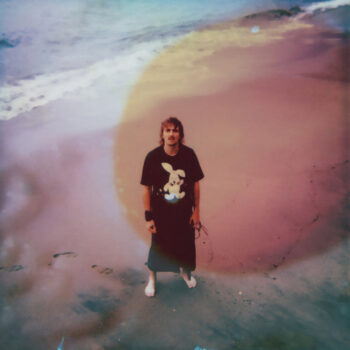
Over the past decade, Martin Luke Brown has built one of UK songwriting’s richest and most emotionally agile catalogs, both as a solo artist and as a founding member of FIZZ alongside Orla Gartland, dodie, and Greta Isaac. His 2023 debut album damn, look at the view ! marked what he calls “the TRUE beginning” of his project, the place where he finally felt he found his voice; last year’s man oh man ! explored masculinity, friendship, closure, and new beginnings through a hazy emotional lens that still feels deeply true to that moment in his life.
“It sounds like that time in my life which is all I could ask for really given my project is always aiming to be a time capsule,” Brown tells Atwood Magazine. “It’s such a stoner record and I was definitely in that sort of space literally and emotionally. It was an insanely emotional time and I just wrote my way through it in this sort of hazy confused way. It sounds like my truth at the time and that’s probably why I’m still proud of it.”
That time-capsule instinct carries into life & death etc, out September 18th via Bright Antenna Records, but the emotional temperature has changed. If Brown’s first record feels, in his words, “naïve and cute,” and his second sounds like “the breaking down of that youthful optimism,” the new album brings those two energies into contact: Lit by the wisdom of someone who has had to move through the dark to find the party.
“It’s celebratory but in a defiant, ‘I’ve been through some shit to get here’ sort of way,” he explains. “It’s much more chaotic and alive in a way I hope is as enjoyable for the listener as it was for me making it.” Written and produced with longtime collaborator Matt Zara, the record turns toward what Brown calls “the beautiful middle ground” between life, death, and everything else – fleeting conversations, hazy nights, emotional collisions, small ordinary moments that somehow become the whole point.
“dream state” is the bridge into that release. The song begins with the body trying to speak through symptoms – “There’s a cloud in my head, a lump in my throat, a pain in my body, it wants me to know” – before Brown admits the pattern with devastating plainness: “That all of my problems, I never solve them, I just run away.” The music makes that running feel urgent at first, all soft-focus glow and dream-lifted motion, but the lyrics keep tugging the listener back toward the ache beneath the haze. Fear becomes a feeling, denial becomes a place, California becomes an imagined escape route, and the chorus turns procrastinated pain into one of the album’s most irresistible hooks. “One day I have to face it, but not today” lands like a joke, a confession, and a survival strategy all at once.
Stuck in my dream state somewhere
In California wasting away
One day I have to face it
But not today
Stuck in my dream state somewhere
I’m sat on board a familiar train
One day I have to face it
But not today
Ooooooh…
“It felt like the perfect bridge between the last project and this one,” Brown says. “It starts off kind of hazy and stonery and then grows into this wide-open expanse of harmonies and key changes and says ‘feel it’ about 20 times. The rest of the album is me FEELING IT, you know?”
“It’s all about the perils of avoidance!” he muses. “It’s about a time where I was literally running away from pain, both physically and mentally. In the context of the album, this song is the moment where the emotional drain begins to unblock, and the fog starts to clear, and it starts to become a big celebration of emotion rather than a turgid wallowing in repression.”
This celebration arrives gradually, then all at once. “dream state” may begin as a cloud-walk, but by its bridge, the song has started shaking itself awake: “Boy you don’t have to be dyin’ all the time / yeah you got your life / so live it.” The refrain that follows – “There’s a feeling there / SO FEEL IT!” – is the whole song cracking open, avoidance giving way to sensation, numbness giving way to appetite. Brown has described life & death etc as a record about being here, fully and messily, and “dream state” captures the moment that philosophy stops being an idea and becomes a bodily command. It does not shame the dreamer for drifting; it simply insists that life is waiting outside the fog.
“‘Feel it’ is the key part,” Brown explains. “Most of the song is talking about how I was so numb for so long. I think you die a lot of deaths while you’re alive – you grieve and you open and close chapters. but I think one of the biggest deaths is a life lived without embracing emotion. It’s like, the whole point of life? To experience and f***ing BEING here. That’s how I see it, anyway.”
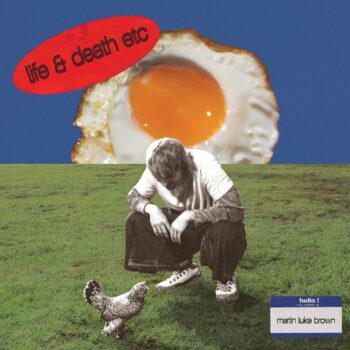
This aliveness is also shaping Brown’s sound. Where previous records sometimes felt like private weather systems, life & death etc leans into collaboration, ceremony, and community as creative fuel. Brown speaks of wanting music to feel alive, and “dream state” embodies that mission in miniature: It’s soft and radiant, but never sealed off; dreamy and loose, but constantly moving toward release. Its warmth feels communal, a song that could soundtrack a walk, a barbecue, a morning coffee, a half-dazed drive through a city glowing in late sun. Brown hopes the music plays a part in those small scenes – the everyday highlights that can feel, in the right light, almost spiritual.
“My main motive is to be as collaborative and community orientated as possible,” Brown says. “I think music is meant to be ceremonious. I’m trying to make music that feels ALIVE and I find that infinitely easier when there’s more people involved. More people equals more life.”
“I hope they just have a nice time making breakfast or going for a walk or having a barbecue with friends or some shit,” he adds. “Whatever really. It’d be nice for it to provide some vibe to the highlight reels of people’s lives… I think that stuff is minor, but it’s an unbelievable privilege. It’s spiritual! To play a part in those little moments would be lovely.”
That is the magic of “dream state”: It transforms avoidance into invitation. Brown doesn’t deny the fog, the ache, the numbness, or the urge to disappear somewhere beautiful for a while; he writes through them until the song becomes a hand reaching back toward the body. Soft, sweet, glistening, and buoyant, “dream state” feels like walking on a cloud just as the sky begins to clear – a celebration of emotion from an artist learning, in real time, that feeling everything might be the only way to truly wake up.
“There’s a feeling there / SO FEEL IT!”
“Crüel to Be Distant”
by TAUROSome songs feel like the golden hour stretching itself into a whole night.
The air turns honeyed, the edges blur, and the whole world seems to glow with that rare, suspended warmth that makes even uncertainty feel beautiful for a moment. It’s the kind of atmosphere that invites you in before you realize there’s an ache moving underneath it.
TAURO’s “Crüel to Be Distant” drifts in like a warm breeze on a hot summer evening – sweet, lush, and disarmingly easy to fall into. It’s a golden-hued pop reverie that seems to soften the room around it, with radiant guitars, pillowy keys, aching pedal steel, and melodies that melt in the mind like butter. Beneath that easy glow, the Toronto duo sing about the slow unease of realizing someone you love is pulling away – the evasions, the half-truths, the gut feeling that turns distance into its own cruelty.
I don’t believe you in the summertime
I don’t believe you in the fall
I don’t believe you when its snowing outside
No I don’t believe you at all

Released in February and featured on TAURO’s April debut album Act I, “Crüel to Be Distant” turns emotional distance into a beautifully lush pop song with a guarded heart. Cynthia Tauro and Brendan Canning keep the surface dreamy, bright, and welcoming, but the hurt underneath is unmistakable: This is a song about intuition, self-worth, and the cruel little silences that tell us more than words ever could.
A collaborative project between jazz-trained pianist and songwriter Cynthia Tauro and indie-rock mainstay Brendan Canning of Broken Social Scene, TAURO formed after the pair met backstage at Toronto’s Field Trip festival in 2022 and began writing together from Tauro’s home studio. Their world draws from indie pop, jazz harmony, R&B groove, neo-soul warmth, and soft-focus dreaminess, but the point was never to stay in one clean lane. “We’re essentially a pop group who don’t want to be pigeonholed with, ‘oh they sound like this or that,’” TAURO tell Atwood Magazine. “We’re getting our project off the ground and there are so many ways to present musical ideas, so why stay in a narrow lane. We’re here to have fun making music and hopefully affect peoples lives in some small meaningful way.”
That openness shapes every corner of Act I, a debut rooted in trust, intuition, and the pleasure of letting different musical worlds collide. Tauro cites Bill Evans, Carole King, and Sting among her major influences, while Canning’s references stretch from Air to Frank Zappa; add core collaborators Kintaro Akiyama, Thom D’Arcy, and Spencer “Moose” Muscio, and the album becomes a meeting place for texture, groove, feeling, and instinct. Rather than forcing a single identity, TAURO chose the songs that felt strongest – a decision that gives Act I its warmth and range.
“Act I gives the listener a glimpse into the TAURO world,” Tauro shares. “It’s a joint effort of myself and Brendan, already coming from slightly different musical backgrounds and influences… Then throw in our three main collaborators – Kintaro Akiyama, Thom D’arcy and Moose and you have so many more worlds that collide. We chose what we felt were the strongest tunes vs. trying to be genre-specific to keep the algo’s happy. Creativity and overall feeling was priority for us.”
“Crüel to Be Distant” distills that spirit into three minutes of sun-kissed unease. Produced by Thom D’Arcy, the song came together from a studio session built around acoustic guitar, Wurlitzer, bass, and drums, then slowly expanded into the warm, glistening arrangement heard today: radiant guitars, lush keys, aching pedal steel, and melodies that seem to melt in the mind like butter. It goes down smooth – almost too smooth – which is exactly why its emotional tension works. TAURO wrap a song about avoidance and suspicion in instrumentation so welcoming that the ache has time to sneak in. “Something don’t feel quite right / you’re just a little bit off,” they sing, and suddenly the breeze carries a chill.
Something don’t feel quite right
You’re just a little bit off
Something deep in the pitch of your voice
That I’m not sure how to clock
But baby it’s cruel to be distant
Anyone would agree
And I’m a fool cause i missed it
You’re keeping something from me
“‘Crüel to Be Distant’ came together in an interesting way,” Tauro explains. “We were in the studio with Thom D’arcy, and the three of us came up with the basic structure – pretty much the entire song without lyrics or melody. nothing was coming to mind for any of us, so we all went home. that night, Thom sends us a rough version with lyrics and melody. Brendan and I loved it and immediately felt connected to the lyrics, so with a few tweaks here and there, that’s what you hear today.”
This immediate connection makes sense: “Crüel to Be Distant” captures a feeling most people recognize before they can prove it. The song is not about dramatic confrontation so much as the small atmospheric shift that comes before it – the pitch of a voice, the dodged conversation, the partner who is physically present but emotionally somewhere else. “But baby it’s cruel to be distant / anyone would agree / and I’m a fool ’cause I missed it / you’re keeping something from me,” TAURO sing in a chorus so sweetly catchy it almost softens the accusation. Almost. The hook is gorgeous, but the hurt inside it is clear: Distance can be its own confession.
“We’ve all been in those relationships where you’re almost positive your partner is hiding something from you,” TAURO say. “Well, you’re lucky if you have NOT been in this position. But this song speaks directly to that feeling and almost gives comfort to the listener saying how it’s not okay to do that and it is ‘CRÜEL.’”
“Distant is someone who’s always avoiding conversation or confrontation,” they add. “Never wanting to talk about the root problem, and also just physically keeping their distance.”
Do you see your reflection
Stealing moments in time
Petty misunderstandings make me
Feel like I’m crossing a line
Some people might feel nervous
Some people just too shy
Some people know exactly what’s what
And don’t mind telling you lies
This emotional clarity is what keeps the song from drifting away on its own beauty. “Crüel to Be Distant” is dreamy and polished, but it never loses sight of the person standing inside the ache, trying to trust what their body already knows. The final lines sharpen that realization into a boundary: “It’s a hard line and I don’t like the feeling / of being the one who stays / hard line and I don’t mind you leaving / you were never here anyway.” It’s a devastating turn because it names the relationship for what it has become – not a shared space, but an absence dressed up as connection. TAURO make that truth feel warm, golden, and strangely freeing, like stepping out of a room where the air has gone stale and finding the night still soft around you.
But baby it’s cruel to be distant
Anyone would agree
And I’m a fool cause I missed it
You’re keeping something from me
“I hope listeners feel understood and even validated for how they feel if they’ve ever felt a similar feeling,” Tauro shares. “And if not, I hope they just enjoy the catchy melodies and pedal steel guitar! This is not the first song about an ally being sneaky, nor will it be the last.”
Sweet as a summer breeze and sharp where it counts, “Crüel to Be Distant” is TAURO at their most inviting and quietly incisive – a lush, glistening pop reverie that turns emotional avoidance into something you can hum, sway to, and maybe even recognize yourself inside. Its warmth is undeniable, its chorus irresistible, but the song’s real power lies in the way it lets beauty carry a boundary. Distance may be cruel, but TAURO make clarity sound radiant.
It’s a hard line and I don’t like the feeling
Of being the one who stays
Hard line and I don’t mind you leaving
You were never here anyway
“lemon gelato”
by CassiaMoving on can feel like getting drunk on sunlight: Warm, strange, and just disorienting enough to make the past look beautiful again.
Cassia’s delicious “lemon gelato” catches that woozy in-between with a smile on its face and a bruise beneath the skin – a sun-soaked, synth-glazed indie pop reverie about breaking old loops, slipping out of stale patterns, and trying to leave a former self behind before the heart has fully agreed to let go. Sweet, hazy, radiant, and instantly singable, the title track off the UK trio’s forthcoming fourth album lemon gelato moves like summer arriving in slow motion: Guitars flickering like heat off pavement, percussion steady and loose, vocals melting into the chorus as Rob Ellis sings, “Bite lemon gelato to hurry along my mind / just having a good time.” The line tastes bright, but it doesn’t land clean. Pleasure becomes distraction. Lightness becomes a way to outrun the weight.
I live my life by the seat of a gun I hear
I learn my lessons while driving a hundred and
I pay my dues to the heathens at sunrise
Bite lemon gelato to hurry along my mind
Just having a good time
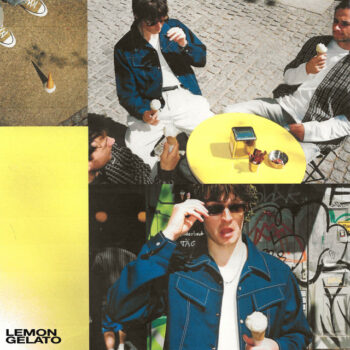
Released in May, “lemon gelato” arrives as the second single and title track from Cassia’s upcoming album of the same name, out August 28. It follows “lovedrunk” and builds on the open-air momentum of last year’s everyone, outside, a record that found Cassia stretching their globally influenced, synth-driven indie pop into a wider, freer world. Active for just over a decade, the Macclesfield band – comprised of Ellis, Lou Cotterill, and Jake Leff – have long had a gift for making escapism feel emotionally grounded, folding warmth, rhythm, and movement into songs that shimmer without losing their human center. Here, that instinct feels especially alive: “lemon gelato” is breezy enough for the start of summer, but its sweetness comes laced with uncertainty, memory, and the surreal sensation of being pulled back toward a person or pattern you’re trying to outgrow.
“‘lemon gelato’ is about breaking the loop – trying to move on and leave an old part of you behind, even if you’re not sure you’re ready to,” Cassia tell Atwood Magazine. “It’s like a woozy rumination about that push and pull when someone drifts in and out of your life, leaving everything feeling exposed, uncertain, and a bit surreal.”
I live my life by the seat of a gun I hear
I learn my lessons while driving a hundred and
I pay my dues to the heathens at sunrise
Bite lemon gelato to hurry along my mind
Just having a good time
That loop is the song’s engine. Cassia write from the dizzy place where progress keeps getting interrupted by old gravity – the same thoughts returning, the same person reappearing, the same unfinished feeling knocking at the door like no time has passed. “I haven’t moved in ages, you come right back / without a warning like nothing at all, my, my,” Ellis sings, his voice slipping between ease and exasperation. The music keeps floating forward, all laid-back glow and hypnotic repetition, but the lyric keeps snagging on what hasn’t been resolved. That contrast gives “lemon gelato” its pull: It sounds like a good time because part of it wants to be one, but the song knows how often “having a good time” becomes the story we tell ourselves when the truth is harder to hold.
You took him out to see what becomes of you
You lived a mess a while tied up with someone else
I haven’t moved in ages you come right back
Without a warning like nothing at all
My my, just having a good time
“The song came from that feeling of realising you’ve been moving in circles for a while repeating the same thoughts, the same habits, the same versions of yourself whilst carrying the feeling of wanting to step out of that loop,” Ellis explains. “Not necessarily in a dramatic way, but in a quiet, private way.”
“For me, ‘lemon gelato’ has this lightness to it, but underneath all that there’s a real sense of release,” he adds. “It’s about trying to move on whilst also being pulled back in the same old situation or the same way of thinking.”
Written in Berlin and made quickly after touring everyone, outside, lemon gelato captures Cassia in a looser, more instinctive state. The band describe the new album as a record built from unfiltered thoughts, rushed takes, human imperfections, and ideas that only revealed their meaning after the fact. That spirit suits the title track beautifully. “lemon gelato” doesn’t feel polished into sterility; it feels sun-warmed and slightly unstable, a song with sand in its shoes and a strange little ache behind its eyes. Its groove is relaxed but never sleepy, its melody immediate but not obvious, its atmosphere sweet enough to lure you in before the emotional disorientation starts to bloom. “I left my love by the sea as it flows back in / I like my odds while driving alone,” Ellis sings, and the image opens the song outward: Love left behind, memory returning with the tide, freedom measured in motion.
“The album came together quite quickly after we got back from touring everyone outside, so I think we carried a lot of that energy into the studio,” Cassia say. “We didn’t overthink the whole music making thing too much.”
“Drums weren’t mic’d up with absolute precision, guitars and vocals were recorded in haste, it was very in the moment,” they continue. “It really felt like we took the best things we’d learned from everyone outside, the freedom, the openness, the sense of space – and let them sink into the new songs almost subconsciously.”
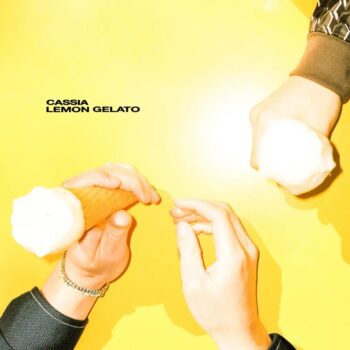
This openness extends to the album title itself. “lemon gelato” is a perfect Cassia image: Bright, sensory, playful, fleeting, a little bittersweet if you sit with it long enough. It carries the song’s summer glow, but also its impermanence – the knowledge that beautiful things melt, spill, vanish, and still leave sweetness behind. Cassia lean into that philosophy across the record, making space for change without treating every loss like a catastrophe. The title track becomes a kind of thesis in miniature: Let the old shape loosen. Let the day go wrong. Let the mess be part of the memory. Then step back into the light.
Late, in a loud and starry room you’ll say
Say there’s nothing going on, you’ll say
That I got it all wrong
Can’t afford to go this side of the tracks babe
I left my love by the sea as it flows back in
I like my odds while driving alone
Whatever’s loose of me be undone and left
And all that’s kept will carry me on
“There’s something about ‘lemon gelato’ that captures the spirit of the album for us,” the band reflect. “It feels bright, woozy, a little surreal and slightly bittersweet. It has a sense of impermanence to it.”
“Also, ice creams get dropped,” they add. “And when that horrible moment happens, you can either let it ruin your day or you can go and get another one. It’s not the end of the world. That idea feels weirdly connected to the record letting things fall apart a little, not taking every loss too seriously, and trying to find some lightness in and amongst the mess.”
That lightness is what makes “lemon gelato” linger. Cassia don’t flatten change into triumph or make escape sound simple; they let it feel hazy, sweet, cyclical, and unresolved, like walking home under a late summer sky with an old thought still humming in the back of your head. “Whatever’s loose of me be undone and left, and all that’s kept will carry me on,” Ellis sings. The song’s charm is immediate – that chorus, that groove, that golden blur – but its emotional core keeps deepening with every listen. “lemon gelato” is Cassia at their most intoxicating and open, making music for sunlit streets, half-healed hearts, and anyone trying to move forward without knowing exactly what they’re supposed to leave behind.
A lie, uncovered by dawn
Out loud so everyone else sees
Outside, they’re waiting for us
But here in my arms I can’t give it up
Late, In a loud and starry room you’ll say
Say there’s nothing going on, you’ll say
That I got it all wrong
Can’t afford to go this
side of the tracks again
But here we go again
Shot me down
Shot me down
“American Dream”
by Bekah BossardSometimes freedom is realizing the life you lost was never really yours.
Tender and smoldering, with a quiet triumph glowing under the ache, Bekah Bossard’s “American Dream” lingers in that beautifully bold afterglow – the place where heartbreak no longer burns the way it used to, but still leaves its shape behind. Originally released last November and later featured on Bossard’s March EP Mothers By July, the song is a tender tempest of indie pop catharsis: Intimate and aching at the edges, soul-stirring and cinematic at full bloom, raw with the shock of realizing someone else’s dream life was never meant to be yours.
I never gave you all of me
I know you got bored
of loving half a girl
I wish I did things differently
but now years have passed
what good are words?
We were friends in my dream last night
just like how it used to be
before we crossed too many lines
no we were never good at simplicity

Born in Los Angeles, raised in Devon, and now based in London, Bossard writes with the kind of exposed nerve that makes confession feel less like a genre choice than a bodily condition. Her music has always carried that direct line from heart to mouth: From the coming-out grief of “What You Wanted” to the anxiety-stricken intimacy of “Four Walls,” the song that first marked her as an Atwood artist-to-watch in 2023, Bossard is steadily building a catalog around emotional survival, queer self-recognition, and the people who help us stay alive through the worst of it. Mothers By July deepens that world with new force, pairing gritty guitars, cinematic textures, and brutal tenderness with songs about family, queerness, grief, love, and the futures we inherit before we know whether we want them.
“I’m excited that the music I’m making now is still honest and raw – perhaps more than ever,” Bossard tells Atwood Magazine. “It’s always been sort of brutally personal but was blurred through imagery and metaphors and now it is even more exposed. I’m proud that despite life’s inflictions, I have stayed true to that part of myself, because it has led me to connect with so many wonderful people. And that is kind of the point of life to me: Making things and creating community through the process!”
This level of exposure gives “American Dream” its emotional double vision. The song finds Bossard addressing an old love head-on, not from the fresh wound of abandonment, but from the more complicated distance of acceptance. “Now you’re living the American dream with a girl who doesn’t look a thing like me,” she sings, letting the phrase carry all its irony: The picket fence, the shiny future, the tidy life that never quite fit. There’s pain here, but no smallness. Bossard isn’t clawing at the past or pretending it meant nothing. She’s looking at it clearly enough to see both the sweetness and the mismatch – the strange mercy of not getting the life you once mistook for happiness.
“I wrote this when I realised I was happy for my exes,” Bossard explains. “Not necessarily happy that we broke up, parts of heartbreak will always sting on some level I think, but happy that in strange ways we both got what we wanted, even if it wasn’t in each other. I think sometimes we can cling to ideas of things we once wanted, but in time come to realise it’s not something we want anymore at all.”
Sonically, “American Dream” grows like a confession catching fire. It starts with Bossard close to the mic, voice unguarded and immediate, as if the song begins before she’s had time to brace for it. Guitars chug underneath with a restless pulse, the arrangement slowly gathering heat until the whole track opens into a feverish, full-bodied anthem: Drums surging, textures glowing, Bossard’s vocal rising with ache, clarity, and a breathtakingly radiant surrender. It’s cinematic without losing its closeness, raw without collapsing into ruin, a song that understands growth as both grief and release. By the time she admits, “I’m not as bitter as I thought I would be,” the line feels less like a confession than a breakthrough.
Now you’re living the American dream
and I’m not as bitter as
I thought I would be
I don’t want the past
no you can keep it
but sometimes I wish I could be
your American dream
It’s not lost on me that this is the third song named “American Dream” to grace my Editor’s Picks. Recent years have seen artists from wildly different vantage points wrestling with this supposed promise of upward mobility, freedom, and equality for all – not as a fixed national myth, but as a cracked mirror for whatever life we were taught to chase. In Bossard’s hands, the phrase becomes both personal and queerly defiant: A name for the future she once imagined with someone else, and a rejection of the tidy, heteronormative life that was never hers.
“The phrase was very tongue and cheek because of my dual nationality,” she laughs. “And of course the deeper meaning being that the futures I had in mind with my exes turned out to be something that was never meant for me after all – much like the original idea of ‘the American dream.’ I don’t want a picket fence and a hardworking, nice husband. I want a hot girlfriend in a beautiful apartment, where nothing is shiny and polished but it is lived in and everything is real and fully felt and meaningful. That’s what I want – and I’m lucky that I’ve mostly already got it, so turns out I’m grateful that I never got my American dream after all!”

This sweet realization sits beautifully beside the EP’s title track, “Mothers By July,” a devastatingly intimate song about grieving the traditional future queer people were taught to expect, even while living lives full of love. Across the four tracks of Mothers By July, Bossard keeps returning to the lives we inherit and the ones we choose instead, threading family, grief, heartbreak, queer longing, and self-recognition through songs that feel as exposed as they are expansive. Together, these songs form a portrait of Bekah Bossard at her most open and assured: An artist sorting through inherited dreams, old heartbreaks, chosen love, and the difficult freedom of wanting something truer than what she was promised. “American Dream” doesn’t turn acceptance into a clean ending; it lets the ache remain, lets the sweetness remain, and still walks away with its head up.
“Oh how sweet,” Bossard sings at the end, and the phrase holds everything: The old dream, the ex’s new life, the life Bossard has claimed instead. Through that lens, “American Dream” turns into a spellbinding indie pop reckoning with who we thought we’d be, who we tried to become for others, and the beautiful relief of realizing we were never destined to live inside someone else’s fantasy. Tender at the start and towering by the end, “American Dream” aches, burns, and blooms into the sound of a heart finally choosing the life that was waiting for it all along.
— — — —

Connect to us on
Facebook, 𝕏, Instagram
Discover new music on Atwood Magazine
Editor’s Picks
follow EDITOR’S PICKS on Spotify