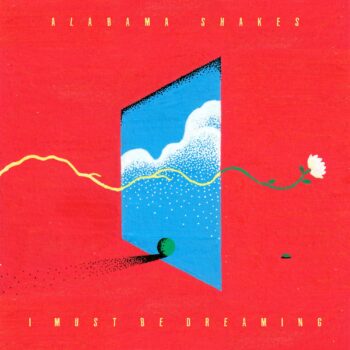
Alabama Shakes return after more than a decade with the feverishly spellbinding ‘I Must Be Dreaming,’ a soul-shaking third album wrestling with love, mortality, political disillusionment, and the stubborn possibility of hope – all while pushing their singular blend of rock, soul, blues, and fearless experimentation further than ever before.
Stream: ‘I Must Be Dreaming’ – Alabama Shakes
Ten years is a long time to wait for a band that once sounded capable of setting the air on fire.
Long enough, certainly, to wonder whether that heat would ever come roaring back again.
One of the most thrilling and formidable rock bands of their generation, Alabama Shakes return on I Must Be Dreaming as if no time has passed at all – only the temperature has risen. Their breathtaking third studio album is bold, dramatic, deeply seductive, and absolutely alive, an 11-song eruption of psychedelic soul, blues, rock, and restless experimentation that reasserts just how singular the chemistry between Brittany Howard, Heath Fogg, and Zac Cockrell has always been.
The Shakes still know how to smolder, still know how to howl, still know how to stretch a groove until it feels almost dangerous – but there’s a newfound openness running through these songs, too. Love and mortality brush against political disillusionment, human connection, anger, wonder, and a stubborn belief in possibility, everything rushing forward at once with the kind of intensity that hits you square in the chest while the music keeps slipping toward stranger corners. I Must Be Dreaming picks up the exploratory thread of 2015’s critically acclaimed Sound & Color and pulls it deeper into psychedelic terrain, sounding unmistakably like Alabama Shakes while expanding what that name can contain.
The entrance alone is enough to raise goosebumps. “Tea Time” opens the door slowly, Howard singing over an arrangement that feels less like an introduction than an invocation, the band gathering around her with extraordinary patience. Cockrell’s bass anchors a winding flute line and a rhythm that keeps shifting its weight beneath Howard’s vocal, while Howard spends much of the song in a lighter register, letting delicacy carry the same authority her famous howl once monopolized. The effect is almost ceremonial, hovering between grounded soul and a dream state that never fully settles. “I’m building a kingdom / In my soul / Where the fires first burned / Let flowers grow,” she sings, and suddenly the listener is dropped back into Alabama Shakes’ universe: Earthy and cosmic, spiritual and physical, deeply rooted yet forever reaching beyond itself.
The song’s vision widens from rivers, wildflowers, and soil toward a world where shields become mirrors and weapons become shelters, giving I Must Be Dreaming a gorgeous opening statement of purpose. After a decade away, Alabama Shakes reintroduce themselves by imagining what could grow from all that fire. Howard has called “Tea Time” her favorite song on the record, telling the Associated Press that something about its music sounded “both ancient and unknown, but super-familiar.” That description could just as easily apply to the album around it.
If I had an army
I’d march them back home
Back to their rivers
Their wildflowers, their soils
I’m building a kingdom
In my soul
Where the fires first burned
Let flowers grow
That return carries real history behind it. Rising out of Athens, Alabama, the band broke through with 2012’s Platinum-certified Boys & Girls and “Hold On,” then blew their own doors off three years later with Sound & Color, a No. 1 album that earned three Grammys and established Alabama Shakes as one of the defining American rock bands of their generation. Atwood Magazine ultimately ranked Sound & Color its No. 1 album of 2015 in our Albums of the Decade retrospective, celebrating the way Alabama Shakes fused funk, blues, rock, and soul into music capable of holding fury and refuge in the same space. That history raises the stakes of this return considerably. Trying to recreate a record that radical and beloved would have meant standing still.
By 2017, years on the road had worn the band down enough that continuing no longer made sense, and Alabama Shakes stepped away. Howard subsequently released Jaime and What Now, pushing deeper into funk, jazz, electronic music, and psychedelic experimentation; Fogg released music as Sun on Shade; Cockrell accumulated ideas of his own. Their reunion arrived almost by accident in late 2024, when, according to the Associated Press, longtime friend Bo Hicks asked Howard to help a struggling Tuscaloosa brewery that had supported the band in its earliest days. She called Fogg and Cockrell, a benefit performance followed, and playing together again opened a door none of them had been actively trying to force.
The plan initially extended only as far as a few new songs and a tour. Cockrell arrived with a cache of demos; the band soon realized they already had the bones of an album. Working in Nashville at Sound Emporium and Blackbird with longtime collaborator and co-producer Shawn Everett, Alabama Shakes embraced the same appetite for discovery that drove Sound & Color, now with a decade of separate musical experience feeding the room. Flute, harpsichord, sitar, layered voices, strange textures, and spontaneous instrumental choices entered the sessions, with Noah Bond joining on drums. The process sounds embedded in the finished record: three musicians rediscovering one another through curiosity rather than nostalgia.

The first spark arrived last summer with “Another Life,” Alabama Shakes’ first original release in a decade and still one of this record’s great gut-punches. It still sounds like a transmission from the cosmos. Smoky keys and a bluesy guitar drift in like storm clouds before Howard’s voice cracks them open, while Fogg’s guitar cuts through the arrangement in jagged, electric flashes as the song pushes from slow-burning R&B and blues into a distorted psychedelic surge. Its gradual expansion mirrors the way one stray memory can suddenly overwhelm an otherwise ordinary moment.
Howard is staring down love’s alternate possibilities here, but “Another Life” reaches further than romantic regret. “Can we try again? / Can we try in another life?” transforms the end of one relationship into a question about every road untaken. Hurt exists alongside acceptance; goodbye becomes temporary on a cosmic scale. The song imagines identity as plural, each decision creating another possible self somewhere beyond reach. Howard’s performance carries that vastness physically, beginning almost suspended inside the arrangement and eventually breaking through it with a vocal that seems too large for the room containing it.
“When we wrote ‘Another Life,’ I was thinking about all the lives we carry,” Howard shared last year. “The ones we’re living right now, the ones that slipped away because of different choices, the what ifs, the what wasn’t meant to be, the goodbyes, and the chance encounters that feel divine. This song is about those threads and how they stretch across time and space, connecting every version of who we are. It’s about letting them come together, letting them harmonize, and realizing that goodbye isn’t really goodbye. It’s more like I’ll see you later. A collective story that never stops unfolding. I’m glad we opened this door into this reality of us making music together again.”
That final sentence gives “Another Life” another dimension inside the album. When The Guardian later asked Howard whether the song might, even subconsciously, reflect Alabama Shakes themselves, she allowed that possibility, explaining that coming back together “feels good and honest.” Heard that way, “Another Life” doubles as both breakup elegy and accidental reunion anthem, its imagined second chance becoming real before the record has even reached track three.
“Garden” brings a different kind of heat. The track is sly, sensual, and almost taunting in the way Howard warns someone to care for what they have before somebody else does. “If you don’t water your garden, I will / If you don’t show her you love her, I will,” she sings, extending the metaphor until desire itself starts blooming through the arrangement. Alabama Shakes have always understood restraint as a form of power, and “Garden” positively simmers – every pause, groove, and vocal curl adding to the delicious tension of watching someone realize too late what they failed to nurture.
Howard has described love itself as a garden requiring continual care, and told the Associated Press that she wanted to frame the love song as “a little mischievous.” That playfulness gives the devotion here appetite and confidence, with just enough threat to make the whole performance smirk.
Then comes “I Feel Hope Coming,” and the record’s pulse widens beyond the self. Airy harmonies and psychedelic soul surround one of Howard’s clearest political statements, the music carrying a curious mixture of unease and uplift. Howard confronts martial law, economic exploitation, polluted air, manufactured enemies, and the exhaustion of watching people get beaten down, yet the chorus keeps reaching toward love. “I feel hope coming / I feel love coming,” the band repeat, building repetition into conviction.
“This younger generation makes me feel hopeful because they can see through all the political lies – that song’s about holding onto that hope, and refusing to give up,” Howard says. Fogg adds, “I’m really happy that song exists. It came from such a joyful moment of collaboration, and exemplifies everything I love about this band being reborn.”
That word matters here: reborn. Their return has meaning because the chemistry itself still sounds joyful, combustible, hungry to engage with the world around them.
The album’s middle stretch reveals how carefully Alabama Shakes manage pressure. “Time” begins with Howard exhausted by acceleration – “Seems like it’s speeding on by / I’m tired of keeping up” – before the arrangement opens into an extended instrumental passage that loosens the song’s frame, the music itself stretching the resource its narrator desperately wants more of. Repetition slows perception. The groove wanders. By the time Howard arrives at “All you want is time,” the music has created a small pocket of it.
“Friends” snaps that reverie with rougher edges and a more volatile charge. Desire curdles into rupture as Howard repeats “We can’t be friends anymore,” yet attraction keeps leaking through the boundary she is trying to establish. “Easy” then lowers the temperature again, creating one of the album’s most necessary exhalations. Its central revelation – “I didn’t know joy could be so quiet” – reframes love as safety rather than combustion, reinforced later when Howard sings of a love that inspires peace and grows back into her. Across these three songs, I Must Be Dreaming moves from scarcity to fracture to restoration, changing its musical density as the emotional stakes change shape.

“How Love’s Supposed to Go” might be one of I Must Be Dreaming’s most irresistible deep cuts, a full-bodied declaration of devotion built around Howard insisting that real love survives movement: “It goes up and down, it goes back and forth / It never really goes if it’s really love.” Its buoyant groove gives the back half of the album a welcome lift, Howard sounding almost breathless with determination as the lyric keeps converting affection into motion. A smoldering guitar solo tears through the arrangement along the way, one of the album’s most electrifying instrumental moments, sending all that devotion surging into pure release.
The song carries itself with tremendous confidence, pursuing another person with care through attentiveness – “The more that you let me know you / The more I can care for you.” There’s such muscularity in Alabama Shakes’ tenderness here. Love becomes active, persistent, almost athletic: Running the distance, gathering someone up, choosing again and again to meet another person where they are.
What are you afraid you might lose?
The more that you let me know, you
The more I can care for you
And if you only knew how easy it is to love you
As easy as breathing in
I’m gonna run you down
Running the distance for love
I’m running the distance
I wanna gather you up
And show you your parts of our love
And I wanna make it
I wanna make it
“Waist Deep” sinks into murkier territory. The momentum grows more intense, almost gravitational, as though the arrangement itself has stepped into the creek Howard describes. Howard’s narrator lives “like an angry child,” forever in trouble, forever caught in the downstream consequences of what people take out on one another. Guitars hum, piano churns, drums pound out a beat, and the creek becomes a brilliant emotional image: Pain follows gravity. “When you can’t take anymore / Where does that go? / It flows downhill to me,” she sings, tracing the way hurt transfers from body to body until everybody is standing in the same muddy water.
The way I live
Like an angry child
Who wants a mother
To calm them down
Always in trouble
Waist-deep
Freedom you found
But can’t keep
Nobody’s looking
When you’re playing in that creek
The song is heavy, bruised, and startlingly intimate, another reminder that Alabama Shakes’ power has always come from their willingness to drag abstract emotion back into the body where it belongs. Its later question – “Is all this hard stuff behind me? / Can I spend more time now / Not trying?” – also reaches backward toward “Time,” giving the album’s concerns with effort, exhaustion, and inherited hurt a deeper current.
I come by it honest
I don’t think too much on it
I got something worth,
worth taking out on somebody
But when you can’t take anymore
Where do you go?
You roll straight downhill to mе
“American Dream” arrives near the album’s end as the record’s most direct confrontation with the surreal world lurking inside its title. It also contains some of Alabama Shakes’ most menacing restraint. A creaky riff rubs against slow, steady drums while Howard sings from deep inside the arrangement, ghostly harmonies circling her voice. The song advances with deliberate weight, every element seeming to pull against forward motion. Howard told the Los Angeles Times that the instrumental Cockrell sent her felt “sludgy and hard to wade through,” a physical quality that steered her thoughts toward the environment and the state of the country around her.
The song begins with six deceptively plain words: “I thought we wanted the same things.” Peace, love, happiness, opportunity, freedom – ideals once sold as foundational begin sounding increasingly impossible as Howard surveys economic strain, gun violence, environmental neglect, doublespeak, and a culture powerful enough to tell us what we want before we know it ourselves. “I must be dreaming,” she repeats until the phrase becomes disbelief, exhaustion, accusation. Yet even here the album refuses a single reading.
(The American Dream)
Peace, love, happiness
(The impossible dream)
Opportunity, freedom
I must be dreaming
Howard has called “American Dream” a snapshot of life in 2026, rooted in the strain of living inside systems that demand more while supporting less. Speaking to the Los Angeles Times, she put that rupture in even more direct terms: “There’s supposed to be this social agreement between us and our government,” she said, arguing that the government has broken it. The song gives that breach a physical presence: the promise remains visible while the structures meant to deliver it keep slipping further out of reach. Instead of converting anger into speed, Alabama Shakes let it accumulate. Every measure seems coated in grit.
Even the song’s relationship with sleep keeps changing. “I must be dreaming” first registers as disbelief. “I wanna go back to sleep now” suggests exhaustion. “I can’t keep dreaming” sounds like awakening. Then the outro repeats “Keep dreaming” until the phrase hangs between command and surrender. That ambiguity opens directly onto the album title itself: dreaming can mean delusion, refuge, imagination, or the radical insistence that another reality remains possible.
“There’s a double meaning to it,” Howard explains of I Must Be Dreaming. “It could be saying, ‘I must be dreaming, because the world is so f***ing crazy right now.’ But it could also mean, ‘I must be dreaming, because the world is so incredibly beautiful.’ Both those things can be true at once.”
That duality runs through the entire record. Beauty and horror keep sharing the frame. “Tea Time” imagines flowers growing where fires burned; “I Feel Hope Coming” insists on love amid political exhaustion; “American Dream” stares straight at national disillusionment while the album itself remains almost extravagantly alive. Alabama Shakes sound fascinated by contradiction here, by the possibility that despair and wonder can occupy the same body, the same day, the same song. I Must Be Dreaming inhabits that tension. It plugs into it and sends the voltage coursing through the speakers. The political songs and love songs therefore belong to the same argument: sustaining another person, a community, or a future all requires the ability to imagine that care can alter what comes next.
The closing “Tied To You” brings all that scale back to one person. Howard spends much of the song resisting surrender – “I’m holding it in / I won’t let it go” – before finally allowing the words to spill out. Voices answer and overlap around her, turning the track increasingly playful as its guarded beginning gives way to release. By the outro, “I love you” repeats again and again, surrounded by playful responses – “Giddy up, baby, giddy up,” “Love is free, try me today,” “Now say it back, it’s easy.”
After an album wrestling with political systems, mortality, fractured relationships, time, hope, and all the impossible contradictions of being alive, Alabama Shakes end with the simplest risk imaginable: saying the words plainly and leaving space for another person to answer.

Fearless, restless, and gloriously alive, I Must Be Dreaming is the sound of three musicians remembering exactly what happens when they get into a room together and then using that history as a launch point.
Alabama Shakes have returned with the fire intact, but they are reaching farther now – deeper into psychedelic soul, further into vulnerability, harder into the world around them. The album roars and seduces, aches and sweats, trembles and explodes. It can sound enormous enough to swallow the room and intimate enough to leave Howard’s breath right against the listener’s ear.
The inevitable comparison is Sound & Color, an album whose ambition transformed Alabama Shakes from an extraordinary roots-rock band into something far harder to categorize. I Must Be Dreaming continues that transformation from the perspective of musicians a decade older, each carrying experiences accumulated outside the group. Where Sound & Color thrilled through the shock of discovery, this record often works through patience: rhythms sink deeper, arrangements wander further, Howard gives restraint as much authority as eruption. The connective tissue is the band’s appetite for the unknown. Alabama Shakes still sound most like themselves when they are busy finding out what else they might become.
More than anything, I Must Be Dreaming confirms the creative purpose still crackling between these musicians. Howard is howling again over Fogg’s guitar and Cockrell’s bass, but Alabama Shakes have returned with far greater ambitions than simply proving the old chemistry survived. They sound curious. They sound restless. They sound fully present.
More than a decade after Sound & Color, the doors are wide open again, and I Must Be Dreaming charges straight through them – back into the heat, toward whatever strange and dazzling place waits on the other side.
— —
:: stream/purchase I Must Be Dreaming here ::
:: connect with Alabama Shakes here ::
— —
— — — —
Connect to Alabama Shakes on
Facebook, 𝕏, TikTok, Instagram
Discover new music on Atwood Magazine
© Bobbi Rich
 © Bobbi Rich
I Must Be Dreaming
an album by Alabama Shakes