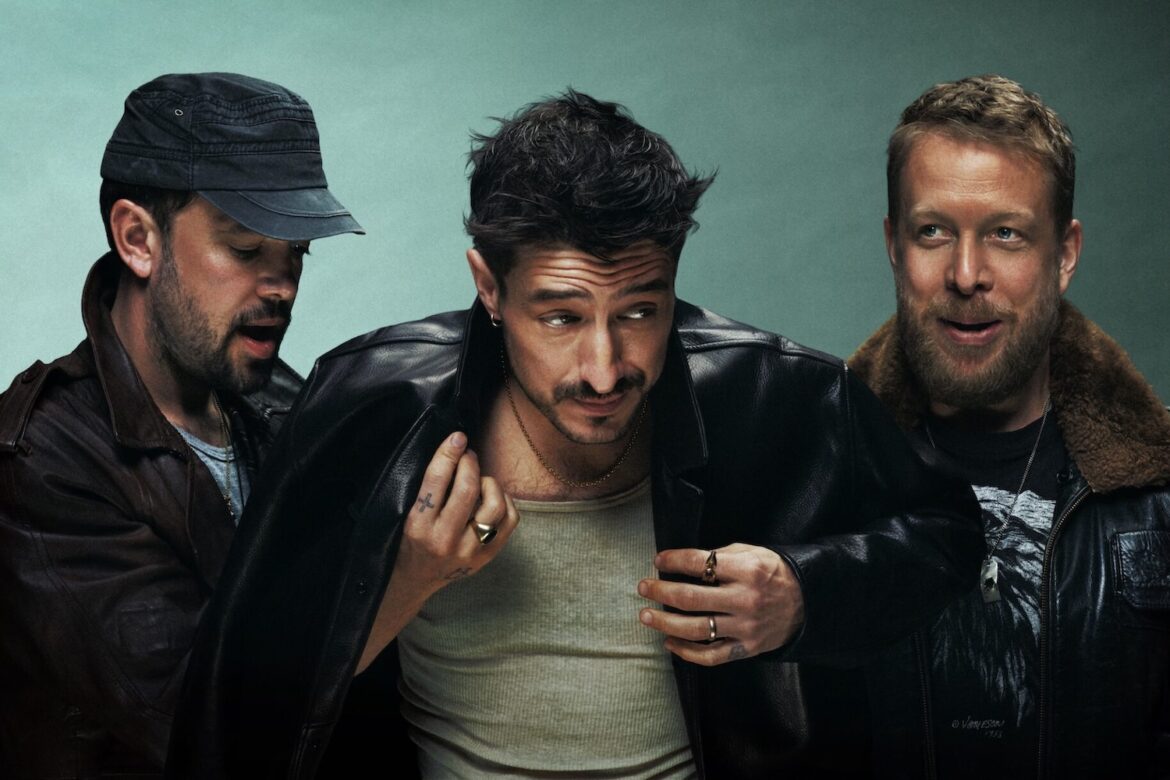
Atwood Magazine’s writers dive into Mumford & Sons’ expansive and confident sixth album ‘Prizefighter,’ a collaborative folk rock record rooted in connection, resilience, and creative camaraderie – unpacking its themes of hope and perseverance, the band’s return to the sound and storytelling that first defined them, and why this feels like their most authentic record yet.
Featured here are Atwood writers Ashley Littlefield, Cassandra Fong, Dimitra Gurduiala, Lauren Turner!

— —
To start, what is your relationship with Mumford & Sons’ music?
Dimitra Gurduiala: I’ve known Mumford & Sons for years now. If I remember correctly, I first discovered them around the time of Wilder Mind (thanks to “Believe”)! I wouldn’t call myself a devoted fan (I’m more of a casual listener), but I’ve always enjoyed returning to their music. There’s something about it that inevitably brings out that familiar, almost nostalgic feeling that folk music does so well, and that’s probably why their songs have always had such a special place for me.
Cassandra: I came for the folk vibes. Stayed for the dramatic banjo energy. Occasionally pretend I’m in a music video. No regrets.
Ashley: The sound of wet brushes hitting a dry canvas filled my area while I was at home in high school. I spent hours on the weekends drawing and painting, and listening to the DirecTV Alternative channel. Mumford & Sons’ “Little Lion Man” from their latest album, Sigh No More, filled the air, fueled inspiration, and calmed my mind. Their folk-stomp sound was unique and refreshing, layered with instruments like banjos, which set it apart. Sigh No More was an album that taught me about hope and perseverance, specifically through the second track, “The Cave.”
Lauren: Mumford & Sons is one of those bands I can say I have been listening to since I was a little girl. Because of that – they hold a very special place in my music library and life. My dad introduced them to me through Sigh No More when I was 10 years old. I remember being instantly captivated by their folk/pub core sounding style. 17 years later, at the ripe age of 27, I can truly say they are one of my favorite bands. “White Blank Page” and “Awake My Soul” are still two of my all time favorite songs that give me chills every time I listen to them – and I think that is such a testament to how much their music has impacted my life.

What are your initial impressions and reactions to Prizefighter?
Dimitra: My first impression is that Prizefighter feels like the work of a band trying to rediscover its momentum, though I’m not sure it completely succeeded in doing that. You can tell it came out of a very collaborative process, and the guest appearances add different shades to the sound without fundamentally changing the band’s core identity. It doesn’t feel like a radical reinvention; rather, it sounds like a band enjoying the process of making music together again. Still, I can’t shake the feeling that something is incomplete.
Cassandra: My initial impression of Prizefighter by Mumford & Sons is that it feels like a confident and collaborative step forward for the band. What strikes me immediately is the sense of companionship in the music. The presence of collaborators like Hozier, Chris Stapleton, and Gracie Abrams gives the record the feeling of a crowded tavern rather than a solitary stage: Voices meeting, clashing, harmonising. Their folk roots still linger like woodsmoke in the rafters, but there is a broader, more modern atmosphere shaping the sound.
Ashley: When I first heard “The Banjo Song” on my Spotify algorithm, it took me back to the room where I was painting back in high school, still reflecting on the discovery of music as I grew older. The cover art was immediately intriguing and influenced my perception of igniting a flame in something – whether it’s about passion, grit, or love – to light a way to see something more clearly. The music on Prizefighter sparks an energetic conversation; throughout the album, the image itself evokes the memory of smoking a casual cigarette while reflecting on life’s impermanence and ever-evolving change.
Lauren: I enjoyed Prizefighter. I agree with the above that it was a very collaborative project for the band, but I kind of admire that. Mumford & Sons have made it pretty clear they are enjoying making music with their friends at this moment in their career. Last year they made an entire tour surrounding it. They traveled all around the US by train on their “Railroad Revival Tour” and performed with many artists. On this album, I loved seeing that mentality continue with names like Chris Stapleton, Hozier and Gigi Perez. Not only are they all incredible, but they fit so beautifully with Mumford & Sons’ sound/aesthetic.
How does this album compare to last year’s RUSHMERE – what are the most striking similarities or differences?
Dimitra: The two albums feel connected in that they belong to the same phase of the band’s career, with Mumford & Sons now operating as a trio. Prizefighter feels slightly more outward-looking to me, almost more conversational. While listening, you can really sense the energy that went into it, as if many of these songs were written in a burst of inspiration, almost impatient to be heard.
Cassandra: Rushmere feels intimate and inward-looking, almost like a quiet return to origins. Named after the place where the band first gathered in their early days, the album carries a sense of nostalgia and rediscovery, leaning heavily on the acoustic textures and folk storytelling that originally defined their sound.
Prizefighter, by contrast, feels broader and more outward-facing. The music still carries the familiar folk undercurrent – acoustic instruments, layered harmonies, and reflective lyrics – but the album reaches further through collaborations and a more expansive production style.
Ashley: RUSHMERE carries themes that remind me more of an internal war one may have with oneself and of letting go of older versions we find in ourselves. The album is emotionally raw and projects more pain in the lyrics. The similarities RUSHMERE has are accountability and a desire for resilience to keep going, as heard in “Surrender” and “Carry On.” Now with Prizefighter, Mumford & Sons seem more defined by hope and perseverance, with strong collaborations that push the album into a bold creative space.
Lauren: I completely agree with Cassandra on this one. Additionally, RUSHMERE was Mumford & Sons’ return to music. They had been away for a couple of years, and this felt like their “coming home” moment. They were also a man down. It only made sense for them to reintroduce and rediscover themselves through the place that started it all. Whereas, for Prizefighter, it feels like they are comfortable and having the time of their lives. They are back storytelling, making music that moves and doing it in a way that is true to themselves.
Mumford & Sons teased Prizefighter with “Rubber Band Man,” “Prizefighter,” and “The Banjo Song.” Are these singles faithful representations of the album?
Dimitra: I think they actually capture the range of the album quite well. “The Banjo Song” clearly nods to the band’s folk roots, while “Rubber Band Man” highlights the collaborative side of the project (and it’s always a pleasure to hear Hozier, too). The title track sits somewhere in between, more reflective and restrained. Taken together, I think the singles give a good sense of the different moods the album moves through.
Cassandra: One could argue that three songs are never really a map of an album – more like three pins stuck rather hopefully into the same continent. “Rubber Band Man” performs the elastic trick that modern folk-rock groups often attempt, it stretches between restraint and release, snapping from quiet introspection into a kind of communal shout. I had assumed the single probably signals something about the album’s ambitions. Not necessarily a radical reinvention, but a widening of the emotional palette? Then there is the title track, “Prizefighter,” and it is slightly grander, a little more theatrical. And finally “The Banjo Song,” whose very name is a wink. It reminds listeners of the band’s old currency, the jangling, rustic signifiers that once defined their sound.
Ashley: “The Banjo Song” is a strong representation that created anticipation for Prizefighter; however, other songs on the album are stronger characterizations that ignite and diversify the album, like “Here (with Chris Stapleton),” “Begin Again,” and “Badlands (with Gracie Abrams).” The songs convey a sense of acceptance and direction, while running with strong emotions and a yearning for love, connection, and belonging.
Lauren: Completely! I find it to be no coincidence that “Rubber Band Man (with Hozier)” happens to be with another one of the biggest trailblazers within this genre, “Prizefighter” is the title of their new chapter and “The Banjo Song” is the sound they are most known for. It seems like they are making a point here…
The title ‘Prizefighter’ suggests struggle, resilience, and endurance. Do you hear those themes in the album – and if so, are they personal, cultural, or creative battles?
Dimitra: What I mostly perceive is a personal and creative struggle, but also a strong desire to keep going despite everything. If there’s one word that captures the album for me, it’s probably persistence: there are uplifting moments, but they don’t quite feel like victories. I also sense a feeling of effort and fatigue behind them, as if the struggle is still ongoing (or stopped, but not completely).
Ashley: Absolutely! In the beginning of Prizefighter, there is a sense of creative battle in “Here (with Chris Stapleton)”: The lyrics, “Here’s a trophy that bears my name,” almost seem to reject validation and the pride that comes with external approval for self-worth – the straightforward acceptance of admitting mistakes and nullifying the experience of confirmation. Towards the end of the album, there is a subtle culture that Mumford & Sons share in “Shadow of a Man”: how they move through the world as artists, and the expectations they have of themselves to be emotional and bravely humble in sharing their story and performing as a band in our current times.
Lauren: Yes, for sure! I think all of the above? But mostly, personal. For this question, I’ll turn to their title track “Prizefighter.” I think there’s one line that says it all, “But ghosts cannot apologize / For the hearts they broke, oh / Is it my heart that’s still broke?”
Mumford & Sons have called Prizefighter the best music they’ve ever made – an album born from creative confidence, clarity, and a prolific period where the band felt comfortable in their own skin and fully invested in expressing who they are now. Do you hear this reflected in the music?
Dimitra: More than their best music ever, I’d describe it as a confident and coherent album. The band clearly know what they’re doing and seem proud of it, and that’s something I appreciate. I’m not sure I would call it their best work, but I do find it stronger than RUSHMERE. It feels more creative and a bit more free.
Cassandra: The arrangements are more assured, the songwriting more focused, and there’s a sense that they’re comfortable blending their folk roots with broader rock and alternative influences. So if Prizefighter is being described by the band as the best work they’ve made, the music does seem to support that claim: it sounds like the product of a prolific period where creativity is flowing.
Ashley: Prizefighter is truly a brighter nature that they set apart, and a perfect example of being comfortable in their skin, as heard in “Run Together,” in the lyrics, “So put on this new skin / ‘Cause this is where we begin.” Mumford & Sons create raw, humble, and encouraging art within this album, their best yet.
Lauren: I hear this completely within the music. Mumford & Sons came into this industry with an original sound. There wasn’t much like what they were doing around. I think due to that, people tried putting them in this box of folk, country or rock. When in reality – they were making a whole new genre and couldn’t be confined to just one of those boxes. I wonder if they struggled with that and what was expected of them. Whereas now, just like Dimitra, Cassandra, and Ashley noted, they seem confident, comfortable and proud of where they are at. They know exactly who they are and the music they want to share with the world. This album feels like their most authentic selves.
Which song(s) stand out for you on the album, and why?
Dimitra: “Rubber Band Man,” their collaboration with Hozier, stood out to me the most. It’s quite an intimate track where the two artists seem to elevate each other in a very natural way. The song feels gentle but intense at the same time, almost like the tension of a rubber band stretching until it finally snaps back.
Ashley: Deep, reverberating, subtle palm mutes open in the first measure, as the acoustic guitar’s projection shares the power to tell listeners how it is in “Here (with Chris Stapleston).” The opening track carries emotional richness and honesty in its strumming, noting and taking accountability for expectations you do not meet while bringing light to your mistakes – the transparency in the track shares a humility in trying to be better, only at the start of acceptance. There is an emotional current between shame and pride, equally matched, just on opposite ends of the spectrum of accepting where you are, and there is so much power in holding the awareness of that idea, which emotionally sets this song and album for me.
Lauren: “Alleycat,” immediately stuck out to me from the first line, “Another red leaf drive, an endless summer.” Marcus Mumford’s lower tone and the lyrics had me hooked to the story instantly. There seemed to be this familiarity with the song, a sense of nostalgia. It almost felt like an older Mumford & Sons track, but a version of them that understands the world even more so. There’s this awe for wonder that lingers throughout the three minutes and eight seconds, and it encourages you to hold onto it. Additionally, knowing Marcus Mumford wrote it in five minutes during poetry workshops he conducted in prison makes me admire it even more.
“Clover,” to me, felt like the perfect way to end this album. As Marcus Mumford’s vocals sing about this idea of a chase being over, feeling complete and slowing down – it seems like he is exactly where he wants to be. “Here, I have everything I need,” he sings. This track too is such a flawless blend of new and old Mumford & Sons. When Mumford sings, “Slow down,” at a slow, calming pace with the music giving this hopeful/entrancing sound in unison, it feels like I can hear every version of this band. It leaves this peaceful ambience.
Do you have any favorite lyrics so far? Which lines stand out?
Dimitra: My favourite one is definitely “We’d rather be ruined than change / And die in our dread / But love your crooked neighbour / With your crooked heart” from “Conversation With My Son (Gangsters & Angels).” It’s a reference to a line from W. H. Auden’s The Age of Anxiety about humanity’s resistance to change. It’s the powerful idea of us often clinging to our fears and doing nothing (ruining ourselves), rather than accepting the temporary pain that growth requires. I find it quite a current topic, actually.
Ashley: The scene-setting that Mumford & Sons share is short and yet poetic, beautiful, and impactful in “The Banjo Song”: “Now there’s gold in your eyes in this rosy-fingered light.” The song connects deeply with the experience of observing someone close to you and the details that can catch your eye in a room during an intimate conversation. Additionally, I also enjoy the reference to Greek Mythology in “Icarus with (Gigi Perez),” in the lyrics: “I was burned by the morning / I got too close to the sun.” The falsetto and harmony are sonically compelling and emotionally revealing.
Lauren: “And when it’s over/ And the chemicals are all intact/ You know I adore you/ Nevermind how I react,” from “Clover.” I’m obsessed with its rawness, vulnerability and truth.
Does Prizefighter feel like a reinvention, a refinement, or a reaffirmation of Mumford & Sons’ identity? Why?
Dimitra: To me it doesn’t feel like a reinvention, really, it’s more a mix of refinement and reaffirmation. The album revisits many of the core elements of their identity (acoustic instrumentation, emotional lyricism, folk roots) while expanding the palette through production choices. In a way, it feels like the band learning to look at themselves with new eyes: more open, more mature, more self-aware, but without the need to completely reinvent who they are.
Ashley: Compared to their last album in RUSHMERE, Prizefighter is a refinement of their roots in storytelling within their songwriting. The production style is dynamic, with sustained keys in the background on “Tell You Everything” and their signature-labeled instrument on “The Banjo Song,” and unwavering, enticing collaborations throughout the album that deepen the lyrics and storytelling.
Lauren: I agree, it’s a mix of refinement and reaffirmation. I think the band is making music they are so proud of while showing the world they are still the same band that knows how to stomp, holler and tell one hell of a story.

Where do you feel Prizefighter sits in the pantheon of Mumford & Sons’ discography?
Dimitra: It’s probably too early to place it definitively, though I did enjoy it more than RUSHMERE. Rather than feeling like a completely “new” chapter, it comes across more as a photograph of where the band currently are. It shows their willingness to explore new dynamics while still holding on to the core elements of their sound. In that sense, it feels almost like a statement of intent, something that reflects both where Mumford & Sons started and where they find themselves now.
Cassandra: It brings together the band’s earliest acoustic warmth, the stadium-sized ambition of their middle years, and the introspective clarity of their most recent work. Collaborations like Hozier, Chris Stapleton, and Gracie Abrams give it a breadth that feels expansive yet controlled, while tracks like “Rubber Band Man” and “The Banjo Song” honor the roots without feeling nostalgic. In the pantheon of their albums, it stands as their most self-assured statement.
Ashley: The collaborations alone are so dynamic with how each artist works on the tracks on Prizefighter. I admire the direction Mumford & Sons have taken on this album, from the lyrics and musical cadence to the collaborations, which are easy to listen to and reflect on. When I first heard “Banjo Song,” I felt the same way I did when Sigh No More played in my creative space back in 2009, and I immediately shared it with a close friend. The album carries a sense of resilience, and I have found it to be my new favorite Mumford & Sons album, one I can keep fighting through life’s turmoil while enjoying the ride.
Lauren: I’m not sure yet… but I love how Dimitra explained it as a photograph of where the band currently is. We’ve seen a handful of Mumford & Sons’ projects now and the more we get, the more and more they sound like their trulest, most confident selves. For now, I’d put it as their most authentic.
— —
:: stream/purchase Prizefighter here ::
:: connect with Mumford & Sons here ::
— —
— — — —
Connect to Mumford & Sons on
Facebook, 𝕏, TikTok, Instagram
Discover new music on Atwood Magazine
© courtesy of the band
 © courtesy of the band
Prizefighter
an album by Mumford & Sons