Every Friday, Atwood Magazine’s staff share what they’ve been listening to that week – a song, an album, an artist – whatever’s been having an impact on them, in the moment.
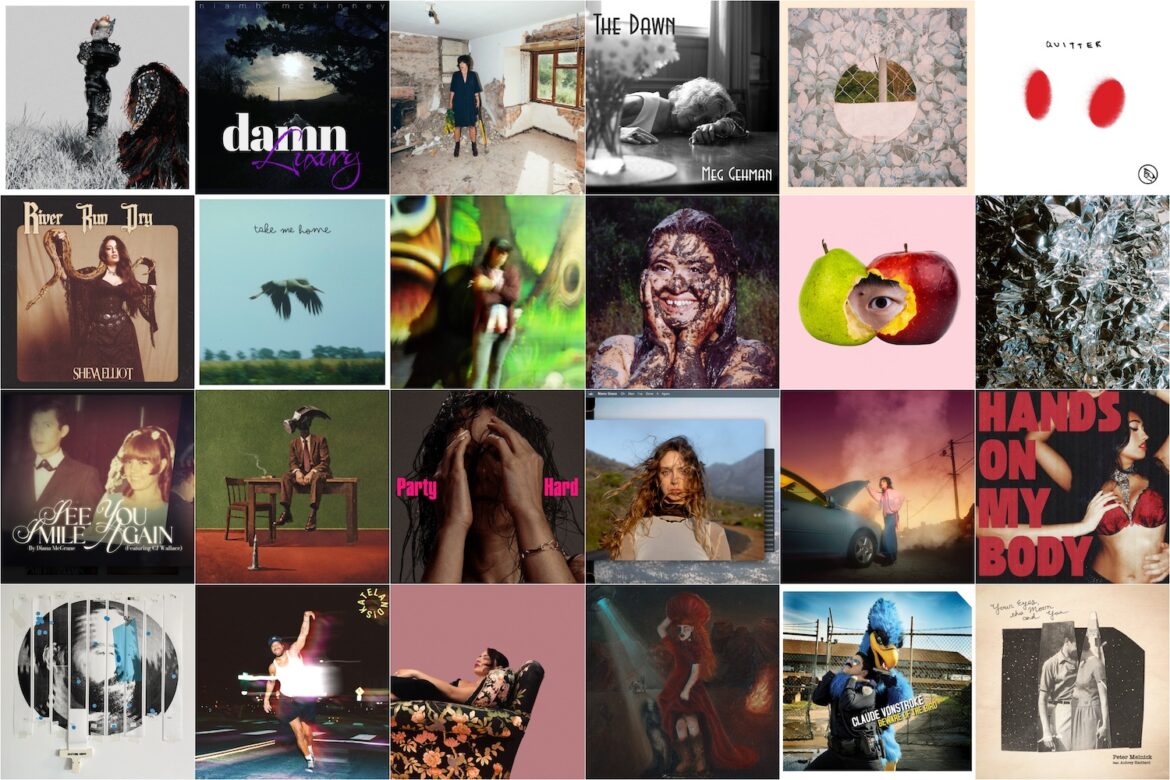
This week’s weekly roundup features music by BEL, Mon Rovîa, Remi Wolf, Tokyo Tea Room, Juli von Lou, Fog Lake, BERYL, Full Flower Moon Band, OLYMPIA, Johanna Warren, Peter Melnick, Aubrey Haddard, Diana McGrane, J.MYSTERY, Book/Spirit, Green Tea Bitches, GILSKA, Skateland, Stephen Steinbrink, Hazy Waters, Manu Grace, Sheva Elliot, Meg Gehman, Claude VonStroke, and Niamh McKinney!
•• •• •• ••
 follow WEEKLY ROUNDUP on Spotify


•• ••
:: “American Dream” – BEL ::
Mitch Mosk, Beacon, New York

You can be proud of the life you’ve built and still daydream about the one that got away. Wistful and electrifying, BEL’s “American Dream” captures that bittersweet push and pull with a smile on its face and a fire in its belly – a dreamy, exhilarating indie pop anthem that sounds every bit as alive as the questions driving it.
Just over a year after releasing her acclaimed 2025 debut album Holy Grail via Nettwerk, BEL (Isabel Whelan) returns with her first new music – and what a spectacular return it is. We’ve adored the California singer/songwriter since her 2020 debut single “Silver Line,” and “American Dream” is another reminder of why she has always stood out. Her velvety vocals glide over a sun-kissed wash of indie pop and light Americana flourishes, gathering heat and momentum as the song builds toward an absolutely spellbinding chorus. It’s a radiant, impassioned rush of sound, brimming with the kind of infectious energy that demands to be played again.
“I wrote it while reflecting on those moments coming home to my hometown for holidays and seeing so many people I grew up with getting married, buying houses, and starting families, while I’m living in a completely different world and timeline in LA, pursuing a creative career,” BEL tells Atwood Magazine. “It’s about fantasizing about an alternate version of myself who chose a simpler life, and reflecting on everything that can happen in a decade – the disillusionment, the unexpected turns, and the resilience it takes to keep going.”
Her lyrics fold an entire decade into a few vivid snapshots, from the stars-in-your-eyes optimism of seventeen to the bruising self-inventory of your late twenties. “I’m a prom queen on a dead end night” is an especially striking image – the glitter of youthful possibility meeting the reality of where life can leave you. Yet when she sings, “I’ve been knocked down / But I’ll put up a fight,” that magnificent chorus surges with renewed purpose. Beneath all the nostalgia and what-ifs is a fierce determination to keep moving forward, even when the future looks nothing like the one you once imagined.
I can’t help thinking back to our conversation last November, when BEL summed up Holy Grail in three words: “Just keep going.” A year later, “American Dream” sounds like an artist taking her own advice – honoring the lives she might have led while throwing herself wholeheartedly into the one she’s living. The dream may change, the road may bend, and the milestones may look different than we expected, but the fire that drives us onward is worth celebrating. And my God, does BEL sound magnificent doing it.
:: “Jester in the Bowl” – Mon Rovîa ::
Mitch Mosk, Beacon, New York
Mon Rovîa refuses to let the world’s cruelty have the last word. His breathtaking new single “Jester in the Bowl” is a beautiful, stirring act of resistance – a gentle but impassioned folk ballad that confronts war, greed, and injustice with an extraordinary tenderness, holding fast to the belief that even in our darkest hours, life is worth living and joy is worth defending.
Released October 23 via Nettwerk, “Jester in the Bowl” marks the Liberia-born, Tennessee-rooted singer/songwriter’s first new music since his debut album Bloodline arrived at the top of the year. And what a magnificent return it is: Built around lush, cascading piano chords and Mon’s rich, resonant voice, sitting right up against the microphone, the song gradually blossoms into a sweeping, soul-stirring arrangement. Spellbinding guitars weave around emotive drums as radiant vocal harmonies rise and fall alongside him, giving every word greater weight. The music swells with passion and purpose, yet Mon’s delivery remains wonderfully intimate – as though he’s singing directly to each and every one of us.
His lyrics paint a world gone terribly wrong, where “wars have come / And still they come” and “mansion men” take whatever they please. The carnival metaphor is especially haunting: Mon casts himself as a jester, singing from inside the spectacle, watching humanity repeat its worst mistakes. Yet his words grow increasingly confrontational, challenging those who claim the authority to decide whose lives matter. “So damn you judges of the earth,” he sings, before declaring, “When everyone born / Has rights in their hands.” It’s an extraordinary expression of compassion and conviction from an artist whose music has always carried a profound sense of responsibility toward others.
“This song is about choosing to keep living in a world turned carnival… I try to find defiance in dreaming, feeling deeply, and holding on to joy,” Mon Rovîa shares in a statement.
By the final refrain, “Jester in the Bowl” has become an almost communal embrace, its gorgeous harmonies gathering around Mon’s voice as he sings, “I’m planning on living.” Those four words carry the emotional weight of the entire song: A personal vow that extends outward, inviting everyone listening to carry on, to care, and to believe in a better tomorrow. Mon Rovîa has a remarkable gift for making enormous truths sound intimate, and here, his tenderness is inseparable from his strength. The world may be cruel, the powerful may be ruthless, and suffering may surround us, but our capacity for love remains our own.
What a beautiful, defiant declaration of life.
:: “Moon So High” – Remi Wolf (w/ John Mayer) ::
Charlie Recksieck, San Diego, CA

I’ve been a fan of singer/songwriter Remi Wolf for a few years now, dating back to her feature-length 2021 debut Juno with one of my favorite songs “Grumpy Old Man.” And while I’ve been slow to warm up to her third album now, Mud, I am indeed warming up to it. It’s clearly a little bit of a breakup record, among the other things that Wolf is dealing with (dealing with bipolar issues, going on and off the wagon with drinking), so it naturally has more of a downbeat feel, while still being indie. It’s almost like Olivia Rodrigo coming down with a Lana Del Rey sensibility.
But the one song that needed no warming up for me has been “Moon So High,” a two-hander with John Mayer. While the rest of the album has some interesting tension and emotion, this song is an outlier in how laid back it is. You can feel the John Mayer vibe all over this one, even though we don’t really even notice he’s here until the second verse.
I’m a sucker for duets that let both members of the relationship tell us how they feel about what went wrong. The female character got tired of fighting her lover’s unreasonable expectations “Why’d you hang the moon so high / If I couldn’t reach it, hard as I try? / Why’d you set the bar up there?” while the male character has his own regrets and feels that his girlfriend was emotionally unavailable “I guess I got what I expected / Wrapping my limbs ’round a bulletproof vest / What a mess now I’m left with, prying my ribs off the rock in my chest.” Even just from the two very different takes on the failed relationship, it’s clear why it could never work out.
There’s vintage John Mayer tone in the guitar fills all over here, and great production like everything Remi Wolf has done. For all of the heartbreak on this record, “Moon So High” is the one that’s the most fun to listen to. Or if you don’t pay attention to words much, then just settle into a pretty Sade or better yet, John Mayer, type of groove.
:: “Hypnotised” – Tokyo Tea Room ::
Julia Dzurillay, New Jersey

If you’re seeking a dreamy, breezy autumn drive song, “Hypnotised” leaves you… well… as the title suggests. As the first song on the album, the original track really brings the listener instantly back into the Men I Trust-adjacent world of Tokyo Tea Room. It has a driving bass line, an 80s-esque keyboard and, as always, Beth Dunn’s airy vocals.
“It’s the uncertainty and fantasy that contribute to the excitement of something new, and I wanted to reflect that in this song, kinda like a soundtrack to your mind wandering into a daydream,” the band’s Daniel James Elliot said of their song. He added that the lyrics, and the sound, tried to capture that feeling of being “completely drawn in,” where the outside world seems to melt away. Tokyo Tea Room is definitely a welcome addition to the Kilby Block Party lineup, bringing a more relaxed, easygoing sound amid a lineup of over-the-top performers (complimentary) like Slayyyter and Jungle. The perfect yin and yang.
:: “Honky Tonk Angels” – Juli von Lou ::
Mitch Mosk, Beacon, New York

Heaven can wait. Juli von Lou has an angel here on Earth she’s not ready to lose. Achingly beautiful and breathtakingly cinematic, her transcendent single “Honky Tonk Angels” is a golden-hued plea for a beloved friend to stay, a lush Americana reverie that practically glistens with emotion. Dreamy and dramatic, this magnificent slice of celestial Americana unfolds with the sweeping grandeur of a Lana Del Rey ballad, its steady, cantering rhythm and swelling strings carrying von Lou’s enchanting, ethereal voice toward increasingly dizzying heights. The music is slow-burning and gloriously atmospheric, yet every note seems charged with purpose, gathering passion as the arrangement blossoms into an epic, almost otherworldly crescendo. It’s utterly spellbinding – an exquisite, soul-stirring performance that fills the space between heaven and Earth with extraordinary love and longing.
Originally released August 18 via Promised Land Records, “Honky Tonk Angels” now appears on the Swedish singer/songwriter’s debut EP The Tales of a Honky Tonk Alien, released November 6. Raised in a rural Swedish community, von Lou has developed a fascinating musical universe inspired by the romantic grandeur of classic Americana and the imagined landscapes of the American Midwest. Her songs inhabit a world of deserted highways and star-crossed lovers, where country tradition meets dramatic indie pop and deeply personal storytelling. Following the fiery heartbreak of her debut single “Desert Hills Motel,” “Honky Tonk Angels” reveals another dimension of that world, drawing inspiration from a close friend who was struggling when the two finally met in person after a long online friendship. What emerged was a profoundly moving reflection on the strange relationship between suffering and good fortune, and the heartbreaking unfairness of watching someone extraordinary endure so much pain.
Von Lou’s lyrics approach that sorrow with remarkable grace, offering companionship in place of easy answers. “Let me take you to the water / Let me take you far away,” she sings, before adding, “If you don’t feel like talking / We’ll be silent for the day.” It’s a beautiful expression of care, recognizing that sometimes being present for someone matters more than finding the perfect words. But as the music grows increasingly expansive, her tenderness takes on a fiercer urgency. “This world don’t deserve you / But I hope that you learn / The secret to not letting go,” she sings, her voice reaching toward the heavens as the arrangement swells around her. The contrast is breathtaking, the song’s enormous cinematic scale carrying an intensely personal message.
“‘Honky Tonk Angels’ was a song I wrote to cheer up a friend who was struggling at the time,” von Lou tells Atwood Magazine. “Right before I wrote the song, we had met in my hometown for the first time after being friends over the internet for a long time. She was not doing well during that time. Neither was I.”
“I’ve myself had quite an eventful life when it comes to both suffering and out-of-this-world luck. I’ve cheated death quite a few times, I’ve had opportunities one could only dream of fall straight into my lap, and I’ve many times wondered why. How I’ve made sense of it all is that there seems to have to be a balance. Almost as if the universe itself needs to balance out luck and unluck to some kind of neutral median. If you’re gonna get extremely lucky, you gotta pay it back in some way.”
“That was also how I made sense of my friend’s suffering. She is probably one of the most special people I have ever met. A true Honky Tonk Angel deserving of the world. But she’s also had to pay. And it’s not been cheap. But being the Honky Tonk Angel she is, it makes a lot of sense that she felt out of place in this world. Of course heaven was tryna pull her back there, ’cause Honky Tonk Angels sure belong in heaven. This song was my way of letting her know that I would very much like her to stay.”
By its final moments, “Honky Tonk Angels” has become an overwhelming celebration of devotion, its heavenly harmonies and sweeping instrumentation reaching an almost euphoric intensity. The refrain rises again and again, each repetition deepening the emotional pull until the entire performance seems suspended in a radiant, golden haze. And at the center of all that grandeur is von Lou’s extraordinary compassion, a love so immense that she imagines pleading with heaven itself on her friend’s behalf. “This world had some nerve to / Treat you like it does / But I hope that you keep it your home,” she sings, capturing the song’s beautiful central contradiction: The world can be terribly cruel, and still there are people in it who make life worth embracing. “Honky Tonk Angels” is a stunning, otherworldly triumph, its dazzling musical beauty matched by the sincerity of the love that inspired it. For all its celestial imagery, its most profound gift is a reminder of how much we mean to one another here on Earth.
:: “Bogus” – Fog Lake ::
Mitch Mosk, Beacon, New York

Fog Lake’s “Bogus” sounds like sunshine through a scratched-up window – a little hazy, a little lovesick, and completely irresistible. Dreamy and spirited, this wonderfully fuzzy slice of folk-laced indie rock wraps romantic disappointment in an almost disarming warmth, its easygoing melodies and restless energy inviting us to get lost in the music. It’s a gorgeous contradiction: A song about lousy luck in love that practically begs to be played on repeat.
The lead single off Fog Lake’s seventh album Hollowbody, out November 13, “Bogus” ushers in an exciting chapter for Montreal-based, Newfoundland-raised singer/songwriter Aaron Powell. Written over three weeks in his native Newfoundland, the record emerged from a creative breakthrough involving a vintage ’80s Tascam amp simulator, with longtime collaborator Warren Hildebrand of Foxes in Fiction helping refine its sound. The result is beautifully apparent on “Bogus,” where jaunty acoustic strums meet dreamy, wonderfully worn electric guitar textures, and Powell’s airy, delicate vocals drift through the mix with an effortless grace. The production is cleaner and more defined than previous Fog Lake recordings, but all that scruffy, homespun character remains.
“‘Bogus’ is a song about bad luck. I’ve had a lot of luck in my life, but never with lovers,” Powell tells Atwood Magazine.
And what a stirringly bittersweet tale of romantic misfortune it is. “Well I’ve been down before / Yeah I’ve been high and I’ve been low,” Powell sings, his weary resignation almost playful against the song’s buoyant backdrop. His lyrics wander through uncertainty and lingering attachment, the refrain gradually shifting from “fond but never of me” to “longed but never for me” – a subtle but devastating distinction between being remembered and being wanted. By the time he arrives at “gone but never from me,” the emotional imbalance is painfully clear. The other person has moved on, but Powell is still carrying the weight of their absence, stuck with memories he can’t quite shake.
Yet “Bogus” has an almost mischievous way of wearing its bruises, its jangling rhythms and vibrant melodies gathering momentum before a gloriously scratchy guitar solo bursts through toward the end. That final surge is invigorating, a rush of musical abandon that gives the song an entirely different kind of release. Powell may be singing from the losing side of love, but he’s clearly having a hell of a time putting those experiences to music. And honestly, so are we listening.
:: “Quitter” – BERYL ::
Mitch Mosk, Beacon, New York
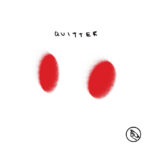
Quitting gets a bad rap – and maybe deservedly so. But not everyone agrees. Sydney duo Beryl give the word an unexpectedly beautiful spin on their wondrous new single “Quitter,” a glistening, dream-soaked indie pop gem whose bright melodies carry a far more complicated inner struggle. It’s a gorgeous, bittersweet contradiction – an airy, enchanting song that captures the uncertainty of knowing when to walk away, even when part of you desperately wants to stay.
Released October 30 via Another Matchstick Recordings, “Quitter” follows Beryl’s acclaimed 2025 sophomore album Body Break and marks their contribution to Matchmakers Vol. 1, a compilation pairing them with fellow Sydney artist Georgia Mulligan. Recorded over two days with longtime collaborator and producer Blain Cunneen, the track is a wonderful showcase of the band’s gift for delicate, intricate arrangements. Chugging guitars move with an easy, steady pulse while gorgeous, lilting piano chords dance between them, adding elegant flourishes that glide alongside the lead vocal. The whole thing practically floats, its irresistible melody carrying an undercurrent of hesitation and self-doubt.
“We recorded Quitter over two days earlier in the year alongside some of our good friends for the Matchmakers Vol. 1 Compilation,” Beryl tell Atwood Magazine. “It’s all about walking away from something that you thought you wanted and all of the mixed emotions that come along with that type of decision. We wanted to contrast the mood of the lyrics with the arrangement behind it which is why the song ended up sounding fairly light and upbeat (for us at least!)”
Beneath those radiant textures, the lyrics are full of bruised pride and uncomfortable admissions. “Taping up my shame, not knowing when to leave,” the band sing, exposing the exhausting cycle of holding on long after a situation has begun to unravel. The repeated refrain, “You’re looking at a quitter,” carries an almost accusatory weight, as though the narrator is wrestling with the label as much as the decision itself. And when they ask, “And who said I’m better than that?” the question cuts even deeper, confronting the shame we attach to giving up and the impossible expectations we place on ourselves to persevere.
By the closing verse, Beryl offer one of the song’s most evocative images: “A new build on an old floodplain / I’ll wait it out until it washes away.” It’s a striking metaphor for pouring yourself into a future whose foundations were never secure, and the painful reluctance to abandon it even when you can see what’s coming. Yet the music keeps dancing, its sparkling piano and gently propulsive guitars lending a remarkable sweetness to the uncertainty. “Quitter” captures the strange space between recognizing an ending and being ready to accept it – and the courage it takes to admit that the life you thought you wanted might no longer be the one you need.
:: “Party Hard” – Full Moon Flower Band ::
Josh Weiner, Washington DC

Meet Full Moon Flower Band from Brisbane, Australia. They’ve added and subtracted members over the years, but lead singer and guitarist Kate Dillon has been at their forefront throughout their lengthy run, which will hit another key stride early next year with the release of their fourth album, After Dark.
“Party Hard,” an early preview of that upcoming project, is a product of two tremendously different settings and geographic locations. Kate Dillon – or, as she’s better known onstage, “Babyshakes” – wrote the lyrics while she was living on her own in New York City for a while, a period she describes as “isolation, uncertainty and intense creative output.” She returned to Australia to give the song its musical identity, working collaboratively with the rest of her bandmates, notably producer and drummer Jim Rindfleish.
The resulting track features the band’s musical prowess on full display – perhaps most impressively from bassist Marli Smales – while Babyshakes sings about the gratification of finding your own path in life, anchored by the central chorus line: “There’s no next time, boys. Let’s get forgiven.” As she explains it, “the chorus is me trying to inspire someone to ‘ask for forgiveness and not permission’ to live the life they want, and to the fullest. It ultimately became a more gravitational anthem than I expected.” With a promising early single like this, there’s a lot to be excited about the release of After Dark this coming February – and what’s more, the Full Flower Moon Band will open for the Foo Fighters on two of their Australian tour dates around that time as well! “Party Hard” sounds like a sensible directive, indeed.
:: Have You Ever Been In Love? – OLYMPIA ::
Rachel Leong, France

Greek singer OLYMPIA first arrived in the UK at 19 with a suitcase and barely any English – but this was nothing next to what she was about to do with her music. She studied songwriting at Leeds and eventually moved to London. Her journey has culminated in her debut EP, Have You Ever Been In Love?, a 5-track debut that draws on the most universal subject with the most timeless delivery. Leaning soul-pop, OLYMPIA moves from heartbreak, to surrender, to desperation and finally release.
Her unwavering commitment to her craft comes through in the project’s message, “whatever we lost was never meant for us,” she shares. Where “Dear God” pleads with a mysterious overarching force, “Happy Means Together” feels like its hopeful anecdote. “Has Anyone Seen My Love?” opens the gates of OLYMPIA’s vulnerability, and standout track “Oh, My Love” follows after, a masterclass in enduring songwriting. The EP closes with titular track “Have You Ever Been In Love?” a cinematic piano interlude that rounds out the very feeling we began with, the joys and heartbreaks of an all-encompassing love.
In a culture that perceives romance as fleeting and compromised, OLYMPIA’s artistry feels urgent and earnest. Inspired by Greek poetry and traditional songwriting, OLYMPIA’s vocals soar above piano ballads and string arrangements, creating timeless soundscapes in the air and the ultimate escapism.
:: “Automatic” – Johanna Warren ::
Mitch Mosk, Beacon, New York

Johanna Warren has had enough – and she’s never sounded more alive. Her spellbinding single “Automatic” is a breathtaking, impassioned eruption of exhaustion and emotion, its restless pulse carrying one of the most electrifying vocal performances I’ve heard in recent memory. Warren’s voice is utterly enchanting, gliding through the verses with a golden radiance before climbing into soaring, full-throated highs that send shivers down the spine. There’s a gorgeous, delicate vibrato in her upper register, an almost trembling intensity that gives every note an extra charge of feeling. The whole performance is absolutely enthralling – passionate, urgent, and impossible to ignore.
Released October 15, “Automatic” heralds Warren’s forthcoming album Frog in the Belly of a Snake, out January 29 via Soul Selects. Her first full-length since 2022’s Lessons for Mutants, the record marks an especially meaningful return for the singer/songwriter, who publicly stepped away from music in 2023 to prioritize her physical and mental health. What began as a handful of live-to-tape recordings has blossomed into an ambitious new chapter, and “Automatic” captures the sheer vitality of an artist rediscovering her relationship with music. Its driving rhythm surges beneath Warren’s expressive delivery, building tension as her voice rises and falls with astonishing grace. The arrangement practically vibrates with life, every swell and melodic flourish intensifying the emotional stakes.
Yet the song’s driving force is a profound weariness with the endless demands of existence itself. “I’ve been trying too hard too long / Way too much for way too little,” Warren confesses, capturing the frustration of pouring yourself into pursuits that leave you depleted. Her reference to Samsara – the Buddhist cycle of birth, death, and rebirth – widens that exhaustion into an existential struggle, while the image of flying too close to the sun on homemade wings evokes the painful consequences of ambition. “I’ve seen it all, I’ve seen it all / And I can’t stand another second,” she sings, her voice climbing with every repetition until the words practically burst from her chest. It’s a stunning collision of musical intensity and emotional vulnerability, the sound of someone reaching the very edge of what they can bear.
“My family moved around a lot when I was growing up, so I never really had a solid sense of ‘home’ as an external place,” Warren tells Atwood Magazine. “I don’t see that as a bad thing at all, in fact I think it equipped me with a skillset that would become extremely useful as a touring musician. I’ve kept up that rhythm of nomadic transience all my life, and it’s both liberating and totally terrifying at times. Somewhere in me I do have a deep yearning to put down roots in a physical place, because I’ve never had that. But I’m also drawn to the Buddhist idea of finding refuge within ourselves, rather than seeking security in things that are inherently impermanent, which inevitably leads to suffering.”
And so, after all that urgency and turmoil, “Automatic” arrives at a moment of breathtaking clarity. “I wanna go home / But I don’t have a home to go home to / Except for the one inside,” Warren sings, discovering a source of belonging that can withstand the uncertainty of the outside world. The revelation is especially moving in light of her years away from music: After pushing herself to the breaking point, she’s learning to recognize the value of simply being, rather than constantly striving to become. “Automatic” is an extraordinary return, brimming with passion and hard-won perspective, and Warren’s magnificent performance captures every ounce of that transformation. Sometimes finding your way home means finally learning to be at home with yourself.
:: “Your Eyes, The Moon And You”- Peter Melnick ft. Aubrey Haddard ::
Chloe Robinson, California
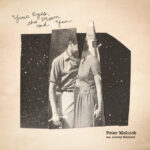
“Your Eyes, The Moon And You” by Peter Melnick featuring vocals from Aubrey Haddard, captures the beauty of finding love later in life, celebrating the depth, maturity, and quiet certainty of a connection that comes with experience rather than the impulsiveness of youthful romance. This stunning serenade is so rich with emotion and nuance, offering a tender reflection on the kind of love that grows more meaningful with time. The idea took shape during a late-night stroll with Melnick’s dog, Oliver, down a quiet country road near his home. As the moonlight shown through the trees, his thoughts drifted to a woman he had recently met. The delicate piano and sweeping strings come together to create a piece that is poignant and pure.
He was born into a family with an extraordinary history in the arts, spanning generations of influential work in film, music, and theater. His father, Daniel Melnick, was a prominent film producer whose credits include All That Jazz, Altered States, and Footloose, along with the classic sitcom Get Smart. His grandfather, legendary songwriter and composer Richard Rodgers, left an enduring mark on American music, penning timeless standards such as “Blue Moon,” “My Funny Valentine,” and “My Favorite Things.” He also helped bring some of musical theater’s most beloved productions to life, including The Sound of Music, Oklahoma!, The King and I, and South Pacific. Melnick has continued that remarkable legacy through his own work as a composer and songwriter, bringing a personal perspective and contemporary sensibility to a lifelong connection with music and storytelling. “Your Eyes, The Moon And You” is another example of that undeniable passion in full force.
:: “See You Smile Again“- Diana McGrane ::
Julius Robinson, California
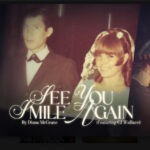
Following Día de los Muertos, Diana McGrane’s “See You Smile Again” serves as a tender reminder that those we’ve lost remain with us in spirit, their memories continuing to bring comfort and joy. Her warm, wistful tone and ethereal, melodic sound make for a heartfelt release that radiates serenity and ease. The song unfolds through atmospheric guitar tones, a fluid solo by Maverick McGrane, and beautifully blended harmonies from CJ Wallace. The result is a strikingly understated tribute that finds light in the sadness of loss.
McGrane’s path to songwriting has been shaped by a lifelong connection to music, language, and the courage to follow her instincts. Based in the Los Angeles area, she comes from a family with creative and determined roots, her father was a Golden Gloves Light Heavyweight Boxing champion, and her mother was a Mexican poet, singer, and guitarist. From both, she inherited a love for words and an unwavering drive to pursue her passions. When she realized how deeply she needed an outlet for her creativity, she returned to her old guitar, finding herself naturally drawn to the chords and melodies that had been playing in her head. As she puts it, “The songs just came pouring out!” Her songwriting shines on “See You Smile Again,” transforming a deeply personal reflection on loss into a touching ode to the lasting bonds we share with loved ones.
:: “Drifting Away” – J.MYSTERY ::
Joe Beer, Surrey, UK
J.MYSTERY’s new single “Drifting Away” perfectly depicts the heartbreaking reality of when two people love each other deeply, but the life they pictured together hasn’t worked out.
“Drifting Away” is the opening track from his upcoming EP, LOVE AWAY MY PAIN. The single brings together alternative rock and electronic pop, featuring velvet vocals that ooze with emotion and a relaxed, gentle beat. The Portuguese singer-songwriter explains, “‘Take me by the hand’ becomes more than a plea to stay; it’s a promise to face the pain together, to keep holding on, and to find a way back to each other.”
This concept of putting your own feelings aside in order to be there for someone else can be heard in the lyric, “I feel your pain and hide away my own.” The breathtaking music video further emphasizes this, as we see the artist constantly reaching out his hand, offering support time and time again. With “Drifting Away” introducing LOVE AWAY MY PAIN, we’re very much looking forward to what else is in store for us.
:: “Badger” – Book/Spirit ::
Mitch Mosk, Beacon, New York
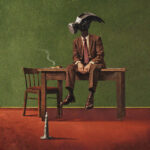
Book/Spirit’s “Badger” is a slow-burning beast of a song, and when it finally bares its teeth, all hell breaks loose. Smoldering and seductive, this electrifying indie rock anthem begins as a brooding alternative rock reverie, its simmering guitars and restless rhythms hinting at the storm gathering beneath the surface. But around the ninety-second mark, the Brooklyn band kick everything into overdrive – and my God, is it delicious. A fiery lead guitar erupts in a feverish blaze, roaring and churning through the mix as the entire arrangement surges into heavier, more exhilarating territory. It’s a full-throttle explosion of sound, an absolutely enrapturing release of pent-up energy that practically demands you turn the volume all the way up.
Released November 3, “Badger” is the second single off Book/Spirit’s sophomore album Catastrophizer, arriving December 1 via Mint 400 Records, following the previously released “Hammock.” Formed in 2018, the Brooklyn quartet – Pete Ferrari, Mike Susa, Micah Evans, and Garrett Troy – have spent years developing a distinctive sound at the intersection of indie rock, post-punk, and shoegaze, with a flair for unconventional arrangements and muscular, guitar-driven intensity. “Badger” captures those instincts in thrilling fashion, moving from a restrained, almost hypnotic opening into an increasingly ferocious performance that showcases the band’s extraordinary chemistry. There’s a palpable excitement in the way the instruments collide, each player contributing to the magnificent chaos.
“‘Badger’ originally started as a guitar riff I came up with while on vacation in New Mexico,” Ferrari shares with Atwood Magazine. “I sent it to the band, and we jammed on it quite a bit before working it into its final form. My original voice memo was actually labeled ‘make it Modest Mousey,’ and I think the first half of the song definitely falls into that Modest Mouse territory.”
Beneath all that instrumental firepower, “Badger” is a wonderfully frazzled portrait of disillusionment and mental unrest. “Nothing seems worth it / It all feels like a hoax,” the band sing, opening a lyrical rabbit hole of frustration, alienation, and spiraling thoughts. The repeated refrain, “Train of thought is going off the rails / Why am I a hammer banging on a nail?” captures the exhausting absurdity of a mind trapped in its own destructive patterns, while the later confession, “If I’m surrounded by people why do I feel alone?” exposes the loneliness beneath the agitation. There’s a wry, self-deprecating humor to the writing, but the desperation is real, and the music gives that internal turmoil an increasingly physical presence.
By the time those guitars are roaring at full force, “Badger” has become a spectacular outlet for every anxious thought and buried frustration rattling around inside its narrator’s head. The contrast between its initially unassuming entrance and its blistering instrumental eruption is downright addictive, the band’s explosive performance channeling an almost overwhelming sense of release. Book/Spirit don’t simply crank up the distortion; they send the whole song careening over the edge, and the result is as cathartic as it is utterly exhilarating. Sometimes the best way to get out of your own head is to make one hell of a racket.
:: “Ghosts” – Green Tea Bitches ::
Mitch Mosk, Beacon, New York
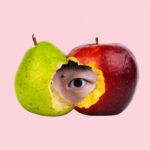
Green Tea Bitches are terrified of ghosts, and they’re making it everybody else’s problem. The Chinese-Danish duo’s deliriously fun new single “Ghosts” is a riotous, off-kilter dance-punk freakout, bursting with infectious energy and a deliciously ridiculous sense of humor. Fiery synths rage and roar against a pounding electronic beat, while fuzzed-out guitars and spooky theremin flourishes add to the delightful mayhem. Quinn Liu’s punchy, irreverent vocals puncture the surface with theatrical bravado, giving the entire performance an almost cartoonish intensity. It’s weird, wild, and utterly exhilarating – an irresistible invitation to lose your inhibitions and embrace the absurd.
Released October 30, “Ghosts” is the latest offering from Copenhagen-based duo Quinn Liu and Emil Lund Pedersen, whose colorful, freewheeling approach to dance-punk has already earned them attention across Europe’s festival circuit. Their origins are just as wonderfully unconventional as their music: Green Tea Bitches began as a traditional punk trio, but when their drummer broke his finger a week before their first gig, Liu and Pedersen scrambled to reinvent their set with drum machines and electronic beats. The result is a sound that practically bursts at the seams, channeling the nervy eccentricity of Talking Heads and the mischievous swagger of contemporary post-punk into a wildly entertaining musical circus.
And what a wonderfully preposterous circus it is. The narrator boasts of fighting electric eels and polar bears, crossing oceans in a soda can, and even frightening a clown at the county fair – yet for all that supposed fearlessness, one supernatural threat is enough to send them running. “I’m scared of ghosts,” Liu chants with increasingly infectious urgency, the repetition growing more hilarious and hypnotic with every round. The joke reaches its peak when a forgotten suitcase in the attic becomes an insurmountable obstacle, exposing the spectacularly irrational fears hiding beneath an otherwise confident exterior.
“Everyone has some kind of fear or insecurity, some of which might seem to be ridiculous from others’ perspectives,” the duo tell Atwood Magazine. “We want to turn that feeling into something people could shout together. There’s something freeing about a room full of adults dancing and admitting they’re scared of ghosts.”
The brilliance of “Ghosts” is how seriously Green Tea Bitches commit to their own ridiculousness. Beneath the cheeky lyrics, the music is an absolute powerhouse, its gritty synth bass and relentless rhythms charging forward with an almost feverish intensity. The vocals get rowdier, the groove grows more intoxicating, and that wonderfully silly refrain becomes increasingly impossible to resist. Green Tea Bitches have a knack for finding joy in life’s most embarrassing contradictions, and here, they’ve crafted a delightfully unhinged celebration of the things that scare us. Who needs a haunted house when you’ve got a dance floor this electrifying?
:: “Hands On My Body” – GILSKA ::
Danielle Holian, Galway, Ireland

GILSKA’s “Hands On My Body” is a confident, club-ready statement of intent that finds the London-based, Sri Lankan artist turning the complications of modern dating into something altogether more empowering. Driven by dark, pulsing electronic production, punchy synths and a seductive vocal delivery, the track balances late-night allure with an infectious pop sensibility. There is a compelling tension between its sleek, dancefloor-focused sound and the frustration running beneath the lyrics, giving the song a personality that extends beyond its immediate hooks. GILSKA understands the power of contrast, moving between sultry restraint and unapologetic assertion while maintaining a melodic immediacy that makes the track instantly inviting. The production feels contemporary and assured, drawing on the more provocative edges of electronic pop without losing sight of the song’s central melodic appeal.
What gives “Hands On My Body” its deeper resonance, however, is the cultural conversation at its heart. By placing South Asian female sexuality, pleasure and personal autonomy at the forefront, GILSKA challenges expectations that have too often dictated how women should express desire, transforming a personal experience of modern dating into a wider declaration of self-determination. Crucially, the message never feels like an afterthought or a statement simply attached to a dance track. It is woven into the song’s attitude, vocal delivery and unapologetic sense of purpose. There is something particularly refreshing about an artist making space for this conversation within a genre so frequently preoccupied with escapism and surface-level seduction. With “Hands On My Body,” GILSKA delivers a record that is as provocative in its perspective as it is infectious in its execution, marking another assured step towards establishing her own distinctive place in contemporary electronic pop.
:: “PLAYTHEDRUMS” – Skateland ::
Chloe Robinson, California
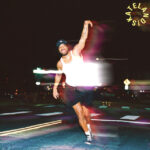
You know those movie scenes where characters lose themselves on the dance floor, moving in slow motion beneath the club lights, wrapped in a hazy, euphoric blur? That’s the very feeling Skateland’s “PLAYTHEDRUMS” brings to life. The dreamy, atmospheric backdrop effortlessly channels the liberating feeling of surrendering to the rhythm, finding a moment of pure escape. The second you press play on the transcendent track, you are sent to a whole other planet, soaking in the electrifying pop/indie paradise. The artist reveals, “PLAYTHEDRUMS was written for the clubs. Clubbing and dancing is a huge part of my Vegas roots and something I’ve always enjoyed, and now that I live in New York I’ve really gotten back into it.”
The single is off of his EP Ultra Kitsch sitting at the intersection of lush dreampop, unconventional artpop, and indie electronica. Skateland has steadily built a name for himself in the indie scene, sharing the stage with acclaimed acts like Foster the People, Major Lazer, and Two Door Cinema Club, while also performing at Austin City Limits Live and the legendary ACL Festival. His genre-blurring approach captures the freedom of a night out while creating an immersive soundscape that feels both nostalgic and refreshingly futuristic.
:: In A Split Mirror – Stephen Steinbrink ::
Mitch Mosk, Beacon, New York
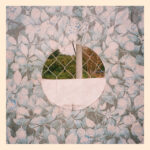
The dream that gives your life meaning can eventually leave you wondering whose life you’re living. For Stephen Steinbrink, that uneasy realization sits at the heart of In A Split Mirror, a breathtakingly beautiful, soul-stirring album about the strange and ever-changing relationship between art and identity. Across eleven enchanting, atmospheric songs, the veteran singer/songwriter explores what happens when the passions that once defined us begin to change shape – when the person we were, the person we’ve become, and the person we imagined ourselves becoming no longer quite line up. It’s a rich, ruminative work of alternative folk, full of yearning and wonder, whose intimate arrangements carry an extraordinary depth of feeling. And at its center is a deceptively simple question: How do you remain true to yourself when the very thing that helped you become yourself starts to pull you in another direction?
Released October 30 via Sedimentary Archive, the new imprint of Berlin label Mansions and Millions, In A Split Mirror is Steinbrink’s tenth album and the culmination of two decades spent making music, touring, and navigating the complicated realities of an artistic life. Much of it was conceived in solitude at Headlands Center for the Arts, the California residency he helps run, where he spent two years writing and recording in a century-old basketball court overlooking the Pacific Ocean. The resulting music is spacious yet wonderfully intimate, its lush arrangements unfolding with an unhurried elegance. Working alongside longtime collaborators including pianist Andrew Dorsett, saxophonist Cole Pulice, drummer Chase Kamp, and pedal steel player Nick Levine, Steinbrink creates a richly textured sonic world where gentle acoustic strums meet glowing synthesizers and unexpected instrumental flourishes. His delicate, expressive vocals give these compositions their emotional center, carrying the weight of memory and self-examination through melodies that seem to drift, swell, and breathe.
The album opens with “It’s Not My Dream,” a phenomenal, deeply affecting song whose churning guitars and simmering intensity immediately establish the record’s emotional stakes. Steinbrink’s voice moves through the arrangement with an aching urgency, the music pulsing with heat and verve as he wrestles with the uneasy intersection of creative fulfillment and professional expectation. “What’s a song if I can’t sell it?” he asks, a provocative line that exposes the uncomfortable pressure to measure art by its commercial value. Beneath the question lies a far more personal struggle: The distance between making music because you love it and building an entire existence around the demands of being a musician. The song is beautiful in its restlessness, its gorgeous melodies and charged instrumentation capturing both the exhilaration of pursuing a passion and the exhaustion of trying to sustain it.
“I first wrote ‘It’s Not My Dream’ in 2017, in the same batch of songs that eventually became Utopia Teased, though I ended up leaving it off that record and instead released a version on my B-sides and singles collection for Melodic in 2018,” Steinbrink tells Atwood Magazine. “I had spent nine of the previous twelve months on tour, saying yes to everything. The feelings and dreams that had drawn me to touring had begun to flatten the life waiting for me at home, creating a lot of internal friction between what had propped up my identity and the growth it was preventing.”
Nearly a decade later, “It’s Not My Dream” has found an entirely different kind of resonance. What began as a reflection on the pressures of touring has become an inquiry into what it means to grow older, revisit your ambitions, and recognize yourself in the person you’ve become. Steinbrink returned to the song during his first support tour since the pandemic, rediscovering it one morning at a friend’s house in Raleigh. The encounter was almost accidental, yet the experience of playing those familiar chords again revealed how much his relationship with songwriting had changed. Here was a song written by one version of himself, waiting to be inhabited by another.
“The morning after our first show in Raleigh, I woke up early at a friend’s house and played her old ’80s Yamaha in the living room, randomly in a similar alternate tuning I’d used to write this song years earlier,” Steinbrink recalls. “I relearned it a little differently from what I’d written in 2017. Being on tour again after such a long break, I found the experience both amusing and paradoxical, and became curious about that feeling. The song’s old meaning was layered over the new meaning I was discovering in it, experiencing it now as a very obviously (to me) different person.”
That collision of past and present would ultimately become the foundation for In A Split Mirror. Steinbrink began examining the relationship between his private creative impulses and the increasingly public, transactional nature of a musician’s career – particularly in an era when artistic expression is so often filtered through algorithms, platforms, and an exhausting pressure to remain visible. The album explores the tension between creating for yourself and creating for an audience, questioning how easily the demands of one can reshape the meaning of the other. Yet these concerns extend far beyond the music industry. Steinbrink is writing about the instability of identity itself, the way our experiences alter us even as we continue carrying the memories and expectations of our former selves.
“This was the first track I recorded for In a Split Mirror, and it became an entry point for what I’d eventually realize was a sorta concept album about art-making and remaining recognizable to myself as I grow older,” he explains. “So much has evolved in the 20 years I’ve been touring and releasing records, even on the very small scale in which I work.”
Those questions ripple throughout the album, taking on increasingly surreal and evocative forms. “Calcified” is a particularly mesmerizing highlight, its brooding atmosphere punctuated by a smoldering saxophone and glistening keys that lend the music an almost dreamlike weightlessness. Steinbrink awakens from a vision of his father as a boat, confronting the unsettling thought of whether his own nature might change beyond recognition. The song’s delicate textures gradually dissolve into an airy instrumental passage, the saxophone and keyboards drifting through the arrangement like fragments of a dream fading upon waking. It’s an exquisite expression of uncertainty, as musically transporting as it is emotionally profound.
Elsewhere, the radiant “I’m a Swimming Pool” offers an especially gorgeous change of pace. Sweetly harmonized vocals float over close-miked acoustic guitar strums, while colorful piano melodies dance through the arrangement with an elegance that feels almost effortless. The song practically glistens, its gentle rhythms and intricate instrumentation conjuring an intimate, otherworldly atmosphere. Yet Steinbrink’s imagery is as unusual as it is enchanting, imagining the self dissolving into the very environment it inhabits. That playful fascination with transformation carries into “I’m a Worm,” where he first imagines himself as the core of an apple before becoming a worm inside it. These surreal metaphors give In A Split Mirror its wonderfully off-kilter personality, finding fresh ways to explore the boundaries between who we are and the world around us.
“Magic Mirror,” meanwhile, brings the album’s central ideas into especially poignant focus. Steinbrink encounters an earlier version of himself, a figure who looks familiar yet belongs to another time, and wonders how two seemingly different people can occupy the same life. The song captures the peculiar experience of looking back at old photographs or memories and recognizing a person whose thoughts and desires you can barely remember inhabiting. On “Driving Around in Arizona,” that introspection reaches beyond the individual and into the physical world, as Steinbrink revisits the landscapes of his youth and considers how geography, isolation, and community helped shape the person he became. The record’s shifting imagery and musical arrangements give these reflections a remarkable sense of movement, each track revealing another facet of an identity that refuses to remain fixed.
Steinbrink’s search for perspective also led him away from the internet for an entire year, giving him space to pursue ideas beyond the relentless demands of contemporary artistic life. He immersed himself in accounts of unexplained phenomena, unusual dreams, and experiences that challenged conventional understandings of reality. A biography of composer Erik Satie proved especially affecting, offering a portrait of an artist whose creative ambitions gave his life purpose even as the demands of sustaining them exacted a tremendous personal cost. Steinbrink recognized the same contradictions in musicians he’d known and admired throughout his own life, particularly within the punk and DIY communities that had helped shape his early artistic identity. The encounter gave him another way to understand the complicated bond between an artist and their work.
“The feeling that art can protect you from the world when you’re young, that it can be the thing that gives you a self, and also the thing that leaves the same self more exposed or isolated,” Steinbrink reflects. “It seems there has to be periods or recalibration and renegotiation with your own creativity. The songs I was writing then kept pointing me toward the relationship between the self that makes art and the art that makes that self.”
That final thought is especially striking, and it captures the extraordinary emotional and philosophical depth of In A Split Mirror. Throughout the record, Steinbrink approaches identity as an ongoing process of creation and revision, shaped as much by what we release as by what we choose to carry. His songs are full of beautiful contradictions, their gentle melodies accompanying startling images and uncomfortable questions, their intimacy expanding into a wider consideration of what it means to live and change. By the time the album reaches its closing track, “Opening Windows in May,” the restless searching has given way to a more grounded sense of presence. The airy arrangement evokes the simple passage of time, the changing seasons, and the possibility of finding stability in the everyday world around us. After spending so much of the record wrestling with the past and imagining alternate versions of himself, Steinbrink arrives somewhere tangible, inhabiting the life directly in front of him.
And perhaps that is the greatest revelation of In A Split Mirror: We are allowed to change our minds about the dreams we once held so dearly. The ambitions that guided us in our twenties may evolve as we enter our thirties and forties, and the way we understand success, fulfillment, and purpose can change right alongside them. Steinbrink’s music approaches that evolution with extraordinary curiosity and compassion, finding beauty in the uncertainty rather than demanding a definitive answer. His reflections ultimately return to the very act of making art, and the possibilities it continues to offer him.
“I had felt confused for years about what songwriting meant to me as I moved away from the aspirational state of my 20s and early 30s, but now I’m starting to recognize it as a framework for experiencing my life,” Steinbrink shares.
What a beautiful place to arrive after twenty years of searching. In A Split Mirror is a gorgeous, soul-searching achievement, an album whose musical beauty is inseparable from the questions that animate it. Steinbrink’s exquisite songwriting and evocative arrangements invite us to examine the stories we’ve told ourselves about who we are, who we were supposed to become, and what might still be possible. And through it all, “It’s Not My Dream” stands as a magnificent opening statement, its impassioned performance giving a voice to the uncertainty that follows us through every chapter of life. Sometimes the most meaningful thing we can do is look at the person we’ve become, recognize how far we’ve traveled, and give ourselves permission to dream differently.
:: “Take Me Home” – Hazy Waters ::
Mitch Mosk, Beacon, New York
You can run yourself ragged trying to escape a place that exists entirely inside your own head. Achingly emotive and dramatically defiant, London trio hazy waters’ “take me home” is a feverish, fuzz-drenched eruption of alternative rock, a smoldering, all-consuming rush of distortion and desperation that practically burns through the speakers. The guitars roar, the bass churns, and vocalist Agness throws herself into the fray with a fiery, impassioned delivery that cuts straight through the furious racket. It’s loud, it’s sweaty, and it’s utterly intoxicating – a heavy, hypnotic whirlwind of sound whose relentless energy gives the narrator’s spiraling anxieties a deafening, physical presence. And my God, does it hit hard.
Released August 28, “take me home” marks a guitar-driven departure from the synth-heavy sound of the band’s recent work, embracing the grit and raw intensity of ’90s and 2000s alternative rock. Comprised of Agness, producer and guitarist Aleks, and guitarist Simon, hazy waters have developed a distinctive sound rooted in their shared love of experimentation and unfiltered emotional expression. The song came together spontaneously after a particularly stressful workday, when Agness visited Aleks at his North London flat and began improvising lyrics over a single, insistent chord progression. Simon’s intricate lead guitar lines followed, and the resulting arrangement pulses with the nervous intensity of a mind racing faster than it can process. The repetition is mesmerizing, the distortion practically palpable, and the whole performance feels dangerously close to boiling over.
“The words just flowed out of me,” Agness tells Atwood Magazine. “The song is about being overwhelmed and searching for safety, but we turned that anxiety into something cathartic. Aleks just put me in front of the mic and told me to sing anything that came to mind. It felt therapeutic – letting the words out without much thinking and allowing the thoughts to just flow without criticism.”
Beneath that blazing wall of guitars, “take me home” captures the suffocating frustration of being unable to escape your own thoughts. “I wish I could start with a brand new blank slate / Make every day matter,” Agness sings, yearning for the opportunity to begin again, free from the burdens she’s been carrying. Her words grow increasingly desperate as the cycle repeats: “How long will I relay that pain?” It’s a devastating question, especially when paired with the song’s relentless instrumental churn. The repeated confession, “I’m running in circles,” becomes almost physical in its intensity, the looping rhythms reinforcing the sensation of spinning endlessly through the same anxieties. Every guitar, every vocal flourish, every pounding beat adds to the mounting pressure until the music itself becomes an outlet for the emotions threatening to overwhelm her.
And that is where the extraordinary power of “take me home” lies. Hazy waters channel the weight of a spiraling mind into a spectacular release of pent-up emotion, their roaring guitars and pounding rhythms transforming an exhausting internal struggle into an exhilarating musical experience. There’s a beautiful sense of abandon in the performance, an almost primal satisfaction in surrendering to the noise and allowing yourself to experience everything at full volume. The title’s plea for home speaks to a yearning for safety and familiarity, for the comfort of people who will stand beside us when our minds become unbearable places to inhabit. Sometimes the storm has to rage before we can hear ourselves again – and hazy waters give that storm one hell of a soundtrack.
:: Oh Man, I’ve Done It Again? – Manu Grace ::
Joe Beer, Surrey, UK

Cape Town-raised, London-based artist Manu Grace combines complicated feelings with laidback melodies, in her new EP, Oh Man, I’ve Done It Again? The songwriter and producer narrates the monsoon of emotions that come when getting swept up in someone new, the sting of wanting more than they do and the sudden urge to back out when things get serious. She also makes room for a different kind of heartache, opening up about the grief she’d kept to herself after losing her father.
The entire project evolved over a matter of years, and by the time Grace wrote the focus track “Can You See Me?” she’d begun to feel removed from the work that had originally brought her to London in the first place. However, that feeling quickly changed once she sat down to write. She wanted to be there after all, and by the end of the session she had a song that allowed her to finally speak about her grief after her father’s death. Grace confides, “I remember sitting on the tube, on the central line, miserable all the way there, thinking, ‘I don’t want to do this, I don’t want to do this’ on repeat. Safe to say, my memory served me well because, once I got there, it turned out I did, in fact, want to be there, and I wrote this song that day.”
The mellow instrumentation and Grace’s honey-soaked vocals make “Can You See Me?” feel like a warm hug. The tempo picks up halfway through, but the percussion stays soft, and it feels as though something is starting to click into place for her. When she sings, “I’ve never kept anything as private as I have this grief,” you get the sense that sharing it might be part of how she begins to heal.
:: “River Run Dry” – Sheva Elliot ::
Chloe Robinson, California

Sheva Elliot’s “River Run Dry” is a bold, guitar-heavy production steeped in Americana influences and driven by the untamed spirit of rock. Her passionate, twang fused tone sings of breaking free from whatever holds you back, reveling in the therapeutic release that follows. Lyrics such as “Oh yeah, this river run dry, see you drowning in your alibi, oh baby my love run dry, drinking from your empty well,” highlight the emotional exhaustion of giving too much to someone who has nothing left to offer, ultimately embracing the strength that comes with walking away. The piece is an unapologetic anthem about reaching your breaking point as you are bled dry and finding the courage to leave a toxic situation.
A native of Los Angeles, Sheva Elliot brings together the grit of roots rock and the expressive richness of deep soul, creating music that pairs organic instrumentation with commanding vocals and heartfelt storytelling. Her style reflects a lifetime of musical influences, from the everlasting melodies of Motown and the theatricality of opera to the rock essence of Laurel Canyon. Inspired by legendary voices like Aretha Franklin, Donny Hathaway and Janis Joplin, as well as the songwriting and sounds of Elton John and Carole King, Elliot channels these influences into a sonic that feels both timeless and distinctly her own.
:: “The Dawn” – Meg Gehman ::
Mitch Mosk, Beacon, New York
Meg Gehman sings hope like she’s had to fight for every ounce of it. Bruised and utterly defiant, her breathtaking single “The Dawn” is a brooding, soul-stirring country ballad that rises from life’s darkest depths with a fierce and unwavering conviction that better days are still ahead. Lilting and full of feeling, the song practically smolders with emotion, its golden piano chords and rich, glowing organ wrapping around Gehman’s magnificent, soulful voice. But beneath that inviting warmth is a restless musical intensity, a fire waiting to be unleashed. The guitars churn, the drums hit hard, and the whole arrangement swells with a passion that grows more irresistible with every passing second. It’s a gorgeous, spellbinding reverie about holding on when everything inside you is begging to give up.
Released October 30, “The Dawn” is the lead single off Gehman’s forthcoming album LoveSister, expected in 2027. Co-written with fellow Nashville songwriter LH Halliburton and produced by Maureen Murphy, the song represents another powerful chapter in a remarkable artistic journey. A lifelong musician who moved to Nashville after retiring from a career in education, Gehman has spent years channeling her experiences into richly expressive Americana and soul music. Her 2022 album The Way the World Knew Her introduced her extraordinary vocal gifts to a wider audience, but “The Dawn” reaches into especially personal territory. Its message comes from a woman who has known profound despair firsthand, and whose understanding of resilience has been forged through some of life’s most difficult moments.
“Like everyone, I’ve had dozens of difficult periods in my life,” Gehman tells Atwood Magazine. “Rough patches. Periods of feeling lost, confused, angry, depressed, and so on. But in addition to that, I’ve also had exactly three dark nights of the soul – times where I hit rock-bottom and saw no way up or out. The first one, which led to me getting clean and sober at 27 years old, planted a seed of knowing in me that the darkest times, as unbearable as they are while they’re happening, are painfully but absolutely necessary. They forced me (as if a scorching hot poker in my back was pushing me) to look in the mirror and stop blaming other people or situations for my pain. I needed a demon to fight in order to know I had courage.”
“The last line of the chorus, ‘It’s always darkest before the dawn,’ is referring to these dark nights of the soul. It’s a feeling of being stuck in an endless, under-the-ocean tunnel with a complete absence of hope. Faith in any kind of love and compassion from a higher source does not exist. There is no trust left in my ability to function as I currently am. Something has to change.”
That hard-earned perspective gives “The Dawn” its extraordinary emotional weight. “You got some bad news today / Once again nothing’s going your way,” Gehman sings, addressing someone who’s struggling to see a future beyond their present pain. Her words are direct and reassuring, acknowledging the exhaustion of repeated setbacks while offering a simple, profound piece of advice: “At the end of your rope / Tie a knot and hang on.” It’s a striking lyric, and one that captures the song’s central promise with beautiful clarity. Gehman understands how impossible hope can seem when you’re overwhelmed, and her music meets that despair with compassion rather than empty reassurance. Even as she admits that “sometimes faith’s a slippery slope,” her voice carries an unmistakable strength, insisting that the darkness needn’t have the final say.
“The last dark night of the soul happened when I was 56. I had just destroyed my marriage, deeply hurting and betraying someone who did nothing (other than love me) to deserve it. I remember locking myself in the guest room of our home for six or seven hours, so filled with self-hatred and shame and howling like some kind of injured animal. I was desperate to fix what was broken inside of me but had NO CLUE how and felt the tunnel closing in on me again. The only solution I could come up with in that dark back room of the house was to just put a bullet in my head so I could stop hurting people who cared about me. This is the dark night, and it’s the place where one of three things happens: you give up and die; you double down and keep repeating the same sh*t, only to have an even darker night the next time (and believe me, the thought of death seems way better than that); you face your patterns, find a way to stop shaming yourself or feeling sorry for yourself, and you heal the broken places inside, which of course, is what I did, and why I’m here to write a song like this. But I was only able to find the courage to do that because of that knowing I referred to earlier that the darkest night is necessary for the next stage of growth.”
“This time, I did it alone – no relationship to hide in. For me, the way back was with my therapist and the therapy modality known as Internal Family Systems (IFS). I found a safe place to go back to my early childhood traumas and discover that all the ‘bad’ behaviors I’d been doing my whole life, that always ended up pushing away or hurting others, were actually parts of me who were trying to protect even more vulnerable lonely ones inside of me. My serial relationship pattern had been just as much about soothing my feelings of unlovability as drugs and alcohol had been. Once I understood that, I was able to stop shaming myself. This is actually a huge step, because shame (the belief in one’s own badness) is such a toxic emotion, one will do just about anything to avoid it. It was only then that I was able to go back to ‘the scene of the crime’ and witness how those little ones inside of me came to believe they were no good. Eventually, I was able to get them out of the dungeon they’d been exiled to and help them let go of these absolutely false beliefs.”
“And this is where the dawn comes in. After two years of very intense and committed therapy and a lot of writing (all of which the solitude of the pandemic allowed me to really dive into), I emerged with a more realistic and true sense of who I am and always have been: a loving, giving child of the universe here to make art that offers hope and joy.”
“So when my dear friend and writing partner, LH Halliburton, and I sat down to write on this particular day, and the topic of getting through hard things came up, I said to him, ‘If there’s one thing I know is true, it’s that saying, “It’s always darkest before the dawn.”’ He started playing a chord progression that he liked and said in his slow, cowboy drawl, ‘Well, why don’t we write that one?’ And it was a perfect fit. Because if there’s one thing LH does great is keep it simple.”
“At its core, ‘The Dawn’ is a simple song about not giving up five minutes before the miracle.”
And as the song gathers steam, that conviction erupts into one of the most stirring performances of the week. The arrangement gradually grows bigger and bolder, its smoldering guitars roaring against the muscular drums while the organ fills every corner with soulful heat. A dazzling keyboard solo near the song’s end sends the energy soaring even higher, its fiery melodies charging through the mix before Gehman returns to the microphone and absolutely lets loose. Her voice rises with breathtaking passion, spilling years of pain and perseverance into a magnificent, full-throated release. It’s an exhilarating climax, the sound of a woman who has weathered the storm and come out singing on the other side. “The Dawn” is a gorgeous celebration of survival, a reminder that hope is often something we have to fight to reclaim – and Gehman pours every ounce of her soul into making that fight sound worthwhile.
:: Beware of the Bird (Deluxe) – Claude Vonstroke ::
Ashley Littlefield, California
20 years later, Claude Vonstroke – real name Barclay Crenshaw – returns with a Deluxe edition of his debut album, Beware of the Bird, featuring artists who have been part of the journey from then to now. Along the way, he also brings in Mike Kerrigan, DJ Sneak, long-time collaborator Justin Martin, and Mary Droppinz & Drezza to remix the original grooves. Before founding Dirtybird Records in 2004, Claude Vonstroke sent his music to Germany, where electronic music was more vivacious than in the States. That path leads to “The 7 Deadly Strokes,” which offers an eclectic, darker synth progression with stark staccato notes and ominous, sustained melodies, remixed by Patrick Chardronnet, one of the producers he’s admired since 2005.
Building on that legacy, Beware of the Bird (Deluxe) reflects the work ethic and determination that led Barclay Crenshaw to build more than a label: a community rooted in music that’s weird, wild, and driven by funky rhythm and raw electronic texture. As the 20th anniversary arrived, it aligned with Vonstroke’s Halloween show on October 31 in Downtown Los Angeles at The MAZE Festival. There, the festival became an immersive Halloween experience taking over a full block – alongside a rare Arcade Fire DJ set and a B2B with Bones and Desert Hearts artist Porky. Closing out Halloween on the outside stage from 10 PM to 12 PM, he brought back his 2025 sound and capped the night with “Barrump” and “Make a Cake,” adding joy in the rain that his longtime fans won’t forget.
:: “Damn Luxury” – Niamh McKinney ::
Mitch Mosk, Beacon, New York

“It’s all right for you.” Five little words, and a lifetime of longing comes spilling out. On her spellbinding single “Damn Luxury,” Irish singer/songwriter Niamh McKinney captures the complicated ache of watching someone else enjoy the freedoms you surrendered long ago. Intimate, charged, and deeply affecting, this propulsive ballad unfolds as a conversation between two young women whose lives have taken dramatically different paths – one of whom became a mother in her teens, and now struggles with the weight of everything she never had the chance to experience. McKinney’s vivid storytelling brings their contrasting perspectives to life with extraordinary sensitivity, exploring the uneasy space where resentment meets responsibility, and where the things we love most can also remind us of everything we’ve given up.
Released June 5, “Damn Luxury” marked McKinney’s first new music in over a year, following a pair of singles in 2025. Produced by her longtime collaborator and husband Stephen McKinney, the song is an exquisite showcase of the Wicklow artist’s gift for evocative, emotionally resonant songwriting. Its atmospheric arrangement unfolds with an unhurried grace, allowing the tension between the two characters to gradually deepen. The music carries a wistful, almost dreamlike quality, while the lyrics cut through with startling directness. McKinney has a remarkable ear for the contradictions of everyday life, and here, she channels that sensibility into a story that is at once deeply personal and profoundly relatable.
“‘Damn Luxury’ was inspired by a piece of dialogue I found in an old short story I’d written years ago, between two young women whose lives had taken very different paths,” McKinney tells Atwood Magazine. “I felt that the bold line of dialogue I came across – “It’s all right for you” – would make a striking first line for a song, and I became enthralled by one character’s feeling that freedom itself had become a luxury she could no longer afford, and the tension between resentment and gratitude that creates. Although the song begins in frustration, it ultimately arrives at a place of acceptance and abundance, with the young mother realising that what she’s gained in life outweighs everything she’s sacrificed.”
The lyrics are particularly devastating in their portrayal of a woman whose sense of self has become entangled with the demands of motherhood. “You are free to be so childlike / You can’t see it’s a damn luxury,” she declares, confronting her companion with the painful distance between their realities. But it’s the confession “You’re all frayed edges and indecision / Used up and unused at the same time” that cuts deepest, capturing the exhaustion of giving everything to others while wondering what remains for yourself. The response is equally striking, challenging the young mother’s self-pity with a bracing dose of perspective: “Yesterday’s sorrows have been wanting to die / And you’ve been keeping them alive.” McKinney gives both women their say, allowing their disagreement to reveal the complicated truths neither could have reached alone.
And then, in the song’s closing moments, that bitterness gives way to a beautiful, hard-won realization. “No room for artifice any more / Just leave your facade right there at the door,” the young mother reflects, before arriving at the extraordinary declaration, “See how rich I am still / With everything taken away.” It’s a breathtaking reversal of perspective, recognizing that the responsibilities she once resented have also given her life a profound sense of meaning. McKinney handles the transformation with such compassion, honoring the sacrifices of a young woman who grew up faster than she expected while celebrating the love and purpose she’s discovered along the way. “Damn Luxury” is a stirring reminder that the lives we imagine for ourselves and the lives we actually lead may look very different – and that the greatest riches can sometimes be found in the places we least expected to look.
— — — —

Connect to us on
Facebook, 𝕏, Instagram
Discover new music on Atwood Magazine
:: Weekly Roundup ::
follow WEEKLY ROUNDUP on Spotify
:: This Week’s Features ::