Every Friday, Atwood Magazine’s staff share what they’ve been listening to that week – a song, an album, an artist – whatever’s been having an impact on them, in the moment.
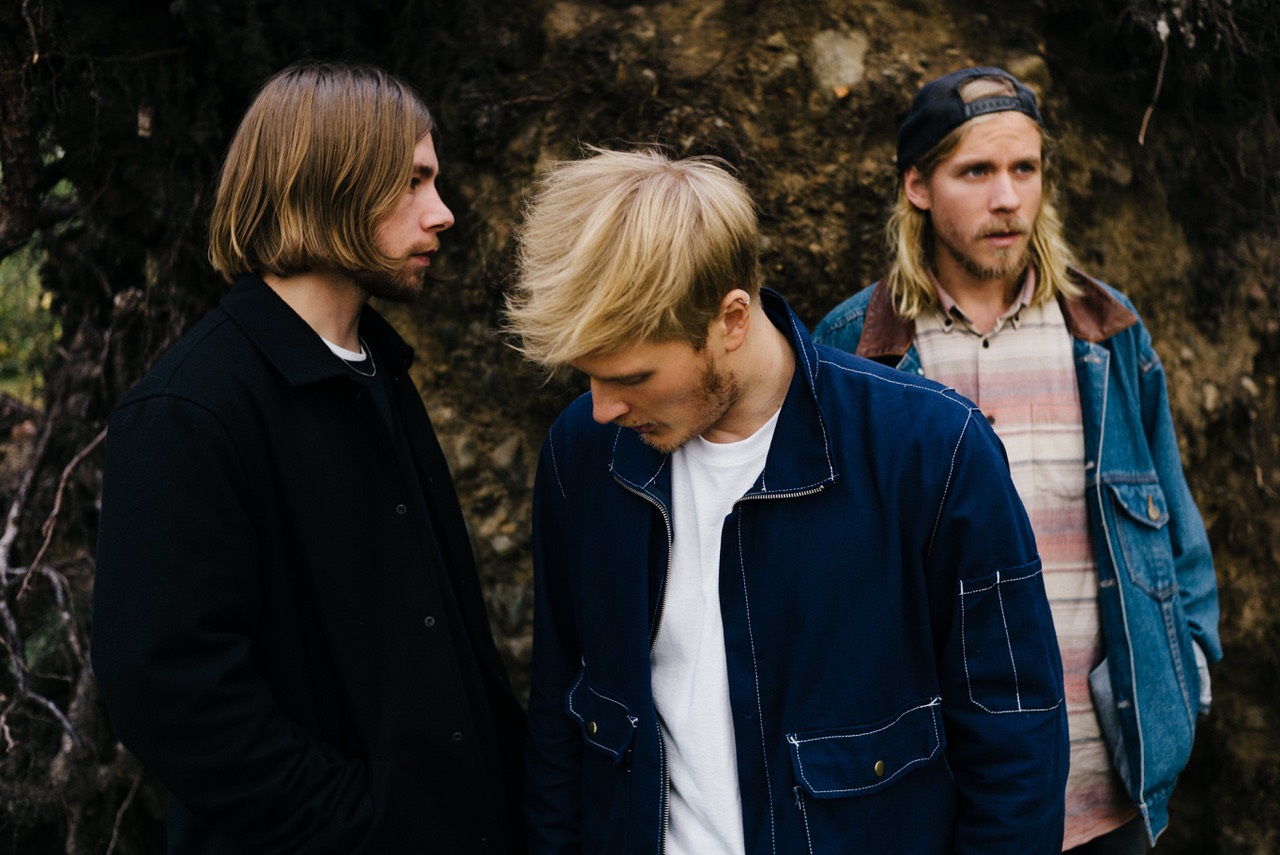
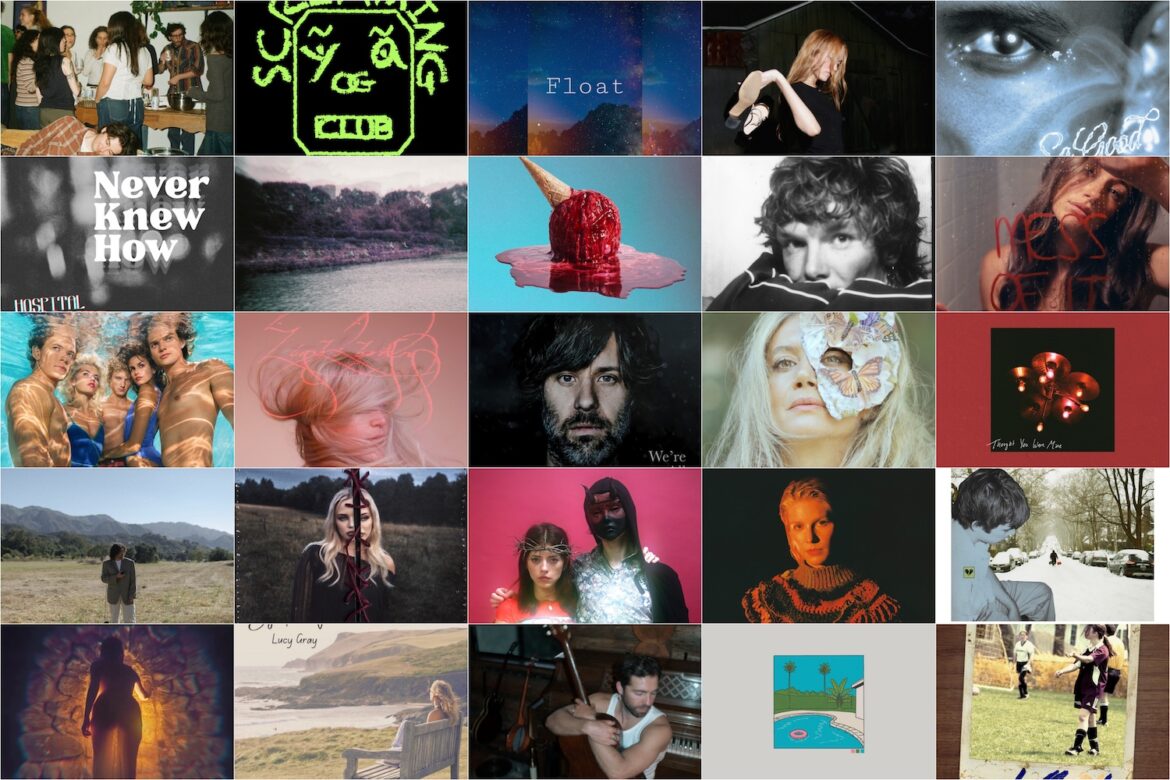
This week’s weekly roundup features music by Breachway, Kramies, Hayes Warner, Body Horror, Softblech, Nerisah, Screaming Yoga Club, combat, Women in Sports, ORKID, Theo Moss, Shaina Hayes, Brooke Lee, Sidecar, Rayvon Owen, Sam Louis, Hospital Corner, Adieu Anaïs, V.V. Lightbody, Soft Swells, Athena Andreadis, Emory Duncan, Lucy Gray, Claire Guerreso, and Visual Language!
•• •• •• ••
 follow WEEKLY ROUNDUP on Spotify


•• ••
:: Breachway – Breachway ::
Mitch Mosk, Beacon, New York

Noah Barreto knows how to make growing pains sound like good company. On Breachway’s self-titled debut album, the Rhode Island singer/songwriter delivers an inviting blend of folk rock and alt-country, full of dusty textures, radiant melodies, and stories that carry as much humor as heart. It’s an irresistible introduction to an artist whose music feels familiar in all the right ways – a little rough around the edges, overflowing with personality, and wonderfully alive.
Released October 2, Breachway is a nine-song collection with a distinctly communal spirit. Recorded in Old Lyme, Connecticut, with producer Charlie Dahlke, the album brought together an extraordinary cast of collaborators, whose contributions fill these songs with pedal steel, banjo, rich harmonies, and plenty of instrumental character. “I had about 30 different musicians and friends come through during the sessions, so the album feels like a big ol’ family dinner,” Barreto tells Atwood Magazine. It’s a fitting description of a record whose homespun sincerity recalls the likes of Hovvdy and mildred, two longtime favorites around here. Yet Barreto’s own personality shines through in his candid storytelling, his playful wit, and the effortless way he balances melancholy with an infectious sense of possibility.
Opening track “Oats & Honey” is an immediate highlight, a buoyant, catchy folk rock gem that captures Breachway’s appeal in just under three minutes. Barreto’s easygoing delivery and the song’s bright, spirited arrangement make for a delightful first impression, but beneath its sweetness lies a relatable, nagging uncertainty. “I will go to work / I will tuck my shirt / I’ll go out at night / I will kiss my wife,” he sings, before imagining a life on the road, financial success, and a little homemade comfort. Through it all, he keeps returning to the same question: “What do I gotta do?” It’s a deceptively simple refrain that speaks to the pressures of figuring out adulthood, the expectations we place on ourselves, and the desire to get things right. Barreto makes those anxieties feel almost weightless, transforming a familiar internal struggle into an exuberant singalong.
The album’s charms extend far beyond its opening moments. “Giving Tree” is another instant favorite, unfolding from a lone acoustic guitar riff into a breathtaking swell of harmonizing gang vocals. The effect is mesmerizing, almost hypnotic, as the gathering voices offer a communal answer to Barreto’s fragile reassurance: “When the lights all turn off / I tell myself there’s someone there.” “I Don’t Wanna Be Here” moves in a softer, dreamier direction, its lush, soulful guitar coloring a poignant confession of insecurity and relational exhaustion. “Waste a weekend / Thinking you were mad at me / Instead of asking / What your feelings really mean,” he sings, the music’s gentle embrace contrasting with the anguish of someone afraid of becoming a burden.
“Darcy” is a particularly endearing showcase of Barreto’s narrative instincts, spinning a small-town story of missed dates, crossed wires, and romantic misfortune with a wry, conversational touch. Its colorful characters and gently comic circumstances reveal a songwriter who understands how much life can happen in a seemingly ordinary afternoon. “Gold Rush,” meanwhile, reaches for something more existential, confronting the uncomfortable realization that growing older doesn’t always feel like progress. “This time I’m moving like I / Promised that I would / But this kind of growing, it don’t / Feel like it should,” Barreto confesses, capturing the distance between the future we imagined and the reality we’ve inherited. That tension runs throughout the record, giving its easygoing arrangements an undercurrent of genuine emotional weight.
There’s an especially moving sense of hope in “Sandusky, OH,” a wistful road song whose shifting scenery becomes a reflection of the changes unfolding within. Barreto travels through windmills, pastures, and passing storms, searching for perspective as the world rolls by outside his window. “It’s a choir in the street / Singing love right back to me,” he sings, finding unexpected reassurance in the midst of uncertainty. It’s a lovely image, and one that speaks to the generous spirit of Breachway as a whole.
Across these nine tracks, Barreto captures the complications of being alive with an open heart, giving everyday disappointments and fleeting joys the same care and attention. His songs are candid, charming, and full of melodic life, offering a welcome reminder that even the messiest journeys can lead to moments worth celebrating. Breachway is a delightful debut, brimming with the kind of warmth and creative camaraderie that makes you wish you could pull up a chair, join the band, and stay awhile.
:: “We’re All Dead” – Kramies ::
Mitch Mosk, Beacon, New York

Leave it to Kramies to make a song about death feel like a celebration of life. His enchanting, achingly expressive “We’re All Dead” is a wondrous reminder of what matters most, wrapped in a lush, orchestral dreamscape that swells with breathtaking beauty. It’s as haunting as it is hopeful, a sweeping and soul-stirring reverie that finds the beloved singer/songwriter embracing life’s fleeting nature with an open heart.
A longtime favorite here at Atwood Magazine, Kramies has spent the better part of fifteen years creating music that blurs the boundaries between folklore, fantasy, and deeply personal reflection. His latest release follows last year’s Goodbye Dreampop Troubadour, an album we proudly premiered and celebrated as a profound reckoning with identity, artistic purpose, and renewal. “We’re All Dead” feels like a natural continuation of that journey, but there’s a newfound freedom in its sound and spirit. Working with longtime friend and producer Derek Lee LaJoie, Kramies builds a richly textured arrangement around his evocative singing, with drummer John Panza helping bring the song’s dramatic atmosphere to life. The orchestral flourishes are especially arresting, rising and falling around his voice with an almost cinematic grandeur. Every swell seems to deepen the music’s emotional pull, making an already captivating performance feel positively transcendent.
“I have absolutely no idea what I’m doing,” Kramies tells Atwood Magazine. “I believe that’s my superpower. I’m just really comfortable being myself, and that’s probably why songs come through me like ‘We’re All Dead.’ It’s just a speckle in time.”
Beneath all that musical splendor lies a disarmingly simple truth: Our time here is limited, and so much of what we spend our lives chasing will ultimately matter very little. “You can drive the car / You can have your aspirations / Tell them I’m the fool / We can have a celebration,” Kramies sings, his words drifting between playful surrender and existential reflection. Then comes the refrain: “But no one’s coming to save you now / No one’s coming to save us / We’re all dead.” On paper, it’s a bleak declaration. In context, however, those words carry an unexpected tenderness, as though the singer has made peace with the inevitable and discovered something liberating on the other side. There’s a peculiar sweetness to the way he approaches mortality, finding room for gratitude, affection, and even a little humor in the knowledge that none of us gets to stay forever.
“All I do know is that I entered into the studio sessions for ‘We’re All Dead’ already feeling secure about the bits of success I’ve had, which I believe helped me let go of the need to prove to myself, allowing me just to create a few songs quickly and in the moment,” he says. “There were a few folks that told me I should maybe change the lyrical line ‘We’re All Dead’… But I don’t really listen to anyone anymore… ‘We’re All Dead’ might be the happiest song I’ve written yet.”
The longer “We’re All Dead” lingers, the more its apparent contradiction begins to make sense. Kramies has always possessed a remarkable gift for finding light in the shadows, and here he gives that sensibility perhaps its most profound expression yet. As he explained to Magnet, “I struggle to know the meaning behind what I’m creating until it’s been done for a bit… This one went from having no meaning to having the biggest theme. It’s a happy reminder that the only thing that matters and that people remember is the kindness you gave and the kindness you received. Other than that, we’re all dead.” It’s a philosophy that resonates through the song’s majestic arrangement, its enveloping melodies, and the extraordinary sincerity of his delivery.
For all its grandeur, the message couldn’t be more intimate: What we leave behind isn’t measured in accolades or achievements, but in the love we share and the ways we touch one another’s lives. “We’re All Dead” is another stunning entry in Kramies’ ever-evolving catalog, an elegiac yet uplifting testament to an artist who continues to astonish with his imagination and emotional depth. We all know how the story ends. Kramies reminds us there’s still so much worth giving before we get there.
:: “Baby” – Hayes Warner ::
Charlie Recksieck, San Diego, CA

Singer Hayes Warner is starring in the 2026 FX series The Shards, based on a Bret Easton Ellis novel – Ellis writing about L.A. rich kids in the 1980s, AGAIN. It could be fun trashy TV with the Ryan Murphy treatment – but I’m not here to write about TV or even Hayes Warner’s emerging dual-threat career. I’m here to say I love Hayes Warner’s song, “Baby.”
Even though Warner has declared her influences including Pink, Lady Gaga, and Gwen Stefani (especially after her cover of No Doubt’s “Just A Girl”), this song leans in hard to the eightiesness of the new series. It sounds like Giorgio Moroder / Debbie Harry glossy, 80s pop. The video does the same, owing to Hayes Warner’s gorgeous eighties prep-school princess role on The Shards. By the way, don’t be fooled by Warner’s good looks; she’s a songwriting monster, with years of songwriting credits under her belt for Disney, Netflix, Nickelodeon, Paramount and Fox at the tender age of 27. Also, the production is amazing with more synths than I can count, but the sound is never too dense. All delivered with a breathy vocal.
This song is more lyrically clever than it even needs to be. Yes, it’s a come-on song of new total sexual excitement and love. The hook is fantastic: “I’m ready to call you, have your, baby.” It’s such a simple line with a lot going on. And then amid the romantic awakening verses, there are great throwaway lines like “Yeah I can see it, in the corner of the bar with the really shitty art” and “Be the smoke inside your bowl, be the Kool-aid in your cult.”
It’s not easy to get retro-’80s pop right. When it’s all winking nostalgia, it never seems to work. In the case of “Baby,” it belongs in both eras – the 1980s and this week’s charts – and functions as great soundtrack work, great dance pop, a songwriting and production showcase, and a song that can be listened to on repeat.
:: At The Nepo – Body Horror ::
Danielle Holian, Galway, Ireland

Body Horror’s debut EP At The Nepo is a four-track exercise in beautifully controlled chaos, finding its footing somewhere between the abrasive urgency of post-punk and the hedonistic abandon of the London rave underground. Across its duration, the Welsh-rooted outfit fuse punishing electronics, serrated guitar lines and a relentless rhythmic pulse into something that feels as suited to a sweat-soaked basement as it does a disused industrial warehouse. There are shades of The Prodigy’s anarchic energy, the wiry menace of Viagra Boys and the feverish intensity of The Birthday Party, yet Body Horror bring a distinctly contemporary edge to the collision. Gethyn Thomas’ snarling vocal delivery cuts through the industrial murk with an infectious sense of confrontation, while the production, helmed by Syd Kemp, gives each track room to mutate, erupt and ultimately overwhelm.
The opening track “At The Nepo…” makes for an intriguing introduction to the EP, drawing the listener into Body Horror’s twisted sonic world with an infectious rhythmic drive. At three minutes and thirty-three seconds, it feels deliberately economical, building its atmosphere without overstaying its welcome and leaving you hungry for more. “The Nepo a Go Go” follows suit, pushing further into the band’s collision of jagged post-punk guitars and unruly electronic rhythms, maintaining a restless momentum that feels equally suited to the mosh pit and the dancefloor. “Sweet Meats” continues to explore the darker, more abrasive corners of their sound, while closer “Crack of the Whip” brings the EP to a suitably confrontational conclusion, rounding out a collection that thrives on unpredictability, distortion and sheer physical energy. Across all four tracks, Body Horror demonstrates an instinct for keeping things moving, embracing the ugly, the chaotic and the irresistibly danceable in equal measure.
What makes At The Nepo such a compelling introduction is its refusal to settle into any one sonic identity. Instead, Body Horror thrives in the friction between bodies in motion and music that feels perpetually on the verge of implosion, balancing dancefloor propulsion with an underlying sense of unease. There is an unmistakable physicality to these four tracks, but beneath the sweat and distortion lies a band with a clear instinct for tension, texture and experimentation. Having already built a formidable reputation on the live circuit, At The Nepo feels less like a tentative first statement and more like a warning shot. Body Horror are making music for the beautifully discontented, soundtracking the point where the dancefloor turns feral and the night begins to unravel.
:: “How to Feel” – Softblech ::
Mitch Mosk, Beacon, New York
Love can fade long before either person is ready to say goodbye. On “How to Feel,” Berlin duo SOFTBLECH inhabit that painful in-between with a brooding, dream-soaked post-punk reverie that aches with every measured beat. It’s an enchanting, deeply affecting listen, drawing us further into its melancholy embrace as the music unfolds.
Released June 12, “How to Feel” finds Dennis Hörtinger (bass/vocals) and Henri Röttger (guitar/vocals) exploring the uncertain territory between romantic love and friendship, where holding on can be just as frightening as letting go. There’s a distinctly Smiths-like sensibility to its wistful melodies and dramatic atmosphere, with glistening guitars cutting through a mournful lead synth, a throbbing bassline, and insistent drum-machine rhythms. The arrangement moves with purpose but never hurries, allowing each instrumental layer to settle into the next. Produced by Leon Kaak, the song develops a gorgeous, almost hypnotic momentum, its darker textures gathering weight even as the guitars offer fleeting flashes of brightness.
“We always try to catch the soul of the demo without over-polishing it,” Hörtinger tells Atwood Magazine. “The melancholic lead synth from the demo was a given from the start: That stays. It pulls you straight into the dark. Then we added a few details on top – the driving bass, and those guitar sounds that surface here and there. They feel like flickers of light. A bit of hope that shows up for a second and then disappears again.”
At its heart, “How to Feel” captures the disorienting experience of realizing a relationship has changed beyond recognition. “I felt it for some time / That I’m living a lie / Love feels so cold,” Röttger sings, his voice carrying an aching vulnerability that grows increasingly difficult to contain. The words circle through doubt and resignation, from “You’re not the one / And you will never be” to the hesitant admission “But maybe it’s ok, maybe.” There’s an almost unbearable intimacy to that uncertainty, as though the singer is trying to convince himself of something his heart hasn’t quite accepted. When the refrain arrives, its repeated “What we never had / Can’t be saved again” becomes a haunting acknowledgment of everything slipping away. The longer the song continues, the more immersive it becomes, its glistening melodies and mounting intensity pulling us into a world where grief refuses to follow any predictable path.
“That’s hard to say – and that’s kind of the whole point,” Hörtinger explains of the song’s meaning. “It’s about the painful realisation that feelings within a relationship can change. That moment when you notice the romance has faded and what’s left is something that looks more like friendship – and then the fear of losing both at once is what makes it so hard to let go. We wrote it right in the middle of that, trying to hold a whole world of emotions that had no clean answers. And honestly, we weren’t looking for any.”
The final stretch is especially arresting. As the instrumentation grows more forceful and Röttger’s singing reaches a fever pitch, SOFTBLECH give the music a visceral urgency that makes the preceding restraint feel all the more meaningful. There’s a desperate quality to the escalating refrain, as though every repetition might finally bring some clarity, even while the words themselves suggest otherwise. Röttger recalls singing through real tears during recording, eventually realizing the track needed a more aggressive ending. The resulting climax is a powerful release, an eruption of feeling that breaks through the song’s careful composure without pretending to resolve its central conflict. “How to Feel” is a captivating portrait of love in transition, and a reminder that some experiences deserve to be felt in all their painful complexity before we can begin to understand them. SOFTBLECH don’t offer an easy way out of heartbreak. They invite us to sit with it, listen closely, and find a little solace in knowing we aren’t alone.
:: “East Ghost” – Nerisah ::
Joe Beer, Surrey, UK

“East Ghost” is the new single from Paris duo Nerisah. With an eerie, sombre melody and light, airy vocals, the track is an impressive and distinct introduction to the duo and their experimental sound. The percussion consists of cowbells and tambourines, emphasizing Nerisah’s desire to make music in a less conventional way. They explain, “We like music where you can still hear the human being inside it.”
The story behind “East Ghost” goes back to a time when singer Mersiha was living in Paris and spending a lot of time on her own. She had been playing guitar for comfort, and she wrote “East Ghost” after reports of war reminded her of growing up in Bosnia. The song is about how quickly those memories can come back, even years later and Nerisah have succeeded in turning those difficult memories into something hauntingly beautiful.
:: “It’s Ok Not To Be Ok” – Screaming Yoga Club ::
Danielle Holian, Galway, Ireland

Screaming Yoga Club have never been ones to take themselves too seriously, and thankfully, “It’s Ok Not To Be Ok” arrives with just the right amount of heart, humour and melodic mischief. Built around a wonderfully unfussy indie-rock sensibility, the single finds the five-piece balancing emotional weariness with an infectious sense of forward motion, pairing sharp guitar work and buoyant melodies with a distinctly tongue-in-cheek outlook. There are familiar echoes of Blur and R.E.M. in their knack for an effortlessly memorable hook, but Screaming Yoga Club bring enough personality to keep things feeling fresh. Beneath the playful exterior, there is something quietly reassuring about a song that acknowledges the messiness of being human without getting too caught up in the misery of it all. Sometimes a good tune is enough, and the band seem perfectly happy to make that their manifesto.
There is a refreshing lack of pretension running through Screaming Yoga Club’s approach, with “It’s Ok Not To Be Ok” embracing the simple pleasures of making noise, writing a chorus and having a bloody good time along the way. Their Cork-Kerry roots lend the band a certain grounded charm, while the collective experience of its members gives the songwriting a confidence that never tips into complacency. Equally comfortable leaning into melodic nostalgia and letting their more eccentric instincts run wild, this is indie rock with its sleeves rolled up and its sense of humour firmly intact. As the band look towards their second album, the single makes for a welcome reminder that alternative music needn’t always be serious to have something meaningful to say. Screaming Yoga Club are finding joy in the everyday chaos, and inviting everyone else along for the ride.
:: “Fluid Karma” – Combat ::
Mitch Mosk, Beacon, New York

Brash and buoyant, Combat make embarrassing yourself sound like the best night of your life. On their irresistibly feverish song “Fluid Karma,” the Baltimore band unleash a riot of overdriven guitars, hard-hitting drums, and Holden Wolf’s searing, emphatic vocals, delivering a ridiculously catchy jolt of pop punk with a grin stretching from ear to ear. It’s a high-octane thrill ride, and an absolute blast from start to finish.
Released November 17 as the lead single off Combat’s forthcoming sophomore album 10 Million (Counter Intuitive Records), “Fluid Karma” follows the breakout success of 2024’s Stay Golden and finds the group sounding positively giddy with possibility. Produced by Origami Angel’s Ryland Heagy, the track carries the mischievous spirit of Blink-182, the exuberant melodicism of early Fall Out Boy, and flashes of Yellowcard’s urgency. It’s a thrilling next chapter for Combat – comprising Wolf, guitarists Max Slavich and Devon Khan, bassist Josh Bell, and drummer Isabella DeVarona – who have carried their DIY roots from Baltimore’s underground music community to stages across the country.
Wolf’s quick-fire phrasing and the band’s explosive interplay give the music an intoxicating forward momentum, as though every thought is tumbling over the next in a race to reach the chorus. It’s nostalgic in all the right ways, with the personality and conviction to feel entirely its own.
For all its sugar-rush energy, the song has a disarmingly vulnerable center. Wolf fixates on “all your cadences your timbre and your resonance,” captivated by someone whose effortless confidence only magnifies his own uncertainty. At a bar full of strangers singing along to “Mr. Brightside,” he admits, “You’ve always got this levity that I wish could be something you could say about me.” It’s an especially revealing confession, capturing the peculiar discomfort of admiring another person so much that you start measuring yourself against them. Beneath the humor lies a familiar insecurity, and Wolf’s breathless delivery makes it feel like we’re hearing his thoughts spill out faster than he can collect them.
“‘Fluid Karma’ is a song about the idea of looking up to or admiring someone but finding yourself ruining every little moment with them and embarrassing yourself,” Wolf tells Atwood Magazine. “The title of the song is a reference to the movie Southland Tales, and the second verse describes a scenario of trying to explain this movie to someone that you know they don’t and shouldn’t care about, and then realizing you’ll probably talk at them again about it another time even though they still won’t and shouldn’t care.”
The whole thing is wonderfully self-aware, a portrait of someone who knows exactly how ridiculous he’s being and somehow can’t help himself. Yet there’s an endearing sincerity to Wolf’s rambling enthusiasm, and the band meet it with all the melodic firepower it deserves. The soaring hooks and relentless instrumental drive give these painfully awkward encounters an unexpectedly triumphant quality, turning a string of conversational misfires into an occasion for collective release. “Fluid Karma” is a spectacularly fun reminder that sometimes caring about someone means risking looking like a complete idiot in front of them. Dignity may be lost along the way, but there’s something liberating about hearing every misplaced word become a chorus worth shouting.
With 10 Million on the horizon, Combat have firmly earned a place on our radar, their irrepressible enthusiasm and infectious songwriting promising plenty more reasons to fall in love with their music.
:: “HELLBENT” – Women in Sports ::
Mitch Mosk, Beacon, New York

A mind at war with itself can make an awful lot of noise. Philadelphia’s Women in Sports give that conflict a ferocious outlet on “HELLBENT,” a fiery, churning alternative rock reverie that pits overdriven guitars against unexpectedly sweet, soaring vocals. The collision is electrifying, bringing a melodic sensibility to a track brimming with tension and turmoil.
Released November 13, “HELLBENT” is the Philadelphia quartet’s third single, following “Thirteen” and “Teeth,” and their boldest embrace yet of ‘90s grunge. Its pounding rhythm section lends the music a physical urgency, while the shared singing of Rebecca Emont and Katie Masterson keeps the melodies clear and compelling. Behind that friction is a group learning to create together rather than simply combine material written apart.
“When Women in Sports first formed, we were bringing songs we’d written individually to the project and figuring out how to expand on them together,” the band tells Atwood Magazine. “We were also each involved in projects spanning vastly different genres, so finding our collective sound has been an evolving process. Now, in our second full year as a band, we’re beginning to find our footing as collaborative songwriters. Heavily inspired by the music we grew up on, we’ve gravitated toward the sounds of ’90s grunge and alternative rock, both sonically and emotionally.”
The lyrics draw the focus inward, addressing someone whose thoughts have become a form of punishment. “Tried to be warm / Now you’re doubling down / Always at war / With yourself,” the opening verse observes, catching the moment defensiveness shuts out an attempted connection. The repeated “It’s not enough” has the persistence of an intrusive thought, while the refrain “Tell me again why you’re so hellbent on” hangs unfinished, as though even the singer struggles to name the damage. Elsewhere, “Always surrounded / But always alone” makes the cost plain. What begins as frustration gradually reveals itself as concern for a person who can’t seem to escape their own worst convictions.
“‘Hellbent’ was one of the first songs we wrote and produced as a band, and it’s the first track that feels like a true reflection of who we are together,” they explain. “The song was inspired by someone we all know well, whose deep-seated insecurities make it difficult for them to connect with others. We found ourselves reflecting on how painful it is to live in constant conflict with yourself, to feel like you’re never enough, even in your own skin. We wanted to explore how that internal struggle can shape the way we relate to the people around us and inhibit our ability to build relationships. We’re excited to share this next chapter of Women in Sports with listeners. As we continue to lean into a heavier sound, we’re finding more of ourselves in the music, and it’s a place where we feel most at home.”
“HELLBENT” leaves its central question unanswered, and the uncertainty gives the song a lasting sting. No amount of reassurance can do the work of self-acceptance for somebody else, however desperately another person might want to help. Women in Sports give that helplessness an outlet fierce enough to rattle the walls, channeling the frustration of watching someone turn against themselves into a compelling musical release. It’s a powerful statement from a young band coming into its own, and a reminder that even our most punishing inner battles can leave the people around us struggling to find a way through.
:: “Wait, Don’t Go!” – ORKID ::
Josh Weiner, Washington DC
With the autumn still in full swing, spooky and sensual imagery certainly remains à la mode, and there’s plenty of that to be found in the new music video from Swedish singer ORKID. Born in Stockholm, raised in the northern county of Jamtland, and now based in Stockholm once again, ORKID has maintained a steady presence in the local Swedish pop scene ever since she participated in her home country’s version of American Idol back in 2013 and released her debut single, “Soulmates,” a few years afterwards.
Ms. Matilda Melin (her real name) has released new music at a steady rate since then, including her new EP, In All Of My Tomorrows, last April. Now, she’s returned relatively quickly with another single, “Wait, Don’t Go!” in which she informs those who once “left in a hurry, with memories left behind,” that “you don’t get to hide in the back of my mind.” She’ll forever be haunted by the memory of them, and it pains her so. She has described this song as encapsulating “the fear of waking up one day and realising you’ve forgotten the way they laughed, the way they looked at you, the sound of their voice. You lose someone once in real life, and then slowly, you lose them again inside your own mind.”
Hearing those feelings brought to life in song form is surely remarkable, especially with her countryman Adam Falk around to provide her with both the ethereal beat and her first official music video. “I got you under my skin,” as ORKID sings, is true for us listeners as well as her long-lost companion.
:: “Spinning” – Theo Moss ::
Chloe Robinson, California
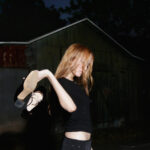
Life is made up of so many different chapters…the innocence of childhood, the challenges of finding your independence, starting a family, and navigating the many fluctuations that come with growing older. Another significant shift comes from relationships changing over time, often leaving us nostalgic for the way things once were. That’s what Theo Moss’ indie alt-rock single “Spinning” is all about. With gritty guitar riffs and pounding drums, she explores the bittersweet reality of watching life change and people drift apart. The singer shares, “I think at some point everyone wishes they could go back to a different time in their life and preserve some things but it’s just a part of growth. It’s wanting to see someone in the same way that you used to.”
With her second EP, Moss is pushing her sound in a new direction, discovering an entirely different creative landscape for her music. Her musical roots trace back to classical training, having dedicated more than 12 years to studying violin. But as time went on, the rigid structure of classical music began to feel limiting, inspiring her to step outside those boundaries and find a sound that better reflected her artistic vision. “Spinning” offers an introduction to Theo’s evolving sound, pairing candid, emotionally charged songwriting with rough-edged guitar work that makes the track all the more compelling. Her forthcoming EP takes inspiration from the alternative rock of the ’90s and the indie-pop sounds of the early 2000s, bringing together familiar influences while carving out a more adventurous direction for her artistry.
:: Take the Case of a Rose – Shaina Hayes ::
Mitch Mosk, Beacon, New York
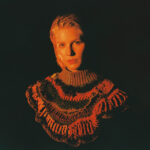
Life can change before we have the words to explain what happened. On Take the Case of a Rose, Shaina Hayes gives those in-between moments a language of their own. The Canadian singer/songwriter’s third album is a graceful, gently stirring collection about uncertainty, acceptance, and the complicated beauty of growing into a life we couldn’t have anticipated. Across ten songs, Hayes approaches the world with open eyes and an inquisitive spirit, finding meaning in the things we cannot control and the everyday moments that remind us why being alive is worth celebrating.
Released November 13 via Bonsound, Take the Case of a Rose follows 2024’s Kindergarten Heart and continues Hayes’ creative partnership with Francis Ledoux and David Marchand. Raised in the small coastal community of Shigawake, Quebec, where she also operates a vegetable farm, Hayes brings a naturalist’s attention to detail to her songwriting. Her music reflects the patience of someone accustomed to watching life unfold at its own pace, with acoustic guitars, piano, and carefully layered instrumentation accompanying her dulcet, expressive voice. Yet beneath the record’s pastoral beauty lies a profound shift in perspective, one born of experiences that challenged her understanding of herself and the world around her.
“Take The Case of a Rose is my third and most intimate album,” Hayes tells Atwood Magazine. “It grew out of a period of personal health struggles that reshaped my relationship to the world around me. The songs are a collection of observations and reflections gathered in the wake of that change.”
The album opens with “Acid Rain,” one of its most musically compelling offerings and a particularly striking introduction to Hayes’ lyrical world. Her voice emerges alongside delicate piano before the arrangement gathers momentum, with guitars and rhythmic flourishes adding an invigorating sense of movement to the song’s introspection. There’s an elegant restlessness to the composition, a bright musical energy that contrasts with the narrator’s increasingly heavy thoughts. “Acid guilt / Like acid rain / Is falling gently on my tender frame,” Hayes sings, imagining remorse as a corrosive force that descends upon her almost imperceptibly. Yet the song opens with a different image entirely: “You wouldn’t count its hours / You let it have its show / You let it be brilliant / Then you let it go.” The rose becomes a lesson in impermanence, its brief bloom an invitation to appreciate what exists rather than spend our lives fearing its end. Hayes places that wisdom beside her own self-reproach, revealing how difficult it can be to extend the same understanding to ourselves.
“Despite being first on the track list, ‘Acid Rain’ was one of the very last songs written for Take the Case of a Rose,” Hayes explains. “It is about learning to articulate your feelings without over-identifying with them.”
“Timid” is another highlight, bringing a refreshing indie pop energy to Hayes’ folk foundations. Recorded live in Montréal with a band of trusted collaborators, the track pulses with a breezy, slightly rough-edged charm, its lively bassline and drums carrying cascading vocal harmonies, electric guitar, and upright piano. Hayes’ silky delivery floats above the arrangement, lending its restless energy a contrasting sweetness. “I cut my teeth keeping quiet / And every night they take to grinding,” she sings, capturing the physical toll of all the thoughts we swallow and the words we leave unsaid. The image gives her silence a physical consequence, while the buoyant arrangement keeps the song moving.
“‘Timid’ was a track that came about during a period when I was listening to a lot of Julia Jacklin and Billie Marten,” Hayes recalls. “I was loving the way their sweet, folky vocals float above the instruments in their more indie-rock tunes, and I wanted to create something similar. With this in mind, I created a basic demo of ‘Timid’ and left it with my super team, Francis Ledoux and David Marchand to work out the arrangement. As far as the writing of the song itself, I wanted to explore the idea that even at our most articulate, the way we express ourselves is just a tiny glimpse into what’s actually going on inside us – that we contain whole, unseen universes. Ultimately, ‘Timid’ is a song about everything we feel but rarely manage to express.”
Elsewhere, “Flourish” offers one of the album’s most inviting expressions of love, its mellow acoustic textures and sweet melodies framing romance as an act of encouragement. We first celebrated the song earlier this year, drawn to the generosity of its central sentiment: “I wanna do to you / What I have seen of springtime / Pull you from your roots / And summon you to sunshine.” Hayes imagines affection as the desire to see another person grow into their fullest self, and the song remains a charming, affectionate highlight. The piano-led “Steady,” meanwhile, offers reassurance for those struggling with indecision and the pressures of everyday life. “Steady, steady / You’re already / Worth all the light you emit,” she sings, her gentle delivery giving the refrain an intimate, almost conversational sincerity. Here, self-worth becomes a matter of recognition rather than achievement, an understanding that our value exists independently of how much we accomplish or give to others.
Together, these songs capture much of what makes Take the Case of a Rose such an affecting reflection on change. Hayes has a gift for expressing complicated thoughts through deceptively simple imagery, and her arrangements allow those observations to resonate with an unhurried grace. Whether she’s wrestling with guilt, searching for the courage to speak, or encouraging a loved one to flourish, she returns to the importance of patience – with ourselves, with others, and with the many uncertainties that accompany a life in motion.
The album’s central image offers a fitting philosophy: A rose deserves to bloom for however long it can, and its passing takes nothing away from the beauty of having witnessed it. Hayes understands that growing older asks us to make room for both the things we cherish and the things we must eventually release. On Take the Case of a Rose, she’s learning to do exactly that, one thoughtful, carefully tended song at a time.
:: “Mess of It” – Brooke Lee ::
Mitch Mosk, Beacon, New York

Brooke Lee has reached her breaking point, and she’s going to sing her way out. On “Mess of It,” the Nashville-based singer/songwriter unleashes a fiery, irresistibly catchy anthem that channels the hurt of a failed relationship into an electrifying display of vocal power and hard-won resolve – pairing punchy guitars and driving drums with a soaring, infectious chorus that begs to be sung at the top of your lungs. Her voice is the main event – commanding and full-bodied, with a soulful rasp that brings every ounce of frustration, heartbreak, and determination roaring to life.
It’s a spirited, utterly captivating performance from an artist who knows how to deliver a knockout hook and back it up with a story worth telling.
Following the release of her sophomore EP Desert Darling earlier this year, “Mess of It” reveals another compelling side of Lee’s artistry, one rooted in the painful realization that love alone cannot save a relationship. The song’s opening imagery sets the scene with startling economy: “Champagne chandeliers / Turned into sunrise tears.” What once seemed full of possibility has deteriorated into a relationship defined by anger and exhaustion, and Lee captures that unraveling through vivid, painfully recognizable details. A broken vase, a slamming door, and the lingering taste of rage bring the fallout into focus, while the confession “You made me small / I hit the wall / And I can’t take anymore” exposes just how much she’s lost in trying to hold everything together. Her words cut especially deep because the love was real, even if the relationship could no longer survive.
“The more life I live, the more sides of love I see,” Lee tells Atwood Magazine. “Sometimes it’s the butterflies, the late nights, and wanting the night to last forever like ‘Driver Drive.’ Other times, it’s the hard realization that not every love story ends the way you hoped it would. ‘Mess of It’ came from a relationship where I gave everything I had because I wanted it to work. My time, my energy, my heart – I really tried. To me, it’s about the moment you realize the relationship you’ve been fighting to save has cost you pieces of yourself, and finding the strength to walk away even though it’s the last thing you wanted to do.”
The music gives Lee’s confession the scale and intensity it deserves. Produced by Danielle Blakey, who co-wrote the track alongside Lee and Peytan Porter, “Mess of It” rides a powerful arrangement whose bright, driving momentum provides an exhilarating contrast to the anguish at its center. The melodies are immediately memorable, but Lee’s delivery is what truly takes this song over the top. She moves between wounded reflection and full-throated defiance with extraordinary conviction, embracing the grit in her voice as the chorus climbs higher and higher. Every note carries the urgency of someone who has reached her limit, and the result is a performance that’s as affecting as it is invigorating. It’s easy to imagine a crowd singing along at full volume, finding their own stories and frustrations in the words she’s fighting so hard to get out.
“I wanted to create something you could scream to when you’re hurting, relate to if you’ve ever been in this kind of relationship, and cry through both the hurt and the healing,” Lee says. “It was important to me that the vocals felt raw and emotional. There are a lot of tears behind the mic that I hope come through. I want people to feel it right in the chest when they hear it live. Leaning into the rasp and my rock influences helped create what I think of as a rage song with its heart on its sleeve.”
For all its fire, “Mess of It” draws its greatest strength from the fact that Lee never pretends walking away is easy. The song’s emotional stakes live in the distance between how desperately she wanted the relationship to succeed and how much of herself she sacrificed along the way. When she sings “I gave you time I didn’t have / Wasn’t enough you needed more,” the words carry the exhaustion of someone who finally recognizes that giving everything can still leave you empty-handed. Yet there is real power in that recognition, and Lee channels it into a chorus that sounds like the first step toward reclaiming herself. “Mess of It” is an absolute knockout of a breakup anthem, brimming with melodic firepower and the unmistakable force of a singer who means every word. Sometimes the hardest goodbye deserves to be sung the loudest.
:: “Thought You Were Mine” – Sidecar ::
Julius Robinson, California
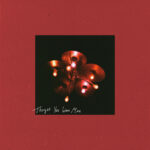
Nashville-based Sidecar blends Americana and indie rock into a single that strikes a familiar emotional chord. “Thought You Were Mine” captures the pain of watching something you thought was yours slip away and learning to accept what remains. Lyrics like, “I put the blinds down on your bedroom door, swear I won’t look through anymore, go home and take down your shrine,” reveal the bittersweet tension between wanting to hold onto someone yet understanding the time has come to finally let go. Soft emotive vocals atop rich country sonics, are the perfect landscape for the song’s raw, heartfelt storytelling.
Sidecar was conceived in 2025, bringing together five musicians with individual histories in Nashville’s music community. Featuring Gabe Gowen on lead vocals, Anders Hansson on guitar, Ben Jones on bass, Jeff Ward on keys, and Dylan Duffy on drums, the group draws on its members’ diverse musical backgrounds to create a sound defined by dynamic instrumentation, expressive guitar work, steady rhythms, and powerful vocals. With a steadily expanding hometown audience, Sidecar is making a name for themselves as an exciting emerging force in Nashville’s Americana and roots-rock scene.
:: “So Good” – Rayvon Owen ::
Julius Robinson, California
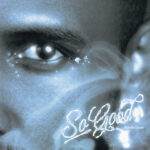
Pop/R&B artist Rayvon Owen understands that being a little bad can feel oh so good. Featuring NATIIV, “So Good” brings together hypnotic synth textures and Owen’s smoldering vocals, delivering a sleek dance track infused with a smooth, breezy groove. Singing in the chorus, “If Loving you is wrong, why’s it feel so good” provides the listener with an intense desire for indulgence. Weather it is a luscious, sweet treat or naughty kind of love, sometimes we just cannot help but give in to the temptation.
The radiant R&B singer, got his start as a top four finalist on American Idol. Shortly after being on the show, Rayvon served as a Musician First Class in the U.S. Navy, performing as a vocalist for the White House, the President of the United States, and international leaders. During his time in the military, he also delivered a solo performance for Team USA at the White House during an event hosted by President Biden. Though he is no longer serving, he still continues to serve up seductive soul.
:: “end times” – Sam Louis ::
Chloe Robinson, California
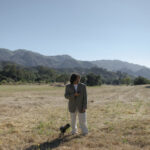
Toronto artist Sam Louis confronts the unpredictability of the world in his latest single “end times,” weaving together themes of global uncertainty and unrest with an unexpected sense of comfort, offering a gentle reminder that there is still light to be found among the turbulence. His vocals begin light and ethereal then progress to a heavier rock essence, conveying how quickly a sense of normalcy can give way to something totally topsy turvy. In the midst of today’s chaos, this unfiltered, thought-provoking anthem is exactly what we need.
Balancing vulnerable songwriting with rich guitar arrangements and polished production, Sam Louis brings a modern approach to alternative music. Louis has built an impressive list of accomplishments, from earning an Indigenous Music Award and becoming an International Songwriting Competition semifinalist to securing a Top 50 spot on Canada’s Got Talent and playing multiple sold-out Canadian Music Week showcases. “end times” is just another shining example of his exceptional musical efficiency.
:: “Never Knew How” – Hospital Corner ::
Mitch Mosk, Beacon, New York

Regret has a pulse, and Hospital Corner send it racing. The Edinburgh band’s “Never Knew How” is a heated, anthemic rush of restless energy and bruised reflection, its driving drums and roaring guitars building toward a fever pitch as frontman Chris Finn confronts the maddening uncertainty of life’s roads not taken. With a distinctly 2000s indie rock spirit and flashes of The Killers in its soaring guitar work, the song is as arresting as it is invigorating, channeling years of second-guessing into a dramatic, emphatic performance that demands to be heard. There’s an unabating urgency to it all, like a pot coming to boil, ready to spill over at any moment.
Released October 22 via In Black Records, “Never Knew How” marks Hospital Corner’s first new music since 2024’s “Bad People,” and an exciting new chapter for a project that began in Finn’s bedroom back in 2020. Now a fully-fledged band, Hospital Corner have grown into a formidable indie rock outfit, pairing Finn’s candid, emotionally charged songwriting with a sweeping, full-bodied sound. The song opens in motion, its first lyric, “Scenery scrolls and dissolves as soon as it slips out of view,” establishing a dizzying sense of displacement. There’s a palpable restlessness here, a desperate desire to keep moving even as the weight of the past threatens to catch up.
“That opening line was about a time where I had a bit of a wobble, let’s say, and just drove and drove in my car,” Finn tells Atwood Magazine. “I didn’t have a destination. It was like everything was zipping by me and I felt it all sort of disappearing once I went past. You know in Scooby Doo when the lads are running down a corridor and the background just keeps repeating to minimise the amount of animation they had to do? It felt a bit like that, so I wanted to capture that restlessness in the recording.”
Beneath the song’s blistering musical intensity lies a deeply affecting story about time, regret, and the people we wish we’d held onto. “Oh you / You were always there right in front of my face / And I just never knew how / To hold on to something,” Finn sings, his voice carrying the frustration of someone who can finally recognize what mattered, long after the moment to act has passed. The chorus is utterly compelling, its melodic urgency elevating the lyric into a full-throated confession. And as Finn wrestles with the years slipping through his fingers, another question emerges: What if he’d made different choices? What if the life he’s living is only one of countless possibilities, each with its own joys, disappointments, and missed connections?
“Lyrically, it’s about those times where you imagine another you, with another life, on an alternative timeline,” Finn explains. “I always have an insecurity around those feelings because I wonder if I’ve made the right choices. A typical ‘grass is always greener’ type deal. Would I have been a different person if I had lived somewhere else, for example? I can’t seem to shake this feeling that life is basically a neverending cascade of ‘sliding doors moments’.”
The music carries these anxieties to exhilarating heights. As the drums pound and the guitars surge, “Never Knew How” grows increasingly feverish, its mounting intensity mirroring the overwhelming experience of imagining all the lives we could have lived. Yet amid the turmoil, Finn offers a glimpse of unexpected light: “When I make you laugh something happens in the sky / The clouds part and there’s dancing light.” It’s a striking moment of clarity in a song consumed by uncertainty, suggesting that even when we’re haunted by the past, the present still holds extraordinary possibilities. Hospital Corner have captured the frustration of looking backward while life continues moving forward, giving those tangled thoughts a thrilling, larger-than-life soundtrack. And in the process, they’ve taken all those years of second-guessing and given them somewhere to go – out of Finn’s head, through the speakers, and into a chorus built to be sung at full volume.
:: Adieu Anais – Adieu Anais ::
Danielle Holian, Galway, Ireland

Electronic pop has always had a fascination with the space between euphoria and unease, and on her self-titled debut EP, Adieu Anaïs, the emerging artist finds plenty of room to explore both. Across four tracks, Anaïs navigates a shifting landscape of experimental electronics, dream pop and classical romanticism, creating something that feels equally at home in the club and somewhere much deeper within the subconscious. It is an ambitious introduction, driven by a desire to push beyond familiar genre boundaries while exploring the complicated business of finding yourself again. Opening with “Darker Places,” the EP establishes an atmosphere of emotional disorientation, weaving ambient electronics and ethereal textures into a haunting portrayal of personal entrapment. There is a delicate intensity to the production, allowing the track to gradually pull the listener into its shadowy world before “My Own Cave” introduces a welcome shift in perspective. Embracing more adventurous hyper-pop sensibilities and experimental flourishes, the second track feels like emerging into a previously undiscovered part of the mind, where colour, imagination and possibility begin to replace uncertainty. Across these opening moments, Anaïs demonstrates a particularly compelling understanding of atmosphere, using electronic production not simply as a sonic backdrop but as an extension of the emotions driving the music.
At the EP’s centre, “Play Me Chausson” provides perhaps its most fascinating creative statement, bringing Anaïs’s classical opera background into conversation with her more contemporary electronic instincts. Inspired by French Romantic composer Ernest Chausson, the track marries orchestral grandeur with delirious electronic experimentation, creating something simultaneously elegant, unpredictable and otherworldly. It is an ambitious meeting of musical worlds, with Anaïs demonstrating an ability to move beyond conventional genre boundaries without sacrificing the emotional weight of either discipline. Her vocal performance is equally striking throughout, balancing the technical precision of her classical training with an expressive, almost weightless quality that gives the material its distinctive character. There are shades of Oklou and FKA twigs in the adventurous production, while the more expansive melodic sensibilities recall Caroline Polachek, yet Anaïs is clearly interested in building an identity of her own. Closing track “Lose Myself” takes the listener somewhere altogether more propulsive, introducing drum and bass rhythms that transform the introspective atmosphere of the preceding tracks into something altogether more liberated. Its restless momentum feels like a final breaking of chains, bringing the EP’s emotional narrative towards a suitably euphoric conclusion.
What makes Adieu Anaïs particularly affecting is the deeply personal story underpinning its four compositions. Inspired by a vivid dream in which the artist encounters her younger self in a glowing cave filled with music and dancing, the project becomes an exploration of identity, rediscovery and the courage required to reclaim the parts of ourselves that life can gradually suppress. That sense of personal liberation gives the EP a narrative coherence that elevates it beyond an exercise in electronic experimentation. There is also something quietly defiant about the circumstances surrounding its creation, with Anaïs overcoming significant personal and professional obstacles to bring the project into existence. Yet rather than allowing those experiences to define the music entirely, she transforms them into something vivid, romantic and ultimately life-affirming. Across its four tracks, Adieu Anaïs moves with an impressive sense of purpose, finding beauty in vulnerability and exhilaration in experimentation. For a debut, it is an assured and imaginative statement from an artist with a clear vision, unafraid to embrace the unconventional or let her musical instincts lead somewhere unexpected. More than simply introducing a new electronic pop voice, this is an invitation into Anaïs’s world, where classical elegance, club culture and the subconscious collide in wonderfully unpredictable fashion.
:: “Two Swans” – V.V. Lightbody ::
Mitch Mosk, Beacon, New York

The universe keeps sending V.V. Lightbody signs, and she’s beginning to suspect it has a sense of humor. On “Two Swans,” the Chicago singer/songwriter embraces the curious, often comical ways we search for meaning in the world around us, delivering a smoldering, enchanting indie pop reverie that positively radiates with personality. Her voice is mesmerizing, her melodies irresistible, and the music brims with a dreamy, seductive heat that draws us deeper into her orbit. Beneath all that musical magic lies a playful interrogation of fate, coincidence, and our desire to believe that the universe might have a plan for us after all.
“Anywhere I saw two swans, it felt like a comforting sign from the universe that I was doing something right,” Lightbody tells Atwood Magazine. “I eventually began to question their cosmic potency when I started seeing them too often and remembered that swans are usually portrayed in pairs. ‘Two Swans’ critiques our society’s tendency towards ‘magical thinking’ while also confessing my curiosity and delight in divinatory practices.”
“Two Swans” is a deliciously slinky, sophisticated affair, its hypnotic arrangement balancing playful eccentricity with genuine sensuality. Lightbody’s voice and the lead guitar share the spotlight and, at times, the same melody, moving in tandem with an effortless, almost flirtatious chemistry. Colorful keyboards and a restless rhythmic pulse add to the song’s infectious character. Through it all, Lightbody’s vocals command our attention, their sultry, emotionally charged delivery giving the music a captivating intensity. It’s the kind of performance that draws you in with its sweetness and keeps you hooked with its surprises.
“I feel like this song feels deeply Chicago and combines many of my musical influences – angular guitars, mixed meter chorus, and raging farfisa,” Lightbody says. “Cate Le Bon, but in a cornfield.”
Released October 9 via Egghunt Records, Lightbody’s third album, Period Piece, marks a significant creative milestone for the artist, who serves as lead producer on one of her own albums for the first time. A longtime collaborator in Chicago’s indie music community, she’s crafted a vibrant collection that explores the peculiarities of getting older, falling in love, and learning to relinquish control. “Two Swans” captures that spirit with particular wit. “Hey babe let’s manifest / or find a good therapist,” she sings, cheekily collapsing the distance between cosmic intervention and practical self-improvement. The joke lands because it exposes the contradictions we happily embrace when we’re searching for reassurance. Lightbody may be skeptical of the universe’s messages, but she clearly hasn’t lost her appetite for a little mysticism.
Perhaps the most irresistible thing about “Two Swans” is how much pleasure Lightbody takes in the uncertainty of it all. She knows that two swans are probably just two swans, and yet the possibility that they might mean more still carries an undeniable thrill. Her music reflects that same delightful tension, with its winding melodies and unexpected rhythmic shifts inviting us to surrender to the moment rather than demand an explanation. The result is a spellbinding highlight off Period Piece, rich in musical imagination and winking self-awareness. The universe may never tell us what those two swans mean, but V.V. Lightbody makes a compelling case for following our curiosity anyway – and enjoying the ride wherever it leads.
:: “Free Pools” – Soft Swells ::
Mitch Mosk, Beacon, New York
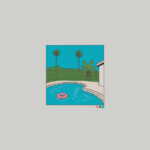
Tim Williams wants to be the biggest free pool in Southern California. It’s a funny, endearing ambition, and a surprisingly moving one at that – especially for a songwriter who’s spent years learning to make peace with his past. On “Free Pools,” Williams’ longtime indie rock project Soft Swells embrace the messy business of growing up with bright guitars, infectious melodies, and an openhearted spirit that makes this declaration of personal growth all the more compelling. Beneath the song’s breezy, sun-soaked exterior lies a candid reckoning with mistakes made and lessons learned, and the exhilarating possibility of becoming a better person because of them.
Released October 9 via Trash Casual Records as the A-side of a new 7-inch single, “Free Pools” marks a fresh chapter for the Los Angeles-based project, now fifteen years into its existence. Williams teamed up with longtime friends Tom Beaujour, who produced and mixed the record while contributing guitar and keys, and drummer Chris Berry to bring these songs to life. Their easy musical chemistry gives the recording a spirited, familiar energy, while the circumstances surrounding its creation suggest an artist rediscovering the simple pleasure of making music on his own terms.
“I wrote these two songs without anyone asking for them, without having to follow anything up, and without the pressure of any expectations besides my own,” Williams tells Atwood Magazine. “It was very freeing and put me in a place where I could reflect on my past and where I hope to go in the future.”
The lyrics to “Free Pools” reveal just how far that reflection extends. Williams begins with a troubling dream of falling knives threatening his friends and family, an unsettling image that gives way to an earnest admission of guilt and the desire to change. “I’m sorry for what I did / A messed up dumbass kid / I’ve changed, I’ll show you what I am,” he sings, confronting the person he used to be with an unguarded honesty. And then comes the chorus’s delightfully unexpected declaration: “I’m the biggest free pool in the southland.” The contrast is striking. Where the verses carry the weight of old fears and regrets, the refrain opens itself to the world, replacing self-reproach with an almost childlike enthusiasm for doing better. There’s a playfulness to the metaphor that gives the song its personality, but Williams’ sincerity is what gives it staying power.
As Williams explains, the titular image emerged from his desire to bring a different kind of energy into the lives of those around him. “Nothing is better in the hot Southern California summer than a free pool. That is what I am striving to be now for everyone I meet,” he says.
The smoldering single’s B-side, “Boiling Water,” approaches life’s complications from another angle, examining how relationships endure the pressures and unexpected challenges that inevitably come their way. Its central image is considerably more volatile, yet the two songs share an underlying faith in our ability to grow through difficult experiences. Together, they capture an artist increasingly comfortable with life’s uncertainties, embracing the knowledge that hard times will come again and recognizing the value of having someone beside you when they do.
Fifteen years into Soft Swells, Williams sounds invigorated by the freedom to create, reflect, and pursue whatever comes next. “Never set on regret / Always gotta learn,” he sings on “Free Pools,” capturing the spirit of a song that acknowledges yesterday’s mistakes while keeping its sights firmly on tomorrow. The message is as generous as the metaphor at its center: We can’t undo the things we’ve done, but we can take responsibility for them and choose how we treat the people in our lives today. And if Williams wants to spend this next chapter being a free pool for everyone he meets, well, that’s an invitation worth diving into.
:: “All Alone Am I (Min Ton Rotas Ton Ourano)” – Athena Andreadis ::
Julius Robinson, California

Brenda Lee’s All Alone Am I is the eighth studio album by the famed American singer. The record was released in 1963 and the album’s title track became a Top 10 hit on the Billboard Hot 100. Athena Andreadis honors the stunning triumph with a version of her own that is equally as masterful. The original has a captivating nostalgic charm and Andreadis does a great job keeping that wistful, sentimental magic alive. Singing in both English and Greek, her cover of the classic track radiates romance, with a dreamy quality that draws listeners in instantly. Every word she sings is felt on the deepest level, erupting with a passion drenched tone that is easy to get engulfed by.
The music video stars herself, but also features the exquisite talent of Nontas Evangelatos on the bouzouki. It captures the fragile reality behind the spotlight, tracing a performer’s struggle with loneliness as music becomes her path toward rediscovery. The visuals are simply beautiful to watch, echoing the already dramatic and dazzling rendition. The work is an intimate yet visually striking accompaniment that begs to be viewed again and again.
Andreadis has established herself as an internationally recognized Anglo-Greek artist, drawing on her classical training to shape a distinguished career as a singer-songwriter. Her achievements are comprised of multiple acclaimed releases, numerous accolades, and an Independent Music Award for Best Folk Singer-Songwriter Album. She has also collaborated with Leonard Cohen on the Greek-inspired track “Travelling Light,” featured on his Grammy-winning album You Want It Darker. From sold-out performances around the world to chart success in the UK, Greece, and the United States, Andreadis has built a bold presence across the international music scene. “All Alone Am I (Min Ton Rotas Ton Ourano)” is just another profound piece to add to her inspiring puzzle.
:: Semicircles & Half-Written Songs – Emory Duncan ::
Mitch Mosk, Beacon, New York
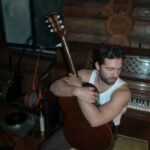
Emory Duncan knows how much can live inside an unfinished thought. His second EP, Semicircles & Half-Written Songs, is an enchanting collection of five folk songs that ache with regret, brim with love, and reach toward the promise of better days. Wrapped in gently bright melodies, gauzy vocals, and richly textured arrangements, Duncan’s music has an irresistible, comforting quality – a welcoming embrace for anyone who’s ever struggled to find the right words, make peace with the past, or figure out where to go next. There’s a breathtaking sweetness to his sound, even when he’s singing from a place of hurt, and a generosity in the way his music invites us to experience those complicated emotions alongside him.
Released October 9, Semicircles & Half-Written Songs follows Duncan’s 2024 debut EP, For Someone I Don’t Know, and finds the Houston-born, California-based singer/songwriter continuing to develop his deeply affecting brand of pastoral Americana. Produced by Jamie Mefford (Gregory Alan Isakov, Nathaniel Rateliff) and Nicholas Kozuschko, the record was recorded over roughly a week inside Duncan’s log cabin beneath the redwoods of the Santa Cruz Mountains. The intimacy of that setting comes through in the music, where acoustic guitars, piano, and atmospheric flourishes gather around his earnest voice, creating a delicate balance between earthly simplicity and dreamlike wonder. Duncan’s songwriting is just as compelling, tracing the unfinished business of love and the difficult work of understanding ourselves.
“Songwriting is kind of my way of getting in touch with my subconscious, and allowing myself the space to feel all the intrusive emotions we typically like to shut out,” Duncan tells Atwood Magazine.
We first encountered this chapter of Duncan’s artistry back in March, when Atwood Magazine had the pleasure of premiering “Halifax,” a beautifully weathered folk confession about choosing love over certainty and finding the courage to come home. Opening the EP, the song continues to resonate with its stirring refrain, “So which way to Halifax / Which way to the coast / Which way to forgiveness / Reckon’ I need that the most.” Duncan’s search for direction is as much an inward journey as a physical one, and his longing for forgiveness establishes a compelling foundation for the rest of the record. Throughout these five tracks, he repeatedly returns to the distance between the person he is and the person he hopes to become.
The title track, “Semicircles,” is a definite highlight, a soul-stirring folk reverie whose glistening sweetness belies the turmoil at its center. Duncan’s guitars move with an effortless grace, while subtle ambient textures and a breathtaking, pedal steel guitar line give the arrangement an elegant, almost weightless quality. Every note seems to hang in the air just long enough to leave an impression. Beneath all this musical beauty lies a bruised confession: “And I’ve lived as a photograph, lived as a ghost / I’ve been miles away when you needed me most.” The lyric captures the pain of recognizing how our own shortcomings can wound the people we love, and the helplessness of arriving at that realization too late. As Duncan sings of wanting to change, the music surrounds his self-reproach with compassion, allowing regret and affection to coexist in the same breath.
“Two Hearts” is similarly moving, a tender, dreamy ballad whose gentle guitars and piano provide the perfect accompaniment to Duncan’s soft, soulful singing. A delicate harmonica drifts through the background, adding a spellbinding touch of melancholy to an arrangement that recalls Gregory Alan Isakov at his most intimate. Duncan sounds especially exposed here, his voice carrying the weight of a relationship strained by loss and the limits of what one person can bear. “And I gritted my teeth as I watched them depart / If I just had the strength of two hearts,” he sings, his words expressing an impossible wish to have more to give than one life, one body, or one person’s capacity will allow. It’s an affecting image, and Duncan allows its significance to deepen with every repetition.
“The Fine Print” brings a harder edge to the EP’s soul-searching, confronting the excuses we tell ourselves when love begins to unravel. “And ain’t it funny how most of the reasons we give are just lies / Out of some selfish need to relieve any guilt that we find,” Duncan sings, acknowledging the uncomfortable ways pride and self-preservation can distort our understanding of the past. His willingness to implicate himself gives the song particular force. Where “Semicircles” mourns the damage already done, “The Fine Print” examines the stories we construct to justify it, exposing the gulf between our intentions and our actions. It’s a necessary moment of self-examination within a record so full of longing, and one that gives the EP’s gentler passages even greater emotional weight.
By the time “Spring Eternal” arrives, Duncan has earned the right to look toward the sun. The closing track carries a refreshing sense of renewal, its hopeful imagery offering a welcome contrast to the uncertainty and remorse that came before. “Singing hallelujah don’t you cry / This branch is gonna bend and bluebirds are gonna fly,” he sings, embracing life’s capacity for change. Yet the most revealing moment comes in a small admission: “The sun is gonna rise / I think it might.” The uncertainty in those final three words gives the song its power. Hope, in Duncan’s world, is a possibility worth believing in, even when certainty remains out of reach. Across Semicircles & Half-Written Songs, he’s crafted a deeply moving portrait of a life still taking shape, full of imperfect choices, hard-earned revelations, and the extraordinary love that keeps us trying. These songs offer comfort in their honesty, reassurance in their gentleness, and a little light for the road ahead. Life may be an unfinished song, but Emory Duncan reminds us just how beautiful the music can be along the way.
:: By The Water – Lucy Gray ::
Joe Beer, Surrey, UK

British singer/songwriter Lucy Gray originally started her music career busking on the streets. She kept this a secret from the people in her life, and it wasn’t until she was in her thirties that she decided to finally fulfill her dream of creating her own music. The confidence she gained from playing in public allowed her to take this leap of faith and the result is her debut EP, By The Water. The backstory of how she got into music gives one of the EP’s tracks, “Different Road,” an even deeper and personal meaning. After being diagnosed with ADHD, Gray began to understand why she’d so often felt out of step with the people around her. The song asks what happens when you stop using their lives as a guide to how yours should be going.
The four-track EP also covers some lighter themes, such as “Good To Go,” where Gray touches on the pleasure of a solo road trip, as well as “Golden Days” which grew out of a poem she wrote on a day when she simply felt ok, and there’s a lightness to the song that came out of it. There’s a warmth to the acoustic guitar that makes By The Water an easy listen. Her voice is especially comforting on the title track, where she sings about a bench in Cornwall she’s often returned to since childhood. After songs about heading off alone and wondering where you’re going in life, there’s something almost therapeutic about ending up somewhere she already knows so well.
:: “Float” – Claire Guerreso ::
Chloe Robinson, California

Claire Guerreso’s latest single, “Float,” lives up to its name, drawing listeners into a weightless listening experience that feels as though you are drifting through the sky. The delicate backdrop of light piano keys, subtle shaker and gentle tapping beats, create a dreamy atmosphere that lends well to her warm, airy tone. She reveals, “ ’Float’ is about those moments when you find yourself wondering what’s next. It offers space to think about what would happen if we let go of needing to know and allow ourselves to simply be.” The arrangement unfolds with an effortless fluidity, inviting the release of control, and the ability to surrender to the now.
Blending elements of indie-pop, rock, electronic, and soul, Guerreso crafts a genre-crossing sound guided by her passion for exploring the complexities of human feeling. Her versatility as both a songwriter and vocalist has allowed her music to reach audiences across the globe. Moving effortlessly between haunting, ethereal compositions and energetic dance anthems, she brings a distinct identity to each track, balancing moody soundscapes with infectious melodies and emotional depth.
:: “Old Photographs Lost by the Shore” – Visual Language ::
Mitch Mosk, Beacon, New York

The past can ache and still feel like home. Visual Language’s debut single, “Old Photographs Lost by the Shore,” is a lush, ambient alt-folk reverie that inhabits this strange contradiction, wrapping a deeply brooding, intimate hurt in an enchanting embrace of sound. Gentle and wistful, the song offers a soothing refuge for the memories we carry, the people we’ve loved, and the moments we wish we could return to, if only for a little while.
Released September 11, the single introduces Visual Language, the solo project of Sheffield-based singer/songwriter and producer Andy Walker. His music dwells in the fragile space between remembering and forgetting, and his lyrics are remarkably sparse, allowing a handful of images to carry tremendous emotional weight. Consider the phrase “Time’s fingerprints blurring soft contours” – a striking depiction of how the details of our lives can gradually slip away, even as our attachment to them endures. Here, an old photograph becomes a window into the unreliable nature of memory itself, and the complicated relationship between what we remember and what actually happened.
“The songs are essentially about the fallibility of human memory – the way that the past can be replayed, misremembered, distorted and reshaped when we revisit it,” Walker tells Atwood Magazine. “So there is a tension between the concept of memory as retrieval and memory as reconstruction. When we remember something, are we accessing something that already exists, or are we actively making it again?”
Musically, “Old Photographs Lost by the Shore” is just as wondrous as its title suggests. Acoustic guitar glides through beautiful chord sequences, its delicate movements gradually joined by tender keyboards and synth swells that give the arrangement a breathtaking sense of depth. The effect is like wrapping yourself in a thick wool blanket on a cold winter night – comforting, welcoming, and immersive. Walker’s understated vocals remain close to the ear as the instrumentation expands around him, creating a striking contrast between the intimacy of his performance and the vastness of the world he’s built. Every layer adds to the song’s gentle drama, yet the spaces between them are just as important, giving the music room to breathe and its emotions time to settle.
“I’ve tried to use space in the songs and the recordings like I have in the lyrics,” Walker explains. “Sonically, those dreamy textures always sound incredible, but they also provide time for you to process a word, a sound or a lyric. And lots of it sounds quite unpolished – the vocals and acoustic guitars are layered and aren’t always a hundred percent in sync – but that was important to leave in because I’m trying to commit to imperfection.”
Walker’s embrace of imperfection carries a significance that reaches far beyond the recording itself. For years, he struggled to finish music, holding onto the possibility that another revision or addition might eventually bring a song closer to perfection. Then, in May 2025, he lost one of his best friends, a devastating experience that changed his relationship with creativity and gave new urgency to the act of putting music into the world. What had once seemed an insurmountable hurdle became a way of honoring someone he loved, and of rediscovering a part of himself along the way.
“Eventually, I found the strength from somewhere to start Visual Language and give some of that emotion that I can’t share with my friend anymore – the pain, the love, the joy, the sadness – a new home,” he says. “Not to write songs about him, but to start finishing songs in his memory. So he’s part of why Visual Language exists, but he’s not what it’s about. It’s about trying to revive and reconstruct something in myself.”
This distinction gives “Old Photographs Lost by the Shore” an even greater resonance. Walker’s personal loss helped bring Visual Language into existence, but his music leaves room for each of us to bring our own experiences, our own histories, and our own unfinished stories into its embrace. When he repeats “The waves we’d outgrown still echo,” the lyric captures a truth that extends far beyond the shoreline: We may move forward in life, but the past continues to ripple through us, shaping who we are and how we see the world. There’s a profound comfort in the way Walker allows those echoes to linger, surrounding them with such generous, soothing sound. For all its sadness, this stunning debut offers a little sanctuary for the things we cannot recover – and a reminder that even the memories that hurt can be worth holding close.
— — — —

Connect to us on
Facebook, 𝕏, Instagram
Discover new music on Atwood Magazine
:: Weekly Roundup ::
follow WEEKLY ROUNDUP on Spotify
:: This Week’s Features ::