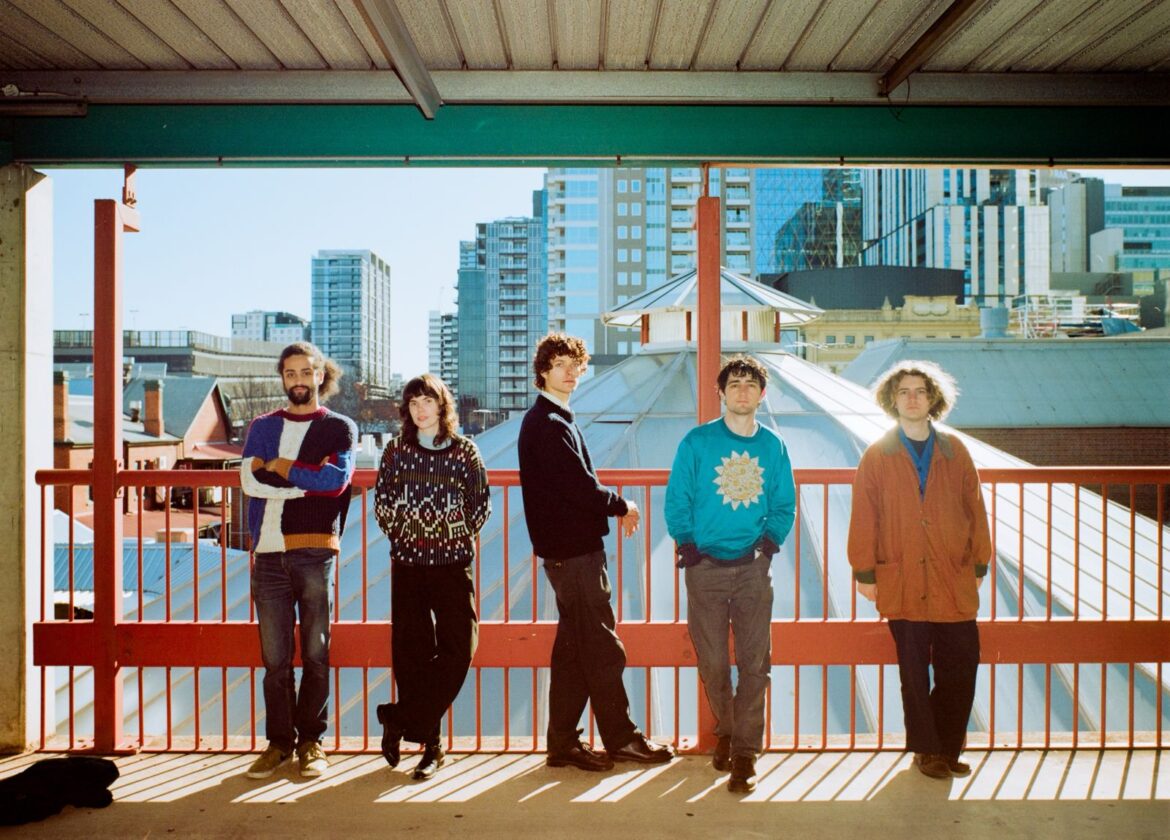
Fast-rising Australian folk band Any Young Mechanic channel raw immediacy, collective spirit, and modern unease into their debut album ‘The Modern Shoe Is Ruining the Foot,’ a vivid, human document of musicians learning, listening, and coming alive together in real time.
for fans of The Lumineers, Mumford & Sons, The Head and the Heart
“There’s a New Place on the Market” – Any Young Mechanic
A housing market ad shouldn’t feel like a gut punch, but here we are –
– tracing the way everyday language flattens lives into listings, turning longing, frustration, and displacement into passing blurbs on a screen.
Australian newcomers Any Young Mechanic lean into that unease, letting it simmer and swell, threading sarcasm through sincerity until the tension starts to fray at the edges. On “There’s a New Place on the Market,” the Tarntanya / Adelaide five-piece transform the monotony of modern living into a restless, slow-burning anthem – one that staggers forward with purpose, carrying both weariness and bite in every step.
There’s a new place on the market
It’s hiding in the city sprawl
The kids that used to paint there
Left portraits on the walls
And eye to eye with this face
It winked at me and I did s’pose
That these aren’t walls at all
They’re painted over windows
Released February 13, “There’s a New Place on the Market” is the stirring second single from Any Young Mechanic’s debut album The Modern Shoe Is Ruining The Foot, out June 5 via Warner Records. Following their frenetic introduction “Snug Barber” and more recent singles “My House Divides” and “Pretty Strange World,” the track offers another window into a band committed to capturing the raw, unfiltered energy of musicians playing together in a room – no overdubs, no polish, just presence and performance at their most alive.
Comprised of Sam Wilson, Thea Martin, Luka Kilgariff-Johnson, Allan McBean, and Jay Eliot Mee, Any Young Mechanic are redefining contemporary folk through a deeply collaborative, live-first approach. The collective build their songs in the room together – no overdubs, no stitched takes – capturing the immediacy, imperfections, and chemistry of real-time performance as a core part of their sound. Drawing from classical training, a tight-knit DIY scene, and a shared love of narrative-driven songwriting, their music threads together folk, indie, and experimental textures into arrangements that feel both expansive and tactile. The songs off The Modern Shoe Is Ruining The Foot introduce them as a band grounded in trust, instinct, and the human element – five musicians chasing connection, and committed to making music for the long haul.
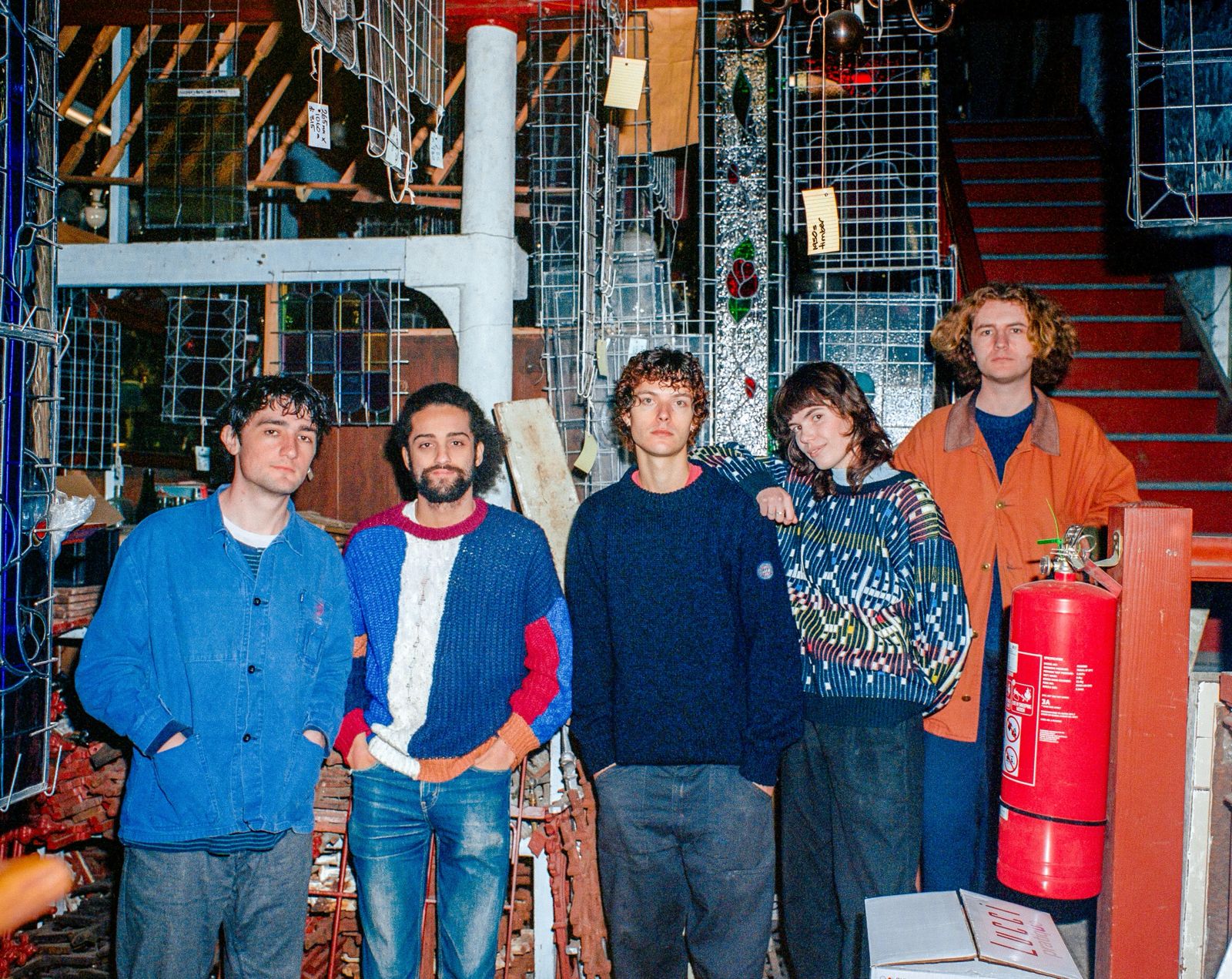
That ethos settles directly into “There’s a New Place on the Market,” where the band root their lived-in sound in a setting that feels both intimately known and quietly unraveling.
“There’s a new place on the market / It’s hiding in the city sprawl.” From its very first line, the song slips into a world that feels eerily familiar – half-memory, half-mirage – where spaces carry ghosts of the people who once filled them, and every surface hints at a story just out of reach. The band play with that tension beautifully, letting the song drift between warmth and unease: Sunlit strums and gently swaying rhythms give way to sharper edges, as if the ground beneath it all might give out at any moment. When Sam Wilson sings, “These aren’t walls at all / They’re painted over windows,” the metaphor lands with devastating feeling, reframing the entire setting as a place built on concealment – histories covered up, truths obscured, lives reduced to facades.
In that familiar listing
Just footsteps from the railroad tracks
Some writers used to sleep there
They’d lay amongst the stacks
I tried to read their novels
But the books were bare there was no prose
I said these aren’t books at all
They’re painted over windows
What have you got to hide
I only want to know you well
Whisper it to me
I promise I will never tell
What have you got to hide
I only want to know you good
Tell me the truth
Don’t you think you should
This push and pull – between openness and obstruction, intimacy and distance – sits at the heart of “There’s a New Place on the Market.” The refrain circles back with a pleading insistence: “What have you got to hide / I only want to know you well,” a line that reads as both personal and political, aimed as much at another person as it is at the systems that shape the world around them. And yet, for all its lyrical weight, the band never lose sight of movement – the song “staggers onwards,” as they describe it, carried by a steady pulse that keeps it from collapsing under its own gravity. It’s this balance – live musicianship, emotional clarity, and a willingness to let imperfections breathe – that makes the track feel so fully alive, capturing the essence of a band that thrives in the space between control and release.
In candid conversation, vocalist and guitarist Sam Wilson admits that it’s been three long years since he first wrote this song, as well as much of the band’s record. “I know that I’d been listening to a lot of Pavement around the time of writing, and that it’s very hard to live in Adelaide without thinking about the con of the real estate market in some way,” he reflects.
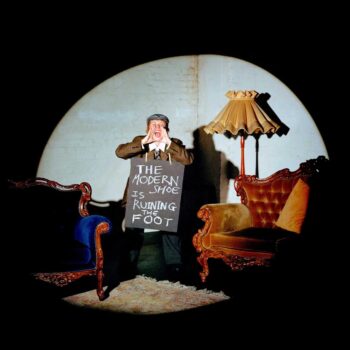
Listening to the rest of Any Young Mechanic’s releases, it becomes clear that “There’s a New Place on the Market” isn’t an outlier – it’s a cornerstone.
The same raw immediacy, the same fascination with space, identity, and modern dislocation runs through the band’s growing catalog, each song adding new contours to the world they’re building. “Snug Barber” arrived first in a burst of wiry, off-kilter energy, its jagged imagery and uncanny phrasing (“Your bin bag is filled with razors / Rusted, snapped or blunt”) introducing a band unafraid to embrace mess, humor, and emotional contradiction all at once. It’s playful on the surface, but there’s a deep tenderness tucked inside its chaos – a belief, repeated like a mantra, that even in disarray, “you’re cut out for love.”
That emotional thread stretches and shifts across the subsequent singles. The feverish “My House Divides” leans into a more urgent space as violins sear and soar throughout, its lyrics tracing intimacy through shared domestic imagery before fracturing into multiplicity – “When my house divides… yours multiplies” – a line that feels both surreal and softly crushing, hinting at how connection can splinter just as easily as it forms.
Meanwhile, desire, disillusionment, and absurdity collide head-on in the dreamy “Pretty Strange World”: “I want a chest packed with loot… I want more than you,” Sam Wilson sings, before pulling back to question the very systems feeding that hunger – “what you’re selling me seems much too cheap.” Across these songs, Any Young Mechanic hone their perspective with each step, expanding their palette while holding tight to the same core impulse: To examine the structures we live inside – homes, markets, relationships, expectations – and expose the fragile, human truths hiding underneath.
Tailors measure for the bust
Bakers chop off all the crust
But sometimes it’s just too soft to consume
And you can’t fill all the empty rooms
I would lock the door and I’d inhale the key
I would give myself to pure complacency
But my house divides, my house divides
And yours multiplies
Yeah, yours multiplies
What remains most important to them is the humanity at the root of their artistry.
“We love to play live. We love to play in the room. We love to make mistakes and listen back and see how they punctuate our recordings,” Luka Kilgariff-Johnson asserts. “This record has no overdubs, no stitched takes, what you hear is what was played, flubs and all. I think the record encapsulates the spirit of our approach to making music as a collective, and is a pretty honest document of how we sound, whether that be live, in-studio or otherwise.”
Zooming out, The Modern Shoe Is Ruining The Foot reads like a document of process as much as it does a debut – a record shaped by proximity, trust, and the friction that comes from five people learning how to move as one. These songs don’t chase perfection; they preserve it in motion, holding onto the cracks, the hesitations, the fleeting moments where instinct takes over and the music breathes on its own. Across its growing preview, the album reveals itself as a study in modern discomfort – how we live, what we inherit, and the quiet negotiations we make with the systems surrounding us – all filtered through a band intent on keeping the human element front and center.
That intention runs deeper than aesthetic. As Sam Wilson shares, “The album is important to me as an attempt to explore the ways in which I feel uncomfortable with aspects of modernity. I tried to explore that discomfort without the cliche of turning towards conservatism. How do you express your discomfort with technology as a progressive? We’re in an unusual time where a good chunk of technology represents harmful desires from a few powerful people. For a long time (especially in music), technological advancement and artistic progress were ubiquitous. Now I’m not so sure.”

What ultimately sets Any Young Mechanic apart isn’t just the way they write or play – it’s the way they exist inside their music.
Every note feels inhabited, every line delivered with the weight of five people listening to one another in real time, responding, adjusting, trusting the moment enough to let it unfold as it is. There’s a rare kind of closeness at the heart of these songs – a warmth that doesn’t smooth over the rough edges, but embraces them, letting the frayed threads show. That rawness isn’t incidental; it’s the point. It’s what gives their music its pulse.
In a landscape increasingly shaped by precision and polish, The Modern Shoe Is Ruining The Foot stands as a reminder of what can happen when artists choose presence over perfection. These songs breathe. They stretch. They leave room for error, for instinct, for the fleeting magic that only exists when people are truly in sync with one another. And in doing so, Any Young Mechanic offer more than a debut – they offer a feeling: that music, at its core, is still a shared, human act.
That sense of presence – of five people meeting each moment as it comes – runs through every corner of Any Young Mechanic’s music, grounding even their most abstract ideas in something deeply felt and unmistakably human. It’s what makes their songs linger, not just as compositions, but as lived experiences captured in real time.
Below, Any Young Mechanic open up about their origins, their process, and the making of The Modern Shoe Is Ruining The Foot – from naming the band to embracing imperfection, and everything in between.
— —
:: stream/purchase The Modern Shoe Is Ruining The Foot here ::
:: connect with Any Young Mechanic here ::
— —
A CONVERSATION WITH ANY YOUNG MECHANIC
Any Young Mechanic, for those who are just discovering you today through this writeup, what do you want them to know about you and your music?
Allan: We have a good time making it – sometimes weird but mostly very fun. We’re looking forward to making lots more stuff. You put a lot of thought into something, then make it up on the fly. These guys are my buddies.
Thea: That we’re from Tarntanya/Adelaide. That we believe really strongly in the idea of the band as a collective. That we have an album coming out in June called The Modern Shoe is Ruining The Foot and that we made it completely live, there’s no cuts or overdubs, just us in a room together. That we want to make music for a really long time.
I just have to ask - what inspired your band name? I know it’s from “Hooray For Hollywood,” but why “Hooray For Hollywood”?
Sam: Hooray for Hollywood opens and closes one of my favourite films, The Long Goodbye. I’ve always been fascinated by the beginning of the golden era of cinema in America that the song comes from. I think the song is a fun mix of lampooning the systems of entertainment but also thinking hopefully about the idea that everyone has the capacity to be creative and make interesting art.
Who are some of your musical north stars, and what are you most excited about the music you're making today?
Jay: Joni Mitchell, Wilco, 4-piece Big Thief, Yo La Tengo, Belle and Sebastian, Talking Heads. I’m excited about how our music foregrounds the human element – playing in a band where you trust everyone to totally excel in their work is a really exciting and cool thing.
Sam: In our music, right now I’m enjoying drawing from what Neil Young called the audio verite approach, which is a slightly wanky way of saying leave in all the mistakes. I think it’s important to leave in our human mistakes in the wake of AI garbage.
Sam: It’s good for radio! We like the idea of it being an uncanny rock song, as it’s not really using any traditional rock elements instrumentation-wise. I think it’s very funny for our first single to not have a chorus as well, to be in ABBA form.
Jay: I think it showcases a lot of what we’re about in 2 minutes flat, which makes it a helpful introduction. But also, every song on the album occupies a different emotional and dynamic area, so we were always going to be omitting something no matter what. That’s partly why we’re such fans of the album format!
Meanwhile, you’ve called “There’s A New Place On The Market” a song that “staggers onwards with a grim determination, cradling moments of sarcasm and sincerity - until its angst bubbles over and explodes into a last-gasp thrash.” Couldn’t have said it better myself, honestly! What’s the story behind this song?
Sam: I find it hard to access the time in which I wrote a lot of these songs because it was around 3 years ago, but I know that I’d been listening to a lot of Pavement around the time of writing, and that it’s very hard to live in Adelaide without thinking about the con of the real estate market in some way.
There’s a musical ease – a lightness, a gentle warmth – to this song. What was your vision for it, collectively, and how did you go about bringing it to life?
Luka: I think the song was two halves of a destined whole before we finally landed on the version you hear on the record. Maybe when the song was just guitar chords and a vocal melody, that warmth was more obvious. Once the rest of the instrumentation fell into place, the brooding that lies within the lyricism rose to the surface. Jay’s rigid backbeat and the razor’s edge of Clara and Thea’s strings sell the drama of the song’s narrative. It’s one to hum along to, but there’s plenty to digest when you scrape the earwax out.
Jay: From my perspective, I remember in the early rehearsals I was still drumming with a hi-hat (as you do), but once I got rid of it the song was much better for it, allowing the excellent string part more space to shine through. A lot of rehearsal for this album was working out how much restraint I could get away with, haha.
These songs are all taken off your upcoming debut album, The Modern Shoe Is Ruining The Foot. How do you feel this record introduces you and captures your artistry?
Luka: We love to play live. We love to play in the room. We love to make mistakes and listen back and see how they punctuate our recordings. This record has no overdubs, no stitched takes, what you hear is what was played, flubs and all. I think the record encapsulates the spirit of our approach to making music as a collective, and is a pretty honest document of how we sound, whether that be live, in-studio or otherwise.
I admire that you’re debuting with an album right away – it feels like a rarity nowadays. What does this album mean to all of you? Does it have certain themes, or any throughlines that help you tell Any Young Mechanic’s story?
Luka: From a band narrative standpoint, this record feels like a collaborative reprieve from the absurdity of things often outside of one’s control. We all approached the songs from disparate and unique contexts; coming together to record them felt like a coalescence of everyone’s individual joy and angst and all those in-between feelings.
Thea: Because the process of making the record was so contained, just a couple months of intensive rehearsals and then into the studio for three days, it really does feel like the clearest time capsule I have of any creative project I’ve worked on. The feeling of being in those rehearsals in Jay’s bedroom and then in the studio together is so specifically captured on the record itself, and personally it’s just a joy to have that kind of document from such an early point in our ‘careers’.
Sam: The album is important to me as an attempt to explore the ways in which I feel uncomfortable with aspects of modernity. I tried to explore that discomfort without the cliche of turning towards conservatism. How do you express your discomfort with technology as a progressive? We’re in an unusual time where a good chunk of technology represents harmful desires from a few powerful people. For a long time (especially in music), technological advancement and artistic progress were ubiquitous. Now I’m not so sure. I think I was trying to understand how to take a step back from tech without taking on antiquated conservative baggage.
Allan: I joined the band just as the rehearsals were starting for the album. It was a great time for me. Musically everyone was so involved and I learned a lot, it was nice that I felt I could provide something too. Everyone approached the thing from a slightly different angle, I think it’s cute that we all got together and made this record. There’s a muscularity in the songwriting that is undercut by the fragility of the acoustic soundworld that I find interesting, though we do bulk up the sound from time to time (just as Sam gets fragile).
Jay: Because of the no overdubs, all acoustic instrument concept, to me it represents the time where the band’s identity crystalised. It was also my first time making a record with Luka, Allan, and cellist Clara – I had been such massive fans of their playing from around the Adelaide gig scene, so it was a landmark for me in that respect too.
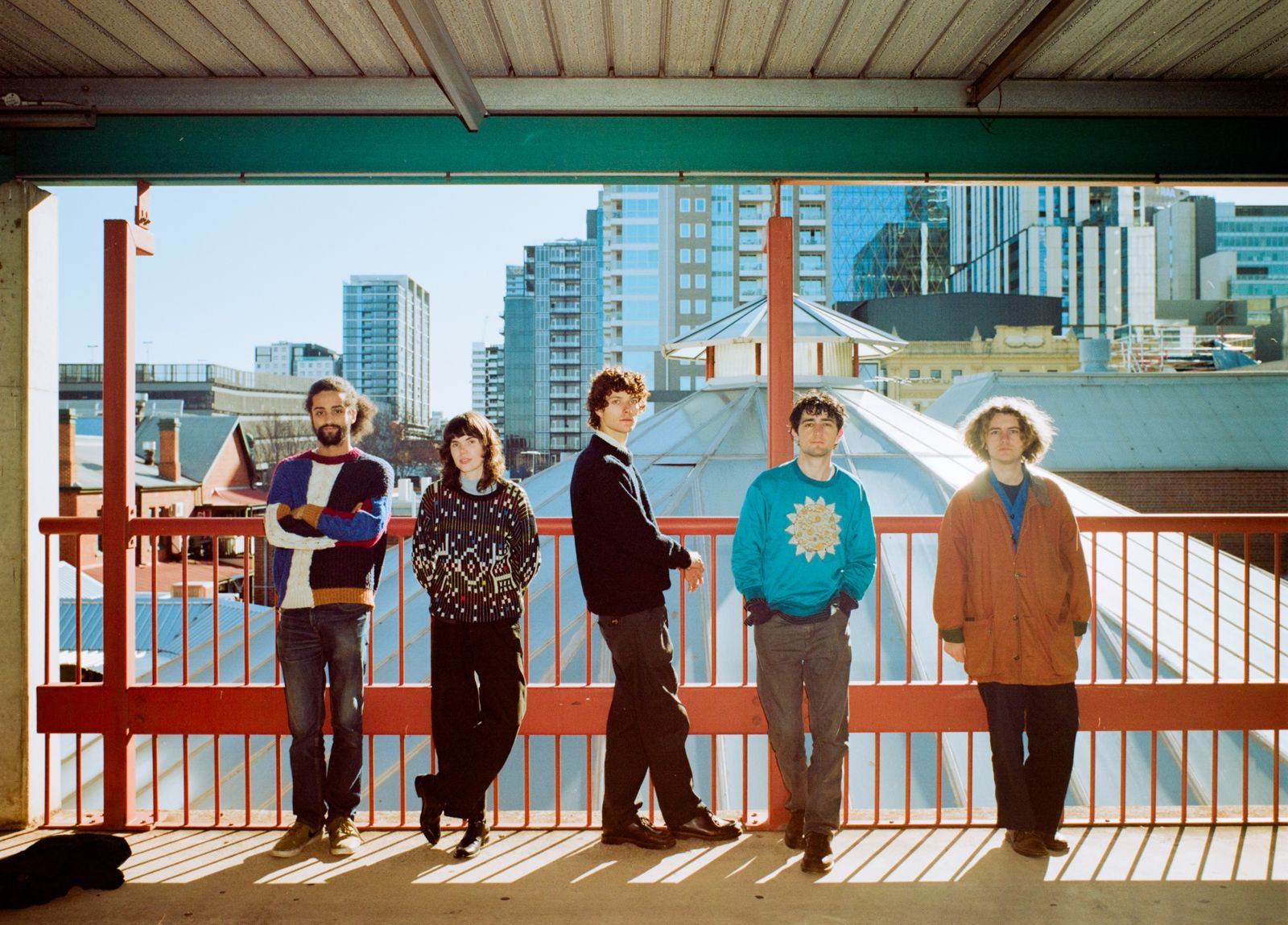
What do you hope listeners take away from “There’s A New Place On The Market” and The Modern Shoe Is Ruining The Foot, and what have you taken away from creating this music and now putting it out?
Sam: I hope people can find some joy in the sound of a band playing in a room together, providing something that is intimate but not always quiet.
Jay: Hopefully – hey, this band really gets it! Lots of people we’ve spoken to have been really pleased with how organic and community led our approach is, so hopefully that continues to be the impression we give people.
In the spirit of paying it forward, who are you listening to these days that you would recommend to our readers?
Luka: Shady Nasty from Eora/Sydney, Swapmeet from Tarntanya/Adelaide, Ebbb from London, all the stuff happening in CPH, Thelonius Monk
Thea: Nika Mo from Boorloo/Perth, Perfect 50 from Tarntanya/Adelaide and an album called
Dear Alien by Lili Holland-Fricke and Sean Rogan from Manchester.
Sam: The caps lock records’ ‘Sitting In The Same Chairs Volume 1’ compilation album. The Louvin Brothers record Satan is Real. I think the new Dry Cleaning record is really good.
Allan: Sly and Family Stone, Georgia Oatley, Palestrina, Docteur Nico
Jay: Tchotchke, Resting Mind Flowers, The Go-Betweens, MF DOOM
— —
:: stream/purchase The Modern Shoe Is Ruining The Foot here ::
:: connect with Any Young Mechanic here ::
— —
“There’s a New Place on the Market” – Any Young Mechanic
— — — —
Connect to Any Young Mechanic on
Facebook, TikTok, Instagram
Discover new music on Atwood Magazine
© Nash Blight
 © Nash Blight
:: Today’s Song(s) ::

 follow our daily playlist on Spotify

:: Stream Any Young Mechanic ::