Every Friday, Atwood Magazine’s staff share what they’ve been listening to that week – a song, an album, an artist – whatever’s been having an impact on them, in the moment.
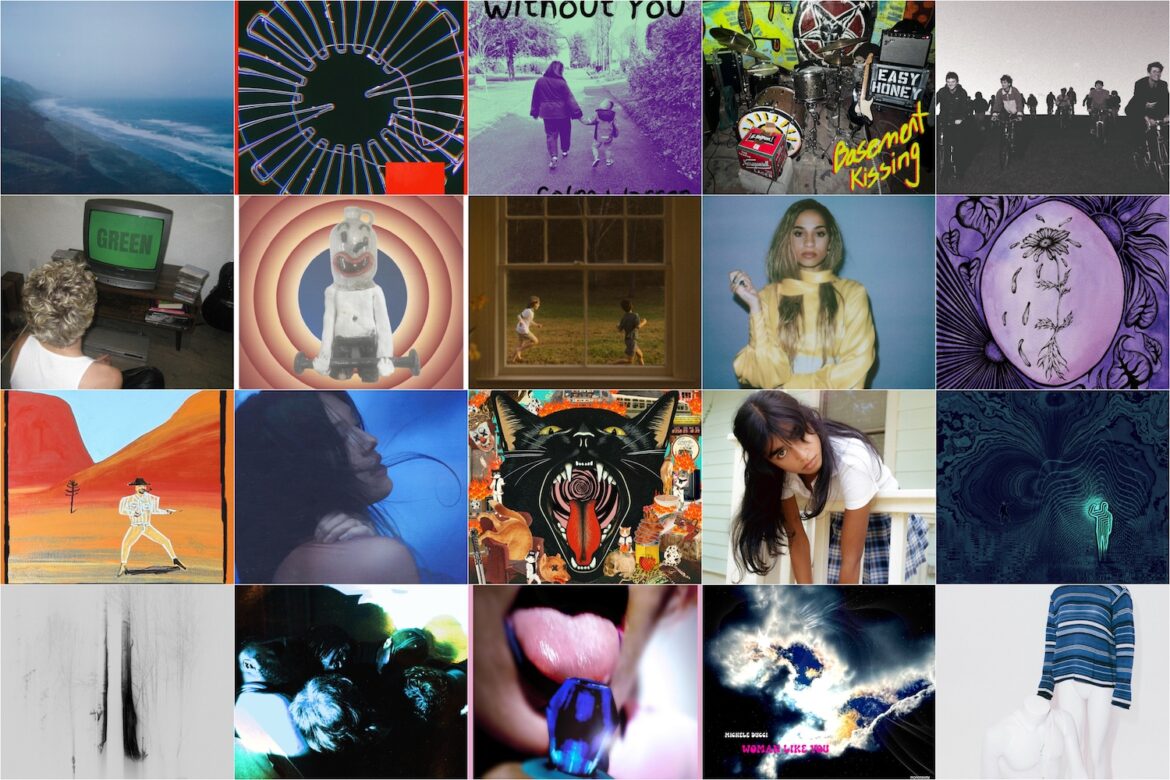
This week’s weekly roundup features music by Noah Kahan, Chelsea Jordan, Miles Jeppson, Fantastic Cat, Hayley and the Crushers, Tijuana Panthers, Cable Boy, Friko, Gen and the Degenerates, Dogviolet, Sev Karlsson, Michele Ducci, Quiet Light, MUANH, Colm Warren, The Pretty Littles, Anna Blaise, Easy Honey, Memory Spells, and Sunnan!
•• •• •• ••
 follow WEEKLY ROUNDUP on Spotify


•• ••
:: The Great Divide – Noah Kahan ::
Mitch Mosk, Beacon, New York

Fame hasn’t flattened Noah Kahan – it’s deepened him. If anything, The Great Divide feels like the sound of someone standing in the middle of everything he’s built and still asking the same questions he always has, only louder now, with more at stake. It’s not a retread of Stick Season or a victory lap after it; it’s a widening of the lens – a record that stretches beyond the small-town borders that once defined him while holding tightly to the voice that made those stories feel so close, so personal, so real.
What’s striking right away is how expansive this album feels without ever losing its intimacy. Kahan pushes beyond the folk rock framework that first carried him into the mainstream, letting elements of rock, pop, and Americana bleed into the margins, but his songwriting remains rooted in that same candid, conversational honesty. Across 17 tracks, he builds a world that feels lived-in and sprawling at once – a collection of moments, memories, and what-ifs that don’t coalesce into a single thesis so much as a shared emotional landscape. As he’s said himself, the process of making this album was a collision of “fear and pressure and joy and luck and total love,” and you can hear all of it tangled together in every corner of this record.
That tension is there from the very beginning. Album opener “End of August” sets the tone with a quiet, almost cinematic unraveling – a softly stirring song about endings that don’t arrive with spectacle, just the slow, inevitable shift of seasons and selves. “Everythin’ you see out here will die / Oh, it’s a matter of time,” Kahan sings, grounding the record in impermanence from the jump. It’s not nihilistic so much as honest – a recognition that time moves whether we’re ready or not, that growing up often feels like watching parts of your life slip away before you’ve had the chance to hold onto them.
From there, “Doors” widens the emotional scope while turning inward. It’s one of the album’s most cutting portraits of self-awareness and self-sabotage, where intimacy becomes both a desire and a threat. “I keep showin’ you doors, but you can’t open them up,” he admits, capturing that paradox of wanting to be understood while actively making it impossible. There’s a raw devastation in that line – not just the distance between two people, but the gap between who we are and who we wish we could be.
That push and pull continues into “American Cars,” one of the album’s most immediate and cathartic moments. It’s bigger, louder, more explosive – a song that leans into electric guitars and anthemic release without sacrificing emotional nuance. Beneath its driving energy sits a deeply human plea for repair, for connection, for someone to come back and make things right: “You’re gonna fix it, you’re gonna patch it up / ‘Cause, honey, we’re fragile, you’ve always been so tough,” he sings. It’s not just about a relationship – it’s about family, about home, about the people we rely on to hold things together when everything starts to crack.
That idea of fragility – and the quiet ways we cope with it – runs through so much of the album. On “Paid Time Off,” Kahan captures the strange, suspended feeling of trying to escape your own life without ever fully leaving it. “It’s been a damn near perfect day, just gettin’ high at the outlet mall / People grow up and then move away, but you don’t care, and I don’t mind at all,” he sings, balancing contentment and resignation in the same breath. It’s a snapshot of stillness that feels both comforting and claustrophobic – a life paused somewhere between staying and going.
Elsewhere, “Haircut” sharpens that introspection into something more biting, more confrontational. It’s a song about change, perception, and the stories we tell about ourselves and each other, where Kahan cuts through ego and illusion with startling clarity. “But at least I got a soul still, even if I’m in a bad place,” he declares, grounding the song in a hard-earned self-worth that feels fragile but real.
The heavy-hearted “Willing and Able” might be one of the album’s most quietly devastating moments. It’s about staying – about choosing to remain present in conflict, in love, in discomfort, even when it would be easier to walk away. “If you’ve got a bone to pick with me… I’ll stay here ‘til morning,” he sings, reframing endurance not as weakness, but as courage.
Across all of these songs, there’s a recurring question: What does it mean to stay connected – to a place, to a person, to yourself – when everything around you is shifting? Kahan doesn’t offer easy answers. Instead, he leans into the uncertainty, the contradictions, the unresolved spaces between moments. Even the album’s title suggests as much: Not a single divide, but many – between past and present, home and elsewhere, who we were and who we’re becoming.
That theme comes into sharp focus on the title track, “The Great Divide,” and the surrounding songs like “Porch Light” and “Deny Deny Deny.” On “Porch Light,” he embodies a kind of stubborn, aching devotion – “I’ll leave the porch light on / Heartbroken, each morning when it’s me that turns it off” – capturing the quiet persistence of love even when it’s no longer returned. On “Deny Deny Deny,” that connection fractures into avoidance and silence, where communication breaks down into deflection and exhaustion. Together, they paint a portrait of relationships not as fixed points, but as evolving, often messy negotiations between two imperfect people.
If those songs circle the edges of connection and disconnection, “The Great Divide” itself stands at the center – not as an answer, but as the question everything else keeps orbiting. It’s a fiery, unguarded reckoning with distance in all its forms: Between friends, between past and present selves, between the life you imagined and the one you’re actually living. Kahan doesn’t frame that divide as a single moment of rupture, but as something quieter and more insidious – the slow drift of time, the conversations that never happened, the understanding that never quite landed. “I hope you settle down, I hope you marry rich / I hope you’re scared of only ordinary shit,” he sings, offering a blessing that’s tangled with worry, regret, and unresolved care. It’s empathy arriving too late, honesty filtered through hindsight – a portrait of two people who grew up side by side only to realize they were never quite seeing each other clearly. Where so many songs chase closure, “The Great Divide” resists it entirely, choosing instead to name the space itself – to stand at its edge and finally say what couldn’t be said when it mattered most.
What makes The Great Divide so compelling, though, is that it never feels like it’s building toward a single emotional climax. There’s no one “centerpiece” track that defines the album, no singular thesis that ties everything together neatly. Instead, each song exists as its own world – a fully realized moment with its own textures, tensions, and truths. And yet, taken together, they form a cohesive, expansive, and deeply human musical journey.
That sense of accumulation – of moments stacking into meaning – is what makes the album’s closing track, “Dan,” land with such quiet power. Where “End of August” begins with endings, “Dan” ends with presence – with memory, friendship, and the fragile comfort of simply being there. “Hand around a Miller Lite, waitin’ for the sun to rise… we’re so alone most of the time,” Kahan reflects, acknowledging both isolation and connection in the same breath. It’s a song about looking back without trying to rewrite anything, about sitting with the past as it is and finding your own form of truth in that stillness.
And maybe that’s what The Great Divide ultimately offers: Not resolution, but recognition. A reminder that life rarely ties itself up neatly, that the spaces between people and places and versions of ourselves are often where the most honest stories live. Noah Kahan doesn’t try to bridge every gap or answer every question. He just stands in the middle of it all – of love and loss, of home and distance, of who he was and who he’s becoming – and sings it back to us in a way that makes it feel a little less lonely.
It’s a record about divides, yes – but more importantly, it’s about what we do with them. About whether we try to cross them, carry them, or simply learn how to live on our side of the distance with open eyes.
:: “picky choosy” – Chelsea Jordan ::
Mitch Mosk, Beacon, New York

Choosing yourself shouldn’t feel radical – but for a lot of us, it is. It comes after the overgiving, the overextending, the slow realization that you’ve been pouring into people who never planned to fill you back up. Chelsea Jordan bottles that turning point into “picky choosy,” a radiant, groove-laced declaration of self-worth that feels as freeing as it does overdue – the sound of someone stepping back into their own life with clarity, confidence, and a little bit of well-earned glow.
Built on deep, swaying rhythms, soft-touch guitars, and that unmistakable warmth in her voice, “picky choosy” moves with an easy charm that never undercuts its message. Jordan sings like she knows exactly who she is now – not in a loud, chest-thumping way, but in the way she settles into each line, letting her words land with intention. “I gotta lotta love to give / And I’m not gonna waste it,” she declares, before flipping the script in the hook: “So I’m gonna give it to myself / Know I ain’t gonna find this nowhere else.” It’s a subtle shift, but a powerful one – love redirected inward, where it was always meant to begin.
That emotional clarity sits at the heart of the song’s story, and Jordan doesn’t shy away from naming it outright: “‘picky choosy’ is a song about choosing yourself after losing yourself in others,” she tells Atwood Magazine. “This is my self-worth and self-protection anthem. It’s taken me a while to truly understand how great I am and while I try not to ruminate on it too much, I’ve wasted a lot of time on people who didn’t deserve it so now I’m extra picky with who I choose to surround myself with and I hope this reminds you to too.” It’s a full-circle moment – especially coming off the emotional processing of “level out,” which sat in the uncertainty of heartbreak and healing. Here, that same journey reaches a new phase: not just understanding the pain, but acting on what it taught her.
Released earlier this year and closing out her sophomore EP better late than not at all, “picky choosy” feels like a thesis statement for everything the project stands for – a reclamation of time, energy, and self. “better late than not at all is the most honest and intimate body of work I’ve ever created,” Jordan says. “In it, both my softness and strength coexist. It’s sweet. It’s heartbreaking. It’s about redirecting the love I once gave away back to myself, while honoring the love that lingers for someone who’s no longer a part of my life.” The EP traces the unraveling of a relationship and the complicated path forward, balancing vulnerability and resolve as Jordan learns to redirect the love she once gave away back to herself. In that context, this song doesn’t just land as a standout – it lands as a turning point, her moment of arrival.
And that’s what makes “picky choosy” linger. It doesn’t ask for permission. It doesn’t soften the message to make it more palatable. It simply holds up a mirror and says: you deserve better – from others, yes, but especially from yourself. Not everyone reaches that point. Not everyone says it out loud. Chelsea Jordan does, and in doing so, she turns a personal boundary into a shared affirmation – one you can dance to, sit with, and carry forward long after the song fades.
:: GREEN – Miles Jeppson ::
Danielle Holian, Galway, Ireland
Miles Jeppson’s Green arrives with the confident poise of an artist no longer testing waters but shaping them. Across eight tightly woven tracks, he refines a sound that sits comfortably between alt-pop immediacy and the emotional weight of late-’90s and early-2000s rock-inflected pop. There is a studied nostalgia here, but it never curdles into imitation; instead, it functions as a shared emotional language, one that renders the album both intimate and broadly accessible. From the understated threshold of “INTRO” to the reflective ache of “CORE MEMORY,” Jeppson constructs a narrative arc that feels less like a playlist and more like a remembered life, fragmented, vivid, and deliberately incomplete. The result is a record that signals not just artistic maturity, but a sharpened awareness of how music now exists as both sound and identity.
What elevates Green beyond its genre touchpoints is its coherent aesthetic universe, where colour becomes both motif and method. The recurring symbolism of green, suggestive of renewal, envy, growth, and emotional liminality, threads through tracks like “NEW HORIZON” and “HEAL ME (Album Version),” giving the album a conceptual gravity that rewards close listening. “ROSES & SPACESHIPS” and “DRIVE YOU WILD” provide brighter, more kinetic counterpoints, while “UP NORTH” and “CRAVE” linger in more subdued emotional terrain, balancing urgency with introspection. Crucially, Jeppson understands the contemporary listener’s dual role as consumer and participant: this is a record designed to be lived with, shared, and reinterpreted across digital spaces. In doing so, Green positions itself not merely as an album, but as a cultural artefact of belonging in an era defined by curated feeling.
:: “Donnie Takes the Bus” – Fantastic Cat ::
Charlie Recksieck, San Diego, CA

Wow. Let’s not bury the lede, I f**king love this song. If you’re here for meditative and introspective, move along. This is real rock with a very human drummer. “Donnie Takes the Bus” fires me up. It’s like The Band if they recorded in Greenpoint in 2026 instead of Woodstock, NY in 1968. Is there a genre called “vintage contemporary rock”?
Fantastic Cat somehow fulfills the oxymoron of a relatively unknown supergroup. I can tell just by listening there’s no ego among these guys. That’s what makes me think of The Band – you can’t differentiate what one particular person is playing or singing; there’s such a blended group dynamic. Oh, and I guess I also can’t help but think of the band because of the time-stop and carryover harmonies that are an echo of “The Weight.”
The music is such a rollicking road-trip song that I feel greedy to expect such great lyrics too. These are not flowery lyrics that sound like lyrics – they sound like conversations with your most interesting friend.
Donnie took the last bus today
The 11:45 to the JFK
Town to town just looking for a friend
He got off in Hackettstown
and then he started to bartend
“Go back to Newark, go back to State!”
My dad he told me not to wait, oh yeah (oh yeah)
“‘Cause I bet you’ve never read a goddamn poem”
And he said, “Oh my Lord,
when are you gonna come home?”
By the way, why haven’t more bands mixed the melody being delivered by some wordless vocal “woo” singing AND whistling? It’s such a cool, unique sound. If you can indulge some “if you like X, you’ll like Y” math, this sounds like you plucked the best guys out of Dr. Dog and Delta Spirit and made a new band. That’s about as high praise as I can give.
:: “Jewel Case” – Hayley and the Crushers ::
Josh Weiner, Washington DC

Think of it as Beverley Hills Cop in reverse – leaving sunny Southern California and heading for the urban drama of Detroit. The move seems to have worked out just fine for Hayley Cain, who grew up in Redondo Beach and has now set up shop in the Motor City with her bandmates over the past few years. They’ve just celebrated 10 years together as a band – their debut album, Jewel Case, came out in 2016. To mark the occasion, they are giving that record’s title track, one of their longtime signature songs, a formal remastered studio treatment.
“It’s about that moment where you swear you’ve found your limit… and then immediately consider ignoring it,” Cain describes. Hearing the song (along with watching its frenetic music video) allows you to experience the well-seasoned chemistry between the band’s players – along with Cain, there’s Dr. Cain, ESQ on bass /vocals, Ryan Deliso on guitar, and Stacy Binelli on drums. It’s great to see a band display such friendship and passion as they rock out to one of their shared favorite songs, and it’ll be nice to catch even more of that once their new album comes out this summer.
:: “Party Boy” – Tijuana Panthers ::
Ashley Littlefield, California
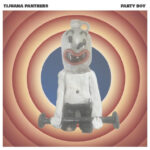
The Tijuana Panthers have long set the perfect vibes for a California Surf Rock sunset into a punk party. The trio from Long Beach has been hitting the soundwaves since 2009, with notable performances in their formative years at the Glass House in Pomona in 2010. During this time, their album Max Baker features standouts such as “Summer Fun,” “Creature,” and “Redheaded Girl.” In 2012, the Tijuana Panthers played their first Coachella, with a midday set to radiate their warm, sundrenched rhythm into listeners’ ears, setting the tone for party festivalgoers. Now in 2026, the trio has earned their slot on the Mainstage of Coachella, soaking up the sun and staying true to the band’s unwavering sound.
Tijuana Panthers, ahead of weekend two of Coachella, have released their latest single, “Party Boy,” on April 14th via Jazzcat Records. The party anthem narrates a perspective on how the night can unfold and end at a “Circle K.” The song captures the mystery and unpredictability of “chasing pleasure.” “Party Boy” conveys the fear of the night’s end and the lows that follow. It reveals a conversation about the Party Boy’s whereabouts. The groove highlights both the dread and delight of what comes next, when the night consumes our minds. “Party Boy” reflects on the enjoyment of connecting with a friend, even when the party concludes.
:: Forever – Cable Boy ::
Danielle Holian, Galway, Ireland

Cable Boy arrive with Forever, a debut that refuses to sit still, instead slipping between shadow and shimmer with a restless, nocturnal energy. Self-described as “goth-disco” (and not inaccurately), the five-piece channel a heady mix of club pulse and dream-state haze, capturing the sweat-and-strobe immediacy of their live shows without sacrificing detail. Produced alongside Adam Shanahan and David Tapley, the record feels expansive yet tightly wound, each track carefully placed, but never overly polished. There’s a kinetic urgency to cuts like ‘Something In My Head’ and the title track “Forever,” where driving rhythms collide with sheets of guitar, hinting at the widescreen melancholy of The Cure or the textured propulsion of LCD Soundsystem, yet filtered through a distinctly Irish lens.
What elevates, Forever beyond a promising debut is its willingness to drift. Elsewhere, the band lean into a softer, more introspective palette, “Icarus,” “Lets Go,” and “Drought” dissolve into washes of psychedelic dream-pop and lo-fi intimacy, revealing a group unafraid of space and silence. That push-and-pull between euphoria and introspection gives the album its emotional core, echoing the gauzy vulnerability of Beach House while retaining a rawness that keeps things grounded. It’s this balance, between movement and stillness, polish and grit, that marks Cable Boy as more than just another hyped newcomer. Forever, feels like a statement of intent: ambitious, emotionally tuned-in, and already reaching beyond its own expectations.
:: Something Worth Waiting For – Friko ::
Mitch Mosk, Beacon, New York
Momentum is a hard thing to hold onto – and an even harder thing to refine. Plenty of bands break through on instinct alone, catching lightning in a bottle once and spending the next record chasing it. Friko don’t chase anything on their Something Worth Waiting For; they build on it, hone it, stretch it, and let it hit with even greater force. What made their debut Where we’ve been, Where we go from here so immediate – that volatile, wide-eyed urgency – is still here, but now it’s more deliberate, more expansive, and somehow even more alive .
That evolution is felt in every corner of this sophomore record. The Chicago indie rock band sound tighter without losing their looseness, louder without sacrificing nuance, more explosive without ever feeling forced. Touring has clearly left its mark – not just in stamina, but in instinct, in knowing when to push and when to pull, when to let a moment breathe and when to let it rip. Working with John Congleton only amplifies that energy, giving their songs a fuller, more urgent shape, but the real shift comes from within: A band that’s played the rooms, lived the songs, and come back sharper for it. As they put it themselves, this record was about expanding everything they did before – writing with more intention, capturing a fuller picture of who they are now, and letting that lived experience bleed into every note.
This sense of range and intention shows up across the tracklist, where Friko lean fully into their extremes. Lead single “Seven Degrees” offers a softer door into this world – what the band themselves called their “most welcoming” song – whereas much of the record stretches outward into far less predictable – and far more charged – terrain. “Choo Choo” barrels in with unrelenting joy and velocity, a live-wire rush that captures the band at their most euphoric and alive, while deeper cuts like “Certainty” push into more ambitious territory, its sweeping arrangements and emotional weight marking new ground for the group. And then there’s “Dear Bicycle,” the album’s closing chapter – a reflective, full-circle moment that doesn’t so much resolve the record as send it drifting forward, asking what comes next rather than answering what came before.
At the center of it all sits “Something Worth Waiting For,” a song that feels like a mission statement. It moves with restless energy – barreling forward without ever quite arriving, chasing a feeling that always seems just out of reach. “So I’m waiting for something more, something worth waiting for,” Niko Kapetan sings, his voice caught between hope and hunger, conviction and doubt. The song leans into that tension rather than resolving it, circling its own question without offering a clean answer. Even in its structure, there’s a sense of perpetual motion – a build that never fully releases, a destination that stays just beyond the horizon. That was always the point: A pace that feels constant, a search that never quite ends.
For the band, that feeling is the meaning. Guitarist Korgan Robb describes it as “reaching forward” – something “hopeful, yet also like a yearning” – while drummer Bailey Minzenberger points to the song’s deliberate lack of closure, the way it leaves “waiting for something” hanging in the air rather than tying it off cleanly. It’s a choice that keeps the song open-ended, always in motion, always searching. And as bassist David Fuller sees it, that “something” doesn’t need definition at all – it can be anything, “any sort of progress or any sort of journey toward that thing that you want so much.” Even the song’s own history mirrors that idea: A refrain the band carried with them for years, shaping and reshaping it until it finally became the centerpiece – not just of the song, but of the album itself.
And maybe that’s what makes this record land as hard as it does. Friko aren’t trying to pin anything down – not success, not identity, not even resolution. They’re reaching, stretching, moving forward in real time, chasing whatever it is that keeps them up at night and pulls them back to the stage. That openness – that willingness to live inside the question instead of answering it – is what gives Something Worth Waiting For its pulse. It’s not about arriving; it’s about believing there’s something out there worth the wait, and having the fire to keep going until you find it.
:: “Favourite Jumper” – Gen and the Degenerates ::
Mitch Mosk, Beacon, New York

Desire has always been political – especially when it’s loud, unapologetic, and refuses to shrink itself for anyone else’s comfort. Gen and the Degenerates don’t just lean into that tension on “favourite jumper” – they light it on fire, turning frustration into fuel and self-expression into a bold, brash, and undeniable soundtrack. It’s a song that struts and snarls in equal measure, a charged indie rock eruption that wears its attitude like armor and invitation all at once.
Your favourite jumper is my ex-boyfriend’s
I should have said something
when you took it from my bed
But you looked so cute
with the sleeves over your hands
I should have said something
but you wouldn’t understand
You wouldn’t understand
Built on punchy, propulsive drums and razor-tight guitar lines, “favourite jumper” hits with immediate force – all snap, swagger, and spitfire delivery. Genevieve Glynn-Reeves commands every second, her vocal performance flickering between playful and confrontational, seductive and self-assured. There’s a wink in the writing, but it lands with purpose: “Like boys like girls like boys like girls… like whatever’s in between like the whole damn world,” she sings, flipping expectation into affirmation, channeling identity into something expansive rather than confined. It’s catchy, yes – but more importantly, it’s defiant, refusing to be simplified or softened.
She had a boyfriend
who was living overseas
When she asked to use my shower
didn’t know she meant with me
Oh it burnt out quick
we can blame the summer heat
She’s still playing straight
I don’t know who she’s trying to please
That defiance is the point. “‘Whenever the right wing is on the rise there is this puritanical pressure placed on women to be virtuous. Women are villanised for being overtly sexual and treated as if they don’t have agency or control over their own bodies.’” Glynn-Reeves explains. “‘We see this reflected in rhetoric around bisexual women settling down with men and almost relinquishing their queerness to try and feel safer. I think this is the perfect time to rebel against that and be as slutty and queer as possible. And so this is really just a fun party song of sorts, from the point of view of a bisexual person (guess what – it’s me), discussing previous experiences in a fun way, but also attempting to reconcile an honest and healthy relationship with a partner, with the totality of that sexuality and sexual history.’” What makes “favourite jumper” hit as hard as it does is how seamlessly it balances both sides of that statement – the bite and the joy, the critique and the celebration.
Like boys like girls like boys like girls
(I’m such a stereotype)
like whatever’s in between
like the whole damn world
(I wanna get it right)
Like boys like girls like boys like girls
(I hope that you don’t mind)
like whatever’s in between
like the whole damn world
And that balance is where the song thrives. It doesn’t posture or preach; it pulses. It invites you in, pulls you onto the dancefloor, and dares you to keep up. There’s freedom in its chaos, confidence in its contradictions – a reminder that identity isn’t something to be pared down or made palatable. It’s messy, magnetic, and entirely your own. Gen and the Degenerates don’t just make space for that reality on “favourite jumper” – they revel in it, transforming rebellion into release and desire into a fiercely, thrillingly alive anthem.
:: “Daisy Crowns” – Dogviolet ::
Danielle Holian, Galway, Ireland
London’s ethereal-grunge four-piece Dogviolet sharpen their signature gloom-pop into something quietly devastating on “Daisy Crowns,” a single that lingers like perfume on old clothes. There’s a studied restraint at play here; guitars hover rather than crash, drums pulse with a heartbeat subtlety, allowing the track’s emotional weight to unfurl with unforced grace. Produced in-house by Ella Patenall and shaped alongside Tom Hill, the song feels meticulously sculpted yet emotionally porous, its sonic palette brushing against the dusky romanticism of Warpaint and the spectral ache of The Cranberries, while nodding to the gothic poise of Siouxsie & The Banshees. Dogviolet aren’t merely borrowing textures; they’re distilling them into something intimately their own.
At its core, “Daisy Crowns” is a meditation on the slow erosion of innocence, tracing the distance between youthful abandon and adult disquiet with poetic precision. Naz’s vocal performance is the track’s emotional anchor; equal parts theatrical and fragile, gliding through lyrical imagery rooted in nature yet charged with tension, touching on social unease, familial fractures, and queer longing without ever feeling overworked. There’s a clear lineage to the hushed intensity of Daughter, but Dogviolet push further into shadow, crafting a sound that feels both carefully polished and instinctively raw. “Daisy Crowns” doesn’t shout for attention. It draws you in, quietly, and holds you there.
:: Reverie – Sev Karlsson ::
Danielle Holian, Galway, Ireland
Sev Karlsson’s Reverie is a debut that resists the impulse toward immediacy, instead opting for a slow-burn immersion into mood and introspection. Across its four tracks, Karlsson constructs a sonic environment defined by restraint, each element carefully calibrated, each transition deliberate. The influence of artists like Toro y Moi and Bon Iver is perceptible, yet never overwhelming; Reverie, ultimately feels less like homage and more like quiet alignment with a broader aesthetic lineage.
What distinguishes the EP is its attention to texture as narrative. Karlsson treats production not merely as a backdrop, but as an expressive tool equal to lyricism. Synth layers ebb and flow with an almost tactile quality, while percussion, often understated, serves to anchor rather than propel. His vocals, frequently diffused within the mix, blur the boundary between foreground and background, reinforcing the project’s thematic preoccupation with identity and self-perception. Reverie, is anchored in transition, themtically. Written during Karlsson’s final months in Los Angeles, the EP captures the psychological tension of creative pursuit within an environment defined by pressure and impermanence. Rather than dramatizing this tension, Karlsson internalizes it; the result is a body of work that feels contemplative rather than declarative. Tracks like “Window” and “Myopia” exemplify this approach, their structures unfolding with a patience that mirrors the gradual process of self-reckoning.
As a debut, Reverie is notable not for grand gestures, but for its coherence and clarity of vision. Karlsson demonstrates a firm grasp of both sonic architecture and emotional nuance, suggesting an artist more interested in longevity than immediacy. If this EP is any indication, his future work will likely continue to refine and expand upon this delicate balance between introspection and innovation.
:: “Woman Like You” – Michele Ducci ::
Josh Weiner, Washington DC

Spring is officially here (even if you wouldn’t know it up in my ever-chilly hometown of Boston), which ideally means that we’ll get some downtime lying in the grass at the park or in the sand at the beach a couple of times this season. One song which I can certainly recommend playing during chill sessions like those is “Women Like You,” a breezy new single by Italian artist Michele Ducci. Operating the organ pedalboard – which allows him to generate chords, bass and rhythm sounds all at once – Ducci has made a gentle daydream-y instrumental, with his creative allies Shane Kennedy and Simon Milner chipping in on the guitar and production front.
The titular woman is none other than Ducci’s own sweetheart, Leitizia (“Love seen from the mind is the sound we make,” he confides. “Sound is the love of matter”). And the accompanying music video is a chunk of the upcoming animated film, Snails in the Clouds, which tells the story of scorpion-snail-human hybrid creatures in outer space fighting to defend their melody-oriented way of life (pretty imaginative, right!). Ducci himself is quite content with the outcome and hopes his listeners will share his enthusiasm. “Snail in the Clouds is one of the most important works in my life,” he says, “and I am glad to start from pure love for this album that is my son.”
:: “Berlin” – Quiet Light ::
Mitch Mosk, Beacon, New York

A late-night call you didn’t expect, a voice cutting through static from halfway across the world, a feeling you thought had settled suddenly rushing back in – “Berlin” lives in that liminal space between distance and intimacy, memory and present tense. Quiet Light lets it unfold like a drifting transmission, hazy but deeply felt, where every word carries weight as it floats through a gauzy, dreamlike haze.
Active for the past five years, Quiet Light – the moniker of Texas-based producer, singer, and multi-instrumentalist Riya Mahesh – has built her sound on that tension, balancing self-produced, bedroom-born intimacy with a wider, more atmospheric palette that blurs the lines between folk, electronic, and pop. It’s a duality shaped in part by her life outside of music, splitting time between her creative world and the demands of medical school – two spaces that rarely intersect, but constantly inform one another.
Built on soft electronic pulses, airy textures, and the aching swell of saxophone, “Berlin” feels suspended in motion – never quite grounded, always gently slipping between moments. Mahesh’s voice sits at the center, close and unguarded, delivering lines that feel pulled straight from lived experience: “You used to be obsessed with me and now you don’t know / You call me from Berlin on your sister’s phone.” There’s no dramatics in the delivery, just quiet recognition – the kind that stings more because it’s so plainly stated. Around her, the production breathes and flickers, blurring the edges between bedroom pop intimacy and something more cinematic and transportive.
What makes “Berlin” linger is how it captures contradiction without trying to resolve it. Love and distance, care and frustration, tenderness and exhaustion all coexist in the same breath. One moment she’s grounding herself – “I planted my feet on the ground” – and the next she’s pulled under again, caught in someone else’s chaos: “Why are you always fighting your friends / You’re at the ER getting stitches again.” It’s not just a portrait of a relationship, but of emotional gravity – how certain people can keep pulling you back in, no matter how far you think you’ve drifted.
Taken from Blue Angel Sparkling Silver 2, out now via True Panther, “Berlin” sets the tone for a project that lives in that same in-between – somewhere between suburban nostalgia and the uncertainty of what comes next, between the sterility of Mahesh’s medical world and the softness of her creative one. It’s a song that doesn’t try to tidy up its feelings or force a conclusion. Instead, it lets them linger in the air, unresolved but undeniable – a reminder that sometimes the most honest thing you can do is sit inside the moment and let it speak for itself.
:: “u wanna have it” – MUANH ::
Mitch Mosk, Beacon, New York

A feeling can be so soft it almost slips through your fingers – until you realize it’s been sitting heavy in your chest the whole time. MUANH captures that exact contradiction on “u wanna have it,” a slow-burning, hypnotic piece of bedroom pop that doesn’t demand attention so much as draw you inward, closer and closer until you’re fully inside it. It’s intimate, suspended, and quietly magnetic – a song that doesn’t rush, doesn’t resolve, and doesn’t need to.
Built on airy pads, a featherlight rhythm, and space that feels just as intentional as sound, “u wanna have it” unfolds with a dreamy, delicate patience. The drums drift in and out like breath, nudging the song forward before pulling back again, leaving room for everything to linger. MUANH’s voice is close, almost whispered, carrying a tension that never quite breaks: “‘Cause what I have, you wanna have it… I can’t help it, it’s a habit,” she sings, her delivery balancing restraint and pull, desire and distance. Nothing here is overstated. Every element feels suspended, as if time itself has slowed just enough for the emotion to fully settle into our bones.
That sense of suspension is by design. “‘u wanna have it’ explores a fragile moment in a past relationship, where resentment and desire existed side by side, and tenderness slowly shifted into tension,” MUANH tells Atwood Magazine. “I tend to write about experiences only after some time has passed, once distance allows me to look at them with more clarity and emotional sophistication. The song emerged very intuitively from a loop I built in my DAW, carried by a soft JX-style synth pad with a subtle Twin Peaks-like atmosphere. The feeling was bittersweet and unresolved, like something that never fully comes to rest. While working on the song, I was also listening to a lot of Dido, Enya and Madonna – I felt like I couldn’t connect as much to new pop music during those months. To expand the song’s texture and dynamics, I continued working on it in the studio with Phillip Kwaku, where we recorded electric guitar by Lars Cölln and bass by Björn Kröger.”
This push and pull – between longing and resistance, closeness and self-preservation – is gives the song its enchanting weight. MUANH doesn’t just revisit a memory; she re-enters it with distance, tracing the emotional fault lines that were harder to see in real time. There’s a gentle reckoning in the way the music unfolds, a recognition that tenderness doesn’t erase tension – it often hides it, softens it just enough to stay a little longer than you should. “u wanna have it” lives in that space, where desire lingers even as something deeper begins to fracture.
MUANH continues, “At its core, ‘u wanna have it’ lives from a contradiction: Softness becomes a shield, while the truth slowly presses through. The single marks the beginning of my upcoming EP Hush, which unfolds gradually through a series of releases and is meant for listeners who appreciate understated, emotional pop over polished radio formulas. I hope the song finds its way to the right ears – people who value softness, tension, and intimacy in pop music.”
That contradiction – softness as both comfort and defense – sits at the heart of MUANH’s work. A Hamburg-based indie pop artist writing and producing independently, she crafts songs that unfold slowly, favoring mood and emotional nuance over immediacy or spectacle. “u wanna have it” doesn’t chase clarity; it lets meaning hover, shift, and settle in with time. It’s a song you don’t just hear – you sit with it, let it wash over you, and realize, somewhere in that stillness, just how much it’s been saying all along.
:: “Without You”- Colm Warren ::
Danielle Holian, Galway, Ireland
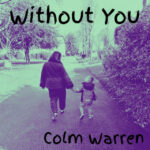
Colm Warren’s “Without You” arrives with a quiet gravity that resists spectacle, instead unfolding as something far more intimate and enduring. Written for his sister and shaped by the presence of his nephew Ódhrán, the song feels less like a conventional tribute and more like a deeply observed act of witness. Warren’s vocal, fragile yet assured, carries the weight of lived emotion, never straining for sentimentality, instead allowing each phrase to settle with a kind of reverence. The orchestration, arranged by John Byrne and rendered with luminous restraint by the Bulgarian Symphonic Orchestra, moves like a slow tide beneath him, expanding the song’s emotional reach without overwhelming its core. There is a rare sincerity here, a sense that every note has been carefully considered, not to impress but to honour.
The accompanying visual work, directed by Tetsuhiko Endo, extends this ethos with striking clarity. By placing members of the Down Syndrome Cork community at its centre, the video resists tokenism and instead embraces a genuine celebration of presence, creativity, and individuality. Performers and audience blur into one another, creating a shared space of joy that feels both deliberate and unguarded. It’s in this interplay, between Warren’s introspective songwriting and the collective vitality of the video, that “Without You” finds its true resonance. The result is a piece that lingers well beyond its runtime, not through grandeur but through its quiet insistence on love, dignity, and the transformative power of being seen.
:: “Terracotta” – The Prettie Littles ::
Mitch Mosk, Beacon, New York
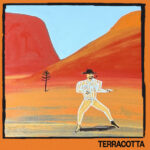
Memory doesn’t sit still – it shifts, reshapes, softens the edges or sharpens them when you least expect it. “Terracotta” lives right inside that push and pull, where the past feels close enough to touch but just distant enough to disorient. The Pretty Littles tap into that tension with a loose, sunlit charm, letting their song wander like a familiar road you haven’t walked in years, equal parts comfort and confrontation.
I look down an old road
the seaberry saltbush is overgrown
And all the old ladies hack it back
under the cover of the early morning
looking over their shoulder
What a life…
Built on jangling guitars, easygoing rhythms, and a lived-in warmth, “Terracotta” carries itself with a kind of unbothered swagger – playful on the surface, but rooted in something deeper. Jack Parsons sings with that distinctly Australian ease, letting the words tumble out of him like passing thoughts, half-observations and half-confessions: “And I don’t know how I can feel so alone and so loved at the same time,” he admits, capturing the emotional contradiction at the song’s core. There’s a looseness to the performance that makes it feel immediate, almost off-the-cuff, but the feeling underneath it lands with quiet force.
“I wrote this about a town on the Bellarine Peninsula,” he tells Atwood Magazine. “Nostalgia can be cruel and nostalgia can be kind. Sometimes it can be confronting going back to a place you’ve been a hundred times and realising just how drastically things have changed in your life. How something that felt like yesterday, is suddenly 25 years ago. Most of the time it doesn’t matter so much. They’re just a jolt, but sometimes they knock you around a bit.”
That push and pull defines not just the song, but the band behind it. The Pretty Littles – a long-running Australian indie rock outfit led by Parsons – have spent well over a decade carving out a catalog that’s grown freer, bolder, and more self-assured with time. Formed in the late 2000s and evolving through lineup changes and reinvention, they’ve built a reputation on songs that feel both offhand and deeply considered, blending scrappy indie rock with touches of folk, humor, and hard-earned reflection.
Yeah and I remember running for my life
through moonah trees of all the things forgotten
that’s still at my heels biting
and I don’t know what it means
to remember happiness like a dream
a reservoir, an abundance,
a land with no boundaries
now a problem buried is a problem sorted
it’s circus tricks but the circuits shorted
just fill the cup
it’s never enough
it’s terracotta warriors acting tough
it’s terracotta warriors
terracotta warriors
what a life…
“Terracotta” lands right in that sweet spot. It’s breezy but weighted, nostalgic but clear-eyed, full of light even as it wrestles with what time takes away. The song doesn’t try to resolve those feelings – it lets them sit side by side, letting memory be messy, uneven, and real. Because sometimes that’s all you get: a moment, a feeling, a place that isn’t quite what it was anymore – and the strange, beautiful realization that it still means everything anyway.
:: “We’ll Be King” – Anna Blaise ::
Danielle Holian, Galway, Ireland

There’s a quiet intensity to Anna Blaise’s debut that feels immediately self-assured, as if she’s less interested in announcing her arrival than in pulling you under her skin. “We’ll Be King” unfolds as a brooding, piano-led meditation on fragility and friction, its sparse opening giving Blaise’s voice an almost unnerving clarity. When she poses the question, “What if I told you I was borrowed and broken / Would you save me?” it doesn’t feel rhetorical; it lands like a held breath, suspended in the track’s carefully constructed stillness. The production, courtesy of Miguel Nicolau, leans into restraint: lo-fi drum textures flicker at the edges, synths hum like distant neon, and every element feels deliberately placed to preserve that sense of emotional exposure.
But what elevates the track beyond introspection is its slow-burning sense of release. The refrain, “We’re so acid alkaline / But we’ve got something that rhymes,” captures the song’s central tension: opposites colliding, chemistry teetering between collapse and cohesion. As the arrangement expands, live instrumentation seeps in, and the track blossoms into a guitar-led outro that feels both cathartic and unresolved. It’s here Blaise reveals her instinct for dynamic storytelling, allowing the song to fracture and bloom in equal measure. For a debut, “We’ll Be King” doesn’t just hint at potential, it sketches out a sonic identity rooted in vulnerability, contradiction, and a quietly defiant sense of self.
:: “Basement Kissing” – Easy Honey ::
Mitch Mosk, Beacon, New York

Some memories rush in all at once, loud and bright and impossible to ignore. “Basement Kissing” lives inside that spell – a wide-eyed, heart-on-sleeve pop rock anthem that bottles the fleeting magic of youth and lets it spill over in waves of sound and feeling. Easy Honey lean all the way into that energy here, capturing a moment that feels both impossibly distant and vividly alive.
Driven by pulsing drums and bold, sunlit guitar strums, “Basement Kissing” moves with unfiltered momentum – all grit, grin, and glowing nostalgia. The band channel the chaos and closeness of house shows and late nights, where everything feels heightened and nothing lasts quite long enough. “Sweaty dancing, ears are ringing, late night drives, what were we thinking? / Pour one out at four in the morning, we could use some basement kissing,” they sing, their voices carrying that mix of recklessness and reflection. It’s the kind of chorus that hits immediately, not just because it’s catchy, but because it feels lived-in – like a memory you didn’t realize you still had.
That immediacy comes straight from the song’s origin. “I began writing some lines very late one night after getting home from a tour about a college house show venue that had gotten shut down, and how all the locals were so bummed,” Easy Honey’s Darby McGlone tells Atwood Magazine. “I was channeling some of the feelings I had experienced at this specific house venue, both playing and watching shows, and specifically, just seeing people fall in love at concerts and fall in love for the first time, and simultaneously knowing that was something you can really only experience once in your life… i.e. the ‘first love.’ A lot of the lines were pulled from our experience playing a show in Harrisonburg, Virginia, and I was thinking about some of the funny little experiences of being a musician… The song is about returning to places you know and how they change past the point of any of your control.”
That blend of humor, heart, and hindsight defines Easy Honey’s approach. Formed in Charleston, South Carolina after its members met in college, the band – Darby McGlone (vocals/guitar), Selby Austin (vocals/guitar), Charlie Holt (drums/vocals), and Webster Austin (bass/vocals) – have spent years building a sound that feels as inviting as it is infectious, rooted in classic rock, indie pop, and Americana influences, and shaped by a deep love of live performance and shared experience. Their music thrives on connection, whether it’s a roadside jam session or a packed basement show, and “Basement Kissing” feels like a distilled version of that ethos.
There’s a deeper current running beneath the song’s buoyancy, though. “This song has an urgency and attitude we like as a group… we worked on it til ‘4 in the morning’ and chased the spark of the idea,” they recall, noting how quickly and instinctively it came together. That urgency mirrors the feeling at the heart of the track – the understanding that these moments don’t last, that the version of yourself who lived them won’t either. And yet, there’s comfort in that, too. “I hope the listener would remember a simpler, more gentle, open minded version of themselves,” they share.
“Basement Kissing” doesn’t just look back – it lights those memories up again, letting them breathe for a few minutes longer. It’s messy, joyful, a little reckless, and full of heart – a reminder that even as time moves on and places change, the feeling of being young, open, and alive never fully leaves you.
:: This Is What It Feels Like – Memory Spells ::
Danielle Holian, Galway, Ireland

There is something quietly radical about, This Is What It Feels Like, not in the sense of sonic reinvention, but in the way it reframes intimacy in an era of distance. The collaboration between Jordan Whitlock and Matt Bauer unfolds like a long-distance conversation that gradually forgets the miles between speakers. Written and produced remotely between San Diego and Los Angeles, the album carries a faint but persistent tension, an emotional latency that paradoxically deepens its sense of closeness. You can hear it in the negative space: the pauses between notes, the suspended chords, the breath that lingers just a fraction longer than expected. Rather than feeling fragmented, the record coheres into a unified emotional atmosphere, as though absence itself has been sculpted into a presence.
The album situates itself comfortably within the dream pop lineage, yet avoids mere pastiche. Airy synths drift like low clouds over minimalist guitar figures, while vintage drum machines pulse with a muted, almost human fragility. There are echoes of familiar touchstones, hints of slowcore melancholy, the narcotic sway of late-night indie, but Whitlock and Bauer resist leaning too heavily on nostalgia. Tracks like “Do You Think of It Sometimes?” ache with a restrained vulnerability, while “All I See Is You” swells into something more tidal, its emotional weight carried not by volume but by accumulation. “Bloom,” perhaps the album’s quiet centerpiece, unfolds with meditative patience, rewarding listeners willing to sit in its stillness. Across these moments, Whitlock’s voice remains the album’s most striking instrument: clear, unguarded, and intimate without ever tipping into fragility.
What ultimately distinguishes, This Is What It Feels Like, is its understanding of scale on how it moves effortlessly between the vast and the minute. The emotional landscapes it conjures feel oceanic, yet its details are rendered with almost diaristic precision. By the time the closing track, “You Tell Me,” arrives, the album has traced a full arc of connection: From uncertainty to immersion, from distance to a kind of quiet recognition. At just over thirty-five minutes, it never overstays its welcome, instead leaving behind a lingering atmosphere that feels both complete and unresolved. In that sense, the album mirrors the very relationships it seeks to explore – ephemeral, transformative, and impossible to fully contain.
:: “Sail (Lady in Waiting)” – Sunnan ::
Mitch Mosk, Beacon, New York
A song can feel like it’s been waiting for you longer than you’ve been waiting for it – like it’s traveled through time just to land in your hands. Sunnan’s “Sail (Lady in Waiting)” carries that special presence, all warmth and wonder and wide-open horizon, a sweeping, psych- and soul-soaked reverie that feels lifted from another era and somehow fully alive right now.
Built on glowing harmonies, shimmering acoustic and electric guitars, and a tight, driving rhythm that never lets up, the song moves with effortless momentum – equal parts groove and grandeur. There’s a richness to its arrangement, a fullness that nods to ‘60s psychedelic rock and vintage soul without ever feeling imitative. Instead, Sunnan make it feel lived-in, like music rediscovered and reawakened. “She’s waiting for someone / Who is brave enough to sail,” they sing, their voices layered and luminous, carrying a sense of longing that stretches far beyond the frame of the song. It’s timeless in the truest sense – not frozen in the past, but flowing through it.
That sense of scale is central to who Sunnan are. Formed through a series of unlikely encounters and creative collisions, the Swedish five-piece have built their identity around what they call a cinematic approach to soul – blending classical aesthetics, Morricone-esque soundscapes, and rock ’n’ roll energy into an expansive and transportive experience. Their 2024 debut album Cinema earned Swedish Grammy nominations and established them as one of the most distinctive voices in their scene, a band as comfortable in sweeping orchestration as they are in raw, immediate feeling.
“‘Sail’ is the bridge from Cinema Sound System to our sophomore album Spaghetti Soul,” the band tell Atwood Magazine. “Leaning into our cinematic roots and timeless soundtracks like ‘Hurricane’ and ‘All Along the Watchtower,’ the song portrays the legend of a life well lived – beauty preserved in memory, and hope for one last ride.”
And that’s exactly how it lands. “Sail (Lady in Waiting)” doesn’t just sound like a relic from another time – it feels like a story being passed down, a memory stretched across decades and carried forward on melody alone. There’s movement in it, a sense of journey that never settles, always pushing ahead toward that which is forever just out of reach. It’s music that invites you to drift, to dream, to believe in something bigger than the moment you’re in – and to hold onto that feeling for as long as you can.
— — — —

Connect to us on
Facebook, 𝕏, Instagram
Discover new music on Atwood Magazine
:: Weekly Roundup ::
follow WEEKLY ROUNDUP on Spotify
:: This Week’s Features ::