Every Friday, Atwood Magazine’s staff share what they’ve been listening to that week – a song, an album, an artist – whatever’s been having an impact on them, in the moment.
This week’s weekly roundup features music by Young the Giant, Sarah Kinsley, Emma Louise, Julien Denis, Louise Aubrie, Tilly Valentine & Meduulla, fanclubwallet, Zee Nxumalo, GENER8ION & Yung Lean, kazaizen, hallpass, Dollpile, Cigarettes for Breakfast, Rudi Burke, Vague Notion, Elliot, Food for the Wyrm, Kelli Blanchett, Ellen Froese, Curly Mouth, Irem Bekter, Hollyy, Victoria Staff, Revived Echoes, Peter Manning Robinson!
•• •• •• ••
 follow WEEKLY ROUNDUP on Spotify


•• ••
:: Victory Garden – Young the Giant ::
Mitch Mosk, Beacon, New York

Hope is not passive on Victory Garden. It is planted, tended, fought for, and carried forward – a living thing made stronger by care, community, and the daily refusal to give in to cynicism. Young the Giant’s sixth album is a triumphant, dramatic return from one of indie rock’s most enduring and deeply human bands, a charged and invigorating collection that finds them doing what they have always done best: pouring passion, verve, and soul into songs that meet the world’s weight with open arms.
That spirit blooms immediately in “Evergreen,” the album’s fiery opening statement and a perfect doorway into the record’s larger world. From its first invocation of “Victory garden / Victory garden,” the song feels bold, urgent, and alive, setting the tone for an album rooted in legacy, survival, and the kind of love that asks us to build beyond ourselves. Sameer Gadhia’s voice sounds extraordinary here – full-bodied, radiant, and roaring with conviction – as he sings, “Call it a victory / Once in a century / Hope you’ll remember me / In the shade under the evergreen.” It is an anthem for tending what matters, even when the harvest may belong to someone else.
“Victory Garden is an ode to radical empathy,” Gadhia tells Atwood Magazine. “I think it is a victory for us in what Jake was saying: It’s such an internal practice. Nothing that you’re looking for is out there. You have to do the work within. It’s about trying to create community, trying to be good ancestors. And in a time that seems consistently more meaningless and cruel, we want Young the Giant to be a beacon of hope. For us, that’s really just getting back to the joy of being in a room.”
“For us, the mantra was: Don’t overthink. Do instinctual writing. Get back to the place of not being interested in how we want to sound, but just being ourselves,” he continues. “More than anything, more than any other influence, it was just trying to capture who we are in the most honest way. So I think, in some ways, it’s one of our most honest records. It’s not just a beacon of hope – it’s the struggle to find that empathy in yourself to be able to share that with other people. That radical empathy in this time is its own form of resistance.”
Fifteen years into their journey, Young the Giant sound renewed without pretending to be reborn. Victory Garden carries echoes of the band’s earliest rush and their later conceptual depth, but its greatest power lies in how fully inhabited it feels: Five musicians back in a room, writing collectively, trusting instinct, and chasing the joy of being together. From the rousing immediacy of “Evergreen” and “Different Kind of Love” to the hard-hitting ache of “God as a Witness,” the searching pulse of “Are You With Me?,” and the stripped-back grace of “Life Is a Long Goodbye,” the album moves with the confidence of a band that knows exactly who they are and still has new ground to break.
Payam Doostzadeh sees “Evergreen” as inseparable from the record’s larger question of legacy. “Radical empathy is moving beyond just walking in someone else’s shoes. It requires taking action,” he says. “I think Sameer hinted at this, and it’s a little bit of the theme of the song ‘Evergreen,’ which talks about legacy. It’s like that Greek proverb: ‘Society grows great when old men plant trees in whose shade they know they shall never sit under.’”
“For me, another form of radical empathy, as far as taking action, is trying to raise this next generation – our kids,” he adds. “I think us millennial parents should all be really proud of the time we’re spending. I remember my dad was always working, and I think all of our dads were doing their best. They were immigrant parents, and they had their 9-to-5 jobs, and they were trying to provide a better place for us, a better world for us. Us paying it forward to our children by having the privilege of being present for them – I don’t want to sound too idealistic, but I really think the best we can do for our world is to raise this next generation of kids to help us fix all this bullshit going on. I’m hopeful that’s possible. That, for me, is my interpretation of radical empathy.”
That idea gives Victory Garden its emotional spine. The album is not naive about darkness, division, exhaustion, or fear; if anything, its hope hits harder because it knows what it is up against. On “Evergreen,” Gadhia sings, “Eye for an eye / Is it karmic suicide?” before pushing toward survival, change, and continuation: “And when I’m gone / Hope the garden carries on.” It is one of the album’s clearest, most potent offerings – a reminder that empathy is not softness, but labor; not sentiment, but action.
“It just felt like the right intro,” Gadhia says of opening the album with “Evergreen.” “That opening moment with Victory Garden kind of leading you in as the lyrics to the song – there are no tracks titled ‘Victory Garden.’ It’s the moment that takes you there. I think it’s the most crystallized idea of the record and the concept of it.”
“It was actually one of the last songs that we’d written,” he adds. “Payam had come up with Victory Garden the next morning, and the next day, we were in a fever dream of songwriting… It’s so fun. You’re in the studio, you’re always chasing that feeling. You never know what’s gonna happen, and when it happens, you have to surrender to it. We were just so excited about that arrival of that song, and I felt it completed the record, so it made the most sense for it to open.”
The victory in Victory Garden is not conquest. It is tenderness preserved, humanity protected, and hope made useful in a world that keeps testing our capacity to care. Young the Giant have made a record that feels urgent for this very moment – passionate, communal, hard-hitting, and alive with the belief that being good ancestors begins with how we show up now. In 2026, that message feels more than timely. It feels necessary.
:: “Truth of Pursuit” – Sarah Kinsley ::
Julia Dzurillay, New Jersey

The rest of the world needs to get on board with Sarah Kinsley, I’m not sure what taking so long. She writes her own songs and got Chappell Roan’s stamp of approval. I even saw her perform a four hour ambient music set/art installation in New York. Sarah Kinsley is truly one of a kind in the indie pop music space, perhaps best known for “The King.”
Sure, “The King” is a fun, TikTok-approved track, but it only scratches the surface of what Kinsley can create as an artist. The songs on her latest EP, Fleeting, feel especially layered, personal, and twinged with ’80s synths, just the way I like it.
I think her deep knowledge of classical music and harmony really shines with songs like “Truth of Pursuit.” Her lyrics, too, so perfectly describe that feeling of wanting to pick someone’s brain. In the first verse, she sings, “If only, baby, you were mine. I think about it almost every night on the line. Do you often wonder how our stars will align? I know you don’t believe in that stuff most of the time.” Like… wow.
:: Sunshine for Happiness – Emma Louise ::
Josh Weiner, Boston, MA

With springtime in full motion, sunshine is becoming more of the current norm – even up here in chilly old Boston, we’ve caught a break with a bit of soleil lately. Weather of that nature tends to brighten people’s mood, even for those who, like singer Emma Louise, have been through some tough times in recent years. Yet the music industry veteran – her debut EP, Full Hearts and Empty Rooms, just celebrated its 15th birthday last year – ultimately managed to overcome her rough experience and harness her well-seasoned musical abilities into a captivating new LP, one appropriately titled for a May 1st release: Sunshine for Happiness.
Given that the singer has gone through some peaks and valleys herself – she was hospitalized following a mental breakdown in 2020 but has gradually managed to heal over the years since then – it makes sense that Sunshine for Happiness packs a variety of moods in as well over its dozen tracks. Songs like “Medicine” and “The Absence Of You” are soft and delicate slow-burners, on which the Cairns, Australia native details the longing and loneliness to which she has been subject to. “It was the absence of you in my life, it was the void you left sleeping in the night,” she sings, perhaps reminiscing on her period of confinement in the mental hospital. “And it woke in me like some beast to fight.”
Conversely, there are plenty of more upbeat songs here like “Trigger of a Gun” and “Bahia de Banderas,” which showcase Emma Louise’s ongoing promising creative partnership with fellow Aussie, DJ Flume (the two of them made a collaborative album, Dumb, last year, and are back at it again quite quickly). Ms. Louise also showcases a considerable mood uptick on these tracks. “Well, it turns out everything was fine,” she sings on the latter. “All I needed was a change of mind. The darkness came, the light followed.” Such a talented musician deserves to have things work in her favor in the long run, and by scoring a successful project with Sunshine for Happiness, that definitely seems to be the direction in which things are headed for her.
:: “Fight Fair” – Julien Denis ::
Chloe Robinson, California

Indie pop artist Julien Denis’ “Fight Fair” is a breezy, sun-drenched song arriving right on cue for spring and summer. Though the track carries a tranquil feel, its message leans toward something a bit darker. Written after a chaotic split, lines like “I’ve been losing my mind from the things left unsaid, can’t get out of bed,” could not be more universally resonant. When faced with intense pain of heartache, it’s easy to want to retreat from the world. “Fight Fair” is for anyone who has had a partner who couldn’t fight fair, leaving you there to pick up the pieces. His warm melancholic tone alongside a glistening, golden backdrop creates the ideal fusion.
Denis shares, “It initially started as a slow guitar song that I wrote after a pretty messy breakup, but it quickly turned into something more upbeat and relaxed than I expected. I wanted it to feel happy and to feel like summer despite what my lyrics evoked.”
Raised in New York City in a musically inclined household, Denis developed an early pull toward melody. After teaching himself guitar a few years ago, songwriting emerged naturally as his primary creative outlet. This latest single reveals the depth of his musical talent and the journey he’s made so far. Denis has developed a distinct voice that balances emotional honesty with a strong melodic sensibility. He’s a standout worth keeping an eye on. With “Fight Fair,” he signals the beginning of a promising trajectory.
:: “Midnight Calls” – Louise Aubrie ::
Joe Beer, Surrey, UK

Louise Aubrie’s new single “Midnight Calls” circles around the idea of being on the edge of something new. For Aubrie, this sense of newness was moving her life from London to Los Angeles and the whirlwind of emotions that come with transitioning your life to a new place. Leaning into a darker, late-night energy, the track is built around melodic guitars, driving percussion, confident vocals and an infectious chorus.
Written during her time in Los Angeles, you can hear the influence of long drives, city lights, and that strange blur of time that comes with living between places that are in different time zones. Aubrie shares, “It’s always interesting when you have a life in both the UK and US as I find I am awake at all times of the day and night catching up with people, which can trick your brain into new areas of creativity.” With sharp and crisp production, the track delivers a punchy, no-frills finish. As the first glimpse into her upcoming album LFA, “Midnight Calls” gives listeners a taste of what is yet to come.
:: “Undercover” – Tilly Valentine & Meduulla ::
Mitch Mosk, Beacon, New York

Heat has its own rhythm on “Undercover,” and Tilly Valentine and Meduulla know exactly how to move inside it. A buoyant, bouncy, sultry seduction with bite, the track pulses with sweet danger and dreamy warmth, turning betrayal into a full-bodied statement of power. The beat is unrelenting in the best way – insistent, intimate, and impossible to ignore – while Valentine’s velvet-smooth delivery and Meduulla’s razor-edged verse meet in the middle with striking chemistry.
Released as the final single ahead of Valentine’s forthcoming EP Cupid Killer, “Undercover” relives the story of two artists joining forces after discovering they are both the “other woman.” Instead of letting that revelation become rivalry, Valentine and Manchester rapper Meduulla flip the whole script, making the song less about being deceived and more about refusing to be divided. “Are you seeing double? / If that’s a double life you’re living / You’re in double trouble,” Valentine sings, her voice gliding over the production with a cool, cutting confidence that makes every line land.
“In a world where women are so often pitted against each other, working with Meduulla felt like flipping that expectation on its head,” Valentine shares. “It was empowering to build something where we stand together.”
That unity is the song’s real thrill. Meduulla storms in with wit, swagger, and precision, turning confrontation into a victory lap: “Two dime pieces leaving one doofus / Mm adios boy bye.” Together, she and Valentine make “Undercover” feel instantly memorable – playful but pointed, seductive but unsparing, a call-out anthem that never sacrifices groove for message. It aches, it stirs, and it commands attention because its power comes from alignment: two women refusing secrecy, refusing shame, and choosing each other instead.
By the time the chorus comes back around – “I’m not gonna keep it undercover with another girl” – the song has already blown the whole thing open. “Undercover” thrives on exposure: the lie revealed, the cover lifted, the double life dragged into the light. Valentine and Meduulla do not just reclaim the narrative; they make it bounce, burn, and shimmer, turning a hidden truth into a striking, soul-stirring release.
:: “Moving Unison” – fanclubwallet ::
Mitch Mosk, Beacon, New York

Love looks blissfully ordinary from the outside on “Moving Unison,” and that may be its sweetest trick. For fanclubwallet’s Hannah Judge – one of indie rock’s most disarming songwriters (and a personal favorite) – the miracle is not some grand, cinematic revelation, but the small, funny, almost absurd intimacy of sharing space with another person until your rhythms start to rhyme. Her first-ever love song is lush, playful, and tenderly aglow, a springtime reverie carried by gentle guitars, light lilting piano, and a soft vocal that feels like it is smiling under its breath.
“This is my first ever love song,” Judge beams in conversation. “The lyrics came to me when we were driving on the highway and I wondered if most of the people in the carpool lane are lovers, and how when you’re with someone your life becomes so intertwined. I also was thinking of the Whose Line Is It Anyway? game ‘Helping Hands,’ where one person puts their hands behind their back and the other person stands behind them and becomes their arms. I think that’s kind of a metaphor for relationships in a funny way.”
That humor gives “Moving Unison” its charm, but the song’s sweetness runs deeper than its central image. Judge turns the carpool lane into a love language, framing partnership as a shared body, a shared brain, a gentle surrender to the strange coordination of being with someone who makes life feel less solitary. “I think that we’ve / Got a shared brain / And I wouldn’t have it any other way,” she sings, later landing on the song’s warmest confession: “It feels good / When I come home / It’s nice to not be alone.” Drums drift in and out of the haze, adding a soft punch whenever they arrive, while the whole track glows with an ease that feels new for fanclubwallet, but instantly right.
“When we went to [producer] Pat’s place, he was showing us some instrumentals he’d been working on,” she recalls. “When I heard this one, it sort of reminded me of the Eternal Sunshine of the Spotless Mind soundtrack, which is one of my favourite soundtracks ever. We played around with it and recorded some piano, and the vocals were just sung in the room over the instrumental, nothing fancy. I can’t even explain how easy this song was to make, it felt so natural. I’ve tried to make love songs after this one, but they’ve felt forced and just haven’t turned out right. This one was perfect.”
Out via Lauren Records, “Moving Unison” also marks fanclubwallet’s first collaboration with producer Pat Linehan, whose light touch helps preserve the song’s natural glow. Judge’s writing has often found resonance in anxiety, illness, disconnection, and the warped comedy of trying to survive yourself, which makes this moment feel quietly radical in her catalog: not a departure from her world, but a new window opening inside it. Sweet, dreamy, and unforced, “Moving Unison” lets love be funny, physical, ordinary, and profound all at once – two people wrapped around each other, moving through the day, happy to be less alone.
:: Zee Nxumalo ::
Josh Weiner, Boston, MA
South Africa, a diverse nation with 12 official languages and a rich musical and cultural tradition, is the ideal breeding ground for an artist of Zee Nxumalo’s stature. Only 19 years old when she first emerged from her hometown of Johannesburg with her 2022 debut EP, KwaNxumalo, the singer quickly expanded it into a full-length release the following year and has kept the tunes coming steadily ever since, as her Spotify page will reveal. The latest addition to her collection is the new four-track EP, Izinja Zam: Vol. I.
In the short span of 25 minutes, Zee Nxumalo makes a remarkable impact with her entrancing vocals, sung in her native Bantu language of SiSwati (that trait alone should make this a groundbreaking listening experience for many Anglophone audiences). She’s also supported by the lush Afrohouse-based production– largely courtesy of her fellow South Africans, Dlala Thuzkin and Funky Qla– as well as the solid number of her countrymen who stop by for guest vocals, including Sino Moslo, Young Stunna, and Shakes & Les.
Ms. Nxumalo remains the star throughout the whole show, guided by her powerhouse vocals and heartfelt lyrical themes (for instance, she describes the track “Guqa (My Prayer)” as being about “recognizing that in moments of uncertainty, the most powerful thing you can do is surrender and realign spiritually”). In the end, Izinja Zam: Vol. I represents a remarkable telepathic journey to South Africa and back in the space of a small half hour, with an exceptionally talenting pilot flying us along the whole while.
:: “STORM” – GENER8ION, Yung Lean ::
Heleen Weber, Cologne, Germany
In case you need a reminder of the force and possibility of art, the double single “STORM” delivers exactly that. The project is a collaboration between GENER8ION – the multidisciplinary project by French producer Surkin – and Swedish rapper Yung Lean. Together, what they create is not a conventional release, but a glorious and fully realized artistic statement.
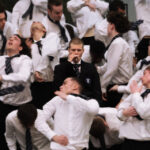
This is a project worth diving deeper into, which in this case means taking a look at the accompanying music video, directed by Romain Gavras. It also marks Yung Lean’s acting debut. Starring as a charismatic bully in an all-boys British boarding school, he moves through scenes of fights, dares, and shared boyhood. Both visually and musically, “STORM” resists predictability – with no clear sense of where things are headed.
This sense of instability defines the A-side of the record, “STORM I.” Its dense, layered production builds tension through clashing synths and overlapping textures. Siren-like sounds and recurring chant-like “hey” shouts create a tense, urgent, and uneasy soundscape. The result is controlled chaos – disorienting, but deliberate – until… the music drops, and the B-side steps in to tie everything together.
In the video, the boys are now lined up neatly on a staircase, as if just about to pose for a photo. Instead, they break into a chilling dance performance. Yung Lean’s stillness, as he stands smoking in the center of the formation, makes for a striking contrast to all the energetic movement surrounding him. Being the fixed point within the choreography, he’s impossible to look away from as the camera moves in and out.
And while it’s arguably the dance choreography that is the project’s most striking moment, the now playing B-side, “STORM II,” is the highlight that makes this moment come together. The music is now guided by a soulful piano, while the same chant that felt aggressive just seconds ago now changes its tone, becoming unifying and communal.
The lyrics reflect this notion: “We stay united through the storm / Lay all your love right on my door / I never fall, I’m standing tall / Go take the darkness out my heart.” All the loose ends, the fragmented feel of music and visuals alike, now resolve into something collective. But the same elements that create cohesion – choreography and collective movement – also echo the earlier tension. The piece never fully abandons its underlying unease, and yet this second half feels like the inevitable resolution to the performance. The song turns energetic and becomes rooted in the euphoric ease of youth:
“Feels like a drug, drug, drug / We gonna love, love, love / Until the sun comes up, up / You’re all out of luck, luck, luck / We don’t give a f***, but what? / It’s only a nick of time / When you see the stars, you better run.”
Stepping back – quite literally, as the camera enters its final zoom out – what sticks is a charged sense of unity – and a rejoiced love for the arts. Because what GENER8ION and Yung Lean create with “STORM” is all the best parts of creative vision in both music and video coming together. And honestly, especially in times of AI, nothing feels more refreshing than this.
:: Sky Fish Fly – kazaizen ::
Danielle Holian, Galway, Ireland

With Sky Fish Fly, kazaizen leans even further into its own beautifully ungovernable logic. Across 13 tracks and a brisk 35-minute runtime, the record behaves less like a traditional album and more like a transmission caught mid-frequency drift: psychedelic rock dissolves into alternative soul, only to resurface as lo-fi city pop or bruised shoegaze.
What makes Sky Fish Fly compelling is its refusal to settle into any single emotional register for long. “Nanoo Nanoo” and “Make It Love” tumble forward like neon-lit daydreams, all elastic grooves and warped funk logic, while “What’s the Meaning – Self” spins city pop through a cracked kaleidoscope until it feels like it’s remembering itself rather than simply playing. Elsewhere, “State of Mind” builds a shoegaze monolith from fragments, samples, gauzy synths, half-submerged guitar lines, while “What Is” plays like a rediscovered 70s soul artefact left too long in a VHS player, degraded into something stranger and more luminous in the process. Even the more playful detours, like the Martian satire of “Mr. Musk,” feel less like novelty and more like myth-making under fluorescent lights.
At its core, Kasai’s approach is less composition than accumulation: fragments of melody, texture, and groove assembled into shifting sonic ecosystems that never quite resolve. “Beyond the Stars” drifts into spaced-out R&B haze, while “Somewhere Somethings Waiting” pushes into progressive synth-jazz territory with a kind of patient curiosity, as if unsure whether it’s arriving or departing. The result is a record that feels both lo-fi and expansive, intimate yet unplaceable, music as altered perception rather than fixed statement. Sky Fish Fly doesn’t demand interpretation so much as surrender, offering instead a flickering, restless world where genres blur, dissolve, and reform just out of reach.
:: Spillway – hallpass ::
Emily Weatherhead, Toronto, Canada
With Spillway, Georgia-based band hallpass have gifted us an exciting debut album that introduces their distinctive sound while highlighting their versatility. From energetic, percussive tracks like “Habits” to slower, emotional ballads like “Rain,” each song draws you in and leaves you eager to hear what’s next.
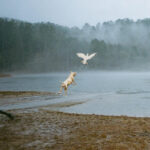
The foursome have created a succinct 12-track narrative split into two halves, labelling the first six tracks with a bird and the second six with a dog in their album announcement. On earlier tracks like “Poke,” the sound is reminiscent of the early days of Valley, with jaunty guitar lines and bright harmonies. One standout track is “Locomotive,” where the driving base line perfectly captures the spirit of an old-fashioned, smokestack train. The turning point of the album comes during the transition from “The Park” to “Habits.” “The Park” evokes a vintage, Western-movie feel as the instrumentals twang sadly underneath longing harmonies. “My heart is yours / My heart is torn” echoes through the end of the song. “Habits” then breaks through with an edgy guitar and an augmenting drum line. This angstier atmosphere is carried through the rest of the album. “Stressor” is one second-half track I can’t stop coming back to. Its moody bass line and raunchy guitar frame lyrics that explore a complex relationship: “Cover my eyes and give me yours / I could try to see you more / I don’t know better / So I choose to stay for whatever.”
Ultimately, Spillway paints a rich, layered sonic landscape through its dreamy vocals and strong instrumental performances. The band often feel like they’re conversing with each other, with guitar riffs and drum lines that break away from the main melodic action. Each song feels intentional, with so many moving parts that you can’t help but go back for a second listen (and a third, and a fourth.) The passion of this band shines through their heartfelt lyrics and creative production, making this emerging group one worth paying attention to.
:: “100 Degrees” – Dollpile ::
Mitch Mosk, Beacon, New York

Heat has a way of making everything feel haunted. On “100 Degrees,” Dollpile turn suffocating warmth into atmosphere, letting desire, dread, boredom, grief, and half-finished goodbyes blur together in a brooding alternative haze. The last single off the band’s upcoming album Someone Else’s Heaven, it is a dreamy, slow-burning expanse of fuzz folk – charged in subtle currents, heavy with ache, and seductive in the way it lingers just beneath the skin.
“100 Degrees” pulses with an intimate kind of unease, the kind that makes a room feel too small and a memory feel impossible to escape. Isadora Eden and Sumner Erhard let the song smolder rather than erupt, building a world of haunting warmth and shadowed wonder where every sound feels close, almost fevered. “If heaven’s a place it’s not here / taking apart the bed again / it’s a hundred degrees / nothing worth saying over the AC,” Eden sings, capturing that awful liminal state where home no longer feels like shelter, but leaving does not feel like freedom either.
“Someone Else’s Heaven feels like we took the ideas and sound we developed on our last album forget what makes it glow and got more confident exploring them,” Dollpile share. “It goes further in every direction – Tuesday Night expands on the fuzzy harsh guitars, Cities leans into softer folk, Concrete is the first drumless Dollpile song, Fake Flowers feels like the epitome of our ‘fuzz folk’ sound.”
That confidence has been the defining force of this era, from the cathartic exhale of “Fake Flowers” to the glistening ache of “Stoplights” and the heavy reckoning of the title track. If those songs opened doors into Dollpile’s haunted universe, then “100 Degrees” lets the heat settle in the walls. “Wasting time on purpose / wishing I was home while I’m at home,” Eden sings, a line that cuts to the album’s emotional core: alienation not as spectacle, but as an everyday pressure that builds in the body until even stillness feels unbearable.
“The writing approach was different too,” the band explain. “We did a lot of ‘demo days’ where we’d block off a Saturday and just spend all day in the basement fleshing out the song from a guitar / vocal demo into a fully realized song. In the past it’s been mainly guitar / vocal demos that we chip away at demoing through a lot of small sessions. We wanted to instead recreate the feeling of being totally immersed in the song that we get when we go in the studio to record. Removing distractions and not breaking up the creative flow made the writing process more fun, and we’d end every demo day with a ‘car test’, driving around our neighborhood and deciding how we felt about the song we’d made. We were more collaborative as well: Stoplights started from a jam right before practice, and Concrete started with a guitar part Sumner was working on.”
That immersion comes through in every inch of “100 Degrees,” a song that feels fully inhabited rather than merely performed. Written and performed by Eden and Erhard, and recorded, mixed, and mastered by Corey Coffman, it captures Dollpile at their most assured and atmospheric – heavier in spirit than in volume, more devastating for how carefully it holds itself back. By the time Eden sings, “Didn’t like it but I’ll miss it when it’s gone,” the song has already made its home in that contradiction, turning discomfort into devotion and heat into a kind of ghost.
:: “flowing” – Cigarettes for Breakfast ::
Mitch Mosk, Beacon, New York

A great shoegaze song does not move so much as overtake. On “flowing,” Philadelphia’s Cigarettes for Breakfast surrender to the current and let the whole track rush over them, pulling distortion, dream pop, and discontent into a spiraling wash of sound. The third single from their colour wheel EP (released March 24), it is a spirited and stirring flood of reversed reverbs, roaring guitar drones, rhythmic acoustic guitar, shakers, and drum machine pulse – breathtaking in its scale, but intimate in its ache.
Written, performed, recorded, and mixed by Matthew Paul Whiteford, “flowing” channels the classic shoegaze pull of My Bloody Valentine and Slowdive without settling for imitation. Its guitars bloom and blur until they feel almost tidal, bending and echoing around vocals that arrive like a half-submerged thought. The song is dreamy and dramatic, but never weightless; beneath its intoxicating haze is a very real exhaustion, the sense of being dragged forward by forces too strong to name, let alone resist.
“I try so hard to believe in / everything I do / with intentions that are true / but it doesn’t make a difference,” Whiteford sings, giving the song its bruised emotional center. That ache deepens in the refrain – “where the river goes / it takes you where it flows / always / is it all really worth it?” – turning the track’s title into both image and inevitability. “flowing” is not just about movement; it is about the loss of control that comes when life refuses to stop moving, even when you are desperate to catch your breath.
Cigarettes for Breakfast have long built their world out of fuzz, feeling, and DIY devotion, and “flowing” feels like a vivid continuation of that mission. Created over three years as part of colour wheel, the song carries the EP’s psychedelic spirit in every swirl and surge, bending shoegaze and dream pop into its own little world of color, current, and collapse. By the time it fades, “flowing” leaves you suspended somewhere between surrender and release – bobbing your head, aching a little, and letting the river take you where it will.
:: “Red, dead Ladybugs” – Rudi Burke ::
Danielle Holian, Galway, Ireland

“Red, dead Ladybugs” unfolds with a quiet confidence that feels almost unassuming at first, yet reveals its depth in subtle increments. Rudi Burke constructs the track around a sparse acoustic framework, allowing space itself to function as an instrument. Rather than leaning on overt dynamics, he works in shades; soft strums, restrained melodic movement, and a vocal delivery that sits somewhere between confession and observation. The result is a song that feels intimately lived-in, as though it were never fully written so much as discovered in real time. Burke’s choice to anchor the piece in such a delicate sonic palette mirrors the thematic core of the song: fragility, impermanence, and the uneasy beauty found in stillness. There is no rush toward resolution, only a patient circling of feeling.
Lyrically and conceptually, the track extends far beyond its modest origin point, the image of two dead ladybugs on a winter windowsill, into something quietly philosophical. Burke resists turning the metaphor into overt symbolism; instead, he lets it remain tactile, almost stubbornly physical, which gives the song its emotional credibility. What emerges is less a narrative than a sustained meditation on transience, where questions about time, love, and meaning hover without ever hardening into answers. The arrangement’s gradual build mirrors this uncertainty, adding weight without ever breaking the song’s contemplative spell. In this restraint lies its sophistication: “Red, dead Ladybugs” trusts its listener to sit with ambiguity, and in doing so, it achieves a rare kind of resonance; one that lingers not through climax, but through quiet insistence.
:: GLOW – Vague Notion ::
Danielle Holian, Galway, Ireland
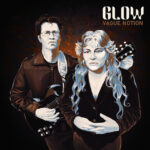
There’s a quiet confidence to, GLOW, the new six-track EP from Vague Notion, that feels both deliberate and instinctive. Opening with “Visceral Reaction,” the duo set a tone of taut, slow-burning intensity before easing into the more expansive pulse of “We Made It So,” where the rock-oriented tune begins to stretch its wings. At the centre is Cheryl Janzen, whose vocal presence cuts cleanly through the haze; cool, controlled, but never distant. There’s a lived-in quality to her delivery that keeps things grounded even as “Peace Dub” drifts into more meditative, rhythm-led territory. Handling much of the synth work and co-production, she shapes a sonic palette that feels expansive yet intimate, balancing restraint with flickers of emotional intensity.
Alongside her, Bevan Early’s guitar work provides a restless, intricate counterpoint throughout with his production prowess. “Blue Skinned Dog” has intriguing hypnotic patterns that draw the listener in, while “Book Of Time” leans further into that interplay between texture and motion, the track unfolding with a patient, almost transportive quality. Drawing on South and West African influences as well as jazz phrasing, his contributions keep the EP in constant motion. By the time the closing song “A Little Distraction” arrives, there’s a noticeable lift; an understated sense of release that threads back through the record’s emotional core. Inspired by the landscapes of British Columbia’s Interior, GLOW, feels exploratory in both sound and spirit; a record that doesn’t just map emotional terrain, but invites you to wander through it.
:: “The One You Forget” – Elliot ::
Mitch Mosk, Beacon, New York
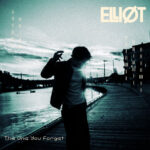
Elliot Tengblad sounds like he is running toward the feeling before it can outrun him. “The One You Forget” is all velocity and ache, a spirited indie rock rush that throws itself headfirst into love’s afterimage – the person gone, the feeling not yet finished, the heart still refusing to learn the shape of an ending. Fiery in the vein of Sam Fender, Wunderhorse, and Catfish and the Bottlemen, the song surges with a raw, youthful force that makes longing feel less like a weakness than a reason to keep moving.
Built for the final stretch of a live show and released April 24th via Bladë Records, “The One You Forget” carries that closing-song electricity in its bones. Guitars charge forward, the drums push with restless insistence, and Tengblad’s voice cuts through with a desperation that feels both enormous and unguarded – dramatic, relentless, and life-giving in the way only a great heartbreak anthem can be. It is not polished into distance; it burns close to the skin, each chorus rising like a confession shouted from the middle of the crowd.
“My dad wanted to show me and my sister Isa, how far AI music has come,” Tengblad tells Atwood Magazine. “He played us some AI-generated track and said, ‘listen to this.’ Isa and I just looked at each other. We went straight into the studio and wrote ‘The One You Forget.’ I genuinely think it’s one of the best things we’ve ever made, and no algorithm was going to beat us to it. The song is about that feeling of holding on when you know you should let go, still in love, not ready to admit it’s over.”
That origin story gives the song an extra jolt of purpose. At 18, the Stockholm-based singer/songwriter already performs with the intensity of someone determined to make every moment count, and his collaboration with sister and co-producer Isa Tengblad gives “The One You Forget” its serrated precision without dulling its human edge. After winning P4 Stockholm Nästa Stjärna in 2025, landing multiple singles on New Music Friday Sweden, and playing more than 50 shows in the past year, Tengblad arrives here with a song that sounds as if it has been sharpened by the stage – urgent, communal, and ready to explode back at him from a room full of voices.
“I don’t wanna be / The one that you forget / The one that could have loved you better than the rest,” he sings, turning a fear of being erased into the song’s emotional engine. By the time the final chorus hits, “The One You Forget” feels less like a plea than a refusal: Refusal to disappear, refusal to let the feeling be flattened, refusal to let heartbreak become disposable. No algorithm could manufacture this kind of ache. Elliot Tengblad makes it roar.
:: “Unfortunate Rake” – Food for the Wyrm ::
Chloe Robinson, California

Food for the Wyrm has fashioned a captivating folk metal song “Unfortunate Rake” that will have you truly haunted. A ballad from 1700s England and Ireland, it has been made through several revisions, told from varying viewpoints and exploring themes of excess such as alcohol use, gambling, and prostitution. With tones of looming fear and dread mixed with wisdom and growth, the piece unfolds as a reflection on how even the darkest moments can become catalysts for transformation and deeper understanding. With powerful, scratchy vocals emitting vibes of Jack Black in Tenacious D, there is a wild, larger-than-life intensity that feels fiercely anthemic.
“The Unfortunate Rake” is off of Food for the Wyrm’s upcoming debut album A Wicked Huntsman. Beau and the band had been performing a selection of reworked Irish folk songs for several years, so recording them in their ancestral home felt like a natural next step. The record includes four traditional Irish folk songs, a track inspired by Blind Willie Johnson, and three original compositions, all presented in a dark, aggressive, driving style that blends hardcore punk and heavy metal with folk tradition.
:: Casual Dining – Kelli Blanchett ::
Joe Beer, Surrey, UK

London-based alt/folk artist Kelli Blanchett recently released a new EP, Casual Dining. Written during a period of chronic illness, the five tracks are stripped-back and emotionally raw, playing out like a break-up record, but rather than with another person, Blanchett speaks about letting go of a previous version of herself.
Sonically, the EP has a beautifully warm, alt-folk palette, featuring acoustic guitars, soft organ tones, subtle flourishes of strings, and the occasional lift of harmonies. Keeping it close and personal, the songwriter lets the vocals do most of the work, with every lyric feeling like a diary entry.
Focus track “Hiding in Plain Sight” unpacks the confusion and distance that can creep into friendships, especially during difficult periods. Emitting a sense of loneliness, the song shimmers with slide guitar and layered soulful, emotion-soaked vocals. As a whole, Casual Dining feels honest and unpolished, offering a clear snapshot of someone learning how to exist in a new version of their life.
:: “Bellflower Blue” – Ellen Froese ::
Mitch Mosk, Beacon, New York
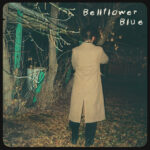
Heartbreak has a way of turning weather into witness. On “Bellflower Blue,” Saskatoon singer/songwriter Ellen Froese wanders through storm, sorrow, and bloom with the poise of an old folk ballad and the intimacy of a private confession. Gentle, dreamy, and deceptively haunting, the song drifts forward on sweet fiddle, pulsing cello, upright bass, and Froese’s spellbinding vocal – a fragile bluegrass reverie that makes devastation feel not only survivable, but strangely luminous.
“‘Bellflower Blue’ was written with a nod to heartbreak songs in a specific vein of traditional folk ballads,” Froese tells Atwood Magazine. “Prolonged stormy weather can erode away parts of you, but the resulting fragility can be a beautiful thing, acting as a guide to new, and gentler pastures. Bellflower is a beautiful, but deceivingly invasive plant.”
That duality lives at the heart of the song: Beauty and danger braided together, heartbreak not as a single wound but as an ecosystem quietly taking root. Featured on Froese’s forthcoming album Solitary Songs, out May 6 via Victory Pool, “Bellflower Blue” carries the weathered grace of a dusted-off country classic, but its emotional language feels immediate and exposed. “Days fall to sorrow, nights to wine / Love lies broken, chiseled in time,” she sings, letting each line land with the ache of memory and the patience of prairie light.
“This was the first track recorded for the album, and the only one without electric instruments and drums,” Froese shares. “It happened this way because the rhythm section was stuck in Regina due to a snowstorm, so the Saskatoon crew found something to work on without them. We had Lauren Tastad on fiddle, me on 12-string acoustic guitar, Clayton Linthicum on acoustic guitar, and Jake Smithies, whom I had just met and happened to be in Saskatoon on a day off from touring, on upright bass. We whipped over to my friend Emma’s house to borrow her upright bass, and then sat down in the studio to work out the song. We ended up recording it sitting around one mic. I added vocals later.”
The story of its making only deepens the spell. Born from a snowstorm delay and captured around one mic, “Bellflower Blue” sounds like music made in the room before the world could interfere – tactile, communal, and alive with the hum of chance. Its arrangement never overreaches; instead, fiddle and cello move like weather systems around Froese’s voice, tracing the song’s passage from erosion to renewal. “The tide will rise, the sun will shine / Seed and cinder harken to pine / Days float on moth wings, fragile and new / To land in a bed of bellflower blue.”
“To round it all out, Stephanie Kuse made me a lovely music video for it at PAVED Arts in Saskatoon,” Froese says. “She built a whole set with homemade grass, flowers, and cleverly designed projections. I think she really nailed the vision as it perfectly blends a kind of 70’s nostalgia with some dark undertones that highlight the heartbreak.”
That blend of nostalgia and shadow is exactly where “Bellflower Blue” leaves us: Somewhere between past and pasture, grief and growth, the invasive and the enchanting. Froese does not rush toward healing or soften the edges of what has been lost. She lets the storm pass through, lets the broken places show, and finds in that fragility a gentler field ahead.
:: Watermelon & Ginger – Curly Mouth ::
Danielle Holian, Galway, Ireland

Curly Mouth’s latest release, Watermelon & Ginger, feels less like a conventional album and more like an unfolding sketchbook of sonic thought; restless, inquisitive, and deeply personal. Driven by an almost compulsive creative impulse, the project embraces genre as fluid rather than fixed, allowing folk-leaning intimacy to dissolve into electronic fragmentation without hesitation. Across 19 tracks and just over 51 minutes, Curly Mouth treats composition as a form of diary-keeping: impressions of thought and feeling captured in real time, unpolished yet deliberate. Warm guitar textures and gentle vocal delivery often anchor the listener, only to be gently unsettled by vintage organ swells or sudden synthetic ruptures that feel both playful and emotionally precise.
What gives the record its lasting appeal is not cohesion in the traditional sense, but a consistent emotional honesty that threads through its stylistic volatility. Each piece inhabits its own small thematic world, yet together they form a broader meditation on change, memory, and creative compulsion. Standout moments such as “I Will Forget,” “Life Moves Forever,” and “Calm Me Down” showcase Curly Mouth at their most affecting, balancing lyrical directness with textured, evolving arrangements. Elsewhere, tracks like “Rudolf & Me” and “Gotta Leave Without Running” highlight the project’s willingness to sit in contradiction; tender yet unsettled, structured yet impulsive. The result is an album that resists easy categorisation, instead offering itself as a living archive of curiosity and emotional immediacy.
:: “Miscommunication (Lost In Transmission)” – Irem Bekter ::
Danielle Holian, Galway, Ireland

With “Miscommunication (Lost In Transmission),” Irem Bekter leans fully into the emotional comedy and quiet tragedy of language itself, how we reach for meaning and sometimes only manage static. Coming from her album The Winding Road, the track feels like a living conversation that keeps slipping sideways, shaped by a production palette that is both playful and intricately layered. The arrangement work of Jean Massicotte gives the song its elastic, almost cinematic structure: rhythms don’t just support the vocals, they interrupt, contradict, and echo them like half-heard thoughts. There’s a real sense of motion here, as if the track is constantly translating itself in real time, never quite settling, but never losing its emotional thread either. Bekter’s own drum machine work keeps everything tethered to a human pulse, even as the song intentionally drifts into moments of misalignment and sonic “glitch.”
What makes the track especially compelling is its collaborative energy, which mirrors the very theme it’s exploring. The interplay between contributors like Akawui (whose rap sections cut through like intercepted signals), Yves Desrosiers on electric guitar, and the textured contributions of David Ryshpan, Mathieu Deschenaux, Olivier Bussières, and Lu Horta creates a kind of controlled chaos that never feels messy, just beautifully human. Each element seems to speak a slightly different dialect, yet they converge in a shared emotional grammar of longing, humour, and fragmentation. By the time the track unfolds fully, “Miscommunication (Lost In Transmission)” doesn’t resolve its central tension so much as celebrate it: the idea that connection is never clean, but it can still be music.
:: “Letting Go” – Hollyy ::
Mitch Mosk, Beacon, New York

Survival can sound like surrender when the groove is this deep. On “Letting Go,” Chicago’s Hollyy sink into the heat of their own heaviness, transforming fear, fatigue, and emotional overload into a smoldering soul release that moves like smoke through the body. A highlight off their December 2025 debut album The Weight of This Heart, the song carries itself with a seductive pulse – dreamy, smoky, and slow-burning, with Tanner Dane’s spine-tingling vocals rising through the haze like a prayer you can dance to.
The band’s garage-soul fire has always thrived in the space between reverence and reinvention, and “Letting Go” feels like one of their most fully realized statements yet. Inspired by the classic musicality of Al Green and Chaka Khan, the track glows with old-school warmth while still pressing forward with modern urgency, blending stirring vocals, jazzy instrumentation, and an indie/alternative edge into a sound that feels timeless without ever feeling frozen in place. Blase Cermak’s trumpet and Nate France’s saxophone prove especially breathtaking here, adding depth, lift, and a golden ache to a track already pulsing with profound feeling.
“This tune is about tuning out the chaos of complex bad relationships and the heaviest parts of the world before it swallows us whole – just breathing, releasing control, finding peace in uncertainty, and still letting light in when everything feels too heavy,” Hollyy tell Atwood Magazine. “Inspired from the musicality of soul artist legends, this tune is for playlists and people that need encouragement during taxing times.”
And taxing times these are, indeed. That encouragement hits hardest because Hollyy never pretend the weight is easy to carry. “Oh the world, it tears at my seams, feels like I’m living my worst dreams,” Dane sings, before returning to the hard-won clarity of the chorus: “Life comes and goes, I take the blows / But I’m still here.” It’s a simple declaration, but in Hollyy’s hands, it becomes a full-bodied act of resistance – not triumphal, not naïve, but stubbornly alive. The song’s release is not about escaping darkness so much as refusing to let it have the final word.
“The Weight of This Heart is 100% our coming-of-age album that explores the realities of heartbreak, personal growth, and the pressures many young people face today throughout our society,” the band share. “Through themes of self-reflection, identity searching, and societal injustice, we are seeking to offer an honest look at what it means to grow up without giving in. At its core, it’s a project about being honest, growing up, becoming better, but refusing to fit in.”
That refusal gives “Letting Go” its charge. Hollyy are not letting go because they have stopped caring; they are letting go because caring too deeply about everything at once can swallow a person whole. By the time the horns flare, the rhythm swells, and Dane’s voice breaks open into the song’s final refrain, “Letting Go” feels less like release than renewal – a soulful exhale for heavy hearts, and a reminder that even under the world’s weight, there is still light worth letting in.
:: “Sweet Blue Moon” – Victoria Staff ::
Mitch Mosk, Beacon, New York
Memory is rarely merciful enough to leave love in one piece. It returns in flashes – a sweater worn in a dim-lit room, a hand tracing tattoos, a cab ride at 19, a doorway closing in the cold – each image carrying its own version of the truth. On “Sweet Blue Moon,” Toronto’s Victoria Staff gathers those fragments into a soft but spirited folk reverie, honoring romance not as a clean story of beauty or wreckage, but as the complicated afterglow of a relationship that once held both.
Dusty and dreamlike, “Sweet Blue Moon” drifts forward with an ache that feels lived-in, its gentle pulse and stirring harmonies adding radiant warmth to Staff’s reflection. The song’s structure mirrors its emotional terrain: There is no single chorus to return to, no neat refrain to resolve the past. Instead, Staff moves from the first spark of intimacy to the fracture of an ending and finally into the tender uncertainty of remembrance, asking not for forgiveness exactly, but for the grace of being remembered whole. “Do you think of me on a sweet blue moon? / Does my hand trace over all of your tattoos? / Do you breathe my name in a dim lit room? / I like to think you do.”
“Sweet Blue Moon” follows a relationship from inception to ending to reflection, Staff tells Atwood Magazine. “It’s about knowing that your time with someone isn’t all good or all bad,” she says. “Most importantly, it’s to hope that someone doesn’t see you as all bad when they think about you. It’s the short train of thought that blows through when you think about your past. It’s not meant to be heady or complicated or long-winded. You were with someone, it ended badly, but you hope they think about you and they think nice things.” That plainspoken hope becomes the song’s emotional center, and its title – a twist on rarity and memory – feels fitting for a track built around the small, glowing moments that survive after a bond has broken.
Actively releasing music since 2023, Staff uses storytelling to weave autobiographical detail into stirring songs that feel intimate, melodic, and fully inhabited. “Sweet Blue Moon” is featured on her recently released EP Normal Stuff, which arrived March 20 – a new chapter that finds her turning love, loss, and memory into concise, emotionally layered vignettes that reflect not only who she is as an artist, but who she is as a person.
As “Sweet Blue Moon” rises toward its brooding, charged boiling point, Staff lets longing become both wound and keepsake. The song does not ask us to sand down the bad parts or romanticize the pain away; it asks whether tenderness can still exist inside the memory of a thing that ended badly. In less than three minutes, Staff turns heartbreak into a living collage of closeness, collapse, and reflection – proof that love’s rarest gift may not be permanence, but the chance to be remembered with kindness.
:: “Let’s Do It Now” – Revived Echoes ::
Danielle Holian, Galway, Ireland

Revived Echoes’ “Let’s Do It Now” arrives like a pulse of light cutting through the quiet uncertainty of night, where emotion and impulse blur into a single, irresistible current. Built on a refined electrodance framework, the track moves with a deliberate elegance; each synth line unfolding like a thought you almost didn’t dare to have. There is a sense of tension woven into its architecture, not as conflict, but as attraction suspended in motion.
At its core, the song lingers in that delicate space between knowing and surrendering, where desire speaks more fluently than reason. Mike Sting’s production frames this emotional drift with clarity and restraint, allowing space for the feeling to breathe rather than overwhelm. Revived Echoes shapes this moment with quiet conviction, offering a piece that feels both transient and lasting. Like a memory still warm against the grain of time.
:: “Bent Out of Shape” – Peter Manning Robinson ::
Chloe Robinson, California

Amid the war in Iran and the recent shooting at the White House Correspondents’ Dinner, it’s hard not to feel like things are especially bleak right now. Peter Manning Robinson channels that discouragement and turns it upside down with “Bent Out of Shape.” In search of reassurance and positivity, he turned to music, crafting an uplifting track to proclaim his feelings through art. The visuals include elements such as a white flag marked “truce,” a photo booth, and a knife-throwing game featuring a doll at its center. All these things add to the musical piece’s layered emotional complexity.
Robinson, based in Los Angeles, is an Emmy- and multiple BMI Award–winning composer and pianist, known as well for inventing the Refractor Piano™ and for his expertise as a vegan chef. Born in Chicago and raised between Vancouver and Los Angeles, he picked up the piano at age three and was already working as a professional performer by twelve. With early training shaped by classical discipline and jazz improvisation, he went on to deepen his craft through formal studies at both USC and the Berklee College of Music. “Bent Out of Shape” reflects how far Robinson has come, tracing a creative journey that transforms early musical foundations into a fully realized artistic voice.
— — — —

Connect to us on
Facebook, 𝕏, Instagram
Discover new music on Atwood Magazine
:: Weekly Roundup ::
follow WEEKLY ROUNDUP on Spotify
:: This Week’s Features ::