Every Friday, Atwood Magazine’s staff share what they’ve been listening to that week – a song, an album, an artist – whatever’s been having an impact on them, in the moment.
This week’s weekly roundup features music by Charlotte OC, MARIS, LIFE, Olivia Rodrigo, Anie Delgado, Molly Stone, Gareth Dunlop, Johnny Blue Skies, Lakecia Benjamin, King Falcon, MojoPin, Austyn Gillette, Brian Elodi, Maren Davidsen, Brontës, Laura Veirs, Judy Whitmore, Edwina Van Kuyk, Theo Day, Dea Doyle, Sam Gelston, Joshua Milú, Keyside, ZK JADE, and UNTER STRØM!
•• •• •• ••
 follow WEEKLY ROUNDUP on Spotify


•• ••
:: “Start of Summer” – Charlotte OC ::
Mitch Mosk, Beacon, New York

This past weekend marked the start of summer, and Charlotte OC arrived right on cue with a bold song that glows like late-afternoon light on bare skin. “Start of Summer” is smoldering, soulful, and sun-soaked – a radiant release that first feels built for open windows, golden hours, and warm-weather surrender. Listen closer, though, and that brightness starts to ache: The British singer/songwriter’s latest single, following her deeply personal EP Seriously Love, Go Home, is a prayer for the impossible – a grief song dressed in shimmering sound, longing, and emotional vocal fire.
I lost my head
In such a big way
You left in slow motion
And I can’t turn this round
I remember questions
I can’t ask you now
It drains me
Lately I’ve tried
To lay it all out
Digest all the pain
That comes to the surface
But I can’t win that game
So what’s the point in playing
I still had to sing at your funeral
“I wrote this song to encapsulate the feelings of grief I carry for my dad,” O’Connor tells Atwood Magazine. “I have all these memories of him. The yearning to hear his footsteps coming down the hallway again. The wish to relive an argument, only this time to change the outcome. The frustration of knowing he’ll never truly know how sorry I am.”
“At its heart, this song is a prayer for one more moment with him. A way of asking for something I know is impossible. Just one more conversation, one more story, one more chance to see him again. But mostly, this song is a way of letting him live on forever. Doing what he loved most. Sunbathing endlessly, somewhere in an eternal summer, until the end of time.”
I need to feel you now
I’m asking for a miracle
See you now
Where love is not invisible
Hear you now
If I could hear you now
Start of summer
Early June
Sitting next to you
That eternal summer burns through every second of “Start of Summer,” giving the song its strange, stunning tension: It sounds like sunlight, but it moves through absence. Charlotte OC sings with the kind of captivating force that makes even the simplest plea feel seismic, her voice rising from smoky intimacy into full-bodied catharsis as she reaches for someone she knows she can’t bring back. “I need to feel you now / I’m asking for a miracle,” she sings, before landing on the song’s most devastating question: “Where do I put my love / There’s so much left / There’s too much room.”
That question is the wound at the center of “Start of Summer,” and Charlotte OC lets it stay open. Rather than soften grief into easy uplift, she gives it heat, color, breath, and motion; she lets memory sunbathe, lets regret sing, lets longing stretch itself across the sky. The song’s optimism isn’t a denial of pain, but a way of keeping her father close – not frozen in loss, but alive in the image of the season he loved most.
“This song is about the ever-present longing I have for my father,” O’Connor explains. “He absolutely loved being in the sun and being as tanned as humanly possible. Whenever I picture him, he’s in the garden, covered in factor 15, with a glass of whiskey by his feet and a border collie by his side.”
“I wanted the song to carry a sense of optimism, because that’s how he always was when summer was around the corner, knowing that tan would soon be his again. It felt important to hold onto that lightness alongside everything else. It’s about not knowing what to do with all the love you still have for someone. Not knowing how to handle grief, and finding yourself replaying conversations that will forever feel unfinished.”
The result is one of Charlotte OC’s most immediate and affecting releases yet – a sunny seduction with sorrow in its bloodstream, and a song that understands how love can outlive a body, a season, and every conversation left unfinished.
Where do I put my love
There’s so much left
There’s too much room
Sky above
There’s nothing I can say or do
Weightless you leave me
I’m left to daydream
Start of summer
Early June
Sitting next to you
Where do I put my love?
Oh where do I put my love?
Where do I put my love ?
Yeah where do I put my love?
Where do I put my love?
:: “MOSH★PIT” – MARIS ::
Julius Robinson, California

“MOSH★PIT” channels both the intensity and release that define MARIS’ artistic world. Built on dynamic pop production and raw, emotionally propelled lyrics, the track leans into the sense of liberation and belonging found on the dancefloor and within shared musical spaces. The Dylan Bauld-produced EP, with the same name, comes after MARIS’ successful “MARIS Goes to College Tour,” a cross-country run that introduced her captivating live show to audiences on college campuses. The bold track showcases her fiery, fierce vocals over an exhilarating heart-pulsing beat, crafting the ultimate high-energy rush, driven by urgency and emotion.
Pulling from heartland rock and glam-pop excess, MARIS constructs widescreen, hook-heavy songs that surge with vocal agility and confessional lyricism. Her standout collaboration with Caroline Kingsbury, “Give Me A Sign,” was named to Spotify’s Best Pop Songs of 2025 and ultimately contributed to her first sold-out headline performance at DC9 Nightclub. She has also appeared alongside artists including Ed Sheeran and Reneé Rapp. “MOSH★PIT” is a clear sign of MARIS’ artistic growth.
:: ABSTRACT / NATURAL – LIFE ::
Mitch Mosk, Beacon, New York
LIFE sound fully possessed on ABSTRACT / NATURAL, a dramatic, feverish, myth-streaked album that feels at once right up their alley and wholly fresh. The Hull alternative band’s fourth LP is charged with everything that’s long made them such a singular force – DIY grit, communal spirit, wiry punk momentum, and a deep sense of place – but this time, they push that familiar electricity into stranger, wider terrain. Folklore, landscape, memory, and movement bleed through these ten songs, giving the album the feeling of a story told on foot: Muddy, windswept, alive, and always pressing onward.
“ABSTRACT / NATURAL is the band writing for themselves and our community,” LIFE’s frontman Mez Green recently told Atwood Magazine. “We are not writing or chasing genres with this record. It simply is the sound of us and the creative collective we have built around the band. I feel like it will be a celebration of our identity.”
That identity comes roaring into focus on “Drinking Games,” a gloriously raucous standout that opens in a ghostly haze before snapping awake with a spiky punk groove. LIFE describe the track as “a fun and raucous surf sounding track about the pressures of life,” and that tension is exactly what makes it hit: The song is loose, propulsive, and a little delirious, but there’s weight underneath the sweat and swagger. It’s pressure turned into motion, anxiety shaken loose through rhythm, volume, and the sheer communal release of a band playing like they’ve got a room to wake up.
Across ABSTRACT / NATURAL, LIFE channel walking, weather, myth, fatherhood, geography, and escape into a pulpy northern fever dream. “The Dollywaggon” is a statement of intent; “Turning In” slips into tender, disco-grooved reflection; “My Yan” beams with love and freedom; “Sun in Nancy” struts with a wildly unkempt, yet equally compelling energy; and “Morning Fog” closes the record in a sparse, haunted reckoning. “Drinking Games” may be one of the album’s wildest bursts of fun, but it also captures the whole record’s restless pulse: A band moving through the world with purpose, searching for release, and finding it in the people and places that made them.
:: “purple” – Olivia Rodrigo ::
Jack Batt, Washington, D.C.

Before Olivia Rodrigo settled on the title of her third album, she and producer Dan Nigro referred to it as “the not purple album.” While Rodrigo’s distinct personality still shines throughout, you seem pretty sad for a girl so in love distinguishes itself from SOUR and GUTS on more levels than just its color palette and unusually long title. Split into two halves, “girl so in love” and “you seem pretty sad,” the record traces a relationship from its euphoric beginning to its devastating end.
Co-produced with Jim-E Stack (who worked with Lorde on her most recent LP Virgin), “purple” sits at the album’s midpoint and serves as the bridge between the two sides, suggesting that being a “girl so in love” required Rodrigo to ignore the reality of her own unhappiness. Across the song, a tender verse about feeling at home in her boyfriend’s hometown gradually gives way to a portrait of isolation: arguments over who she can spend time with and a relationship that slowly eclipses everything else in her life. Her blue and his red merge into purple, but rather than symbolizing unity, the color represents enmeshment and a loss of identity: “I had big dreams ’til I tied myself to you.”
As she begins to see her situation more clearly, the arrangement sheds its artificial layers and becomes increasingly grounded, transitioning from programmed to live drums and eventually arriving at a stripped-down outro. The story begins with her losing herself in someone else’s world, but it ends with her seeing through her own eyes again. Though it may be a painful realization, “purple” captures the moment Rodrigo chooses to confront reality and begin the long process of returning to herself.
:: “LOVERGRLL” – Anie Delgado ::
Josh Weiner, Washington DC

The Caribbean has colored my year considerably so far – I had a memorable trip to Puerto Rico in April and it’s been great following Haiti and Curaçao in action at the World Cup this June. Let the glorious trend continue by way of Anie Delgado, a Cuban-American singer (and former Atwood writer) currently based in Los Angeles and who has kept the tracks coming steadily – some in English, some in Spanish – since her 2019 debut single, “Galaxy.” She’s got a new EP in the works and has released two advance singles from it: “Without Me” and, fresh out this past week, “LOVERGRLL.”
According to Delgado, “LOVERGRLL is for the ones who walk into a room and shift the energy without saying a word.” Speaking of the title character: “She doesn’t chase, she radiates. This song is a reminder that your power was never something anyone could take.” The singer gains remarkable mileage out of this concept, thanks to her dazzling vocal gifts (those aaaahhh-aaaaahh’s certainly slay!) and the bouncy dance-pop beat crafted by Olivier Bassill, whose past clients have included Mary J. Blige and Don Toliver. It’s the kind of track that can get you movin’ it on the dancefloor while also giving you something to pause and think about the morning after. That’s a solid one-two punch delivery, in my word.
:: “I Got You” – Molly Stone ::
Danielle Holian, Galway, Ireland

Molly Stone’s “I Got You” moves like a small, bright constellation of feeling; each beat a reminder that friendship can be both refuge and spark. The song doesn’t simply describe connection; it inhabits it, tracing the invisible threads between laughter, loyalty, and those unguarded moments that never quite make sense until they’re remembered together. There is a lightness to its sound, but also a quiet gravity beneath it, as if joy itself is being carefully preserved in melody.
In its glow, Stone transforms the everyday chaos of closeness into something almost cinematic, where “unhinged” becomes affectionate and chaos becomes care. The production shimmers without overwhelming, allowing her voice to sit at the centre like a steady hand in motion. “I Got You” lingers not as a spectacle, but as feeling like an aftertaste of warmth, like leaving a room full of people you trust and still hearing their laughter follow you into the night.
:: “Wish I Couldn’t Feel a Thing” – Gareth Dunlop ::
Mitch Mosk, Beacon, New York
As soul-stirring as it is breathtakingly beautiful, Gareth Dunlop’s “Wish I Couldn’t Feel a Thing” burns bright from inside the wound, a soulful eruption of heartbreak, heat, and hard-won catharsis. The Belfast singer/songwriter’s latest single surges with deep alt-R&B and electropop energy, channeling the kind of bold, body-shaking emotion that artists like Jack Garratt, Chet Faker, and James Blake transform into living, breathing soundscapes. It’s seductive and genre-bending, intimate and enormous – a multicolored flare of feeling from an artist who knows exactly how much power can live inside pain.
“There’s no softening what this song is about,” Dunlop tells Atwood Magazine. “We’ve all had moments in life when we wish we couldn’t feel a thing. I know I’ve had more than a few. Putting the song together in the studio was kind of challenging because we wanted to capture the raw emotion of it while still adding new textures and ornamentations that wouldn’t distract from the lyric. We sweated over every part that went down against the vocal until we all agreed that nothing was taking away from the song.
“When I was writing the words and melody, I could hear the harmonies in my head. I knew the melody would lend itself to more voices. Getting the chance to go down into the belly of the historic Titanic Pump House in Belfast with the band to record a live version was a moment I won’t forget. It’s a cavernous space with so much history. The echoes of our voices bouncing around felt like there were 50 of us singing and not just five.”
That care is palpable. “Wish I Couldn’t Feel a Thing” doesn’t dress heartbreak up in easy resolution; it lets the ache flood the room, then builds around it with pulsing textures, aching harmonies, and a vocal performance that sounds like it’s being pulled straight from the chest. Dunlop sings from the impossible center of grief, where numbness starts to look like mercy and feeling becomes its own kind of torment: “Colder than steel, harder than granite / Tough as nails and bulletproof / Ironclad in the face of sadness / Maybe then my heart wouldn’t break in two.”
The song’s most devastating truth arrives in its refrain: “Though I know that sorrow is love’s souvenir / A bitter memento that says love was here / Though I know that love’s worth the suffering / Sometimes I wish / That I couldn’t feel a thing.” It’s a brutal, beautiful contradiction – the knowledge that pain proves love mattered, and the very human desire to be spared from that proof. Dunlop doesn’t resolve that tension; he lets it ring, swell, and echo until “Wish I Couldn’t Feel a Thing” becomes a full-bodied reckoning with the cost of having a heart.
:: “Situation” – Johnny Blue Skies ::
Charlie Recksieck, San Diego, CA
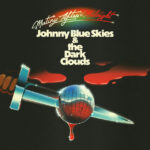
Does genre even matter in music anymore? Certainly not when something sounds as fresh as Johnny Blue Skies’ latest song, “Situation.” And just to be clear, when I mention Johnny Blue Skies it’s really a Sturgill Simpson alter ego. Literally. Simpson felt like his name carried too much outlaw country weight, so the new name is pretty much a reboot.
While sometimes it can feel like critical darlings and playlists have all gone soft and indie, this is super straight 4/4 swamp rock that couldn’t sound less formulaic despite its simplicity. Furthermore, you can honestly say this doesn’t feel like a Sturgill Simpson song that you’d find on Sirius Channel 62 (Outlaw Country). This is bolted-down mood groove rock like you’d hear from folks like Cowboy Mouth or Robert Randolph.
This song isn’t sung; it’s growled. And it’s a straight-ahead sweaty, let’s f*** song, with subtle and weird production as strange as any Dr. John stuff from the 1970s, which is saying something. Check out the simple sentiment:
Can’t control my breathing, can’t stay calm
Your body’s hotter than a brothel in Guam
Put that loving on me, it goes off like a bomb, it’s detonation
Ain’t no doubt about it girl, you’re a situation
Ever since the day that we met
Wanna get you wet, wanna make you sweat
Wanna make them walls in the room drip with precipitation
Girl, I’m trying to tell you now we got a situation
If you’re looking to get excited about a new song which makes you bounce your feet instead of knowingly nodding your head, try “Situation.” At least for me this month, it’s at the top of my playlist.
:: We Dream – Lakecia Benjamin ::
Josh Weiner, Washington DC

Lakecia Benjamin has helped spice up each of the last two summers for me with her dazzling skills on the saxophone – first, at the Montreal Jazz Festival in 2024, and then again, wearing the same flashy golden outfit, at the Newport Jazz Festival in 2025. I’m hoping to catch her for a third straight summer – it looks like the Greater Hartford Jazz Festival in July might be my best bet geographically – and with the fresh batch of 11 new tunes she has to perform, which come to us packaged together as the hot new album, We Dream, I’m sure her set will be as electrifying as ever before.
Lakecia Benjamin’s undeniable saxophone mastery shines throughout We Dream, starting off strong with We Dream and continuing on with such wondrous high points as “Flame Keeper,” “Dream Breaker,” and more. Her work is every bit as captivating here as it was on 2023’s Phoenix and other past records of hers, with some additional bonus features this time around. For one, she’s dialed up the hip-hop here, and the rapping gets so fiery and self-righteous on songs like “Right Now,” “Ascension” and “We Dream” (a sample: “I’m up from the bottom, had to hustle with pain. Lost are the lessons, now I’m running the game”) that when it culminates with a cry to us all to “put your fists up in the sky,” it’s pretty darn hard to resist. Furthermore, Benjamin has bulked up on the guest artists list this time, and her highly capable collaborators contribute in both the vocal and instrumental department (check out that crazy work on the keyboard by Hiromi on the aforementioned “Flame Keeper,” for instance). We also see her drawing upon Afro-Latin jazz influences more on tracks like “Mi Gente,” entirely fitting for a young lady who grew up in Washington Heights, New York, a barrio that got dubbed “Little Dominican Republic” in recent years.
All in all, We Dream certainly confirms Lakecia Benjamin’s status as one of the most talented and invigorating performers in the contemporary jazz scene, and I certainly hope to see her work her magic on the saxophone soon enough, in Hartford or elsewhere.
:: “Nothing Feels Amazing” – King Falcon ::
Mitch Mosk, Beacon, New York
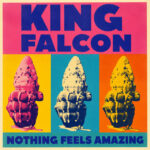
King Falcon make numbness sound exhilarating on “Nothing Feels Amazing,” an infectious alt-rock jam that barrels straight through despair with charging drums, churning guitars, and roaring, full-bodied vocals. The New York City trio’s third single of the year is dramatic, buoyant, propulsive, and hard-hitting – the kind of track that grabs the room by the shoulders and refuses to let its heaviness sit still. It’s fun because it moves; it hits because that movement comes from somewhere real.
Frontman and primary songwriter Michael Rubin shares, “It captures the emotional progression from the immediate reaction to a situation into the difficult acceptance that some things can’t be changed. There’s a numbness that comes with that acceptance and I thought the visual of the melted ice cream in the single artwork encapsulated that perfectly.”
That image – sweetness collapsing into a sticky, shapeless mess – is the perfect entry point for a song built around disorientation. “Nothing Feels Amazing” sinks into the anguish of feeling stuck, but King Falcon never let it become inert. Instead, they turn confusion into a hook-heavy surge, pushing forward even as Rubin admits, “I feel so numb / And nothing feels amazing / Nothing feels amazing / Anymore.” The chorus lands like a confession shouted from the middle of a crowd: vulnerable, frustrated, and wildly alive.
The song’s Dumbo-set video, filmed around Jane’s Carousel, sharpens that contrast even further, placing private heaviness against scenes of motion, color, and public joy. Ice cream melts, the carousel spins, the city keeps moving, and King Falcon keep playing through the ache. “Nothing Feels Amazing” may be about fighting not to sink, but its pulse is pure lift – an invigorating alt-rock release that finds catharsis not by escaping the numbness, but by turning it all the way up.
:: “Out the Door” – MojoPin ::
Mitch Mosk, Beacon, New York
The next generation of grunge is in good hands if MojoPin are any indication. “Out the Door,” released back in March and now standing as the title track to the San Diego band’s debut EP Out the Door, is heavy, dynamic, and achingly alive – a visceral alt-grunge anthem that carries the torch of ‘90s rock without sounding trapped inside someone else’s memory. Think Foo Fighters-sized catharsis filtered through a younger band’s raw urgency: massive guitars, hard-hitting drums, and a chorus built to be screamed from the other side of whatever almost broke you.
“‘Out The Door’ is an anthem for anyone who has chosen liberation over obligation,” MojoPin share. “It came from a deeply personal place and as a band we wrote it to feel universal. The big open chorus is something anthemic to grab on to. Bad relationships, broken systems or figures of authority; whatever has had a hold over you, this song lights the way out.”
That light comes with teeth. Dave Euell’s voice aches and roars in equal measure, dragging every line through grit, release, and hard-won clarity, while Gunnar Keeling’s drums drive the song forward with phenomenal force. Jack Harris’ guitar work is just as commanding, shifting between dreamy melodic haze and full-bodied distortion, giving “Out the Door” its emotional pressure and its sense of escape. The whole thing churns and surges like a breaking point in motion: Not collapse, but departure.
The lyrics frame escape as both refusal and reclamation. “You can’t tell me what to do, anymore,” Dave Euell sings, later pushing the thought further into outright defiance: “You can’t tell me where to go, anymore.” It’s not a clean, graceful exit; it’s messy, breathless, and necessary, with lines like “I can’t think straight, make your mistakes, walking out the door” capturing the disorientation that comes with finally choosing yourself. MojoPin aren’t romanticizing the leaving – they’re honoring the force it takes to move.
What makes “Out the Door” land is its refusal to confuse heaviness with despair. MojoPin take manipulation, control, and the long shadow of authority, and turn them into a way out – a door kicked open through sound. As the centerpiece of Out the Door, it’s a gripping introduction to a band already in command of their catharsis: Raw but melodic, bruised but blazing, and ready to make modern grunge feel urgent all over again.
:: Moments – Austyn Gillette ::
Danielle Holian, Galway, Ireland

Austyn Gillette’s Moments arrives as a thoughtful meditation on presence, purpose, and the quiet revelations that often emerge during periods of transition. Across five beautifully understated tracks, the Los Angeles-born singer-songwriter embraces vulnerability with a rare sense of ease, inviting listeners into a world shaped by travel, reflection, and emotional honesty. Inspired by a transformative year spent moving through Europe and grounded in the Swedish philosophy of lagom, the idea of finding balance in “just enough,” the EP explores life’s shifting landscapes with warmth and sincerity. Rather than searching for grand answers, Gillette finds meaning in the spaces between certainty and change.
The 19-minute, 20-second runtime feels purposeful as it thrives in its subtlety. Gillette’s signature blend of indie rock, alternative pop, and dreamlike textures creates an atmosphere that feels intimate without becoming insular. His songwriting remains conversational yet deeply evocative, pairing memorable melodies with reflections on fulfillment, love, friendship, and self-discovery. Tracks like “Is It Enough” and “Moments Last” examine universal experiences through a deeply personal lens, while the encouraging tenderness of “In Due Time” showcases his gift for transforming private emotions into shared understanding. Throughout the EP, shimmering synths, understated guitar work, and expressive vocals serve the songs rather than overshadow them, allowing each narrative to unfold naturally.
What makes Moments particularly compelling is its quiet confidence. In a cultural moment often defined by urgency and excess, Gillette offers something gentler: an invitation to slow down and pay attention. These songs don’t seek to overwhelm; they resonate through their authenticity, revealing new layers with each listen. By the time closing track “Imminent” embraces change as an unavoidable, and ultimately necessary, part of life, Moments feels less like a collection of songs and more like a companion for anyone navigating their own season of growth. It is a beautifully crafted record that reminds us that some of life’s most meaningful transformations happen not all at once, but moment by moment.
:: After Only – Brian Elodi ::
Danielle Holian, Galway, Ireland
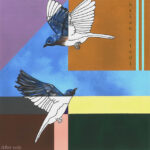
Brian Elodi’s debut album, After Only, arrives with the quiet assurance of a record that has been lived with long before it was ever released. Spanning 13 tracks and just under 50 minutes, it unfolds like a carefully preserved archive of songwriting years in the making, now reimagined through collaboration with Washington, D.C. producer Ben. What could have remained a private collection instead blossoms into a cohesive, thoughtfully arranged body of work; one that draws from the emotional clarity of Bon Iver, the intimacy of Iron & Wine, and the narrative warmth of The Lumineers, while still retaining a distinctly personal voice.
Across songs like “Apologize,” “Hurricane I Bring,” and “Far from My Mind,” Elodi demonstrates a refined instinct for emotional storytelling, favouring character-driven lyricism and understated confession over overt dramatics. The writing often feels cinematic in its framing, “Words with Teeth” and “Wax Wings” in particular stand out for their ability to balance metaphor with grounded human detail. Even the more reflective passages, such as “Spare Me” and “More Than I,” carry a sense of narrative momentum, as though each song is a chapter in a larger, interconnected memoir of memory and imagination.
What ultimately elevates the record is its restraint and cohesion. Songs like “Lay Down Your Arms,” “That’s Fair Sometimes,” and “Half Your Mother’s Eyes” close the album with a quiet emotional resonance that lingers rather than resolves, reinforcing the project’s central ethos: preservation over perfection. Elodi’s conversational vocal delivery, paired with Ben’s subtly expansive production, allows the album to breathe naturally, never overreaching yet consistently compelling. It is a debut that feels both deeply personal and generously offered, an unpretentious, beautifully realised statement of intent from an artist stepping into the light with something worth hearing.
:: “Tennessee On My Mind” – Maren Davidsen ::
Joe Beer, Surrey, UK

“Tennessee On My Mind” is a reflective slice of Nordic Americana from Norwegian singer-songwriter Maren Davidsen. Taken from her forthcoming debut album This Is Where I Leave You, the track is shaped by personal upheaval and the search for a fresh start. Written during a solo trip to Nashville, the song captures a moment of transition, balancing the excitement of new surroundings with the emotional baggage of a chapter that was beginning to unravel. Davidsen’s gift for storytelling shines through as she traces the complicated feelings that surface when distance finally allows old wounds to be seen more clearly.
Built around warm acoustic guitar, “Tennessee On My Mind” gradually expands into a rich arrangement filled with harmonies, strings, and subtle country influences. The production mirrors the song’s emotional arc, starting with intimacy before opening into something larger and more expansive.
The track offers an early glimpse into an album that explores love, loss, and self-discovery through an unflinchingly honest lens. Drawing inspiration from artists such as First Aid Kit and Kacey Musgraves, Davidsen delivers a song that feels both deeply personal and widely relatable.
:: “Wouldn’t Be Me” – Brontës ::
Mitch Mosk, Beacon, New York

Bad boyfriends don’t deserve beautiful songs, but Brontës are generous enough to turn romantic disappointment into a glittering indie pop fever dream. “Wouldn’t Be Me” arrived earlier this year as the Glasgow band’s anti-Valentine’s anthem – a bright, buoyant, delightfully theatrical kiss-off that arrives all smiles, hooks, and raised eyebrows. Taken from their self-titled debut album, Brontës (released April 21), the song is playful on the surface and ruthless underneath: A sugar-rush intervention for anyone watching a friend settle for “just fine.”
She’s dressed to the nines
he couldn’t even make it on time
And I’m wondering how this came to be
Said he’d be here at eight
didn’t tell her he’d be late
I’ll tell you now that wouldn’t be me
Got her makeup done whilst he rolls another one
It’s right in front of you why can’t you see
Has he even brushed his hair
you act like you don’t care
I’ll tell you now that wouldn’t be me
“[It’s] a punchy take on disliking someone’s boyfriend,” Brontës tell Atwood Magazine. “Everyday you see couples consisting of girls who have made an effort, and want to be present in the relationship. In contrast to the guy who has rolled out of bed and looks as if he wants to be at home playing games. This song is a request to dump your boyfriend and find something better. The perfect Valentine’s Day song for single people.”
That spirit comes alive in the song’s spring-loaded guitars, gleaming vocals, and fizzy pop momentum, all of which make “Wouldn’t Be Me” feel less like a warning and more like a party thrown in the aftermath of a bad decision. Brontës’ charm is in the contrast: They sing with the sweetness of classic girl-group pop and the bite of a band who know exactly what they’re saying. “Time after time you know he’s going to cross the line / Why would you settle for just fine / Move on babe,” they urge, turning concern into a chorus built for windows-down shouting.
I see this every day
don’t know why they stay
She could come my way
who cares what he’s got to say
Time after time you know
he’s going to cross the line
Why would you settle for just fine
Move on babe
To tell you the truth
you should cut the guy loose
If you know what’s good
Move on babe
It’s that balance of sass and sincerity that makes “Wouldn’t Be Me” such a rush. Brontës aren’t just making fun of a useless boyfriend; they’re making a case for wanting more, choosing better, and refusing to shrink your standards for someone who can’t be bothered to show up. Fun, dramatic, and fiercely alive, “Wouldn’t Be Me” is the sound of a band transforming romantic exasperation into pop catharsis – and making the dump-him anthem feel irresistible.
:: “Flying Into Darkness” – Laura Veirs ::
Jack Batt, Washington, D.C.

“Flying Into Darkness” is the lead single from Laura Veirs’ forthcoming LP Temple Songs. Based in Portland, Oregon, the singer and songwriter is known for her tender folk records as well as her collaborations with Neko Case and k.d. lang on case/lang/veirs. (The band released their first single in ten years on Wednesday to celebrate the album’s 10th anniversary.)
Temple Songs is the first album that 52-year-old Veirs has written, performed, produced, and recorded entirely on her own. She says it was recorded from her backyard studio, live without headphones or editing, simply “looking at the bamboo waving outside the window.”
On “Flying Into Darkness,” Veirs stays remarkably down-to-earth on a midnight journey into outer space. Created after her divorce and a four-year break from writing, the song finds her learning to meet existential questions with curiosity. “When will I be grounded? When I’m dead? / What are we doing? When can we rest?” she wonders, approaching life’s biggest mysteries with acceptance and a lightness in her voice.
:: “The House I Live In” – Judy Whitmore ::
Chloe Robinson, California

America turns 250, and everyone is joining the party, even Baskin-Robbins, which celebrates with its new America’s Birthday Cake flavor. Accomplished vocalist, trained jet pilot, bestselling writer, licensed therapist, and theater producer Judy Whitmore also displays her patriotic side with her latest single “The House I Live In.” Her warm, tender vocals shine throughout the poignant piece, beautifully complemented by a lush classical arrangement. Some lyrics include, “The house I live in, a plot of earth, a street, the grocer, the butcher and the people that I meet. The children in the playground, the faces that I see, all races and religions, that’s America to me.” These powerful lines represent America as a beautiful melting pot, celebrating the diversity, unity, and shared humanity that defines the nation at its best.
Born in New York City and raised in Studio City, California, Judy Whitmore has built an extraordinary career spanning music, aviation, literature, and the arts. Her journey as a performer began during her college years when she landed work as a background vocalist for Capitol Records in Hollywood. Later relocating to Aspen, Colorado, she became a prominent figure in the region’s arts community, serving as President of the American Theater Company and the Aspen Playwrights Conference, while also holding a position on the Board of Directors for Ballet West Aspen. Beyond the stage, Whitmore pursued a passion for aviation, volunteering on search-and-rescue operations with Aspen Air Rescue after earning her pilot’s license. Her dedication to flying eventually led her to become a Learjet captain, adding seaplanes and hot-air balloons to her impressive list of aviation achievements. Today, she is also recognized as an admired vocalist and award-winning bestselling author. Much like her song reflects a melting pot that is this country, she herself spans multiple creative endeavors, actively engaging in a range of artistic and professional pursuits.
:: “Here to Stay” – Edwina Van Kuyk ::
Mitch Mosk, Beacon, New York

Edwina Van Kuyk turns impermanence into a full-bodied soul-pop rush on “Here to Stay,” a dreamy, sweat-slicked reverie that moves with swagger, pulse, and wide-open feeling. The Limerick artist’s latest single is big in every direction: Bold melodies, cinematic hits, gospel-touched lift, and a children’s choir from St. Kevin’s Community College in Clondalkin that pushes the song toward anthemic release. It’s invigorating and larger than life, but beneath all that shine is a fear most of us know too well – the fear that everything we love is already on its way out the door.
Same old same again
Laughing at things that cause me pain
Well It’s easier to cope that way
And I can tell myself it keeps me safe
“I’ve experienced a lot of loss in recent years, and ‘Here to Stay’ was born out of that,” Van Kuyk shares. “Part of me became really aware, and anxious about how transient everything is. Although nobody gets out of life unscathed, the song is a daydream of what it might look like if you could evade heartbreak before it happens. It’s scary to know there’s no roadmap for how your life plays out, who you lose, and what you go through so there’s a little bit of fear underlying the song, but it’s definitely not meant to be pessimistic. I can also see the beautiful side of how everything is impermanent. To me, it’s just a fact of life – nothing is here to stay – but that’s what makes it all the more magic.”
I learned the hard way that hardly anyone stays
Come to realise that leaving is on its way
I thought that I could make a run
Get out of dodge before the harm is done
Now I’m picking at the perfect pieces
Afraid that nothing’s here to stay
That tension gives “Here to Stay” its emotional charge. Van Kuyk sings like someone trying to outrun hurt and surrender to it at the same time, her voice carrying both the ache of self-protection and the thrill of letting the song take flight. “I learned the hard way that hardly anyone stays,” she admits, before the chorus opens into a desperate, dazzling fantasy of escape: “I thought that I could make a run / Get out of dodge before the harm is done.” The lyrics are anxious, but the music refuses to stay small; every drum hit, choir swell, and soaring melody turns fear into motion.
By the time Van Kuyk reaches “Maybe you’ll be the one who stays,” “Here to Stay” has become less a denial of loss than a celebration of what makes love worth the risk. The song knows nothing is guaranteed, and it still chooses grandeur. That’s its magic: not pretending life won’t break our hearts, but meeting that truth with passion, heat, and a chorus big enough to carry the whole ache skyward.
:: “Leave You Behind” – Theo Day ::
Mitch Mosk, Beacon, New York

Theo Day’s “Leave You Behind” lifts grief into the open air, channeling loss, memory, and longing into a dreamy folk-pop rush full of churn, charm, and light. The Canadian singer/songwriter’s latest single sits comfortably among the recent wave of “stomp-and-holler” newcomers (think Brenn!, Michael Marcagi) bringing big feeling back to acoustic-forward songwriting, but Day’s voice gives the song its own wild weather: A roaring, dramatic, ferocious force that seems to carry whole worlds of pain, devotion, and raw vulnerability inside every note.
“I wrote this song to purposefully have a double-meaning,” Day tells Atwood Magazine. “I wanted people to have their own interpretation of it. One side could be that you think ‘I can’t leave you behind’ when you’re talking or thinking about someone you really care about, someone you can’t separate yourself from, or someone you’re feeling dependent on. There’s also the idea of ‘I can’t leave you behind,’ as in I’m leaving the person that I was. So it can be introspective or outrospective, and that’s what my favourite part of the song is.”
That double meaning lends “Leave You Behind” its ache and its lift. On one level, it’s a song about being haunted by someone who changed you forever – “She’s always in my head, so I see her in my dreams,” Day sings, later admitting, “All my life / I’ll be searching for your signs.” On another, it’s a song about carrying the past without letting it become a prison. The chorus turns that tension into a full-bodied release, with Day howling, “I found you in darkness / The darkest of times / Everything has a purpose I still don’t know why,” as if faith, grief, and confusion have all been thrown into the same flame.
Musically, “Leave You Behind” is utterly invigorating, driven by a strong beat, dramatic acoustic fingerpicking, and glistening electric work that flashes through the arrangement like sunlight over moving water. The song has cheer and ache in equal measure; it stomps forward even when its heart is looking back. That push-pull is where Day thrives, letting the arrangement grow bigger and brighter while the lyrics keep reaching toward absence.
By the time he repeats “God only knows I can’t leave you behind,” the line feels less like surrender than a vow: to remember, to change, to keep walking with the people and former selves that made us. “Leave You Behind” is big-hearted, bruised, and beautifully alive – a folk-pop anthem that finds its power not in moving on cleanly, but in moving forward with the past still singing in your chest.
:: “Marina” – Dea Doyle ::
Joe Beer, Surrey, UK

With “Marina,” West London singer/songwriter Dea Doyle returns with her most personal release to date. The indie-pop ballad was written in memory of her aunt, a figure whose influence continues to shape both her life and music, and explores the complicated reality of carrying grief alongside gratitude. Rather than dwelling on loss, Doyle reflects on the milestones, conversations, and everyday moments that someone loved no longer gets to witness, creating a song that feels deeply intimate.
Musically, “Marina” pairs warm acoustic textures with subtle folk, soul, and country influences, drawing inspiration from classic singer-songwriter traditions while maintaining a contemporary edge. A luminous guitar performance adds brightness to the arrangement, allowing the track to balance its emotional weight with a sense of warmth and celebration.
The single also signals a new creative chapter for Doyle, one shaped by a willingness to dig deeper and write from lived experience. Where her earlier material often focused on relationships, “Marina” finds strength in vulnerability, offering a moving tribute that honours family, memory, and the lasting impact of those we carry with us long after they’re gone.
:: See Through Now – Sam Gelston ::
Danielle Holian, Galway, Ireland
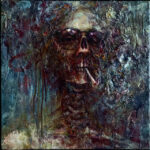
On See Through Now, Boston singer/songwriter Sam Gelston delivers a record that feels less like a carefully curated statement than a living document of emotional survival. Written, performed, and recorded entirely in his bedroom, the album embraces the aesthetic of imperfection not as a stylistic affectation but as a philosophical commitment. Across nine songs, Gelston channels the intimate fragility of Elliott Smith, the melodic instincts of Big Star, and the emotional volatility of Jeff Buckley, yet the resulting work remains distinctly his own. The production is intentionally unvarnished, preserving vocal cracks, missed notes, and spontaneous performances that lend the record a rare sense of immediacy. In an era increasingly dominated by digital polish and algorithmic precision, See Through Now finds its power in sounding unapologetically human.
What makes the album particularly compelling is Gelston’s ability to balance absurdity and sincerity without diminishing either. The darkly comic opener, “I’m Coming to LA to Kill You,” establishes this tension immediately, transforming what could be a throwaway joke into a surprisingly poignant meditation on distance and friendship. Throughout the record, Gelston navigates fractured relationships, depression, alienation, and self-interrogation with a lyricism that often favors unsettling imagery over easy catharsis. Songs such as “Who You Are,” “IDKY,” and “Lazy Too” explore emotional uncertainty with remarkable candor, while “Somethings Last a While” demonstrates his gift for finding beauty in discomfort and contradiction. Even at its most introspective, the album resists self-pity, maintaining a restless curiosity about the messy realities of being alive.
The emotional center of See Through Now arrives with “Make It Make Sense,” a devastating reflection on mortality written following Gelston’s diagnosis of kidney failure. Preserved from an iPhone demo because the original performance could never be replicated, the song encapsulates the album’s guiding ethos: truth matters more than perfection. It is a fitting conclusion to a record that consistently chooses vulnerability over refinement and emotional honesty over convention. While See Through Now may not satisfy listeners seeking pristine production or straightforward resolutions, those willing to engage with its rough edges will discover a deeply affecting work of art. Gelston has created an album that understands uncertainty not as a problem to solve but as a condition to inhabit, and in doing so, has produced his most accomplished and resonant statement to date.
:: Sucito: A Home – Joshua Milú ::
Danielle Holian, Galway, Ireland

On Sucito: A Home, London-based producer, vocalist, and multidisciplinary artist Joshua Milú condenses an expansive personal narrative into a remarkably focused 10-minute statement. Drawing from house, alternative house, and contemporary electronic music, the EP functions as both memoir and manifesto, tracing the intersections of queer self-discovery, working-class resilience, and urban belonging. Across its three tracks, Milú demonstrates a keen understanding of dance music’s dual purpose: as a vehicle for physical release and a medium for emotional truth. The production is lean yet immersive, favouring percussive momentum and textured grooves over excess, while his songwriting remains grounded in lived experience. Rather than romanticising struggle, Sucito: A Home presents the realities of financial precarity, identity formation, and social isolation with striking clarity, transforming them into moments of communal catharsis. In doing so, Milú joins a lineage of artists who understand that the dancefloor can be both sanctuary and site of self-reclamation.
What makes the EP particularly compelling is its ability to balance intimacy with movement. “Mayhem” opens with restless energy, its propulsive rhythms mirroring the uncertainty and instability that underpin the record’s themes, while “Oatmeal” introduces a more reflective sensibility without sacrificing the project’s club-focused pulse. The title track, co-written with Roselyn Mugabe, serves as the emotional centrepiece, weaving together ideas of home, acceptance, and chosen community into the EP’s most affecting moment. Throughout, echoes of Kaytranada, Channel Tres, and The Blaze are detectable, yet Milú avoids imitation by grounding his sound in distinctly personal storytelling and a specifically London perspective. Engineering from bgtheengineer gives the record a polished but tactile finish, allowing every kick, vocal layer, and rhythmic detail to breathe. As the opening chapter of an ongoing series, Sucito: A Home succeeds not only as a collection of songs but as the foundation of a larger artistic vision, one that reasserts working-class and queer narratives within electronic music while celebrating the transformative power of club culture.
:: “Rock My Love” – Keyside ::
Mitch Mosk, Beacon, New York

Keyside turn survival into a jangle-rock lifeline on “Rock My Love,” a heart-on-sleeve anthem released back in November and now set to appear on the Liverpool band’s self-titled debut album, Keyside, out August 7 via Modern Sky UK. The song has shades of Sam Fender’s bruised, open-hearted urgency, plus a healthy glow of Britpop melody and Johnny Marr-esque guitar shimmer, but its power comes from the contradiction at its core: Realist lyrics about addiction, grief, unemployment, and left-behind communities, carried by music that refuses to surrender its hope.
Ms. Rudy when you gonna tell me
that life on pip is harder then they say
A year and 3 months to the date
that your father passed away
And it still don’t feel miles astray
I cried on the 4th of November
Tried to shout out my issues with the day,
Under the pressure of the spotlight
You still don’t cave in
Is it God under your skin?
“The character in the song has hit rock bottom, struggling with addiction and unemployed, but she finds a way to live again through a love of photography,” singer and songwriter Dani-Lee Parker says. “It’s autobiographical in some ways as music has been a path to lead me away from being lost on dark roads. I journal a lot, which I started after reading Meditations by Marcus Aurelius. By reading I found that I wanted to write. It’s a necessity for me and out of that habit that the lyrics for songs like this can turn into songs.”
Ooooh oh oh lost your love
You try to find it
but it’s hard to find it true
You rock my love
My love, my love
That need to write – to document, to remember, to make art out of the wreckage – runs through every line of “Rock My Love.” Parker sings with plainspoken empathy, sketching a life under pressure through images that feel lived rather than invented: “A year and 3 months to the date that your father passed away,” “I cried on the 4th of November,” and later, “When all your dreams feel like they’re breaking / They say they love you but the words don’t stick.” The song doesn’t look away from despair, but it also doesn’t let despair have the final word.
Instead, “Rock My Love” keeps chiming forward, all bright guitars, heart-swelling hooks, and raw, melodic lift. The chorus – “You rock my love / My love / My love” – turns into a kind of communal refrain, less a romantic gesture than a hand reached toward someone trying to find their way back to themselves. Keyside’s gift is making that hope feel earned: not polished into fantasy, but pulled from the places where people actually live, hurt, recover, and begin again.
As the band move toward Keyside, “Rock My Love” feels like a clear statement of purpose. Comprised of Parker, lead guitarist Ben Cassidy, bassist and backing vocalist Max Gibson, and drummer Oisin McAvoy, Keyside aren’t shouting over the pain; they’re singing through it, finding beauty in lives too often flattened into statistics or slogans. The result is raw, ringing, and deeply human – a song about desolation and redemption that understands escape doesn’t always mean leaving where you came from. Sometimes it means finding enough light there to keep going.
Fresh-faced and fearless, Keyside are an Atwood Magazine artist to watch, and “Rock My Love” makes the case with undeniable conviction. They’re the rare young band able to write about hardship without flattening it, to chase escapism without abandoning reality, and to make social realism feel not only urgent, but alive with melody, motion, and heart. With their debut LP on the horizon, the Liverpool four-piece sound poised and ready to fill big spaces – and “Rock My Love” is the kind of song that makes you want to meet them there.
:: “Good Lover” – ZK Jade ::
Danielle Holian, Galway, Ireland

ZK Jade’s “Good Lover” arrives like a midnight confession wrapped in neon light, balancing vulnerability and restraint with remarkable grace. Across its concise two minutes and twenty-one seconds, the Los Angeles-based singer-songwriter crafts a cinematic world where desire lingers in the air and emotions remain frustratingly just out of reach. Blending dark pop atmospherics with sleek pop-R&B textures, the track feels both intimate and expansive, inviting listeners into the emotional push-and-pull of a connection that feels real even as it remains elusive. Echoes of artists like Billie Eilish, Dua Lipa, and Tate McRae can be heard throughout, yet Jade’s voice and perspective remain distinctly her own.
Written and co-produced with longtime collaborator HILLOC, “Good Lover” shines through its emotional honesty and poetic self-awareness. Rather than offering easy resolutions, the song embraces the beautiful uncertainty of modern relationships, capturing the ache of wanting more from someone who keeps part of themselves hidden. Jade’s storytelling transforms a deeply personal observation into something universally resonant, while the polished production glides effortlessly beneath her expressive vocals. The result is a captivating release that proves ZK Jade’s growing talent for turning life’s emotional complexities into compelling, memorable pop music.
:: “Fold” – UNTER STRØM ::
Chloe Robinson, California
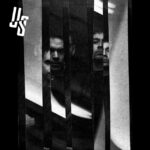
UNTER STRØM is a forward-thinking duo blending techno, melodic house, and industrial textures into raw experimental soundscapes. Their current piece “Fold” comes at the heels of their explosive release “Orynth” and exhibits a hypnotic, brooding quality. The song leans into minimalism and control, defined by its sense of restraint. Hearing “Fold” feels like stepping into an underground nightclub and the listener is immediately intrigued. The single slowly builds tension through subtle shifts in rhythm and ambiance, pulling us deeper into its immersive, shadowy pulse.
UNTER STRØM is a new collaborative project between Alex Gonzales (Matte Blvck) and John Kunkel (The New Division, John Grand). What started as a project built on mutual respect soon grew into a creative partnership driven by curiosity and trust. Their contrasting production styles allow each idea to evolve as it moves between them, giving the music a fluid, ever-changing air. This interplay has become a core part of UNTER STRØM’s identity, lifting the project beyond typical club structures into something more atmospheric and emotionally rich. “Fold” possesses those same characteristics advancing with precision and letting tone and feel carry the weight of the track.
— — — —

Connect to us on
Facebook, 𝕏, Instagram
Discover new music on Atwood Magazine
:: Weekly Roundup ::
follow WEEKLY ROUNDUP on Spotify
:: This Week’s Features ::