Every Friday, Atwood Magazine’s staff share what they’ve been listening to that week – a song, an album, an artist – whatever’s been having an impact on them, in the moment.
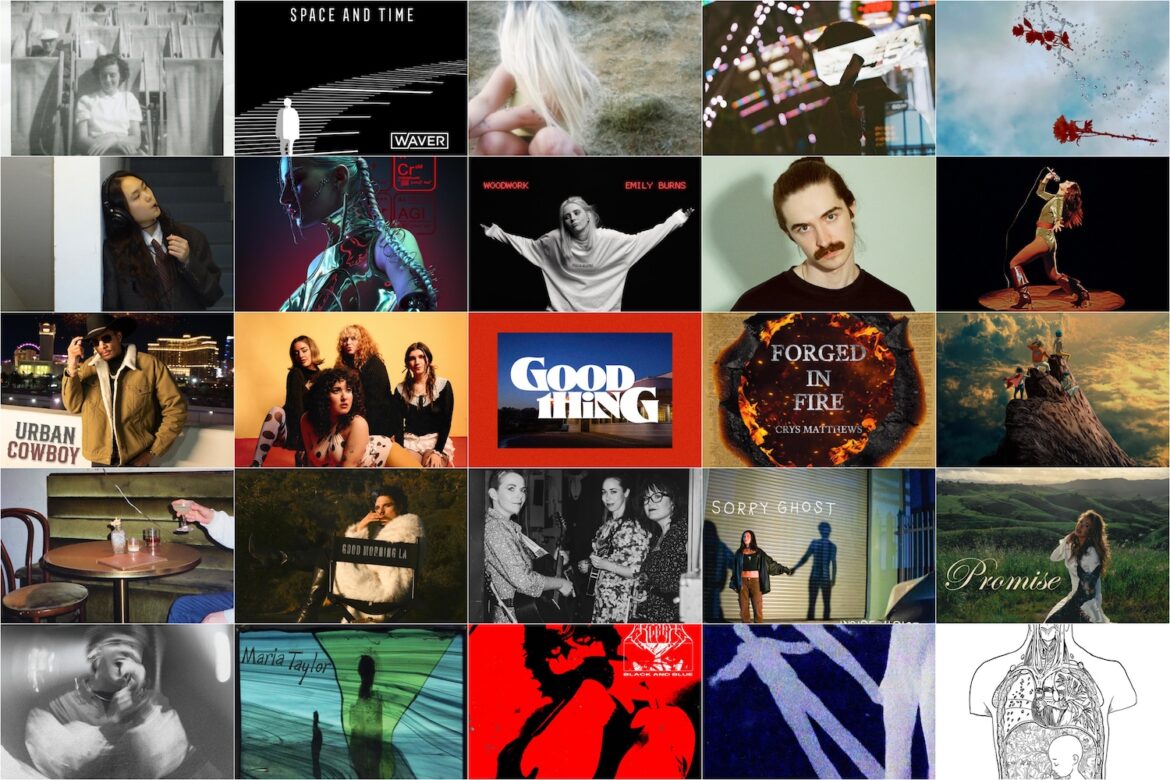
This week’s weekly roundup features music by Crys Matthews, I’m With Her, dum blond, Haley Reinhart, Wolf Alice, Eugene McGuinness, Band Of Revelations, Yan Qing, Maria Taylor, Corban Chapple, Emily Burns, Wishlist, GoodThing, Ryan Nico, Waver, ROREY, Vansire, Julez and the Rollerz, William Bleak, Gorillaz, 4ra 4ra, Ciaran Quigley, Walter Miller, Alexander Carson, Jordan Anthony, and Sorry Ghost!
•• •• •• ••
 follow WEEKLY ROUNDUP on Spotify


•• ••
:: “Forged in Fire” – Crys Matthews ::
Chloe Robinson, California
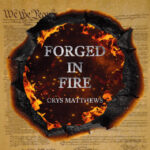
Over the past year, the current U.S. administration’s contempt for democracy has fueled widespread chaos and instability. When Crys Matthews wrote “Forged In Fire” a whirlwind of headlines were spinning through her mind. A few of those being… Withdraws Head Start Services for Undocumented Children; CUNY Targets Pro-Palestinian Students and Staff in Latest Crackdown; and everything from tariffs to deadly floods in Texas. The Americana/folk single is a powerful battle cry calling us to action, urging you to keep moving forward and press on, even when hope feels lost. Lyrics include “If we stand and fight, we gonna be alright. Instead of fire in your heart, you can do your part.” Haunting and insistent, the track pairs gospel-style vocals with a driving, stomping soundscape. It’s a song that transforms frustration and fear into determination, reminding listeners that resilience can rise even from the most turbulent times.
Matthews is a fearless social warrior that doesn’t back down. An accomplished, award-winning songwriter and composer, she fuses Country, Americana, Folk, Blues, and Bluegrass into performances that are both rooted in tradition and vividly original. The powerhouse singer shares, “my mission is to amplify the voices of the unheard, shed light on the unseen, and remain a steadfast reminder that hope and love are the truest pathways to justice.” “Forged In Fire” embodies that sentiment to the fullest.
:: “The Obvious Child (Nashville)” – I’m With Her ::
Emily Weatherhead, Toronto, Canada

I love a good live album, and I’m With Her’s Sing Me Alive has already produced some noteworthy singles. Their Paul Simon cover, “The Obvious Child (Nashville),” is a stand-out. While the original song is very percussion driven, I’m With Her open their version with a dual guitar line that mimics the same beat. This sets the precedent for the cover, which stays true to the spirit of the original song while the band still make it their own.
Strings set the structure for the song, which showcases their triadic vocal lines and invokes an upbeat, optimistic feeling through the opening verses. Then, right around the two-minute mark, the momentum stalls. A gentle violin line supports an otherwise acapella moment that dives into the most introspective lyrics of the song. The longing harmonies invoke the same gut-punch feeling of nostalgia as a boygenius song, creating a space to hold listeners’ emotions. Just like in life, though, this time to pause doesn’t last forever.
The guitars return and the violin chirps up into a driving melody as I’m With Her bring us back into the chorus. Their instrumental structure supports Simon’s original lyrics, capturing the contradictory experience of longing for the past while being forced to move forward. Ultimately, you have to accept where you are now, and that’s exactly the sentiment their final chorus drives home. The percussive-guitar breakdown and joyful trio of calling voices capture a feeling of hope as the song ends. With complementary vocals that soar over intricate instrumentals, I’m eager to hear what the rest of I’m With Her’s album brings.
:: “american man” – dum blonde ::
Mitch Mosk, Beacon, New York

Wanting someone so badly you start to lose the edges of yourself – that’s the dangerous, dizzying space “american man” lives in. Dum Blond don’t just touch that feeling; they dive headfirst into it, turning longing into something volatile, all-consuming, and impossible to ignore. The Los Angeles indie band’s fifth single simmers before it snaps, a dramatic alt-rock eruption that aches from the inside out, driven by a cool churn and a slow-building sense of unraveling that feels as intoxicating as it is unsettling.
The tension is baked into the song’s structure: soft, intimate beginnings give way to blown-out guitars and heavy, crashing drums, the whole thing swelling until it can’t hold itself together anymore. Chase Weaver’s voice leads that descent, pouring heart, body, and soul into every line – unfiltered, feverish, and fully committed to the chaos. When the chorus hits, it doesn’t just land, it detonates, guitars roaring as she confesses, “And I’ll change if you want me to, ’cause I’m wine drunk and crossed drowning in your blue” – a line that stings with clarity, capturing the moment where desire tips into self-erasure.
That emotional spiral comes straight from lived experience. “When I was writing ‘American Man,’ I was alone in my bedroom during a sad time when I was desperate to be loved,” Weaver tells Atwood Magazine. “The song’s about wanting someone so much you start changing yourself for them – like you’ll do anything just to keep them. It feels like love when you’re in it, but it’s really more about needing them to want you back. I was in such a dark, lonely place when writing this. I was just craving control and validation, and somehow, this song gave that to me. The song builds, taking you on a journey, starting really soft and intimate and then getting louder as it unravels. By the end, the belting almost feels like you’re not yourself anymore. Someone you can’t recognize. Like you’ve completely lost where you end, and they begin.” That loss of self pulses through every second of the track, turning its sonic rise into something deeply personal and painfully real.
Formed in 2023 and already making noise across the LA circuit, Dum Blond have built their identity on that push and pull – soft honesty colliding with loud, messy release. They call it “female manipulator music,” a tongue-in-cheek label that masks something sharper underneath: Songs that sit in contradiction, where control and chaos blur, and vulnerability becomes its own kind of power. “american man” feels like a defining statement of that ethos, capturing the band at their most unhinged and self-aware.
By the time the song reaches its breaking point, there’s no clean resolution – just the echo of everything that’s been given up in the name of being wanted. And that’s what makes “american man” hit so hard: It doesn’t pretend that kind of love is healthy or sustainable. It just tells the truth about how it feels in the moment – messy, magnetic, and a little bit destructive – and lets you sit in it, no filter, no apology.
:: “Promise” – Haley Reinhart ::
Josh Weiner, Washington DC

My total number of minutes spent watching American Idol after about 2007 has been pretty limited, but I do remember that the show attracted a good number of wannabes who couldn’t sing at all and who only came to audition so that they could be on TV, much to the chagrin of Simon Cowell and crew. Thankfully, I’ve discovered that there certainly are some who defy that common perception of Idol participants and can stand on their own as genuine vocal talents.
Haley Reinhart is one individual who fits that description: she finished a respectable third place on Idol in 2011 and has since achieved a successful 15-year career as a professional singer on the strength of her gorgeous vocal capabilities. Embodying that much is her latest single, “Promise.” Reinhart describes the song’s title as “a heavy, loaded word,” one that she has avoided using too liberally in her past lyricism. But now, she feels the time is right, given that she is indeed about to make her lifetime vows to her partner, Drew Dolan, as their wedding day draws closer.
And thus comes the big word: “I promise, I vow to keep you safe and sound,” she sings. “Our forever starts today, our forever starts right now.” It’s a touching expression, made more so by Dolan’s featured presence on the piano. But Reinhart hopes that the song won’t exclusively be seen as a wedding song and instead will be thought of as a universal sentiment, one you could even express to your dog if you’d like. In the end, Reinhart may be the rare Idol contestant that Simon Cowell would be willing to give a thumbs-up to; she’s got an enthusiastic one from me, at any rate!
:: “The Sofa” – Wolf Alice ::
Heleen Weber, Cologne, Germany
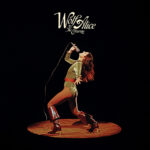
Sometimes all you need to do is lie on the sofa and think about life – and I’ve found that “The Sofa” is easily the perfect soundtrack for that. Full of emotional depth, this playful track by London band Wolf Alice is radically honest and direct. Singer Ellie Rowsell delivers some of her best writing yet, as she explores the often contradictory emotions that make up life.
She moves between feeling both lucky and angry, stuck and content, at one point exclaiming “I love my life” while still second-guessing herself. It’s this constant back and forth that gives the song its emotional weight, eventually leading to the quiet but powerful realization that “Sometimes I just want to be no one thing.”
Rowsell’s vocal performance is striking, as her range of vocals leans into an almost theatrical sound. The bridge then introduces sweeping strings alongside the otherwise 70s-inspired rock sound, giving the track a real sense of release.
The music video is a charming visual counterpart. Built around the titular sofa, which glides through the streets of London, it carries Rowsell through a series of everyday scenes – different people, different emotional states, all just passing by in slow motion. What remains is an observant and – quite literally – laid-back perspective on life.
That same sense of surrender sits at the heart of the song. “The Sofa” isn’t trying to neatly resolve anything; instead it’s about letting go of the need to fully understand every feeling and situation. Rowsell allows herself to embrace the messiness and remain as she is: “Hope I can accept the wild thing in me / Hope nobody comes to tame her / And she can be free.”
And in a landscape so often shaped by careful curation and self-presentation, that kind of honesty feels genuinely refreshing. Lines like “I can be happy, I can be sad, I can be a b**** when I get mad” land precisely because of how simple – and real – they are.
And so what ultimately lingers is a thrilling sense of hope. Not the kind that resolves everything, but one that allows space for uncertainty. And it’s in that space that “The Sofa” really finds its footing.
:: “Icarus” – Eugene McGuinness ::
Mitch Mosk, Beacon, New York

Eugene McGuinness writes like someone who’s seen the edge and decided to step back – not out of fear, but because he’s learned what’s actually worth holding onto. His song “Icarus” drifts in with a cosmic ease, all hazy guitars and soft strings, a song that feels suspended between dream and memory. It’s colorful and woozy in that early Bowie sense, but grounded in something far more lived-in – the push and pull of desire, regret, and the strange gravity of a city that keeps pulling you back.
Released ahead of his upcoming album Eugene McGuinness Verses the Universe, out April 24, the track marks a return that feels both expansive and deeply personal. A decade removed from the industry machine, McGuinness leans into instinct and atmosphere here, letting the song unfold like a late-night spiral through London’s underbelly – “the gamblers of this circus city climb up the walls” – where myth and reality blur into one continuous scene. The Icarus parallel isn’t just clever framing; it’s a self-aware reckoning with ambition, excess, and the cost of getting too close to the flame.
There’s a wryness to it all that keeps the song from collapsing under its own weight. “You say I’m all chorus / Well here is the verse” lands like both a joke and a quiet challenge, a songwriter poking at his own tendencies while still chasing something bigger. That tension carries through every line, from the fractured nightlife imagery to the aching admission, “I was less than efficient / practicing what I preach” – moments that feel tossed off at first, but linger long after. Even the refrain – “Oh look what you do to me” – plays less like accusation and more like surrender.
McGuinness candidly describes his album’s inspiration as coming from “the joy, toil and demons of my everyday existence,” but also from a vast constellation of records, books, films, games, and paintings – from D’Angelo’s Black Messiah and Nick Cave’s Ghosteen to Brian Eno’s Another Green World, McCarthy’s Suttree, Nishijima’s Drive My Car, The Red Turtle, and even Red Dead Redemption 2.
What makes “Icarus” stick isn’t just its atmosphere, but the way it captures that fragile space between performance and truth – the version of yourself you present, and the one staring back when the night finally winds down. McGuinness isn’t chasing the sun anymore; he’s circling it, studying the light, letting it illuminate the parts of himself he used to outrun. And in doing so, he’s made a song that feels less like a comeback and more like a reintroduction – one that lingers, flickers, and slowly reveals itself with each return.
:: “All the Way Home” – Band of Revelations ::
Mitch Mosk, Beacon, New York

Sunlight spills through the speakers on “All the Way Home” – warm, worn-in, and alive with feeling, like a song that’s been waiting for the right moment to find you. Johnny Lloyd’s debut as Band of Revelations doesn’t just introduce a new project; it opens a door, inviting listeners into a deeply human and wholly unguarded moment of truth, where heartbreak and healing move in lockstep with one another.
Built on woozy guitars, Motown-kissed piano, lush vocal harmonies, and a groove that sways with easy confidence, the song lands in that sweet spot between soul and folk rock – rich with texture, lifted by melody, and grounded in craft. There’s a natural looseness to the performance, a sense of musicians playing in the moment rather than chasing perfection, and that immediacy gives the track its smile-inducing pulse. It feels good to sit inside, even as it carries the weight of a love lost and the disorientation that follows.
Johnny Lloyd has spent years carving out his voice across different chapters – first as the frontman of Tribes, whose debut Baby broke into the UK charts, and later through a run of solo work that steadily peeled back the layers of his songwriting. With Band of Revelations, he turns inward in a more deliberate way, stepping away from expectation and into instinct, chasing a sound rooted in timeless influences like Sam Cooke, Van Morrison, and Bob Dylan while letting his own perspective lead. “All the Way Home” feels like the natural culmination of that journey – a reset grounded in vulnerability, authenticity, and creative freedom, where the goal isn’t to keep pace with anything external, but to make music that lasts, music that lives and breathes alongside you.
“All the Way Home” is our introduction to that artistry, that intentionality, and that brave new musical world. “It’s a song about losing love and the journey back to yourself after experiencing grief,” Lloyd explains, framing the track not as an ending but a beginning. That perspective radiates through every note – the ache is present, but so is the forward motion, the belief that something new can grow from what’s been broken. In writing it, he realized grief isn’t isolating so much as it is connective: “We all lose the people we love at some point, and maybe that’s some common ground in such a divided world.” That sentiment lingers, turning personal loss into shared understanding without losing its intimacy or impact.
There’s a special magic in how “All the Way Home” holds both heaviness and light in the same breath – how it lets you feel everything without ever weighing you down. As a debut, it’s disarming in its honesty and striking in its clarity, a reminder that sometimes the most powerful thing a song can do is meet you where you are and gently guide you forward.
And maybe that’s why Band of Revelations is the perfect name for this new project – every note feels like a small unveiling, each lyric pulling back another layer until what’s left is something raw, resolute, and unmistakably true, a path forward illuminated not by certainty, but by the courage to keep going.
:: “wandering” – Yan Qing ::
Emily Weatherhead, Toronto, Canada

With only five releases under her belt, Toronto-based musician Yan Qing is at the very beginning of her music career, and what a pleasure it was to stumble upon her so early. With poetically vulnerable lyrics and unpretentious instrumentals, she writes the incredibly personal kind of songs that feel like they’re about your own life. Tackling everything from the messy intimacy of friendships to the fear that AI might take the job you’re training for, “wandering” is a perfect snapshot of the world we’re all continuing to grow up in.
In your early twenties, life is terrifyingly open-ended. In “wandering,” Yan Qing explores the cautiously hopeful questions we have all asked ourselves, wondering if we’ll ever fall in love or achieve our dreams or simply be alright, wherever we end up. “wandering” doesn’t try to answer any of these questions. It simply lets you know that you’re not alone in asking them.
The song opens with a simple guitar line, repeating the same chord as soft vocals begin to shape its narrative. The intensity of the instrumentals continues to build, equal parts cathartic and unsettling. As Yan Qing reaches the bridge, the vocal line brightens, highlighting her optimism for the future. Underneath, the undercurrent of the guitar line remains dissonant, reminding us that even as we reach for our biggest dreams, there’s a nagging uncertainty. She closes the song with the lyric, “I know it’s hard to believe / I might end up where I need.” It’s a feeling that doesn’t quite ever seem to go away, making this a relatable listen no matter how far away twenty feels.
:: “Be Careful What You Want” – Maria Taylor ::
Charlie Recksieck, San Diego, CA

Maria Taylor both solo and with Azure Ray sometimes could be a little shoegaze-y, even when I loved it (Azure Ray’s “Rise” is a song that never leaves you once you’ve heard it). Sure, she can shapeshift. “Cartoons and Forever Plans” is great light folk-country, and “Song Beneath the Song” Grey’s Anatomy placement makes total sense.
This new song “Be Careful What You Want” comes from her latest, Story’s End, and it embraces its jazz feel. It’s almost aggressively soft, like a vintage Belle & Sebastian song. Two full-bodied guitars and a jazz flute make no mistake about the intended mood. Think of it as lo-fi bossa nova.
Is it a career evolution and a sign of things to come with Taylor’s new label (Million Stars)? Maybe. Personally, I think she’s always dipped her toes into other genres over her whole career and just now might be starting to take full leaps into other styles – which is terrific news for those of us who love her voice.
The chorus warning of “Be careful what you want” doesn’t come off like a warning, but kind of a sexy whisper. There’s a mysterious and intentional I-don’t-quite-remember-the-whole-night feel to it, pinning the sentiment down to something specific doesn’t seem quite right. This is great ethereal music.
Let the time pass
By the 4th glass
I say everything
That’s great, compact lyric writing.
One of my favorite reviews of the film Michael Clayton came down to, “It’s a vibe.” That’s exactly right for this song – it’s a little like Priscilla Ahn, Men I Trust, or a quiet Jenny Lewis. But ultimately, it’s a vibe: a late-night, overheard vibe that I’ve got on repeat.
:: Maybe We’ll Make It – Corban Chapple ::
Danielle Holian, Galway, Ireland

Corban Chapple’s Maybe We’ll Make It is a remarkably assured debut EP that positions him immediately as a serious voice in modern Alternative R&B. Across just five tracks, he constructs a cohesive emotional world that feels both deeply personal and musically expansive, blending Soul, Jazz, Hip Hop, and contemporary Pop sensibilities into something fluid and immersive. Opening with “Greener,” Chapple sets the tone with a poetic exploration of post-breakup jealousy, using a gardening metaphor that transforms emotional insecurity into something tender and painfully human. From there, “Let’s Not Talk About It” captures the uneasy silence of undefined relationships, leaning into avoidance as both theme and mood, while “Braid” unfolds as a textured slow jam layered with symbolic intimacy and intricate vocal harmonies that showcase his meticulous production instincts.
As the EP progresses, Chapple deepens its emotional and sonic range without ever losing cohesion. “Porcelain (feat. Igor)” stands out as a striking moment of dual perspective, where fragility and machismo collide through both Chapple’s introspective writing and August Igor Egholm’s contrasting rap contribution, elevated further by Carlos Alvarez’s co-production touch. The closing title track, “Maybe We’ll Make It,” brings the project full circle, offering a grounded sense of acceptance that feels earned rather than imposed, an honest embrace of uncertainty rather than a forced resolution. What makes this EP so compelling is not just its thematic ambition or genre-blurring sound, but Chapple’s total command over every element of its creation; self-written, self-produced, and self-performed, it feels like the arrival of a fully formed artist rather than a tentative introduction. Maybe We’ll Make It, doesn’t just suggest promise, it confidently delivers it.
:: “Woodwork” – Emily Burns ::
Mitch Mosk, Beacon, New York

A spark hits, then another – sharp, electric, and impossible to ignore. “Woodwork” arrives with a pulse that feels both playful and pointed, Emily Burns stepping back into view with a song that shimmers on impact while carrying a sting just beneath the surface. It’s bright, immediate, and alive with intent, pulling us in on instinct before we even register what it’s really saying.
Driven by punchy drums, synths, and those tight, explosive guitar blips, “Woodwork” thrives on contrast – glossy and kinetic on the outside, but emotionally loaded at its core. Burns’ voice is the anchor, her falsetto lifting into airy and angelic territory while still holding onto an ache that cuts through the sheen. There’s heat in her delivery, a quiet intensity that turns each line into a realization unfolding in real time, giving the song both its bite and its beauty.
“There’s a certain irony in how people crawl out of the woodwork when life starts moving in the right direction,” she explains, tracing the song back to a moment of clarity after depending on someone who couldn’t show up consistently. That duality defines the track – “It feels playful on the surface, but underneath it’s actually quite sad… it’s about recognising patterns and finally deciding not to ignore them anymore.” What plays like a carefree pop rush is, in reality, a line drawn in the sand, a refusal to keep excusing what’s already been revealed.
As her first fully independent release, “Woodwork” carries an added sense of purpose – not just a sharp, self-aware anthem, but a statement of autonomy. Burns isn’t just calling out the patterns around her; she’s breaking them, too. The result is a song that feels as liberating as it is infectious, a reminder that growth often starts with the moment you stop letting the same story repeat itself.
:: “I’m Sorry” – Wishlist ::
Mitch Mosk, Beacon, New York

A pulse flickers to life, then blooms outward – hypnotic, luminous, and just a little bit unsteady, like a thought you can’t quite shake. Wishlist’s “I’m Sorry” feels like slipping back into a world that already knows you, one built on instinct, tension, and emotional release. Their third single and first of 2026 doesn’t just continue the story they started with last year’s “Even When I’m Leaving” – it deepens it, pulling listeners further into a sound that feels as intimate as it is expansive.
Grip onto the words that hold me afloat
I’m waiting for the train
that keeps me on course
Blacking out the scene
Blacking out the phone
Fall into the water tree
swinging from the rope
Pulsating pads and a punchy, percussive beat carry the song forward, each element clicking into place with a kind of restless precision. The production is alive with movement – warped textures, layered vocals, and unexpected turns that keep unfolding in real time – but it’s the duo’s harmonized delivery that gives “I’m Sorry” its gravity. There’s a seductive weightlessness to it, Stella Farnan and Soren Maryasin’s voices drifting and colliding as the track builds toward moments of reckoning and release, balancing control and chaos in equal measure.
Holding it down shiny holding it good
Pretending out loud that
I knew it when I should’ve
I’m pulling out the words
They’re spilling from my mouth
Keeping it close but the blood is rushing out
And I hate how I can get like this
And I hold on to the words we missed
But with each turn there’s a longer list
It’s a fine line and I can’t resist
The confession, “And I hate how I can get like this / And I hold on to the words we missed” cuts straight to the core, a line that lingers long after it passes, capturing the loop of fixation and self-awareness that defines the song’s emotional arc. That tension – between knowing and repeating, between clarity and compulsion – pulses through every second, giving the track its urgency and its ache. As the duo explain, the song itself mirrors that push and pull: “We found the chorus for ‘I’m Sorry’ in one of our earliest writing sessions, but we struggled with it for a while… we kind of ended up collecting all of these samples that became little arrangement building blocks that we fell in love with.” Piece by piece, they rebuilt it until it felt right, embracing the eclecticism that now defines its shape.
That process speaks directly to what makes Wishlist so compelling – a partnership rooted in experimentation, trust, and a willingness to let the music evolve on its own terms. “I’m Sorry” doesn’t try to resolve its tension; it lives inside it, letting contradiction and emotion coexist without forcing an answer. And in that space, it becomes something quietly powerful – a song that doesn’t just capture a feeling, but lets you move through it, over and over again, until it finally starts to loosen its grip.
You keep calling and I keep crawling back
(I’m sorry, I’m sorry)
Deep falling towards myself again
(I’m sorry, I’m sorry)
It’s a rhythm
(I’m sorry, I’m sorry)
It’s a rhythm
(I’m sorry, I’m sorry)
:: “I Like The Way I Feel” – GoodThing ::
Danielle Holian, Galway, Ireland
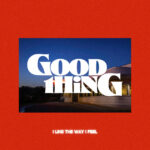
London-based solo artist GoodThing returns with infectious new single “I Like The Way I Feel,” a shimmering slice of self-styled “Tarantino Disco” that fuses neo-soul, electronica, disco and dreamlike pop into something slickly cinematic. Drawing on the cut-and-paste experimentalism of Gorillaz and Air, alongside the hypnotic pulse of Primal Scream and SAULT, the multi-instrumentalist lands somewhere between funk-fuelled futurism and late-night euphoria. Think Jungle’s rhythmic bounce colliding with BADBADNOTGOOD’s fluid, genre-blurring musicianship, all filtered through a distinctly playful, filmic lens.
Produced by Callum McGuinness at Moss Studios, “I Like The Way I Feel” opens in a haze of chopped guitar loops and textured field recordings before locking into a groove that feels both loose and laser-precise. Swinging percussion, buoyant basslines and half-spoken vocal hooks give “I Like The Way I Feel” its addictive lift, equal parts dancefloor-ready and leftfield experimentation. Visually and sonically, GoodThing continues to build a cohesive world inspired by vintage film iconography (think Goodfellas grit and Godfather grandeur) and retro advertising aesthetics.
:: Urban Cowboy – Ryan Nico ::
Grace Holtzclaw, Los Angeles, CA

Emerging with his debut full-length album Urban Cowboy, Ryan Nico embraces the wild side of Nevada’s mythology. It’s a place where the sweltering heat of the desert collides with the sparkling mirage of the city. Nico brings the illusive and enticing landscapes of Las Vegas to life on his colorfully surreal project.
Blending influences of country, hip-hop, and R&B into one sonic atmosphere, Nico embraces the archetype of a true urban cowboy. It’s music you could turn on at a city club, or blast through the speakers down a desert backroad. Bustling beats, twangy notes of acoustic guitar, and grippingly charismatic vocals make Urban Cowboy an instant classic.
Focus track “Nevada” transports you to the heart of Las Vegas where Nico spills the inside secrets on the city he’s from. He leans into the glitz and glamour as he sets the tempo for a wild escape from reality. Paired with a music video filmed while driving down the Las Vegas strip, Nico brings a whole world to life on his unforgettable sonic experience.
:: Space and Time – Waver ::
Danielle Holian, Galway, Ireland

Waver’s Space and Time unfolds like a conversation left simmering across decades, picked up again not with urgency, but with a kind of weathered assurance that time has not dulled its emotional voltage so much as deepened it. Across its 13 tracks, the Boston duo of Mike Sartor and Dorsey Stone reanimate the melodic instincts of ‘90s rock without slipping into revivalism, instead treating influence as sediment rather than template. “Silvertone” opens the record with patient lift and glow, guitars circling rather than striking, while “You Instead” and “Always Awake” establish the album’s central grammar: dual vocals that rarely harmonize in the conventional sense, instead overlapping like two memory streams refusing to fully align. Even at its most propulsive, “Control” in particular, with its taut rhythmic spine and sharpened guitar lines, the album feels less about momentum than accumulation, as if each song is adding another layer to a shared archive of feeling.
The album’s emotional core reveals itself in its midsection, where Waver’s nostalgia turns inward and begins to fray at the edges. “I Used To Be Someone Else” and “More Than You Know” are among the record’s most affecting moments, their restraint doing more expressive work than any overt crescendo could manage. Later, “Blue Tomorrow” briefly opens a window of brightness, only for “Us” to undercut it with ambiguity, a reminder that reunion is not resolution. By the time “I’m Still Waiting” arrives, patience itself has become the subject, and the closing pairing of “You Belong With Me” and “I Miss You” reads less like a finale than an echo fading into itself. Waver ultimately craft not a reinvention, but a sustained act of listening, between past and present, between two creative minds, and between the songs as they learn, slowly, how to hold their own weight in time.
:: “Dying Fire”- Rorey ::
Chloe Robinson, California

Heartbreak is often inevitable. No matter how tightly we try to hold on, some things still seem destined to slip away. Rorey’s single “Dying Fire” reflects the sorrow of love lost yet still present is an understanding that not everything endures. The instrumental backdrop feels peaceful, echoing a calm that comes with acceptance. Her lush, haunting tone drifts effortlessly above, carrying the idea of quiet resolve. The piece settles into a space between grief and clarity, where letting go becomes less about loss and more about acknowledging what once was.
The video begins with stunning rays of soft sunlight in a beautiful nature setting. Her gorgeous scoop neck light blue gown adds to the visuals delicate nature. She follows a red scarf through the woods, a symbolic thread representing the warning signs in the relationship. It concludes with her choosing to leave the item behind, signaling a moment of release and self-awareness.
The New York-based singer-songwriter and musician is known by fans for her stirring melodies and dream-like vocals. This song really brings that attribute to life. “Dying Fire” is off of her forthcoming album Temporary Tragedy. She shares, “The album is essentially about two people who couldn’t make it work no matter how much they loved each other because what they wanted and they needed were at odds. In the end they both got hurt in the face of love never fully realized.” Across its sound and sentiment, the release captures that fragile conflict of devotion and disconnection, offering a poignant preview of the emotional terrain that “Temporary Tragedy” is set to explore.
:: “For the Moment” – Vansire ::
Mitch Mosk, Beacon, New York

Sun-warmed and effortlessly magnetic, “For the Moment” drifts in like a breeze I didn’t know I needed – light on its feet, glowing at the edges, and instantly transportive. Vansire bottle that early-summer feeling here, where the air feels softer, time stretches just a little longer, and everything moves with an easy, unspoken rhythm. It’s a song that doesn’t ask much of us beyond presence – just press play, lean back, and let it carry you wherever it wants to go.
Fresh off the announcement of their upcoming album Taking Solace, due June 5, the Minneapolis duo – Josh Augustin and Sam Winemiller – returned earlier this month with a track that feels like both a continuation and a deepening of their world. Having come up on a steady diet of 2010s chillwave and indie pop, Vansire have built a catalog defined by atmosphere, melody, and an instinct for songs that stick without ever feeling overworked, growing from self-released beginnings into a project that quietly spans genres, collaborators, and continents. “For the Moment” arrives as the latest glimpse into that evolution – a breezy but intentional offering that reflects where they are now, reaching for connection and comfort in a time that so often asks for both.
Built on shifty synths, jangly guitar lines, and a groove that pulses with understated confidence, the track lives in that sweet, sun-dappled space between indie pop and soft-focus nostalgia – a little yacht rock adjacent, a little dream pop, all wrapped in a sound that feels both breezy and intentional. There’s a casual precision to it, the way each element locks into place without ever feeling overworked, giving the song its buoyant, feel-good energy. It’s the kind of music that lingers in the background of a perfect day, only to sneak up on you later when you realize it’s been soundtracking everything all along.
But beneath that glow is a deeper current, one that gives “For the Moment” its weight and resonance. As the band share, “The album title, Taking Solace, is lifted from the lyrics of ‘For the Moment,’ which help frame the context under which the album is unfolding. Taking solace can be an act of kindness, an act of community building, and an act that holds political potential… ‘For the Moment’ pulls a little bit from the bag of tricks we used on metamodernity, both sonically with its sidechained synths and atmospheric guitars, but also lyrically, where I’m addressing an imagined listener’s perspective, celebrating the way music can be a powerful tool in trying times, specifically tracing a line for someone who has grown up after 9/11 to this point in world history, where American imperialism has ravaged humanity and indelibly shaped the direction of everyone’s life, but celebrating music together can be an act of self preservation and taking solace.” That perspective reframes the song entirely – what first feels like pure escapism reveals itself as connection, a shared experience shaped by memory, history, and the need to hold onto something good.
Lines like “Every opus / Every jingle in your head at the moment / Taking solace / It’s you and the stranger who wrote it” capture that idea with striking clarity – the way music collapses distance, turning private listening into a kind of collective understanding. In Vansire’s hands, even the smallest moments carry meaning, each melody a thread tying us back to one another.
That’s what makes “For the Moment” linger – not just its glow, but what’s underneath it. It’s a reminder that feeling good isn’t trivial; it can be grounding, connective, even quietly defiant. And as the days stretch longer and the world keeps spinning in all its chaos, Vansire offer a simple, powerful invitation: stay here, just for now, and let that be enough.
I can already feel where “For the Moment” is going to live in my life – rolled down windows, late afternoon light spilling across the dashboard, that first stretch of heat that makes everything feel a little looser, a little more alive. It’s a song I’ll come back to in the coming months without thinking, letting it blur into the best parts of summer 2026 until it’s inseparable from the memories themselves. And that’s the highest praise I can give it: Not just that it sounds good, but that it feels like something I’ll carry with me, a constant companion for whatever comes next.
:: “I Don’t Know You” – Julez and the Rollerz ::
Mitch Mosk, Beacon, New York

Outgrowing yourself can feel like losing someone you once knew by heart – a disorienting, aching realization that the person you were is no longer someone you fully recognize. That inner friction fuels “I Don’t Know You,” a dizzying song that erupts with an unapologetic urgency that feels almost accidental, like it had to exist. Julez and the Rollerz bottle lightning in their first single of the year, turning a fleeting moment into a full-bodied, feverish indie rock release that burns with tension, swagger, and emotional clarity. It’s restless and radiant all at once, thrashing and aching in equal measure, chasing catharsis with every distorted chord and soaring refrain.
That sense of immediacy is baked into its origin. “The chorus melody of ‘I Don’t Know You’ randomly came to me in the shower one day,” vocalist/guitarist Jules Batterman tells Atwood Magazine. “I yelled from the bathroom to my then-fiancé, now husband, who was in the other room, to quickly grab my phone so I could sing it into my voice memos (from the shower) before I forgot it. I don’t know why, but immediately I decided this song needed to be about grappling with the realities of change.”
“That specific time of my life was very transformative for me. I was planning a wedding, having fallings-out with long-time friends, and realizing I was entering an entirely new chapter of my life – to the point where I was like, damn, I almost don’t even recognize the ‘old me’ even though she’s always in my heart.” That raw, unfiltered genesis pulses through the track itself, where every note feels lived-in and hard-won.
Set to appear on the band’s debut album Dirty Little Rock ‘N’ Roller, out June 26, the single marks a striking step forward for a Los Angeles outfit that’s been steadily sharpening its edge since forming in 2021. Fronted by Batterman, Julez and the Rollerz have evolved from scrappy garage rock beginnings into a more theatrical, more intentional act – still gritty, still guitar-driven, but now brimming with larger-than-life hooks and emotional precision. Produced by Alex Newport, their upcoming record leans into that balance, capturing the band’s live-wire energy while giving their songs room to breathe, swell, and hit harder where it counts.
At the heart of “I Don’t Know You” is a reckoning with time and identity, a confrontation that feels both deeply personal and universally felt. Batterman puts it plainly: “Turning 30 made me confront the fact that I’ve outgrown parts of myself. ‘I Don’t Know You’ started as a song about looking back at my younger self and thinking, ‘Who is she?’ But it naturally became more than just ‘that.’ It’s also about how time reshapes everything. Sometimes you lose significant people in your life; whether it be friends, past lovers, family members… Sometimes you lose who you once were. We are forever changing, as are the people around us, and while scary, it’s also beautiful to think about.”
“I’m now 31, married, still unsure of what I want out of life, and I’m hoping my past self is still proud of the path I’m on now.” That tension comes to life in the song’s most striking line, “I know I don’t know you / but I miss you somehow,” a lyric that lands like a gut punch – tender, disorienting, and painfully true.
That push and pull – between who you were and who you’re becoming, between memory and motion – is what gives “I Don’t Know You” its fire. It doesn’t try to resolve the feeling; it lives inside it, letting the confusion, the longing, and the release crash together until they form something undeniable. And in that collision, Julez and the Rollerz don’t just capture a moment of change – they make it feel electric, alive, and worth holding onto, even as it slips through your fingers.
:: “Black and Blue”- William Bleak ::
Chloe Robinson, California

They say it’s all about how you view things. Is the glass half empty or the cup half full? Discovering beauty in the disorder, that’s what William Bleak’s new single “Black and Blue” is about. The track sheds its sorrow, embracing a surge of pure exuberance. It radiates with urgency, a tribute to uncovering joy within turmoil, shifting perspective through another’s eyes, and returning to life after a fall that felt so hard to escape. The brooding atmosphere and deep, growling vocals make every emotion impossible to ignore. Ultimately, it captures that turning point where pain stops feeling like an ending and starts becoming the beginning of something new.
Driven by a deep, uncompromising need to find his own community, Bleak builds a sound that merges harsh electronic pulses with powerful live instrumentation. The Berlin-based solo project has forged a continuous trail of gothic intensity, performing alongside acts such as She Past Away, Clan of Xymox, and Traitrs, while taking its live show across Mexico, the US, the UK, and much of Europe. Bleak is set to release his debut LP, a raw, immersive plunge into industrial, EBM, and gothic anguish. What emerges is not just music, but a persistent echo of unrest that lingers long after the final note dissolves.
:: The Mountain – Gorillaz ::
Josh Weiner, Washington DC

Over 20 years after I got into the Gorillaz as an 8th grader in 2005 – the year my brother memorably dressed up as an iPod playing “Feel Good Inc.” for Halloween – it’s great to see this virtual band has got life in them yet as they release their ninth studio album, The Mountain. Even a quarter-century into their act, this band still remains crazily ambitious, as their latest record features seven different languages (Hindi, Yoruba, Russian, and more), combines multiple international styles (Indian instrumentation, worldbeat, and psychedelia among them), and dives into profound themes related to death, loss, and the afterlife.
Even with so much going on in the operating room, The Mountain remains impressively cohesive and engaging all the way through its hour-plus runtime. As with their past records, the sonic adventurism is a marvel to behold, and the various guest rappers who stop by all make valuable contributions. A special shout-out from my corner goes to Black Thought of the Roots, who delivers some dazzling emcee work on “The Sad God” and “The Empty Dream Machine.” I’m a generation removed from my middle school days and there aren’t a ton of popular artists still around from back then… but I’m happy that the Gorillaz are the rare exception! Chalk up another win for them with Album #9.
:: CHROMEsoME – 4ra 4ra ::
Danielle Holian, Galway, Ireland

4ra 4ra’s CHROMEsoME is a masterclass in conceptual cohesion, seamlessly merging sound, narrative, and visual artistry into a singular immersive experience. From the outset, “CHROME UP” establishes a meticulously crafted sonic architecture, where metallic percussion and layered synths evoke both ritualistic resilience and the cold precision of a hyper-technological landscape. Each track functions as a chapter in a broader meditation on identity, survival, and transformation, drawing the listener into a world where the human psyche negotiates its relationship with optimization, surveillance, and artificial augmentation. The title track, “CHROMEsoME,” exemplifies this tension, juxtaposing visceral energy with contemplative exploration of the line between the organic and the synthetic, while the collaboration on “MUGSHOT TYPE” expands the EP’s thematic scope through the lens of digital resistance and performative mutation.
The closing piece, “4GI,” offers a haunting yet considered reflection on the role of Artificial General Intelligence as both guardian and interlocutor, with 4ra 4ra’s AI-generated vocals lending the track an uncanny, almost philosophical intimacy. Beyond the music itself, CHROMEsoME’s visual and conceptual framework elevates it to the realm of multimedia art, encouraging engagement on multiple sensory levels. It is a work that rewards attentive listening, inviting repeated exploration and thoughtful reflection on the ethical, aesthetic, and psychological implications of a post-human future. In its totality, CHROMEsoME is not merely an EP but a sophisticated, forward-looking statement on the evolving interplay between identity, technology, and creative expression.
:: “Long Way Home” – Ciaran Quigley ::
Mitch Mosk, Beacon, New York

Letting go doesn’t always happen in a single, clean break – sometimes it stretches out, lingering in the in-between, where goodbye hasn’t fully landed and neither of you are quite ready to walk away. That tender limbo sits at the beating heart of “Long Way Home,” a song that glows with warmth and movement, capturing the ache and comfort of holding on just a little longer. Ciaran Quigley leans into that feeling with ease, delivering a light, feel-good folk rock reverie that feels as uplifting as it is quietly reflective.
Built on rich acoustic textures and a gently propulsive rhythm, the track moves with an easy, sunlit momentum, balancing introspection with an undeniable sense of lift. There’s a softness to Quigley’s performance, but it never fades into the background – his voice carries a striking clarity, full of passion and intent, especially as it opens up in the chorus. When it hits, it feels like a burst of light breaking through, radiant and energizing, the kind of moment that sneaks up on you and leaves you smiling without quite knowing why. That balance between weight and release gives the song its charm, letting it feel both grounded and free at once.
Quigley, an emerging voice out of Killarney, County Kerry, has been steadily building his path through Ireland’s resurgent indie folk scene, honing his craft through years of live performance and thoughtful songwriting. Now signed to Cast Over Records and preparing to release his debut EP Is This a Problem Darling? this summer, he’s stepping into a new chapter with growing confidence and clarity. “Long Way Home,” the second single from the project, continues that trajectory, blending acoustic tradition with a modern sensibility while exploring themes of youth, growth, and emotional honesty. It’s a natural extension of his evolution as a writer – more open, more self-aware, and more willing to sit with life’s complexities.
That emotional core comes into sharper focus through Quigley’s own words: “Long Way Home is a song about a relationship that lives in that space between ‘it’s over’ and ‘not yet.’ It’s about taking the scenic route through goodbye, stretching out the final minutes. It’s choosing to drive each other to the door, and making those last few moments mean something.” You can hear that intention woven through lines like “So I’ll drive the long way home / To kill the time while you’re mine” – a lyric that captures both the fleeting nature of the moment and the desire to hold onto it just a little longer.
There’s a beauty in the way “Long Way Home” embraces that space without rushing past it. It doesn’t try to force closure or resolution; it simply lets the moment exist, stretching time in the way only music can. And in doing so, Ciaran Quigley delivers a sweet, smile-inducing song that feels genuinely good to live inside – bright, tender, and full of heart, a track that reminds us that even goodbyes can carry their own endearing light.
:: “Good Morning LA” – Walter Miller ::
Danielle Holian, Galway, Ireland

Walter Miller’s “Good Morning LA” is a striking study in emotional scale, a pop-rock single that manages to feel both meticulously crafted and genuinely felt. From its opening moments, the track unfurls with a cinematic patience, building atmosphere rather than rushing toward impact, and in doing so it establishes Miller as an artist with a rare command of restraint within grandeur. His vocal performance is the centrepiece, rich, expressive, and unafraid of vulnerability, gliding across sweeping instrumentation that feels designed for vast spaces yet remains anchored in intimate emotional truth. The production is lush without excess, allowing each element to breathe while steadily guiding the listener toward a chorus that feels less like a hook and more like an emotional release.
What ultimately distinguishes the song is its sincerity and narrative clarity, drawn from the quiet ache of distance and the fragility of connection stretched between New York and Los Angeles. Miller transforms a deeply personal moment into something resonant and universally legible, without diluting its emotional specificity. There is an elegance in the way the track balances its dual impulses, introspection and elevation, resulting in a work that feels both contemporary and timeless in its sensibility. “Good Morning LA” does not simply announce an artist on the rise; it affirms one already capable of shaping feeling into form with uncommon grace.
:: “Corporeal & Complete” – Alexander Carson ::
Danielle Holian, Galway, Ireland

Norwich-based singer/songwriter and composer Alexander Carson unveils “Corporeal & Complete,” the first glimpse of their ambitious forthcoming three-part album project Triptych. Arriving as the opening statement of Triptych No.1: “Anemoia,” due in full June 2026, the single sets the tone for a body of work that moves between classical precision and contemporary emotional abstraction. Working between Norwich and London, Carson, who is non-binary and classically trained from the age of four, has long occupied a space where Chopin-esque intricacy meets the literate, theatrical sweep of Rufus Wainwright, their compositions underpinned by a voice that feels both intimate and disarmingly fragile.
Co-produced by Mercury Prize-nominated Ed Harcourt (Here Be Monsters), who also contributes to the recording, and mixed by David Pye (Wild Beasts, Egyptian Hip-Hop) alongside Carson, the track is a meticulously constructed study in restraint and release. Mastered by Dylan Barber (Roger Eno, Warner Chappell), “Corporeal & Complete” unfolds through atmospheric field recordings, fingerpicked guitar, swelling strings, piano, double bass and analogue synths, all orbiting Carson’s searching vocal delivery. Featuring contributions from Acer Smith (Flat Venus / Red Mar) on double bass and Harry Fisher (Red Mar / Yer Blooze) on viola, the piece meditates on embodiment, absence, and the uneasy liminal space between feeling whole and feeling real. Yet beneath its melancholic architecture runs a streak of wry theatricality, Carson invokes Oscar Wilde’s notion that life is “much too important… ever to talk seriously about” as a guiding principle, allowing humour and existential weight to coexist in quietly striking equilibrium.
:: “Wrong Impression” – Jordan Anthony ::
Chloe Robinson, California

To feel utterly certain of something, only to be let down, can undo you. You are left there to gather the pieces of a belief you once trusted without question. Jordan Anthony’s stirring track “Wrong Impression” reflects on the fallout of a breakup, grappling with the lingering inquiry of where everything unraveled. Lines like, “You can tell me that you are leaving, but my heart just won’t believe it,” show how unfathomable the whole situation seems. Listeners can feel the raw ache in his vocals, carried by a stripped-back soundscape that lets the emotion take center stage. His wholly emotive quality has drawn comparisons to artists such as Benson Boone and Lewis Capaldi. Anthony reveals, “This song is almost like an inner monologue I had with myself after my first breakup. It’s that realization of ‘how did I get this so wrong?’ and how everything can change so fast.”
The Australian pop/R&B singer, now based in Los Angeles, has wasted no time accelerating his career and making an impact. Since first appearing on American Idol, Anthony has steadily moved beyond his initial television exposure, developing into an artist with a defined voice and a profoundly personal artistic perspective. Jordan has spent the past year and a half sharpening his sound, working alongside collaborators Brett Koolik and Taylor Sparks. Currently he progresses toward his debut EP, slated for release in 2026. With this new single, he proves how far he’s come.
:: “inside voice” – Sorry Ghost ::
Mitch Mosk, Beacon, New York

Memory has a way of softening the edges – turning old wounds into something warmer, almost comforting, like a scar you catch in the light and remember not just the pain, but the person you were when you carried it. That lingering feeling runs through “inside voice,” a song that aches gently, wrapping its melancholy in a kind of quiet warmth that makes you want to stay a little longer. Sorry Ghost tap into that tension with ease, delivering a mellow, moody indie rock reverie that feels both introspective and deeply lived-in.
Built on twinkling guitar lines, hushed vocals, and a groove that moves with a steady, almost hypnotic ease, the track unfolds patiently, never rushing its emotional arc. There’s a distinctly West Coast glow to it – sun-washed but shadowed, breezy but brooding – as the band let each moment breathe before gradually building toward a fuller, more impassioned release. That push and pull gives the song its soul-stirring pull, hitting all the right sweet spots without ever overreaching, letting the feeling speak for itself.
For a band that’s spent the past year riding a wave of virality and DIY momentum, “inside voice” feels like a statement of intent. Originally from Louisiana and now based in Los Angeles, the quartet have built a devoted following through both their music and their offbeat, behind-the-scenes presence online, carving out a space that thrives on duality – earnest yet playful, polished yet unfiltered. “‘inside voice’ is our earnest shot at telling people we’re more than internet fad; we have something to say and an authenticity to display that we feel hasn’t been said or done in indie.” It’s a bold claim, but one the song backs up, revealing a band more interested in emotional truth than easy attention.
That honesty lingers in lines like “Hold your voice / Down just a little / When I fall asleep / Buried in the pillow,” where intimacy and distance blur into one another, and in the repeated refrain of hearing someone long after they’re gone. “inside voice” doesn’t chase resolution – it sits in the afterglow, in the spaces left behind, letting memory and feeling intertwine until they become inseparable.
And that’s what makes it stick. It’s not just the mood or the melody, but the way it captures that specific, human kind of longing – the kind that doesn’t quite hurt anymore, but hasn’t fully let go either. Sorry Ghost don’t just revisit the past here; they let it breathe, turning it into something quietly powerful, and in doing so, carve out a sound that feels entirely their own.
— — — —

Connect to us on
Facebook, 𝕏, Instagram
Discover new music on Atwood Magazine
:: Weekly Roundup ::
follow WEEKLY ROUNDUP on Spotify
:: This Week’s Features ::