Every Friday, Atwood Magazine’s staff share what they’ve been listening to that week – a song, an album, an artist – whatever’s been having an impact on them, in the moment.
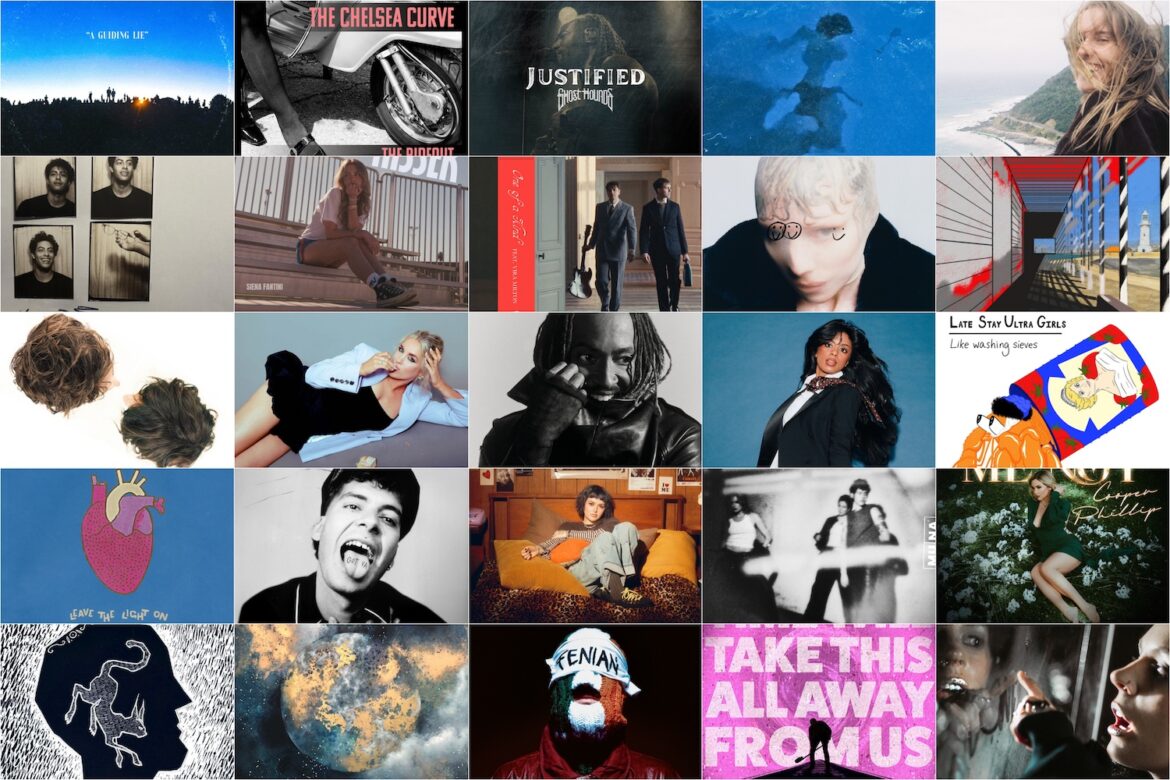
This week’s weekly roundup features music by MUNA, KNEECAP, Debbii Dawson, Thundercat, total tommy, UKofA, Lykke Li, Ray Bull, Starling, Sam Burchfield, The Boo Radleys, Jessie Reid, marigolden, Siena Fantini, Cooper Phillip, The Chelsea Curve, gracie, Mon Rayon & Vira Milton, MOSAICS, Ghost Hounds, Late Stay Ultra Girls, People Laughing, The Gulps, The Greater Good, and Ian Cobiella!
•• •• •• ••
 follow WEEKLY ROUNDUP on Spotify


•• ••
:: Dancing on the Wall – MUNA ::
Mitch Mosk, Beacon, New York
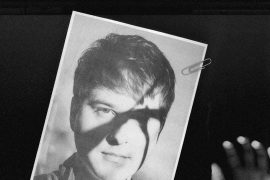
MUNA make desire feel like a live wire on Dancing on the Wall – hot to the touch, impossible to hold, and dangerous in all the right ways. Their fourth album is an incredible pop record full of pulse and passion, heat and raw visceral emotion: Impassioned, outspoken, and unapologetic in both its politics and its pleasures, it captures a band operating with thrilling clarity, not sanding down their contradictions but amplifying them until every ache, want, grievance, fantasy, and release feels charged enough to light up the room.
Released today via Saddest Factory Records / Secretly Group, Dancing on the Wall finds Katie Gavin, Josette Maskin, and Naomi McPherson stretching MUNA’s world wider without losing the ecstatic immediacy that made them one of contemporary pop’s most vital voices. The title track, already one of this year’s great cathartic singalongs, turns unrequited longing into kinetic euphoria; “Eastside Girls” radiates lust, locality, and queer joy in a rush of Los Angeles color; “Wannabeher” plays like a sweat-slicked infatuation spiral, blurring attraction, admiration, and identity into a gleefully combustible anthem. Even “So What,” with its glimmering social armor and wounded refrain, cuts through spectacle to reveal the ache beneath validation – all those beautiful rooms, all those important people, and still the need that fame cannot answer.
“This is an album about love, heat (literal and metaphorical), horniness, and heartache, grounded in the here and now as we experience it,” the band shared in a statement. “We hope it makes for good company, wherever you are.”
That “here and now” gives Dancing on the Wall its undeniable, inescapable fire. MUNA have always been masters of turning private feeling into communal release, but this album widens the frame: The heartbreak is personal, the heat is physical, the longing is messy and embodied, and the politics are inseparable from the world pressing in on every body trying to love, dance, survive, and be free. Produced by McPherson, the record moves with a feverish command of texture and tension – synths flare, guitars cut, drums snap into motion, hooks arrive like pressure valves – but its boldness comes from how fully it lets pleasure and pain coexist. Nothing here feels passive. These songs sweat, they yearn, they flirt, fight, unravel, and insist.
And then there is “Big Stick,” the album’s most striking detonation: A provocative punk track and overtly political anthem that hits hard and leaves an instant, lasting mark. Where much of Dancing on the Wall channels heat through romance, fantasy, sex, and self-recognition, “Big Stick” brings that same voltage outward, attacking the machinery of manufactured desire and state power with ruthless precision. Its opening lines move through consumer aspiration and gendered image-making – “Make you want a matte lip and a miniskirt / Make you want a big blazer and a collared shirt” – before tightening into a thesis on manipulation: “I can make you want anything that I want you to.”
The song escalates with terrifying logic. What begins as aesthetics becomes ideology; what looks like influence becomes control. MUNA draw a clean, brutal line from beauty standards and domestic fantasy to surveillance, policing, militarization, propaganda, and empire, exposing how want itself can be engineered. By the time they arrive at the bridge – “Make you want to build an army and wage a war / Make you want to show the world what America’s for” – “Big Stick” has shed any illusion of metaphor. It is direct, furious, and unflinching, naming Palestine, apartheid states, weapons, hunger, incarceration, and repression with the urgency of a band unwilling to separate pop music from the crisis outside the club.
Make you want to build an army and wage a war
Make you want to show the world what America’s for
And how America gives more than America takes
We give weapons to dictators in apartheid states
We give kids in Palestine PTSD
But we’ll never f***in’ ever give them something to eat
And if you’ve got a problem with it, you could end up in jail
Send you to Louisiana, million-dollar bail
Because I have a big stick I’m not afraid to use
So I can make you do anything that I want you to
That I want you to, that I want you to
I can make you do anything that I want you to
Because I know you like the back of my hand, it’s true
I can make you do what I want you to
That same red-hot, irresistible urgency pulses through Dancing on the Wall, whether MUNA are singing about sex, heartbreak, fantasy, or the ache of wanting to be wanted. The band’s fourth album is not escapism, even when it is euphoric; it is release as resistance, pleasure as presence, pop music as a way of telling the truth with your whole body. MUNA understand that desire is never just desire, that heartbreak is never sealed off from the world, that the dancefloor can be both sanctuary and pressure cooker. Their catchiest, most cathartic and charged songwriting and production to date does not ask listeners to look away from the mess of being alive right now. It invites us deeper in – into the heat, into the ache, into the fight, into the company of a record that sweats, shimmers, and refuses to cool down.
On the album’s powerfully pulsing opener, MUNA sing, “It gets so hot, so I might as well daydream” – and that, in its own way, is Dancing on the Wall’s spark, a kind of survival tactic: Making room for release when the world won’t stop burning.
:: Fenian – Kneecap ::

The Irish rap trio’s sophomore record follows up Fine Art with a critically acclaimed film, a slew of legal battles, headlines across the globe, and an unshakeable public stance. If you’ve followed Kneecap in the past 2 years, it’s no surprise that their record continues to tackle British imperialism, the Israel-Palestine war, and a dicey terrorism charge brought against one of the members, which they beat. Mo Chara, Moglai Bap, and DJ Provai no longer need to introduce themselves to the world, and the songs on Fenian show their unshakeable stances, drawing parallels between Palestine and the North of Ireland in songs called “Palestine” and “Occupied Six.”
In the Occupied Six
Wasn’t all about teenage kicks
Neart hassle, ó Windsor Castle
Faoi stiúir ag na Brits
(translation:
Lots of hassle from Windsor Castle
led by the Brits)
While the band is inherently political by rapping in a language that the British government tried to systemically erase, Fenian is much more upfront in its political leanings, even as the rappers spit in Gaeilge. “Smugglers and scholars/Getting guns with American Dollars/Did it before, do it again, no bother,” Moglai Bap raps on the chorus to an early single. While the trio has always led “Free Palestine” chants at their shows, the “Tiocfaidh ár lá’s” are joined with just as much “Saoirse don Phalaistín” in these songs. This has also seemingly freed them up to write more personally too. The album closes with the emotional “Irish Goodbye,” which is a tribute to Moglai Bap’s late mother and her battles with depression.
From a purely musical standpoint, Fenian also sees Kneecap hitting their sweet spot. Songs like “Smugglers and Scholars” and “Occupied Six” are sparing with instrumentals that put the rappers at the front, while songs like the title track, “Liars Tale” and quite a few other songs feel like they lean more toward jock jams. Still, it never feels like Kneecap are compromising on what made them such a standout musical act and more than just a novelty.
:: “Where Have All the Good Men Gone?” – Debbii Dawson ::
Mitch Mosk, Beacon, New York

After dazzling us last year with a steady stream of disco-pop delights, Debbii Dawson has returned with a question for the ages: “Where Have All the Good Men Gone?” Her first single of 2026 is a stunning revelry in its own right – fun, funny, insanely catchy, and beautifully ABBA-esque, a light and irresistibly buoyant pop gem that turns modern dread into a widescreen burst of melody, movement, and theatrical flair. Following last year’s “I Want You,” “Gut Feelings,” “Chemical Reaction,” and “You Killed the Music,” Dawson’s latest release doesn’t just pick up where she left off; it spins her world into brighter, bolder, more cinematic color.
There’s a delicious irony baked into “Where Have All the Good Men Gone?”: The song is, on its surface, bubbly and buoyant, all gleaming hooks, glitzy flourishes, wandering synths, and Dawson’s layered, yearning vocals rising like a disco ball catching the first light of morning. But beneath that sparkle is a real exhaustion with the state of things – the kind of bone-deep disbelief that comes from watching the world get worse and wondering who, exactly, is supposed to help. Dawson sings, “Picture this as I set the scene / It’s like those dreams where you try to scream / But waking up is a dangerous game to play,” and suddenly the song’s shimmer sharpens into satire. This is not naïve pop escapism; it is grim reality dressed in platform boots, grinning because crying would ruin the mascara.
“Every day I watch the news and think, ‘Wow, this is terrible,’” Dawson shares. “And every day seems worse than the day before. I find myself wondering if there are any good people left on this planet, why am I seeing supervillains everywhere I turn? I was binging Smallville at the time, wishing that Superman would swoop in and save the day. That’s the headspace I was in when I met up with Joel Little at his home in Los Angeles.”
That Superman fantasy gives the song its charmingly over-the-top pulse. Dawson is not asking the title question with a straight face so much as throwing her hands into the air, looking around at bills, genocide, fear, apathy, and absurdity, and demanding somebody, anybody, show a little backbone. “Everybody’s missing their medullas / Need somebody, need somebody super,” she sings in a chorus that somehow feels both ridiculous and painfully reasonable. It is a testament to Dawson’s gift that she can make existential fatigue sound this bright – not because she is softening the feeling, but because she understands how much sharper despair can become when it is delivered with wit, style, and a hook you cannot shake.
“I found a spiderweb in my car, but no spider, so I took an Uber to his house just to be safe,” she continues. “We wrote the song pretty quick because he had a flight to Middle Earth, also known as New Zealand, to catch. We bounced some production ideas back and forth over text but really dove in the next time we were together in person. A fun fact is that a large portion of the production for this song was done on the Korg RK-100S2 keytar; it’s so versatile and has been a staple in many of my recent projects. At the time, I had also just seen Toto & Men at Work in concert, and it left me walking on air – what an immensely talented group of people. They were definitely additional inspirations.”
That walking-on-air feeling is all over “Where Have All the Good Men Gone?” even when the lyrics are staring directly into the fire. Dawson has always had a rare gift for making glitter feel like survival, and here, her theatricality feels more purposeful than ever: The song moves like a rescue mission staged under disco lights, with Dawson as both narrator and heroine, searching for goodness in a world that keeps handing her villains. By the time she sings, “I’ve been thinkin’, thinkin’ ’bout the future,” the question is no longer just where the good men went – it is whether goodness itself can still be chosen, practiced, protected, and made visible in a culture that so often rewards the opposite.
“I wanted to write about our grim reality in a non-emo way,” Dawson says. “I hope this song shakes listeners up a bit and causes action. Good people are hard to come by these days, but if we each try to be the good we’re so desperately looking for, we just might have a chance.”
That is the real magic of Debbii Dawson’s return: “Where Have All the Good Men Gone?” sparkles because it has to. It laughs at the apocalypse without pretending the apocalypse is funny; it turns fear into a chorus, frustration into a wink, and helplessness into a call to action. Dawson has given us another pop song that feels fresh and timeless at once – classic in its sweep, contemporary in its bite, and lit from within by the belief that even in a world full of supervillains, we might still become the heroes we keep waiting for.
:: Distracted – Thundercat ::
Josh Weiner, Washington DC

When I last covered Thundercat for Atwood in spring 2020, we had all just recently entered pandemic mode and were desperate for anything that might improve our moods and assuage our thoughts. It Is What It Is achieved just that via the deft bass-playing and melodic vocals of the man with his name on the cover; he was also supported by a healthy range of guest artists, including Kamasi Washington – whose masterful show at the Howard Theatre in Washington, DC in February 2020 wound up being the last concert I would see for over a year – and Mac Miller – who had died less than two years prior and was incorporated posthumously via a vocal sample on the title track.
Over the ensuing six years, I’ve continued to enjoy listening to Thundercat and have seen him in concert twice – moreover, twice on the same street in Boston, Lansdowne Street! (at the House of Blues in 2021 and at Fenway Park, opening for the Red Hot Chili Peppers, in 2022). So, I’m glad to see him finally return with a new batch of tracks, Distracted. I’m happy that the line I used to describe It Is What It Is – “a masterfully crafted record that showcases its author’s broad set of skills and music industry liaisons, all while promoting him as an indispensable figure in today’s jazz scene” – is equally applicable to its well-crafted follow-up, which I’ve listened to several times over the past month since its release and have enjoyed on each occasion.
All of the ingredients for success that Thundercat’s included in his past releases make their way back into Distracted. His voice is pleasant to listen to (see “Great Americans” for a fine case in point). His bass-playing remains as dazzling and ever, and he shifts between energetic and soothing tracks with ease. Plus, he’s got fine tastes in friends, and brings lots of his most talented ones on board – no Kamasi this time, alas, but Greg Kurstin, Tame Impala, Flying Lotus, Willow and many more do their part to fill the void. We’ll see how deep the well of posthumous Mac Miller vocals will run, but at least one song that he and Thundercat worked on before the former’s 2018 passing has been finalized and released here – “She Knows Too Much,” which also comes with a colorful animated video. All considered, Distracted features Thundercat applying his time-tested winning musical formula to yet another successful project that was well worth the extended wait.
:: “Pretty Little Mouth” – total tommy ::
Mitch Mosk, Beacon, New York

Australia’s total tommy has come back swinging, smirking, and covered in gasoline. Her first song since last year’s “Butterknife” and 2024’s breathtaking debut album bruises, “Pretty Little Mouth” is a sweaty, feverish alt-rock churn: Bold, brash, sinister, and unapologetically alternative, it captures the dizzying rush of falling too fast and the brutal whiplash of getting spat back out just as quickly. Where bruises introduced Jess Holt’s total tommy as a raw, scuzzy, emotionally exposed force, “Pretty Little Mouth” sharpens that bite into a more deadpan and deliciously venomous vessel – a love-bombing autopsy delivered with a snarl.
“Pretty Little Mouth” opens mid-confrontation, all clipped timing and emotional ambush: “Set the record straight in a neutral place / Can you meet me at the park before it gets dark / 5pm ‘cause I got plans at 6 / And I don’t think you’re gonna like the sound of this.” It is such a precise little scene – the neutral place, the time limit, the pre-planned exit – that it feels less like a breakup than a hit job dressed up as a conversation. Holt has always had a gift for turning relational collapse into body music, and here, the song’s heavy-hitting pulse mirrors the panic of realizing the person who pulled you in may have been holding the door open only long enough to slam it shut.
“I wrote ‘Pretty Little Mouth’ in about two hours, as just before the session, I’d been chatting to a friend who was going through a crazy situationship,” Holt tells Atwood Magazine. “I was in London at the time on a writing trip, so every time we’d chat I’d be like, ‘You know I’m gonna put this in a song.’ The first verse is a very close paraphrase of a text she actually received.”
That real-life text-message origin lends “Pretty Little Mouth” its cruel little spark. The song feels overheard as much as written, filled with lines that land with the casual brutality of someone trying to sound reasonable while doing damage. “Heartbreaker, self-appointed / Tough love not what you wanted,” Holt sings, before the chorus lands its knockout image: “It’s all fun until you can’t get out / Smoke wouldn’t leak from her pretty little mouth.” It is a perfect total tommy line – sweet on the surface, rotten underneath, soft enough to seduce and sharp enough to leave a mark. The phrase plays like a poisoned compliment, a portrait of someone whose charm is so polished it almost hides the burn.
“‘Pretty Little Mouth’ is a play on the saying ‘butter wouldn’t melt,’” Holt explains. “I wrote the line ‘smoke wouldn’t leak from her pretty little mouth’ in reference to a love-bomber. It’s about falling easily but ultimately getting hurt just as quickly when you get spat back out. This happened to a friend of mine recently, and this song is my deadpan, not so serious take on it all.”
That “not so serious” framing is part of what makes the song sting. “Pretty Little Mouth” is funny in the way a bruise can be funny once you are no longer in the room where you got it – a little theatrical, a little bitter, a little too accurate to laugh at without wincing. Holt lets the song revel in its own nasty glamour, co-producing with Tom Stafford in a way that lets every guitar grind, every drum hit, and every vocal curl feel charged with bad decisions and worse intentions. The production does not just support the story; it becomes the bloodstream, churning with nicotine, acetone, kerosene, and that horrible thrill of wanting someone who is already halfway out the door.
That fever breaks open in the second verse, where desire curdles into aftermath: “Never one to do things casually / Used to meet you at the bar so effortlessly / 5 drinks down, wouldn’t stop at 6 / And now I’m subtracting short straws to fit.” The writing is compact but loaded, turning old rituals of intoxication and ease into a kind of emotional arithmetic. What once felt effortless now requires rearranging yourself around someone else’s absence. By the time Holt repeats “Heart of stone stripped with acetone / Down to the bone, again / Nicotine between her teeth / Doused in kerosene,” the song has become a portrait of damage disguised as cool: A person, a dynamic, maybe even a memory, so flammable that looking back at it feels like striking a match.
As a return, “Pretty Little Mouth” feels both familiar and freshly vicious. It carries the gut-level ache that made “Butterknife” so gripping, but trades that song’s confessional self-reckoning for a slyer, meaner clarity – one that watches the mess from the corner of the room and knows exactly who lit the fuse. total tommy has long thrived where tenderness and abrasion meet, and here, she sounds fully in command of the collision: Sweaty, sinister, brutal, and alive with an alternative-rock charge that lingers long after the smoke clears.
:: Time Will Take This All Away From Us – UKofA ::
Danielle Holian, Galway, Ireland

UKofA’s Time Will Take This All Away From Us is a striking, deeply layered statement that feels like the culmination of a lifetime spent dismantling and rebuilding sound. Rather than presenting a linear journey, the album operates like a shifting collage, one where memory, media, and lived experience bleed into each other. Across its runtime, UKofA threads together found audio, fragmented samples, live instrumentation, and electronic processing into a coherent emotional language that never settles in one place for too long. It’s ambitious without feeling self-indulgent, and experimental without losing its human centre.
The record opens with “NICE THINGS,” a dense, sample-heavy burst that immediately sets the tone, sunlit on the surface but subtly uneasy beneath, hinting at the record’s interest in contrast and subtext. From there, “GATE OF FLESH” blends folk-inflected melody with hip-hop structure, creating something both earthy and disorienting, while “PUT YOUR FAITH IN ME” pushes into heavier industrial territory with a melodic core that keeps it grounded. Midway, “LIKE WE WERE NEVER HERE” acts as a philosophical anchor, built from library music fragments that reflect on time’s vast indifference, before “COMMIT” and “CHANGE MY MIND” pivot between rhythmic experimentation and politically charged frustration, each track reshaping the album’s emotional temperature. As the record unfolds further, UKofA leans into atmosphere and transformation. “MISTER OBLIVION” functions as a fluid, almost breathing instrumental bridge, while “WATCHTOWER” and “THE JOKE IS THE SAME” expand the album’s emotional scope, exploring power, connection, and dislocation in an increasingly digital world. Later highlights like “WHAT I’VE DONE” bring unexpected pop clarity, and the title track “TIME WILL TAKE THIS ALL AWAY” becomes a shifting centrepiece, gradually building into a multi-part evolution of earlier ideas. The closing track “COVER ME IN LOVE” lands with a stark, post-apocalyptic calm, suggesting cycles of collapse and renewal rather than resolution.
What makes the album so compelling is its refusal to separate concept from feeling. Even at its most fragmented or sample-driven, there’s a clear emotional throughline; one rooted in time, impermanence, and the strange beauty of things falling apart and reforming in new shapes. UKofA doesn’t aim for perfection or polish; instead, the record thrives on texture, contradiction, and discovery. Time Will Take This All Away From Us ultimately feels less like a collection of songs and more like an evolving ecosystem; one that rewards deep listening and reveals more of itself with every return.
:: “Lucky Again” – Lykke Li ::
Charlie Recksieck, San Diego, CA

Swedish singer and artist Lykke Li describes her new record, The Afterparty, by saying, “I find that we’re in an era where everyone is talking about, ‘My higher self.’ F*** that. This is an album dealing with your lower self: Your need for revenge, your shame, despair, all of it.”
For those of you who are looking forward to reckoning with humanity’s dark side on the first single, I’ve got bad news for you: “Lucky Again” is a delightful, fun, light dance groove with optimism.
Why the mismatch between her public quotes and the actual joy in this single? Hey, my family’s people are Swedish too, I get the doom and gloom. But the only icy mood in “Lucky Again” comes from the beautiful Max Richter classical samples that begin and end the song.
The music is a hooky light dance track expertly produced with atmospheric keyboards, congas and strings among the jangly guitars and breathy pop vocals. We might hear a little irony or reticence in the delivery or mild despair in the verses, but the hook and the clever chorus say otherwise:
Lord, I don’t know how, and I can’t say when
If we’re lucky, we’ll get lucky again
Baby, hold on tight ’til the bitter end
If we’re lucky, we’ll get lucky again
The full album, The Afterparty, comes out May 8 after I’ve written this. Maybe it will deliver what Li describes as “revenge heist energy,” and both she and the album’s PR push claim it will be her last album… we’ll see. But meanwhile we’ll have to just live with this optimistic, swirling pop song.
:: Please Stop Laughing – Ray Bull ::
Mitch Mosk, Beacon, New York

Ray Bull’s Please Stop Laughing plays like the sound of two artists fully surrendering to their own strange, spirited momentum – and coming out the other side with one of the year’s most exhilarating indie pop records.
Released today via AWAL, the New York duo’s new album solidifies Aaron Graham and Tucker Elkins’ rightful place at the vanguard of 2020s indie pop, not because they have finally “figured out” what Ray Bull is supposed to be, but because they sound so alive inside the question. Across Please Stop Laughing, their music is beautiful and bold, dreamy and dramatic, full of spirited melodies that sweep us somewhere brighter while their lyrics keep one foot planted in all the awkward, self-conscious, vulnerable mess of being human. It is tongue-in-cheek and gut-level sincere, funny until it hurts and tender when you least expect it.
“It almost seemed like Please Stop Laughing was going to be an identity crisis. It felt existential,” Graham reflects. “The record could have been a folk record, easily. It could have been a pop record, easily.”
That tension could have pulled the album apart, but Ray Bull make it feel like their natural habitat. They do not so much choose a lane as build a playground out of the collision: Internet-age absurdism, classic pop instinct, indie rock looseness, tender confession, and a communal sense of lift all crashing into one another with swagger and cheer. “All That You Are,” already an Atwood Editor’s Pick, remains a gleaming standout, but the title track “Please Stop Laughing,” the focus track “Under Your Eyelid,” and the dreamy, soulful “Antifreeze” deepen the album’s world in ways that feel equally essential. You laugh, you ache, you dance in your living room; you might even skip down the street.
“The ultimate dream is to have people listen to these songs and incorporate them into their story and their lives and have it hold some sort of meaning within their lives,” Graham told Atwood Magazine. “That’s where the most meaningful music to me sits. Our takeaway has been a sense of relief. We’ve had so many tracks just piling up and it feels great to send a whole collection of them out the door to live their own lives. It makes us want to keep going. Finish more songs and get them into the world.”
That desire – to send these songs out into the world and let listeners complete them – feels written into the album’s very DNA. Please Stop Laughing is dynamic in the truest sense: Always moving, always mutating, always finding new ways to make vulnerability feel kinetic. On “Under Your Eyelid,” the duo turn a melody born from proximity into a seamless fusion of instinct, longing, and motion, singing, “Just a little silence / Just under your eyelid / Stay here for the night / We can even get a bite.” It is casual and intimate at once, a little surreal, a little bruised, and completely Ray Bull in the way it makes a private feeling feel like a shared room.
Elkins put it beautifully when he told Atwood, “The listener completes the music in a way so we just want people to take time with it and digest it. It’s been a struggle to compile the songs on this album. It’s been the combination of both a white knuckled force and a blind intuition. I think we’ve taken away this sense of trust in ourselves to make the songs happen even if we’re not sure how.”
That trust radiates through every corner of Please Stop Laughing. The album feels familiar yet distinctly fresh and new, a little manufactured and deeply felt, self-aware without losing its heart. Ray Bull are deeply serious and terminally online, art project and pop group, pranksters and poets, and their best songs thrive inside that contradiction. “Antifreeze” folds love into self-deprecating charm; “Please Stop Laughing” turns discomfort into a hook; “Under Your Eyelid” finds softness in the blur between dependence and desire. Their world is inviting because it refuses to be flattened. It has jokes, bruises, melodies, and movement.
By the time Please Stop Laughing reaches full stride, it feels less like an identity crisis than an identity claimed in real time. Ray Bull’s great gift is not only that they can make indie pop this vibrant, funny, and addictive, but that they can make uncertainty feel like its own kind of freedom. The album does not ask us to understand every layer immediately; it asks us to live with it, laugh with it, dance with it, and let its songs find their way into our own stories. For a record called Please Stop Laughing, it leaves us with the rarest kind of smile: The one that arrives when music catches you off guard, makes you feel seen, and reminds you how good it can be to not know exactly where you’re going.
:: “Cupcake” – Starling ::
Chloe Robinson, California

Radiant and charismatic UK pop artist Starling delivers something undeniably irresistible with her single “Cupcake.” Her soft, ethereal vocals balance delicacy with conviction as she pushes back against her inner critic. Each birthday became a battleground with her self-doubt, whispering that she was falling behind and failing to meet the life she imagined for herself. “Cupcake” is about gaining confidence through rediscovering your self-worth. Her lyric, “A queen doesn’t act like a fool,” lands as a powerful mantra, reminding listeners of their value and that they deserve to be cherished. By the time the chorus swells, the track transforms into an empowering release, turning self-doubt into a celebration of resilience and self-love.
After being told she lacked vocal talent, her path became focused less on conventional achievement and more on challenging those constraints. At a Soho bar, where, after finishing a shift serving drinks, she found the nerve to sing a cappella. In the crowd that night was Henry Binns of Zero 7. Since then she has obtained the assertion to craft what has been deemed as “pop therapy,” using her music to help others uncover their own strength. Cupcake” is a powerful example of Starling’s ability to inspire people to prioritize self-care.
:: “Leave The Light On” – Sam Burchfield ::
Miranda Urbanczyk, East Lansing, Michigan

“Leave The Light On” isn’t just a song; it’s a feeling. The first time I heard this song, there was no doubt in my mind that it was special. After listening to it more and more, it’s become its own entity. Unlike other songs on my playlist, this one deserves its own moment every time. A pause for three minutes to stop everything and just reflect: on life, the world around me, and even just a moment of gratitude.
Sam Burchfield’s music has this unique effect on me that I can’t quite explain. “Leave The Light On” is no different, as my entire demeanor changes whenever it plays. Suddenly a warm fuzzy feeling rises, reminding me of home. Yet in its own way I also feel free, picturing someone running down a hill with their arms raised. This song specifically is very self-reflective on life, and opening yourself up to more. While it’s a little bittersweet, everything about it makes me view life differently. “Oh, leave the light on baby / Yeah, leave the light on in your heart.“
:: “Do Better, Be Better” – The Boo Radleys ::
Charlie Recksieck, San Diego, CA

“Wake Up Boo!” is the biggest charting song from this long-time Merseyside band. I’m here to write about the song where the oft-shoegaze band musically ‘wakes up’ and that’s on the brand new “Do Better, Know Better.” This song sounds like Bon Iver flipped a switch and made an LCD Soundsystem record. In the middle of an album that’s introspective and looking downward and inward, the opening of “Do Better, Know Better” is like an alarm going off in the middle of a record.
It’s high-energy, rock-pop with continuing full drums and rhythm. But in an age of almost every recording you’ll hear being sanded-off studio perfection – “Do Better, Know Better” amazes because they intentionally lob in discordant pieces. Not once or twice, but through the whole song. Somehow, it never stutters.
The absolutely off-key guitar riffs sprinkled throughout the verses somehow don’t sound out of place. And the bridge is refreshingly nonsensical; the chords in the bridge have little relationship with the rest of the song. Normally, that would torpedo a song while here it elevates it. How exactly did they pull this off? I have no idea.
I must mention that the new album, In Spite of Everything, is in part about founding member Tim Brown’s grief over his son’s death. You can hear that throughout the album, and the understandable wild range of emotions. But “Do Better, Know Better” is where the album chooses optimism and potential joy as a response.
Even without knowing any backstory, it’s inspirational:
And he knows that he should do better,
despite that he is a go-getter.
And he knows they’re better together,
ogether, together, together, together.
I know it’s time to make a change.
It’s not easy to write a song that makes you dance, makes you set your sights a little bit higher, and makes you a tiny bit more hopeful. But they’ve done it.
:: “Blue Moon” – Jessie Reid ::
Mitch Mosk, Beacon, New York

Jessie Reid makes fate feel intimate on “Blue Moon,” a dreamy, soul-stirring indie folk reverie that glows with heat, heart, and radiant ache. The Shropshire-based singer/songwriter’s latest single is smoldering and seductive without ever losing its softness, built around hauntingly beautiful acoustic guitar work, understated drum pulses, and Reid’s enchanting vocal performance – a voice that feels at once earthbound and celestial, full of warmth, longing, and quiet conviction.
Known for her soulful, folk-inspired songwriting and distinctive percussive guitar style, Reid is no stranger to Atwood Magazine’s pages – having been featured a half-dozen times over the past five years. She has earned over 20 million Spotify streams, landed music on Made in Chelsea and Love Island, received support from BBC 6 Music, and performed everywhere from Glastonbury’s Acoustic Stage to Sofar Sounds shows across three continents. “Blue Moon,” taken from her forthcoming album Little Sparks, begins where so much of her magic lives: In the hands, in the rhythm, in the way a guitar pattern can open a door before a single word is sung.
“‘Blue Moon’ began with the guitar riff, and everything else grew from that,” Reid tells Atwood Magazine. “It felt very instinctive to write. The lyrics lean into the idea of fate – ‘if my life was written in the stars, I’d hope to find you there’ – and the ‘blue moon’ becomes a symbol of something bigger than us, something constant and universal. At its heart, it’s about two people coming together and realising they may have been waiting for each other all along.”
That sense of recognition gives “Blue Moon” its pull. Reid sings, “All my life / Looking for the answers / All my life / Trying to find you,” and the song itself seems to hover in the space between searching and arriving, between solitude and the sudden wonder of being met. By the time the chorus blooms – “Blue Moon / Break through / You knew / I’d be waiting for you” – the music has become a quiet invocation, a love song written not as a grand declaration, but as a surrender to timing, mystery, and the possibility that some connections really do feel written somewhere beyond us.
It’s elegant, aching, and deeply human – a luminous reminder that sometimes the rarest kind of love is the one that feels like it was always making its way toward you.
:: “Great Ocean Road” – marigolden ::
Mitch Mosk, Beacon, New York

marigolden transforms uncertainty into coastal catharsis on “Great Ocean Road,” a spirited and stirring indie-folk-rock reverie that feels like salt air, swelling guitars, and every question you cannot outrun catching up with you at golden hour. Released April 10th, the first single from Mel O’Neill’s forthcoming debut EP Long Game is charming and churning, charged and fully human, an instantly breathtaking introduction to an artist whose voice lands like a soulful, aching beacon of raw emotion. It carries the intimacy and emotional force of early Angie McMahon and Leif Vollebekk, but O’Neill’s presence is strikingly her own – elegant, emphatic, and alive with the restless thrill of becoming.
Raised in lutruwita / Tasmania and now based in Naarm / Melbourne, marigolden writes songs about self-trust, longevity, and the slow, sometimes disorienting work of listening to yourself. “Great Ocean Road” was born from a real place of transition, after O’Neill moved from a home where she could see mountains one way and water the other into the grey rush of city life. “Moving from Tassie to Melbourne, from a place where I saw mountains one way and water the other, to a grey and busy main road that swapped nature for trucks, was a big adjustment for me,” she shares. “‘Great Ocean Road’ became a safe haven. A place where the noise of the city was left behind, and in its absence the real questions I was grappling with could rise to the surface.”
Those questions come tumbling out in the chorus, where the song’s dazzling melodies give way to a tender, almost breathless inventory of young adulthood’s impossible asks: “How to keep your cool as the months keep getting warmer / How to be an introverted social performer / How to play your part without breaking your heart or rip your soul apart.” Co-produced by marigolden and Natasha Newling, with additional production from John Castle, “Great Ocean Road” balances folk-rooted warmth with driving indie-rock momentum, its rolling drums and shimmering lead lines capturing both the literal movement of the coast and the inner churn of trying to grow without losing yourself. It is surfy and restless, nostalgic and searching, a song about friendship, identity, and the rare clarity that arrives when the world finally gets quiet enough for you to hear yourself think.
I don’t know, I don’t know
how to tell the difference
between love and disaster
How to play my part without
breaking my heart and sending
my moral code out into the dark
How to tell the difference
between nerves and excitement
How to feel it all without
getting too heightened
How to play the game,
make yourself a name,
and not go insane
How to keep your cool…
“There is something beautiful about the fact that ‘Great Ocean Road’ suggests a sense of ongoing movement, continuous exploring, because that’s kind of like life, I’ve realised,” O’Neill says. “More often than not, I shared the drive with my best friend. We were two kids, figuring out what we wanted from life, and amongst all the chaos of the search, the road and the ocean helped us keep our cool.”
That is the heart of “Great Ocean Road”: Not certainty, but motion; not easy answers, but the grace of having someone beside you while you search. marigolden’s first song of the year is an instant hit in my book – beautiful, bold, and wondrously alive, a song that understands growing up not as a destination, but as a drive you keep taking until the horizon starts to feel like home.
:: “casual kisser” – Siena Fantini ::
Danielle Holian, Galway, Ireland

At 3 minutes and 30 seconds, “Casual Kisser” by Siena Fantini wastes absolutely none of its runtime. It opens with an immediate sense of lift, bright, modern pop production that feels sun-warmed but slightly unsure of itself, like the emotional equivalent of catching someone’s eye across a crowded room and trying not to read too much into it. Siena’s vocal sits front and centre with a disarming ease, gliding between playful detachment and quiet emotional spillover. The concept is deceptively simple, but she leans into it with precision: casual intimacy, unspoken rules, and the blurry ethics of teenage romance where “it’s nothing serious” rarely means nothing at all. The track’s pacing is crisp, built around hook-driven momentum that never overstays its welcome, instead mirroring the fleeting nature of the connection it describes.
What makes “Casual Kisser” stand out is how naturally it balances charm with self-awareness. Siena writes with a clarity that feels instinctive rather than overworked, shaping each lyric like a snapshot rather than a statement. The production leans into polished pop textures; light percussion, subtle melodic layering, and a chorus that lands with just enough emotional weight to stick without feeling overcooked. There’s a strong sense of internal dialogue running through the track, as if she’s narrating the moment while still trying to make sense of it in real time. It’s this tension that gives the song its replay value: what first feels like a breezy, flirtatious pop cut gradually reveals itself as something more reflective, a portrait of teenage connection that understands how quickly “casual” can start to feel anything but.
:: “Love Me Not” – Cooper Phillip ::
Julius Robinson, California

Remember picking petals off a daisy as a kid, whispering, “He loves me, he loves me not”? Cooper Phillip’s “Love Me Not” brings you right back to that feeling. Soft, sensual vocals float over a bold atmospheric backdrop, creating a hypnotic contrast that pulls the listener into a rich, immersive journey. Lyrics include, “Take the petals off a flower, cause that’s all I got and I wonder if he loves me or he loves me not.” That imagery evokes a strong sense of nostalgia while also feeling deeply relatable, capturing a common experience of questioning someone’s feelings. The song’s subtle tension between vulnerability and confidence makes the track even more gripping, as if each line is caught between hope and hesitation. It ultimately transforms a childhood game into something more mature and emotionally layered, turning fleeting doubt into a moment of self-reflection.
The Los Angeles-based pop artist is marked by emotional intensity, clean minimalist production, and a fresh pop / R&B fusion. Her previous releases such as “Not Perfect” and “Party By Myself” are sleek songs that drip with so much assertion and swagger. “Love Me Not” is another upbeat synth forward commanding piece that pairs striking production with emotive vocals for a dynamic, infectious sound. The track also expands on Phillip’s signature blend of raw sincerity with edge, creating a sonic that feels both intimate and empowering. “Love Me Not” ultimately captures the essence of her evolving style, merging heartfelt depth with polished pop sensibility in a way that feels both fresh and unmistakably her own.
:: The Rideout – The Chelsea Curve ::
Danielle Holian, Galway, Ireland
There’s a particular charm to The Rideout that feels both deeply nostalgic and refreshingly alive. On their sophomore release, The Chelsea Curve continue to channel the sharp silhouettes of classic British mod culture while injecting the songs with a distinctly American grit and urgency. The result is an album that glides effortlessly between power-pop immediacy, punk vitality, and melodic sophistication. From the opening rush of “Ride,” the trio establish a confident rhythm that never loses momentum, balancing infectious hooks with a genuine emotional warmth that gives the record lasting resonance beyond its retro influences.
What makes The Rideout particularly compelling is the band’s refusal to treat mod revivalism as museum-piece nostalgia. Linda Pardee’s melodic basslines and expressive vocals anchor the album with charisma and sincerity, while Tim Gillis colours the songs with bright, kinetic guitar work that recalls the golden age of guitar pop without sounding derivative. Bruce Caporal’s dynamic percussion ties everything together with an effortless sense of movement. Tracks like “Never Come Down” and “Rally ‘Round” broaden the band’s sonic palette into expansive, almost euphoric territory, while songs such as “Outta My Head” and “Kindawanna” retain the concise, hook-driven punch that has defined the band since their earliest releases.
Beneath the album’s polished melodies lies a deeper sense of perseverance and communal spirit, qualities that make The Rideout feel especially vital in 2026. There’s an authenticity to The Chelsea Curve’s songwriting that comes not from reinvention for reinvention’s sake, but from a band fully committed to refining and celebrating the music they love. The production remains crisp yet organic, allowing every chorus, tambourine hit, and harmony to breathe naturally. In an era where so much modern rock can feel either overly calculated or emotionally detached, The Rideout stands out as a genuinely joyous record, stylish, heartfelt, and made to be played loud.
:: “Vendetta” – gracie ::
Mitch Mosk, Beacon, New York

gracie does not tiptoe into revenge – she crashes the party with a clenched fist and a chorus sharp enough to draw blood. “Vendetta,” the Tooth & Nail Records newcomer’s latest single ahead of her forthcoming debut album Miss Misfortunately (out June 26), is a hard-hitting pop-punk anthem that channels the boldest, most dramatic rush of Paramore and the mid-2000s scene without feeling stuck in nostalgia. Shimmering keys give way to snappy guitars, sugar-rush melodies, and a vocal performance brimming with fury, hurt, and righteous satisfaction – the sound of someone finally saying the thing everyone else has been too polite to say out loud.
She called me crying
When you left her place and
I started laughing
The thought of your face because I’ve
Seen it before
I know all of the games that you play
You took her dancing
Lost her in the crowd
And so she called up a ride and
She got out of town
Because you’re so good at leaving
And making her feel like she left
That thing, in this case, is simple: Men who hurt women do not get to rewrite the story. “Vendetta” was written about an old friend whose boyfriend, as gracie puts it, “decided to acquire multiple girlfriends,” and her verdict is wonderfully blunt: “I obviously hate cheating.” The song’s bite comes from how cleanly it understands the emotional cleanup that follows betrayal – not just the heartbreak itself, but the excuses, explanations, and emotional labor demanded afterward. “You can’t blame her for what you did / And I know she told her therapist about you,” gracie sings, turning the chorus into both a callout and a rallying cry before landing the knockout: “I’m tired of / Making excuses / For silly little men.”
So the breaking point
Is a painful place
On the other side
Is a clenched fist fate
And I can’t say I’m
Feeling sorry for you babe
You can’t blame her for what you did and
I know she told her therapist about you
Why don’t you just own up to it
I’m tired of
Making excuses
For silly little men
That feminine rage feels especially potent because gracie delivers it with such theatrical precision. Her music lives in the space between alternative pop sweetness and rock grit, where feelings are big, messy, and impossible to politely contain. “Break up your party / I’m coming tonight / Because I’ve got a vendetta / A missile to strike,” she declares, and the song becomes less a breakup postmortem than a rescue mission for anyone who has watched a friend be made small by someone else’s cowardice. It is funny, furious, and deeply satisfying, a revenge fantasy with enough emotional truth beneath the neon to make every hook hit harder.
gracie has said she makes music because she has to, because she needs to tell an authentic story, and “Vendetta” sounds like exactly that kind of necessity: No-filter, no-apology, heart-on-fire pop-punk built for bedroom screams, car speakers, and late-night debriefs between lifelong friends. It is sugary sweet and heart-wrenchingly raw, sharpened by early-2000s rock influence but animated by a voice that feels fully her own. With Miss Misfortunately on the horizon, gracie is not just introducing herself as the queen of feminine rage anthems; she is making a case for how cathartic, combustible, and downright fun that rage can be when it finally gets the last word.
:: “One of a Kind” – Mon Rayon ft. Vira Milton ::
Josh Weiner, Washington DC
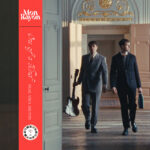
Swedish EDM has been such a tour de force over the past generation (I’ve certainly been able to cover a fair number of said artists for Atwood over the years) that it can be easy to lose sight of just how many musicians there are still playing traditional instruments way up there in Det avlånga landet. Thankfully, one happy reminder of that reality has come to us in the form of Mon Rayon, a duo who incorporate guitars, keyboards, harpsichords and many more instruments into what they describe as “orchestral pop.”
It’s a curious concept, one that the duo– Josef Ask and Christoffer Zetterlund– have been testing throughout their small-but-growing catalogue over the past few years. For their latest experiment, they’ve recruited their fellow Stockholm native, Vira Milton, to lay their vocals atop their immensely appealing instrumentals, which draws upon the 1960s musical landscape with some critical contemporary updates. It all comes together splendidly on “One of a Kind,” their first single of 2026 and a preview of the album of the same name scheduled for release this fall.
“Our core idea from the beginning has been that it should feel alive,” Josef Ask says of the duo’s music. “That we play together, that the playing is real. That it should sound organic in some way– that’s probably the idea we’ve embraced most strongly from orchestral pop.” It’s great to hear the two of them (three, counting Ms. Milton) have achieved early success with that practice on “One of a Kind,” and it’ll be great to take that formula even further as the buildup to the One of a Kind album continues.
:: A Guiding Lie – MOSAICS ::
Danielle Holian, Galway, Ireland

MOSAICS step confidently into their next chapter with A Guiding Lie, a five-track EP that feels like a clear statement of intent from a band rapidly sharpening their identity. Across its runtime, the release blends 90s-leaning rock textures with a modern indie sensibility, balancing shimmering guitar lines, widescreen choruses, and introspective lyricism that lingers long after the first listen. There’s a sense of scale here that nods toward stadium-ready influences like Kings of Leon and U2, while still grounding itself in a distinctly British indie lineage, echoing the emotional directness of artists like Sam Fender and Feeder. The production is crisp and intentional throughout, allowing each track to breathe while still feeling tightly constructed and emotionally cohesive.
What makes A Guiding Lie particularly compelling is its emotional core: songs that wrestle with modern disconnection, fading ambition, and the quiet narratives we build to make sense of uncertainty. From the propulsive drive of “Godspeed” to more vulnerable moments like “A Thousand Faces” and “Sing Me To Sleep,” MOSAICS show a versatility that never feels forced, instead unfolding naturally across the EP’s arc. It’s a record that feels both carefully crafted and instinctively heartfelt, the kind of release that suggests a band not just finding their sound, but actively expanding it. With growing momentum behind them, MOSAICS sound poised for a leap into far bigger rooms.
:: “Justified” – Ghost Hounds ::
Mitch Mosk, Beacon, New York

Ghost Hounds turn vengeance into a smoldering country-rock fever dream on “Justified.” A searing original released alongside their soul-drenched cover of The Rolling Stones’ “Gimme Shelter,” the Pittsburgh band’s latest burns with visceral, charming heat – all swaggering guitar grooves, roots-rock grit, and a slow-building tension that feels one breath away from combustion. There’s a delicious Stones-inspired looseness in the way the song moves, but its real fire comes from SAVNT’s commanding vocal performance and Kristin Weber’s fiery fiddle, both of which pull its moral weight out of abstraction and into the body.
“This song is written almost like a Greek tragedy,” SAVNT shares. “From the first line, it drops you into the height of a man’s war with himself; within his mind, he is judge, jury, and executioner. It really highlights the duty people feel when they refuse to be a bystander. When he realized that a young woman was harmed, he took matters into his own hands in efforts to let her know she isn’t alone. This man is oscillating between knowing that he did the right thing and struggling with validating the finality of his actions. It begs the question: If this was somebody you cared about, what would you do?”
That question hangs over every second of “Justified.” Written by guitarist, songwriter, and producer Thomas Tull, the song drops us into a conscience already stained, where righteousness and remorse have become nearly impossible to separate. “Now I know that an eye for an eye / That just ain’t a righteous man’s way,” SAVNT sings, before landing on the song’s brutal refrain: “I’m justified in what I’ve done / I’ll face my reckoning when that day comes / Can’t get back what you took from me / I’m justified in blood.” It is not a clean confession, and that is what makes it so gripping. The narrator is not asking to be absolved; he is trying to live with the weight of an action he believes had to happen.
The band lean into that ambiguity with force and finesse. Ghost Hounds’ signature blend of country, rock, blues, and roots music gives “Justified” both muscle and shadow, letting the song simmer before it scorches. SAVNT sings like someone caught between conviction and collapse, while Weber’s fiddle cuts through the arrangement like a flame licking the edges of an old photograph. The result is cinematic without losing its grit, dramatic without tipping into excess – a story of blood, burden, and the terrible cost of stepping into the dark on someone else’s behalf.
By the time SAVNT sings, “The weight of my deeds / Yeah, they burden me / But I still wouldn’t call it a sin,” “Justified” has become more than a revenge tale. It is a reckoning with the limits of justice, the instinct to protect, and the haunted aftermath of doing the unthinkable for a reason you still believe in. Ghost Hounds make that conflict roar. They do not soften its edges or settle its moral score; they let it burn, turning a man’s private war into a hard-hitting country-rock anthem that smolders long after the final note fades.
:: “Like Washing Sieves” – Late Stay Ultra Girls ::
Danielle Holian, Galway, Ireland
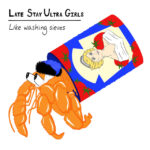
Late Stay Ultra Girls arrive with striking intent on debut single “Like Washing Sieves,” the new project from Bristol multi-instrumentalist Tim Burden, and it immediately feels like something slightly off-centre in the best possible way. After years of moving through different musical worlds, from alt-rock and country-tinged projects to more theatrical collaborations, Burden now lands on a sound that feels unrestrained and deliberately unstable. The track thrives in contrast: motorik rhythms push forward while jagged guitars and brooding synth textures constantly pull in different directions, creating a tension that never fully resolves but remains gripping throughout. It’s bold, noisy, and oddly elegant all at once.
What makes the single so compelling is its sense of controlled chaos, a record that sounds like it’s constantly on the verge of collapsing but never does. Produced with Stew Jackson (Massive Attack), the track leans into dense, cinematic sound design, shifting from towering walls of guitar noise to fragile, almost tender piano moments without warning. Burden’s lyrics match that unpredictability, blending surreal imagery with sharp emotional undercurrents, giving the song both humour and unease in equal measure. “Like Washing Sieves” feels less like a traditional debut and more like the opening of a larger, more unpredictable world; messy, inventive, and completely absorbing in its refusal to sit still.
:: “Suffocating” – People Laughing ::
Mitch Mosk, Beacon, New York

People Laughing make infatuation sound like a fever you can dance through on “Suffocating.” The Nottingham rock band’s third single is dramatic, searing, and instantly alive, a buoyant guitar-pop rush with ’80s shimmer, 2000s indie rock sheen, and just enough alternative bite to keep the blood pumping. It arrives grinning and gasping at once, all bright momentum and breathless confession, transforming the ache of wanting someone unavailable into a song that feels both charmingly lovesick and dangerously close to boiling over.
Formed by Matt Grocott, Luke Hallam, and Ollie Carnell, People Laughing have built quick momentum through direct, emotionally charged songwriting, early BBC Introducing support, and a sold-out Rescue Rooms debut supporting The Molotovs. “Suffocating” builds on the immediacy of debut single “One Thing” and the heavier confrontation of “Mano a Mano,” but there’s a wider, more melodically expansive spirit here: Searing guitars and driving drums collide with harmony-led vocals, turning romantic delusion into something big, bright, and almost cinematic. “I’m delusional, a lover boy tonight,” Grocott sings, and the line lands like both confession and surrender.
“‘Suffocating’ came together while I was listening to a lot of late ’90s and early 2000s rock bands,” the band share. “I’ve always been drawn to the vocal harmonies of ’60s groups like The Beach Boys and The Beatles, which have really shaped the fundamentals of how I write. I had People Laughing in mind when writing it, so I used a lot of the guitar tones from our debut single ‘One Thing’ while building on more harmony led moments throughout the track.”
That mix of eras gives “Suffocating” its spark: Britpop charm, classic-pop sweetness, alt-rock churn, and the full-body urgency of a feeling that refuses to stay manageable. The song’s narrator knows the fantasy is bigger than the reality, but that self-awareness does little to slow him down. “You know that, I know that / So what we doing here just wasting time?” he pleads, caught between clarity and compulsion, before the bridge strips the whole rush down to its most desperate truth: “I’m suffocating, I need you… I’m suffocating, I love you.”
“At its core, the song is about being completely consumed by someone who was never really emotionally available, being more attracted to the idea of them rather than the reality,” the band continue. “It’s that feeling of slipping into a sort of madness because the infatuation is so strong. I think there’s something really human about being that infatuated with someone. Looking back, I can see it wasn’t being reciprocated, but when you’re in it, you don’t see it that clearly. In the end, it didn’t become what I thought it would, but I got a catchy song out of it.”
That last line might be the whole song’s secret weapon. “Suffocating” does not over-romanticize unreciprocated longing; it catches the madness, the melodrama, the ridiculousness, and the real ache all at once, then sends it skyward on a hook built to stick. People Laughing make heartbreak feel restless and radiant here, turning emotional claustrophobia into a blast of spirited rock release. It is fun but feverish, polished without losing its pulse, and proof that this young band already knows how to make pressure sound like flight.
:: “Got Ya” – The Gulps ::
Danielle Holian, Galway, Ireland
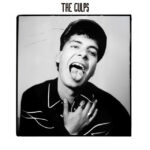
The Gulps return in emphatic fashion with “Got Ya,” a track that reaffirms exactly why they’ve been steadily building a reputation as one of the more unpredictable forces in modern indie rock. Released via Downtown Records, the single bursts out with the band’s trademark collision of punk urgency and glossy, almost danceable energy; a tension they’ve previously been praised for by outlets like NME and DIY. There’s a restless, wired quality to the track from the outset, driven by punchy guitars and a propulsive rhythm section that never quite settles, instead constantly teetering between chaos and control. It’s loud, vibrant, and unashamedly maximalist, yet still threaded with a sense of melodic precision that keeps everything locked in.
Lyrically and emotionally, “Got Ya” leans into the band’s familiar mix of raw honesty and dark humour, capturing an intimate, slightly surreal moment between lovers in a chemically charged, sleepless haze. That contrast, vulnerability wrapped in swagger, gives the song its staying power, especially as it builds toward its euphoric, almost unhinged final stretch. Produced by Martin “Youth” Glover, the track benefits from a full-bodied, analog warmth that enhances its throwback undertones while still feeling firmly contemporary. With their return now fully underway after a difficult hiatus, The Gulps sound re-energised here, still chaotic, still sharp-edged, but with a renewed sense of purpose that makes “Got Ya” feel like both a comeback statement and a warning shot.
:: “Edwina” – The Greater Good ::
Mitch Mosk, Beacon, New York

The Greater Good don’t just raise the temperature on “Edwina” – they set the whole room on fire. A rip-roaring, hard-hitting alternative rock eruption full of fire and feverish energy, the Manchester indie/alt outfit’s latest single finds them spiraling in all the right ways. It starts almost unassumingly, with tight vocals pulsing against taut guitar and drumbeats, everything simmering just beneath the surface as the song’s gossip-fueled narration confides its chaos to Edwina, the narrator’s cat. But beneath the surreal imagery and exaggerated anecdotes lies a sharper, messier truth: The intoxicating pull of a destructive relationship you know is bad for you, but can’t quite bring yourself to leave behind.
That tension makes the song detonate so beautifully. Known for combining groove-driven, high-intensity sounds with potent storytelling, The Greater Good – the five-piece led by Huw Eddy – fuse heartbreak, self-doubt, and emotional chaos with a soundtrack built to physically move people. Beneath their imposing riffs, driving basslines, raucous drums, and captivating vocals lies a searing reflection of the modern experience – messy, volatile, and hard to shake.
The verses move with a sly, steady energy – “My god Edwina / You should’a should’a seen her” – sketching a figure who is magnetic, absurd, dangerous, and impossible to keep up with. Then the chorus arrives like a match dropped into gasoline: “Gotta keep up!” becomes less a hook than a survival instinct, a breathless command from inside the whirlwind. When the guitars roar and the drums seem to throw themselves into triple time, “Edwina” unleashes in the most caustic and catastrophically beautiful manner, all raucous force and no clean exit.
“We’ve felt ourselves moving in a different direction recently both within our songwriting and the sonic landscape we are exploring,” the band share. “We are excited about this track and what is to come from our EP in the summer. Recording at Abbey Road was something else, a truly surreal experience. We’ve been enjoying dwelling in a slightly more unhinged state in our creativity, but still striving to ground the narrative in relatable modern life moments.”
That unhinged creative state suits The Greater Good. “Edwina” feels like a turning point precisely because it refuses to behave: Funny until it isn’t, theatrical until it cuts, chaotic until the chaos reveals its own logic. By the time the outro circles back to desire as damage – “I’ve been aching to cross that line / See if I can’t find / Better ways to waste my time” – the song has already lit its fire and handed us the match. It is breathless, biting, and built to move bodies, but its real thrill is how fully it captures the rush of knowing better and running toward the flame anyway.
:: “Have I Been Good To You” – Ian Cobiella ::
Chloe Robinson, California

When a partner grows distant and aloof, it’s easy to begin wondering, “Have I been good to you?” Ian Cobiella’s track captures that sense of doubt and confusion effortlessly, while rhythmic salsa-inspired drums, groovy synths, and shimmering guitars add a playful energy. Lyrics include, “I walked through fire for you babe, that don’t mean much to you. I almost went half crazy, that don’t mean much to you,” capturing the heartbreak of giving everything to someone who fails to recognize your devotion. His suave, seductive vocals make the track deeply alluring from start to finish.
Cobiella is an indie pop and rock artist of Cuban-Bolivian heritage blending pop and rock influences. “Have I Been Good To You” is the lead single from his debut EP All I Have I Give. Creating the track was an experience he’ll never forget, ultimately helping him find his rhythm. The single also reflects a growing confidence in his songwriting, balancing emotional honesty with polished, melodic structure. In many ways, it marks the beginning of a more defined artistic voice, setting the foundation for what follows on the EP.
— — — —

Connect to us on
Facebook, 𝕏, Instagram
Discover new music on Atwood Magazine
:: Weekly Roundup ::
follow WEEKLY ROUNDUP on Spotify
:: This Week’s Features ::