Every Friday, Atwood Magazine’s staff share what they’ve been listening to that week – a song, an album, an artist – whatever’s been having an impact on them, in the moment.
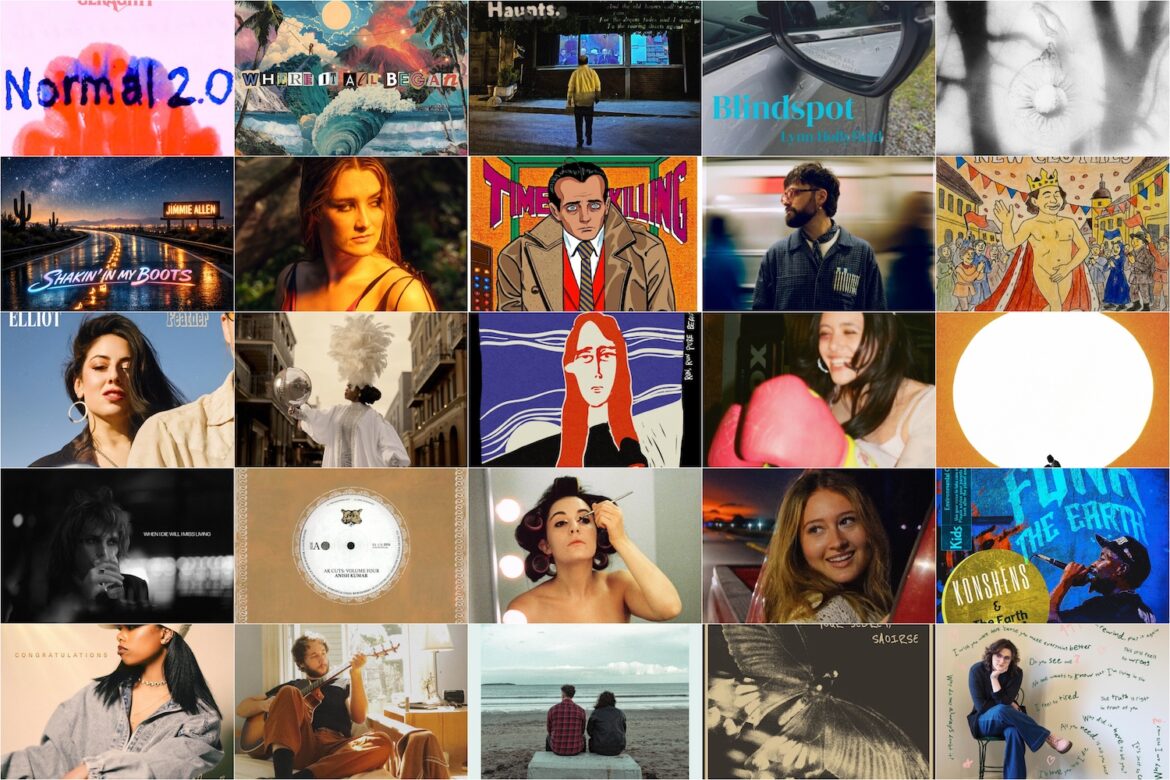
This week’s weekly roundup features music by Tank and the Bangas, Death Cab for Cutie, Luke Spiller, Francis of Delirium, Aja Maria, Rosemary is famous, Peter DiMaggio, Rivkah Reyes, Hockitay, Anish Kumar, Iration, Carlotta Schmidt, Cormac Looby & Pádraig Hughes, Scott Quinn, Lynn Hollyfield, Jimmie Allen, David Geraghty, Gianni Ferraro, Doctor Noize, Strange Plants, Sophia Lynn, MIIA, Sheva Elliot, Racoonhead, & Jonah Connock!
•• •• •• ••
 follow WEEKLY ROUNDUP on Spotify


•• ••
:: The Last Balloon – Tank and the Bangas ::
Charlie Recksieck, San Diego, CA

So many music fans and artists love to claim to cross multiple genres, but in reality just stretch from country to alt-country, or a range of hip-hop to trap. But New Orleans collective Tank and the Bangas truly cover a ton of ground on their newest record, The Last Balloon. This is R&B, funk, spoken-word, neo-soul, and hip-hop in one place – without ever feeling like toe-dipping dilettantes.
More importantly, everything about this record is alive in a modern New Orleans way. The infectious bounce of the first single, “Move,” captures everything that made Tank and the Bangas breakout stars after their landmark 2017 Tiny Desk Concert. Individual soul pop songs like the fantastic “Whole World” have the brash soul fun of Janelle Monáe or vintage Erykah Badu – while the group’s range rivals the versatility of The Roots.
If you’re sampling, I think the back half of the album is where the gold is. “Oh Boy” is a beautiful slow jam, “Jealous” is like the thinking man’s Black-Eyed Peas, and the more experimental trip of “Nighttime” to close the record could have been a great Esperanza Spalding jazz experiment. One thing I can promise is that if somebody describes this album as “eclectic,” they aren’t lying.
:: I Built You a Tower – Death Cab for Cutie ::
Mitch Mosk, Beacon, New York
Death Cab for Cutie do not need to prove a damn thing, which may be exactly why I Built You a Tower hits with such raw, rejuvenated force. Nearly three decades into their career, the Seattle indie rock stalwarts sound newly alive in the tension between containment and collapse, writing not from the safety of hindsight but from the middle of the mess.
Ben Gibbard has always had a gift for making inner turbulence feel physical – a road, a room, a body, a city at night – and on the album-closing “I Built You a Tower (b),” that gift arrives charged with overdrive, urgency, and ache. A companion to the album’s earlier “I Built You a Tower (a),” the song revisits the same central image from a more visceral angle: grief and memory locked away in the mind, only to break loose when the walls no longer hold. Gibbard has described I Built You a Tower as born from “this need to find a place in ourselves to put loss and grief,” and “I Built You a Tower (b)” turns that idea into a full-band exorcism. What begins as a private act of emotional architecture becomes a rush of guitars, drums, and desperate release, the sound of a thought spiraling until it has nowhere left to go.
I built you a tower in my mind
A place that no one else could ever find
‘Cause I needed you contained
You’d run circles ’round my brain
Until I could not think of anything else
At first the silence felt like an old friend
We were estranged for many years
but made amends
But into that empty space
My fears began to race
Until I could not think of anything else
I’m learning how to
Live without you
But these ruminations
Are all about you
The title track’s second half is not just a reprise; it’s a reckoning. Where “I Built You a Tower (a)” moves with the intimacy of a confession, “I Built You a Tower (b)” surges forward with the angst and raw churn of someone realizing that compartmentalization is not the same as healing. Gibbard’s writing is dense but direct, poetic without losing its pulse, and when he lands on the exhausted admission “It makes me tired / So tired,” the line feels less like defeat than the body finally telling the truth.
I thought that I could
keep you locked away
That in this soundless spire
was where you’d stay
But there was no cage or shape
That you could not escape
What a fool I was to think I was safe
Following the instant-earworm pull and sonic risk-taking of 2022’s Asphalt Meadows, Death Cab for Cutie could have easily slipped into legacy mode. Instead, I Built You a Tower finds them embracing the very thing that has always made their best work last: The willingness to sit inside longing, grief, obsession, and uncertainty until the feeling reveals its shape. “I Built You a Tower (b)” closes the record in a rush of visceral power and verve – not a return to form, but a band still pushing through the walls they built for themselves, still chasing the feeling until it breaks open.
I’m learning how to
Live without you
But these ruminations
Are all about you
And it makes me tired
So tired
I’m learning how to
Live without you
But these ruminations
Are all about you
It makes me tired
So tired
It makes me tired
So tired
:: “When I Die Will I Miss Living” – Luke Spiller ::
Josh Weiner, Washington DC
After years of touring and recording with rock group The Struts, Luke Spiller is now branching off in his own direction and giving a standalone act a try. His debut solo album, Love Will Probably Kill Me Before Cigarettes and Wine, is out soon, and “When I Die Will I Miss Living” represents an early excerpt of said project.
The track features awesome guitar work, particularly with the closing riffs, and lyrics partially inspired by the poem “Whale Day” by Billy Collins. “It’s a different direction for me but that’s a great thing,” says Spiller. “I always want to keep moving forward. As Gordon Lightfoot once said, ‘motion is the potion.’” The song is a Carpe Diem-style ode to savoring life to the fullest, from its most beautiful parts (“flowers blooming,” “summers in full swing”), even down to its most mundane elements (“the morning rush to catch the bus,” something “I did a thousand times”). We have to enjoy them all before it’s too late, Spiller seems to tell us. “When I Die Will I Miss Living” was recently featured on the NBC medical drama, Chicago Med, and it’ll be great to see where the song – as well as its talented author – land next.
:: Run, Run Pure Beauty – Francis of Delirium ::
Mitch Mosk, Beacon, New York
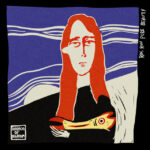
Jana Bahrich sounds like she’s trying to sing the sky open on “Higher.” A standout from Francis of Delirium’s sophomore album Run, Run Pure Beauty, the song is an elevation in every sense: Bigger, brighter, and more fully embodied than the already excellent Lighthouse, yet still wired to the same raw nerve that made that debut hit so hard. The guitars smolder and soar, the harmonies bloom like weather breaking, and Bahrich’s voice sends shivers down the spine as she turns vulnerability into propulsion.
Written in the wake of neck surgery and the vocal recovery that followed, “Higher” channels resilience not as a slogan but as a sensation. “I went all out on this song,” Bahrich says. “There are over seventy vocals and even that wasn’t enough, so I enlisted the help of my speech therapist to add a different vocal texture. She was a crucial part of the past year after she helped me strengthen my voice.” You can hear that history in every layer: The dreamy Laurel Canyon warmth, the near-spiritual choral swell, the way the track keeps reaching upward even as fear and instability tug at its edges.
That upward reach is the heart of Run, Run Pure Beauty, an album Jana describes as “either a warning or a wish”: A plea for beauty to protect itself from the darkness closing in, or an invitation for us to run toward it freely and wildly. On “Higher,” those readings fuse into one breathless ascent. “Take me higher / than war & lust & fire,” she sings, not escaping the world’s violence so much as insisting on another way through it – love as lifeline, beauty as motion, hope as an active choice.
After Lighthouse opened Francis of Delirium up to love, connection, and light, Run, Run Pure Beauty widens the frame without dimming the fire at the center. “Higher” is the sound of an artist pushing past pain and into power, stacking voice upon voice until the song feels almost too alive to hold. It’s roaring and radiant, intimate and immense – a reminder that Bahrich doesn’t just write songs to survive the storm. She writes them to shake it, answer it, and rise above it.
:: “Congratulations” – Aja Maria ::
Grace Holtzclaw, Los Angeles, CA

Aja Maria is a compelling new voice in R&B. Her background as a Broadway performer informs her poised and self-assured presence as a breakout artist. Her new single, “Congratulations,” is an anthemic uproar dedicated to the human experience of falling in love.
Opening up the track with a victorious flurry of trumpets infused with gripping beats, “Congratulations” takes hold of you from the moment you press play. Aja’s voice commands the center of attention with vivid depth and rooted passion. She sings, “It’s so amazing, you found a new way to / Make me fall in love again.” Aja makes the point that love is timeless. No matter how things change, love remains a constant thread amidst the chaos.
Drawing in the acclaimed King Midas on the production of “Congratulations,” Aja Maria is emerging with strong support behind her. King Midas has previously worked with iconic artists among the likes of Teyana Taylor and Justin Bieber. Aja has that one-of-a-kind energy about her that makes her a seamless fit amongst these legendary artists. “Congratulations” makes it clear that Aja’s on a winning streak and she’s taking all her listeners through the finish line with her.
:: “Overnight Sensation (Overnight Jerk)” – Rosemary is famous ::
Charlie Recksieck, San Diego, CA

Normally, we just review music here in this space. But in the case of Rosemary is famous’ new vibey song, “Overnight Sensation (Overnight Jerk),” I simply have to give a rave review to the video.
Let me first set you up with this setup of what the song is about. It’s all right there for you in the title “Overnight Jerk” – the one-time boyfriend of the protagonist got a little heat going for himself and turned into an asshole.
We didn’t matter and we didn’t care
We drove for hours with the wind in our hair
Until the day you stopped being a rando
‘Cause someone said
You’re like a young Marlon Brando
Overnight sensation
But the fame turned you into a jerk
Who can’t relate to that? The video is pretty damn genius. It all takes place in Madame Tussaud’s wax museum. If you’ve ever been to a wax museum, the celebrity likenesses can range from freaky-accurate to freaky-weird. But they play great in this video, and Rosemary interacts with them beautifully in the video. She seems to save her harshest “in person” attitude for Sylvester Stallone, Tom Cruise, and Charlie Chaplin, by the way. Anyway, strong recommend on the video.
I should be clear that it’s not just a great video; it’s a great pop song that buries some pettiness in smooth synths and soaring vocals. There’s a steady, mellow drum track with delicately arranged production around it. The chord progression of the verse might seem simple, but that critical third chord is enough of a curveball to make this listenable on repeat. And the chorus has multiple parts to it, including the harmonized “cry, cry, cry” and “try, try, try.” In fact, I defy you to get sick of this song.
And if you, like me, like the sweet notes of pop revenge of the “Then I’ll try try try – To ruin your life” part, so much the better.
:: “Chasing a Trace” – Peter DiMaggio ::
Danielle Holian, Galway, Ireland

Peter DiMaggio’s “Chasing a Trace” is a quietly affecting piece of songwriting that thrives on restraint, atmosphere, and emotional authenticity. Where many contemporary singer-songwriters lean heavily on polished production or overt sentimentality, DiMaggio instead trusts the subtle power of texture and narrative, crafting a song that feels lived-in rather than manufactured. The arrangement unfolds with remarkable patience, its layered acoustic guitars creating a warm, earthy foundation while the slide guitar drifts through the mix like fragments of fading memory. Most striking is the wistful trumpet performance, whose delicate phrasing evokes the late-night melancholy of Chet Baker without descending into imitation. Every instrumental choice serves the song’s central themes of longing and remembrance, creating a sonic landscape that feels simultaneously intimate and expansive. The production allows space for silence and reflection, giving the track a cinematic quality that mirrors the emotional uncertainty embedded within its lyrics. Rather than chasing dramatic climaxes, DiMaggio embraces nuance, allowing small melodic details and understated instrumental flourishes to carry the emotional weight.
At the center of “Chasing a Trace” is DiMaggio’s vocal performance, which proves to be the song’s greatest strength. His delivery possesses the easygoing warmth associated with artists such as Jack Johnson, yet beneath that approachable surface lies a vulnerability that feels deeply personal and sincere. He sings less as a performer commanding attention and more as a trusted narrator sharing fragments of a private conversation, drawing listeners into the song’s emotional core. The lyrics navigate themes of absence, memory, and perseverance with poetic clarity, avoiding cliché in favor of observations that feel genuinely earned. What makes the track particularly compelling is its delicate balance between melancholy and optimism; even in its most reflective moments, there remains a quiet sense of forward motion and emotional resilience. As only the second release from Passeri Records and another preview of his forthcoming project, “Chasing a Trace” suggests an artist confidently refining a distinctive musical identity. DiMaggio’s ability to merge folk intimacy, jazz-inflected sophistication, and contemporary singer-songwriter accessibility results in a song that lingers long after its final notes, marking him as a compelling voice whose artistic evolution is well worth following.
:: “Miss Congeniality” – Rivkah Reyes ::
Mitch Mosk, Beacon, New York

Rivkah Reyes comes out swinging on “Miss Congeniality,” a pulsing indie pop banger that turns people-pleasing into a contact sport. Her first single of the year following a string of scattered releases, “Miss Congeniality” is visceral and warm all at once, all crunchy guitars, full-body momentum, and the bruised humor of realizing you’ve been performing for people who still refuse to choose you.
“It’s like I’ve been shapeshifting into whatever version of myself feels the most likable in the moment,” she tells Atwood Magazine. “It’s that pageant energy of being everyone’s favorite but still not actually being chosen. I’m very aware of the pattern while it’s happening, which is where the humor and the sting come from.”
That self-awareness is the spark that makes “Miss Congeniality” hit so hard. Known to many as the bassist from School of Rock, Reyes now fully owns her lane as a New York-based singer/songwriter making what she likes to call “bratty, sapphic bubblegrunge”: Music that feels like a diary entry, a late-night text, and a cathartic scream all tangled together. She describes her new songs “sapphic doomcore situationship bangers,” and that phrase lands because the track really does live inside the chaos of wanting, auditioning, unraveling, and still trying to look good under the lights.
“It’s bratty, high-energy alt-pop with crunchy guitars and a bit of indie sleaze, polished on the surface but kind of unraveling underneath. It lives in that space between sweet and frustrated, like I’m holding it together but barely.”
The lyrics lean into that pageant metaphor with a wicked wink and a clenched jaw. “I’m undercover, I’m on a mission / I do it naturally, like an audition,” Reyes sings, before the chorus turns self-deprecation into a hook built for screaming: “Yeah I might be Miss Congeniality / If I fall and scrape my knee / Am I just a casualty?” It’s funny until it stings, and then it’s funny again – a glittering little spiral of vulnerability, overreaction, and self-defense moves as talent portion.
Fittingly, the video takes that same collision of performance and pain into the ring, roughing up the song’s pageant polish inside a queer and trans Bushwick boxing gym. “I absolutely had to pay homage to Miss Congeniality because the song was so heavily inspired by it, and because I’ve loved that movie forever,” Reyes explains. “There’s something so special to me about the way Sandra Bullock plays this woman who’s trying to survive inside a version of femininity that doesn’t totally fit her naturally. I really connected to that. I liked the idea of taking this super glossy, hyperfeminine world and roughing it up a little. Busted lip, smeared makeup, sweat, chaos. That contrast felt really true to the song.”
That contrast is where “Miss Congeniality” thrives: Between tiara and busted lip, pageant smile and basement-show grit, wanting to be loved and wanting to break the whole performance open. It’s a banger with bite, a bruise with glitter on it, and a knockout reintroduction from an artist who knows exactly how to make the punchline hurt.
:: “two crows” – Hockitay ::
Mitch Mosk, Beacon, New York
Hockitay’s “two crows” moves like an ache learning how to breathe. The Guatemalan-born, Montreal-based artist’s latest single is heavy without ever sinking, warm without softening its strange edges – a slow-burning blend of organic slowcore, indie-electronic haze, distorted guitar, and tactile vocal fragments that gather like smoke around the song’s central omen. One crow may signal misfortune, but two suggest partnership, protection, and luck; here, that image becomes a lifeline against isolation, greed, and the grim machinery of modern life.
“Coin sun / Round warm glow / If we’re broke / So be it then,” Hockitay sings, locating tenderness in scarcity and solidarity in the shadow of collapse. There is dissonance threaded through “two crows,” moments where harmony feels cracked open by discord, but that tension only deepens the song’s strange spell. Chopped and pitched vocals hover like a chorus from another room, while the track’s lush textures create the feeling of a ritual unfolding in real time – intimate, unsettled, and quietly defiant in its refusal to give in to fear.
“These things aren’t usually so clear while the songs are being made. But looking back at it now, I was trying to talk about community as an antidote to the isolating forces of modern society. Two crows are often seen as a good omen, which made the idea of them being fearless in the face of greed interesting to me. They’re these highly intelligent, community-oriented animals, but they also carry Gothic, almost sinister associations with death. I like that their connection to the cycle of life isn’t so grim here. Some of the other images that came up were actually inspired by Moby Dick, like the ‘truth is in the thigh’ referencing Queequeg’s tattoos.”
That balance between darkness and communion gives “two crows” its visceral pull. “No more isolation / We’ve wasted enough / Thinking of living like humans,” he sings, letting the line land like both indictment and invitation. The song does not deny mortality – “A circle will gather the day we die” and “A pine box at last” make sure of that – but it refuses to make death the whole story. Old wood becomes new wood. Fear becomes fellowship. A bad omen becomes a blessing when another body appears beside it.
Following last year’s slo mach, “two crows” finds Hockitay turning disillusionment into a space for connection, and the result feels both ancient and eerily present. It’s a song of weight, warmth, and musical aching, but beneath its shadowed surface is a steady pulse of resilience: Two figures on a pine tree, facing the world together, no longer scared.
:: “Hustle and Opulence in America” – Anish Kumar ::
Ashley Littlefield, California

London-based artist Anish Kumar creates unique sonic textures that serve as the foundation for an eclectic club sound on “Hustle and Opulence in America,” out on the imprint Platoon. The single is a crackled vinyl chop, nostalgic soundbites of savored delight from the influence of Moodymann – as it arrives as the first release ahead of EP AK Cuts Vol. 4. The EP concludes his AK Cut Series, which began in October 2025, having previously explored textures in Vol. 1 (NYC House), Vol. 2 (fresh cuts of Indian-sampled), and Vol. 3 (Italo-disco).
Now, with “Hustle and Opulence In America,” Anish Kumar’s audience can enjoy the simplicity and easy groove of more fresh cuts, savoring early-morning coffee, the crackle of vinyl, and charming flutes that gently soothe the soul, making listeners can’t help but dance in their living room. You can find Anish Kumar serving up high-fidelity vibes to listeners during his Sunday Sessions.
:: Where It All Began – Iration ::
Josh Weiner, Washington DC
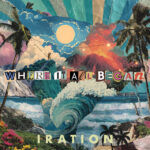
When it comes to Iration, I stand by the words I wrote as part of my staff profile entry three years ago: this band is “one of the artists I’m most happy to have discovered through my work with Atwood.” When that had first occurred, another three years prior to that writing, Iration’s pleasant, beach-evoking tunes had been of great assistance in terms of helping me get through the doldrums of the 2020 lockdown. It was also my good fortune to score a thoughtful interview with lead singer and guitarist Micah Pueschel that same year.
Six years on, I remain an Iration fan and just got to see them perform for the 2nd time (in fact, the 2nd time at the same venue! The House of Blues in Boston). Seeing another captivating performance by the group has inspired me to complete several spins of their corresponding album, Where It All Began. Everything I’ve come to admire about the band is preserved in pristine state on their ninth album: Pueschel remains a captivating vocalist and he and his crew know how to rock their instruments to incredible effects. One of my favorite samples of that is on the song “Grapevine,” when supporting instrumentalists Dan Kaneyuki and Drake Peterson are brought to center stage and allowed to rage freely on the trumpet and trombone (a major highlight of the concert, that moment sure was!) The formula proves successful all the way through the closing track, an imaginative reggae-recreation of “Mary Jane’s Last Dance.”
Micah has described this album as “a nod to the records we grew up listening to, the islands that shaped us, and the feeling that made us want to make music together.” The love that the bandmates all share for the Hawaiian Islands is sonically palpable on Where It All Began, which makes the images of those islands come alive vividly in the mind– as does that wild night at the House of Blues, for me!
:: Overthinker – Carlotta Schmidt ::
Danielle Holian, Galway, Ireland
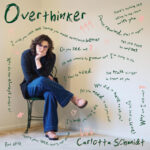
Carlotta Schmidt’s Overthinker is an intimate and deeply human collection that transforms personal reflection into compelling musical storytelling. Written during a period of significant emotional and personal transition, the ten-track album showcases Schmidt’s gifts not only as a singer-songwriter but also as a producer with a keen ear for atmosphere and texture. Composed entirely on a vintage 1979 Guild D55 acoustic guitar, often in moments of quiet solitude, these songs possess an authenticity that feels lived-in rather than performed. Drawing from jazz-inflected acoustic rock, Schmidt builds a sound world that is both warm and expansive, enriched by the contributions of her band, The Bold, alongside the expressive strings of acclaimed guests Dave Eggar and Lyris Hung.
What makes Overthinker particularly engaging is its ability to balance emotional weight with musical adventure. The empowering “Let Me Be Me” stands as the album’s emotional centerpiece, pairing a message of self-acceptance and identity with an infectious sense of uplift, while “Woman Crush Wednesday” reveals Schmidt’s playful side through spirited performances and an impressive display of vocal and guitar dexterity. Elsewhere, “Oyster and Pearl” exemplifies the album’s adventurous arrangements, weaving lap steel and violin into a rich tapestry of contrasting moods, while “Rosalie” unfolds with elegant string textures that highlight Schmidt’s willingness to experiment in the studio. Throughout the record, themes of love, longing, anxiety, grief, and transformation are explored with nuance and sincerity rather than melodrama.
The album reaches its most poignant moment with “I Just Want To Talk To You,” a moving tribute to Schmidt’s mentor of a decade and the sole track to feature the full ensemble of The Bold, Eggar, and Hung together. The result is a piece of remarkable emotional resonance, underscoring the record’s central preoccupation with memory, connection, and change. From the opening introspection of “Since You Never Asked” to the bittersweet honesty of “Two Steps Forward, Twenty Back,” Overthinker never shies away from vulnerability, yet it consistently finds beauty within uncertainty. It is an accomplished sophomore release that demonstrates Carlotta Schmidt’s growing confidence as both a songwriter and producer, offering a thoughtful, richly crafted work that rewards attentive listening and lingers long after its final notes fade.
:: “Don’t Make Me Long for England” – Cormac Looby & Pádraig Hughes ::
Mitch Mosk, Beacon, New York

“I settle into myself / Ready to eat myself.” Cormac Looby and Pádraig Hughes begin “Don’t Make Me Long For England” inside a room that feels too small for the self it’s holding. The debut single from the Irish singer/songwriter and Galway producer is hauntingly beautiful and deeply captivating, a five-minute slow burn that seems to rise from a whisper toward release only to stay suspended in that same hushed intensity. Smoldering guitars, pulsing drums, and Looby’s impassioned vocals move through the song like yearning made physical, letting the tension deepen rather than break.
In a cartoon room under the stairs
Less than a foot above the floor
In an orange chair
I settle into myself
Ready to eat myself
Then I leave with that strange
uncomfortable feeling
Realising England was the last time
I had remotely been a version of myself
That I can stand
Recorded in Hughes’ bedroom studio in Dublin, “Don’t Make Me Long For England” pulls at the uncomfortable longing for a past version of yourself – the person memory insists was easier to inhabit, even when the truth is far more complicated. “When Pádraig sent me this track, I immediately connected with it and thought ‘this is the exact type of music I want to be making,’” Looby tells Atwood Magazine.
“He cites the sensibility of MK.gee and the dark atmosphere of The Gloaming as inspirations. I had a set of lyrics written that I knew would fit the vibe well. The writing came after starting in-person therapy regularly for the first time. During one particular session, I came to the realisation that I much preferred an iteration of myself while living in England. The song sets that scene and the title is a little pep talk with myself, to make my life more bearable here in Ireland and not yearn for the past as much.”
But it feels like
We’re starting to process
But it’s all just a process
So keep on moving forward
Keep on making progress please
And don’t make me long
Don’t make me long for England
That tension between self-confrontation and self-preservation gives the song its shiver. Looby places us in the strange aftermath of therapy, where clarity does not soothe so much as expose: A drive away from home, a conversation in a parked car, a ceiling, a cushion, and the terrifying approach of depth. “Don’t Make Me Long For England” understands that healing is not always cathartic in the moment; sometimes it’s the slow, destabilizing work of realizing what you miss, who you miss being, and how little the past can actually give back.
Looby’s soul-stirring vocal keeps that ache from hardening into despair. When he reaches “But it feels like / We’re starting to process / But it’s all just a process / So keep on moving forward / Keep on making progress please / And don’t make me long / Don’t make me long for England,” he barely raises his voice, and yet the song feels like it’s cresting from the inside out. There is no grand eruption, no easy emotional purge – just a gentle, dramatic swell of raw feeling, as if every guitar shimmer and drum pulse is pressing against the same restrained confession. That’s where “Don’t Make Me Long For England” becomes devastating: Not in release, but in the breathtaking beauty of a release that never quite arrives.
And I have driven a mile
from the comfort of my home
Just to sit in my car
at the end of someone’s road
And talk about the big things
without losing control
Without reaching the depth
that I know I need to go
She was afraid of how it would leave me
With too with long on my own
But with a cushion and a ceiling
The time is approaching
Approaching…
The song never grants the release it seems to promise, and that restraint is its power. Its beauty lives in the waiting – in the smolder, the pulse, the ache held just beneath the surface. Looby and Hughes have made a song about process that feels like process itself: Unfinished, unsteady, still moving forward, still asking the past to loosen its grip.
In a cartoon room
I’m ready to eat myself
In this cartoon room…
:: “Places in London” – Scott Quinn ::
Mitch Mosk, Beacon, New York

“Give me back the summers that were mine.” Scott Quinn begins “Places in London” with a request no one can grant, and that impossible ask hangs over every aching second that follows. The British singer/songwriter and multi-instrumentalist’s latest single from his upcoming album Being Human is a beautifully cinematic pop ballad that understands heartbreak as a kind of haunting: A piano, a voice, a city full of ghosts, and all the ordinary corners that no longer feel safe to enter.
“‘Places in London’ is a song about the hidden losses that come with heartbreak. When a relationship ends, you don’t just lose a person – you lose the places you once shared together. The cafés, streets, and late-night corners that once felt like yours suddenly turn into reminders of what’s gone. The song captures the grief of watching those memories fade over time, knowing that eventually they’ll be replaced by others. It’s both a love letter to the city and a meditation on how love reshapes the spaces around us.”
Give me back the summers that were mine
Pour every drop we drank back into a bottle of wine
And give me back the heart I thought was yours
tell me should I hold on to some hope
Or should I close the door
Since we last spoke
Since he’s moved there
Quinn sings that loss with devastating grace, his voice tender, luminous, and exposed as it moves through a melody that feels built for late-night walks and empty streets. The arrangement gives him room to ache inside every line: The piano is intimate and worn at the edges, the strings bloom with a bittersweet pull, and his vocal rises not to overpower the grief, but to let it fully take shape. When he sings, “There are places in London I can’t go / I’m afraid that my feet will take me back onto our road,” the lyric lands with the awful clarity of muscle memory – the body remembering where the heart is still too afraid to return.
There are places in London I can’t go
I’m afraid that my feet will
take me back onto our road
And I’m not ready yet to see
That you’re with him instead of me
In the places in London I can’t go
If I stay away I’ll never have to know
“I wrote this song with a good friend of mine, Charlotte Black. We were sat at my slightly wonky sounding piano in my living room and it felt like the song just fell out of us. Fast forward a couple of years and we were stood together in Snap Studios watching a string quartet record the final version, produced by my very good friend and collaborator Rich Cooper, with the string parts arranged by me. By the time it came to recording, I’d already been performing the song all over Europe. I got in my head a bit because I wanted the vocal to be perfect, but the truth is, the songs that seem to connect most are the ones where the performance has something raw and human in it. So I let go of the idea of perfection and leaned fully into the heartbreak.”
That surrender is exactly what makes “Places in London” so affecting. Quinn is not just mourning a person; he is mourning a map, a routine, an imagined future, a home that now belongs to someone else. “Now a stranger hangs his clothes in my closet / Now a stranger lives the life that I wanted,” he sings, before the bridge tightens around painfully specific details: The coffee shop, the tiny cups, the second left, the mother who still asks if they’re fine. The song’s power lives in those details, in the way love turns geography into memory, and memory turns geography into an emotional minefield.
“Ever since I wrote this song, I’ve been thinking about how many people avoid certain streets, coffee shops, parks and places because the memories tied to them are just too painful. I started wondering if there’s a way to reclaim those spaces, to take some of that power back. Having just gone through a breakup myself, I’ve found I’ve been going to some of these places on purpose, to confront whatever comes up. It’s a powerful exercise, even if it’s not exactly a fun one. I want people to know they’re not alone in what they’re feeling. That’s where the idea of a map of ‘Places in London I Can’t Go’ came from. A space where people can share the locations they can no longer go, and the story behind why. The hope is that it grows into something bigger. A canvas of stories, vulnerability, and the universal experience of love and heartbreak.”
With “Places in London,” Quinn transforms private devastation into shared recognition, giving listeners a place to put all the streets they still avoid and all the rooms they have not yet reclaimed. It is heartbreaking, yes, but also strangely radiant – a song for anyone learning that the city does not stop being yours just because love changed its shape.
:: “Blindspot” – Lynn Hollyfield ::
Chloe Robinson, California

Blind spots are areas surrounding your car that cannot be seen in your mirrors, so extra vigilance is necessary to drive safely. Lynn Hollyfield applies that idea to her latest release. The singer was not as attentive to a friend and also a family member in crisis, causing their struggles to remain in her blind spot. That is something she lives with everyday and her pain is beautifully expressed with “Blindspot.” Her rich alto vocals, paired with warm acoustic guitar and subtle violin textures, bring the emotive folk arrangement vividly to life. Losing someone close to the fentanyl crisis can leave a lasting weight of grief, anger, and helplessness, often accompanied by the lingering question… could I have done more? Lyrics include, “Sometimes we pretend we don’t have a clue, our instincts don’t lie, they tell us the truth.” Oftentimes we can ignore what our gut is saying and overlook when a situation doesn’t feel right, only to realize later that those early intuitions were trying to warn us. Ultimately, “Blindspot” serves as a reminder to trust those quiet signals before they fade into hindsight.
Hollyfield’s songwriting journey started in her teens on Staten Island, New York, where she was raised amid a musical landscape that spanned from jazz legends such as Ella Fitzgerald and Frank Sinatra as well as classic rock and folk influences like The Beatles and Neil Young. She first took to the stage in local venues while still young, eventually earning attention as part of the duo Hollyfield & Spruill, which performed at festivals including the Falcon Ridge Folk Festival. After embarking on her solo career, Hollyfield went on to release a series of well-received albums, including LAYERS (2010), IN THE BALANCE (2014), and LOOK UP (2024), receiving high praise. “Blindspot” keeps the momentum going and acts as a stark reminder that what goes unnoticed can carry the heaviest consequences.
:: “Shaking In My Boots” – Jimmie Allen ::
Grace Holtzclaw, Los Angeles, CA

Jimmie Allen is a defining voice in country music, blending elements of pop and R&B into his vibrant and expressive sound. His new single, “Shaking In My Boots,” is a lovestruck anthem that sheds light on a relationship that sets the foundation for his life. It captures the power of surrender and the bliss of letting go in the arms of someone we trust. Allen isn’t afraid to admit that he depends on someone. There’s beauty in the courageous endeavor of fully falling in love.
“Shaking In My Boots” entrances the ear with rolling percussion, poignant notes of acoustic guitar, and a rooted vocal that dives deep into the soul. Allen croons, “If we can get beyond this / I’ll be better I promise / Life without you has got me shaking in my boots.” The music video for the track captures Allen in an emotional state as he reflects on the depth of his love that surfaces over the possibility of losing them.
Jimmie Allen has been recognized for his achievements with the CMA New Artist of the Year and ACM New Male Artist of the Year Awards. He has also been nominated for Best New Artist at the 64th GRAMMY Awards. His career as a multi-platinum musician has touched the lives of many. His effect on culture is a result of his fearless and unabashed presence as a performer. “Shaking In My Boots” is a testament to the resilience of love that persists through our hardest moments.
:: “Normal Two Point Zero” – David Geraghty ::
Mitch Mosk, Beacon, New York

“I need an ally for the trial / For normal two point zero.” David Geraghty turns uncertainty into an entrancing enchantment on “Normal Two Point Zero,” a funky, feverish, and hypnotic psychedelic pop spell from his upcoming solo album KOMOREBI. The Bell X1 founding member and multi-instrumentalist moves through synths and sweat with a strange, magnetic ease, building a song that feels both playful and haunted – a dance-floor daydream flickering beneath the weight of a world remaking itself in real time.
“N2PZ was written at a time of forced isolation. While celebrating the joy and sense of belonging we feel from being with our tribe, it also reflects on the fallout and sense of loss when these ties are torn apart. The song also speaks to the current world, with its escalating upheaval and imbalance between that familiar security and the unknown of, where does it all end?”
That tension gives “Normal Two Point Zero” its pulse. Geraghty sings of “photographs of our dancing days,” of faces and embraces kept out of reach, of trying to understand how love survives when contact itself becomes fear. The groove keeps moving even as the lyrics look backward toward communion and sideways at collapse, its shimmering synths and restless rhythm turning disorientation into a body-moving rush. It’s fun, absolutely – but that fun has friction, a sweaty urgency born from separation, longing, and the deep human need to gather again.
Since his last release, Geraghty has continued expanding an already wide-ranging creative world, from Bell X1 and solo albums to film composition and classical study, and “Normal Two Point Zero” carries that restless curiosity in its bones. It’s psychedelic indie pop with a cinematic eye and a communal heart, a song about what happens when the old normal disappears and we’re left dancing toward whatever comes next. Strange, soulful, and irresistibly alive, “Normal Two Point Zero” makes the unknown feel less like an ending than a groove we have no choice but to enter.
:: “The Emperor’s New Clothes” – Gianni Ferraro ::
Danielle Holian, Galway, Ireland
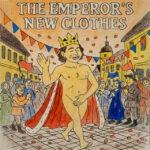
Gianni Ferraro’s “The Emperor’s New Clothes” is a sharp, confidently crafted indie-rock statement that wastes no time making its impact felt. Built around driving rhythms, textured guitars, and an infectious melodic core, the track balances grit and accessibility with impressive ease. There is a restless energy running beneath the song’s polished exterior, creating a sense of momentum that keeps the listener engaged from the opening bars to its concise finish. Rather than relying on oversized production tricks, Ferraro allows strong songwriting and instinctive musicality to take centre stage, resulting in a track that feels immediate yet layered enough to reward repeat listens.
What makes “The Emperor’s New Clothes” particularly compelling is its ability to occupy the space between introspection and anthemic release. Ferraro channels alternative-rock attitude through a modern indie-pop lens, delivering a performance that feels authentic rather than calculated. The production remains clean and dynamic throughout, allowing every hook, rhythmic shift, and melodic flourish to land with precision. Clocking in at under three minutes, the song leaves a lasting impression without overstaying its welcome, establishing Ferraro as a songwriter with a keen understanding of both emotional resonance and musical economy.
:: “Funk The Planet” – Doctor Noize ::
Chloe Robinson, California
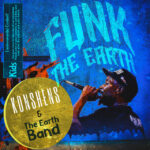
“Funk The Planet” comes courtesy of celebrated singer-songwriter, artist, and musician Doctor Noize. With the single, the artist urges action to help safeguard the environment. The track comes from his forthcoming retrospective album Positive Energy! (The Music of Doctor Noize). It also serves as the final release from the Doc’s all-star side project, Konshens & The Earth Band, featuring Konshens The MC from DC (son of hip-hop pioneer Master Gee of The Sugarhill Gang), Grammy-winning UN Goodwill Ambassador Ricky Kej of India, and acclaimed producer Lonnie Park of New York.
Exploring through rap how we can promote a healthier world is a fun, dynamic way to motivate people to do their part. Some lines are… “Learning like a student the do’s and don’ts, how we can do the most, only helping it grow, keep the water ways clean so the water can flow, keeping trees safe so we don’t breathe CO.” The goal is to turn awareness into action so that every beat and every lyric inspires real change for a more sustainable future. This piece does that brilliantly. The video displays different animals and nature scenes further capturing the heart of it all.
Renowned children’s recording and performing artist Doctor Noize is a Stanford Music graduate and Master of Recording Arts whose career spans entrepreneurship, education, writing, speaking, app development, studio ownership, community building, and lifelong learning, all guided by his playful “philosopher-poet-goofball” spirit. After losing most of his family in a single year during childhood, he found refuge in music and has since devoted his life to sharing its healing power with others. The track builds on that healing energy, turning its focus toward healing the planet.
:: “Time Killing” – Strange Plants ::
Mitch Mosk, Beacon, New York
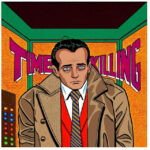
“Don’t fear, don’t cry / Don’t let ’em steal your soul before you die.” Strange Plants drift through the smoldering haze of “Time Killing” with a seductive ease, turning existential dread into a dreamy psychedelic reverie that feels lush, languid, and strangely alive. The song moves like smoke across an empty room: Slow elevator, stalled routine, a life spent waiting on standby, all wrapped in lap steel shimmer, trippy strings, and a vocal performance that feels half-dazed, half-awake.
“At the risk of sounding absurdly pretentious, I was reading a lot of Charles Bukowski at the time,” songwriter Matt Brannon shares. “So it created a sort of temporary supercharged nihilism. The song’s title is a play on the phrase ‘killing time’; the idea that time comes for us all and we spend so much of it in the service of meeting basic needs.”
That “supercharged nihilism” hums through every corner of “Time Killing,” but Strange Plants keep the song from collapsing under its own dread. Instead, they let it float. “The elevator feels slow today / Nothing ever seems to change,” they sing, before the chorus turns the phrase inside out: “It’s just time, time, time killing.” What begins as a meditation on monotony slowly becomes a warning flare, a reminder that the hours we burn through are also burning through us.
“We had some cool collaborators on this track: Loel Campbell from Wintersleep and Billy Talent on drums, Christine Bougie from Bahamas on lap steel and Drew Jurecka (Dua Lipa) did the strings. It was mixed by Chris Shaw and co-produced with Juno Album of the Year winner Michael Phillip Wojewoda.”
You can hear that chemistry in the track’s rich, analog glow. Born from the creative partnership of Travis Flint and Matt Brannon, former members of Halifax alt-country collective Hot Mondy, Strange Plants bring vintage psychedelia into a more haunted, modern frame, drawing on the widescreen pull of Pink Floyd and Supertramp while letting MGMT-esque color and Jack White grit bleed through the edges. “Time Killing” is not loud about its despair, and that’s what makes it linger. Its beauty lives in the gentle drift, the smoldering production, and the ache beneath the haze – the feeling of watching life move past while still trying, somehow, to keep your soul intact.
:: “Bittersweet” – Sophia Lynn ::
Julius Robinson, California

Sophia Lynn, the 18-year-old singer from Huntington Beach and daughter of Dirty Head’s Duddy B, is making her debut with a highly emotive single. Written during her senior year of high school, “Bittersweet” reflects a turning point, encapsulating the ache of leaving one chapter behind while stepping into the next. The lyrics strike a chord with many experiencing the shift into adulthood. Lines like “we were growing up too fast weren’t we, trading summers for a pair of car keys,” evoke the uneasy blur between adolescence and independence, where freedom and responsibility begin to overlap. Lynn’s airy, smooth vocals carry a beautiful sense of nostalgia.
Raised in a musical environment, she grew up observing her father develop his career alongside longtime collaborators such as Rome. Over time, those enduring creative connections have come to play a key role in shaping the start of her own artistic journey. With a strong flair for storytelling combined with a rich, silky tone, listeners are drawn to her vulnerability and heart. Taking inspiration from Lizzy McAlpine and Olivia Rodrigo, her sound blends honest lyricism with a moody, modern pop feel.
:: “Necessary Evil” – MIIA ::
Danielle Holian, Galway, Ireland

Norwegian alt-pop visionary MIIA plunges headfirst into the shadows on “Necessary Evil,” a mesmerizing reinvention that feels both daring and inevitable. Trading the slow-burning melancholy of her earlier work for the kinetic pulse of UK garage and bassline-inspired production, MIIA emerges with a sound that throbs with urgency and emotional electricity. Produced by Joachim Rygg (JR), the architect behind her breakthrough anthem “Dynasty,” and polished to a razor-sharp glow by legendary mixer Spike Stent, the track balances cinematic vulnerability with late-night club intensity in exhilarating fashion. Skittering 2-step percussion ricochets beneath cavernous sub-bass while airy synth textures and fragmented vocal chops swirl around MIIA’s unmistakable voice, a voice that still carries the same haunting ache that first captivated listeners, but now weaponized against a restless, dancefloor-ready backdrop. It’s euphoric without losing its emotional weight, a song equally suited for solitary reflection and crowded rooms lit by neon haze.
What makes “Necessary Evil” truly compelling, however, is the emotional honesty pulsing beneath its sleek electronic surface. MIIA frames heartbreak and self-preservation not as opposites, but as intertwined forces in the painful process of growth. Her lyrics capture the quiet devastation of choosing truth over temporary comfort, embracing the difficult decisions that leave scars but ultimately restore dignity and clarity. There’s a fascinating tension throughout the track: strength wrapped in fragility, longing colliding with self-respect, intimacy dissolving into liberation. Rather than abandoning the atmospheric depth that defined her earlier material, MIIA expands it into something more immediate and physically alive. “Necessary Evil” doesn’t simply mark a sonic evolution; it announces the arrival of a more fearless, multidimensional artist willing to push her emotional world onto bigger, bolder canvases. It is the sound of reinvention done right; emotionally raw, sonically intoxicating, and impossible to ignore.
:: “Birds of a Feather” – Sheva Elliot ::
Chloe Robinson, California

“Birds of a Feather” by Sheva Elliot is an addictive twang rock single that will leave you craving more. Her country vocals atop glistening acoustic guitar drift through the track with an easy confidence, weaving warmth and grit together into a sound that’s timeless. The song examines the emotional push and pull between what’s seen as “right” by others and what feels right on a personal level. At its core, it’s about giving in to desire, chasing what sets your soul on fire. The visuals take place at a weathered, vintage-style gas station set in a dusty desert landscape, which totally matches the song’s vibe. Even her fashion is immaculate, dressed in a brown fringe jacket and a necklace with a large turquoise pendant.
The piece offers a peek into Elliot’s upcoming full-length album. The offering is a roots-rock project blending Americana with gospel flavor and the raw energy of classic rock and roll. Her work frequently delves into what she describes as “the truth of the human experience,” freedom, heartache, humor and finding the strength to be your most authentic self. That vulnerable authenticity is felt throughout “Birds of a Feather.”
:: “Same Old Haunts” – Racoonhead ::
Mitch Mosk, Beacon, New York
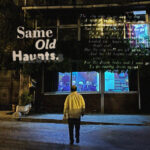
Racoonhead blast through “Same Old Haunts” like a sparkler burning at both ends. The Melbourne emo-pestcore band’s second single of the year is pure kinetic release, all exhilarating beat, glistening surf-rock guitar licks, high-energy vocals, and unrelenting forward motion. It’s rip-roaring and wildly fun, a song that seems to know exactly how much life it can pack into 137 seconds – and wastes none of them.
“I’m a restless person by nature,” Racoonhead’s Adam Jared Lee tells Atwood Magazine. “So the nomadic lifestyle has always beckoned me: Hopping from place to place, living in foreign cities, then packing up and doing it all over again. On some subconscious level I think I’ve been searching for something missing. I don’t even know what it is; I guess I always figured I’d know it when I see it. But these days, I’ve been reminding myself to slow down, to take time to just be with what’s right in front of me.”
That friction between restlessness and stillness gives “Same Old Haunts” its bite. Beneath the song’s adrenaline rush is a deeper ache: The pull of relocation, escapism, and the search for meaning crashing headfirst into the possibility of staying put. “Restless heart, please stay still,” they sing, letting the line flash by in the middle of all that movement, while “Watching the stars from a red-eye budget plane / Now we’re starting over and over again” captures the romance and exhaustion of a life always in transit.
“I think this song really encapsulates the themes on the upcoming album of relocation, escapism, and the search for meaning,” Lee adds. “So shooting it on the runway of the Melbourne Airport, a city with one of the highest rates of immigration, of people searching for something more, was really apropos you could say.”
That airport runway setting could not feel more fitting. “Same Old Haunts” is a song about motion that knows motion alone will not save you, a blast of bright guitars and restless heartache racing toward the realization that escape can become its own kind of loop. Still, Racoonhead make that loop sound irresistible – a high-speed, heart-forward indie rock sprint that leaves you breathless, grinning, and ready to hit replay.
:: I Kept Your Secret, Saoirse – Jonah Connock ::
Danielle Holian, Galway, Ireland

Jonah Connock’s I Kept Your Secret, Saoirse is a debut that understands restraint not as limitation, but as a method. Across its eight tracks and tightly measured 31 minutes, the UK singer-songwriter builds a record defined by proximity with vocals that sit close to the ear, guitar lines that feel lightly etched rather than constructed, and arrangements that consistently refuse excess. What emerges is a folk-leaning collection that draws from tradition without leaning on nostalgia, instead reframing intimacy as its own contemporary aesthetic language.
The album’s emotional architecture is anchored in songwriting that privileges observation over resolution. From the opening track “Letter to You,” a formative composition that originated as a songwriting exercise, to the confessional stillness of “Half-Awake,” Connock frames each piece as a contained emotional moment rather than a fully resolved narrative. “Bones” and “Black Dress” extend this approach through atmospheric understatement, where lyrical fragments and recurring imagery carry as much weight as conventional hooks might in a more expansive production. The influence of Cornwall’s coastline is especially pronounced here, with shifting weather and tidal imagery functioning less as setting and more as emotional grammar, shaping the way memory and longing are articulated across the record.
Where the album gains its distinct identity is in its commitment to nuance. Connock’s vocal delivery avoids theatricality, instead leaning into tonal fragility that reinforces the record’s central themes of connection, loss, resilience and hope. This restraint is mirrored in the instrumentation: expressive but unembellished guitar work forms the backbone of each track, while production choices deliberately preserve space and silence. Even at its most atmospheric, the album resists crescendo, favouring drift over climax. The closing track “Clandestine,” described by Connock as reflecting “time passed and the feeling of perpetual possibility,” encapsulates this ethos, ending the record not with resolution, but with openness. In doing so, I Kept Your Secret, Saoirse positions itself less as a definitive statement and more as an unfolding emotional map, one that suggests its creator is only beginning to trace its boundaries.
— — — —

Connect to us on
Facebook, 𝕏, Instagram
Discover new music on Atwood Magazine
:: Weekly Roundup ::
follow WEEKLY ROUNDUP on Spotify
:: This Week’s Features ::