Every Friday, Atwood Magazine’s staff share what they’ve been listening to that week – a song, an album, an artist – whatever’s been having an impact on them, in the moment.
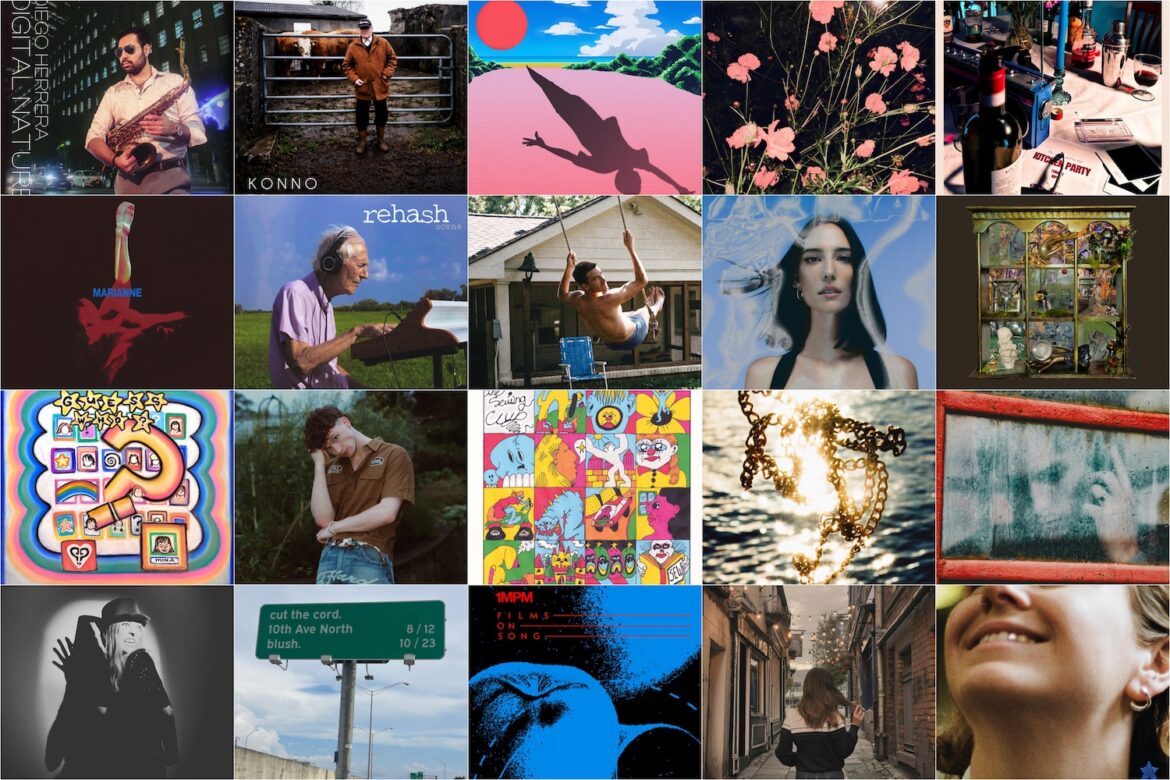
This week’s weekly roundup features music by Medium Build, Modern Haze, Fontaines D.C., Hallworth, min.a, archie, Diego Herrera, Billy Strings, POUCH, cut the cord., Rehash, Amelie Lens, My Life As A Moth, KONNO, CS Hellmann, The Madelines, Montello, Small Pond, The Sewing Club, and Films on Song!
•• •• •• ••
 follow WEEKLY ROUNDUP on Spotify


•• ••
:: King of Having Fun – Medium Build ::
Mitch Mosk, Beacon, New York
Nick Carpenter has spent a decade making Medium Build out of the thoughts most people would rather hide. On King of Having Fun, he finally turns that same unflinching gaze toward the habits that kept him alive – and the ones that were keeping him from living. The singer/songwriter’s sixth album, out now via slowplay/Island Records, is explosive and intimate in equal measure, channeling panic, desire, self-loathing, humor, family history, romance, and hard-won freedom into a world that feels unmistakably his. It’s also an immediate album-of-the-year contender – not because it ties any of those contradictions into a neat bow, but because Carpenter lets every one of them stay messy, loud, funny, painful, and human.
“This album is maybe the best and most important thing I’ve ever made. I got all my favorite people in a room and we had fun. It’s a celebration of life,” Carpenter shares. Few songs capture the record’s intensity better than “Do Something Productive,” one of King of Having Fun’s most viciously funny and unsettling moments. Carpenter begins with the familiar choreography of self-improvement – wake up, run, meet a friend, eat well, clean the house, write a song – only to watch the whole routine collapse beneath the compulsions it was supposed to control. The song is relentless because Carpenter’s mind is relentless: Wellness becomes another benchmark, another performance, another way to discover he still hasn’t fixed himself.
“Wake up, go for a run, coffee with a friend
Go home and make some lunch
Do something productive,
clean the house, and write a song
But you know it won’t be long,
you know it won’t be long
’Til I gotta get super f**ed up…”
“Perceived” cuts even closer to the bone. Here Carpenter turns his attention toward Medium Build itself and the strange bargain at the center of an autobiographical career: He has built a life by saying the private thing out loud, only to realize that constant exposure can become another form of confinement. “So I turn my private life into entertainment / Commodified all the thoughts I’d ever had,” he sings, before the song reaches its bruising refrain: “I don’t wanna be here / But I don’t wanna be gone / No I don’t wanna be perceived at all.” It’s one of the album’s sharpest contradictions – wanting the stage, the songs, and the connection while recoiling from what it costs to be watched.
That push and pull gives King of Having Fun its astonishing range. “Bird Woman” churns and erupts with raw, almost feral release, Carpenter seeing himself in the mockingbird making noise because it wants something. “Home Depot” brings twangy charm, empathy, and genuine ache to its portrait of a man who can fix nearly anything except himself. “It’s Not Easy (Falling In Love)” burns with heat and romantic urgency, while “In My Gut” glows dreamily as Carpenter traces learned behavior and family conflict backward through generations. “Chill” smolders until its electric fuse catches, complete with a guitar solo that hits exactly where it should; “Downpour” barrels forward with emotional and musical force; and “Armor” turns intrusive thought into pure catharsis: “There I go again / Projecting on you / And I hate myself / So, I turn it into art.”
The vitality running through these songs is no accident. Carpenter made much of King of Having Fun in the room with the musicians who have become central to Medium Build’s live identity, allowing drums, guitars, bass, mistakes, laughter, and friendship to shape the music from the beginning. Where earlier Medium Build recordings often started with beats and were later translated for the stage, these songs already seem to know what they’ll become in a packed room. Carpenter describes the difference simply: “So much less loneliness. Informed by laughter and friendship.” That communal pulse is everywhere – even at the album’s darkest, it rarely sounds isolated.
And then there is “King of Having Fun” itself, the album’s emotional center and the song that feels like a capstone to an entire era of Carpenter’s writing. He looks backward toward the curious, rambunctious kid he was before fun became partying, before approval became currency, before every experience came with an awareness of how it might look from the outside. The memories are wonderfully specific – bikes, DVDs, a PSP, stuffed-crust pizza, Mountain Dew – but the real ache comes from recognizing how naturally that younger self once inhabited his own life.
“I was a curious kid and that curiosity led me to the deep woods, not only of Dire Dire Docks or Vice City, but of my own physical world. That curiosity led me to call my local radio station and ask what that song they just played was. It was ‘Two Princes’ by Spin Doctors! That curiosity got me second place in the rocket building class at camp and had me riding the bench during my only season as a basketball player. That curiosity enabled me to take risks and fail and laugh. That curiosity revealed a zeal for life that wasn’t much concerned with how I was perceived. That curiosity is very much the DNA of a kid who could wear the robe and crown, the king of having fun.”
That child isn’t simply an object of nostalgia. Across King of Having Fun, Carpenter is trying to recover some of his freedom without pretending he can undo everything that came afterward. As he tells Atwood, “Fun is not concerned with safety. Fun knows it’s safe. Survival is a chokehold on control and safety.” That distinction runs beneath nearly every song here: the difference between pleasure and escape, work and presence, attention and connection, making it through the day and actually being inside it.
King of Having Fun succeeds because all of that self-examination still results in a record you can scream, dance, cry, laugh, and lose yourself inside. Carpenter hasn’t made an album about arriving at some perfected version of himself; he’s made one about being alive enough to keep looking, loving, failing, playing, and trying again. It’s blisteringly catchy, emotionally overwhelming, deeply funny, and full of the kind of writing that makes a private thought suddenly feel communal. For a project that has always thrived on turning inner chaos into connection, King of Having Fun feels like Medium Build at his most complete – and one of the year’s most special records.
:: “Kitchen Party” – Modern Haze ::
Danielle Holian, Galway, Ireland
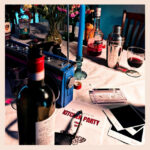
Modern Haze understand the particular magic of a night that refuses to go according to plan. “Kitchen Party” takes that familiar coming-of-age scenario and turns it into a full-bodied indie rock anthem, packed with the kind of hooks and kinetic energy that make a song feel instantly at home in a packed room. Biting guitars cut through bouncing bass and punchy drums, giving the Cambridge outfit a sound that feels rooted in the early 2000s without becoming overly nostalgic. There is a looseness to the track that suits its subject perfectly, with the band capturing that strange, exhilarating point in an evening when nobody quite knows where the night is heading. It is messy, spontaneous and gloriously alive, with frontman Jack delivering the song with an emotional directness that ensures the rush never comes at the expense of feeling.
What makes “Kitchen Party” particularly effective is the universality sitting underneath its youthful exuberance. The song is less interested in documenting one particular party than capturing the feeling of them all: arriving somewhere without knowing what to expect, meeting people who were strangers hours earlier, losing track of time and inevitably waking up the next morning with a sore head and a collection of memories that somehow feel more valuable because they were never planned. Modern Haze channel the melodic immediacy of The Vaccines alongside the expansive rock instincts of Kings of Leon and the sharp observational quality of Arctic Monkeys, while maintaining a character of their own. Their ability to balance the ethereal with the gritty gives the track a welcome depth, allowing the guitars to provide the adrenaline while the lyrics provide the reflection. It is nostalgic, certainly, but there is no sense of looking backwards. Instead, the song celebrates being completely present.
For a band still establishing its identity, Modern Haze already sound remarkably assured. Their growing presence across East Anglia and London, alongside early support from outlets including ASBO Magazine and an appearance at Festival Too, suggests a group steadily building the foundations for something bigger. “Kitchen Party” makes a convincing case for that trajectory, functioning equally well as a soundtrack to reckless nights out and as a reflection on why those nights matter in the first place. There is an instinctive understanding here of what makes indie rock endure: memorable guitars, a chorus built for collective shouting and enough emotional honesty to make the nostalgia feel earned. Modern Haze are not attempting to reinvent the party song. They are doing something arguably more difficult, capturing the fleeting, chaotic feeling of youth and making it sound completely irresistible.
:: “Marianne” – Fontaines D.C. ::
Heleen Weber, Cologne, Germany
There’s a confrontational sense in Fontaines D.C.’s new “Marianne” that feels both uncomfortable and inevitable. Like holding up a mirror of honesty, the Irish band explores the concept of hedonism, as singer Grian Chatten tells us:
This year you should come and stay here
You can follow my lead
I can help you disappear
The track is shaped by an outlook that’s anything but hopeful. Chatten himself reflected: “I felt it would be more powerful to leave the hope out and reflect the ugliness honestly. This one needed to feel more like a catastrophic warning. There’s a poignant sense of us being on the brink of some other kind of form of humanity, or non-humanity.” This end-of-world notion heavily reflects on the track. One might try and ignore all the bruising of the world, but reality will never just go away:
Understand this is your life
You can go on dreaming
You can go under the knife
Marianne
Fontaines D.C. try to grapple with the weight of the world on “Marianne.” Characterized by the anxiety and unease that the band feels about the present moment, they reflect with honesty on the option and nature of escapism. Because ultimately fleeing into a world of instant dopamine rushes and “cinematic feelings” might sometimes be easier than facing the world and its problems head-on – even if it comes at the cost of deceiving yourself.
“Marianne” is an exciting first glimpse at the Irish band’s upcoming fifth studio album Dopamine Chamber, which is set to be released on October 16 via XL Recordings. The single hints at the entire upcoming album taking a darker, colder turn. “The album itself is a dopamine chamber,” Chatten stated, “You step inside and we test these different mind- or mood-altering pieces of music on you.”
With “Marianne,” Fontaines D.C. seem to invite the listener to “disappear,” maybe just in time for their recently announced tour. The single serves as an instant mood-setter for their upcoming live run across Europe, which notably features two shows at iconic Irish venue Slane Castle the following June (including a – for some certainly tragic – overlap with Glastonbury Festival).
Along the way, Fontaines D.C. have always redefined their sound, from their debut record Dogrel all the way to their critically acclaimed and ultimate commercial breakthrough, 2024’s Romance. After that, the stakes are now certainly higher. But the band doesn’t shy away from continuously evolving their sound. “Marianne” is a stark move away from the infamous guitar riffs that shaped the first records – an evolution that admittedly won’t be received completely without objection. But it’s more than worth it giving them a shot at this newly synthesizer-influenced soundscape. “Marianne” is proof that this new era works wonderfully for the band. Albeit moving away from guitar riffs to synthesizers, the track – produced by James Ford – persuades with its incredible arrangement. There are lush strings throughout the last chorus, and the outro layers Chatten’s vocals in a truly tremendous way. The song simply casts its spell on you right away – and I very genuinely just can’t stop listening to it. Its sound is seductive, almost like a siren song. The melody is instantly memorable – an overall theatrical and grand track, both sonically and lyrically.
All along, Chatten is a wordsmith as always. But next to the lush and rich sound of the track, I can’t help but wish there had been more lengthy and abundant lyrics to accompany this, too. But alas, this is only a first short look at what will certainly be one of the most exciting records of the year.
:: “Brush My Teeth” – Hallworth ::
Mitch Mosk, Beacon, New York

Who knew brushing your teeth could sound this romantic? Hallworth’s “Brush My Teeth” is a dreamy indie pop reverie that glows from the first note, all glistening guitars, smoky atmosphere, and a vocal performance so sweetly intoxicating it practically floats. Hannah Lloyd sings with a gorgeous, distinctive lilt, her voice tender and spellbinding as the arrangement smolders around her. The whole song carries that rare feel-good warmth that sneaks up on you – intimate enough to draw you close, radiant enough to leave you smiling.
Hallworth is the alternative indie pop project of South London singer/songwriter and instrumentalist Hannah Lloyd, who grew up playing violin in classical orchestras and string quartets before developing her own songwriting voice. Her stage name pays tribute to her grandmother, an opera singer and singing teacher, while her music now bridges two cities: London and Nashville, where she has split her time since falling in love on a writing trip. That transatlantic pull feeds directly into Hallworth’s sound, pairing confessional songwriting with pop polish, high-energy guitars, and Lloyd’s unmistakable accent. “Brush My Teeth,” released July 3 via Too Fine Records, was co-produced with Tom Baird and mixed by Amy Sergeant (Bastille, Zola Courtney), and serves as the first single from her forthcoming Upswing EP, out October 16. Next single “Running Blind” follows September 11.
“I wrote this song after falling in love with someone that made me feel like I was capable of anything,” Hallworth tells Atwood Magazine. “It was a new feeling to me to be in a relationship that built me up consistently. It was so exciting to be able to support each other – even through long distance, and busy careers. I took it into the studio with my co-producer Tom Baird, and we spent a long time getting it right.”
You can hear that care in every inch of “Brush My Teeth.” The production gives Lloyd’s voice plenty of room to breathe while surrounding her with a soft-focus glow, and the guitars arrive like little waves of reassurance, brightening and thickening around her as the song opens up. There’s a beautiful tension in how understated the performance remains even at its most radiant: Hallworth keeps the intimacy intact, so the track lands less like some grand romantic declaration and more like the private thrill of realizing another person genuinely believes in you.
That’s what “Brush My Teeth” captures so beautifully – love as encouragement, companionship, and the sudden expansion of what you think you can handle. Hallworth wraps that realization in a warm, inviting haze, giving us a song that glistens, smolders, and stays close long after it ends. It’s a little dreamy, a little intoxicating, and exactly the kind of indie pop reverie that leaves you better than it found you.
:: “guess who?” – min.a ::
Mitch Mosk, Beacon, New York

Dim the room, turn “guess who?” up, and surrender to the haze. min.a’s latest is a dreamy, lush alt-pop reverie that glows from the inside out, all brooding restraint and glistening warmth until the chorus suddenly swells into something much heavier. Thick guitars crash through the softness, giving the song a pulse of heat beneath its hypnotic surface, while min.a’s enchanting vocal seems to hover inches from your ear. She sings with an understated intimacy that pulls you closer, letting every little crack of uncertainty soak in until the whole thing feels achingly close.
min.a is the moniker of NYC-based Korean American singer/songwriter/producer Michelle Lee Bae, who grew up between California and Seoul before studying at NYU’s Clive Davis Institute of Recorded Music. Her music has long been a place to process isolation and the complicated ways we see ourselves through other people, and “guess who?” turns that instinct inward. Released August 28, the single follows earlier 2026 release “good fight” and finds min.a channeling insecurity into a song that sounds inviting even as its lyrics expose the anxiety underneath.
“My new single came from a sudden self revelation after playing the board game ‘Guess Who?’ with some close friends. Trying to describe someone fully based on my own opinion of them sparked this realization that other people may not see me the way I see myself,” min.a tells Atwood Magazine. “I often project my worst insecurities onto what I believe others think of me. As someone diagnosed with anxiety, it’s easy to convince myself other people have only negative things to say. It’s a self-inflicted crisis—I think the lyrics ‘I wish you’d just come out and say it’ reflect the feeling of impatience and anxiety that can pervade parts of my life.”
That line is the song’s open wound: “I wish you’d just come out and say it / I don’t want to play another round of guess who?” min.a sings, trying to drag an imagined judgment into the light before it can keep multiplying in her head. Elsewhere, “maybe I was almost something good” and “I’m not everything I want to be” reveal how quickly the fear of what other people think collapses into self-criticism. The lyrics are intimate enough to sting, but the arrangement keeps pulling them outward, especially when those guitars thicken around the chorus and turn private doubt into a full-body rush.
That push and pull gives “guess who?” its hypnotic power. min.a wraps raw self-doubt in warmth, melody, and a little bit of glow, creating a song that can comfort even as it exposes the thought spiral underneath. The guitars surge, her voice stays close, and the entire track seems suspended between wanting an answer and fearing what that answer might be. By the end, “guess who?” leaves the question hanging exactly where it belongs – unresolved, intimate, and echoing long after the haze clears.
:: “THE NARCISSIST” – archie ::
Mitch Mosk, Beacon, New York

archie knows how to make self-reckoning sound like a damn good time. “THE NARCISSIST” is grade-A stomp ’n’ holler singalong shit, a wildly catchy folk rock reverie driven by big melodies, pounding momentum, and the 22-year-old Scottish artist’s enchanting, dramatic voice. Call it Scot-pop, as archie does – whatever the label, this thing hits. It burns. It practically grabs you by the shoulders and demands movement, whether that means a little jig in your kitchen or a hot strut down the street. His performance carries enough passion and energy to make the song instantly invigorating, even before you catch wind of just how much pain he’s pouring into it.
The Glasgow-based multi-instrumentalist, songwriter, and producer has already amassed more than 25 million streams and over half a million followers, building from social media into sold-out hometown shows and a rapidly expanding catalog. Following his debut mixtape 40PROOFTEARS, “THE NARCISSIST” opens a new chapter ahead of his forthcoming five-track EP Dear Elizabeth, due in February 2027. archie’s earlier releases leaned more heavily into pop; here, that melodic instinct remains front and center while folk rock, alt-pop, and a darker alternative edge crowd into the frame.
The song’s bright, propulsive exterior makes the confession underneath land even harder. “So maybe I’m the narcissist / And even if I’m wrong / I played my part in it / By stringing you along,” archie sings, flipping years of blame back onto himself. Later, “I called you the arsonist / While you put out the smoke / But this house didn’t burn on its own” cuts straight through the song’s rush. He has spent previous releases writing from inside hurt; “THE NARCISSIST” looks backward with enough distance to ask what part of the wreckage might belong to him.
“‘THE NARCISSIST’ is a bittersweet realisation of the growth that comes from enduring toxic & difficult relationships, this song comes from a place of finally being able to be vulnerable and understand that it is easy in the moment to blame someone else for the problems you face when trying to navigate these relationships but when you move on from them you have to retrospectively look back and take into account your own actions that may have led to it ending up where it did. Sonically this song to me lives in a world of juxtaposition with pretty melodys & very ‘musical’ instrumentation contrasting darker introspective lyrics , this all ties into the brand of ‘archie’ combing genres & production techniques that wouldn’t typically go together in the one song. It is also the start of a new chapter as it’s the first song that looks at the problems I have talked about in previous releases but with a more introspective & vulnerable take on it,” archie tells Atwood Magazine.
That juxtaposition is exactly where “THE NARCISSIST” comes alive. The melody practically beams while the lyric winces; archie’s voice drives forward with all the conviction of someone finally saying the uncomfortable part out loud. There’s a little early Busyhead-era Noah Kahan in that combination of huge pop instinct, folk-rock propulsion, and ache you can sing at the top of your lungs – music engineered for communal release while remaining intensely personal at its core.
By the final chorus, “maybe I’m the narcissist” has become less a punchline than an act of ownership. archie takes the ugliest question he can ask himself and gives it enough melody to shout back at the stage. That’s the thrill here: “THE NARCISSIST” gets your feet moving while its writer digs deeper into himself, proving that self-awareness can sting, burn, and still sound absolutely euphoric.
:: Digital Nature – Diego Herrera ::
Josh Weiner, Washington DC

The Concerts in the Courtyard series at the Boston Public Library has sadly come to a close, but I’m happy to say that, for the fourth straight summer, it provided me with a healthy dose of great performances from a variety of talented young instrumentalists, mainly from over at the Berklee College of Music. This year, I wound up saving the best for last, as I showed up on August 26th for the final week of this summerly series and enjoyed a fabulous show by Diego Herrera, a young Peruvian saxophonist, and his equally talented band. Hanging out in that beautiful urban oasis of a courtyard, with masterly jazz music bouncing off the Italian Renaissance-inspired walls, was a mighty fine way to spend a warm summer evening, believe me.
Thankfully, I’m now able to relive that grand experience by means of “Digital Nature,” which was published as a single on Spotify, but thankfully comes with a total of three tracks. My favorite of them is probably “Flor Nocturna” – Diego highlighted this one during the show, saying it was inspired by a nighttime stroll with his novia early on in their relationship – but I’m also happy to recommend the other two tracks here, “Time Computer” and “Midnight Call.” Together, the three tracks showcase Herrera’s remarkable capabilities on the tenor saxophone and natural chemistry with his bandmates. Plus, there’s more where it came from – last year’s album, Midnight Call, is certainly worth checking out as well while you’re at it. I’m excited to see where the man on the sax will head now that he’s wrapping up his time at Berklee and ready to venture out into the broader industry.
:: So Much For Goodbyes – Billy Strings ::
Charlie Recksieck, San Diego, CA
Jam band or “jamgrass” favorite Billy Strings has a great new album out, So Much for Goodbyes. He’s a terrific artist, and maybe every Goose fan’s favorite bluegrass artist. But I’ve long been a little confused by how strong his connection is to the jam-band scene. Yes, Trey Anastasio played at his wedding, but Billy Strings music is unmistakably bluegrass; you could say it’s slightly psychedelic bluegrass but that sure seems like a statement about the audience more than the studio recordings. I suppose that says a lot more about the patience and musical breadth of the average jam band fan. I mean, Billy Strings was born just as I was getting into Phish and things like Bill Monroe and Doc Watson were more of an influence on “Billy’s” (born William Lee Astopol) music than the Grateful Dead.
Yes, Billy Strings’ music sounds very much like Ricky Skaggs’ to me, in a great way – or classic acoustic Jerry Garcia / David Grisman stuff. But on So Much for Goodbyes, I swear you can detect things sliding away from traditional bluegrass and getting a strong Dave Matthews Band vibe, also in a good way.
Take the new song “I Like Train Songs” and the two lines “Well, I don’t mind the story of a man who’s been through hell / if he’s an engineer and reaching up to ring the bell.” The first line could be Dave Matthews and the second line Earl Scruggs.
Billy Strings is just 33, and somehow his music could be mistaken for a legacy act. But thanks to his authenticity and a Deadhead/Phish audience that’s willing to follow him anywhere, that keeps the music vibrant instead of a music history exercise and imbues this new record with relevance and excitement.
:: “Girl On The Phone” – POUCH ::
Danielle Holian, Galway, Ireland
There is something immediately magnetic about POUCH’s “Girl On The Phone.” Arriving with the force of a band that has spent considerable time honing its live attack, the Brighton trio turn their punk foundations towards something broader, heavier and more cinematic without sacrificing the melodic instinct that has made their songwriting so compelling. Produced by Gareth Nuttall, the track is all distorted, widescreen guitars, muscular drums and a bassline that keeps everything grounded as the arrangement gathers momentum. Yet for all its weight, there is a looseness at its centre. James Neighbour’s vocal delivery carries a wonderfully understated swagger, sitting somewhere between Britpop nonchalance and the clipped melodic urgency of classic British punk. It is an effective contrast, giving the track both immediacy and character while allowing the song to feel distinctly POUCH rather than simply nostalgic.
“Girl On The Phone” finds its tension in the familiar territory of attraction, uncertainty and spectacularly bad communication. Two people are drawn towards one another in a crowded environment where everyone appears to be performing a version of themselves, yet neither can quite decipher the other’s intentions. POUCH resist overcomplicating the premise, instead allowing the frustration to accumulate through the song until the bridge provides its emotional release. The invitation to “take her away” suddenly reframes everything that came before, turning the track’s restless energy into something more vulnerable. Musically, the grungier direction makes perfect sense. There are clear echoes of the colossal guitar weight associated with Nirvana’s Nevermind, but filtered through a distinctly British songwriting sensibility. The result is neither straight revivalism nor an exercise in genre nostalgia. It is a contemporary indie-punk track that understands the power of a great hook, a memorable vocal and a guitar sound capable of filling a room.
“Girl On The Phone” feels like a genuine progression for POUCH, and that matters. Having already built a formidable reputation around Brighton through their live shows, radio support and previous Pouch Core EP, the trio now sound increasingly ready to step beyond the confines of their local scene. Their appearances at Y NOT? and The Great Escape, alongside headline shows and support slots with acts including The Skinner Brothers, Aerial Salad and The Lilacs, have clearly given the band an understanding of how to make songs translate beyond the studio. Here, that instinct is audible in every part of the track. “Girl On The Phone” has the grit to hit hard in a sweaty venue, but enough melody to linger once the noise subsides. It is a confident next step from a band sharpening its identity in real time, and if this is the beginning of POUCH’s next chapter, the direction is looking decidedly promising.
:: “10th Avenue North” – cut the cord. ::
Mitch Mosk, Beacon, New York
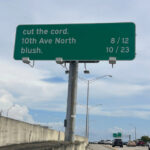
Turn this one up until the double kick rattles the floor. cut the cord.’s debut single “10th Avenue North” comes out swinging, a hard-hitting pop-punk rush powered by churning, chugging guitars, pummeling drums, and a vocal performance from Dylan Samaniego packed with heat, passion, and sweat. The whole thing surges forward with the kind of adrenaline that gets your blood moving before you’ve even registered what he’s singing about – immediate, physical, and ridiculously effective at waking you up.
The Florida-based project is Samaniego’s vehicle for rebuilding himself in real time. Inspired by a meditation exercise during one of the lowest points in his life, cut the cord. grew out of his desire to separate from the people, habits, and thought patterns keeping him stuck. “10th Avenue North” is the first taste of debut EP blush., out October 23, a four-track release recorded at Boardwalk Studios in South Florida with Jacob Bates and Fame on Fire’s Bryan Kuznitz. Across the EP, Samaniego wrestles with codependency, resentment, nostalgia, and the work of finding yourself again after giving too much away.
“‘10th Avenue North’ is an expression of feelings of nostalgia and missing someone in a kind of bitter way,” Samaniego tells Atwood Magazine. “I wrote the song about how even when a place changes aesthetically, the feelings someone can leave you with at that place seemingly always stick around. Being reminded of someone you wish you could forget every time you’re innocently out on a drive.”
That bitterness gives all the song’s velocity a real destination. “Well I noticed that 10th Avenue’s changed / To me that’s always been our place,” Samaniego sings, mapping heartbreak onto streets that refuse to become neutral again. Later, “Every place we went to / It reminds me of you / It’ll never change,” becomes the hook at the center of the wound: the city moves forward, buildings change, roads keep carrying people past, and memory stubbornly stays put. The guitars keep grinding ahead while Samaniego sounds increasingly desperate to outrun a past that keeps appearing in the windshield.
“I think that theres a lot of different things that inspire a song like this, whether thats the personal side that inspired the lyrics or musical influences that inspired the actual sound/structure of the song,” Samaniego says. “I would say its really easy to hear blink-182 in my writing as they were my biggest influence in getting into music, I feel like this song kind of feels like a mix of their original mid-90’s sound (Dude Ranch) and their early 2000’s sound (TOYPAJ). Personally, I feel like the biggest inspiration for this song was just being honest about being bitter and missing someone I hadn’t spoken to in years. I think I’ve finally been able to let myself feel things without judgement/cringing myself out which has been a long road to get to.”
That honesty is what keeps “10th Avenue North” from becoming pure pop-punk sugar rush. Its hooks hit hard because Samaniego sounds like he means every syllable, channeling years of influence into a song that belongs to his own bruised present. By the end, the guitars are still roaring and the drums are still kicking you forward, but nostalgia has revealed itself as the heavier force – proof that sometimes moving on starts with admitting exactly how badly you still miss what you left behind.
:: “Scene” – Rehash ::
Mitch Mosk, Beacon, New York

Clear the runway and give Rehash four and a half minutes to absolutely go for it. “Scene” is a dreamy, dramatic alt-rock adventure that keeps finding another gear – guitars ripple, roar, and smolder; heavy drums pound underneath seismic melodic lifts; and vocalist Renzo Valdez throws himself into a spellbinding performance that moves from tender restraint to full-throated heat. The whole song pulses with exactly the right amount of weight and intensity, constantly threatening to burst its seams as it climbs higher. It’s smoky, soulful, seductive, and gloriously alive.
The South Florida quartet formed in Hallandale Beach in 2022, when high schoolers Valdez and Sebastian Gamez began writing and recording together in a bedroom before siblings Ethan and Daseth Lopez joined on drums and bass. Since then, Rehash have released an album every year, chasing whatever ideas excite them and building a young catalog defined by curiosity and momentum. “Scene,” released alongside “Take Off Your Clothes, I Won’t Say A Word,” captures that spirit in especially thrilling form: Rehash wrote, mixed, and mastered the song themselves, giving its twists and surges the freedom to develop exactly as they wanted.
That freedom is the whole point. “Scene” opens with an extended instrumental introduction and keeps growing from there, unfolding less like a conventional single than a miniature rock odyssey. Riproaring electric guitars pull the song forward through dramatic shifts in pressure and pace, while its outro arrives like one final door kicked open. For someone raised on the go-anywhere, do-anything possibilities of Led Zeppelin and Pink Floyd, hearing a young band trust the journey this much is a genuine breath of fresh air.
“‘Scene’ started off as any other song demo of ours, what was different about it is we kept adding completely new parts to it like its outro riff and intro,” Rehash tell Atwood Magazine. “We’ve always wanted to explore doing a song like that, a long and ever-changing song that seems to just keep growing and ‘Scene’ seemed like the right fit for a song like that. There’s a lot of different influences in that song too.”
Beneath all that forward motion sits a bruised, unsettled lyric. “You slipped away / Out of the scene / Then went back to me yeah / Not a sound / Keep me down / I had tears to wrap my wreck,” Valdez sings, letting the words hang in the spaces between eruptions. The music keeps expanding while the narrator stays caught inside uncertainty, and that friction gives “Scene” its all-consuming pull: the louder and wider Rehash get, the more exposed the center becomes.
Rehash are barely getting started, and “Scene” already sounds like a band testing how far they can stretch a rock song before it breaks – then discovering there’s still more road ahead. Every new section deepens the thrill; every lift earns the next one. Consider this one definitive: Rehash are an undeniable Atwood artist to watch.
:: Aura – Amelie Lens ::
Ashley Littlefield, California

An aura is defined as “a distinct mood or feeling that seems to surround a person, place, or object.” Amelie Lens, a mother, producer, and DJ, has finally released her long-awaited debut techno album. At the same time, she defines what an aura is and what the surrounding energy means to her. The album’s title track, “Aura,” brings the listener into her perspective: an atmosphere that invites a vision of color seen through a prism; you are not hit with light but with sound. Listeners can dive deeper into every kick drum within the vibrant frequency. Flowing deeper into the sound, “Our Frequency” carries a deep, pulsing beat that drives the listener into the next track, “Run.” there is a softness through voice on “Run” and creates a dark cadence that contrasts with the vulnerability in the melody and lyrics. “Cannot compute these feelings.”
Throughout Aura, Lens creates more space with her choice of electronic textures and adopts a more industrial techno sound, as heard in “The Only One,” evoking the atmosphere of a warehouse party. Aura blends between tracks, making “Come Closer,” a faster-paced track with shuffling hi-hats, with subtle claps accenting the song’s breaks. “Come Closer” and “Drift Away” play between contrasting energies. The two songs reflect the essence and feeling of listening to the ocean and hearing its receding tides; both are needed to coexist in space.
The driving powerhouse track on Aura is “Falling Into Acid Dreams,” a heavy-hitting track with hi-hat shuffling, rhythmic electronic textures, and a subconscious focus on inner space. Shifting from night into dawn, “4AM at RSO” describes the passage of time on the dance floor and feelings that can arise within the space. The subtle vocal cuts in the track serve as a reminder to pause and breathe deeper. Then, “Fade Into Light” illuminates the album from the dark as it emerges from the abyss and shifts toward a new cosmic energy. The song layers saturated acid techno elements and oscillating synths. Closing the album, “Whisper My Name” is the most emotive and energizing arrangement; it features a sustained low-frequency bassline in the intro and a hopeful melody that underscores the cathartic soul behind her lyrics: “Whisper my Name / Touch my heart.” Amelie Lens makes a clear, raw, energetic statement about what an Aura can bring in sound, movement, and experience, while simultaneously embracing rhythm through emotion.
:: “Closer To Earth” – My Life As A Moth ::
Danielle Holian, Galway, Ireland

“Closer To Earth” feels like stepping through a doorway into somewhere recognisably human yet entirely unfamiliar. My Life As A Moth creates an intensely atmospheric piece of art pop that thrives on tension, using space and restraint as effectively as its heavier moments. Lo-fi electronics and processed vocals establish an eerie, almost weightless opening before syncopated live drums and cutting guitar tones begin to pull the track towards something more physical. There is a cinematic quality to the arrangement, but it never feels overly polished or distant. Instead, the production retains a raw intimacy that makes every shift in texture feel purposeful. The influence of experimental artists such as Björk and Chelsea Wolfe can be felt in its fearless approach to sound, yet the track remains distinctly its own, constantly transforming without losing sight of its emotional centre.
The song’s greatest strength lies in its ability to make the abstract feel emotionally immediate. Inspired by the journey of a soul entering the material world and the sensation of existing between different realities, “Closer To Earth” inhabits that uncertainty rather than attempting to resolve it. The vocals move between vulnerability and theatricality, while vocoders and sprawling electronic textures create a sense of dislocation that mirrors the song’s central themes. There is an almost dreamlike quality to the way the track moves between its sections, with each new layer subtly disrupting whatever sense of stability came before. Rather than following a conventional verse-chorus trajectory, My Life As A Moth allows the composition to evolve organically, creating the feeling of being caught between consciousness and illusion. It is unsettling in the most compelling sense, asking the listener to surrender to its atmosphere rather than simply observe it.
What ultimately makes “Closer To Earth” so captivating is the conviction behind its strangeness. This is experimental music that never sacrifices feeling for abstraction, with every unusual sonic decision contributing to the song’s sense of emotional and psychological displacement. The combination of electronic murk, live percussion, distorted guitar and theatrical vocals creates a world that feels simultaneously intimate and vast, fragile and imposing. There is a beautiful contradiction at the heart of the track: it reaches towards something spiritual and otherworldly while remaining grounded in the vulnerability of existing inside a physical body. “Closer To Earth” is consequently less a song about finding definitive answers than an invitation to question what reality actually means, and My Life As A Moth makes that uncertainty sound hauntingly beautiful.
:: “T.O.M” – Konno ::
Danielle Holian, Galway, Ireland

I have experienced more loss within the last year than I ever imagined I could carry. I walked away from an abusive relationship and called off my engagement, watched cancer take my mother’s life, and then said goodbye to my maternal grandfather. It has been an incredibly vulnerable season, one I would never wish upon another person. So when Konno, an indie rock singer-songwriter, released “T.O.M.,” a folk-inspired tribute to our 91-year-old grandfather, Tom McGuire, it found me at a time when I needed it most. I have had this song on repeat ever since. There is something wonderfully tender about its emotional intensity, musical fragility, and endearing lyricism, making it not only a precious tribute, but a beautiful addition to Konno’s ever-growing discography.
“T.O.M.” stands for “This Old Man”, while also referencing our grandfather’s name. The song captures Konno’s memories of working on the family farm, written from the perspective of our grandfather before his battle with dementia. What makes the track so beautiful is that Konno does not dwell solely on the sadness of loss. Instead, he chooses to celebrate a life, filling the song with warmth, memory, and the quiet beauty of having known someone deeply. It feels less like a goodbye and more like opening an old photograph and suddenly remembering all the little things that made that person who they were. In collaboration with Irish folk singer-songwriter Darragh O’Dea, Konno steps away from his energetic indie-rock sound and embraces a minimalist acoustic arrangement that allows the story and its raw emotional weight to remain at the heart of the song. Mastered by Peter Montgomery, the production feels intimate and beautifully restrained.
Perhaps what makes “T.O.M.” so special to me is how gently it reminds us that grief and gratitude can exist in the same breath. In a year filled with endings, this song has given me a small place to hold onto something beautiful. It reminds me that remembering someone can be an act of love, and that a life does not have to be defined by its final chapter, but by all the moments that came before it. Konno has created more than a song here. He has created a keepsake for our grandfather, a celebration of his life, and a little musical home for his memory. Some songs are simply heard, but some become part of you. “T.O.M.” is one of those songs for me.
:: “The Weight” – CS Hellmann ::
Mitch Mosk, Beacon, New York

Pour a drink, find a patch of sun, and give “The Weight” six and a half minutes to work its magic. CS Hellmann’s latest arrives like a late-summer afternoon stretched almost impossibly long – dusty, dreamy alt-country with the radiant warmth of a cloudless blue sky and just enough haze hanging in the distance. Guitars glisten, flute curls lazily through the arrangement, and Hellmann’s soulful vocal carries an easy, seductive sweetness through it all. “The Weight” practically glows from the speakers, inviting you to sink in and stay awhile.
The Nashville-based singer/songwriter has increasingly made his home between indie folk, Americana, roots rock, and the wider reaches of indie rock, filtering the records he grew up with – Van Morrison, Bob Seger, The Marshall Tucker Band – through his own atmospheric songwriting. Recorded at Nashville’s Polychrome Ranch with longtime producer Jared Corder, “The Weight” brings that lineage into especially vivid focus: Titus Cody supplies flute and piano, Sean Bennett handles drums and percussion, and Corder adds bass, pedal steel, and background vocals around Hellmann’s guitar and voice. Much of the track was recorded through Corder’s TASCAM 388, giving its sprawling arrangement a wonderfully vintage cast.
“For all the weight and reflection in the lyrics, the record itself has always felt very warm and nostalgic to me,” Hellmann tells Atwood Magazine. “I picture being on a lake at the end of summer, having a beer with friends and family while the sun is going down and reflecting off the water. There’s something peaceful about it, but there’s also that little bit of melancholy you get when you know the day – or the summer – isn’t going to last forever. That’s really the world I hear when I listen to ‘The Weight.’”
That blue-sky glow makes the darkness running through “The Weight” land all the harder. Hellmann sings, “Far away from the sun / Heating up in the dark / Dreaming of the big stage,” before lying awake, waiting for the day to “break & bend” and hoping he can hold himself together. The song drifts between loss, loneliness, ambition, and endurance, its sun-drenched arrangement carrying lyrics that repeatedly return to silence, distance, and the fear of breaking down. By the final refrain, “No baby, I won’t break down,” sounds less like certainty than a promise he’s choosing to make in real time.
Hellmann and Corder give that promise plenty of room to breathe. A repeating guitar figure anchors the track while pedal steel, flute, piano, and harmonies gather around it; near the four-minute mark, Hellmann loosens his grip and pushes into a more soulful, improvised vocal passage before the song settles back into its easy sway. His customized “Hellcaster,” a Telecaster that once belonged to his wife’s late father, adds another layer of history to a recording already steeped in memory.
“The Weight” carries its melancholy like heat shimmering over pavement: always present, never quite obscuring the beauty in front of you. Hellmann lets memory, worry, and longing drift through a gorgeous roots-rock reverie built for that hour when the sun hangs low, the water catches fire, and summer suddenly feels both endless and almost gone.
:: “Amy” – The Madelines ::
Mitch Mosk, Beacon, New York
Meet “Amy” once and she’s already stuck in your head. The Madelines’ debut single is the kind of smile-inducing indie rock jam that hits your gut almost immediately – bright, hooky, and ridiculously easy to sing along with by the second spin. Its angular guitars carry the post-punk revival snap of New York’s noughties heyday, but here they’re more sun-kissed than severe, radiating warmth as they roar and soar around Owen Tressider’s wonderfully charming vocal. “Amy” is pure guitar-band pleasure: a little dreamy, a little scrappy, and completely irresistible.
The Brooklyn quartet – Tressider on vocals and guitar, Ralph Franco on bass, Alex Taylor on guitar and keys, and Jack Barrett on drums – have spent the past several years growing alongside the music itself. Written in 2023 during The Madelines’ earliest days, “Amy” survived lineup changes, new arrangements, and countless rehearsals before becoming the title track and first of four singles leading into the band’s debut album Amy, currently slated for spring 2027. The song was produced by The Madelines, mixed by Max Goulding, and mastered by Alec Ness, with all that accumulated time somehow leaving the finished track sounding wonderfully immediate.
“‘Amy’ is really about memory, and the strange way certain periods of your life can stay completely intact in your head even after everything around them has changed. I started writing from memories of being a teenager in Arizona, where I spent a long stretch of my adolescence at a boarding school in the desert. I was lonely, homesick, and constantly thinking about the people and the life that existed somewhere outside of where I was. Years later, when I wrote ‘Amy,’ I found myself returning to that feeling-not necessarily trying to document exactly what happened, but trying to capture what it felt like to want somebody who felt impossibly far away,” Tressider tells Atwood Magazine. “I wrote the song around 2023, when The Madelines were first starting to become a real band. The lineup wasn’t completely formed yet, but there was suddenly a place for these songs to live outside of my own head. That became really important to me. I had spent years writing and recording largely on my own, and over time Ralph, Alex, and Jack started bringing things to the music that I never could have arrived at by myself. That’s a big part of why we chose ‘Amy’ to introduce the album. The song looks backward, but the record represents finally being able to let all of these things go. Some of the songs have followed me through different cities, relationships, apartments, bands, and different versions of myself. ‘Amy’ sits somewhere in the middle of all of that. It feels less like trying to explain a memory than opening a box of photographs and realizing how much time has passed.”
That memory carries more ache than “Amy” initially lets on. Tressider sings, “Oh I act so good / But I feel so bad / I’m not the only one in this desert land,” then reaches for a person who already seems halfway gone: “I need to be with you / But I’m all alone / I wish I could call you on the telephone.” The chorus packages all that longing inside one of the year’s most immediately lovable refrains, bouncing between devotion, frustration, and gallows humor as “I would push up daisies for you” eventually gives way to “Just leave me all alone / Oh, please just go.”
That push and pull is exactly what gives “Amy” its charm. The past hurts; the guitars grin anyway. The Madelines take homesickness, distance, and a memory that refused to disappear and send them racing through radiant chords and restless rhythms, leaving behind a song that practically begs to be blasted with the windows down. “Amy” may look backward, but everything about the way this band plays it points forward – and it’s hard to imagine a more fun introduction to wherever The Madelines go next.
:: “Eleanor (When Will You Learn)” – Montello ::
Danielle Holian, Galway, Ireland

Montello have a knack for making heartbreak sound like something worth dancing to, and “Eleanor (When Will You Learn)” is a particularly sharp example of that instinct. Produced by Luke Owens, the new single wraps the frustrations of a dysfunctional relationship in jangling guitars, a waltzing drum beat and anthemic vocal melodies, creating an arrangement that feels immediately familiar while retaining plenty of personality. There are traces of The Vaccines and early Arctic Monkeys in its brisk indie-rock momentum, alongside the melodic melancholy of The Smiths, The Stone Roses and Oasis. Yet the track never gets weighed down by its influences. Instead, Montello use that distinctly British indie vocabulary to give the song an effortless accessibility, allowing its bittersweetness to come through without ever tipping into self-pity. It is melancholy with movement, built around the simple but effective idea that sometimes the only way through emotional turmoil is to keep going.
Lyrically, “Eleanor (When Will You Learn)” captures the exhausting cycle of caring about someone who seems too consumed by themselves to reciprocate, balancing sincerity with a welcome streak of sarcasm. The repeated question at its centre becomes increasingly loaded as the song progresses, expressing frustration, bargaining and the faint hope that perhaps this time things might change. That emotional push and pull gives the track its bite, while the nostalgic noughties indie-rock instrumentation keeps everything buoyant and immediate. Montello have already demonstrated their ability to translate their sound to major stages, but this single succeeds on its own terms, condensing the band’s knack for melody, lyrical relatability and distinctly Manchester-rooted indie sensibility into a concise, memorable release. “Eleanor (When Will You Learn)” is heartache dressed for a night out, and Montello make the combination feel thoroughly natural.
:: “Silver Coin” – Small Pond ::
Mitch Mosk, Beacon, New York

“Silver Coin” arrives like a dream you wake up from sweating. Small Pond’s latest is achingly intimate and breathtakingly dreamy, a feverish alternative rock reverie that flips a spectacular switch between its hushed verses and roaring choruses. Molly McDevitt draws you close with a soft, charged vocal, then the whole band erupts around her – wiry guitars flare and churn, the drums absolutely thrash, and suddenly all that restraint has somewhere to go. It’s dramatic, visceral, and wonderfully alive. It hurts so good.
The Portland, Maine band – McDevitt on lead vocals and songwriting, Colin McKenna on drums, Ian Howard on guitar, and Joe Murphy on bass – introduce their forthcoming sophomore album Soft Burn with “Silver Coin,” the record’s first single. Due October 21, Soft Burn was produced by Alex Farrar at Drop of Sun Studios and finds Small Pond stretching further into the heavier side of their sound, with “Silver Coin” helping open that door. The song’s live-wire intensity came naturally in the studio too: after struggling to piece it together track by track, the band returned and recorded it live.
“‘Silver Coin’ is about looking at a relationship from the outside almost like a third person perspective, watching yourself and not always liking what you see,” McDevitt tells Atwood Magazine. “It’s about the disconnect that comes when you know you’re not showing up the way you want to for the people who matter to you, and the discomfort of admitting that. The chorus line ‘I know it’s hard to know me when I’m scarred’ is that out of body moment of owning it. The second verse (‘I beat the bars of the cage that I made’) gets at feeling stuck in your own patterns, caught in a loop you built yourself. This song became central to the sound of the back half of the record. I wrote it, our bass player Joe took it and built out a demo that shaped most of what ended up on the album, and it opened the door for us to lean into heavier tones later in the tracklist. In the studio we kept hitting walls trying to record it piece by piece, so our producer Alex suggested we just come back and track it live. That’s how it came together, and I think you can really hear it. It was important to us that the live version and the recorded version felt like the same song, and ‘Silver Coin’ does that.”
That live charge is exactly what gives “Silver Coin” its bite. McDevitt’s “I know it’s hard to know me when I’m scarred” lands like an admission pulled reluctantly into daylight, while “I beat the bars of the cage that I made” cuts even deeper: she knows the trap, knows who built it, and still has to claw her way out. The guitars seem to absorb all the pressure she keeps tucked inside her delivery, surging and glistening until the chorus becomes its own fever dream. McDevitt stays controlled at the center while the arrangement does the screaming for her.
Small Pond describe Soft Burn as a record whose meaning revealed itself after the songs were written, circling “something soft pulled against something cold and hard.” “Silver Coin” practically embodies that friction. Its verses hover in a dream state; its choruses rip the ceiling open. The result is devastating and strangely exhilarating – a song about recognizing your own patterns that captures the thrill, terror, and release of finally hearing them break.
:: “Bark” – The Sewing Club ::
Mitch Mosk, Beacon, New York
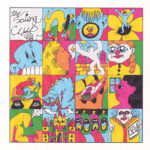
Turn the lights low and let “Bark” fog up the room. The Sewing Club’s latest is a dreamy alternative reverie soaked in sweat and reverb – smoky, hazy, brooding, and wonderfully smoldering. A thick, heavy beat engulfs the ears while guitars drone, glisten, and roar across an all-consuming canvas, and vocalist Hannah McElroy stirs the soul awake with a subdued yet deeply charged performance. Every word seems to fall slowly from her lips carrying ten more left unspoken. The whole thing aches inside and out, sucking you into its orbit and holding your heart hostage.
The Nashville quartet formed in 2022 and currently comprise McElroy, Stephen Meaux, Justin McKinney, and Zach McCoy. “Bark,” released August 26 via Born Losers Records, is the shiver-inducing second single off their debut album, SEW, arriving October 2. Written between home and the road and recorded with longtime friend Calvin Lauber, the record captures The Sewing Club in motion – twenty-somethings watching friendships drift, relationships end, and familiar lives rearrange themselves while blown-out guitars and sticky hooks keep the blood pumping.
“On SEW, we’re chasing the feeling of being twenty-something and watching our lives quietly rearrange themselves. Friendships drift. Relationships end. The people you thought you’d know forever slowly become strangers, while everything else moves faster than you can keep up with,” The Sewing Club tell Atwood Magazine. “Written between home and the road and recorded with our longtime friend Calvin Lauber, we tried our best to never really smooth jagged edges over on the record. The songs lean into blown-out guitars, hooks that stick around (hopefully), and enough fuzz to blur the line between nostalgia and something entirely new. Inspired by bands like Veruca Salt, The Breeders, Wishy, Punchlove, and Slow Pulp, etc., the record has a feeling of being equally at home in a basement show or blasting through blown speakers on a summer drive. Rather than chasing a perfect debut, we made the record we wanted to hear. SEW is less a statement than a snapshot – it’s a band catching itself in the middle of becoming.”
“Bark” catches that becoming at one of its ugliest pressure points: the moment trust curdles into recognition. McElroy’s restraint gives the betrayal room to burn as she sings, “You’ve got a big bark / I never thought you’d bite / I know how to bite back / I know how to fight.” The guitars hover and heave around her, amplifying the gap between the person she thought she knew and the threat standing in their place. By the time she promises to bite back, the song has quietly shifted from wounded disbelief into self-preservation.
“‘Bark’ was probably the hardest song to write on the record. The whole premise of the song is discovering someone isn’t who they say they are. Someone who is supposed to make you feel safe and comforted actually really does turn out to be a wolf in sheep’s clothing,” McElroy explains. “I always tend to write the most depressing lyrics over the most melancholic guitar parts, but I really like that – it’s kind of just a mirror to the juxtaposition of life. Some of the most horrific things are totally normal.”
That last thought hangs over “Bark” long after its guitars fade. Horror rarely announces itself with flashing lights; sometimes it arrives wearing the face of safety, embedded so deeply in the everyday that recognition comes late. The Sewing Club give that realization a body – heavy, hazy, and alive – then let McElroy’s voice cut through the sludge with the one thing her narrator still owns: the certainty that she can fight back.
:: “1MPM” – Films on Song ::
Mitch Mosk, Beacon, New York
Crank “1MPM” loud enough and the whole room starts to sweat. Films on Song’s latest is a charged alternative rock fever dream, all gritty, crunchy guitars pushed into the red and warm melodies glowing through the distortion. The Charlottesville, Virginia five-piece have built themselves a little world here – frayed around the edges, deliciously overdriven, and hooky enough that the noise goes down easy.
Released August 28 as the second single off Films on Song’s forthcoming sophomore album, Dissection, “1MPM” trades some of the post-punk shimmer of predecessor “Soho” for a fuzzier, more immediate attack. The record arrives September 11, with the band pulling from post-punk, shoegaze, slacker rock, and ’90s alternative rock as they dig into burnout, isolation, consumerism, and digital overload. Parts of Dissection were recorded at Sill & Glade, a mountaintop cabin in Virginia’s Shenandoah Valley, while others took shape in the band’s dimly lit Charlottesville warehouse rehearsal space – two environments that mirror the push and pull between escape and confinement running through the album.
That tension boils over beautifully on “1MPM.” Francis McKee’s blasé vocal delivery cuts through the din as the song races headlong toward a chorus built to buckle under its own weight. The guitars get bigger, hotter, and more overwhelming as McKee sings about exhaustion, disconnection, and a pace of life nobody can realistically sustain. Even the arrangement becomes part of the argument: the very noise scratching that rock ’n’ roll itch also crowds the listener’s head until there’s barely room left to think.
“1MPM is about trying to keep the pace in a world where everything and everyone is constantly demanding your attention to the point where your own thoughts and feelings are left watered down and drowned out,” Francis McKee tells Atwood Magazine. “The overabundance of content, particularly on social media, has gotten to the point where it feels like we’re barely making genuine connections anymore. We’re all just promoting ourselves and our ‘brand.’ What is all this content really for? When do we run out of attention to give? At what point can we say ‘this is too much’?”
“In the chorus, I wanted to echo this feeling of having your thoughts drowned out with massive, almost blown out guitars. They take up so much sonic space that it’s hard to focus on anything else.”
The chorus catches the trap in one breath: “Running a mile a minute / Is too fast to sustain / And though you know you charged your limit / Let’s go again.” The body is exhausted, the brain is overloaded, and still the machine keeps asking for another round. Films on Song capture that contradiction with a grin and a wall of amplifiers, channeling modern burnout into three-ish minutes of gloriously overheated release. “1MPM” may be about reaching capacity, but its biggest pleasure comes from hearing the band absolutely blow past theirs.
— — — —

Connect to us on
Facebook, 𝕏, Instagram
Discover new music on Atwood Magazine
:: Weekly Roundup ::
follow WEEKLY ROUNDUP on Spotify
:: This Week’s Features ::